Saturday, 5 December 2015

"A Benn - Not A Bennite" - Finally, The Blairites Have Someone To Replace Jeremy Corbyn.

Cometh The Hour ... Hilary Benn's speech in favour of bombing the Islamic State brought the House of Commons to its feet. Finally, the Blairites have someone to replace Jeremy Corbyn.
 
IT HAS BEEN HAILED as one of the best speeches delivered to the House of Commons in 50 years. Having urged his fellow MPs to support the Prime Minister’s motion in favour of bombing Syria, the Shadow Foreign Secretary, Hilary Benn, resumed his seat to resounding cheers from both sides of the aisle. The Labour Leader, Jeremy Corbyn, his face a picture of both puzzlement and exasperation, did not join in the applause. No one from the Labour Party, himself included, had managed to deliver so passionate a speech on behalf of peace.
 
The emotion missing from Corbyn’s countenance was fear. It speaks well of the man that Benn’s noisy standing ovation did not frighten him. Someone more steeped in the realities of politics would have heard, behind the cheering of the Commons, the dull rattle of the tumbril. He should have known that his opponents weren’t just applauding the impassioned speech of a bellicose social imperialist, they were applauding the fact that, at last, they had found the person to replace the despised Member for Islington North.
 
It’s been the biggest problem of the Blairites all along that among their ranks there was no one who could hold a candle to Corbyn. When set against the sincerity and plain-spokenness of the front-runner, the bland contributions of the other three leadership contenders came across as utterly unconvincing. Liz Kendall, the candidate most closely associated with the Blairite rump, attracted just 5 percent support from the party membership. What’s more, in the aftermath of the membership’s resounding endorsement of Corbyn, the Labour Right’s petulant refusal to accept that Blairism had been rejected only added to the new leader’s lustre.
 
Yes, Labour’s parliamentarians had the advantage of a sympathetic press. United in their disdain for Corbyn the journalists and columnists of the allegedly “left-wing” newspapers – The Guardian, The Observer, and The New Statesman – never missed a chance to tell their readers that Labour could not hope to win with Corbyn at the helm. But, increasingly, the left-wing media’s hostility was being written off by the Labour rank-and-file as yet further proof that the whole “mainstream” political establishment was rotten to the core.
 
What they needed was a challenger untainted by all the petulance and back-stabbing; someone who cleaved to his or her principles with the same sincerity and passion as Corbyn himself. Someone who had served time in the trade union movement. Someone unafraid to summon-up the ghosts of the men and women of the International Brigade who died fighting Franco’s fascists in Spain. Someone who was a teetotaller and a vegetarian. Someone who never fiddled his parliamentary expenses claims,. Someone whose father was, for more than 50 years, one of the towering figures of the Labour Left. Someone, in short, called Hilary Benn.
 
That Benn the Younger had made a point of telling his constituents that he was “a Benn – not a Bennite”, and had been an enthusiastic supporter of Tony Blair’s “New Labour” from Day One, serving in the Cabinets of both Blair and Gordon Brown, well, that only made it all the more delicious.
 
Not that the Blairites will be celebrating too loudly. The more intelligent among them understand that Corbyn has shoved “Overton’s Window” decisively to the left. Indeed, when History assesses the (now almost certainly brief) leadership of Corbyn, breaking the neoliberal stranglehold on the British Labour Party will be cited as his greatest achievement. If Benn wants to be Prime Minister he will have to run on a clear anti-austerity platform and to offer the voters policies that are recognisably social-democratic in tone, content and purpose.
 
But if Paris, as Henry of Navarre is said to have quipped “is worth a mass”, Number 10 Downing Street is worth the renationalisation of British railways and a sharply more progressive tax system. Hilary Benn has only to signal to Labour’s rank-and-file that Corbyn’s vision (minus the pacifism and all that baggage from the 1980s) is safe in his hands, and the incumbent’s already difficult position will become impossible.
 
As the Andrew Finney character (played by Ian McShane) says in the TV series Ray Donovan: “If you see a man getting ready to take on the world – bet on the world.” After weeks of relentless media and political assault (not least from his own side) even Corbyn’s staunchest supporters know, deep in their hearts, that the British Establishment is never going to allow their hero to become Prime Minister. One way or the other, Corbyn is going to be driven from the Labour Leadership.
 
But the United Kingdom is an old and devious state, and both its public and not-so-public protectors know that if they are seen to have taken out one Labour Leader, then it is not in their interest to be seen putting too many restrictions on his replacement. In return for Trident, the “Special Relationship” with the USA, and a light hand when it comes to reforming the financial system (i.e. The City of London), the Left will be given their moment in the sun. The protectors of Britain’s Deep State understand that the Westminster System requires two parties of more-or-less equal strength if it’s to go on working. Allow that myth to fail, and who knows what the long-suffering British people might replace it with?
 
The King is dead (or soon will be). Long live the King!
 
This essay was posted on The Daily Blog and Bowalley Road on Saturday, 5 December 2015.

Friday, 4 December 2015

Stacking The Deck.

A Royal Flush: If only Andrew Little had these sort of cards to play with! Unfortunately, no matter how often he shuffles and cuts, cuts and shuffles, he's never going to deal himself a winning hand. Campaigning with the Greens, however, might just deliver the face cards Labour is lacking.
 
IT’S LIKE RESHUFFLING a deck of cards with all the face cards missing. No matter how often Andrew Little shuffles and cuts, cuts and shuffles, he’s never going to deal himself a winning hand. Labour’s failure to develop a simple and democratic method of selecting electorate candidates and drawing up its Party List has, finally, rendered it all but unelectable.
 
To become a Labour MP in 2015 one must first negotiate a multitude of competing interest groups: Women, Maori, Unions, Youth, the Rainbow Council. This is every bit as difficult as it sounds, with numerous compromises and trade-offs to be made all along the way.
 
Getting through this labyrinth leaves Labour’s candidates with an extremely detailed picture of the Left’s ideological landscape, but only the sketchiest notion of the world in which 95 percent of New Zealanders go about their daily lives.
 
It’s a process that also puts a lot of potentially excellent Labour candidates off. Someone confident in their understanding of industry, agriculture, science, or (God forbid!) running a business, rightly feels affronted at the prospect of being figuratively pinched, poked and prodded by people whose experience of the world is often extremely limited and narrow.
 
Not surprisingly, narrow and limited candidates have a head start!
 
Matters are not helped, of course, when these narrow and limited individuals – now MPs – turn against an obviously talented and successful colleague and conspire to bring him down. Andrew Little’s demotion of David Cunliffe – one of Labour’s most experienced politicians – represents the unwarranted triumph of spiteful Fives and Sixes over a much-maligned King of Hearts.
 
Nor is it helpful when these number cards are given royal faces. Her regular appearances in the women’s magazines notwithstanding, Jacinda Ardern has yet to impress as New Zealand’s Queen of Hearts. And no matter how rapidly he is pushed up Labour’s pecking order, Kelvin Davis will struggle to be recognised as the King of Clubs. Some chiefs may have started out as warriors, but not all warriors become chiefs.
 
What, then, should Labour do? If it cannot choose candidates with the same appeal to the voters as National’s selections. If it cannot break its habit of penalising talent and promoting mediocrity. And, if it cannot even persuade colleagues who have sat in Parliament for three decades that it might be time to move aside for someone younger. How can it expect to win?
 
Helen Clark undoubtedly asked herself the same question in 1996. Having just led her party to its worst result since 1928 (28.19 percent) she needed some means of lifting Labour’s numbers by at least ten percentage points to have any chance of winning the 1999 General Election.
 
Three-quarters of these she secured almost immediately when Winston Peters, against public expectations, opted to form a coalition with Jim Bolger’s National Party. The remaining quarter came from Jim Anderton’s Alliance, which, in one of the most generous gestures in New Zealand political history, invited Clark to its annual conference and there agreed to give voters the chance of ending the bitter civil war on the left of New Zealand politics by electing a Labour-Alliance coalition government.
 
With Colin James’s “Poll of Polls” currently putting the Labour Party just under 31 percent, Andrew Little faces an electoral conundrum no less taxing than Helen Clark’s. Somehow, he has to find an additional ten percentage points to become a credible contender for power.
 
The record shows that the Alliance’s embrace of its bitter rival cost it nearly a quarter of its 1996 vote. From 10.10 percent, the Alliance’s vote fell to just 7.74 percent. This two point drop, when combined with the decline in the NZ First and National totals, was more than enough to supply Labour with the ten-point boost it needed.
 
Will Andrew Little turn 2017 into a re-run of 1999? Will he use the occasion of Labour’s 2016 centenary conference to invite James Shaw and Metiria Turei to join him on the stage for a symbolic group hug? Will the three of them then invite the New Zealand voter to bring centre-left politics into the Twenty-First Century by electing a Labour-Green Coalition Government? The “optics” – as the spin-doctors say – would be compelling.
 
And useful. Lacking Face Cards of his own, Andrew Little could end up winning the 2017 election with a Royal Flush of Greens.
 
This essay was originally published in The Waikato Times, The Taranaki Daily News, The Timaru Herald, The Otago Daily Times and The Greymouth Star of Friday, 4 December 2015.

Wednesday, 2 December 2015

How Economists Are Failing Society: Professor Robert Wade At The Ika Seafood Bar & Grill.

Heterodox And Proud Of It: Professor Robert Wade is an economist who refuses to toe the accepted line. Someone with the courage to point out that the neoliberal economic emperor isn’t wearing any clothes.
 
LAILA HARRE saved the very best for last. The “Salon” lunch with economist, Professor Robert Wade, provided one of those clarifying political moments when, at last, the veil falls away and you are shown the real state of affairs in all its terrifying clarity.
 
Wade is what his orthodox colleagues at the London School of Economics would loftily dismiss as a “heterodox” economist. Someone who refuses to toe the accepted line. Someone with the courage to point out that the economic emperor isn’t wearing any clothes.
 
More than this, however, Wade exposes orthodox neoliberal economics as a failure. Presenting itself as a scientific discipline, fully capable of pronouncing definitively on the true nature of reality – the profession was, nevertheless, unable to produce a single accurate prediction of the Global Financial Crisis (GFC).
 
There was a very good reason for this. As Wade explained to his mostly academic audience, the Dynamic, Stochastic, General Equilibrium (DSGE) model used by orthodox economists all over the world – including the OECD, the IMF, the World Bank and the Bank of England – does not factor-in the influence of the financial sector on the economy, and flatly denies that economies conforming to the DSGE model are susceptible to crises generated endogenously (i.e. from within themselves).
 
Just think about that for a moment. An economic model that makes no allowance for the most powerful force in the modern international economy – finance capital. A model which, for that very reason, simply could not see the Global Financial Crisis coming.
 
Now, you might think that a profession which had exposed its shortcomings so dramatically might be feeling just a little bit chastened; might be looking for a new economic model; might even be ready to admit that it had got just about everything horribly wrong and apologise to the world for all the extraordinary suffering its failure to read reality correctly has produced.
 
You would, however, be wrong.
 
Orthodox economists pride themselves on their positivism. They are not swayed by their emotions, nor do they make value judgements. The language of ethics and social responsibility is foreign to them. Their language is mathematics. Numbers don’t lie – and they certainly don’t apologise!
 
But if Orthodox Economics pays no heed to the real world and cannot predict an event as devastating as the GFC; if it scorns all those who posit a different interpretation of the economic data; if it guards the tenets of its economic faith as jealously as any member of the Roman curia, and punishes heretics with equal severity; then what, exactly, is the orthodox economics profession?
 
The answer lies in the word “faith”. Wade himself said that there is a religious quality to the thinking of the men and women in economic institutions like the NZ Treasury. And this, of course, is exactly what the orthodox economics profession has become – a modern priesthood.
 
In terms of the social and political function it serves, Orthodox Economics is no different from the Medieval Catholic Church. It exists for one reason and one reason only: to justify the ways of the rich to the poor, and to convince them there is no alternative to the inequality and injustice of the existing order. As it was in the beginning, is now, and ever more will be, world without end.
 
This brief review hardly does justice to Wade’s lecture. There is much more that I wish I could recall: astonishing quotations from these naked economic emperors that left his audience shaking their heads in disbelief.
 
The vote of thanks was given by Laila’s dad, who first met Wade when he was a young student of anthropology back in 1960s Auckland. Indeed, he was able to produce a wonderful photograph of the young Robert Wade, taken during an expedition to the islands of the South Pacific.
 
There he was, one of many rowers, hauling manfully on his oar, in the midst of a vast and troubled sea.
 
Somehow, it seemed appropriate.
 
This essay was posted on The Daily Blog and Bowalley Road on Wednesday, 2 December 2015.

Tuesday, 1 December 2015

Viable Within The System.

Playing By The Rules: Bill Clinton's overriding ambition was to become - and remain - a political player. When he was just 23 he wrote: “For years I have worked to prepare myself for a political life characterized by both practical political ability and concern for rapid social progress. It is a life I still feel compelled to try to lead.” To do so, however, he had to maintain his "political viability within the system." It was this urge to remain viable within the system that would lead a whole generation of Centre Left politicians to dazzling political success and abject moral failure.
 
“THE DECISION not to be a resister, and the related subsequent decisions, were the most difficult of my life. I decided to accept the draft in spite of my beliefs for one reason: to maintain my political viability within the system.”
 
Bill Clinton was only 23 years old when he wrote these words. Colonel Eugene Holmes, head of the Reserve Officer Training Corps (ROTC) at the University of Arkansas, had arranged for the young Rhodes Scholar to join what we used to call the “Territorial Force” so that he might avoid being drafted to fight in Vietnam. Clinton was writing to explain why, after much thought, he had decided to reject the offer of ROTC training and take his chances with the Draft.
 
“For years I have worked to prepare myself for a political life characterized by both practical political ability and concern for rapid social progress”, Clinton explained to the Colonel. “It is a life I still feel compelled to try to lead.”
 
Had Clinton not drawn a “lucky” number in the ballot, and thus escaped service in Vietnam, his fledgling career might have been cut short by a Viet-Cong bullet. As things turned out, however, the young Arkansas law student’s “practical political ability” was enough to take him all the way to the White House. So “viable” was Bill Clinton in the American political system that, in 1993, he was sworn in as the 42nd President of the United States.
 
In office, Clinton proved that his decision to risk the draft, rather than, at some point in the future, be labelled  a “draft-dodger”, was in no sense aberrant. Because, although Clinton’s concern for rapid social progress was very real, his desire to maintain his political viability within the system was much, much stronger. Throughout his career, whenever the two objectives came into conflict, Clinton was almost always willing to sacrifice rapid social progress on the altar of his own political viability.
 
Clinton was by no means alone in making the retention of personal political viability his Number One priority. Two of his most fervent admirers on the Centre Left, internationally, Tony Blair and Helen Clark, operated in much the same way. Clark’s infamous quip: “I didn’t come this far to be burnt out in a hail of gunfire”; demonstrated the importance she attached to remaining viable. As did Tony Blair’s observation that: “Power without principle is barren, but principle without power is futile.”
 
Some have characterised Clinton’s modus operandi – dignified by some as a “Third Way” between the Far Left’s alleged lack of viability and the Far Right’s hostility to any form of social progress – as entirely consistent with the Baby Boom generation’s determination to have their cake and eat it too. While there is a generous measure of Baby Boomer self-indulgence in Third Way politics, there is also a harder, frankly self-protective, edge to Clinton’s “practical” political style.
 
The letter to Colonel Holmes was written towards the end of 1969. For ambitious leftists like Clinton, the previous two years had been heart-breaking and terrifying in equal measure. In 1968 the two greatest hopes for securing rapid social change in America – Martin Luther King and Robert Kennedy – had both been assassinated. And the inheritor of the darkness into which the country had suddenly been hurled, Richard Nixon, left progressive America feeling angry, isolated and afraid.
 
In their hit song, Long Time Gone, Crosby Stills and Nash evoked these conflicting generational emotions with heart-wrenching force:
 
Speak out you got to speak out against the madness
You got to speak your mind if you dare
But don’t, no don’t, no, try to get yourself elected
If you do you had better cut your hair
 
The Centre Left’s predicament did not improve in the following decades. Object lessons like Chile, Australia and Nicaragua proved that left-wing governments could be shot down just as easily as left-wing politicians. And with the last great challenge to free-market capitalism blipping-off the screen in 1991, “it’s the economy stupid” took on a whole new meaning.
 
For Centre Left parties to remain viable within the system it had become necessary for them to surrender practically every radical item on their historic agenda. It was still possible to do good, but only if the rich were allowed to do better. It was the likes of Clinton in the USA, Blair in the UK, and Clark in New Zealand, who, finally, made the world safe for neoliberalism.
 
Meaning that if, by some miracle, a genuine left-winger (like Jeremy Corbyn) should find himself at the head of a modern, Centre Left party, the Right will have no need to go looking for assassins – either real or metaphorical. To remain viable within the system, his own colleagues – all of them politicians of the most practical ability – will strike him down.
 
This essay was originally published in The Press of Tuesday, 1 December 2015.

Monday, 30 November 2015

Puppet On A String? Has Andrew Little Become The Plaything Of Labour’s Dominant Factions?

Hardly Napoleonic Andrew: Consigning David Cunliffe to the rear of the battlefield, and replacing Nanaia Mahuta with Kelvin Davis do not strike me as the decisions of a wise general. (Although they may be those of a panicky one.) While advancing his Right, a wise general would have taken care to keep his Left strong – just in case his confidence in all these newly promoted commanders proves to be misplaced.
 
CLEARLY I ERRED in likening Andrew Little to Napoleon Bonaparte. Whatever else people may say of Napoleon, no one can fairly accuse him of dissipating his forces on the field of battle.
 
Concentration, concentration, concentration, was Napoleon’s mantra: what the American Civil War General, Nathan Bedford Forrest, later summarised as “getting there firstest, with the mostest”.
 
Consigning David Cunliffe to the rear of the battlefield, and replacing Nanaia Mahuta with Kelvin Davis do not strike me as the decisions of a wise general. (Although they may be those of a panicky one.) While advancing his Right, a wise general would have taken care to keep his Left strong – just in case his confidence in all these newly promoted commanders proves to be misplaced.
 
As a number of right-wing commentators have already pointed out, the treatment of Cunliffe is as wasteful of the man’s talent as it is self-indulgently vindictive. They contrast Little’s demotion of Cunliffe with National’s treatment of Bill English. In spite of leading his party to the worst defeat in its history, English’s colleagues did not consider it appropriate to signal his imminent political demise. On the contrary, his talent was retained and directed, very successfully, against the political enemy.
 
But that’s Labour’s problem, isn’t it? For far too many Labour politicians, the political enemy is seated on their own side of the parliamentary aisle. The Government benches contain only their opponents.
 
It is interesting to speculate about how Cunliffe’s supporters in the broader Labour Party will respond to Little’s brutal treatment of him. Some will recall the statespersonship of Helen Clark, who judiciously divided up the top jobs between her friends – and foes. The result – a “ministry of all the talents” – proved crucial to ending the serious factional strife that had long plagued Labour’s caucus. Others will recall with some bitterness the assurances given to them by the Labour hierarchy at the party’s recent conference.
 
The bitter divisions of the past had been healed, they said. Caucus and party were now working together, they said.
 
Yeah, Right.
 
It is now very clear that the only “peace” secured at Palmerston North was a Carthaginian Peace. Satisfied that their rank-and-file opponents had no more fight left in them, Cunliffe’s enemies immediately prevailed upon Little to order the New Lynn MP’s political demotion.
 
Expressed in the most brutal terms, Little’s reshuffle pushes Grant Robertson’s people (especially Jacinda Ardern) “up”; casts Cunliffe’s people “down”; and raises the very serious question as to whether Little has any “people” at all.
 
Are we looking at a Labour Leader in command of his own caucus, or a Labour Leader dancing to the tune of its dominant faction? A faction characterised by petty spitefulness, and almost completely lacking in the magnanimity so crucial to building and bringing together an effective government.
 
The last time we had a puppet Leader of the Opposition was in the years immediately prior to the 1984 general election. The difference then, of course, was that the public never doubted that David Lange was going defeat Sir Robert Muldoon and bring an end to nine years of divisive National rule.
 
That Andrew Little is about to do the same to John Key is not a bet that many New Zealanders would take. And this reshuffle in no way improves the odds.
 
This essay was posted on The Daily Blog and Bowalley Road on Monday, 30 November 2015.

Saturday, 28 November 2015

Window Dressing A Dark Reality: Why I Won’t Be Signing On To “HeForShe” Anytime Soon.

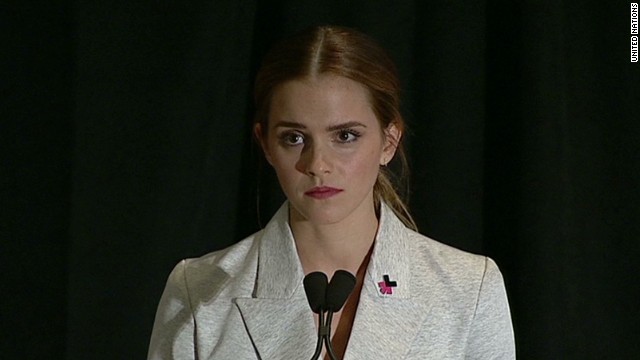
Through A Glass Darkly: Emma Watson's passionate advocacy of Popular Feminism at the UN Women's launch of the "HeForShe" initiative in September 2014 broke with 40 years of feminist process by inviting men and boys to become part of the struggle to end gender inequality. Bitter experience had taught Second Wave feminists that this was a struggle best fought by women, for women, and on women's terms. In the immortal words of Frederick Douglass: "Power concedes nothing without a demand."
 
“I AM INVITING YOU to step forward, to be seen to speak up, to be the ‘he’ for ‘she’. And to ask yourself if not me, who? If not now, when?” That was the challenge thrown down to men and boys around the world by the British actor, Emma Watson, at the launch of the HeForShe movement in New York City last year. The brainchild of UN Women, the UN organisation dedicated to gender equality and the empowerment of women, HeForShe openly solicits the support of men in the struggle for gender equality – tacitly acknowledging the success of patriarchal resistance to the further extension of women’s rights internationally.
 
Watson spoke movingly of her own conversion to feminism and of the many “inadvertent feminists” who had made it seem natural for her to be treated as an equal. But she also made reference to the declining influence of feminism as a mobilising ideology.
 
“I was appointed six months ago and the more I have spoken about feminism the more I have realized that fighting for women’s rights has too often become synonymous with man-hating. If there is one thing I know for certain, it is that this has to stop.”
 
Watson’s speech thus resurrected the line of argument which some of the early advocates of what came to be known as “Second Wave Feminism” deployed in their quest for male allies.
 
“We don’t often talk about men being imprisoned by gender stereotypes but I can see that that they are and that when they are free, things will change for women as a natural consequence … Both men and women should feel free to be sensitive. Both men and women should feel free to be strong. It is time that we all perceive gender on a spectrum not as two opposing sets of ideals.”
 
Subsuming the struggle for women’s rights in a grander battle for the freedom of both sexes did not, however, strike many 1970s feminists as a particularly effective strategy for securing their own liberation. Their personal experiences as political activists told them that any movement for gender equality in which men participated as full and equal partners would inevitably end up being dominated by men, and reflect a masculine view of the world. Women found their own voices much more readily in groups with a “Women Only” membership rule.
 
This herstory is well known to the New Zealand spokeswoman for HeForShe, Sue Kedgely. As one of the Founding Mothers of Second Wave Feminism in New Zealand, she is well aware of the movement’s organisational evolution. All the more surprising, then, that she should be the one inviting all good Kiwi blokes to don their shining armour and ride to the rescue of the world’s damsels.
 
Never backward in coming forward, Kedgely kicked off the New Zealand HeForShe effort, launched in Wellington on Friday (27/11/15) afternoon, by signing up the realm’s leading knight – and Governor-General – Sir Jerry Mateparae. Other high-profile fellas signing on to this noble, global quest to secure gender equality by 2030 include broadcasters Wallace Chapman and Jack Tane; economist and philanthropist, Gareth Morgan; and comedians Te Radar and Jeremy Ellwood.
 
If you’re a bloke and also feel moved to support this new cause of “Popular Feminism”, then simply pay a visit to the website and sign on.
 
Just be aware, though, that not every feminist shares Emma Watson’s views. Responding to her New York speech, feminist columnist, Clementine Ford, wrote in the Sydney Morning Herald of 27 September 2014:
 
“It’s true that a person like Watson is very well placed to inspire people who may still be labouring under the weight of stereotypes regarding feminism, and that is undoubtedly cause for celebration. I applaud her for being brave enough to speak out when so many others haven’t. But feminists have been battling these stereotypes for decades and we will almost certainly be battling them for years to come because the unfortunate truth is that gender inequality is about power – who has it, and who wants to retain it. No amount of window dressing (for that is surely what the HeForShe campaign amounts to, given its entire breadth seems to be asking men to click a button and download a twibbon) is going to change the systemic global oppression that results in women’s degradation, subjugation and death in persistently high numbers. And it isn’t, as some have suggested, ‘tearing another woman down’ to want to discuss that reality.”
 
To which, as a “He”, I am happy to stand and say to that particular “She”:
 
“Right-on Sister!”
 
This essay was posted on The Daily Blog and Bowalley Road of Saturday, 28 November 2015.

Friday, 27 November 2015

Build Now - Save Later

Little Edens: These new houses bear testimony to the success of the Waimahia Inlet Special Housing Area in Weymouth, Auckland. At between $350,000 and $540,000 each, however, these houses are still far beyond the resources of those in the most urgent need of accommodation. Houses for the poorest New Zealanders are still in critically short supply. Tackling homelessness now will reap significant social benefits in the years to come.
 
WHY IS THE GOVERNMENT so reluctant to get its hands on the housing crisis? Reviewing its performance over the past seven years, it is clear that John Key is prepared to do just about anything to reduce homelessness – except build the houses that people so desperately need.
 
In Auckland, where the crisis is most acute, Dr Nick Smith keeps announcing the creation of Special Housing Areas (SHAs) to streamline the building consent process. Nine more of these were promulgated by the Minister for Building and Housing on Monday, bringing the tally to 106 SHAs – space for upwards of 48,000 new homes!
 
Dr Smith is inordinately proud of his creation. But, having made space for all these mini-Edens, the Minister, like the Creator God of the Book of Genesis, has simply blessed the property developers, instructed them to “be fruitful and multiply”, and withdrawn from the scene.
 
Actually building houses, in numbers sufficient to significantly reduce homelessness, is not something this government believes the state should be doing. It is the National Party’s firm belief that the actual process of house construction should be left to the market’s “invisible hand”. (Presumably, the one wielding the invisible hammer!)
 
Unfortunately for Dr Smith, the Market has so far displayed minimal interest in constructing homes for poor people. (Or even, it must be said, for tolerably well off people.) According to the Labour Party’s Housing Spokesperson, Phil Twyford, the Auckland City Council has been able to account for only 102 houses completed in Dr Smith’s SHA’s since 2013.
 
“We now officially have more Special Housing Areas than actual houses built in them”, quips Mr Twyford. “The consenting rate still languishes at 4300 below the 13,000 new homes Auckland needs every year just to keep up with population.”
 
It’s important to understand that this exchange between Dr Smith and Mr Twyford is not about homes constructed for the poorest New Zealanders. These two politicians are merely debating the building of homes per se. In some parts of Auckland, the average price of one of these per se homes is fast approaching (or long ago exceeded) $1 million dollars. Hardly the sort of small change your average, poverty-stricken Kiwi family is likely to find down the back of the sofa!
 
Labour’s housing policy (assuming it remains Labour’s policy) is called Kiwibuild. It envisions the construction (by private developers) of 100,000 “modern affordable homes” over ten years for first-home-buyers.
 
Just how the very poorest New Zealanders are supposed to pay for a “modest entry-level home” priced at around $300,000 Labour does not explain. (And that $300,000 figure, cited when the policy was first released back in 2012, has likely inflated to around $500,000 in the current Auckland property market.)
 
Kiwibuild would, however, assist a great many young, middle-class couples into their first home – which is, unquestionably, a good thing. But, it would do little to address the acute shortage of low- and no-cost emergency accommodation which is presently forcing Maori, Pasifika and immigrant families into doubling- or tripling-up with relatives and friends. That’s when they’re not driven to sleep in caravan parks, under bridges, or in their cars.
 
The Finance Minister, Bill English, has, for some time, been arguing for a whole new approach to managing the burgeoning cost of New Zealand’s welfare state. By intervening early, says English, the State can save millions – quite possibly billions – of taxpayer dollars. Children raised in poverty, whose lack of a stable home environment often requires a host of extremely costly state interventions in later life, could, if targeted early for state assistance, end up becoming net contributors to society.
 
The rapid construction by Housing New Zealand of thousands of units of emergency accommodation would not only contribute to the well-being of thousands of New Zealand’s poorest and most vulnerable citizens, but would also largely pay for itself. Well-designed, warm, and energy-efficient, such units could be provided free-of-charge – at least initially – while their occupants lives were restored to some sort of order. Once family life had stabilised, regular rental payments could begin.
 
English’s actuarial approach to welfare would require considerable political courage to implement. The trick, electorally speaking, would be to demonstrate the huge potential savings in Vote Health, Vote Education and Vote Corrections. National’s slogan could be: “A tax-cut to every voter who provides a future for every child.”
 
This essay was originally published in The Waikato Times, The Taranaki Daily News, The Timaru Herald, The Otago Daily Times and The Greymouth Star of Friday, 27 November 2015.