Tuesday, 22 August 2023

The Radical Consequences Of Doing As Little As Possible.

The Man With His Hand On The Handbrake: NZ First’s participation in government is defined not so much by what it does, but by what it prevents its coalition partners from doing. Photo by Richard Harman.

IN THE NORMAL COURSE OF EVENTS New Zealand general elections are won and lost in the centre-ground. Even under MMP, the multiplicity of parties is more apparent than real. For the most part, the minor parties are ideological outriders, positioned to the left or right of the more moderate political sentiment pursued by the majors. When National showed signs of losing its taste for economic reform, Act stepped forward to keep it honest. When Labour embraced neoliberalism in the 1980s, it spawned a succession of protest parties: NewLabour, the Alliance, the Greens; to keep the progressive flag flying. It is, therefore, a pretty straightforward exercise to work out who will go with whom after the votes have been counted. Everyone knows that the outriders have only one credible choice of coalition partner.

What makes the NZ First Party such a difficult political proposition is that it is the only party which claims the centre – not the centre-right or the centre-left – as its natural home. Since its foundation in July 1993, NZ First’s consistent pitch to voters has been that National and Labour are fraudulent centrists: pretending to moderation while secretly embracing extremism. Coming from the National Party, the founder and leader of NZ First, Winston Peters, has witnessed at close hand the enormous political effort required to prevent New Zealand’s business and farming interests from bending successive governments’ economic and social policies to their will. Peters knows what a radical undertaking the defence of moderation has always been.

Radicalism of any sort is disruptive, and the sort of radical populist interventions required to thwart the predatory intentions of the Australian banks, big business, the agricultural sector, large public sector unions and iwi-based corporates must entail major disruptions. This explains the unabashed hostility towards NZ First which has become the default position of virtually all the other political parties. They know that any coalition relationship with Peters and NZ First is bound to involve the frequent use of the party’s infamous “handbrake”. NZ First’s participation in government is defined not so much by what it does, but by what it prevents its coalition partners from doing.

The first coalition government of which NZ First was a part illustrates the political dilemma created by the mere presence of a genuinely centrist party. The changes demanded by NZ First were small-scale, but very popular: free doctor’s visits for children under six years old; generous concessions for superannuitants. They were bearable. But, NZ First’s refusal to support any further privatisations of municipally- and/or state-owned enterprises most certainly was not. National’s “dries” could not countenance such a direct challenge to the core tenets of neoliberalism. The successful plot, first to oust Jim Bolger (the coalition’s enabler) and then to dismiss Peters and his party, gave the lie to National’s pretentions to moderation. It also illustrated in the most vivid terms the radically disruptive effect of, in effect, doing nothing.

NZ First’s coalition with Jacinda Ardern’s Labour Party also illustrates the disruptive effect of centrist aspirations, this time from the point of view of a populist party which had quickly become profoundly alarmed at both the inexperience of its senior coalition partner’s ministers, and what its leader and his colleagues were persuaded was the extremism of some of those ministers’ ambitions. It was not long before NZ First was reaching for the handbrake – most notably in relation to Labour’s preference for a Capital Gains Tax. Here, again, we see NZ First’s strong reluctance to disturb the status quo. Tax-free capital gain constitutes a vital part of New Zealand’s small enterprises’ business model. Peters was unconvinced that his Labour colleagues fully grasped the likely consequences – economic and cultural – of introducing a CGT.

Peters’ apprehension concerning the extremism permeating Labour’s parliamentary ranks was subsequently borne out by the eventual release of the He Puapua Report. The fact that the far-reaching recommendations of this guide to New Zealand becoming fully compliant, by 2040, with the United Nations Declaration of the Rights of Indigenous Peoples had been kept from them was bitterly resented by NZ First and its leader.

Had it known about He Puapua, it is likely that NZ First, by campaigning strongly against it, would have remained above the 5 percent MMP threshold. While it is probable that the 2020 general election would have freed Labour from the need for NZ First’s support, Peters’ mere presence in the House would have strengthened the opposition to Labour’s decolonisation and indigenisation efforts significantly. In these circumstances, Act’s opinion poll support may not have surged so dramatically, and the 2023 electoral battlefield would look quite different.

Certainly, Act’s implacable opposition to serving alongside Peters and his colleagues in a National-Act-NZ First coalition government lends strength to the argument that political parties determined to keep the actions of a multi-party government within the parameters of public tolerance cannot avoid having a decisive impact on its conduct.

A National-led government committed to a purely ameliorative programme vis-à-vis infrastructure, housing, health and education would, surely, welcome the support of a similarly inclined NZ First? That the National leader, Christopher Luxon, has, to date, had so little to say on whether he would, or would not, welcome Peters’ participation in a coalition government, suggests strongly that his party’s ambitions fall well short of the grandiose. Unfortunately for Luxon, the same cannot be said for the ambitions of David Seymour and Act.

Act’s radicalism may yet prove its undoing. Were Peters and NZ First to retire to the cross-benches, promising their support for any confidence motion in a National-Act minority government (in much the same way as the Greens promised their support for a Labour-Alliance minority government back in 1999) Luxon would become New Zealand’s next prime minister. The downside of this arrangement would be that he and his party would be governing as hostages to Act’s extreme policy agenda.

While NZ First could vote for those items on National-Act’s agenda enjoying majority support, and for which it had also campaigned, this would not be the case when it came to Act’s hardline economic and social policies. As the time for National-Act to present their first Budget drew near, the question of whether Peters’ promise of confidence also included “supply” would become increasingly acute.

Were NZ First to say “This far – but no further!” and join with Labour, the Greens and Te Pāti Māori in voting down a cruel austerity Budget, a new election would have to be called. With Act having demonstrated what it is made of, Peters and NZ First might humbly invite the electorate to provide National with a less extreme coalition partner. One not so determined to force unkind and unwanted policies down the electorate’s throat.

Of course, all the pundits will opine that any party forcing a snap election so soon after a general election will be punished mercilessly by the voters. It is possible, too, that if given the option of a second crack at getting the country back on the right track, the electors might opt for Labour-Green-Te Pāti Māori. Then again, a great many of those same electors, marvelling at the political magic of the Great Centrist Showman, might give him exactly what he asks for – thereby confirming the radical consequences of doing as little as possible and as much as necessary.


This essay was originally posted on the Interest.co.nz website of Monday, 14 August 2023.

The Pity And The Terror.

A Public Catharsis: Such was the effect which the authorities of 300 years ago were hoping to elicit from the “drama” of a public execution. The judicial killing of felons was not simply a matter of the state exacting retribution. Executions were carried out in public because only by allowing the public to participate in the fear and the horror of the criminal’s demise, could its own fear and horror be expunged.

HOW MANY made the one-way journey from the Tower of London and Newgate Prison to Tyburn? According to Alfred Marks, author the grim, 115-year-old tome entitled Tyburn Tree, the answer is – a lot.

“Of this crowd there exists no census, we can but make a rough estimate of the number of those who suffered a violent death at Tyburn: a moderate computation would place the number at fifty thousand.”

Many more came to watch.

“The long road [was] thronged with spectators flocking in answer to the invitation of the State to attend these spectacles, designed to cleanse the heart by means of pity and terror.”

As the two major political parties vie with each other for the coveted title “Toughest On Crime”, the worrying question arises: How many New Zealanders would turn out to witness the public execution of convicted felons in 2023?

If it was the State issuing the invitation, the answer would, almost certainly, be – a great many. Tens of thousands would likely gather to see the guilty punished if public executions were, once again, officially sanctioned. With somewhere between a quarter and a half of the population believing that capital punishment is an effective and morally justifiable deterrent to murder, attracting a crowd would not be a problem. But, would the gruesome spectacle still retain the power to “cleanse the heart by means of pity and terror” in 2023 that it is said to have possessed in 1723?

That phrase – “cleanse the heart” – is difficult for those living in the Twenty-First Century to interpret. Perhaps the easiest way to grasp its meaning is to watch the American movie Dead Man Walking – one of the best cinematic examinations of capital punishment ever produced. In the light of what the film allows us to learn about its guilty protagonist, his execution is indubitably a mixture of pity and terror, and the audience’s hearts are purged of these powerful emotions by the overwhelming nature of the experience. The Ancient Greeks called it the moment of “catharsis” – from the Greek katharsis, meaning to cleanse or purify.

This was exactly the effect which the authorities of 300 years ago were seeking to elicit from the “drama” of a public execution. The judicial killing of felons was not simply a matter of the state exacting retribution. Executions were carried out in public because only by allowing the public to participate in the fear and the horror of the criminal’s demise, could its own fear and horror be expunged.

That the whole bloody business strikes us as barbaric and morally indefensible is because the modern state no longer accepts that its duty extends to dispensing therapeutic fear and horror for the benefit of its citizens. Our justice and correction systems strive to treat those that fall into their bureaucratic clutches as broken – not bad – individuals. Even where capital punishment endures – as in the United States – the execution of felons is hidden away from public view, and justified in terms of deterring future crime. (Even if, in Texas, it more resembles state-sanctioned sadism than justice.)

And yet, the past still contrives to intrude, even in these modern executions. From the safety of the prison’s viewing-room, the relatives of the victim/s are permitted to witness the demise of their loved one’s killer. Even in 2023, that all-important moment of catharsis is still recognised as the right of the wronged. When the fear and horror, the pity and terror, of victim and slayer alike, finally meet and merge in Death’s dark shadow.

Alfred Marks ends his dismal history with the very modern observation that while honouring the religious martyrs who died at the stake, and upon the gallows, “let us not forget the thousands of martyrs for whom no one has claimed the crown of martyrdom – the martyrs to ferocious laws, not seldom put in force against the innocent, the martyrs to cruel injustice, to iniquitous social conditions. Thousands have had the life choked out of them at Tyburn on whom pity might well have dropped a pardoning tear: to whom compassion might well have stretched out a helping hand.”

They might have – and sometimes they do. But, in the imagination of too many of us the Tyburn Tree still looms, its hideous fruit made sinfully palatable by the deadly, holy, communion of a heart-cleansing catharsis.


This essay was originally published in The Otago Daily Times and The Greymouth Star of Friday, 18 August 2023.

Not In It For Them.

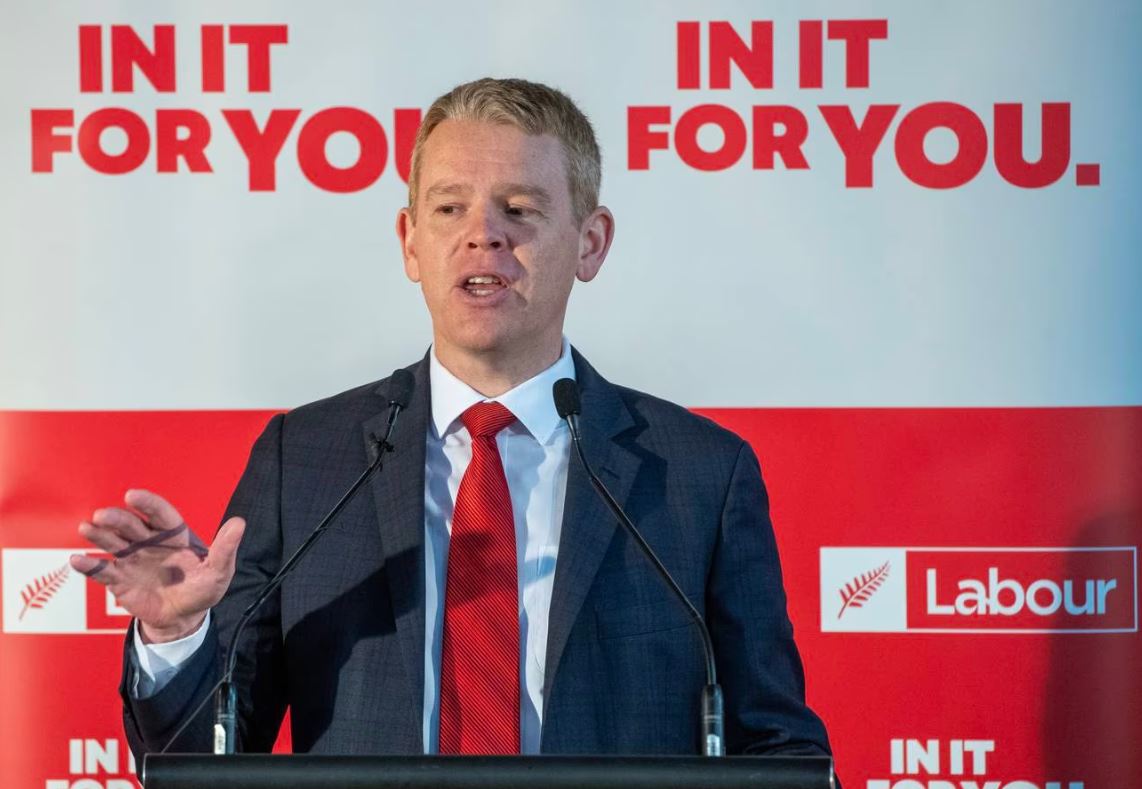
In It For Your Votes: Political momentum comes from announcing policies (like removing GST from fruit and veges) that you already know “your people” want. Call that cynical if you want to, but it’s a helluva lot better than announcing policies your supporters don’t want (like pushing up the price of petrol).

OH DEAR, OH DEAR, OH DEAR, the political class is extremely displeased with the Labour Government. Against all responsible advice, the Prime Minister has announced the removal of GST from fresh and frozen fruit and vegetables. Who knew there were so many economists and tax lawyers in our unhappy little nation? Or that they could all become so very cross on cue? We shouldn’t be surprised, though. Not really. A state so bereft of sensible tax policy did not get that way by accident. How many economists and tax lawyers does it take to prevent a meaningful redistribution of wealth? Now we know.

And oh, what a giveaway. All these middle-class objections. All these silly, cavilling, nit-picking political journalists. None of them able to see what’s happening right in front of their upturned noses. All of them arrogantly unaware of their starring role in Chris Hipkins’ shrewd political drama. If they realised that what they are doing is exactly what Labour’s strategists want them to do, I wonder, would they go on doing it? Probably. These newshounds have heard Pavlov’s bell ring one too many times.

So, what is Chippy’s cunning plan? Why is the sound of the whole Press Gallery criticising his GST policy music to the Prime Minister’s ears? Simple really. When Labour’s electoral base hears the media pack howling down a policy aimed at helping the sort of people political journalists wouldn’t be seen dead with, then they are even more disposed to give “their” party the big thumbs up.

The same principle is at work in relation to the condemnatory commentary of the economists and tax lawyers. They’re experts, remember, extravagantly rewarded shills who think they know best. And who, these days, trusts extravagantly rewarded shills who claim to know more about your world than you do? The more the “experts” criticise Labour’s policies, the more credibility those policies acquire. To paraphrase the old pro-MMP poster: “If you want to know why you should back Labour’s GST policy, then just take a look at the people telling you not to.”

A cynical and manipulative misuse of the post-Covid zeitgeist by politicians who have lost even the memory of their moral compass? Well, duh! How else would Labour’s critics suggest it recovers the political momentum it has so clearly lost? (Thanks Stuart. Thanks Michael. Thanks Kiri.) And, no, the answer has nothing to do with releasing the sort of policy that makes old lefties like me jump to their feet and cheer. We are a wasting electoral asset – fewer of us to cheer with every passing year. No, political momentum comes from announcing policies that you already know “your people” want. Call that cynical if you want to, but it’s a helluva lot better than announcing policies your supporters don’t want.

And, sorry, but if the word from Labour’s strategists is to be trusted (a big “if” I’ll grant you!) then a wealth tax and a capital gains tax both fall into the category of policies the average Labour voter doesn’t want. Chippy and his inner circle, ably assisted no doubt by Talbot Mills, “focus-grouped” the “tax switch” put together by Grant Robertson and David Parker, and the assembled “ordinary voters” are said to have given it the big thumbs down. God knows why. But, God’s not answering his cellphone.

So, what’s a government to do? It gets sneaky, that’s what it does.

When Nicola Willis told the world that Labour was planning to take GST off fruit and vegetables, my first thought was that someone in Treasury or the IRD had leaked it. Some dyed-in-the-wool neoliberal for whom the very idea of messing with New Zealand’s “pure” goods and services tax was an abomination. Some bureaucrat who thought that by allowing National to release the information early, the Government would be warned-off the idea by the vociferously negative response. But, now, I’m not so sure. Now, I’m coming round to the idea that it was actually Labour’s campaign-team that leaked the GST policy to National.

Think about it. Robertson’s and Parker’s tax package allegedly tested badly with the punters, so Chippy issued his “Captain’s Call” and pulled the plug. But, the polling agencies reported solid support for the idea – raising the possibility that Captain Chippy had made the wrong call. With Labour still needing to make some announcement on tax, someone needed to come up with a cunning plan – and soon.

In retrospect, the plan was better than cunning – it was brilliant.

Labour leaks its GST policy to National. National denounces it. The media follows suit. The Old Left decries the initiative as too little, too late. The economists and tax lawyers join the debate. They are not impressed. It looks as if Labour is on a hiding to nothing with its GST policy.

Except, while all this is going on, Labour’s pollsters are hard at work measuring the reaction of Labour’s working-class supporters to the GST off fresh fruit and vegetables policy. No focus-groups this time, but honest-to-goodness scientific opinion sampling. And, guess what? The poll data showed Labour’s electoral base loving the policy. They were all for it. Chippy and his team were on to a winner.

More to the point, all that negativity from the Nats, Act, the news media and, of course, the “experts”, hadn’t dimmed the party’s enthusiasm. Labour voters weren’t responding with their heads, but with their hearts. As far as they were concerned, Labour was doing something to help people like themselves: people without fancy degrees and six-figure salaries; people without mortgage-free houses and tons of money in the bank; people with no reason to like or trust the pointy-heads putting the boot into Labour’s plans.

Chippy’s and Robertson’s speechwriters got it. From now on, like Donald Trump, they would “love the poorly-educated”. Now there was no need to justify Labour’s policies to the economists and the tax lawyers, no need to fear the woke media pack. So long as the Prime Minister and his Finance Minister kept reiterating that they weren’t introducing the policy to win the approval of the “purists”. So long as they insisted that they were changing the rules for the benefit of “all those people out there who are doing it hard”.

Cynical? You bet! Socialist? Don’t be silly! But, you know what? It works. The louder the political class howls its disapproval, the tighter Labour’s voters close ranks around “their” party.

Who would have thought it was so easy?

POSTSCRIPT: Easy it might have been, but, true to form, this Government refused to be guided by its own political insights. Any good that might have been done for Labour's election chances by removing GST from fruit and veges was undone completely by Hipkins' decision to add 12 cents to the price of a litre of petrol over the next three years. The consequences of this insane announcement were promptly captured by the 1News/Verian Poll released on Monday, 21 August 2023. Labour's popularity had fallen by 4 percentage points to 29 percent. That's pretty much "Game Over" for Chippy and his mates. Didn't have to be, but, as one of those Ancient Greeks put it: "Those whom the Gods seek to destroy they first make mad." And, right now, Labour is barking.  – C.T.


This essay (except for the postscript) was originally posted on The Daily Blog of Wednesday, 16 August 2023.

Monday, 14 August 2023

The Politics Of National Security.

Strategically Challenged: Of the threats listed by Defence Minister Andrew Little one can only observe, grimly, that they are universal. Every nation state must take precautions against “terrorism, cyberattacks, transnational crime, mis- and disinformation”, even if each state’s degree of vulnerability to these evils is a product of their ideological and political deportment vis-à-vis the rest of the world. 

THE RELEASE of New Zealand’s first National Security Strategy document revealed the inevitable limitations of such exercises. The gravest threats to any nation state are always and everywhere political. From fanatical ideologues ready and willing to commit acts of political violence to advance their cause, to political parties eager to exercise the tyranny of the majority over insubordinate minorities, it is politics that constitutes the most profound threat to the safety of the state. In a democracy, however, any official attempt to designate a political party or movement as a threat to national security would be decried as an outrageous attempt to screw the political scrum. Strategy documents relating to national security must, therefore, be so general in scope as to be useless for alerting the population to the dangers posed by specific political actors.

Which is not to say that historically there have not been instances of the New Zealand state’s security apparatus singling out a political party as a threat to national security. In common with most capitalist countries, the New Zealand state identified its local Communist Party as a palpable threat to the nation’s safety.

Most New Zealanders associate anti-communist witch-hunts with “McCarthyism” and the Cold War, but the truth is the New Zealand state, in the guise of the Police Special Branch, had been watching and harassing New Zealand communists ever since the Bolshevik Revolution of October 1917. It is certainly the case, however, that the coincidence of the McCarthyite “Red Scare”, the Korean War, and the hugely disruptive New Zealand Waterfront Lockout, contrived to bring this country’s power elites perilously close to identifying the parliamentary Opposition – Labour – as a national security threat.

The Lockout itself spawned a State of Emergency, complete with a suite of “Emergency Regulations” which effectively suspended New Zealanders’ democratic liberties for the duration of the crisis. This led to the Leader of the Labour Opposition, Walter Nash, being physically prevented from addressing a public meeting on the deepening crisis by a burly Police sergeant. With the Waterside Workers Union defeated, and the State of Emergency lifted, the National Prime Minister, Sid Holland, shrewdly sought retrospective validation for his Government’s actions by calling a snap-election for September 1951.

According to Otago historian Tom Brooking: “The campaign was probably the dirtiest in New Zealand’s political history. National declared that the election was a contest between ‘The People versus the Wreckers’. Hackneyed old stories that Nash had once been a bankrupt were dredged up and his earlier visit to Russia was cited as proof of his communist leanings.”

In the febrile atmosphere of Cold War hysteria and post-Lockout retribution which overshadowed the election campaign (a situation which New Zealand’s conservative newspapers were only too happy to inflame) Labour did not know which way to turn. Unsurprisingly, it was trounced by Holland’s National Party, which secured a 20-seat majority and an impressive 54 percent of the popular vote.

It was to shake-off the red-baiting slurs of the National Party and the conservative press that the Labour Party, in June of 1951, abandoned its explicitly socialist commitment to “the socialisation of the means of production, distribution and exchange”. While the party’s official colour remained a fiery revolutionary red, the complexion of its policies tended more and more towards a conciliatory pink.

To describe Labour’s policies for the 2023 General Election as “pink” would flatter them enormously. The truth is that, colour-wise, they’d fit snugly between green and blue on the ideological spectrum. Certainly, it would be bizarre to cast Defence Minister Andrew Little’s summation of New Zealand’s national security position in revolutionary colours:

Aotearoa New Zealand is facing more geostrategic challenges than we have had in decades - climate change, terrorism, cyberattacks, transnational crime, mis- and disinformation, and competition in our region which, up until recently, we thought was protected by its remoteness.

For a start, New Zealand’s “geostrategic” position is exactly where it has always been – next to Australia and far away from everybody else. In relation to climate change, it enjoys a relatively benign position vis-à-vis those continental nations currently caught between devastating heatwaves and cataclysmic flooding. As the past few months have amply demonstrated, New Zealand is not immune from the effects of global warming, but it is better positioned than many of its allies – and most of its enemies – when it comes to surviving the threat of climate change.

As for the other threats listed by Little, one can only observe, grimly, that they are universal. Every nation state must take precautions against “terrorism, cyberattacks, transnational crime, mis- and disinformation”, even if each state’s degree of vulnerability to these evils is a product of their ideological and political deportment vis-à-vis the rest of the world. If Sweden moves against its citizens’ freedom of expression by banning the desecration of the Koran, then its chances of experiencing an Islamist terrorist attack will be diminished. If New Zealand’s Defence Minister allows himself to be bullied by New Zealand’s Five Eyes partners into signing-up to Pillar 2 of AUKUS, then our exports to China are certain to suffer. In both cases, the outcome will be determined by the respective governments’ political choices – and, because both nations are democracies – the will of their people.

Were Little not constrained by New Zealand’s political conventions, he would be free to identify what really is the single gravest threat to this country’s national security – the Act Party.

If Act finds itself in a position to drive forward its core economic, social and constitutional programme, then the political reaction produced will likely be beyond the capacity of the New Zealand state to manage – without resorting to deadly force. Of course, the presence of blood in the streets will only increase the threat of terrorism, cyberattacks, crime, mis- and disinformation dramatically – most probably to the extent of civil war. The New Zealand state would, doubtless, emerge as the victor of this fratricidal/racial struggle (states almost always win) but only at a truly appalling cost in blood and treasure. New Zealand’s national security would require decades to restore.

But, Little cannot brand Act a threat to national security – not without exposing Labour (and all the other parties) to an equivalent charge. As a democracy, the New Zealand state is obliged to wear the consequences of the people’s electoral choices. If those choices amount to unleashing an existential threat to the safety of the state, then it is only because the nation’s politics have decayed to the point where a dangerous percentage of the population no longer considers it safe to abide by the collective judgement of their fellow citizens.

If the franchise is used as a weapon, then fewer and fewer people will find themselves in a position to accept its judgements with equanimity. The moment the preservation of national harmony ceases to be the fundamental purpose of New Zealand’s electoral politics, then safeguarding its national security becomes an impossibility.


This essay was originally posted on The Daily Blog of Friday, 11 August 2023.

Monday, 7 August 2023

Lord Liverpool's Ghost.

Taking It From The Top: Though more than a century has passed since the outbreak of the First World War, there remains a deeply-embedded fraction of the New Zealand state apparatus which continues to regard New Zealand as simply a loyal cog in a much larger and more powerful imperial machine. Like their forebears, these civil servants see no meaningful role for the democratic public in determining matters of national security and defence.

WHEN NEW ZEALAND WENT TO WAR on 5 August 1914 it was by vice-regal declaration. The Governor of New Zealand, Arthur William de Brito Savile Foljambe, the Second Lord Liverpool, chose to announce the commencement of hostilities with Germany from the steps of what is now the General Assembly Library. Although the country’s leading politicians were gathered around him, there wasn’t even the slightest nod in the direction of democracy. Neither the House of Representatives, nor the Legislative Council, saw any need for debate. In London the King-Emperor, George V, acting upon the advice of his ministers, had declared war, and as a loyal Dominion of the British Empire, New Zealand fell in behind the “Mother Country” without hesitation.

Though more than a century has passed since the outbreak of the First World War, there remains a deeply-embedded fraction of the New Zealand state apparatus which continues to regard New Zealand as simply a loyal cog in a much larger and more powerful imperial machine. Like their forebears, these civil servants see no meaningful role for the democratic public in determining matters of national security and defence. Thankfully, they are no longer so arrogant as to sanction a declaration of war without allowing Parliament to go through the motions of democratic debate. The possibility that a solid majority of MPs might decline to follow their advice would not, however, occur to them.

That this fraction remains so sure of itself on matters of national security and defence is rather odd. At least three times in the last 50 years, its expectations have been overturned by a democratically elected government – all of them Labour. The first rejection came in 1973, when Prime Minister Norman Kirk astonished the world by sending a New Zealand navy frigate to protest French atmospheric nuclear testing at Mururoa Atoll. The second came in the mid-1980s, when Prime Minister David Lange refused to renege on Labour’s promise to create – and enforce – a nuclear-free New Zealand. The third occurred in 2003, when Prime Minister Helen Clark and her Labour-led Government refused to join the USA, the United Kingdom and Australia in their illegal invasion of Iraq.

In all three cases the reaction of what some now refer to as the “Deep State” was one of alarm and embarrassment. Of the five digits making up the Anglo-Saxon fist, New Zealand is obviously the “pinkie finger”. When the USA, the UK, Canada, and Australia set out to deliver a geopolitical blow, New Zealand is expected to contribute to its impact – not witter on to the rest of the world about morality and international law.

It is the job of the defence chiefs, the national security apparatus, and the Department of Prime Minister and Cabinet to make sure that when the “Empire” (aka “The Five Eyes”) delivers its orders, New Zealand stands to attention and salutes. Any wayward lefties are to be brought into line by the defence and security experts who best understand New Zealand’s permanent interests – and know who its friends are. Failure to secure the pinkie-finger’s compliance can only mean a huge loss of face for all those Kiwi soldiers and spooks who, for years, have been reassuring their Anglo-Saxon colleagues that everything is under control.

The democratic public (as opposed to the leading financial, commercial, industrial and farming interests, for whom democracy is either an irritating distraction from the all-important job of generating profits for shareholders, or a genuine threat to same) have never warmed to the idea of expending blood and treasure for the greater glory of British and American imperialism.

As a people living in one of the oldest enduring democracies on Earth, albeit a very small one, New Zealanders have long grasped the concept of “soft power”. Going all the way back to the Liberal Government of Balance and Seddon (1891-1912) the democratic public have revelled in their country’s description as “the social laboratory of the world”. In both the League of Nations and the United Nations, New Zealand has taken advantage of the fact that it offers not the slightest military threat to anyone to become a consistent voice for peace, justice and the rule of international law.

It is interesting to note that Sir Robert Jones’ New Zealand Party (1983-93) although resolutely free-market in its economic outlook, also advocated massive reductions in military expenditure and withdrawing New Zealand from the ANZUS alliance. Jones personally favoured following the example of the tiny Central American state of Costa Rica and abolishing the New Zealand armed forces altogether!

Such was the heterodox political environment out of which the Fourth Labour Government’s anti-nuclear policy (and the United States’ angry reaction to it) gave birth to the broadly supported idea of New Zealand operating – and maintaining – its own “independent foreign policy”. That this was essentially Labour’s diplomatic position was strongly reinforced when Helen Clark eliminated the fighter-arm of the RNZAF and refused to participate the invasion of Iraq.

Small wonder, then, that Defence Minister Andrew Little’s release of the latest Defence Policy Review, and New Zealand’s first National Security Strategy, has elicited such a critical response from Helen Clark. As Clark herself notes, the documents bear all the hallmarks of those defence and national security “experts” whose primary allegiance has always been to the “Anglosphere” rather than the people of New Zealand. This was her tweet:

Defence policy and security strategy documents released in Wellington today [4/8/23] suggest that NZ is abandoning its capacity to think for itself and instead is cutting and pasting from 5 Eyes’ partners. Drumbeat from officials has been consistent on this for some time.

This is reminiscent of the Frank Corner-led Defence Committee of Inquiry of 1985 set up by David Lange, which in effect – and in the end unsuccessfully – tried to put brakes on the Govt’s nuclear free and independent foreign policy.

Now there appears to be an orchestrated campaign on joining the so-called ‘Pillar 2’ of AUKUS which is a new defence grouping in the Anglosphere with hard power based on nuclear weapons. New Zealand removed itself from such a vice when it adopted its nuclear-free policy.


It is extremely rare for a former Labour prime minister to intervene in a live policy debate with such acerbic force. Clark’s tweet (viewed more than 90,000 times and counting) indicates just how seriously these documents, formulated under Chris Hipkins’ Labour government, threaten the legacies of Kirk, Lange and Clark herself.

On display in Little’s defence of these documents is just how far the centre-left of New Zealand politics has drifted from the foreign-policy and defence shibboleths of even 20 years ago. What we appear to be witnessing is the same moral surrender that accompanied the “Red Scare” of the early 1950s, when Labour abandoned its traditional socialist objectives out of fear of being branded Red China-loving “commies”. Indeed, it would not be surprising, at this point, to hear Little say that he his “neither for, nor against” New Zealand having a nuclear-free and independent foreign policy. (Just as the Labour Opposition leader, Walter Nash, infamously declared that Labour was “neither for, nor against” the Watersiders during the bitter Waterfront Lockout of 1951.)

Those passing the steps of the General Assembly Library late at night should not be surprised to encounter the ghost of Lord Liverpool – smiling.


This essay was originally posted on the Interest.co.nz website of Monday, 7 August 2023.

Opting Out Of The Coalition Of Containment.


The dove is never free - Leonard Cohen
 

That there has been no outcry against the decision of the Australian government to purchase eight nuclear-powered submarines from the United States is astonishing. These formidable weapons of war are intended to patrol the waters of the Pacific and Indian Oceans – and their strategic choke-points – and should have occasioned loud protests from “nuclear-free” New Zealand.

RIGHT NOW, New Zealand is in a very awkward geopolitical position. Heedless of its vital economic relationship with China, the United States and its allies in the Indo-Pacific region are pushing New Zealand into a growing coalition of containment aimed at weakening the Chinese state and economy.

The most obvious outcome of this diplomatic pressure (and in all likelihood its purpose) will be a sharp deterioration in the Chinese-New Zealand relationship. Most probably, Chinese displeasure will be expressed through restrictions on New Zealand exports. Not that the United States and its allies will make good any consequential losses to New Zealand’s economy. The Coalition of Containment’s sole purpose in precipitating such a break is to erase the irritating question-mark beside New Zealand’s name on its list of “trustworthy” allies.

New Zealand’s national security apparatus, whose loyalty to the people of New Zealand, as opposed to the decision-makers in Washington, London and Canberra, has always been open to doubt, has been pushing the Labour Government hard in the direction of Uncle Sam’s Coalition of Containment. Its efforts have, as usual, been seconded by all the usual suspects in the mainstream news media. (As well as some interesting recruits from the blogosphere!) The resulting upsurge in Sinophobia must be a source of considerable satisfaction to China’s enemies in New Zealand. It is unusual, these days, to hear a kind word spoken publicly about China – without the guilty party being subjected to the most vehement reproof.

That the Left has allowed itself to be drawn into this anti-Chinese discourse is especially disappointing. There was a time when the machinations of US imperialism were subjected to consistent and sophisticated critique by New Zealand communists and socialists, and even one or two intelligent members of the Labour Party. So effective were these critiques that the left-wing arguments advanced against such imperialistic interventions as the Vietnam War were able to win massive public support. The political upshot of such campaigns was a weakening of New Zealand’s relationship with the United States and its allies. The high-point of the Left’s influence on New Zealand foreign and defence policies came in 1986, when New Zealand withdrew/was excluded from the ANZUS Pact.

What passes for the Left in 2023, however, is, for the most part, content to echo the principal talking-points of US imperialism and its Nato accomplices. The obvious fiction that China is an aggressive power seeking global domination is repeated ad nauseum, along with the absurd charge that the Chinese government is overseeing a genocidal campaign against the Uighur population of Xinjiang. (It is a curious exercise in genocide that leaves twice as many Uighurs in Xinjiang today as there were 50 years ago!) It is no accident, however, that this “softening-up” of an historically ignorant Left, addicted to emotionally-charged international campaigns, preceded the creation of the Australian, United Kingdom, United States (AUKUS) military relationship in 2021.

That there has been no outcry against the decision of the Australian government to purchase eight nuclear-powered submarines from the United States is astonishing. These formidable weapons of war are intended to patrol the waters of the Pacific and Indian Oceans – and their strategic choke-points – and should have occasioned loud protests from “nuclear-free” New Zealand. At the very least, this present Labour Government might have been expected to gather the small nations of the South Pacific behind it in a concerted diplomatic effort to uphold – and enforce – the 1986 anti-nuclear Treaty of Rarotonga.

If New Zealand continues upon its current diplomatic trajectory its economically vital relationship with China cannot help being put at risk. Certainly, the pressure, both from Canberra and Washington, shows no sign of decreasing. Statement-by-statement, in language that demands much but offers little, Wellington is putting more-and-more distance between itself and Beijing. China is hoping that the hard, cold realities of making its living as a very small nation-state in a very large world will continue to keep New Zealand out of the flash new military leg-irons being fastened around the Indo-Pacific region by the United States.

But, hope is unlikely to be enough. Beijing needs to make New Zealand an offer it can’t refuse if it is to prevent the pinkie-finger of the Anglo-Saxon fist from clenching-up tight alongside its bigger brothers. A change of government in October could be just the opportunity Beijing is looking for.

Faced with mounting infrastructural and climate-related problems, and committed to reducing state spending, what might a National-Act coalition not agree to if presented with Chinese promises of massive investment in transport, housing, and climate adaptation/mitigation projects? Roads of national significance, electrification of the railways, extensive and intensive housing developments, taming rivers and hillsides: China’s done it all before, all over the world. Why not here?

And why stop there. Large-scale investment in renewable energy projects would set New Zealand up for a green re-industrialisation of the economy. Chinese companies will not be the only ones seeking-out nation-states with plentiful, cheap and reliable “clean” energy to offer investors in a post-carbon world.

Too much? Not when one considers that New Zealand 1.0 was built, almost entirely, out of British capital. Why shouldn’t New Zealand 2.0 be the creation of massive Chinese investment? Across the broad sweep of human history, imperialism has always been colour-blind.

Such a shift would, of course, entail a diplomatic revolution greater even that New Zealand declaring itself nuclear-free. Canberra, Washington, London and Ottawa would be livid. Accusations of treachery would be hurled at New Zealand by its former allies and, doubtless, all kinds of clandestine efforts would be set in motion to destabilise – even topple – its wayward government. Outright intervention would, however, be unlikely. It is difficult to persuade the world that China is the greatest threat to peace in the Indo-Pacific, when US Marines are splashing ashore on New Zealand beaches.

In the face of New Zealand’s diplomatic realignment, its South Pacific neighbours might also find it expedient to adopt a new stance vis-a-vis the neo-colonial objectives of the USA and its English-speaking allies. Pacific leaders might feel moved to inquire exactly what the United Kingdom thinks it is doing – again – in this part of the world. Were New Zealand to propose the creation of a South Pacific navy, dedicated to protecting and defending the resources within each member-state’s Exclusive Economic Zone, it might be surprised at the level of interest.

Especially if China offered to supply the patrol vessels.

Such a nightmare scenario could, of course, be easily avoided if the United States was willing to offer what China was ready to negotiate with New Zealand 15 years ago – a Free Trade Agreement. It has always been the easiest and, ultimately, the least costly option for the Americans: agree to take whatever New Zealand can send them – just as Great Britain did for the best part of a century. Just as China is doing right now.

But that would require US Imperialism to do what it has never done before: put the word “give” ahead of the word “take”.


This essay was originally posted on The Daily Blog of Friday, 4 August 2023.

The Dog That Doesn’t Bark.

Why You Lookin At Me? So, here we are. All out of charismatic and battle-hardened working-class guard-dogs. I’d wager that 99 New Zealanders out of 100 could not name of the Council of Trade Union’s current president.

“IS THERE ANY OTHER POINT to which you would wish to draw my attention?” Asks Gregory, the Scotland Yard detective. “To the curious incident of the dog in the night-time”, replies Sherlock Holmes. “But, the dog did nothing in the night-time”, says Gregory. “That was the curious incident”, says Holmes.

Those lines, from Sir Arthur Conan Doyle’s The Adventure of Silver Blaze, are among the most frequently quoted words of the celebrated consulting detective of 221B Baker Street.

As the Labour Government’s popularity continues to evaporate (26 percent in the latest Roy Morgan poll!) I cannot help pondering, like Holmes, why the labour movement’s guard dog, the Council of Trade Unions, has done so little to dispel the night-time that has settled upon Labour’s hopes.

On the face of it, the CTU should be making the case for a just and more equitable New Zealand. It should have been “organised labour” that led the charge for a dramatic overhaul of this country’s taxation system. When it became clear that the private sector could not be relied upon to build the state houses so desperately needed to pare-back a waiting-list of 24,000 desperate Kiwis, it should have been the CTU demanding the creation of a state-owned construction company to make good the market failure.

But, when I talk about leading the charge and issuing demands, I have in mind a CTU led by somebody cast from the same mould as Helen Kelly. Think back to the campaign Helen waged for the health and safety of forestry workers. Think of her steadfast defence of the film industry workforce against Sir Peter Jackson’s and Warner Bros’ wrath. Remember how she stood shoulder-to-shoulder with the maritime workers against the hard-nosed bosses of the Ports of Auckland. While Helen lived, so too did the CTU. In the glow of her lonely activism, other union “leaders” had to at least pretend to be in it for the working-class.

Now, as someone schooled in the heroic traditions of the American Socialist Party and the ideological bomb-throwers of the Industrial Workers of the World – “the Wobblies” – I can quote Eugene Victor Debs with the best of them: “I would not lead you into socialism even if I could”, he told his members. “Anyone who can lead you into socialism can lead you out again.” Even so, since 1984, the New Zealand working-class has had to endure more than its fair share of bad luck.

How different things might have been had Rob Campbell not been prevented, by a combination of illness and treachery, from being elected the CTU’s first president, and, after that, president of the Labour Party. Just think, New Zealand might have been blessed (cursed?) with its very own Bob Hawke and, as happened in Australia, the neoliberal revolution may well have been attenuated to a reform programme the working-class could learn to live with.

And then, thirty years later, Helen Kelly was elected president of the CTU. Once again, there was talk of a trade union leader wearing the double-crown of the labour movement. People dared to hope that a genuine leftist, the first since Big Norm Kirk, might exhort the Labour Party into, once again, making space on the political stage for the working people of New Zealand. Until, tragically, cancer cut her story short, and the traditional (as opposed to the woke) left could only contemplate the counterfactuals – the triumphs that might have been – through their tears.

So, here we are. All out of charismatic and battle-hardened working-class leaders. I’d wager that 99 New Zealanders out of 100 could not name of the CTU’s current president. Even fewer could cite the content of the turgid and timorous media statements it occasionally releases on matters economic, social and political. In the face of inflationary pressures unseen since the 1990s, buckling beneath the crushing weight of their household bills, working people have a right to expect their peak trade union organisation to be barking like a furious guard-dog in the night-time – not slumbering on a silk cushion like a pampered pup.

“The curious incident of the dog in the night-time.” But not that curious, not really. Not when you consider that the modern trade union movement does not exist to guard, let alone lead, New Zealand’s workers. It exists to manage them.

To do nothing.


This essay was originally published in The Otago Daily Times and The Greymouth Star of Friday, 4 August 2023.