Friday, 31 December 2010

Stupid Silence (Farewell to 2010)

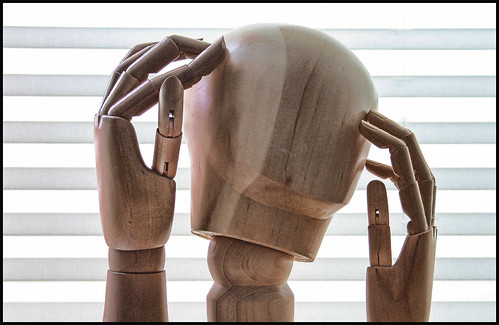
Perfectly Calm: 2010 was year characterised by the politics of denial.

‘WE HAVE MAINTAINED a silence closely resembling stupidity." Do you remember who said that – and when?

The words belong to Neil Roberts, New Zealand’s only suicide bomber. He spray painted them on a toilet wall shortly before blowing himself to pieces outside the Wanganui Computer Centre on 18 November 1982.

Thirty years ago, when personal computers and cell-phones were still in their infancy, the Wanganui Computer Centre loomed large in New Zealanders’ imagination as the ultimate symbol of the "Big Brother" state.

Fourteen months after the massive upheavals of the Springbok Tour, and just 9 days shy of the first anniversary of Rob Muldoon’s re-election, the 22-year-old anarchist and punk rocker, despairing of his fellow citizens’ commitment to freedom and democracy, detonated a carry-bag-full of high explosive directly outside the Wanganui Computer Centre’s front doors.

While Neil Robert’s acute depression found an extreme form of self-expression, he was by no means the only person alienated from New Zealand society under Rob Muldoon.

Paradoxically, the supreme effort of the preceding year, when tens of thousands of Kiwis rose up against the suffocating conservatism of the Muldoonist regime, had only made things worse. For young idealists like Roberts it seemed as though the country had turned a corner. But, almost as soon as the Springboks boarded their flight to Johannesburg, the great tide of anger and frustration which their visit had occasioned began receding. Far from wanting to carry the revolt against Muldoonism to new heights, most of the anti-tour protesters could not escape fast enough into normalcy.

By November 1982, the National Party’s grip on New Zealand had regained its full strength. A wage and price freeze had reduced the economy’s machinery to a slow grind. Unemployment was rising rapidly. And Labour’s new leader, David Lange, had yet to hit his stride as Opposition leader. The whole country seemed to have retreated into itself.

For thousands of young people the words of Blam Blam Blam’s "There is No Depression in New Zealand" had taken on the ring of prophecy.

But we’re as safe as safe can be,
there’s no unrest in this country
We have no dole queues,
we have no drug addicts,
we have no racism,
we have no sexism, sexism, no, no

It was this: New Zealanders’ wilful political denial; their sullen, self-defeating silence; that Neil Robert’s bomb was intended to shatter.

Today, nearly three decades later, both Neil Robert’s name and the final devastating act of his tragically short life have fallen victim to the collective historical amnesia that allows New Zealanders to repeat their political, economic and social mistakes over and over and over again.

Reviewing 2010, I cannot escape a feeling of déjà vu. The route John Key has chosen may differ markedly from Rob Muldoon’s, but he has led New Zealand back to all the old familiar places.

We are gripped by the same collective urge to deny the evidence of our eyes and ears. As if the dismissal of the Canterbury Regional Council; the creation of Auckland’s "democracy-proof" CCOs; the Canterbury Earthquake Reconstruction and Recovery Act; Simon Power’s and Kate Wilkinson’s relentless stripping away of our civil and workplace rights; and the extraordinary expansion of the State’s search and surveillance powers; are happening in some other country – to some other people.

There’s that same sullen refusal to be moved by the plight of our fellow citizens. Paula Bennett’s hand-picked razor-gang terrorises the sick, the disabled, and the solo mums. Judith Collins privatises the administration of misery. Nick Smith dismantles the world’s most successful no-fault accident compensation system. Sir Peter Jackson (to the frenzied cheers of the news media) pummels Actors Equity to a bloody pulp.

And what do we do? Sod all.

New Zealanders appear to have forgotten how to resist their government. That glorious anti-mining march aside, there’s the same "What’s the point?" fatalism that seized the country following the Springbok Tour and Muldoon’s subsequent, demoralising, success at the polls.

Neil Roberts never got to see what happened after his bomb went off. We are luckier. Looking back, it’s clear that New Zealand’s "silence closely resembling stupidity" was not maintained. In less that two years, change came – and on a scale young Neil could scarcely have imagined.

For me, at least, that’s an encouraging thought to take into 2011.

This essay was originally published in The Timaru Herald, The Taranaki Daily News, The Otago Daily Times and The Greymouth Star of Friday, 31 December 2010.

Wednesday, 29 December 2010

The Incredible Lightness of Being John Key

A Gift for Levitation: Asked to explain the difference between himself and the Prime Minister in an interview for North & South magazine, Bill English famously responded: "I’m a stayer, he’s a sprinter. I grind away, John just bounces from one cloud to another".

JOHN KEY’S greatest political gift is his levity. Which is not to say that the Prime Minister is inappropriately frivolous or comical – although he does have a politically endearing talent for self-deprecating humour. The word’s original meaning was "lightness", and it is in this sense that I am using it.

This quality of lightness has not gone unnoticed by Mr Key’s colleagues. His Deputy, Bill English, famously explained the difference between himself and his boss in an interview published in North & South magazine: "I’m a stayer, he’s a sprinter. I grind away, John just bounces from one cloud to another".

In many countries Mr Key’s light touch would not be regarded as an asset. When politicians become prime ministers or presidents in these much older societies they are expected to put on political weight, and to evince at all times a judicious seriousness. In short, they are expected to display gravitas not levitas.

New Zealanders are more than a little ambivalent on the subject of levitas versus gravitas. On the one hand, we do not expect our leaders to embarrass us on the world stage. On the other, we don’t like leaders who put on too many airs and graces or talk down to us.

Like so many other populations descended from pioneering stock, New Zealanders place a much higher value on practical achievement than they do on artistic talent or intellectual accomplishment. Artists and intellectuals tend to make most Kiwis nervous. As voters, we regard a surfeit of intelligence and/or creativity in our leaders as an implied reproach for our own (meagre?) abilities and tastes. In politics it is never wise to let the public think you think you’re better than they are.

Strangely, we don’t seem to mind if our leaders are richer than we are. Money, after all, is a wonderfully democratic thing. With sufficient hard work (and just a little bit of luck) just about anybody can become rich.

By contrast, great intellectual acuity and creative power are innate qualities. No amount of hard work can increase our native stock of intelligence and creativity (although it will certainly sharpen the skills we do possess). It’s an inconvenient truth which gives the lie to, and undermines, New Zealanders’ cherished egalitarian faith. That’s why so many Kiwis are suspicious of individuals with too much talent. It smacks of unfairness, privilege and elitism. Such people are not to be trusted.

Mr Key is certainly a very wealthy man, but that fact alone does not condemn him in the eyes of most New Zealanders. After all, he did not inherit his money – he made it, himself, by deploying the skills he was born with to their best effect. Indeed, the Prime Minister’s humble background; the fact that he and his sisters were raised in a state house by their widowed mother; only serves to reinforce his fellow citizen’s confidence in the universal attainability of the New Zealand dream.

A large pile of cash in the bank does, of course, possess the power to levitate just about anyone up, up and away from the daily drudgery of earning a living. For many people, however, the levity money confers can be personally devastating. It either breeds a sneering sense of superiority, or crippling feelings of guilt and/or obligation.

But, Mr Key’s public conduct reflects neither of these classic responses. His wealth does not appear to have had any malign effect upon him. Miraculously, he has risen above even this.

What it has done is allow him to deploy the otherwise quite ordinary aspects of his life and personality as a devastating political weapon.

The Prime Minister is not a connoisseur of fine art. He doesn’t attend the opera. He has penned no books, made no scientific breakthroughs, climbed no mountains, written no songs. He does not mix with artists or intellectuals, nor does he espouse with any noticeable fervour the grand, all-encompassing ideologies and religions of mankind.

He is, however, a husband and a dad with two teenage kids. He does like to watch the Rugby. He turns a mean steak on the family barbecue, and he drinks his beer straight from the bottle – just like hundreds of thousands of ordinary Kiwi blokes.

John Key’s political balloon is inflated not simply by the fortune he made as a currency trader, but by the paradoxical pressures of New Zealand’s thwarted egalitarianism. Ordinariness is his helium. We push him up to prove that we, too, can rise.

The Prime Minister is said to practice "the politics of aspiration". To aspire is to breath out, to reach up, to soar. John Key bounces from cloud to cloud on the warm updrafts of his nation’s confidence. On New Zealanders’ desperate conviction that politics can be, and should be, the province of ordinary men and women.

This essay was originally published in The Press of Tuesday, 28 December 2010.

Friday, 24 December 2010

No Vacancy (A Christmas Story)

"And she brought forth her firstborn son, and wrapped him in swaddling clothes, and laid him in a manger; because there was no room for them in the inn." - The Gospel of St. Luke. The painting is: The Arrival at Bethlehem (1897) by Luc-Olivier Merson.

"WHO WAS THAT?" Martha set down her laundry basket with a thud and cast a practised eye over her husband’s face. She’d always been able to tell when he was troubled, and forty years of marriage hadn’t made it any easier for him to hide his feelings.

"Just a young couple looking for a bed. I told them we were full and sent them on their way."

"And?"

"And what?"

"Don’t you ‘and what’ me, Joel Benjamin. Something’s troubling you – out with it!"

"Oh, I don’t know, it just didn’t feel right sending them away. The girl was so very, very young, and so very, very pregnant. And the young fellow she’s travelling with – the baby’s father, I suppose – he wasn’t much older. Seemed like a steady sort of fellow though: a carpenter by trade. Both of them from some tiny place up north. They’re down here for the Census."

Martha snorted. "Him and everybody else. Town’s full of people waiting to be registered."

"That’s what I said. I told him he’d be lucky to find accommodation anywhere. Said he knew that already, that ours was the seventh place they’d tried. I tell you, Martha, the poor lad sounded desperate. And the girl seemed ready to have her baby at any moment."

"And you sent them away."

"What else could I have done – we’re full up. There’s not a spare bed in the house."

"May the Good Lord forgive you, Joel Benjamin! How could you send that poor girl out into the night to give birth in some ditch under the stars, with no help near except a frightened boy. Have you forgotten what can happen to a woman in those circumstances? What can happen to her baby!"

"I haven’t forgotten."

The old man takes his wife in his arms, presses her head against his shoulder, feels the gentle shudder of her sobs.

"I haven’t forgotten."

Martha pushes herself free from his embrace, furiously wiping away her tears.

"Go after them, you fool! Fetch them back! In the name of the son you could not save, Joel Benjamin, fetch them back!"

The old man hurries toward the gate, pushing past his startled guests, calling the gatekeeper to him.

"Amos! Amos!"

"Master?"

"That young couple. The pregnant girl. Tall fellow, strongly built. Did you seen them?"

They passed through a little while ago – they’ll be lost in the crowd by now."

The inn-keeper steps out into the crowded street, turning his head to right and left, trying to locate the pair in the gathering darkness.

"Mary said you would come."

The old man swings ‘round to find himself face to face with the young carpenter.

"I wanted to look for another inn, but she told me to wait here – that this was the place."

"I wasn’t lying to you about the rooms, you know. There’s not a spare bed to be had. But my wife would not hear of you being turned out into the winter chill – not with your good lady so close to her time."

Martha holds out her arms to the young woman.

"Come in my dear. This is no season to be giving birth alone. And there are skilled hands here tonight. Three Parthian priests, great healers it is said, arrived at sundown from Jerusalem. They were asking after a child.

"Dozens of children here, I told them. Take your pick! But they shook their long oiled beards at me and said it was a new-born child they were seeking. Well then, I said, I don’t like your chances, because there are no …."

Martha’s eyes widened in sudden understanding.

"Mine is the child they seek", the young woman said softly, "and it is here your wise men will find him. The Magi left a prince in his palace to see a king born in your stable."

"It is not worthy, lady."

"It is holy ground. You lost a son once, Martha. Tonight, God gives you another."

This short story was originally published in The Dominion Post, The Timaru Herald, The Taranaki Daily News, The Otago Daily Times and The Greymouth Star of Friday, 24 December 2010.

Wednesday, 22 December 2010

Sing Choirs of Angels (For Julian Assange)

Guardian Angels: Julian Assange, like the prophets of the Old Testament, has called the powerful to account. It is to be hoped that he is afforded the same divine protection.

"HE’S NOT at all like him. How can you even think that?" Gabriel’s pinions flutter with indignation, casting off tiny splinters of golden light into the frigid evening air.

"Oh, I don’t know," replies Raphael, brushing Gabriel’s still glowing sparks from his robes. "If you cast your mind back, you’ll recall that He wasn’t everybody’s favourite activist either. In fact, didn’t just about everyone in high places call him a trouble-maker? A terrorist even?"

"Not the same thing at all – He was a prophet."

"Oh, come on, Gabriel. You know as well as I do that ‘prophet’ is just another name for troublemaker. How do you think the kings of Israel responded to being called to account by the likes of Isaiah and Amos? Do you think they liked having their misdeeds discussed openly in the marketplace? Do you think they appreciated those bearded vagabonds striding into their palaces, pointing their fingers, laying bare their sins? I don’t think so!"

"They were speaking for God, Raphael – that’s what makes the difference. They were His mouthpieces. Their mission was divine."

Gabriel spreads his wings, and with an upward beat brings himself to a position just above a pair of forbidding wrought-iron gates. Gathered in a noisy semicircle around the gateway are the outside-broadcast vehicles and satellite dishes of the world’s media. He counts at least a hundred journalists stamping their frozen feet in the snow-shrouded Suffolk countryside.

"Do they look like God’s mouthpieces to you, Raphael?"

"As individuals? No, not really. But then they are mortals, Gabriel. Sinners, every one. Just like Isaiah. Just like Amos. Just like all the human bearers of God’s word. He fashioned them, Gabriel. Endowing them with the wit and skill to subdue the whole earth: root and branch; fish and fowl. This is how they speak to one another nowadays – twittering and tweeting. Voices in the air, Gabriel. Hasn’t God always spoken thus?"

"And the man they seek, Raphael? He’s no stranger to the sins of the flesh. Does it seem likely that God would place his word in so flawed a vessel?"

Now it was Raphael’s turn to send indignant sparks into the wintry air.

"But isn’t that the point!" With a mighty beat of his wings he propels himself several thousand feet higher into the darkening sky. "Look about you! Look at what they have done to the garden we made for them to dwell in! They are fallen, Gabriel! Fallen! They should be left to freeze – or to burn. And yet here we are – just as we were that night on the hillside above Bethlehem, when we spoke to the shepherds, and just for a moment let them see the splendour of our wings. Because he loves them Gabriel – he loves them. Flawed though they be. Sinners though they are. He would not have them fall."

"But where were the signs? The wonders? Where was the gold, the frankincense, the myrrh? Where were we thirty-nine years ago when this fellow came into the world? I have no memory of a maternity ward in Townsville."

"I don’t think it works like that any more, Gabriel. That first time, remember, they called him Emanuel – "God is with us". And I don’t think he ever left. He remains with them, don’t you see? To be born again in every generation. The same story, Gabriel, told over and over and over again. What was it that Paul said: ‘For we wrestle not against flesh and blood, but against principalities, against powers, against the rulers of the darkness of this world, against spiritual wickedness in high places’."

"That certainly sounds like our friends in Washington", chuckled Gabriel, as the two archangels descended slowly towards the English country house.

I think I understand you now, Raphael", Gabriel smiles, "We’re here to bear witness. From the first betrayal to the final crucifixion. To the whole tragic passion play which, for twenty centuries, these doomed mortals have prepared for anyone who dares bid them be free."

"But we’re not the only witnesses," Raphael replies, spreading his wings protectively around half the house. "For each time the drama is played out there are always more who grasp its meaning. Who hear, as if for the first time, the words we heard Him speak to Pontius Pilate all those centuries ago: "For this purpose I was born and for this purpose I have come into the world – to bear witness to the truth. Everyone who is of the truth listens to my voice."

"And is set free!", Gabriel laughs, wrapping his own wings around the other half.

A great rush of air sends snow flurries whirling among the waiting journalists.

"Christ!", mutters a reporter from The Sun. "Freezing me effing bollocks off for Julian bloody Assange. What a way to spend Christmas!"

This short story was originally published in The Press of Tuesday, 21 December 2010.

Friday, 17 December 2010

The Price of Privatising Prisons

The Biggest Company You've Never Heard Of: Serco plc sits at the centre of a vast international web of business operations, including prisons, immigration detention centres, nuclear facilities, services to the US National Security Agency, air traffic control systems, railways, hospitals and schools.

ADAM RICKWOOD was just 14 years old when he died. His "carers" at Hassockfield secure training centre in County Durham found him hanging in his cell. Adam’s suicide, in August 2004, remains the United Kingdom’s youngest-ever "death in custody" case.

But it was much more than that.

The following year a judge ruled that, shortly before his death, Adam had been subjected to "unlawful force" by his so-called "carers".

The incident that led to Adam’s suicide began when he resisted being placed in solitary confinement. Employing one of the "pain compliance techniques" secretly recommended to Britain’s privatised secure training centres by the UK Ministry of Justice, Adam’s "carers" struck him violently on the side of his nose, causing it to bleed profusely.

Having administered their state-sanctioned "nose distraction technique", Adam’s "carers" then confined their sobbing, blood-covered "client" to his cell, where he lay, without medical treatment, for several hours. Alone, in pain, fearing further assaults and convinced that he would never again be free, the traumatised teenager took his own life.

The private-sector organisation contracted by the British Government to run the Hassockfield secure training centre is called Serco plc.

Earlier this week, our own Minister of Corrections, Judith Collins, announced that this vast transnational conglomerate, memorably described by Guardian journalist Jane Martinson as "the biggest company you’ve never hear of"; the same company in whose "care" 14 year-old Adam Rickwood was driven to suicide; would soon be running the Mt Eden/Auckland Central Remand Prison.

In a press-release announcing the contract, Ms Collins explained: "Serco has a strong track record in managing prisons. I’m confident that the company will bring the high standards of professionalism, safety, rehabilitation and security expected by the Government to Mt Eden/ACRP."

One wonders exactly how Ms Collins and her Department of Corrections define "high standards of professionalism" when the fatal brutalisation of a 14 year-old boy – but one of many cases of prisoner and detainee ill-treatment uncovered at Serco-run facilities in both the UK and Australia – is part of the corporation’s "strong track record in managing prisons".

One certainly hopes that the ex-police, ex-military, security guards employed by Serco to keep order in the "Aussie Archipelago" of Immigration Detention Centres (security guards who bear more than a passing resemblance to the Blackwater Corporation’s notorious "contractors" in US-occupied Iraq) are not what Minister Collins has in mind when she talks about Serco bringing in "new ideas and international best practice".

Serco will certainly bring a wealth of experience in the business of privatisation. Three-quarters of the 50,000 people employed by Serco across the planet are former civil-servants. Not that there’s anything like a one-to-one correlation between the state-sector employees Serco replaces and the people who end up on its permanent payroll.

As Bevan Hanlon from the Correction Officers’ union noted in his response to Ms Collins’ announcement., Serco take-overs usually result in about 30 percent of the workers formerly employed by the State failing to secure re-employment in the new, privately-run entity.

This is hardly surprising, since Serco’s ability to turn a profit on the "business" of incarceration is almost wholly dependent upon its ability to provide the State with an equivalent level of "service" with fewer resources and far fewer staff.

It’s a Devil’s bargain. Ms Collins must know that Serco’s loss-leading tender can only be recouped at the expense of the prisoners in its "care". When fewer corrections staff are available to perform their highly demanding and often dangerous duties, the international literature all points to inmates spending more time in dangerously overcrowded and unsanitary cells, receiving reduced rations of inferior quality, having fewer exercise and rehabilitative opportunities, and being afforded considerably less dignity than when they were the responsibility of the State.

And, of course, these cut-backs come at a price. For individuals suffering from mental illnesses and/or drug and alcohol problems – prisoners without the intellectual or physical resources to withstand the constantly degraded living conditions – the stress will quickly become unbearable. Violence – against staff, other prisoners and, most tragically, against themselves – will increase.

In recommending Serco to her cabinet colleagues, Ms Collins has – wittingly or unwittingly – injected a deadly toxin into our correctional facilities. The outcome is horribly predictable: "deaths in custody" will rise dramatically.

Sooner than she would wish, Minister Collins will be presented with an Adam Rickwood of her own.

This essay was originally published in The Timaru Herald, The Taranaki Daily News, The Otago Daily Times and The Greymouth Star of Friday, 17 December 2010.

In Memory of Tom Newnham (1926 - 2010)

A Great New Zealander: Tom Newnham, founder of the Citizens Association for Racial Equality (CARE), author of By Batons & Barbed Wire: A Response to the 1981 Springbok Tour of New Zealand, and a ceaseless fighter for the rights of oppressed people everywhere, died on Wednesday, 15 December 2010, aged 84.

You were thirty-seven, Tom,
When Peter, Paul and Mary
Made If I Had a Hammer a hit.
Old enough to know, in 1963,
How brave it was to sing
So fervently about
Justice, Freedom, Love.

What an incitement it was:
All that youth and reckless hope;
With Mary Travers’ hair
A silver banner in the spotlight,
And Peter’s and Paul’s guitars
Brandished like swords
Above the Newport crowd.

At eighteen, watching the newsreels,
You’d seen the worst that men can do.
The bodies stacked like cordwood,
Racism’s obscene legacy
Luminous in the survivor’s eyes.
Was it then, in the darkness,
You made your lifetime vow?

Watching the post-war babies grow.
Seeing them reach for the bright promises
Their parents forgot to keep.
Refusing the hemlock of comfortable silence.
Moving like a partisan through the Cold War sentries.
Distributing your weapons of resistance –
Hammers, bells and songs.

Showing us how much was lost
In the translation of waiata to song.
How much had been stolen
Beneath the auctioneer’s hammer.
How a whole people was dispossessed
To the accompaniment of church bells –
And the cheering of Rugby crowds.

Until, standing there, Tom,
The air throbbing with the
primal violence of thwarted sport,
You linked arms with history.
And while the whole world watched,
Swung the hammer, tolled the bell,
Sang freedom’s song.

Chris Trotter
17 December 2010

Tuesday, 14 December 2010

Politics Is About Choices - Not Tricks.

The Squeezed Middle: Employing the political tactics perfected by the American strategists Mark Penn and Dick Morris, Phil Goff is attempting to play both sides against "the squeezed middle" - a phrase which, along with "Soccer Moms" and "Reagan Democrats" has more to do with polling than principle.
 
MARK PENN and Dick Morris have a lot to answer for. Between them they have managed to change the practice of politics in the modern world fundamentally. If you’ve ever wondered why today’s politicians never seem to do anything large or inspiring; or why modern politics appears to revolve around the petty and the paltry; then look no further than Penn & Morris.

It was Mark Penn who invented "Soccer Moms". This wonderfully evocative term was his shorthand way of describing middle-income mothers of young families more-or-less uninterested in political and economic issues – but absolutely committed to the moral and physical welfare of their families. The way to come at these voters, Mr Penn told his client, President Bill Clinton, was not via their back pockets, but through their values. Convince them that you care about the same things they care about, and they are much more likely to vote for you.

This is where Dick Morris enters the picture. His main claim to fame is as the inventor of the political technique known as "triangulation". His advice to President Clinton, as he contemplated his campaign for a second term, was brutally simple. Abandon fixed ideological positions and re-fashion your political message so that it incorporates elements of both the Left and the Right. In other words, if the liberal and conservative ideologies represent the base, your new position should be "above and between them" at the apex of a new "triangular" political configuration.

President Clinton’s ringing declaration that "the era of big government is over" and his support for Republican Party-inspired "welfare reforms" are two of the best known examples of "Clintonian Triangulation".

Political observers in the United States point to President Barack Obama’s latest White House-brokered compromise over bitterly contested tax and benefit legislation as evidence that he has embraced his Democratic Party predecessor’s "triangulation" technique. That President Obama recently played host to President Clinton at the White House has done little to dampen this speculation.

The Penn-Morris combination: intensive and continuous "neuro-personality" polling of the electorate; combined with the constant re-positioning of political parties – to keep them "above and between" the extremes of Left and Right. In the 21st Century, this is simply the way politics is done.

Our own prime minister, John Key, is a master of the Penn-Morris style of politics.

The National Party polls the electorate continuously, accurately tracking the smallest shifts in public opinion and building up "psychographic" profiles of the many (and often quite contradictory) components of the Government’s electoral base. Mr Key follows the results of his party’s polling assiduously – borrowing freely from the policies of both his right- and left-wing competitors to preserve the public’s perception of him as a leader refreshingly unencumbered by ideological baggage.

Labour’s leader, Phil Goff, attempted a little triangulation of his own last Monday with a speech to a gathering of well-heeled Auckland lawyers and businessmen entitled "The Squeezed Middle".

Promising a future Labour Government would "operate within tight fiscal restraints"(a clearly conservative commitment) he also pledged his party to growing "better jobs and higher incomes" (a traditional left-wing objective).

The subject of his speech – "The Squeezed Middle" – is clearly born of the same mixture of demographic and psychographic profiling that gave birth to Clinton’s "Soccer Moms" in the 1990s, and to "Reagan Democrats" back in the 1980s.

The picture it conjures up is one of deep social anxiety and economic insecurity. At its heart is the sort of middle-income family which did well in the boom years, but which now finds itself just a paycheque away from disaster. These are the folk who borrowed heavily – maybe to buy a better house or to set up a small business – and who now find themselves shivering in the bitter recessionary winds.

The "squeeze" they feel comes, on one side, from their fear of falling back into the poverty from which their family only recently escaped, and, on the other, from the pressure of a pitiless economic system that will crush their hopes without the slightest hesitation.

Mr Goff must know that such people are deeply conflicted. Strong believers in free enterprise, their values cast the poor as lazy "bludgers" – undeserving of the vast quantities of taxpayers’ money spent annually on their relief. But, they also know that if the worst happens, and they lose everything, it will not be for lack of hard work. Why doesn’t that count? They ask themselves. Why, when the chips are down, is the banker never your friend?

That’s the weakness of Penn-Morris politics. Power isn’t something that can be triangulated, and polling merely describes the voters’ predicament. Real politics is about making choices.

New Zealand’s problems need solutions: whether they be left-wing or right-wing solutions matters much less than locating a politician with the guts to give them a try.

This essay was originally published in The Press of Tuesday, 14 December 2010.