
Showing posts with label Jim Bolger. Show all posts

Saturday, 15 March 2025

Whistling Past The Graveyard.


Bugger the pollsters!”

WHEN EVERYBODY LIVED in villages, and every village had a graveyard, the expression “whistling past the graveyard” made more sense. Even so, it’s hard to describe the Coalition Government’s response to the latest Taxpayers’ Union/Curia Research poll any better. Regardless of whether they wanted to go there, or not, the polling data is leading the Coalition partners’ thoughts inexorably towards the dreary burial-ground of electoral hopes.

As they draw nearer to that dismal place, the tune they have elected to whistle to keep up the courage of their jittery supporters is that old political favourite: “Don’t Worry, We’ve Been Here Before.”

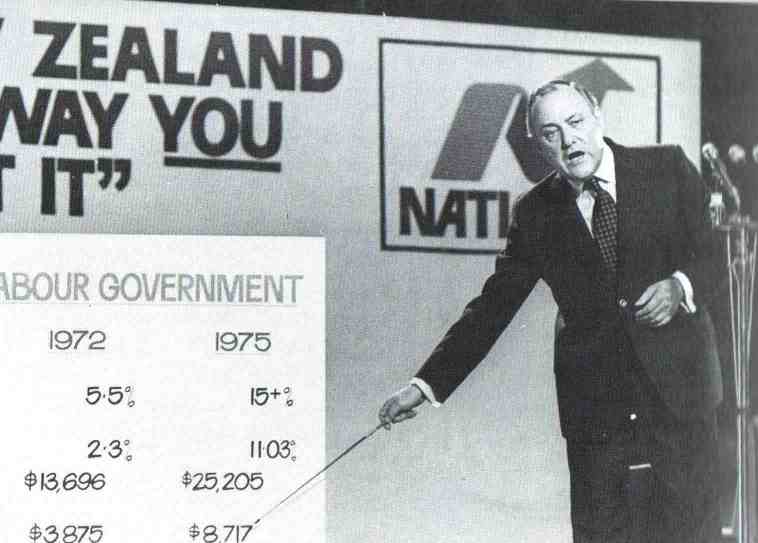
Conservative voters are invited to cast their minds back to 1990-1993, the first term of the Jim Bolger-led National Government. (That rules out every voter under the age of 40, but, never mind, they can always Google it!)

In the years preceding the 1993 General Election, we are told by National’s whistlers, the opinion polls also showed National lagging behind its opponents. (One survey put them at just 21 percent!) When all the votes had been counted, however, National found itself with just enough seats to govern.

On the night, and facing the prospect of a hung parliament, Bolger was not moved to breathe a huge sigh of relief. In the run-up to election day, he had been persuaded that National was on track for a comfortable win. Denied his easy victory, a clearly frustrated Bolger was moved to deliver the most memorable quote of the entire campaign:

“Bugger the pollsters!”

But, National’s whistlers are forgetting something. The General Election of 1993 was the last conducted under the First-Past-the-Post (FPP) electoral system. Indeed, it was also the year in which New Zealanders voted decisively to replace FPP with Mixed Member Proportional (MMP) representation. Looking for solace in Bolger’s narrow 1993 victory is, therefore, a lot like looking for cheese in a chalk factory.

Not a good analogy, then? But wait, it gets weirder.

The Jim Bolger-led National Party had been swept to victory in 1990 on a wave of revulsion at the damage inflicted upon New Zealand society by Labour’s “Rogernomics” – the top-down free-market revolution for which it had never asked, or received, an unequivocal mandate. Promising a return to the “Decent Society” of happy memory, Bolger’s party romped home with just shy of 48 percent of the popular vote.

Three years later, after discovering that the Decent Society entailed the Employment Contracts Act, the Mother of All Budgets, and user-pays health care, National emerged from the last FPP election with just 35 percent of the popular vote. The anti-government parties, Labour, the Alliance and NZ First, between them accounted for 61 percent of the popular vote.

It is practically inconceivable that the 1993 election result, replicated under New Zealand’s current electoral system, would see the incumbent government returned to office. What happened in 1993, largely on account of the anti-government vote being split three ways, would not happen today, because under MMP the parties opposing the government would be allocated parliamentary seats in proportion to the number of Party Votes they received.

Barring something unprecedented occurring (like Labour entering into a “grand coalition” with National) if the 2026 General Election leaves the anti-government parties sharing 61 percent of the popular vote – as they did in 1993 – then they will have more than enough seats to form a government.

After all, the 50.6 percent claimed by Labour, the Greens and Te Pāti Māori in the Taxpayers Union/Curia Research Poll would still give them enough seats to govern.

National hung on in 1993 because, under FPP, 35 percent of the vote was enough to secure them just enough seats to govern. But National, Act, and NZ First, if they continue, as Bolger’s government continued between 1990 and 1993, to implement policies opposed by a significant majority of the New Zealand electorate, should not anticipate a similar, by-the-skin-of-their-teeth, happy ending.

And yet, this is precisely the advice being tendered to the Coalition Government by the Taxpayers’ Union and other assorted ideological cheerleaders. The very policies that are driving the Government’s numbers down, it is suggested, must not be discarded as electoral liabilities, but instead, “all options should be on the table”.

Rather than whistling past the graveyard, any government disposed to heed such advice should probably be praying in the church.


This essay was originally published in The Otago Daily Times and The Greymouth Star of Friday, 14 March 2025.

Friday, 3 December 2021

Can Luxon “Reimagine Capitalism” – Like Muldoon?

Outflanking The Socialists: Because there really isn’t any other way that National can win. Christopher Luxon, like Rob Muldoon (above) needs to go fishing where there are fish to catch. Using what for bait? Simple. A solemn promise to halt the upward redistribution of wealth among the sort of highly-educated, middle-class bureaucrats who get paid for telling working people what to do.

THE PROBLEM with Jim Bolger’s sagacious intervention of last Sunday was that it diagnosed National’s disease, but supplied no remedy. It is all very well to tell National’s new leader, Christopher Luxon, that he must articulate a clear “vision” to the electorate. Who would disagree? Much more helpful, however, would’ve been some indication as to what that vision might be.

The nearest Bolger got was a suggestion that the new Leader of the Opposition might like to “reimagine capitalism”. Now, as a man of the Left, I have to say this was a pretty startling piece of advice. Most of those on the centre-right of politics struggle with the idea that there is anything about capitalism that requires “re-imagining”. What Bolger’s radical diagnosis appeared to be saying, however, was that National’s longstanding mistrust of political imagination might just lie at the heart of the party’s electoral difficulties.

Fair enough. But asking Luxon to re-imagine capitalism strikes me as a rather tall order for someone who’s only just celebrated his first year as an MP. Tall, but not impossible. Because, as Newsroom journalist Nikki Mandow reminded us on Monday morning (29/11/21):

“[I]t was Luxon who first introduced former KiwiRail chief executive Peter Reidy to the high engagement, high performance management model.

‘He’d been using it for a couple of years at Air New Zealand and was getting great results in terms of engaging frontline workers and their union to improve productivity’.”


Does this “high engagement, high performance management model” count as an example of reimagining capitalism? Maybe it does. It certainly counts as persuasive evidence that Luxon isn’t afraid of new ideas, new ways of working, and – wonder of wonders for a National Party politician – that he isn’t afraid of interacting productively with workers and their unions.

And that lack of fear is likely to prove crucial to Luxon successfully hauling National out of the rural and provincial swamp in which his predecessor, Judith Collins, had allowed her party to become mired.

Because, if there is one fact that National’s new leader must make his colleagues understand, it is that there simply aren’t enough farmers, small businesspeople and conservative Christians living in New Zealand to carry their party to victory. Nor is it any longer the case that a middle-aged White male, with a background in business, can expect to be automatically deferred to by centre-right voters – let alone centre-left converts.

Not that I’m suggesting a business background is a handicap, merely that it’s not enough. Not with half the workforce made up of women. Not when the blue collars of New Zealand’s proletariat are, increasingly, fastened around brown necks. Not when a growing proportion of New Zealand’s population grew up in powerful and active states, for whom the planning and implementation of economic development remain core government functions. (As was once the case right here in New Zealand!)

If Luxon’s caucus is unwilling to exercise their collective political imagination upon these electoral and cultural fundamentals, then National’s future is bleak. Eventually, Labour – which understands, at least theoretically, that these key transformations must be acknowledged and responded to – will work out how to make change happen.

Luxon’s tenuous – and presumably temporary – advantage is that Labour has yet to master the art of turning theory into practice. If, while his political opponents continue to faff about, Luxon reaches out, like Boris Johnson, to that part of Labour’s traditional working-class base that is no longer quite sure whose side Jacinda Ardern and her government is on, then National can begin to amass the additional numbers it needs to reclaim the Treasury Benches.

Outlandish? You reckon. Impossible? Well, it certainly won’t be easy, but it should not be forgotten that National has done it before. Luxon could do a lot worse than to set about rehabilitating the reputation (and some of the policies) of Rob Muldoon. Not the whole shebang, mind, but, at the very least, Muldoon’s willingness to reimagine, and reconfigure, capitalism in the way ordinary New Zealanders wanted it.

Because there really isn’t any other way that National can win. Luxon, like Muldoon, needs to go fishing where there are fish to catch. Using what for bait? Simple. A solemn promise to halt the upward redistribution of wealth among the sort of highly-educated, middle-class bureaucrats who get paid for telling working people what to do.


This essay was originally published in The Otago Daily Times and The Greymouth Star of Friday, 3 December 2021.

Monday, 11 June 2018

Forget the 1970s, Labour’s Fair Pay Agreements will take New Zealand back to the 1890s!

Poacher Turned Gamekeeper? Will Jim Bolger, the one-time master-poacher of worker’s rights, be able to transform himself, over the course of the coming months, into the incorruptible game-keeper of their interests?

“FAIR PAY AGREEMENTS” (FPA) are the final proof that Labour is evolving backwards into the Liberal Party. Predictably, National’s ignorance of its own country’s history has rendered it incapable of placing this latest example of Labour milksoppery into its proper context. Scott Simpson can witter-on all he likes about Jim Bolger (of whom more later) taking New Zealand back to the 1970s. A much more accurate historical invocation would be the 1890s. Or, if we’re being precise, 1894. That was the year the Liberal Government of Richard John Seddon passed the Industrial Conciliation and Arbitration Act (ICAA) – the true inspiration for Iain Lees-Galloway’s FPAs.

The ICCA empowered the state to bring employers and workers together for the purpose of establishing minimum rates-of-pay and working conditions across whole industries and occupations. If these could not be arrived at by negotiation, then binding arbitration was available from a special Arbitration Court. Crucially, unions and employer associations who submitted their disputes to the Court were forbidden from engaging in strikes or lockouts. These “awards” of the Arbitration Court spelled out the minimum standards workers could expect and prevented the employers’ competitors from initiating a ‘race to the bottom’ on wages and conditions.

The parallels with Labour’s proposed FPAs are obvious. What has yet to be established, however, is whether or not the advisory group headed by Bolger will incorporate a twenty-first century equivalent of the Arbitration Court into the new FPA machinery. Without such a mechanism, the negotiation of anything resembling a useful FPA will be next-to-impossible. Strikes and lockouts have already been ruled out of the process, so in the absence of a binding arbitration mechanism, negotiations between employers and unions could be prolonged indefinitely. Or, at the very least, until the National Party is re-elected and the legislation enabling FPAs repealed.

This will be the true test of whether Bolger’s ‘road to Damascus’ conversion: from hard-line anti-union promoter of the Employment Contract’s Act, to conscience-stricken repudiator of neoliberalism and all its works; is genuine. With National’s workplace relations spokesperson, Scott Simpson, on record as promising to repeal all FPA-related legislation, any hopes Labour may have entertained of Bolger inspiring an outbreak of constructive bi-partisanship have already been dashed.

The best the Left can hope for now is that the one-time master-poacher of worker’s rights will, over the course of the coming months, transform himself into the incorruptible game-keeper of their interests.

This essay was originally posted on The Daily Blog of Wednesday, 6 June 2018.

Monday, 24 April 2017

“Better Late Than Never, Jim!” – Bolger On The State Of The Unions.

Second Thoughts: It speaks well for Jim Bolger that he now recognises, albeit very belatedly, that the Employment Contracts Act, one of the key pillars of the neoliberal order which his government consolidated, has contributed hugely to the growth of inequality in New Zealand .
 
JIM BOLGER’S IMPLIED CRITICISM of his own government’s assault on organised labour is astonishing. The Employment Contracts Act 1991 ranks as one of the most extreme examples of anti-union legislation in post-war history. Certainly, the equivalent statutes enacted in the USA, the UK, Canada and Australia pale in comparison. From the legislation introduced by Jim Bolger’s close friend and ally, Bill Birch, even the word “union” was excluded.
 
Nor should it be forgotten that Jim Bolger had “form” in the union-busting business. As Minister of Labour in Rob Muldoon’s government he had, in 1983, been responsible for legislating compulsory unionism out of existence.
 
It was the catastrophic impact of Bolger’s legislation on union membership numbers that made the Federation of Labour (FoL) so biddable in the first flush of Rogernomics. New Zealand’s trade union leaders were willing to swallow just about anything from the Fourth Labour Government – in return for the restoration of compulsory union membership.
 
Labour obliged, but Stan Rodger, David Lange’s Minister of Labour, let it be known that this would be the last time that the political wing of the labour movement rode to the rescue of the industrial wing. The union movement, Rodger sternly insisted, must learn to stand on its own feet without the assistance of the unqualified preference clause.
 
To assist the unions, Rodger introduced the Labour Relations Act. The new legislation, in an attempt to make the typical New Zealand trade union bigger and better, mandated a membership base of 1,000, offered assistance for union amalgamations and encouraged the evolution of industry bargaining. Rodger also made it clear that the Labour Government expected the public and private sector unions to come together in a single peak organisation – the NZ Council of Trade Unions.
 
Rodger’s reforms sent a clear signal to Bolger and Birch that a future National government’s industrial relations legislation would not automatically be repealed by the next Labour government. They took this as a green light for a root-and-branch reform of the New Zealand labour market. With the assistance of the Business Roundtable, Birch and his advisers began drafting the legislation that would become the Employment Relations Act 1991.
 
In his interview with RNZ’s Guyon Espiner, Bolger volunteers the observation that the unions have become too weak. On the face of it, this is an extremely odd observation. After all, Bolger was well-aware of what would happen to union density in New Zealand the moment the prop of compulsory membership was removed. The experience of 1983-84 was there for all to see. The abolition of standard, occupation-wide contracts (known then as “awards”) applicable to everyone employed to do the same work, was similarly guaranteed to knock the stuffing out of the union movement. How could Bolger possibly entertain the notion that the Employment Contracts Act would not, in very short order, transform the union lions into lambs?
 
Possibly because the leadership of the NZCTU had reassured him that the reformed union movement: bigger and better resourced than ever before; was more than capable of weathering his storm.
 
I have been told by a former trade union leader that the President of the CTU in 1991, Ken Douglas, was convinced that the changes enshrined in the Employment Contracts Act would not cause a precipitate collapse in union density, and that employers would be amenable to the continuation of industry-wide bargaining and agreements. On the basis of Bolger’s recent remarks, it seems likely that Douglas conveyed this confidence to the newly-elected National Government. Certainly, it would explain why the Bolger Government felt able to introduce legislative measures which, in other jurisdictions (like France!) would have been met with massive resistance – up to and including a General Strike.
 
It is, of course, a matter of history that Ken Douglas and his allies in the public sector unions refused point-blank to support the private sector unions’ call for massive resistance. Not even the outpouring of tens-of-thousands of workers onto the streets in the early months of 1991 and the passing of multiple rank-and-file resolutions in favour of a General Strike, were enough to shake the opposition of Douglas and the public sector union bosses. At a special executive meeting of the CTU on 18 April 1991, a motion calling for a one day General Strike was defeated 190,910 to 250,122.
 
As things turned out, the grim misgivings of the rank-and-file and the private sector union leaders proved to be correct, and Douglas’s belief that the new, improved union movement could handle anything the Nats threw at it was shown to be entirely unjustified. In just a few years union density (the percentage of the workforce belonging to a trade union) fell by more than half.
 
The fate of private sector workers over the past quarter-century has been especially hard. Union density in the private sector has fallen from just under 50 percent in 1990 to less than 10 percent in 2017. The cost, in terms of worsening working conditions and stagnant real wages, is plain for all to see.
 
If they were, in fact, given, any reassurances from Douglas concerning the unions’ long-term resilience have proved to be spectacularly misconceived. Their expression would, however, provide some sort of explanation as to why, twenty-six years on, the former National prime minister expresses surprise that New Zealand’s trade unions have become so weak. At the time, Bolger (who has always struck me as a fundamentally decent person) may have consoled himself that the Employment Contracts Act’s bark would be worse than its bite. It speaks well of the man that he now recognises that the signature legislation of his premiership has contributed hugely to the growth of inequality in New Zealand.
 
This essay was originally posted on The Daily Blog of Saturday, 22 April 2017.

Wednesday, 24 August 2016

The Treaty Settlement Process: Neoliberalism With Maori Characteristics.

A Good Deal? By laying the foundations of “neo-tribal capitalism” the Treaty Settlement Process interposed a rapidly expanding Maori middle-class between an impoverished Maori working-class and the Settler State's elites. Without the TSP, the huge transfer of wealth and resources from ordinary New Zealanders to those privileged elites could not have been accomplished.
 
WHEN THE NATIONAL GOVERNMENT OF 1990-99 came up with the “Treaty Settlement Process” (TSP) it created a winning strategy. No single state initiative has done more to pacify the principal casualties of the economic and social changes of the past 30 years. By laying the foundations of what Dr Elizabeth Rata calls “neo-tribal capitalism”, the TSP interposed a rapidly expanding Maori middle-class between an impoverished Maori working-class and the Settler State elites. Without the TSP, the huge transfer of wealth and resources from ordinary New Zealanders to those privileged elites could not have been accomplished.
 
By the time the Fourth Labour Government was voted out of office at the end of 1990, its neoliberal policies had laid to waste huge swathes of Maoridom. Whole communities had been devastated by mass lay-offs in the state-owned forests, Post Office and railways, as well as the privately owned freezing-works and car assembly plants. A disproportionately large number of these displaced workers were Maori.
 
The Treasury’s preferred method of dealing with mass unemployment was to let the jobless rot on a benefit. Retraining and re-employing redundant workers was deemed to be both cost ineffective and ideologically unsound.
 
The results were entirely predictable. In a frighteningly short period of time all the familiar social pathologies of poverty: drug addiction, child abuse, domestic violence, marriage breakdown and gang-related crime; began to unravel the working-class Maori suburbs of Auckland and Wellington. While dealing with these pathologies imposed a massive fiscal burden on the state, the alternative – an activist government intervening to create jobs and strengthen communities – was dismissed as unacceptable. The whole point of the Douglas-Richardson Revolution was to put an end to state interventionism.
 
The skewed ethnicity of this new “underclass” (as journalists were beginning to call it) did, however, present the new National Government with a problem. Maori nationalist sentiment had grown rapidly in the 1980s – most particularly in the agitation for tino rangatiratanga – Maori Sovereignty. The possibility that these radical ideas might be transmitted to and taken up by unemployed Maori was a source of considerable concern among Pakeha elites. A mass Maori uprising, inspired by tino rangatiratanga, could only be contained by the use of deadly force – a course of action that would almost certainly spark a civil war.
 
The TSP, by contrast, could serve as an effective diversion from the misery and anger gripping urban Maori. By nominating traditional iwi as the Crown’s key negotiating partners the Settler State offered a sense of historical continuity and by enlisting the talents and shifting the focus of Maori nationalist leaders it deprived the Maori underclass of the tino rangatiratanga firebrands who might otherwise have set it alight.
 
Even so, it was a near-run thing. The occupation of Moutoa Gardens in Whanganui in early-1995 balanced on a taiaha-edge between peaceful protest and violent insurrection. The Government of Jim Bolger and Douglas Graham (the minister responsible for the TSP) held their hand and the occupiers refused to be provoked. The Whanganui confrontation, which could so easily have ended in disaster, caused the Crown’s negotiators to redouble their efforts.
 
By the end of the decade the TSP was well entrenched. The multi-million dollar Ngai Tahu and Tainui settlements had demonstrated the awesome commercial potential of the neo-tribal capitalist model. The tribes’ corporate structures were offering employment to Maori graduates, and tribal scholarships were supplying the Settler State with the highly-educated Maori personnel it needed to give bureaucratic expression to the “Treaty partnership” which the New Zealand Court of Appeal deemed to have existed between Maori and the Crown since 1840.
 
The creation and consolidation of the Maori middle-class which the TSP and the partnership model facilitated has proved to be a shrewd investment on the part of the Settler State. It has been achieved at a fraction of the cost of effectively educating and gainfully employing the tens-of-thousands of untrained and unemployed rangatahi. Indeed, the transfer of wealth (in the form of Crown cash and resources) from the poorest Maori communities to wealthy tribal elites (the Iwi Leadership Group) mirrors neatly the transfer of wealth from the 99 percent to the top 1 percent of income earners that is the hallmark of neoliberalism globally.
 
The cost – a large urban Maori underclass in the grip of all the evils to which poverty gives rise – has not yet risen to the point where the Pakeha elites feel compelled to do more than refine and expand their techniques for social control. That the new Ministry for Vulnerable Children will feature a large number of middle-class Maori professionals, appointed to ensure that the principles of the Treaty of Waitangi are upheld, even as the children of Maori poverty are made the guinea-pigs of National’s “social investment” ideology, merely reinforces what an extraordinary success the TSP has become.
 
This essay was originally posted on The Daily Blog of Tuesday, 23 August 2016.

Wednesday, 29 April 2015

Would John Key Have Pulled A Right-Wing Ponytail?

Set And Setting: Was the Prime Minister's harassment of waitress, Amanda Bailey, a form of political punishment? The behaviour of right-wingers when confronted with left-wingers in "places where they don't belong" is often both punitive and confrontational.
 
DID THE PRIME MINISTER pull Amanda Bailey’s pony-tail because her “strong political  points of view” conflicted with his own? (We know that Ms Bailey holds strong political views because that information was passed on to the NZ Herald’s gossip columnist, Rachel Glucina, by her employers.)
 
Now, many New Zealanders will object that a waitress’s political views cannot be used to justify prime-ministerial hair-pulling. They’re right, of course, but I hope they’ll bear with me a little longer, because an examination of the way powerful right-wingers behave in the presence of left-wingers promises to recast John Key’s acknowledged misconduct in a new and very interesting light.
 
Let me give you an example of the phenomena I’m describing from my own experience. Some years ago, I was the guest of the French Ambassador at his official residence in Thorndon. An hour or so after my arrival, the Ambassador and his guests were joined by the former Prime Minister of New Zealand, Jim Bolger. Spying me, Mr Bolger called out in a very loud voice: “Good God, Trotter, when did they let you out of jail!”
 
"Good God, Trotter, when did they let you out of jail!" - Jim Bolger.
 
I took his “jest” in good part and joined in the rather startled laughter of the other guests. But I did wonder how the former Prime Minister would have responded had our positions been reversed. Would Mr Bolger have openly challenged the misbehaviour of a person holding such elevated political rank? Or would he, like me and Ms Bailey, have let the indiscretion (or, in the case of the Parnell waitress, the first of many indiscretions) pass?
 
Jim Bolger, the blunt King Country cocky and son of impoverished Irish settlers, may well have returned fire without inhibition, I simply don’t know. What did intrigue me, however, was the former National Party leader’s motivation. Quite simply, I believe it was shock. Encountering a well-known left-winger in what, to Mr Bolger, must have seemed the most unlikely of settings, can only have been profoundly surprising.
 
And, perhaps, just a little affronting. Because the presence of a person holding views so radically at odds with his own was likely received by Mr Bolger in the same way as a soldier on neutral ground would respond to the presence of a soldier from an enemy army. One can no longer speak freely, for fear of giving away important secrets. One’s behaviour, too, must be carefully controlled – lest the enemy be given an opportunity for ridicule or reproof.
 
Was this how Ms Bailey’s presence at Rosie’s Café, in upmarket Parnell, was perceived by the Prime Minister and his right-wing supporters from the neighbourhood? Did they fear that their “fun and games” and “horseplay” were being silently judged by this left-wing waitress? Had she overheard them saying things that might – if taken out of context – have sounded just a little bit racist, sexist or homophobic? And wasn’t that just a little bit unfair? That John Key, his wife Bronagh, and their friends and neighbours, couldn’t let their hair down and speak freely without every word and action being recorded and used as evidence by this young thought-policewoman?
 
It may not even have been conscious on Mr Key’s part. His fondness for dangling tresses is now well attested in the photographic and video record. But it’s also possible that the urge to tug Ms Bailey’s ponytail was driven by the same feelings that prompted Mr Bolger to put me so firmly in my place at the French ambassador’s residence.
 
The New Zealand Right has always had huge difficulty in accepting the Left’s socio-political legitimacy (and it’s by no means alone in this). Throughout the Cold War, self-identifying as a left-winger was tantamount to acknowledging high treason in the eyes of many National supporters. Trade unionists, particularly, were received with venomous hostility by National, which “made its bones” as a conservative political party by brutally enforcing the great Waterfront Lockout of 1951.
 
But the Cold War isn’t the sole explanation. The New Zealand Right’s hatred of the Left predates the onset of the Cold War by several decades – extending all the way back to the strike-breaking actions of the Reform Party government of William Massey. It has also survived the Right’s victory in the Cold War. To declare oneself a person of the Left, even in the twenty-first century, is to define oneself as not-quite-fit for polite company: “Good God, Trotter, when did they let you out of jail!”
 
With each tug of Ms Bailey’s “tantalising” pony-tail, was the Prime Minister sending a very similar message of “light-hearted” political disapproval? Was he telling her: ‘You really shouldn’t be here, but, since you are, it’s only fair that you join in (even unwillingly) all the “horseplay”, all the “fun-and-games”, in which the other wait-staff at Rosie’s Café happily engage.’?
 
What’s the matter, Amanda? Can’t you take a joke?
 
This essay was originally published in The Press of Tuesday, 28 April 2015.