Showing posts with label Labour Share of Party Vote. Labour Share of Electorate Vote.. Show all posts

Wednesday, 30 August 2017

Disturbing Signs.

Mixed Messages: Now is the time for every electorate-focused Labour candidate to come to the aid of the Party Vote!
 
LABOUR HQ needs to upgrade its intelligence. Because out there in the streets there are a host of disturbing signs – most of them their own!
 
Sure, the sudden departure of Andrew Little left Labour’s messaging in a state of considerable confusion. Inevitably, the production and distribution of new campaign material – especially hoardings – was not something that could be accomplished overnight. But, more than three weeks have elapsed since Jacinda Ardern squeezed her syringe-full of adrenaline (to borrow Rachel Stewart’s arresting metaphor) into Labour’s failing heart. That so much of Labour’s signage continues to present voters with outdated and, frankly, embarrassing messages is, if you’ll pardon the pun, a very bad sign.
 
What on earth is preventing the same groups of Labour Party activists who erected the Andrew and Jacinda hoardings from taking them down? More importantly, why are individual Labour candidates insisting on keeping their personalised hoardings in place?
 
Frankly, I’m surprised that Labour HQ ever countenanced the production of these things. How many elections does Labour have to lose before somebody realises that plastering a candidate’s name and face all over his or her electorate is an open invitation for voters to split their votes between a much-liked local Labour MP and some other party altogether? The Party Vote is the ONLY vote that counts when it comes to changing the government. Anyone who allows their ego to get in the way of maximising Labour’s Party Vote should be invited to see how well they do running as an independent.
 
In 2014 Labour received 25 percent of the Party Vote and around 35 percent of the votes cast in the electorates. Do you know what Labour got for that additional 10 percent of support? Nothing. Nada, Zip, Zilch. Racking up majorities in a multitude of electorate contests advances Labour’s cause not one iota. Had Labour won 35 percent of the 2014 Party Vote, however, the history of the past three years might have been very different.
 
It gets worse.
 
Every time a potential Labour voter drives past a hoarding that does not feature Jacinda’s smiling face above the party’s “Let’s do this.” campaign slogan, the leader’s and the party’s brand suffer.
 
It’s as though, for some reason, the people running the local effort don’t want to be associated with Jacinda’s rejuvenated national campaign. Or, even more damagingly, that they haven’t been able to get their act together sufficiently to allow the extraordinary change in Labour’s political fortunes to be given graphic expression in the streets where the voters actually live.
 
For Jacindamania to acquire sufficient momentum to carry Labour all the way to the Beehive, Jacinda’s face and slogan need to be on display everywhere. On every supporter’s front fence, and at every city intersection. People driving to work should not be able to complete their journey without Jacinda silently imploring them to “Let’s do this.” at least half-a-dozen times.
 
After all, on the same journey, they will have passed at least that many hoardings from which Bill English has reassured them that he and National are “Delivering for New Zealanders”. Labour’s candidates urgently need to get their heads around the idea that, in 2017, there’s only one face on Labour’s hoardings that matters – and it isn’t theirs.
 
This essay was originally posted on The Daily Blog of Thursday, 24 August 2017.

Tuesday, 7 July 2015

One Tick For Labour Isn't Enough.

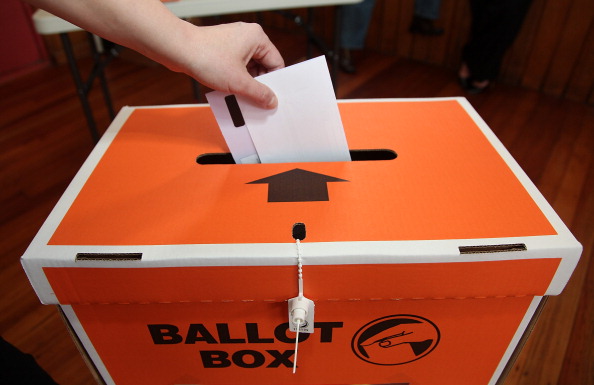
Split Decision: Labour’s woeful 2014 Party Vote, at just 25 percent, was the party's worst electoral performance since 1922. Not so well known, however, is the number of votes cast for Labour Party candidates across the country’s 71 electorates. That total, at 801,287 (34 percent!) is 196,752 larger than the 604,535 Party Votes Labour received. If every Electorate Vote for Labour had been matched by a Party Vote, the National Government would, almost certainly, have fallen.
 
IF EVERYONE who voted for their Labour candidate in last year’s election had also given Labour their Party Vote, National would have lost. The discrepancy between the two vote tallies is startling. Everybody’s heard about Labour’s woeful 2014 Party Vote. At just 25 percent, it was Labour’s worst electoral performance since 1922. Nowhere near as well known, however, is the number of votes cast for Labour Party candidates across the country’s 71 electorates. That number, at 801,287, is 196,752 larger than the 604,535 Party Votes Labour received. If every Electorate Vote for Labour had been matched by a Party Vote, the percentage figure alongside Labour’s name on election night would not have been a derisory 25, but a much more respectable 34 – almost certainly enough to have changed the government.
 
Such a huge discrepancy between the Party and Electorate Votes indicates a political party in serious trouble. What it reveals is that where voters are either well acquainted with, or have been introduced effectively to their Labour Party candidate, they are much more likely to place a tick beside his or her name. When it comes to Labour as an entity in its own right, however, the inclination to give the party a tick is nowhere near as strong. In the Christchurch electorate of Port Hills, for example, the long-serving Labour candidate, Ruth Dyson, received 18,161 electorate votes. The Labour Party on its own, however, mustered just 9,514 Party Votes – a whopping 9,205 less than National’s 18,719 Party Votes. Small wonder, then, that 27 of the 32 MPs in Labour’s caucus are electorate MPs, with only 5 coming in off the Party List.

Ruth Dyson, Labour MP for Port Hills: 2014 Electorate Vote : 18,161; 2014 Party Vote: 9,514.
 
Unless this situation is turned around – and quickly – Labour’s electoral performance can only deteriorate. As the party’s well-known and affectionately regarded electorate MPs retire, the assumption that Labour people will replace Labour people is being called into question. Once again, Christchurch supplies the example. The parliamentary seat of Christchurch Central was for decades regarded as one of the safest of Labour’s “safe” seats. True to form, in the 2005 General Election Labour’s majority was 7,836. In 2008, however, with a new candidate, it’s majority shrank to just 935. Three years later, National’s Nicky Wagner took the seat with a majority of 47 votes. In last year’s election National increased its majority to 2,420. Significantly, National’s share of the Party Vote over those four general elections rose from 30.5 to 44.6 percent. Labour will have to work very hard to recover Christchurch Central in 2017.

Nicky Wagner, National MP for Christchurch Central: Increased her majority from 47 in 2011 to 2,420 in 2014.
 
What is to be done? Clearly, the most important issue that Labour must address is the current, very different, perceptions Labour voters have of familiar political faces – like Ruth Dyson’s – and the political face of the Labour Party itself. Inevitably, the face of the Party, per se, and that of the Party Leader become blurred in the minds of the voters. It is, therefore, essential that whoever is Labour’s Leader takes great care of the party’s “brand”. David Cunliffe’s “I’m sorry I’m a man” comment, though well meant, nevertheless inflicted enormous damage on Labour’s image – especially (and obviously) among its male supporters.
 
But if protecting and projecting the party’s brand is an important part of any Labour Leader’s job, having a clear idea of what the brand stands for is, surely, just as important? At the electorate level (and Labour’s electorates are mostly poor, brown and working-class) the local MP is generally perceived as being on “our side” – someone they can turn to for help in times of trouble. That perception of being on the side of the poor, the brown and the working-class once constituted the core of Labour’s brand.
 
That up to twice the number of poor, brown and working-class voters now vote for Labour candidates, rather than the party itself, suggests that their perception of what Labour stands for is very different from what they perceive their local MP to stand for.
 
The needs and problems of elderly folk soak up an enormous amount of Labour MPs’ time and energy – and that’s greatly appreciated. Not so appreciated, however, was Labour’s election promise to raise the age of eligibility for NZ Superannuation from 65 to 67. In the eyes of poor, brown and working-class people, that didn’t come across as a very Labour-like thing to do.
 
Labour’s challenge is to persuade its voters to give it two ticks. But that won’t happen until poor, brown and working-class people can be persuaded that Labour and its local candidates stand for the same things. Offering Labour’s traditional supporters economic policies that look and sound like those of the National Party will not rebuild Labour’s Party Vote.
 
The now demolished Christchurch Trades Hall once bore the graffiti: “You were supposed to help.” If Labour’s not very careful, those words may also become its epitaph.
 
This essay was originally published in The Press of Tuesday, 7 July 2015.