Showing posts with label Science and Politics. Show all posts

Monday, 30 August 2021

Discordant Realities.

When Reality Goes West: New Zealanders unrepresented by the Mayor of Westland, Bruce Smith, might struggle to accept the proposition that their fellow citizens are kept alive by businesspeople rather than health professionals.


THERE ARE MOMENTS when the existence of many New Zealands, as opposed to just one, becomes undeniable. The presence of these many, often discordant communities, all claiming to represent the “real” New Zealand has seldom been made plainer than during Saturday morning’s (28/8/21) riveting interview between Newshub Nation’s, Simon Shepherd, and the Mayor of Westland, Bruce Smith.

“Discordant” is an altogether inadequate adjective to describe the forthrightly delivered views of the Westland Mayor. What the viewers heard was a description of a world radically at odds with the one inhabited by New Zealanders living in the major urban centres. Reality, as understood by these city-dwellers, was given short shrift by Bruce Smith. His world, the world of the West Coast, is “real” in a way he clearly believes the big cities are not. It was the Mayor’s certainty, and the confidence it imparted to his pronouncements, that made the interview so compelling.

And what pronouncements they were:

“It’s a bit frustrating you know, to have Wellington, with say 14 active cases, and the South Island with none, and for us all to be at the same level doesn’t make a lot of sense to me”, Smith told Shepherd. Adding for good measure: “I have to say my thoughts last night were with the business community. We see lots on TV and it’s always health professionals – we don’t see our business community that keeps us alive. My thoughts are with them.”

The inference here is that unless official guidance makes sense to the Mayor of Westland and, presumably, to the no-nonsense people who elected him, then a very good prima facie case exists for rejecting it.

A politician less immersed in his own narrative would probably have left it at that. After all, the Government makes no secret of the fact that it is guided by “the science”. It’s a pretty big call for a lay person – even one referred to as “Your Worship” – to dismiss expert scientific advice as not making a lot of sense.

But the Mayor pressed on, declaring that his thoughts were with “our business community”. How much better it would be, he inferred, if instead of health professionals clogging up the airwaves, New Zealanders were allowed to hear the views of businesspeople – the group that “keeps us alive”. Those same New Zealanders, or, at least, a good portion of them, might have a little difficulty accepting the proposition that their fellow citizens are kept alive by businesspeople rather than health professionals. What exactly was he saying?

Well, Mayor Smith was almost certainly expressing sentiments not dissimilar to those printed on placards during last month’s “Groundswell” protests. “No Farmers, No Food” declared the cockies who paraded their tractors into the provincial towns and major cities of New Zealand. This rather brutal example of rural reductionism was intended to remind the sort of townie who thinks milk comes from the supermarket, that, ultimately, everything that keeps humanity alive is derived from the land – and the people who bring forth its bounty. The sub-text being: piss-off the nation’s farmers at your peril!

Whether Mayor Smith’s claim that the “business community” enjoys a life-sustaining status comparable to the people who grow our food isn’t quite so incontestable. After all, agriculture preceded capitalism by several millennia. What’s more, the specialisation that gave rise to artisanal production and trade – “business” if you like – was inconceivable without the food surpluses produced by farmers. Never forgetting that makers need users, and sellers buyers, a fact that confirms the indisputably social character of commerce.

So, if it is true that the “business community” keeps “us” alive, then, equally, it is true that without “us”: the people who work in the factories, offices and shops; the people who drive the trucks and trains; the people who operate the warehouses and stand for hours at the supermarket checkouts; the users, buyers and consumers of the nation’s production; the business community would perish.

Hence the wage subsidy offered by the Government. Hence all the other measures to keep the workforce safe and reduce to a minimum the length of time the nation and its regions are kept in lockdown. A point the Newshub Nation’s presenter attempted to drive home to the Westland local government leader. But, Mayor Smith wasn’t having a bar of it. Those who advocated the Elimination Strategy that had kept New Zealand’s Covid-19 death-toll to a world-beating 26, were not to be trusted:

“I think the people who say that are all being paid by the state. They get their pay every Thursday, doesn’t make a lot of difference to them. Coming out into the real world, you’ll find it’s totally different.”

This was the point in the interview when it became clear just how many New Zealands there are out there – and just how hostile some of those New Zealands are to the rest of us. Listening to Mayor Smith unleash on the likes of Ashley Bloomfield, Michael Baker, Sir David Skegg, Shaun Hendy – and all those other New Zealanders “paid by the state”, one was reminded of just how easy it is for people to surrender to the siren-songs of sectoral chauvinism. It requires an effort of imagination to grasp just how interdependent human communities are; to understand that epidemiologists paid for by the state are playing a vital role in making sure that the small-scale, private tourist operator in Westland gets back to business in the shortest possible time.

For Mayor Smith, however, a more “balanced” response is required from the Government. The mix between “our economy and our health”, he suggested, needs a course correction. The Government was too bound up with the threat to people’s health. Insufficient attention was being paid to the business community. The public’s wellbeing was being protected at their expense.

Once again Mayor Smith appealed to a “reality” dangerously divergent from any condition recognisable to science:

“The reality is Covid is with us. It’s no different to polio back in my grandparents’ days. The only way that we can fix it is we’ve got to be vaccinated. I’ve encouraged everybody to get vaccinated, but even then it’s still going to come in. It’ll come in from overseas. It’s part of our lives from here on in and we need to adapt.”

When Simon Shepherd objected that those who talked about “living with the virus” were leaving unspoken the epidemiological certainty that hundreds – perhaps thousands – would be “dying of the virus”, Mayor Smith responded with the observation: “There’s lots of people who have different opinions, different agendas”.

It is against this New Zealand that all the other New Zealand’s must, for their own safety, unite. The New Zealand that rejects “the science” as nothing more than someone’s “opinion”, or, worse still, someone’s “agenda”. The New Zealand in which only those inhabiting the “bubble” of business have any interests worthy of protection. The New Zealand in which all those unfortunate enough to exist outside the “real world” of “our business community” are reduced to mere means to its ends. The New Zealand in which life continues only for so long as there are profits to be made and unavoidable losses to be accepted without complaint. The New Zealand in which no real Kiwi would wish to be found dead – or allowed to die.


This essay was originally posted on the Interest.co.nz website of Monday, 30 August 2021.

Wednesday, 23 December 2020

Annus Horribilis.

Covid Crushers: In this horrible year of 2020, we have learned some important lessons about the importance of leadership and the power of science.

THE BOYS would have heard them coming. The roar of dozens of powerful motorcycles telling them everything they needed to know. Bandits in the pay of Boko Haram. A raid. 

Of the more than 800 pupils at the Government Science Secondary School, in Kankara, North-West Nigeria, 500 managed to flee. The rest, more than 300 teenage boys, were taken prisoner and marched at gunpoint into the forest, where military helicopters could not track them. They would be ransomed by the Nigerian Government and released, mostly unharmed, a few days later – for an undisclosed sum.

After an earlier raid, in which 100-plus teenage girls were taken, ransomed, and returned to their distraught parents, Boko Haram – Islamist terrorists with a deep hatred for everything associated with Western science and education – had a chilling message for the local population: “Don’t you ever send your daughters to school again.”

Over the past twelve months, in the Northern states of Nigeria, more than a thousand people, many of them children, have been killed by Boko Haram and their proxies. More than 100,000 have been displaced: refugees in their own country.

Worse afflictions than Covid-19 have beset the peoples of the world in 2020.

Boko Haram’s terrorists do, however, have more than a little in common with at least some of the citizens of the world’s wealthiest nations – especially when it comes to science. In the United States, especially, there are many equally fanatical religious believers who, like Boko Haram, see science as a deadly threat to their faith. More than that, they see it as a threat to their whole conception of the world, and to their roles within it.

Multiple reports from the United States describe evangelical Christians, only hours away from succumbing to the Covid-19 virus, still breathlessly insisting to their professional carers that the whole pandemic is a hoax: part of a grand political conspiracy to rob them of their faith and their freedom.

New Zealand had these people, too. Billy Te Kahika and his Public Party courted them on social media and brought them to their feet at indoor and outdoor rallies across New Zealand. Alongside the former National MP, Jami-Lee Ross, and his Advance NZ Party, Te Kahika sought parliamentary representation in the October general election. When all the votes had been counted, however, it was clear that, in this country at least, the political market for anti-science is extremely small. Fewer than 30,000 New Zealanders cast their votes for Billy TK and his outlandish conspiracy theories.

The scale of Labour Party leader Jacinda Ardern’s electoral victory attests to the considerable faith New Zealanders are still willing to invest in the twin pillars of modern society: science and democracy. From the moment it became clear that the world was facing a pandemic of huge potential destructiveness, the country’s political leadership made the crucial decision to be guided by their scientific advisers – rather than business lobbyists.

That this was a decision made in their interests, to keep them safe, very soon became clear to the New Zealand electorate. The voters had only to look at the Covid-19-related death and havoc unleashed in the countries whose politicians refused to be guided by the scientists, to grasp how fortunate they were in their Prime Minister and her Director-General of Health, Ashley Bloomfield.

Most of those delinquent countries were located in the West. That New Zealand followed a different path is, therefore, unusual. As one of the key scientific voices in New Zealanders’ ears throughout the pandemic, Professor Michael Baker, observed to Jim Mora on his last Sunday Morning show for the year: New Zealand, throughout its history, has taken its cue from Europe and North America; but in relation to Covid19, we allowed ourselves to be guided by Asian nations. Is it possible that New Zealanders, looking back on their country’s handling of the pandemic, will see it as the moment we finally and irrevocably relocated our imaginations from the North to the South?

What became indisputably clear to New Zealanders, as the pandemic raged across the planet, was that their political leaders and their scientific advisers had reclaimed the state for the people. From the mid-1980s onwards, as the veteran political journalist Colin James has observed on many occasions, New Zealanders ceased to look upon the state as their friend – as their parents had done since the days of “King Dick” Seddon and Mickey Savage – and began, instead, to see it as an inhumanly programmed apparatus for the advancement of “market forces” and the businesses who benefited from them.

In the daily performances of the “Jacinda and Ashley Show”, however, it was made very clear that the business voices decrying the Government’s decision to lock down the economy, and demanding a less rigorous and costly approach to managing the pandemic, were not being heeded. Business journalist Bernard Hickey’s angry imprecations notwithstanding, the Government’s Covid response was very far from being a gift to our biggest capitalists. On the contrary, the full resources of the state were being rolled out on behalf of its citizens: a frankly socialist gift to the New Zealand people, for which, on 17 October, they showed themselves to be extremely grateful.

That socialist response would not have been possible without the ideology-defeating power of science. For nearly 40 years now, the makers of the “free market revolution” have done everything within their power to convince people that their economic nostrums are, in fact, scientific truths. Faced with the Covid-19 pandemic, however, the perceived interests of business, and the facts of epidemiological science, began to diverge.

In other Western nations, the UK and the USA in particular, the political leadership responded to this divergence by side-lining the scientists in favour of re-starting the economy. In New Zealand, however, that did not happen. Prime Minister Ardern and her key Cabinet colleagues, in accordance with the best scientific advice, opted to “go hard and go early”.

New Zealand’s lockdown, one of the most draconian on the planet, was predicted to produce dire economic consequences. Treasury warned the Finance Minister, Grant Robertson, to expect an unemployment rate of around 14 percent – Depression Era stuff. But, as Ardern consistently argued: getting on top of the pandemic is the only sure way of getting the economy back on its feet. She was right. New Zealand’s GDP fell sharply, but then it roared back, as New Zealand’s “Team of Five Million”, in marked contrast to the citizens of other Western nations, succeeded in eliminating community transmission of the virus – thereby freeing themselves to resume living something pretty close to a normal life.

What the people of Northern Nigeria would give for a normal life. For a country in which science, far from being denounced as the work of Satan, was the guarantor of the people’s health and safety. Where girls could not only be educated in perfect safety, but go on to lead their people to a better future.

In this annus horribilis – 2020 – we have discovered two things about the power of science. The first is that science, rationally applied, can preserve and enhance our lives, and keep us safe. The second is that who controls the power of science is a matter of the utmost importance.

Because, behind Covid-19 there still lurks the much vaster threat of runaway climate change. In combatting this truly existential danger, will our leaders be guided by the science – as they were in this country over Covid-19? Or, will the bandits of business kidnap science and extract from us all a ransom the planet cannot afford to pay?


This essay was originally posted on the Interest.co.nz website on Monday, 21 December 2020.

Friday, 17 April 2020

Hurricane Covid.

Predictable Disasters: Scientists the world over have been warning their respective governments about the inevitability of a global pandemic for decades. They have urged them to prepare for outbreaks of new strains of infectious diseases against which their citizens, having no immunity, will find themselves acutely vulnerable. Those scientists’ warnings have been vindicated but, tragically, they have not, for the most part, been heeded.

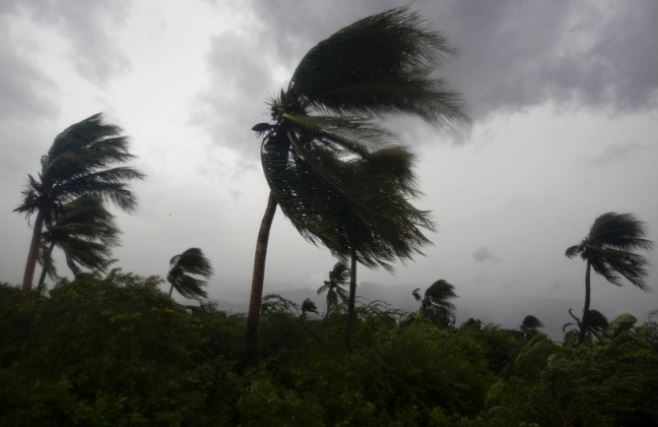
HURRICANES are particularly destructive and often deadly natural phenomena. The number of fatalities arising out of the annual “hurricane season” in the Caribbean, however, have been consistently lower in Cuba than in neighbouring islands. Why? It’s not that Cuba is spared the attentions of serious hurricanes. Hurricanes strike the island as regularly as they strike any other in the Caribbean. The simple answer is that the socialist government of Cuba puts the welfare of its citizens at the very top of its list of priorities. This leaves Cuba unusually well prepared for the entirely predictable extreme weather events to which its geographical location is prone. That preparation saves lives – many lives. The capitalist island states of the Caribbean have different priorities. Those priorities cost lives – many lives.

Scientists the world over have been warning their respective governments about the inevitability of a global pandemic for decades. They have urged them to prepare for outbreaks of new strains of infectious diseases against which their citizens, having no immunity, will find themselves acutely vulnerable. To be ready for these global pandemics, scientists have counselled politicians and civil servants to make sure that excess capacity is built into their countries’ hospitals, and to stockpile vast quantities of personal protective equipment (PPE). They have also urged the creation of detailed “pandemic plans” so that state agencies know exactly what to do when mass infection and death threaten their populations.

The scientists’ warnings have been vindicated but, tragically, they have not, for the most part, been heeded. A global pandemic has indeed struck, but only a handful of nation states were in any way prepared for the outbreak of the Covid-19 virus. In the overwhelming majority of countries the recommended preparations were not implemented. Indeed, far from being given excess capacity, hospitals and health services around the world have been consistently underfunded and their capacity to mount a successful pandemic defence diminished. Only in those countries seriously threatened by the SARS coronavirus outbreak of 2002-03 (China, Hong Kong, South Korea, Taiwan, Singapore, Thailand) was there anything resembling a well-prepared and effective public health response.

To properly prepare a nation for the outbreak of a potentially fatal infectious disease requires a state committed unequivocally to prioritising the general welfare of its citizens. Building in excess capacity in terms of trained staff, ICUs and hospital beds, and stockpiling PPE, should be regarded as simple governmental prudence by the electorate and the required fiscal resources allocated without serious objection. Politicians decrying such preparations as an unwarranted imposition on “the taxpayer” should elicit only angry condemnation and derision. Naturally, such states will, for many decades, have supplied universal, publicly funded and provided healthcare services to their citizens as of right.

The response of an ill-prepared nation would be altogether different. Possessing only the rudiments of a public health system, or a formerly robust public health system that has been consistently underfunded for decades, the necessary infrastructure for combatting a deadly pandemic would be absent. Poor and marginalised citizens, unable to afford the diagnosis and care they needed would present themselves to health professionals only when their condition had worsened to the point where they could be categorised as critical and hospitalised. This delay in seeking care has contributed significantly to the catastrophic overloading of hospitals – both public and private – that the world has witnessed in New York City and in the Italian region of Lombardy.

The absence of effective public health services, coupled with debilitating levels of poverty and inequality, is not, however, the worst feature of a nation ill-prepared to protect its citizens from natural disasters. To those glaring practical deficiencies must be added an equally glaring moral deficiency which makes national ill-preparedness on a criminal scale practically unavoidable.

That deficiency is the certitude pervading ruling elites and their enablers that, excepting themselves, human-beings are best considered “means to an end”. An “end” determined by themselves. It’s an attitude best summed-up in the verbal manoeuvre featured in HBO’s comedy-drama series “Succession”. When confronted with evidence of their criminal negligence, the series’ billionaire protagonists cynically dismiss it with the cryptic abbreviation “NRPI”. What does NRPI stand for? “No Real People Involved”.

If, in the face of disaster, only the rich are considered real enough to save, then the poor and the weak will soon be regarded as dispensable illusions.

This essay was originally published in The Otago Daily Times  and The Greymouth Star of Friday, 17 April 2020.

Friday, 27 July 2012

Thinking Our Way Out

It's Okay To Be Smart: Professor Peter Gluckman has urged New Zealanders to embrace intellectualism, science and the life of the mind. But in a country where intelligence and creativity are viewed with suspicion, what are his chances?

THE PRIME MINISTER’S scientific advisor, Professor Peter Gluckman, recently asked New Zealanders to show more respect for intellectualism. He was right to do so, although I hold little hope that New Zealanders will heed him. Kiwis don’t put a lot of stock in intellectualism and even less in intellectuals. Supposedly, our nation was built by “practical men” in circumstances that left little time for extravagant flights of fancy. Besides, to most New Zealanders intellectualism smacks of elitism: of people who misconstrue their intelligence and specialised knowledge as a badge of superiority. It offends our egalitarian principles.

Though this faux egalitarianism obliges our sporting heroes to demonstrate huge difficulty in stringing together a coherent sentence, we don’t object. An articulate Rugby player would only arouse suspicion. Was he making fun of us? His team-mates? Or – God forbid! – the holy game of Rugby itself? It’s why our sportsmen and women would never dream of waxing lyrical about their codes. Kiwis don’t appreciate “show-offs”. The media would be unsparing. Careers would suffer.

The Prime Minister, John Key, understands this imperative to do “normal Kiwi” very well. It’s why he has never attempted to modify his excruciating pronunciation of “Nu Zild” English. Remaining so dismally unquotable undoubtedly requires considerable self-discipline in a man as ebullient and intelligent as John Key. But, he’s up for it. To be the sort of bloke most New Zealanders can see themselves having a drink with, not only must the Prime Minister have nothing to say, but he must not say it often, with complete conviction, and in an accent broad enough to send elocutionists running screaming from the room.

In a peculiar way, this practice of political leaders deliberately dumbing themselves down is a tribute to the democratic temper of the New Zealand electorate – and must not be neglected. David Cunliffe’s great mistake, as an aspiring leader of the Labour Party was to be, in the words of Matt McCarten, “the better performer”. Intelligent, accomplished, articulate, even a little poetic, the man simply didn’t stand a chance against the patriotically inarticulate David Shearer.

But our democratic temper – or perhaps that should be “distemper” – comes at a cost. Professor Gluckman made his appeal for more intellectualism at a function honouring the late scientist, author and entrepreneur, Sir Paul Callaghan. In a country that valued men of ideas more (and ignoramuses less) Sir Paul would have been better known and more highly regarded. He wanted a New Zealand that put smarts ahead of sports, and was the untiring advocate of a nimble, export-oriented economy based on scientific entrepreneurism and innovative manufacturing – not on ever increasing volumes of milk and muck.

But, such an economy will only come into being in a New Zealand that has freed itself from the tutelage of “practical men”. A New Zealand whose airwaves are mercifully free of Maori haters, beneficiary bashers and climate change deniers. A New Zealand from which the malign spell of neoliberal economics has been lifted, and whose boardrooms have been populated with business leaders prepared to believe in the extraordinary abilities of ordinary Kiwis. A New Zealand that has, once again, become the place where exciting new ideas go to be born – instead of remaining the place where exhausted old ideas go to die.

Because the real story of New Zealand is not the story of sporting heroes and “practical men”, but of clever, creative, caring and innovative risk-takers. Men and women like William Pember-Reeves and Kate Shepherd, Bill Sutch and Clarence Beeby, Sonja Davies and Sir Owen Woodhouse. Sorely missed citizens like Sir Paul Callaghan and Margaret Mahy.

The social anthropologist, Peter J. Wilson, was another distinguished New Zealander. His celebrated book, Crab Antics, takes its name from the behaviour of crabs in a crab-pot. Should a more intelligent and enterprising crustacean discover a way out of their prison, his companions, rather than follow him to life and freedom, will reach up with their claws and haul him back. Wilson’s study of impoverished rural communities in the Caribbean revealed a culture in which human-beings behaved towards one another much like those incarcerated crabs.

The egalitarianism of Crab Antics is impressive, but it is also fatal. To have an equal chance of escaping their present confinement, New Zealanders must learn to stop hauling down those who have thought our way out.

This essay was originally published in The Waikato Times, The Taranaki Daily News, The Timaru Herald, The Otago Daily Times and The Greymouth Star of Friday, July 27, 2012.

Friday, 17 June 2011

Why The Greens Should Watch Adam Curtis

Soul Destroying: The classical ecological paradigm regards a state of equilibrium as Nature's "default setting".  Adam Curtis's latest series of documentaries argues that our faith in "the balance of nature" is in fact a manifestation of our own inability to meaningfully disturb the equilibrium of the political and economic machinery in which we are enmeshed. Finding ourselves unable to beat the machines, we appear to be trying to join them.

ADAM CURTIS makes television programmes that challenge our understanding of the world. To call this puckish fifty-five-year-old’s productions documentaries scarcely does them justice. Curtis ransacks his BBC employers’ visual archives for his trademark rapid-fire imagery, and makes free with both classical and popular music for his films’ evocative soundtracks. Elucidated and enhanced by these sensory onslaughts, Curtis’ ideas strike hard and sink deep in the minds of his viewers.

His latest offering, a three-part series entitled All Watched Over by Machines of Loving Grace should be compulsory viewing for every member of the Greens’ caucus and party.

They won’t enjoy it, but I’m confident it would do them a world of good.

Because the second part of Curtis’s trilogy, “The Use and Abuse of Vegetational Concepts”, interrogates and then radically deconstructs one of the central tenets of the green belief system, that: left to themselves, all ecosystems tend towards a state of equilibrium.

It’s the idea which underpins the entire environmental movement. Stripped of the notion that some mysterious natural force somehow keeps all things in balance, the prospect of the human species abandoning its destructive behaviour – and thereby earning itself a “sustainable” niche in Mother Nature’s steady state – becomes a chimera.

Curtis’s challenge to the original ecological paradigm forms just one part of a much broader critique of the way in which men and women of the twentieth and twenty-First centuries have attempted to empty human behaviour of its moral and political dynamism by applying to it the soulless logic of mechanical systems.

At first blush, this would appear to have little or nothing to do with green ideology. Surely the logic of the machine is precisely what greens are fighting against?

What Curtis demonstrates, however, is that the stereotype of the “luddite” green is almost entirely mistaken. By a series of daring conceptual leaps, Curtis links the right-wing libertarianism and extreme individualism of the tea-partiers’ guru, Ayn Rand, with the “turn on, tune in and drop out” libertarianism of the Californian hippies.

The link? Cybernetics.

Cybernetics and systems theory gave rise to the notion that computers could not only free capitalism from the regulatory chains of the social-democratic herd, but that they would make possible a world in which human-beings and the natural world “did their own thing” in perfect harmony.

The curious title of Curtis’s series is taken from a poem by the celebrated 60’s poet, Richard Brautigan. He wrote of:

a cybernetic ecology
where we are free of our labors
and joined back to nature,
returned to our mammal
brothers and sisters,
and all watched over
by machines of loving grace.

Curtis challenges the superficial radicalism of Brautigan’s hippie vision by drawing on the very real experiences of those who took the systems theory utopians like Buckminster Fuller at their word and established communes of networked, non-hierarchical, self-organising individuals held in equilibrium by the self-correcting influence of “feedback loops”.

What brought these communes to their bitter, often violent, ends was that their anti-political ethos, far from eliminating coercion and exploitation, actually ended up facilitating it. By forbidding majority decision-making and the formation of factions (evil manifestations of the despised practice of politics) all the communards had done was draft a bully’s charter.

Because all human (and natural) systems are dynamic and subject to constant challenge and response, the question of agency is inescapable. Moral and political decisions cannot be magically excised from our social and economic environment unless – and this is the whole point of Curtis’s series – we are willing to regard ourselves as nothing more than amoral bio-machines.

The conflict within the New Zealand Greens, which Sue Bradford has written about with considerable passion of late, carries alarming echoes of Curtis’s critique. The Greens’ prohibition against faction-forming, and their distaste for majority decision-making, sound remarkably similar to the rules of those dysfunctional Californian communes.

Add to this their newfound willingness to become just another “responsible” component in the political circuitry of capitalism, and Sue’s concerns are readily understood.

That’s why Russel Norman, Metiria Turei and their colleagues should invest three hours in watching Curtis’s remarkable trilogy.

It will remind them of what they once had – and are at mortal risk of losing.

The insight that it’s only our ability to make moral decisions that makes us human.

And that there’s absolutely nothing “natural” about it.

This essay was originally published in The Timaru Herald, The Taranaki Daily News, The Otago Daily Times and The Greymouth Star of Friday, 17 June 2011.

Friday, 10 June 2011

The Gluckman Report: Acknowledging The Symptoms, Ignoring The Causes

The Morbid Relationship of Politics and Science: Professor Sir Peter Gluckman's report to the Prime Minister addresses the biological and psychological aspects of human maturation but fails to locate these in their socio-economic and political contexts. Twenty-percent of Kiwi adolescents aren't making the transition to adulthood easily, says the Professor. Did anyone ask if they were raised in the 15-20 percent of families whose incomes fall below the poverty line?

WHAT A SHAME. To hear the news media tell it, the story of Professor Sir Peter Gluckman’s report to the Prime Minister was one of disinterested science versus ill-informed populism. 

In a world dominated by sound-bites and focus-groups, John Key’s hand-picked scientific adviser was heroically making the case for evidence-based policies. 

“Social investment in New Zealand should take more account of the growing evidence that prevention and intervention strategies applied early in life are more effective in altering outcomes and reap more economic returns over the life course than do strategies applied later.” 

So says Professor Gluckman and his team – adding for good measure that: “This will require long-term commitment to appropriate policies and programmes.” 

For those in the policy-making community this must have been an “Alleluia Moment”. Could it be, that after years of denigration and marginalisation at the hands of the political class, experts and expertise were about to make a come-back? 

Well, I for one hope not. At least not these “experts” or this “expertise”. 

Because, reading through Improving the Transition: Reducing Social and Psychological Morbidly During Adolescence, it quickly becomes clear that this “science” is very “interested” indeed – and not in a good way.


THE HISTORY of scientific involvement in the formation of social policy is not a happy one. From the pernicious social theories of the 19th Century eugenicist Sir Francis Galton, to the authoritarian social-engineering offered up in the Trilateral Commission’s 1976 report Crisis of Democracy: On the Governability of Democracies, the interventions of “disinterested science” have almost always ended up arguing for an intensification of social controls and the consequent curtailment of individual liberty. 

The essence of Professor Gluckman’s argument is that, over the course of the last half-century, the human developmental phase known as “adolescence” has grown longer, and that the discoveries of biological science should be applied to the task of reducing the social and psychological “morbidity” of the “at least 20 % of young New Zealanders” who are failing to navigate this extended period of sub-adulthood successfully.


OH DEAR, oh dear, oh dear: there is just so much wrong with Professor Gluckman’s approach – it’s hard to know where to begin. 

For a start, his thesis is utterly ahistorical – a deficiency which renders most of the report redundant. It neglects to acknowledge that “adolescence” itself is much more of a social than a scientific construct. An ex post facto justification for the very political decision to keep children out of the industrial labour force. 

Prior to the rise of industrial capitalism, women and children had participated fully in the processes of production, and the family formation process was usually underway by the late teens. 

And even after the social reformers of the 19th Century had put an end to child labour, no legal impediment was raised to employing 12 to 15-year-olds on farms and in factories. 

Those of us over 50 will have little difficulty in remembering people who left high-school at 15, married at 19 or 20 and were parents long before they were 25. No one back then questioned their “social and psychological” fitness for these roles; they were adult citizens in good-standing; holding down jobs, paying off homes and raising families. 

It’s this historical data that Professor Gluckman and his team quite simply refused to confront. 

If there is social and psychological morbidly in New Zealand society, the explanation is not to be found in our genes, or the development of our brains, but in the political and economic decisions that have made the unnatural extension of “adolescence” inevitable. 

Reintroduce full employment and free tertiary education, Professor Gluckman, and watch the morbidity of “at least 20% of young New Zealanders” plummet. Restore State Advances housing loans and the universal Family Benefit, and be astounded at how much earlier those young New Zealanders take on the responsibilities of adulthood. 

To paraphrase Marx: The Scientists have only investigated the world, in various ways. The point, however, is to change it. 

This essay was originally published in The Dominion Post, The Timaru Herald, The Taranaki Daily News, The Otago Daily Times and The Greymouth Star of Friday, 10 June 2011.