Showing posts with label 2022 Auckland Mayoralty Race. Show all posts

Monday, 6 February 2023

A Sorry State Of Affairs.

Apology Accepted? “I dropped the ball on Friday, I was too slow to be seen …The communications weren’t fast enough – including mine. I’m sorry for that.” Auckland Mayor Wayne Brown.

HOW OFTEN do politicians apologise? Sincerely apologise? Not offer voters the weasel words: “If my actions have offended anyone, then I apologise.” That’s the apology politicians offer when they don’t believe they’ve done anything to apologise for. The question is: how often does a politician offer voters an apology like this?

I dropped the ball on Friday, I was too slow to be seen …The communications weren’t fast enough – including mine. I’m sorry for that.

The politician speaking those words is Wayne Brown, the Mayor of New Zealand’s largest city, Auckland. Justifiably criticised for his inadequate initial response to the torrential rainstorms that deluged his city on Friday 27 and Saturday 28 January 2023 (since described by meteorologists as a one-in-200-year weather event) Brown has publicly owned-up to his personal failings and said “I’m sorry.”

Not that Brown will receive the slightest positive acknowledgement from his many media critics for stepping-up and accepting his share of responsibility for the multiple failings of public agencies that occurred on the night of Auckland’s devastating rainstorm. The reasons for this are relatively straightforward: Brown is male. Brown is white. Brown is over the age of 65. Brown is also known to be openly contemptuous of journalists. And, most importantly, Brown defeated Efeso Collins, the mayoral candidate many (most?) Auckland journalists wanted to win.

Before examining Brown’s relationship with the news media in more depth, a word or two is needed concerning the shocking level of ageism to which he has been subjected from the very beginning of his campaign to become Auckland’s mayor.

It is remarkable how adept – and shameless – young and supposedly well-educated New Zealanders have proved to be at discriminating against their fellow citizens on the grounds of age. Journalists who would lavish barrels of ink on any person writing disparagingly about the personal appearance of a female politician, nevertheless feel free to dwell upon the ravages time has wrought upon the features of a “grumpy old man”.

That discrimination on the basis of age is outlawed in New Zealand cuts almost no ice with the sort of journalists who glibly describe Brown as “The Boomer King”. It is almost as if the journalists responsible for such ageist slurs are unable to recognise in themselves the same, deeply-ingrained, discriminatory impulses that they condemn so bitterly when manifested by racists, sexists and homophobes.

One can hardly avoid the conclusion that these ageists’ hatred for older human-beings is every bit as visceral as the racists’ hatred for people of colour, and the misogynists’ hatred of women. That they nevertheless feel free to express their prejudices openly is as worrying as it is shameful. Where is the Human Rights Commission when the “hate speech” it condemns so vigorously – and promptly – when directed at Māori, women, Muslims and the LGBTQI community is aimed, instead, at older New Zealanders?

The oddest thing of all about ageism is that every single person who indulges in it will one day (absent the worst sort of bad luck) grow old. How much racism would there be if every White person slowly became a Black person? How much misogyny, if every man turned gradually into a woman? When old age is humankind’s common destiny, ageism makes no sense at all.

The propensity of old age and guile to defeat youth and idealism, is also a common feature of human experience – especially in the field of politics. That Wayne Brown proved the accuracy of the aphorism, by soundly defeating his younger opponent, Efeso Collins, in the mayoralty race of 2022, did little to improve his already poor relationship with “progressive” Auckland journalists, many of them a whole generation younger than himself.

Jacinda Ardern’s “Politics of Kindness”, and her Government’s strong support for Māori and Pasifika, encouraged the Prime Minister’s generation to look forward to Collins becoming the Auckland super-city’s first Pasifika mayor. If Auckland voters had been willing to elect Labour-endorsed has-beens like Len Brown and Phil Goff, then surely, Efeso would be a shoe-in? That Aucklanders might elect a “grumpy old man” like Wayne Brown struck Ardern’s generation of activists as preposterous. They were confident that their assumptions about the nature of contemporary politics and the shape of Aotearoa’s political future were unassailable.

That Brown won the mayoral race easily – principally by applying basic electoral principles to the structuring of his campaign – threw into sharp relief the organisational deficiencies of a generation encouraged to accord bold declarations and positive intentions the same ontological status as actual achievements. As an engineer, Brown is only interested in what works. So instructed, his advisers told him to target only those Aucklanders with a proven track-record of participating in local government elections. These tended to be older, and considerably less tolerant of political dreams and visions, than the younger, typically non-voting, Aucklander.

As it became increasingly obvious that Brown’s pragmatic, non-ideological, “Mr Fix-It” pitch to the active Auckland electorate was going to overwhelm Collins, the active dislike of “progressives” – most particularly those located in the younger generations – grew. Among the least successful at hiding their animosity towards Brown were the city’s journalists – a failure that convinced the newly-elected Mayor that he would be better off not engaging with them.

Brown was right. The reaction of the New Zealand news media – especially those elements of it based in Auckland – was depressingly similar to the United States’ news media’s reaction to Donald Trump’s “impossible” presidential victory of 2016. Unable to accept that it was the political incompetence of “their” candidate that made a Trump victory possible, the American media instead abandoned completely its cherished principles of fairness and balance. Henceforth Trump was the enemy to whom no quarter should be given. Brown, who had also won on the votes of “deplorables” and, like Trump, held most journalists in contempt, would be treated as a reactionary interloper.

It should not be thought, however, that journalists were alone in their animosity towards Brown. Across the entire Auckland City bureaucracy similar misgivings were growing at the prospect of Mr Fix-It telling the Council’s highly-paid managers and professionals how to do their jobs. It would certainly explain why, when the deluge struck, and many of the Supercity’s bureaucrats failed to respond effectively to the emergency, their first instinct was to make the Mayor the scapegoat for what was clearly a system-wide failure. And why the first instinct of the city’s “progressive” journalists was to help them.

Hence Brown’s all-too-public frustration and anger at his inexplicable early exclusion from a number of crucial informational loops. That exclusion in no way excuses Brown’s failure to be seen and heard by Aucklanders as the floodwaters rose and the crisis deepened, but it most certainly does explain them.

And Brown, at least, has had the decency to say he’s sorry. It would be most unwise, however, to hold one’s breath in anticipation of Auckland’s anti-Brown journalists and bureaucrats doing the same.


This essay was originally posted on the Interest.co.nz website on Monday, 6 February 2023.

Friday, 28 January 2022

Efeso? Yeah, Yeah!

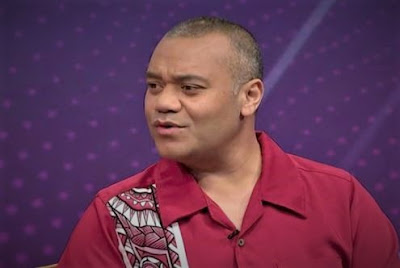
Rebel With A Cause: Efeso Collins promises to be the sort of candidate who can generate genuine excitement among an electorate that usually dismisses local government elections as too boring to bother with. That said, you might think that Labour’s top brass would have fallen to their knees saying “Thank you God for sending us a candidate straight out of Central Casting!” But they’re didn’t. Why? 

WHAT IS LABOUR going to do about Efeso Collins? His decision to offer himself as a candidate in this year’s Auckland mayoral election places the party in a very difficult position. If Labour backs him, he risks dragging it in a direction it doesn’t want to go. If it sacks him, he just might win anyway.

Collins is a larger than life politician of considerable eloquence and unsettling (for Labour’s top brass) independence of mind. Even worse, he is a politician unafraid to take a principled stand – even at the cost of angering his senior colleagues. Born and raised in Otara, the youngest son of Samoan immigrants, Collins possesses that rare, but highly prized, quality of personal authenticity. For the Pasifika community, he’s the Man.

In other words, Collins promises to be the sort of candidate who can generate genuine excitement among an electorate that usually dismisses local government elections as too boring to bother with. That said, you might think that Labour’s top brass would have fallen to their knees saying “Thank you God for sending us a candidate straight out of Central Casting!” But they’re didn’t. Why? Because Collins makes them look like the stale, white-bread, don’t-rock-the-boat politicians that they truly are – and they hate him for it.

Foolishly, Labour’s top brass have allowed their animosity towards Collins to cloud their strategic political judgement. Without first securing a rock-solid guarantee from Collins that he was not going to run, they started briefing the Auckland news media about the man they had already fixed upon as Phil Goff’s replacement. (That Phil Goff had fixed upon the same man made it all too easy!)

North Shore councillor, Richard Hill, was presented as the man upon whom Labour’s hands had been laid. Technocratic, socially liberal, a disciple of the gospel of “governance”, and a bona fide policy wonk, Hill was shopped around to local government journalists as Labour’s heir presumptive to the mayoral chains.

And then Collins announced – on the woke website The Spinoff, no less. In a long interview with Spinoff editor, Toby Manhire, Collins laid out his pitch for “the second most powerful job in New Zealand”.

It was a damn good pitch, confirming just how adroit Collins has become at presenting himself as both a genuine reformer and a moral conservative – the perfect South Auckland combo, but also one likely to kindle genuine interest among a great many more Aucklanders than simply the city’s Pasifika population. Receiving the near instant endorsement of the caustic conservative commentator, Ben Thomas, was proof of Collins considerable cross-over appeal.

The Spinoff also did Collins the enormous favour of putting up a video produced by his South Auckland supporters for his first run at local office. This is the sort of thing that Labour’s pathologically cautious apparatchiks just can’t do. Jacinda can – which is why Labour is where it is today. Do what? Make her party look cool-as. What The Spinoff allowed its huge audience of young, politically engaged readers to see and hear was that, way before Jacinda mastered this style of communication, Efeso’s campaign workers had nailed it to the wall.

This is Labour’s problem. It has set its heart on a Hilary Clinton, who can’t win, and is now facing a Barack Obama, who can.

What to do?

The most obvious solution – which Collins admits to lobbying for hard over many months, to no avail – is an open process of democratic selection. A “primary”, if you will, like those used by the Americans to determine their parties’ choices.

Labour Party members, across the whole of Auckland City, would be asked to vote for their preferred candidate. Simple? Effective? You might think so. But, Labour’s top brass hate the whole idea of membership elections. (Mention the name of David Cunliffe and watch them turn pale!) The only election process they seem to favour is something along the lines of the College of Cardinals choosing a Pope. An entirely mysterious process, conducted behind locked doors, comprehensible only to God.

Besides, even if the Labour top brass could be persuaded to democratise the selection process, they’d still be faced with the problem that Collins would, almost certainly, win it. And if he did, he would likely prove even less amenable to the guidance of Labour’s top brass than he has as a humble councillor. Like his last-minute refusal to vote for Goff’s regional fuel tax, arguing convincingly that it would disproportionately impact his Pasifika and Māori constituents who depend on their old, gas-guzzling jalopies to get them to work on time.

Not the sort of argument that cut much ice with North Shore Councillor Richard Hill – who loyally supported Mayor Goff’s regressive policy.

So, what will Labour do? My best guess is they will put Hills up as an “independent” candidate and spend the whole campaign casting Collins in the role of “spoiler” and “splitter” of the “centre-left” vote. If that fails to produce the desired effect in the polls, then Labour’s little online helpers will remind voters that Collin’s opposed gay marriage and has personal moral objections to abortion. Thoroughly distancing themselves from such scurrilous tactics, Labour will, nevertheless, be privately delighted to see their allies in the news media amplify these attempts to cancel Collins’ campaign.

Will it work? Doubtful. Wokeness is an acquired socio-political taste – at best. Depending on how Collins responds to these attacks, his standing with the average, non-woke, voter might even be enhanced. A brown, working-class, family man, under attack by the worst elements of left-wing “cancel culture”. What’s not to like?

Then, of course, there’s the Right. Should its preferred mayoral candidate/s fail to fire, and the race between Collins and Hills come down to the wire, conservative Aucklanders might just decide to inflict a crushing blow upon Labour in Auckland by throwing their weight behind Collins – thereby ensuring his victory, as well as giving themselves a not insignificant role in the election of Auckland’s first Pasifika mayor.

Wildly optimistic? Maybe. But just read this extract from Collins interview with The Spinoff before writing-off the chances of the Right swinging in behind him:

“As far as reaching across the left-right aisle is concerned, Collins points to his working relationship with Desley Simpson, the National-aligned councillor for Ōrākei. “I made a deliberate choice to sit next to Desley. And that is based on the fact that I represent the poorest ward in the city, and she represents the wealthiest, and we can sit there while other discussions are going on and thrash things out,” he says. “And what that has done has allowed me to understand how people in her area see the world, the same way I can invite her to understand how our people in this part of Auckland see the world.” During last year’s Covid lockdown, that resulted in “one of those beautiful things”, he says, when “she turned up with trailer loads of goods, which had women’s sanitary products, food, furniture, and she brought it to the Māngere budgeting service – trailer loads of stuff … She rang me and said: “Look, I’ve got these people who said they’ve seen you on TV, they know you’re really keen to get some services and products out to your community. Let’s make the link.”

It’s stories like that which make Efeso Collins such a formidable mayoral candidate. Raised on Bible stories, he knows how to craft a memorable parable.

Labour’s problem, as an old mate of mine once observed of another ideologically rigid organisation, is that: “They’d rather keep control of the losing side than lose control of the winning side.” Well, faced with Efeso Collins, the chances of Labour keeping control of the Auckland mayoralty strike me as slim. I think they’ll lose it.

And, frankly, that will be no bad thing.


This essay was originally posted on The Daily Blog of Friday, 28 January 2022.