Showing posts with label Anthropogenic Global Warming. Show all posts

Friday, 5 November 2021

COP26: Good Luck – To All Of Us.

Eyes On The Prize? COP26 is important and necessary: not on account of the messages it will impart to us; and certainly not on account of the workable solutions it will offer us. It is important and necessary precisely because humanity needs to be persuaded that it is still rational to go on believing, or, at the very least, hoping, that the looming and unstoppable climate catastrophe can be avoided.

I WONDER how many people around the world are watching COP26 with their lips curled in a permanent sneer. I have witnessed too many of these gatherings to harbour even the tiniest hope of anything positive emerging from this latest worthy talkfest.

Not even an impassioned Boris Johnson, giving his very best impression of an Extinction Rebellion activist, could remove my sneer. And certainly not dear old “Sleepy-Joe” Biden, sitting there in COP26’s great hangar of a venue, arms folded across his chest, and … well … sleeping.

Not that I’m criticising the US President. His reaction to the droning catastrophism was entirely reasonable. The only responses that topped it were those of Vladimir Putin and Xi Jinping – who didn’t even bother to show up.

The Russian President has far too much to contend with on the climate change front to waste his time in Glasgow. Roughly two thirds of the Russian Federation is permafrost. Which means that, as of now, roughly two-thirds of the Russian Federation is melting.

This not just a matter of twisted railway tracks and the foundations of houses parting company with their superstructure – although that would be worrisome enough. Right across Siberia, gaping holes are appearing – some of them huge – where Methane, imprisoned beneath the frozen tundra for thousands of years, is bursting forth into the atmosphere.

Methane is, of course, among the most devastating of greenhouse gasses.

As if this wasn’t enough to distract the Russian leader, unprecedented surface temperatures across Siberia are drying out its vast primeval forestlands, transforming them into so much tinder for the seemingly never-ending succession of wildfires that have been exhausting thousands of firefighters for the last two years.

Undoubtedly, Putin has been demanding answers from his top scientific advisers. Being Russians, their answers were likely a dark mixture of pessimism and fatalism. Preventing climate change is no longer an option, they would have told their boss. It’s already here. And, no, there is nothing we can do to save Siberia – unless the President knows of some way to re-freeze half a continent.

What could Putin have said to the COP26 delegates anyway?

“You’re wasting your time. It’s too late.

“Climate change could have been prevented if we had acted collectively 50 years ago. But, 50 years ago we were too preoccupied with the question of whether industrial (i.e. fossil-fuel-based) civilisation should be run by socialists or capitalists.

“We failed to notice that the exponential increase in greenhouse gasses was rendering the entire argument moot. The challenge facing the human species now is the same it has always been: adapt, or die. Udachi!

And Russia’s contribution to global warming is less than the European Union’s.

Consider, then, the challenge confronting the President of the world’s biggest contributor to greenhouse gas emissions – the People’s Republic of China. What could Xi Jinping possibly say to COP26?

“I have nothing to offer you. Nothing. Because the People’s Republic has attempted to make deep, structural changes to the Chinese economy: changes intended to dramatically reduce its greenhouse gas emissions. It has been a disaster.

“Without the burning of fossil fuels our species could never have come so far, built so high, lived so well. Far too many of us are now dependent on those same fossil fuels. The Chinese people have learned what it means to suddenly stop using them.

“The only possible solution is sudden and massive depopulation.

“But that raises the awful question: who is to die? Because, be under no illusion, billions must perish.

“All I can tell you is that the Chinese people will not be volunteering. And neither, I suspect, will any of the other peoples represented here.

“As always, it will come down to a struggle for survival. Zhù nǐ hǎo yùn!

Not that world leaders will ever speak so plainly, or so honestly, to their own, or the World’s, peoples.

COP26 is important and necessary: not on account of the messages it will impart to us; and certainly not on account of the workable solutions it will offer us. It is important and necessary precisely because humanity needs to be persuaded that it is still rational to go on believing, or, at the very least, hoping, that the looming and unstoppable climate catastrophe can be avoided.

“Good luck!” – to all of us. (Offered without a sneer.)


This essay was originally published in The Otago Daily Times and The Greymouth Star of Friday, 5 November 2021.

Tuesday, 22 June 2021

No Questions Please – We’re Revolutionaries!

The Kids Were All Right: By stripping away all moral and practical grounds for unified struggle, Critical Race Theory can only strengthen the elites’ grip on contemporary society. The abdication of School Strike For Climate Auckland offers a textbook example of this phenomenon. The moral force of the nation’s secondary students in the fight against climate change has been significantly compromised. And through it all the mainstream news media has had nothing to say.

PERHAPS THE MOST ASTONISHING aspect of School Strike For Climate Auckland’s (SSFCA) spectacular self-cancellation was the media’s lack of interest. Oh sure, they picked up the group’s news release, and made its contents known to the public, but that was it. There appeared to be a general reluctance, extending across the whole of the mainstream news media, to investigate the story in any depth. No attempt was made to flesh-out and explain what, to most New Zealanders, was a jarring and baffling item of news. The same media which had welcomed the School Strike For Climate Movement, and praised its achievements, accepted the curious demise of its largest section without serious investigation or comment.

The only explanation for such an egregious dereliction of journalistic duty is that mainstream editors and reporters were fearful of the territory into which any serious investigation of the event was bound to lead them. They would have to explain why a group of young and idealistic secondary-school students, people they had written glowing stories about, had somehow been persuaded that they, and their organisation, were racist. They would have been required to question whether the Maori and Pasifika groups into whose hands SSFCA had vouchsafed the climate fight were capable of maintaining the political momentum generated by Greta Thunberg’s global movement.

Most of all, they would have had to help ordinary New Zealanders understand the extraordinary self-abasement contained in the group’s news release:

We apologise for the hurt, burnout, and trauma. We also apologise for the further trauma caused by our slow action to take responsibility. We recognise that this apology can never be enough to make up for our actions on top of years of systemic and systematic oppression, racism, and the silencing of those who are the most affected by climate change. This apology is just one of our steps in taking accountability for our actions.

What could possibly have made these young people say such extraordinary things about themselves, and about the movement they had worked so hard to build?

Unwilling to go there, a more politically savvy mainstream news media would simply have ignored the news release. Certainly, if your intention is to let a story die, then the last place you should put it is on RNZ’s “Morning Report” or the NZ Herald’s website. That, however, is where the statement ended up – in all its woke glory. Tens-of-thousands of astonished New Zealanders heard it, or read it, and said: “What on Earth?” But, from the editors and reporters who had salved what remained of their journalistic consciences by broadcasting and publishing SSFCA’s words, no answers came – just enthusiastic endorsements of the organisation’s actions from indigenous activists.

Those astonished New Zealanders seeking an explanation for SSFCA’s actions need look no further than the American-born ideology known as “Critical Race Theory” (CRT). According to the University of California, Los Angeles, Luskin School of Public Affairs:

CRT recognises that racism is engrained in the fabric and system of American society. The individual racist need not exist to note that institutional racism is pervasive in the dominant culture. This is the analytical lens that CRT uses in examining existing power structures. CRT identifies that these power structures are based on white privilege and white supremacy, which perpetuates the marginalisation of people of colour. CRT also rejects the traditions of liberalism and meritocracy. Legal discourse says that the law is neutral and colour-blind, however, CRT challenges this legal “truth” by examining liberalism and meritocracy as a vehicle of self-interest, power and privilege.

Now, while you might need to be a professor to write the above definition of CRT, you most certainly do not need a PhD to grasp how CRT works in practice. In a nutshell, CRT operates according to the principle: “If you’re white, you cannot be right.”

Naturally, in the United States the historical force credited with creating white privilege and white supremacy is Slavery. In New Zealand, however, the place of Slavery has been taken by Colonisation. It is not to white slavers, but white settlers, that the followers of CRT look for the root of all Aotearoa’s evils.

Leftists who object that white workers will always have more in common with brown workers than they will with a white ruling-class that oppresses all workers, get no joy from the followers of CRT. White elites may derive material benefits from their dominant position, but working-class whites derive equally important psychological benefits from their position in the racial hierarchy. According to CRT, the existence of a whole category of human-beings deemed immutably inferior to the white race, makes it easier for white workers to accept their own socio-economic subordination. At a stroke, Marxism is reduced to just another prop for white supremacy!

By stripping away all moral and practical grounds for unified struggle, CRT can only strengthen the elites’ grip on contemporary society. The abdication of SSFCA offers a textbook example of this phenomenon. The moral force of the nation’s secondary students in the fight against climate change has been significantly compromised. Doubts and resentments will spread swiftly through the SSFC Movement, making it a pretty safe bet that the turnout for any future demonstrations will be only a fraction of its former efforts. If the oil companies had set out to sabotage the domestic movement against anthropogenic global warming they could hardly have done a better job than these local adherents of CRT.

Black American progressives have themselves noted the dangerous ironies inherent in CRT. As Mitchell Dean and Daniel Zamora note in their recent Guardian article “Today, the self is the battlefield of politics. Blame Michel Foucault”:

Despite the ever-growing presence of this politics, its shortcomings are growing clear. “White guilt and black outrage,” as Cedric Johnson, professor of African American studies, has recently pointed out, “have limited political currency, and neither has ever been a sustainable basis for building the kind of popular and legislative majorities needed to actually contest entrenched power in any meaningful way” ….. In fact, he added, this “militant expression of racial liberalism” will “continue to defer the kind of public goods that might actually help” all those who are “routinely surveilled, harassed, arrested, convicted, incarcerated and condemned as failures”. With material stakes of politics growing ever more urgent many in the liberal centre would much prefer us to busy ourselves with loud rituals announcing our inner battles.

It would be unfair, however, to heap too much blame upon the young students at the heart of this story. One can only imagine the emotional intensity of the “struggle sessions” required to induce the activist core of SSFCA’s abject capitulation. During the infamous “Cultural Revolution” of the 1960s, the brutality of similar sessions, at the hands of Mao Zedong’s fanatical “Red Guards”, was sufficient to break Communist Party veterans of the “Long March”. What chance had an well-meaning, idealistic bunch of middle-class Auckland kids against such tactics?

We conclude, therefore, where we began. In its coverage of the SSFCA’s self-immolation, the mainstream news media touched upon none of the issues featured in this post. Why? Because, bluntly, any such investigation would be severely career-limiting for the young (or old) mainstream journalist who undertook it. This is unfortunate, because arising out of this story are a number of important questions.

Does it mean, for example, that in spite of being disadvantaged and under-resourced by colonisation, and only responsible for a small part of the local climate problem (which tends to be correlated with income, as well as population) Maori and Pasifika will also now bear the burden of solving the whole of Aotearoa-New Zealand’s climate change problem? Does it mean that Pakeha climate change activists will no longer accept historical responsibility for persuading the country’s farmers – overwhelmingly Pakeha for obvious colonial reasons – to do their bit to reduce biogenic methane and plant more trees? (Hat-tip to Dr Chris Harris.)

Don’t hold your breath for the answers. Like it or not, the precepts of CRT are now accepted as holy writ in the newsrooms of the nation. Guilty white journalists may cheer-on the Revolution as loudly as they wish, but they must not, under any circumstances, interrogate it.


This essay was originally posted on The Daily Blog of Friday, 18 June 2021.

Sunday, 13 June 2021

Hoping For Divine Intervention.

By Any Chance, Are These Two Related? Climate Change Commission Chair, Rod Carr, and Michelangelo's Jehovah. Is that the message hidden in the CCC's report? That only divine intervention can save the planet from the effects of anthropogenic global warming?

ROD CARR reminds me of God. Seriously, that beard. From a distance, in poor light, the God of Michelangelo’s Sistine Chapel ceiling could easily be mistaken for the Chair of the Climate Change Commission (CCC). More to the point, Carr seems to believe he possesses at least some of the powers of the Almighty. How else to explain the “transformational” plans he has developed to meet the, frankly, unachievable goals this government has set itself vis-à-vis greenhouse gas emissions? Contrariwise, maybe that’s exactly the message Carr is trying to send: “From here on in, folks, only divine intervention can save us!”

That the CCC and the Government have got this far without encountering very much in the way of pushback from the public (farmers don’t count as the public) is because New Zealanders have no idea how much their day-to-day lives will be affected if Carr’s masterplan becomes Government policy. Everybody pays lip service to fighting global warming, but beyond occasionally catching a bus, or walking – instead of driving – to the chippie, it’s business as usual. Hardly anyone is prepared for the radical change of lifestyle which Carr’s recommendations would require. So, when the climate change penny finally drops, all hell is going to break loose.

In a country currently engaged in a such a passionate love affair with the SUV, does the Prime Minister, Jacinda Ardern, and the Climate Change Minister, James Shaw, truly believe New Zealanders are going to embrace electric motor vehicles without a backward glance? Do they seriously expect their political opponents to rise selflessly above all the opportunities for inflicting mortal injuries upon them by telling the voters that although they may not wanna – they hafta?

Four words: Not. Going. To. Happen.

Act’s David Seymour has already indicated the Right’s general direction of travel. He has called for Carr’s report to be thrown into the rubbish bin. Picking apart his response, it’s not difficult to predict the core content of the emerging right-wing narrative.

Carr’s plans are typically elitist in their lofty disregard for the lives of ordinary New Zealanders. Indeed, the burden of this plan of his will fall most heavily upon those Kiwis least able to bear it. Is the cleaner living in South Auckland, who travels miles each day by car to reach her workplace, seriously being asked to buy an electric vehicle? And even if the government finances her into one, how is she supposed to power it up?

When the whole global warming schtick is about not being able to take for granted all the weather events that make it possible to rely on hydro-electric energy and those godawful windmill thingies, what makes Carr and his minions so sure there will be enough electrical energy to keep a vehicle fleet of millions powered up? What if the snows don’t come? What if there’s a prolonged drought? What if the winds fall away to nothing for weeks at a time? I mean, presumably, the scientists call it “climate change” for a reason!

Seymour is also pointing the way, right-wing wise, when he counsels against New Zealand attempting to lead the world in its response to climate change. Why would we want to do that, he asks? What’s wrong with being a “fast follower”? Let others invest the billions in research. Let others develop the technological fix. Why shouldn’t we just do the best we can and await developments?

The Taxpayers’ Union is running a very similar line. This is what Jordan Williams had to say in response to Carr’s recommendations:

You might read in the media that the Commission has softened the hard edges of some of its targets (like electric vehicles and renewable energy). But working through the detail I’m sad to report that the plan doubles down on its most egregious and costly elements. Let me be very clear: this plan will not improve our ability to fight climate change. It deliberately shuns the ‘least cost’ approach and the Emissions Trading Scheme in favour of a ‘transformation’ of the New Zealand economy. This isn’t me saying this. The Commission’s own experts say that the ETS would actually get us to our emissions targets without radical interventions.

You can see where this is going, can’t you? This is going straight to the Right’s happy place, where calm and reasonable folk can say: “Look, we don’t have to change our lives in the way the CCC and the Ardern Government are suggesting. There’s a perfectly sensible scheme already in place. What’s wrong with telling people that if they want to consume a more-than-sensible amount of fossil fuel, then they’ll have to pay for the privilege? What’s wrong with letting the market decide?”

Oh, sure, the likes of Shaw, Marama Davidson and Julie-Anne Genter will wax eloquent about Aotearoa’s responsibility to do all it can to meet its Paris (and, in a few months, Glasgow) targets. They will insist that we have a moral duty to save the planet for our mokopuna. But by then, nobody will be listening. Why? Because the Right will be beating on the deplorable drum.

The deplorable drum? WTF is the deplorable drum? Well, that’s the drum that beats out the message that undermines everything God – I mean Rod – Carr and the Labour Government are trying to do.

And what message is that? The Right’s deplorable – but irrefutable – message is this. Read it and weep.

“Don’t listen to all these greenie idiots. Don’t let all this nonsense about New Zealanders having to step up to the challenge of climate change fool you. To hear people like Carr and Shaw and Ardern tell it, if we sacrifice our way of life, if we pull on the hair shirt of social and economic decline, then somehow we’ll be saved. Somehow, all over these blessed islands of ours, the climate will return to the norms of the Holocene. All BS, of course, because Climate Change is a planetary problem. And do you know how much this country contributes to the emissions that are threatening Mother Earth? No? Well, let me tell you. In 2014, our contribution was just 0.17 percent. That’s right. If we stopped using fossil fuels altogether. If we took ourselves back to the stone age in the name of saving the planet – no one would even notice. The only people who can save the planet are China and the United States. Will they? Well, that’s the only question that really matters, isn’t it? And we can’t answer it.”

A bitter truth? Oh, yes. But prepare to hear it spoken more and more forcefully in the years ahead. As the sun goes down on humanity’s hopes, and not even Rod Carr’s godlike self-confidence can disperse the encroaching darkness, I can’t help recalling the words of Dylan’s All Along the Watchtower:

“No reason to get excited”,
The thief he kindly spoke,
“There are many here among us
Who feel that life is but a joke.
But you and I, we’ve been through that
And this is not our fate.
So let us not talk falsely now,
The hour is getting late.”


This essay was originally posted on The Daily Blog of Friday, 11 June 2021.

Tuesday, 27 August 2019

Save The Ship!

Damage Control, Report! Why are the world's leaders not issuing an ultimatum to the President of Brazil, Jair Bolsonaro? Why isn’t he being ordered to save the Amazonian Rain Forest, the planet’s “lungs”, by ending his government’s indiscriminate land clearance programme. Why isn’t he being told that if these clearances, which have led directly to the deliberate lighting of thousands of forest fires, are not halted immediately, then his country will be purged of all those responsible for this devastating environmental crime – starting with himself?

WHAT WOULD YOU DO if you discovered a deranged crew-member deliberately endangering the onboard atmosphere of your spacecraft? Obviously, the delicate mechanism responsible for scrubbing the air and keeping it breathable is absolutely crucial to the survival of the ship’s entire crew. If you allow the saboteur to continue his destruction, everyone on board will die. What is your optimal course of action?

A powered-up and fully-functioning phaser to everyone who said: “Stop him! Stop him at all costs. Kill him if you have to – but save the ship!”

Why, then, are the leaders of the seven most prosperous nations on Earth, currently gathered in the French resort city of Biarritz, not issuing an ultimatum to the President of Brazil, Jair Bolsonaro? Why isn’t he being ordered to save the Amazonian Rain Forest, the planet’s “lungs”, by ending his government’s indiscriminate land clearance programme. Why isn’t he being told that if these clearances, which have led directly to the deliberate lighting of thousands of forest fires, are not halted immediately, then his country will be boycotted, blockaded, invaded, occupied and purged of all those politicians, bureaucrats and businesses responsible for this devastating environmental crime – starting with himself?

After all, when the President of Iraq, Saddam Hussein, invaded and annexed the tiny Kingdom of Kuwait in 1990, the Western World, led by the United States President, George H.W. Bush, assembled a vast military coalition (to which New Zealand was a proud contributor) to drive the Iraqi forces out. The justification for this massive military response was the need to defend the territorial sovereignty of small states.

Nine years later, another American President, Bill Clinton, supported enthusiastically by the UK Prime Minister, Tony Blair, prevailed upon his Nato allies to authorise the bombing of the Federal Republic of Yugoslavia. The latter had not attacked any member of the Nato alliance, but it was accused of committing genocide against the Muslim population of the Yugoslavian province of Kosovo.

Nato’s “humanitarian intervention” – undertaken without the authorisation of the United Nations – cost upwards of 500 Yugoslav lives and wrought millions of dollars’ worth of damage to the nation’s industry and infrastructure. Subsequent investigations revealed that the US/UK accusations of genocide levelled against the Federal Republic of Yugoslavia were, if not wholly fabricated, then grossly exaggerated. Kosovo has since become a haven for human traffickers, drug smugglers and illegal arms traders.

Four years later, in 2003, the United States, the United Kingdom and Australia, acting, once again, without UN authorisation, invaded the sovereign nation of Iraq. Saddam Hussein was accused of stockpiling “weapons of mass destruction” which the invaders claimed he was intending to use against his neighbours – and (outlandishly) themselves. Not only was it later proved that Saddam’s “WMDs” did not exist, but in sharp contrast to his actions in 1990, the Iraqi dictator had not ordered his armed forces into action against anyone.

Between 500,000 and a million Iraqis died as a result of the illegal invasion of 2003. The Americans and their co-conspirators reassured the world that they were bringing democracy to the Iraqi people. What they actually delivered was massive corruption, the wholesale sell-off of Iraq’s state-owned enterprises to foreign corporations, vicious sectarian violence, and ISIS.

As you read these words, the United States President, Donald Trump, is waging a brutal economic war against the people of Iran. For reasons that would appear to have more to do with his personal animosity towards his predecessor, Barack Obama, than they do with international peace and security, Trump withdrew the United States from the multilateral agreement which brought an end to Iran’s nuclear weapons programme by reauthorising and restoring its economic relationships with the rest of the civilised world.

In place of this “very bad deal”, Trump imposed a draconian regime of economic sanctions intended to inflict so much pain and suffering on ordinary Iranians that they will rise up and overthrow their rulers.

Trump’s withdrawal from the agreement was entirely unilateral. The other signatories (which include the UK, the EU, Russia and China) begged the USA to stick with the deal. Not only did Trump refuse their request, but he also warned that any corporation deemed guilty of defying US sanctions would be severely punished – regardless of its country of origin.

Unsurprisingly, tensions in the Persian Gulf have risen to extremely dangerous levels. Iran has vowed that it will not go down without a fight. Its territory borders the Straits of Hormuz through which one fifth of all the world’s oil must pass on its way to market. This crucial seaway has thus become the most likely flash-point for yet another war in the Middle East. A war which would likely trigger a devastating global recession.

These then are the kinds of situations in which the great powers of our age – particularly the United States – deem it not only advisable, but ethical, to authorise the use of military and economic force. None of them, you will note, constituted a threat to humanity on a scale even remotely comparable to the destruction of the Amazonian Rain Forests. (They do, however, share a common obsession with who should control the world’s oil!) And yet, in the countries directly involved in these military adventures, practically the whole of the mainstream news media treated their government’s justifications for direct intervention seriously.

That no significant media organisation anywhere has called for direct and forceful intervention against Bolsonaro’s Brazil (other than in the form of polite requests for him to stop burning the trees) clearly delineates (just in case younger members of the human family were in any doubt) international intervention which is plausible and possible, from demands for action that are absurd and impossible.

This media silence reflects the political dead-end into which the world’s leaders have driven themselves over climate change and the measures needed to address it. Though they can see as clearly as any ordinary citizen that a madman intent on destroying a spaceship’s artificial atmosphere would have to be stopped immediately, by any means necessary, those in charge of “Spaceship Earth” simply cannot recognise in Jay Bolsonaro an identical existential threat.

In the minds of our current political masters, the Amazon Rain Forests “belong” to Brazil – a sovereign state. Using massive amounts of economic and military force to reverse a nation’s agricultural policies – no matter how dangerous they may be to the planet’s “lungs” – is simply unacceptable in relation to the current thinking about the rights of nation states. To suggest otherwise is to advance the view that humanity has every bit as much right to be protected from environmental aggression as it has from military aggression. From ecocide as well as genocide. And what sort of borderless world would that lead us into?

The ordinary people of Planet Earth would say: “One in which it is the duty of everyone to do whatever is necessary to save the ship.” Their rulers, however, would reply: “Nations do not go to war to save the world, or its inhabitants. War has always been, and will always remain, organised theft – up to and including the future itself.

This essay was originally posted on The Daily Blog of Tuesday, 27 August 2019.

Thursday, 28 February 2019

The Greatest Crime In Human History?

Humanity's Fate In Criminal Hands: How many years would it take, I wonder, before the greatest criminal act of human history – the deliberate release of a genocidal virus – came to be regarded as the singular, terrible, but absolutely necessary, act which prevented an incorrigibly rapacious human species from cooking itself, and just about every other living thing on Planet Earth, to death?

IT WOULD BE the greatest crime in human history. The ravages of Genghis Khan’s armies; the anguish of the slave trade; Mao’s “Great Leap Forward”; Stalin’s purges; Hitler’s Holocaust; the combined death tolls of World Wars One and Two: all of these nightmares would pale in comparison. The great pandemics of history: the Black Death especially, which carried-off between a third and a half of the human communities it infected; might come closer. But, only in the Western Hemisphere has humankind ever experienced anything remotely like the crime I’m about to describe.

It is estimated that the human population of the Americas in the years immediately prior to the arrival of Europeans in the late Fifteenth Century stood, conservatively, at 30 million. By the time the microbes unleashed upon the indigenous peoples of North and South America by their European carriers had done their work, that figure had plummeted to less than 5 million. Within a century, Europe’s viral exports had reduced the human population of the Americas by between 80 and 90 percent.

So overwhelming was this sudden depopulation of the Americas that it ended up affecting the global climate. Human communities across the Americas had relied upon wood for heating and construction. Forest clearance was also necessary for the cultivation of crops. The sudden elimination of millions of human beings, leading to the disappearance of entire communities, led to the rapid advancement of forests across thousands of square miles on both continents. The increased sequestration of carbon which resulted from this natural process of reforestation lowered the level of atmospheric CO2 and triggered what became known as the “Little Ice Age” of the Seventeenth Century. Some scientists are even arguing that the sudden depopulation of the Americas marks the true beginning of the Anthropocene – the current geological age, in which human-beings are themselves responsible for generating planet-wide ecological change.

To the worst criminal in human history, the terrible fate of the indigenous peoples of the Americas would likely prove cruelly instructive. A highly contagious viral infection, against which human-beings possess absolutely no defence, is clearly capable of wiping out close to 100 percent of any population it infects. Assuming the motive for the world’s worst criminal is a determination to save the biosphere’s other life forms, the catastrophic depopulation of the America’s during the Sixteenth Century offers another lesson. Eliminating 80-90 percent of humanity at speed may be the only means of sequestering sufficient carbon to arrest the effects of anthropogenic global warming. Combined with the sudden cessation of virtually all industrial pollution, the unchecked growth of forests might just be enough to save the planet.

Who could do such a thing? Well, the criminal would have to be extremely wealthy. Rich enough to hire microbiologists sufficiently skilful to develop not only a humanity-winnowing virus, but the vaccine required to ensure that the “right” people survived it.

Some Silicon Valley billionaire with a God complex, perhaps? He might even have bought a huge chunk of New Zealand’s South Island high-country to hide in when the bodies start falling. It’s even possible that this genocidal billionaire might decide to turn New Zealand into a human ark: the place where humanity’s seed-corn can be kept safe for the moment when a terribly chastened, but indubitably wiser, “Humanity 2.0” can begin again.

How many years would it take, I wonder, before the greatest criminal act of human history – the deliberate release of a genocidal virus – came to be regarded as the singular, terrible, but absolutely necessary, act which prevented an incorrigibly rapacious human species from cooking itself, and just about every other living thing on Planet Earth, to death?

This essay was originally posted on The Daily Blog of Thursday, 28 February 2019.

Thursday, 16 February 2017

Too Little, Too Late: Rachel Stewart On Climate Change.

The Rush To Destruction: Anthropogenic Global Warming signals a civilisation in terminal decline. A world owned and ruled by people who have given up on the future. Humanity finds itself in the hands of a pathologically dissociated global elite. Stupefied by greed and consumed with pride, the ultimate demonstration of the power they refuse to give up will be the irreversible collapse of the fossil-fuelled economic system they have committed so many crimes to preserve.
 
RACHEL STEWART’S COLUMN in yesterday morning’s (15/2/17) NZ Herald bears eloquent testimony to the global progressive community’s sense of helplessness. In it she berates herself for getting into a pointless altercation with a dirty-dairy farmer. Of what value are such small-scale exchanges, she demands, when the much larger and more important struggle against anthropogenic global warming is being lost all along the line?
 
“We need to wise up to the fact that continuing to compartmentalise our endless individual battles – pay equity, dirty dairying, transport, roading, autism funding, education, intersectional feminism, partisan politics – is a waste of precious energy.
 
“Don’t get me wrong. All are beyond important but, ultimately, unless we tackle climate change and right now, there’ll be no human rights or environment to actually fight for.”
 
There was one line in Rachel’s column that particularly resonated:
 
“[I]t’s time to stop getting caught up in the individual fights and realise that climate change is a mission that must be tackled on a World War II scale.”
 
Another way of expressing this is to treat global warming as the “moral equivalent of war”. This would require a level of personal and societal engagement proportionate to the existential threat which global warming poses to human civilisation.
 
The reason Rachel’s words resonated so strongly was that just over seven years ago I expressed remarkably similar thoughts in my own newspaper column ‘From the Left’.
 
On 9 December 2009 I wrote:
 
“If the battle against Climate Change does not become the moral equivalent of war for all the peoples of the Earth, then not only the battle, but the Earth itself, as a planet hospitable to human civilisation, will be lost.
 
“Our government – every government – must be willing to mobilise the population as it was mobilised during World War II. Our generation must plant its own ‘Victory Gardens’ and run its own ‘Salvage Programmes’. We must learn, as our parents and grandparents did, to ration scarce resources, pay special taxes, and buy as many ‘War Bonds’ as we can afford.”
 
I was moved to write these words seven years ago because the leaders of the world were gathering in Copenhagen for an international conference on combatting global warming. Even before that ill-fated conference collapsed in acrimony and confusion, I was doubtful as to whether any good would come of their going.
 
Seven years, and another fruitless international conference on global warming (this time in Paris) later, there is no doubt at all that no good has been done. The rate of global warming is already nudging the thresholds laid down in Paris.
 
As Rachel makes clear in her column, these failures are producing not only extreme consequences in the material world, but they are also generating extreme responses in the human psyche. Seven years ago people were asking “What can we do?” Seven years later, more and more of us are asking “What’s the point of doing anything?”
 
The sheer scale of the organised malice that has undermined every attempt to limit the damage of global warming is at once profoundly shocking and profoundly disempowering.
 
That global capitalism is fully conscious of the planetary harm it is causing, but resolved to go on inflicting that harm regardless, is a realisation so profoundly depressing that hitherto active citizens are robbed of all purpose and resolve.
 
It speaks of a civilisation in terminal decline. A world owned and ruled by people who have given up on the future. Humanity finds itself in the hands of a pathologically dissociated global elite. Stupefied by greed and consumed with pride, the ultimate demonstration of the power they refuse to give up will be the irreversible collapse of the fossil-fuelled economic system they have committed so many crimes to preserve.
 
The election of Trump, and the obvious incapacity of the American political system to defend itself against the madmen and women who have taken up residence in all three branches of the United States government, is merely the outward manifestation of global capitalism’s inner corruption.
 
Neoliberalism has immobilised humanity in the manner of those parasitic wasps whose offspring excrete a chemical which fatally overpowers their host’s self-protective reflexes. Aware that we are being destroyed, we are nevertheless incapable of resisting our destroyers effectively.
 
Rachel gets it: “Just about every bit of bad news is directly linked to climate change. Everything. Oh, and the greed of the few who are trying to extract even more before the inevitable breakdown.”
 
She has also, perhaps unintentionally, chosen the epitaph for the entire Anthropocene epoch.
 
Quoting the father of evolutionary theory, Charles Darwin, Rachel ends her column with his observation: “It is not the strongest of the species that survives, nor the most intelligent, but the one most responsive to change.”
 
We have changed far too little, and left it far too late.
 
This essay is also posted on The Daily Blog of Thursday, 16 February 2017.

Friday, 27 January 2017

Political Paradoxes.

The “Pollution Paradox”: According to Guardian columnist George Monbiot: “The more polluting a company is, the more money it must spend on politics to ensure it is not regulated out of existence. Campaign finance therefore comes to be dominated by dirty companies, ensuring that they wield the greatest influence, crowding out their cleaner rivals.”
 
POLITICS IS FULL OF PARADOXES. Electoral success in a democracy often goes to the political party most effective at suppressing dissent within its ranks. Outstanding individuals, persuaded by their friends to take up politics, finally make it into Parliament – but only after purging themselves of all the virtues that made their friends want to send them there in the first place. A left-wing government committed to policies of disarmament and peace, ends up encouraging the precise opposite. Or, as the paradoxical Romans put it: Si vis pacem, para bellum – If you want peace, prepare for war.

The “Pollution Paradox” offers yet another example of how the pursuit of virtue can end up rallying vice. According to its author, Guardian columnist George Monbiot: “The more polluting a company is, the more money it must spend on politics to ensure it is not regulated out of existence. Campaign finance therefore comes to be dominated by dirty companies, ensuring that they wield the greatest influence, crowding out their cleaner rivals.”
 
Donald Trump’s putative Cabinet: containing the former CEO of Exxon-Mobil and at least two notorious climate change deniers, is held up by Monbiot as proof of the Pollution Paradox’s validity.
 
Many New Zealanders will recognize the Pollution Paradox at work in their own environment. With Greenpeace and the Greens campaigning for cleaner streams, rivers and lakes, Federated Farmers and the dairy industry work tirelessly to strengthen the ties that bind the National Party and its politicians to the agricultural sector’s special interests.
 
Anyone who doubts that this behind-the-scenes manipulation is firmly embedded in New Zealand’s policy formation processes should track down a DVD copy of Alister Barry’s deeply troubling documentary, Hot Air: Climate Change Politics in New Zealand. The decades-long lobbying effort devoted to preventing any kind of effective political response to anthropogenic global warming is as eye-opening as it is disturbing.
 
The political dynamic at work in Monbiot’s paradox is present in many more issues than pollution. Indeed, the covert funding of political parties and movements considered likely to eliminate perceived threats to entrenched business interests and/or the power and influence of dominant social groups, runs like a golden underground river beneath many of the defining events of the modern era.
 
The most telling historical example of the practice is unquestionably the funding of Adolf Hitler’s National Socialist German Workers Party. The name of Hitler’s party is written out here in full because it shows how indifferent his wealthy backers were to the ideological content of the Nazi phenomenon. All they wanted was a battering-ram against the individual and social rights enshrined in the constitution of the ill-starred Weimar Republic. So long as Hitler promised to destroy the economic and political institutions of the German working-class and preserve the social ascendancy of the “owning classes”, his paymasters paid little attention to the contradictions embodied in the Nazi Party’s identity.
 
The celebrated British historian, A.J.P. Taylor, exposes the fatal flaw in the owning classes assumption that once bought, Hitler would stay bought, with the following, telling, analogy:
 
“They soon found that they were in the position of a factory owner who employs a gang of roughs to break up a strike: he deplores the violence, is sorry for his work-people who are being beaten up, and intensely dislikes the bad manners of the gangster leader he has called in. All the same, he pays the price and discovers, soon enough, that if he does not pay the price (later, even if he does) he will be shot in the back. The gangster chief sits in the managing director’s office, smokes his cigars, finally takes over the concern himself. Such was the experience of the owning classes in Germany after 1933.”
 
It is possible that some people – maybe quite a lot of people – will find a great many contemporary echoes in Professor Taylor’s description of Germany in the 1930s.
 
It is certainly Monbiot’s contention that the Trump phenomenon, far from being “an insurgency, challenging entrenched power” is actually about “holding back the tide of change” for as long as possible.
 
The reckless short-sightedness of Hitler’s backers unleashed World War II. The Chancellor they appointed to save their nation, left it in ruins. In another political paradox, the man elected to “Make America Great Again”, may prove to be the ruin of the whole world.
 
This essay was originally published in The Waikato Times, The Taranaki Daily News, The Timaru Herald, The Otago Daily Times and The Greymouth Star of Friday, 27 January 2017.

Monday, 19 September 2016

Corporate Conspiracies.

What's Your Poison? It is only in the last few years that the world has learned of the American sugar industry’s successful battle to suppress the science linking excessive sugar consumption with heart disease. In a tactic borrowed from the tobacco industry, scientists working for the sugar barons heaped doubt upon the emerging evidence and diverted scientific attention towards saturated fats as the primary cause of heart disease.
 
CONSPIRACY THEORIES have long fascinated me: ever since I laid eyes on a document known as “The Gemstone File” nearly 40 years ago. If I quote just the first few sentences from the cover-page, you’ll understand why I found it so hard to put down:
 
Tell me what it is, dear editors, before I get into it.
My dear, it’s heavy.
What is its history?
It’s an anonymous manifestation mailed from Tucson, Arizona, to a fanatical friend of The Fanatic, who insisted it should be published for the good of the North Indies – that radiated land improperly referred to by trivialists as America.
What does it mean?
It’s mean. It names names, and pushes punches right back where they came from.
On whose behalf?
God and the Revolution … If this planet’s a corporation, it’s a corpse.
 
In the age of the Internet this sort of pitch is commonplace: the staple fare of wild-eyed conspiracists the world around. Back in the late 1970s, however, when practically every form of written communication was carried on the surface of pulped trees, a document like “The Gemstone File” rapidly acquired semi-mystical status. It was passed from hand-to-hand; photocopied to the point of illegibility; puzzled over and debated through long nights of drug-fuelled paranoia.
 
The very best kind of undergraduate fun!
 
Whoever wrote “The Gemstone File” was right about one thing though: if this planet is a corporation, then it is a corpse. But even in the fevered brain of The Fanatic and his fanatical friends, it is unlikely that fantasy ever outstripped the true extent of corporate mendacity.
 
It is only in the last few years, for example, that the world has learned about the American sugar industry’s successful battle to suppress the science linking excessive sugar consumption with heart disease. In a tactic borrowed from the tobacco industry, scientists working for the sugar barons heaped doubt upon the emerging evidence and diverted scientific attention towards saturated fats as the primary cause of heart disease.
 
For nearly four decades the deadly impact of sugar on the health of people all over the world was downplayed. Not only was sugar’s major contribution to heart disease minimised, but its crucial role in fuelling the West’s burgeoning levels of obesity was also deliberately obscured. The inevitable outcome of a sugar-laden diet – a global epidemic of Type 2 Diabetes – looks set to burden the health services of the world for many years to come.
 
Calculating the harm done by the American sugar industry is difficult. But the number of people who, since the 1960s, have had their lives cut short by heart attacks, strokes, and the deadly consequences of undiagnosed and untreated Type 2 Diabetes, must run into the tens-of-millions.
 
It is difficult to comprehend the psychological make-up of people who, in the name of selling tobacco and sugar, were willing to suppress and/or denigrate the scientific evidence pointing to these substances catastrophic effects on public health. That they entered into genuine conspiracies to thwart all attempts to mitigate the harm caused by their products is indisputable – as is the conclusion that they have the blood of millions on their hands. And yet, somehow, they still manage to carve their Thanksgiving Turkey and ruffle the curls of their grandchildren. Death on an obscene scale is simply written-off by these corporate killers as the cost of doing business.
 
And it’s still going on. The tried and true tactic of denying and/or debunking “inconvenient” scientific evidence was adopted with undeniable success by the oil industry as it became increasingly clear that anthropogenic global warming was fossil-fuelled. Once again the hired scientific guns of the big corporations were dispatched to undermine every effort to reduce carbon emissions. That a majority of Americans are now convinced that man-made climate-change is a “hoax” bears testimony to the efficacy of the tobacco and sugar barons’ ‘big lies’. That a planet rendered incapable of sustaining human civilisation might be the ultimate outcome of their public relations exercise did not slow them down.
 
The author/s of “The Gemstone File” devoted considerable creative energy to inventing a world ruled by individuals utterly consumed by greed, lust and ambition. Paradoxically, their villains are too charismatic, too grandiloquent, to be believably evil. True evil is nearly always the work of ordinary, or, to use Hannah Arendt’s superbly chosen adjective, “banal”, human-beings whose lack of empathy and atrophied imaginations make them the ideal carriers of the corporate disease.
 
How else could so many of them work so diligently for corporations that have piled up so many corpses.
 
This essay was originally posted on The Daily Blog of Sunday, 18 September 2016.

Tuesday, 8 December 2015

Our Own Worst Enemies.

Topping Out: The Conference of the Parties of the United Nations Convention on Climate Change is unlikely to produce any sort of useful agreement in Paris. Only the world’s scientists understand the width of the gulf between the extinction level event seriousness of anthropogenic global warming, and those whose will and resources are required to, at best, soften its impact.
 
PARIS IS ALREADY A FAILURE. The world has already exceeded the target it’s leaders have gathered to enforce. Scientists estimate that the amount of man-made heat already absorbed by the world’s oceans has locked-in a global temperature rise of 3.5°C. That’s already 1.5°C higher than the Paris target of 2.0°C.
 
Bad enough news, you might think, but it gets worse. All around the Arctic Circle, but especially in the uppermost reaches of the Russian Federation, rising temperatures are giving rise to massive burps of methane. The recorded incidence of these emissions has soared over the last five years. This is seriously alarming information, because methane is a much more dangerous “greenhouse gas” than carbon-dioxide.
 
But, newswise, it gets worse still. The rising emissions of methane from the rapidly warming Arctic Ocean are but the feeble harbingers of the vast amounts of methane currently trapped in the planet’s permafrost. Gigatons of the gas will be released into the atmosphere as Earth’s hitherto frozen soil gives up its riches. (Strictly speaking, I should be using the present tense here because, even as you read these words, the permafrost is steaming.) The world faces “runaway” global warming of 5°C and upwards by the end of this century.
 
Fire In The Hole! Gigatons of methane will be released into the atmosphere as the world's permafrost begins to thaw.
 
A temperature rise of that rapidity and magnitude is not survivable – not by a human population numbering in excess of 7 billion. Runaway global warming will cause the Greenland and Antarctica ice-sheets to melt. When that happens the seas and oceans will rise by metres, not centimetres, profoundly reshaping the world’s landmasses. Civilisation, as we know it, will end.
 
Yes, whole cities will be drowned, but that’s not the half of it. The real worry are the inevitable and profound changes in the world’s climate that runaway global warming is bound to trigger. Regions which now produce a large percentage of the planet’s food surpluses will become arid and infertile. The glacial sources of many of the world’s great rivers will disappear. Very quickly water will become more valuable than oil, and men will kill each other with ever increasing ferocity to control it. Famine, Pestilence and War will raise their reeking banners above a sweltering earth. Billions will perish.
 
Could we have prevented this? Was the current unfolding climate catastrophe ever avoidable?
 
Probably not. The human animal is not very good at dealing with slow-moving threats. The slightest tremor in the leaves, the faintest rustle of crushed leaf-litter, and your average homo-sapiens is instantly alert, chipped flint spearhead, or rifle, in hand. Humankind’s evolutionary programming has equipped it superbly to handle immediate and short-term threats to its survival. Long-term threats, however, are much harder to resist, not least because the measures required to meet these less-than-imminent dangers will, themselves, be perceived as immediate and/or short-term threats!
 
As a species, we have evolved the intelligence to perceive long-term threats, but not the wisdom to come together and do what is necessary to eliminate them.
 
Faced with the imminent danger of being overwhelmed by Nazi Germany and Imperial Japan, the United States of America was prepared to direct (or take over) private enterprises, impose strict controls on the operation of the market, raise billions through higher taxes and the sale of war bonds, and require its citizens to restrict dramatically their consumption of fossil fuels. To free up resources for the war effort, neighbourhood “war gardens” were promoted and radical recycling measures made mandatory.
 
If, from the moment the world’s scientists agreed that it was real, the US Government had treated the threat of man-made global warming as the “moral equivalent of war”, the planet might have been spared.
 
Better still, if the nations of the world had truly united in the aftermath of World War II; if, instead of waging a Cold War against one another, the USA and the USSR had jointly waged a war against want, ignorance and disease; then maybe the peoples of the planet would have developed the wisdom necessary to avoid the catastrophe being cooked-up by their industrial civilisation’s relentless pursuit of economic growth and material consumption. If, in exploring the solar system, the world’s peoples had grown accustomed to thinking of their planet as a unique and fragile ark, carrying through the void of space everything they hold dear, then perhaps, just perhaps, humanity could have rung the changes necessary for its own survival.
 
Alas, it was not to be. The Conference of the Parties of the United Nations Convention on Climate Change is unlikely to produce any sort of useful agreement in Paris. Only the world’s scientists understand the width of the gulf between the extinction level event seriousness of anthropogenic global warming, and those whose will and resources are required to, at best, soften its impact.
 
That tremor in the leaves; rustling in the leaf-litter: it is ourselves.
 
This essay was originally published in The Press of Tuesday, 8 December 2015.

Friday, 22 August 2014

Abandoning Science - And The Planet

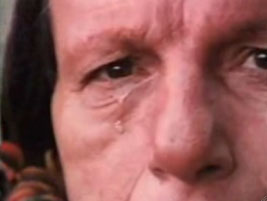
Weeping For The Planet: The famous "Crying Indian" advertisement, produced by Keeping America Beautiful, struck a deep chord with Americans when it first screened on "Earth Day" - 22 April  1971. It was a time when both the Left and the Right respected ecological science and were ready to take action to protect the environment. How times have changed. In 2014, right-wing politicians are unwilling to tolerate "any measures which are socialism masquerading as environmentalism".
 
MANY NEW ZEALANDERS are puzzled by the sudden descent of right-wing political parties into anti-environmentalism. Forty years ago, in the first flush of global ecological awareness, political parties of every ideological stripe were ready to put aside their differences for the sake of the environment. There was a strong bi-partisan agreement that, regardless of whether they were Left or Right, every human-being had a personal vested interest in improving the health of the planet.
 
It was a Republican President, Richard Nixon, who signed into law the National Environmental Policy Act of 1969, which, for the first time, required federal agencies to file environmental impact statements for federally funded programmes.
 
Nixon who oversaw, in 1970, the creation of the Environmental Protection Agency and signed into law the Clean Air Extension Act, imposing strict controls on airborne pollutants known to be hazardous to human health.
 
Nixon who, in 1972 offered whales, dolphins, sea otters, polar bears and seals the protection of the US Government by signing the Marine Mammals Protection Act.
 
Nixon who, likewise, presided over the passage of the 1973 Endangered Species Act and the Safe Drinking Water Act 1974.
 
Though a deeply conservative (and deeply flawed) politician, Nixon was a shrewd enough politician to grasp the electoral heft of the burgeoning environmental movement.
 
By the 1980s, however, political parties of the Right around the world were rapidly distancing themselves from the “environmentally friendly” legislative reforms of the 1970s. Ronald Reagan was no Richard Nixon.
 
The Right’s growing antipathy to environmentalism was fuelled by the world-wide ideological resurgence of laissez-faire capitalism. The so-called “New Right” was hostile to just about every kind of regulatory regime, but it was environmental regulation that earned its special ire. This was because the much admired dynamism of “the free market” was hugely dependent on the capitalists’ ability to “externalise” (i.e. not have to account for or pay for) the environmental and social consequences of their behaviour.
 
If capitalists were required to fully account for and pay for their detrimental impact upon the natural and human environments, then their profitability would be seriously (and in many cases irreversibly) reduced.
 
In the 1970s, political leaders like Nixon still felt obliged to respond to the voters’ pleas to save the planet. By the 1980s, however, the priorities of the Right had changed. The mission of conservative parties everywhere was now to convince voters that capitalism’s ultimate contradiction: the extraction of infinite profits from a finite planet; wasn’t really a contradiction at all, and that industrial capitalism’s most fearsome externality, anthropogenic global warming, was nothing more than “green propaganda”.
 
This was not an easy sell. Historically speaking, the rise of capitalism and the rise of science had coincided, spurring one another on to new discoveries, new applications. Persuading people to reject the science of global warming could only be achieved at the cost of abandoning the rationalist project itself.
 
But it was rationalism and science which had, ever since the eighteenth century, imbued capitalism with its progressive economic, social and political force. To reduce scientific knowledge to the status of exculpatory evidence bought and paid for; and scientists to little more than the servants of big business; would strip capitalism of its intellectual potency. It would mean abandoning what Professor Niall Fergusson calls its “killer apps” – the critical advantages that had enabled capitalism to see off all its ideological rivals.
 
These potentially fatal dangers notwithstanding, by the second decade of the twenty-first century it was possible for right-wing political leaders to win public office in spite of (or even because of) their refusal to accept the findings of environmental science.
 
Across the Tasman, for example, the Cabinet of the Australian Prime Minister, Tony Abbott, has proclaimed, with a straight face, that it is not prepared to tolerate “any measures which are socialism masquerading as environmentalism”.
 

Who Speaks For The Trees? Ancient Huon Pine, Mt Read, Tasmania. These trees are among the oldest on the planet (3,000-10,000 years old).
 
Included among these allegedly “socialist” measures, is the World Heritage Status of both the Tasmanian wilderness and the Great Barrier Reef. In any stand-off between ecological science and Australia’s extractive industrialists it’s not difficult to predict who will win the Abbott Government’s support.
 
We shouldn’t feel too smug and superior, however, when it comes to our Australian cousins. Not when the difference between their right-wing politicians and ours is, as always, more a matter of subtlety than substance.
 
Environmental destruction masquerading as economic growth.
 
This essay was originally published by The Waikato Times, The Taranaki Daily News, The Timaru Herald, The Otago Daily Times and The Greymouth Star of Friday, 22 August 2014.