
Showing posts with label Gnosticism. Show all posts

Wednesday, 24 December 2025

Good News Story.

Gospel: What, after all, is a magic spell, if not a formulation of words to effect actual change in the real world? Wasn’t that why the Greek followers of the Christ referred to the stories that had grown up about him: his birth, ministry, death and resurrection as euangélion – “good news”? Because, for sure and certain, Matthew told himself, nothing changes our world like good news.

THEY HAD BEEN MEETING above Matthew’s scriptorium for the best part of a decade. There wasn’t a lot of room, but neither was there a lot of them. Half-a-dozen on a good day, more often just the three stalwarts: Matthew, James and Rebecca.

Not that Rebecca was a wholehearted follower of the Christ. She subscribed to the doctrines of the Gnostics who, as far as Matthew was concerned, were hardly followers at all. Earlier attendees of these gatherings, offended by her angular questions, had stopped coming. But Matthew rather liked her questions, they tested him, made him think a lot harder about “The Way” than he would have done otherwise.

Truth to tell, Matthew liked Rebecca with or without her questions. Not many of his friends could read, write, or think as well as Rebecca.

That was why people came to him, a scribe. Writing was his business – capturing the questions, explanations and observations of ordinary Alexandrians on papyrus, fixing their words in time. A kind of magic, he’d always thought.

What, after all, is a magic spell, if not a formulation of words to effect actual change in the real world? Wasn’t that why the Greek followers of the Christ referred to the stories that had grown up about him: his birth, ministry, death and resurrection as euangélion – “good news”? Because, for sure and certain, Matthew told himself, nothing changes our world like good news.

Except, when he had offered that thought to Rebecca she’d just laughed.

“Nothing, Matthew? Truly? What about bad news? In my experience it’s bad news that brings people’s worlds crashing down. Bad news changes everything.”

“There you go again,” James had muttered. “Such pessimism. Honestly, Rebecca, I wonder sometimes why you continue to keep company with us. For, surely, those who follow the Way of the Christ must be counted the world’s greatest optimists!

Rebecca laughed. “Not quite the way I would put it, James. My description of you wayfarers would be the world’s most innocent, but also its most deluded, souls. You reach out for a redemptive god in a world where only evil reigns. A world of corrupted flesh and blood, in which the virtuous are crucified and vice thrives unpunished. Your Jeshua, the one you call the Christ, said it all when he said, “My kingdom is not of this world”, and yet you persist in seeking salvation inside it.”

“Jeshua said more than that, Rebecca – much more.”

“Did he, Matthew, did he really? How many of the Christ stories have you collected and written down? Think about the ones describing his birth and its immediate aftermath. Do any of them agree? One has him fleeing the wrath of King Herod into Egypt. Another tells of him being recognised forty-one days after his birth in the Jerusalem Temple. Some stories tell of humble shepherds attending his birth, others have powerful Parthian wizards offering the Christ-child precious gifts. What stock can you put in all these contradictory tales?”

“Each story is complete in itself, Rebecca. Each has its own lessons to teach. And I place more stock in these fragmentary and often contradictory recollections of God-made-flesh than I do in your Gnostic secrets. A loving father would not bar the gates of paradise to all but the wisest of his children.”

Rebecca shook her head sadly. “A loving father would send a messenger with a key to open the gates of the terrible prison in which his children are languishing, along with a set of instructions on where to find that key, and how to use it. Escaping the dominion of Rex Mundi, the evil king of this world, is no easy matter, Matthew, there are secrets to learn, knowledge to master.”

James sighed. “No great secrets, Rebecca, and just two instructions. Love God and love your neighbour.”

“No arcane knowledge to master, either,” said Matthew. “Just a child’s tale that begins with joy and hope and ends the same way. Certainly, there is darkness and cruelty in this world, but there is also light and the path to decency that it reveals. A narrow path easily missed. But those who look for it, find it.

“Jeshua, the Christ, was born into this fallen world, Rebecca, the details aren’t important. What matters is that by being born into it he transformed it.”


This essay was originally published in The Otago Daily Times and The Greymouth Star of Friday, 19 December 2025.

Friday, 7 October 2022

The Problem Of Evil.

“Stare not too long into the abyss, lest the abyss stare back into you.” - Friedrich Nietzsche.
 
THE PROBLEM OF EVIL – ah yes – an old and flavoursome chestnut. How many nights, fuelled by Velluto Rosso (and other brave attempts at a palatable New Zealand red) did I wrestle with my fellow undergraduates as to why, or even if, evil exists in this world.

“How could a benevolent God allow bad things to happen to good people?” That was one of the questions. Inevitably followed by: “And isn’t a God that allows bad things to happen to good people himself one of the bad guys? Or, if not bad himself, then powerless to prevent evil from doing its worst?”

Except, of course, that a powerless deity is not a deity at all – but a fraud. Which not only means that evil is more powerful than good, but also more powerful than God. And that is not a comforting thought.

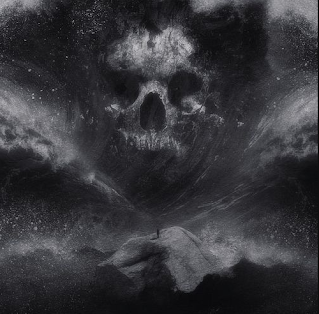
Nor, I’m afraid, a very original thought. Indeed, the notion that this world is in the grip of a malevolent deity harks all the way back to the earliest decades of Christianity. Some called this evil being “Rex Mundi” – King of the World. His was the realm of matter. It was Rex who personally made certain that our all-too-solid flesh would melt, burn, decay, and otherwise fail to endure.

Given the fate of those who subscribed to this, the Gnostic, heresy, it is difficult to fault their theology. Over the centuries Rex Mundi has got a lot of blood on his hands.

I wonder, sometimes, whether undergraduates still argue over the problem of evil. Certainly, it is difficult to imagine them arguing about the nature of God – not when surveys show most of them rejecting the notion of divinity altogether. That said, it isn’t in the least bit difficult to imagine them arguing about the problem of climate change.

Ideally, this would be a rigorously scientific exchange, but I strongly suspect that any argument about climate change will very quickly morph into our old friend, the problem of evil.

Not that God will be standing in the dock at this trial. Much more likely the discussion will turn on whether there is enough good in the human species to warrant its survival, or, whether our overwhelming propensity to tear apart the delicate threads of Nature’s ecological web has led humanity to an evolutionary dead-end.

It is not a debate to which Rex Mundi would be invited. In my imagination, I see Gaia as the smiling hostess of this existential colloquium. Proving just how difficult it is for the human mind to free itself entirely from the notion of a benign and/or just deity.

Then again, voting for their own species’ extinction is a pretty hard ask of the undergraduates of the Twenty-First Century. But, if the species itself isn’t all bad, then, perhaps, the “problem” of evil is best resolved by examining who has done the most.

Who was it who enslaved the peoples of Africa? Who wiped out the world’s indigenous cultures? Who planted their flags in the soil of sovereign nations and claimed them for their own? Who spread their capitalistic economic system across the face of the whole planet without thought for the exorbitant human and environmental costs? Who denied women their rights? Who persecuted homosexuals and the gender-diverse? Who invented racism, heavy artillery, poison gas and the H-Bomb? Who is the living embodiment of evil?

Yes, well, we all know the answer to those questions, don’t we?

Us, the world’s white, heterosexual, males: marching down the centuries with our swords and guns and bombs; slaying the innocent; enslaving the weak; bending all to our implacable will; consuming the whole world to satisfy our insatiable appetites. Us, seated upon our ivory thrones, white as death, ruling the world of matter absolutely. Rex Mundi in human form. Evil personified.

It’s all our fault.

And it’s not just undergraduates who argue this way – their professors write books about it!

They characterise evil as the problem born out of power over others. The power that creates victims. The power to be overcome only when its victims seize their own power – and use it.

Making evil a paradox. When we fear it, we feed it. In attempting to defeat it, we only make it stronger.

“Stare not too long into the abyss,” warned Nietzsche, “lest the abyss stare back into you.”


This essay was originally published in The Otago Daily Times and The Greymouth Star of Friday, 7 October 2022.

Monday, 1 December 2008

Chambers of Secrets


SECRETS are important things in communities where change, apart from the slow roll of the seasons, arrives only reluctantly, if at all. In New Zealand’s little towns and rural hamlets, back in the days of station-masters and telephone party-lines, the urge to elaborate an alternative identity, whose details were not the common knowledge of all and sundry, was very strong.

There had to be something more to you than the man the neighbours saw mowing his front lawn every Saturday morning; or, seated on a tartan rug in the brisk winter air every Saturday afternoon, sipping sweet tea from a thermos flask and watching the local footy team cover itself with mud, if not glory, on the poplar-lined playing fields down by the river. Most of all, you needed to be something more than just the polite little fellow serving behind the counter of the general store, the butcher shop, the drapers.

In the frenetic environment of our modern world, it is difficult to conceive just how constrained the lives of our grandparents and great-grandparents really were. Travelling more than about twenty-five miles from one’s front door was a major undertaking in an age where private motor vehicles were rare and folk still got about on horseback or by bicycle.

People travelled slowly in those days: slow enough to both see everything that was going on, and to be seen by everybody doing it. Imagine, then, how exciting the thought of doing something that could not be seen; saying something that could not be heard; must have been to the upright and prosperous men of town and village. The prospect of leaving behind, if only for a few hours, the hum-drum world of wives and children, customers and clients, employees and tenants – and becoming something entirely different – must have had an enormous appeal.

I say "must" because the evidence of this need for a secret, more potent, more intense existence may be found in just about every settlement of any size in New Zealand. In some places they were built right there on the main street; in others at one remove from the daily commerce of the town, but everywhere they presented to the outside world a blank and uncompromising façade of secrecy. New Zealand’s Masonic Lodges were places where only the initiate gained admittance: secret temples, where dark oaths were spoken and ancient rituals enacted; places where the local grocer, butcher and draper was transformed into something new, and luminous, and powerful.

Transplanted from the bleak landscape of Scotland and Northern Ireland, to the equally desolate wilds of the West Coast and Southland (see illustrations) New Zealand Freemasonry retained a great many of its original prejudices and much of its historical purpose.

Vigorously anti-clerical, and theologically sceptical – as befitted its origins in the secret societies of the Enlightenment – Freemasonry placed less faith in an all-knowing God, than it did in the esoteric knowledge of its supposedly ancient brotherhood. Like the perennial Gnostic heresy, Freemasonry believes the mind of Man, properly prepared, is more than equal to the task of comprehending the mind and purpose of its maker.

This was a heady brew to pour into the brains of the good burghers of Hokitika and Clinton, but clearly of sufficient potency to persuade them to finance the sturdy little structures in which their brotherhood could meet without fear of prying eyes and flapping ears. For what, in the end, is more conducive to solidarity and mutual assistance than a shared secret, or secrets? Especially when the secrets shared are said to be drawn from the hidden wisdom of the ancients and sufficient to lift you high above the level of the common herd?

In many ways Freemasonry made New Zealand’s little towns. These numerous bands of Masonic brothers, who solemnly greeted each other every week down at the local lodge, could hardly avoid becoming an economic, social and political oligarchy, effortlessly presiding over their community’s commercial expansion and setting the tone of its cultural life. Deeds and projects which Adam Smith’s invisible hand might never have touched were very often the manifestations of the local Masonic brotherhood’s enlightened spirits.

They could also, sadly, be the moving force behind the very worst kind of reactionary social behaviour. It doesn’t take much for a small and secret group to move from light to darkness. Believing themselves to be the sole repository of local wisdom, and the only protectors of local prosperity, the Masonic brothers of how many small towns lent their power to causes that were as disreputable as they were self-serving? How fared the local unionist, clergyman, doctor or teacher of radical, or even liberal, views when the bigoted brothers of the local lodge turned their faces against them?

And how was justice served when the local magistrate, the local prosecutor, and the local policeman all greeted each other with the secret handshake? How many innocent people have been imprisoned, how many wife beaters and child abusers have gone free, thanks to the secret solidarity of the local Masonic brotherhood?

So, the next time you’re driving through one of our provincial towns, or rural villages, and you see a building of singular aspect, standing at a distance from the workaday world, pause, take a closer look, and ponder what role the men who gathered inside its walls may have played in the history of the place where you are standing. Imagine what arcane thoughts went through the minds of seemingly ordinary men as they plied their daily trades. Consider what deeds – dark or luminous – may have been set in motion behind the set-square and dividers that crown the secret door.