Showing posts with label Labour. Show all posts

Monday, 3 April 2023

Sitting This One Out: How Angry Abstainers Could Sink Labour and the Greens.

It’s White Cis Males!” Greens co-leader Marama Davidson blithely alienates 33 percent of the voting public. The people who used to think of themselves as “left-wing” look at the causes Labour and the Greens have declared themselves to stand for and, very reluctantly, begin to weight the pros and cons of abstaining from voting altogether.

VOTER ABSTENTION should now be Labour’s and the Greens’ biggest fear. That tens-of-thousands of New Zealanders, normally supportive of these two parties, may simply choose to stay home on the 14 October and abstain from participating in the General Election altogether. Asked why they are considering this drastic course of action, why they are opting-out, the most common reply is: “Because there’s no one I can bring myself to vote for.”

The reasons for these voters turning away from Labour and the Greens are many and varied. Some are registering their displeasure at the way the Centre-Left parties responded to the challenge of the Omicron variant of Covid-19. Locating themselves, politically, among the 30 percent of New Zealanders who thought the anti-vaccination mandate protesters encamped on Parliament’s front lawn had a measure of right on their side.

Others may be planning to abstain in response to what some are calling the “Maorification” of New Zealand. The He Puapua Report, Three Waters, the whole “co-governance” project, may present an insurmountable hurdle to casting a vote for Labour and/or the Greens.

Not that the abstainers are considering voting for National or Act – not these “tribal” leftists. No matter how alienated they may feel from their traditional electoral options, there is simply no way they could ever cast a vote for “the class enemy”. Better not to vote at all.

Bolstering these groups considerably will be those women – and men – outraged at the treatment meted out by members and supporters of the transgender community to the British women’s rights activist Kellie-Jay Keen-Minshull (a.k.a “Posie Parker”). Well-connected insiders are already reporting resignations – including a number of hard-working party organisers outraged by the scenes that unfolded in Auckland’s Albert Park on Saturday, 25 March 2023.

Their outrage has since been compounded by the apparent inability of senior Labour and Green parliamentarians to acknowledge their complicity in the whipping-up of a climate of toxic rage against Keen-Minshull and all those who accepted her invitation to publicly speak up for women’s rights.

Left-wingers who came of age between the 1970s and 90s find it increasingly difficult to relate to the “progressives” of the twenty-first century. They see activists who fought for women’s and gay rights (in a period of New Zealand history when there was strong societal resistance to both) demonised as “TERFs” by activists willing to tear apart an entire political culture over the question of who is, and who is not, a woman.

A fey mood of reckless radicalism appears to have gripped Labour and the Greens. The extraordinary charge levelled against “white cis men” by the Greens’ co-leader, Marama Davidson, declaring them responsible for all the violence in the world, epitomises the Traditional Left’s dilemma. Confronted with the Orwellian obligation to confirm that 2+2=5, or face excommunication from the progressive community, more and more of the people whose votes have kept the Greens in Parliament (and Labour in Government!) are simply saying “Fuck it!” – and walking away.

Undoubtedly, there will be some who will respond to this information with a tart “good riddance”. But those tempted to take this position should, perhaps, pause to consider the consequences of allowing so much electoral support to simply walk away.

Those perplexed and/or alienated by the actions of the Contemporary Left tend to be older voters. After all, if you can remember protesting the Vietnam War, the 1981 Springbok Tour and campaigning for the Homosexual Law Reform Bill, then you’re going to be well into your 50s – at least.

So what?

So, older supporters of the Left are among the most reliable of New Zealand voters. Their abstention will require Labour and the Greens to fill the gaps in the Left’s ranks with younger voters – the most difficult of all demographics to motivate electorally. While the ranks of the Right are replenished by middle-aged and elderly voters returning to the conservative fold after atypically backing “Jacinda” in 2020, the ranks of the Left will be thinned when those who, election after election, have proved themselves to be the Left’s most loyal and reliable voters, refuse to get off the couch.

There is even a worrying possibility that neither the Labour Party, nor the Greens, will see this electoral disaster coming. Left-wing abstainers are a politically astute group who, depending on how pissed-off they are with the parties they have traditionally supported, may flat-out lie to any pollster questioning them. If they refuse to answer honestly, then the looming threat they pose to the Government’s survival may not become apparent until it is too late to avert it.

Respondents lying to pollsters has been a vexing problem in the United Kingdom where “Shy Tories” pretending to be Labour loyalists have made electoral predictions increasingly problematic, and continues to bedevil psephology in the United States, where political polarisation is making people increasingly ill-disposed to co-operate with those they identify as the “enemy”. Such are the bitter fruits of political betrayals that never seem to end.

Sadly, New Zealanders are fast becoming familiar with their taste.


This essay was originally posted on The Daily Blog of Friday, 31 March 2023.

Friday, 13 October 2017

Talkin' 'Bout A Revolution - Or Not?

An Unlikely Revolutionary Banner? A well-organised campaign to root out neoliberalism from all of our economic and social institutions would signal that Peters was serious about changing the way this country is run. And for all those who pretend not to know what the term neoliberalism means, let me spell it out. I am talking about the deliberate intrusion and entrenchment of the logic and values of the marketplace into every aspect of human existence.

“THESE TALKS ARE ABOUT A CHANGE in the way this country is run. Both economically and socially.” That is how Winston Peters characterised the government formation negotiations currently drawing to a close in Wellington. But, what could his words possibly mean, in practical terms?

If seriously intentioned, Peters’ call for economic and social change would have to encompass the thorough-going “de-neoliberalisation” of New Zealand. And, yes, the obvious reference to the “denazification” of post-war Germany is quite deliberate. Between 1945 and 1947 (when a resurgent American Right began insisting that Soviet communism posed a far greater threat than the tens-of-thousands of National Socialists who were quietly re-entering German society) the Allied occupation forces undertook a serious attempt to identify and exclude all those who had facilitated and/or participated in the most appalling crimes in human history.

A well-organised campaign to root out neoliberalism from all of our economic and social institutions would signal that Peters was serious about changing the way this country is run. And for all those who pretend not to know what the term neoliberalism means, let me spell it out. I am talking about the deliberate intrusion and entrenchment of the logic and values of the marketplace into every aspect of human existence.

Neoliberals have been hard at work in New Zealand society since 1984 and the damage they have inflicted upon practically all of its institutions is enormous. So, how would a Labour-Green-NZ First government that was serious about redefining good government in New Zealand begin? Well, it could start by inviting the two Maxes, Rashbrooke and Harris, to undertake a root-and-branch reform of the State Sector Act. The two Bryans. Easton and Gould, could be asked to revise the Reserve Bank Act. Matt McCarten, Robert Reid and Maxine Gay could be given the job of beefing-up the Employment Relations Act. Claudia Orange, Annette Sykes and Moana Jackson could be tasked with fully integrating the Treaty of Waitangi into the New Zealand Constitution being drafted by Sir Geoffrey Palmer and Andrew Geddis. Metiria Turei and Sue Bradford could be issued with blowtorches and sent into the Ministry of Social Development.

It’s only when you start thinking in these terms that the awful implausibility of Peters’ statement strikes home. Putting to one side the ingrained provincial conservatism of NZ First’s electoral base, there is simply no possibility of anyone in the senior ranks of the Labour Party endorsing even a pale imitation of this “de-neoliberalisation” agenda. Willie Jackson and a handful of his Maori and Pasifica colleagues might be keen, but no one else. Only the Greens could advocate with an credibility for this sort of root-and-branch reform – which almost certainly explains why there were no Green Party negotiators seated at the table with Winston and Jacinda!

But, if New Zealand is not going to be de-neoliberalised in any meaningful way. If neither NZ First nor Labour would entertain for a moment any of the individuals mentioned above, in any of the roles mentioned above, then what of any lasting worth could a Labour-Green-NZ First government achieve?

More importantly, perhaps, what would be in it for the Greens? If Peters’ very public characterisation of the Greens as a powerless appendage of the Labour Party, with no role at all in the government formation talks, is an accurate reflection of his attitude towards the party, then not only do the Greens have no way of influencing the shape and policies of any new centre-left government, but they will also have no place within it. As Newshub’s Lloyd Burr so succinctly put it, they are being “shafted”.

It is possible, of course, that Peters is talking-up his disdain for the Greens in order to avoid spooking his core supporters in the countryside; and that, privately, he is right behind the eco-socialists’ radical policy agenda. Except, if that is the case, then he must surely be bitterly disappointed by Labour’s extreme policy timidity. Is the sort of party that invites Sir Michael Cullen and Annette King to join its young leader at the negotiating table, really the sort of party that is getting ready to throw its weight wholeheartedly behind “a change in the way this country is run. Economically and socially”?

By this time next week, Winston willing, we’ll have an answer.


This essay was originally posted on The Daily Blog of Thursday, 12 October 2017.

Monday, 8 September 2014

Three’s Company: Labour-Greens-NZ First may just be the coalition New Zealanders are looking for.

Conservatively Radical: The leaders of the Labour-Greens-NZ First combo have just 11 days to campaign for a Government possessing the collective wisdom to distinguish necessary from unnecessary change, and the political courage to make it happen.
 
WITH LESS THAN A FORTNIGHT to go until Election Day, the broad outlines of the voters’ choice are becoming clear. Labour has refined its position to one of anticipating a tripartite arrangement with the Greens and NZ First. The National Party, unmoved by recent polls, is hoping the voters allow them to begin their third term with the same support partners as their first and second: Act, United Future and the Maori Party. John Key cannot, however, discount the possibility of having to enlarge his support combination by including Colin Craig’s Conservative Party.
 
Both of these configurations reflect the central political reality of this election campaign: that New Zealanders have become considerably more cautious and (small-c) conservative than they have been for many decades. If, for whatever reason, voters desert National in sufficient numbers to allow Labour, the Greens and NZ First to make a centre-left government, it is clear that it will be a coalition shorn of radical policy.
 
David Cunliffe is sending three important messages to the electorate. 1) That he considers NZ First indispensable to effecting a change of government. 2) By very publicly ruling out any kind of accommodation with either Internet-Mana or the Maori Party he is signalling that he understands “Middle New Zealand’s” current distaste for radical ideas. 3) He is inviting them to interpret his reaching-out to NZ First as proof of his moderate bona fides.
 
John Key faces a very different set of problems. On the right of New Zealand politics there is a growing impatience with what it scorns as “Labour-Lite” policies. In this context, Nicky Hager’s revelations concerning Judith Collins will have come as a Godsend to the Prime Minister. They have allowed him to temporarily spike the guns of Ms Collin’s and her Far-Right faction of the National Party caucus and reassured nervous National supporters that the Government is not about to embark on any Tea Party-like excursions into ideological extremism.
 
The downside of Hager’s disruption of the election campaign is the bleeding away of votes it has occasioned to National’s right-wing rivals.  Both NZ First and the Conservatives have benefited from these defections (the former more considerably than the latter) and this raises the very real possibility that Key, in order to remain in office, will be forced to make the sort of political concessions that could seriously destabilise his government.
 
If he opts for NZ First, he will be obliged to anchor his government very firmly in the harbour of Mr Peter’s caring, paternalistic and overtly interventionist “one nation” conservatism. This will outrage his own neoliberal colleagues, strengthen the hand of Collins’s supporters, alienate Act and empower those Conservative MPs (we are assuming here that the Conservative Party crosses the 5 percent MMP threshold) excluded from Key’s political solar system.
 
On the other hand, if he throws in his lot with Colin Craig’s Conservatives he will have hitched his wagon to a new and untested band of political eccentrics and Tea Party-type “ultras” with the capacity to drag his hitherto unthreatening and predictable centre-right government into the ideological badlands. In the finely balanced Parliament both sides are expecting post-20 September, the Conservatives could very easily prove to be much more trouble than they’re worth. And, if they were seduced into making common-cause with the equally eccentric Ms Collins, the Conservatives could conceivably end up threatening the Prime Minister himself. Craig’s messiah complex is unmistakeable – and there can be only one!
 
Clearly, the potential for instability and ideological confusion is considerably greater on the right of New Zealand politics than it is on the left. Once Internet-Mana are excluded from the constellation of acceptable Opposition stars, what the electorate is presented with in a Labour-Greens-NZ First combination is a coalition government erected on two extremely solid foundation-stones: economic nationalism and environmentalism.
 
Popular antipathy to land sales to foreigners (almost certainly intensified by Act leader Jamie Whyte’s ill-considered intervention over the weekend) is reflected in the manifestoes of all three parties. Combine Labour, Green and NZ First pledges to put the heft of the state behind a major effort to improve the productivity of New Zealand Incorporated with the growing public concern about the health of New Zealand’s waterways because of “dirty dairying”, and the populist potential of the Labour-Green-NZ First policy agenda is readily apparent. All three parties will find themselves free to manoeuvre on extensive common ground.
 
David Cunliffe, Russel Norman, Metiria Turei and Winston Peters have just 11 days to convince a confused and jittery electorate that although a Labour-Greens-Internet-Mana combination may have represented an unmistakeable and unwarranted lurch to the Left, a Labour-Greens-NZ First combo could turn out to be something much more palatable.
 
All three parties must campaign hard for a Government possessing the collective wisdom to distinguish necessary from unnecessary change, and the political courage to make it happen.
 
This essay was posted on Bowalley Road  and The Daily Blog blogsites on Monday, 8 September 2014.

Friday, 7 June 2013

"Hidden" - The New Zealand Version

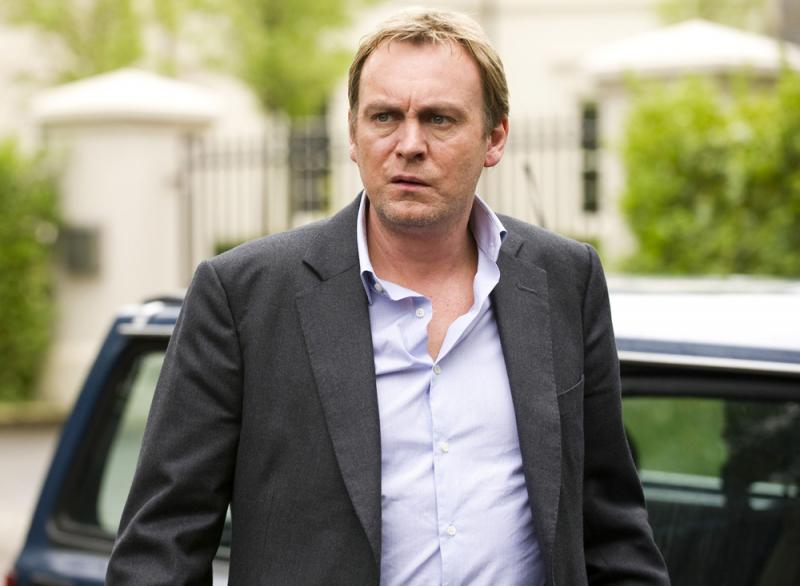
Hidden In Plain Sight: Philip Glenister plays seedy small-time lawyer, Harry Venn, in the UK television series Hidden. The plot turns on the lethal manoeuvres of sinister business and media figures as they attempt to turn a hung parliament to their political advantage. In eighteen months New Zealand could be living through its very own version of Ronan Bennett's screenplay.

HIDDEN is a gritty BBC political drama series written by Ronan Bennett. Crucial to the plot’s development is a UK general election result from which no clear winner has emerged. As day after day passes without a government, and rioting convulses London, a billionaire businessman, working secretly with a ruthless media proprietor, prepares the public for a right-wing coup d’état. Though the screenwriter never reveals the political identity of the caretaker PM, the inference is strong that he’s a moderate Tory who’s usefulness to the powers-that-be is at an end.
 
Right here in New Zealand, in just 18 months’ time, life could very easily be imitating art.
 
John Key, the National Party’s moderate but unpopular leader, faces the near impossible task of creating a government out of an election result from which no clear majority is readily discernible – for either the Right or the Left.
 
The Governor-General asks Mr Key, as leader of by far the largest party, to try and form a government. Day after day drifts by without any sign of a breakthrough. All eyes turn to the leader of the Labour Party. Can David Shearer succeed where Mr Key is failing?
 
While Mr Key contemplates the election’s intractable political arithmetic, Mr Shearer begins pressuring the Green Party. He needs to know how badly their leaders want to be Cabinet Ministers. Is it possible that, for the sake of the country, they might step aside and allow Mr Peters and his NZ First colleagues to form a minority government with Labour? And would they then be willing to keep that government in office by voting it Confidence and Supply? When the Greens protest, Mr Shearer warns them that any refusal to step aside will almost certainly see Mr Peters pledge NZ First’s votes to Mr Key.
 
The Greens are in a quandary. As the third largest party in the new parliament, they should be in the box seat – but they’re not. On the contrary, pressures are mounting for them to be written out of the political play entirely.
 
Every day the mainstream news media finds a new way of branding the Greens as “too radical for government”. Business organisations warn of dire consequences for New Zealand’s economic future should Russel Norman and Metiria Turei come within a bull’s roar of the Cabinet Table. The country’s international credit rating comes under review and international lenders quietly voice their growing fear of a Labour-Green Government to the Governor of the Reserve Bank.
 
When the Greens point-blank refuse to rule themselves out of government, the political tension is ratcheted up a few notches. The news media immediately seizes upon the fact that National won more votes than any other party. Never before, they correctly claim, has the party which won the most votes been denied the right to govern. That being the case, thunder the nation’s editors, the onus falls upon the “responsible” parliamentary parties to provide National with a working majority.
 
With the Greens’ “irresponsibility” taken as a given, and with NZ First’s numbers falling just short of the majority “the country” so desperately needs, the private cell-phones of certain Labour and Green MPs begin to vibrate.
 
First they are offered the carrot: guaranteed Cabinet seats, High Commission postings, seats around some very important (and well-remunerated) boardroom tables. If that fails, they are shown the stick: video recordings of what they thought were “secret” assignations; terrifying estimates of the tax owing on their undisclosed offshore incomes; pretty-much everything they did last summer.
 
The Governor-General gives Mr Key just 48 more hours to form a government. Mr Shearer, secretly informed that a critical number of Labour and Green MPs are about to defect, announces his party’s unwillingness to enter into any kind of agreement with the Greens. Mr Peters announces NZ First’s willingness to join in a “Coalition of National Unity”. National’s caucus meets to deliver Mr Peters’ price – John Key’s political head.
 
The Governor-General invites Judith Collins to Government House.
 
This essay was originally published in The Dominion Post, The Waikato Times, The Taranaki Daily News, The Timaru Herald, The Otago Daily Times and The Greymouth Star of Friday, 7 June 2013.