Showing posts with label Laurie & Les. Show all posts

Wednesday, 12 November 2025

A Different World: Laurie & Les, Ageing Boomers, Talk Politics.

“So, Les, let me get this straight. If I’m convinced that my true self is Mickey Mouse, then that is the identity everyone must acknowledge – even when its patently obvious to everyone that I am not Mickey Mouse, that’s what they have to call me?”

LAURIE PAUSED for a moment to take in the raw vista of devastation wrought by the October gales. How many times had he gazed out from the pub deck at that stately line of poplars adjoining the road? The blaze of their autumn glory, their bright green kirtles in spring, even in grey sentinel guise, looming over the empty winter fields, these trees had been beautiful. And now they were gone, snapped-off and cast down by the vandal gusts.

Across the paddocks the whine of chainsaws serenaded their departure. Laurie sighed, he would not live to see their replacements rise above the ridgelines.

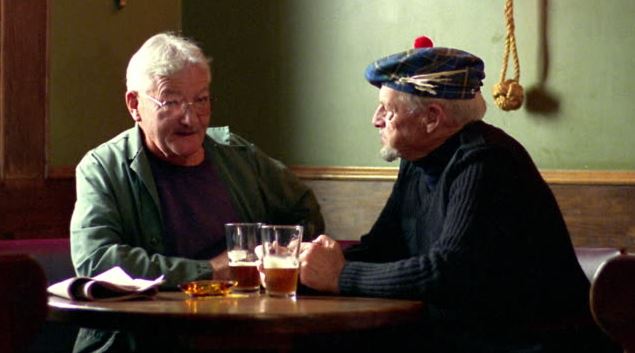
“Hell of a storm.” Laurie’s mate Les had also been contemplating the fallen trees. Seated on the pub deck, he held a half-empty glass of ale in his hand. A full one awaited his friend’s arrival at the table.

“Never seen the like of it”, Laurie affirmed, “I suppose you’ll blame global warming?”

“Nah!” Les snorted. “There were destructive gales long before the invention of the steam engine. Sometimes Mother Nature just loses her rag. Shame about the poplars though, they were a tonic for weary souls.”

Laurie lifted his glass: “To the view that was and will be, even though we’re unlikely to see it.”

“You know what, mate? I’m not sure that’s a bad thing. By the time those fallen trees’ replacements grow as tall as their predecessors – always assuming the cocky who owns the land decides to replace them, they will be casting their shadows over a very different world.”

“Here we go!” Laurie chuckled. “Another parade of grim predictions!”

“No, no, you cheeky bugger, I’m serious. Last night I finally got a handle on what’s making the present such a damned uncomfortable place to live in.”

Laurie’s smile faded. “What happened last night?”

“I had an argument with my son-in-law over gender ideology.”

“Oh, for God’s sake, Les! Why on earth did you do that? You’ll never change David’s mind, and you’ll only upset Alison – not to mention her Mum!”

“Yeah, yeah, I know, Laurie, bad move, which, to Alison’s obvious relief, Rosemary shut down pretty quickly. But not before David had his say, and I’m actually glad he did. Because it was while he was holding forth that I finally understood where he was coming from, and where all the people we call ‘woke’ are coming from.”

“Which is where?”

“They come from a place where the only thoughts that matter are their own thoughts, which cannot be challenged because they are the thoughts of their true selves which are, by definition, unchallengeable.”

Laurie made a face. “Isn’t that what we used to call solipsism?”

It is, Laurie, but it goes way beyond solipsism. You and I were raised to be tolerant of differences, but not too tolerant. What’s that saying? ‘Your right to swing a punch ends at the tip of my nose.’ In other words, we are good old-fashioned liberals. But wokeness goes way beyond liberalism, way beyond tolerance. What wokeness demands is validation. Agreeing to differ is not good enough, we are expected to agree, full-stop. If your true self tells you that 2+2=5 then society is obligated to affirm your arithmetic. If it refuses, then your true self may suffer serious harm. So, validation isn’t optional, validation is compulsory.”

“So, Les, let me get this straight. If I’m convinced that my true self is Mickey Mouse, then that is the identity everyone must acknowledge – even when its patently obvious to everyone that I am not Mickey Mouse, that’s what they have to call me?”

“That’s it, Laurie. Because nobody has the right to inflict harm upon Mickey by refusing to validate his identity as an imaginary rodent.”

“But that’s barking mad, Les, you can’t run a society according to those rules!”

“Well, you wouldn’t think so, would you? But, apparently, you can. If the validation of people’s true selves can be represented as the most fundamental of human rights, and if society’s most powerful institutions can be persuaded to back that proposition, then your right to say, ‘You’re not a bloody mouse!’ can be cancelled – along with you.”

“Crikey, Les, I’m beginning to understand why living long enough to see a new row of poplars grow to maturity may not be all that validating of your true self.”


This essay was originally published in The Otago Daily Times and The Greymouth Star of Friday, 7 November 2025.

Tuesday, 30 September 2025

Inconvenient Flags: Laurie & Les, Ageing Boomers, Talk Politics.

What we used to call ‘war’ is now called ‘genocide’. By the UN definition, our fathers and grandfathers were vicious war criminals. The Allied blockade of Germany in World War I? The bombing of Dresden in World War II? Acts of genocide. Crimes against humanity. No question.”

HANNAH EYED THE FLAGS warily. Behind the bar a miniature Ukrainian flag had stood at attention since 2022. A few days earlier, however, a varsity student had asked her to position a miniature Palestinian flag alongside it. She’d stashed it under the bar. Now, one of her oldest patrons, Laurie, had presented her with an Israeli flag: “To keep the Ukrainians company”, he had said with a wink as she poured a pint of ale for him, and another for his best mate, Les.

“I’ll think about it”, she responded, passing him the brimming glasses on a tray.

“What did she say?” Les eyed the bar manager who was, he noticed, eyeing him back.

“She said she’d think about it.”

“Heh! I never had Hannah down as someone who’d try to have a bob both ways.”

“C’mon, Les, that’s not fair. This Israel/Palestine thing is so bloody polarising. If she puts up our little flag, then the pro-Palestine mob are certain to give her no end of grief.”

“Yeah, well, you’ve got a point there. I’ve participated in countless demonstrations over the years Laurie, but I’ve got to tell you, I’ve never encountered such passion.”

“I must confess, Les, I was surprised to see you marching alongside the keffiyeh-wearers.”

“Well, you shouldn’t have been. You should have known that my tolerance for Israel’s ‘collateral damage’ wasn’t likely to be limitless. There’s only so many images of mutilated women and children that I can look at without recalling the words of Mario Savio.”

“Which you’re about to quote me.”

Les straightened his back and jutted out his chin.

“‘There is a time when the operation of the machine becomes so odious, makes you so sick at heart, that you can’t take part; you can’t even passively take part, and you’ve got to put your bodies upon the gears and upon the wheels, upon the levers, and upon all the apparatus, and you’ve got to make it stop.’”

“Except that, neither you, Les, nor your passionate mates, can make the Israeli war machine stop. Because, you know as well as I do that the only body big enough to stop that apparatus belongs to Uncle Sam. And Uncle Sam doesn’t want to. Hell, it’s Uncle Sam who’s supplying Israel with the gears, the wheels, and the levers!”

“Yeah, well, I thought I had to try.”

“So, what changed your mind, Les? Why did you ask me to ask Hannah to put Israel’s flag alongside Ukraine’s?”

“Genocide.”

“Genocide?”

“I did some research and discovered that the UN’s Genocide Convention is so broad that the Allied Powers of both World Wars would have fallen foul of it. What we used to call ‘war’ is now called ‘genocide’. By the UN definition, our fathers and grandfathers were vicious war criminals. The Allied blockade of Germany in World War I? The bombing of Dresden in World War II? Acts of genocide. Crimes against humanity. No question.”

Laurie nodded.

“And just consider the metrics. In nearly two years of bitter urban warfare, Palestine has lost nearly 70,000 people – at least a third of them Hamas fighters. But, in just 100 days, Rwandan Hutu butchered 800,000 Tutsi. Dammit, Les! If both events merit the description of genocide, then the term has lost all meaning.”

“But the world doesn’t care, Laurie, which means that Hamas is winning this war. It set out to goad Benjamin Netanyahu’s government into lashing out against Gaza with such fury that the world would turn away from Israel in disgust. And its working, Laurie, it’s working. The UK, Canada, Australia: they’ve all recognized Palestinian statehood. No wonder Hamas is claiming victory!”

“What do you think Winston’s going to do? Follow suit?”

“God, I hope not, Laurie! Because if Palestine is a state, then the term, like genocide, is meaningless. I hope he’s been able to convince Cabinet that this country’s got more to gain by standing alongside Donald Trump than Keir Starmer. Who knows, it might be enough to persuade the President to lower his 15 percent tariff.”

Hannah watched the two old Boomers leave the pub. She’d overheard quite a lot of their discussion, and she was glad. It made her decision much easier. She tossed both flags, Israel’s and Palestine’s, into the bin.

“There you are,” she muttered, “the perfect two-state solution.”


This short story was originally published in The Otago Daily Times and The Greymouth Star of Friday, 26 September 2025.

Thursday, 19 June 2025

Highway Twenty-Nine: Ageing Boomers, Laurie & Les, Talk Politics.

“It’s in the air, mate. Anger, cruelty, bitter rage. We’re taking it in with every breath, like some colourless, odourless, poisonous gas. But where’s it coming from? Whose making it? And how the hell do we turn it off? Because it’s killing us?”

THE TEA TOWEL, the glistening pint glass, and the hands holding both, fell still. Hannah’s attention was fixed on the table in the corner, and the rising volume of the quarrel that had just erupted. Two old mates, pub regulars, looked ready to trade blows. Not good.

Suddenly, both men were on their feet.

Hannah strode towards them.

“Laurie! Les! What the hell?”

But Laurie was already threading his way through the tables, making for the door. His face set hard in the rigor of wrath. Les watched him go.

“Don’t just stand there you old fool – go after him! You guys have been mates since before I was born. Get out there and set this right.”

Les scowled, gulping down what was left of his ale.

“I’ve had it with that right-wing prick,” he hissed, reaching for his cap. “Had it up to here!”

“No you haven’t, Les”, said Hannah softly. “I know how much you two look forward to your bouts of political jousting. So don’t you try and tell me this is about politics. Get out there and find out what’s really upsetting the two of you. Go on!”

Les’s shoulders slumped. He sniffed. “Alright, alright. Just bring us out another couple of ales, will you.” The ageing Boomer breathed deep and followed his friend out onto the wet wooden deck.

Laurie was standing at the rail, staring blankly into a landscape made indistinct by autumnal rain. The day’s palette of sombre greys, thin blues, and deep greens, matched the men’s now flattened emotions.

“Sorry, mate.” Les stood woodenly at Laurie’s side, his eyes locked, like his friend’s, on the middle-distance – a blurred composition of hills and trees. “That was uncalled for. I don’t know why I said it. It isn’t true.”

Laurie nodded imperceptibly. “Apology accepted, old friend, but unnecessary. I’d been needling you all afternoon.”

“Yeah.” Les’s voice was without rancour.

“It’s in the air, mate. Anger, cruelty, bitter rage. We’re taking it in with every breath, like some colourless, odourless, poisonous gas. But where’s it coming from? Whose making it? And how the hell do we turn it off? Because it’s killing us?”

“You don’t blame the Internet?”

“Of course I blame the bloody Internet! Everybody blames the bloody Internet! But that’s too easy – isn’t it? Sure, it carries our rage far and wide – but does it make our rage?”

Les turned to take the glasses of ale that Hannah had carried out to them on a tray. Acknowledging her approving expression with a wan smile.

“Some say that it does, by using algorithms, whatever they are. They reckon social media software somehow reads our emotional state and amplifies it. Apparently, a rarked-up audience is more profitable to these tech billionaires than a placid one.”

Laurie shook his head.

“How can that be true, Les? Every ruler throughout history has preferred placid subjects to angry ones.”

“Maybe. But, it’s also true that those in charge would rather have the masses at each other’s throats than clamouring for their heads. Maybe the anger and division encouraged by social media is a feature – not a bug?”

“Perhaps. But I think the rage was there long before the Internet. Long before social media. Long before smartphones.” He paused. “You’re a big fan of Bruce Springsteen, right?”

“Huge fan.”

“Do you recall his song ‘Highway 29’, about a pair of doomed lovers, and a bank robbery that goes horribly wrong? That second-to-last verse, when the guy says something like: ‘I told myself it was something in her. But I knew it was something in me. Something that had been coming for a long, long time. Something that was with me now on Highway 29’.”

“Yeah, I do. It’s off ‘The Ghost of Tom Joad’ – one of his best albums.”

“Yes, that’s right, and I agree, one of his best. And you know, Les, when I look at our country today, I think about those words. We are all so keen to put the blame on those who are travelling with us. Those who aren’t responsible for our crimes. But we’re wrong to do that. Because what’s emerging now has been working its way out of us for a long, long, time.”

Laurie sighed, and put down his glass.

“Les, I’ve got an awful feeling we’re on Highway 29.”


This short story was originally published in The Otago Daily Times and The Greymouth Star of Friday, 23 May 2025.

Thursday, 19 December 2024

Christmas Gifts: Ageing Boomers, Laurie & Les, Talk Politics.

“Like you said, I’m an unreconstructed socialist. Everybody deserves to get something for Christmas.”

“ONE OF THOSE had better be for me!” Hannah grinned, fascinated, as Laurie made his way, gingerly, to the bar, his arms full of gift-wrapped packages.

“Of course!”, beamed Laurie. Depositing his armful on the bar-top and selecting with a flourish the smallest of the packages. “Just a little token of my appreciation for your patience and tolerance over the past twelve months. I know Les and I aren’t the easiest of your customers.”

Hannah blushed in spite of herself, unwrapping Laurie’s gift with exaggerated care.

“I’ve spent the better part of 40 years living with Chanel No. 5, Hannah, so please tell me I’ve chosen correctly.”

“Oh, Laurie, of course you have! I don’t know what to say except, thank you. This is just so sweet.”

“Merry Christmas, Hannah.” Now it was Laurie’s turn to blush. “I’ll join that old reprobate over in the corner now, if you would be so kind as to pour us each pint of your best ale.”

“Of course. On the House. Go on – I’ll bring them over.”

Les frowned ferociously as his friend laid his Christmas pile before him.

“Bloody-hell, Laurie, why did you have to do that? Now I’ll have to get her something. Seriously, man, you’ve got more money than sense!”

“She’s a very good bar manager, Les. Don’t be such a tight-fisted old Scrooge.”

“Bah! Humbug! I can’t help it, Laurie. I hate Christmas.”

“A socialist like you? I thought you believed in handing out goodies to all and sundry, regardless of whether they deserved them or not.”

“Shush!”, hissed Les. “Here’s Hannah with our ale.”

“Here we are, gentlemen. Not a gift to match those of my two favourite Boomers. But it’ll have to do for now.”

“You old fraud!”, whispered Laurie, as Hannah returned to the bar. “Cracking on you hadn’t bought her a gift. I wonder about you sometimes, I really do!”

“No need. Like you said, I’m an unreconstructed socialist. Everybody deserves to get something for Christmas.”

“Even politicians?”

“Especially politicians!”

“So, what would you give the Prime Minister for Christmas?”

“Christopher Luxon? If I could, I’d give him what the German’s call fingerspitzengefühl.”

“Finger-what?”

Fingerspitzengefühl. The literal translation is ‘fingertips feeling’. By which the Germans mean a politician with an instinctive ability to respond to any given situation appropriately, tactfully, and, hopefully, with lashings of style and flair.”

“Not qualities we generally associate with Christopher Luxon.”

“No.”

“And Chris Hipkins? What would you give him for Christmas?”

“A working memory might be a useful gift. In his speech to Labour’s annual conference on Sunday he paid the usual homage to the great Labour prime ministers of the past. He began with Mickey Savage, moved on to Peter Fraser, then to Norman Kirk. So far so good, you might say, even if he’d missed out poor old Walter Nash. His next pick, however, was Helen Clark. Come on, Laurie, what’s wrong with Chippie’s portrait gallery?”

“Ummm. What happened to David Lange?”

“Damn good question, Laurie! It would appear that the entire Fourth Labour Government has disappeared down the Memory Hole. And why not? Accepting that Lange changed New Zealand every bit as much as Savage, Fraser, and Kirk – and a great deal more than Clark – would mean that Chippie might have to come to terms with the fact that while he and his mates are happy to celebrate their democratic socialist predecessors, they’re completely unwilling to embrace their policies.”

“Like Basil Fawlty not mentioning the war?”

“Exactly! Neoliberalism has become the ideology that dare not speak its name.”

“Unlike ‘Decolonisation’.

“Indeed. But you know why that is, don’t you?”

“Wokeness on steroids?”

“No, no, no, Laurie! It’s because Chippie owes Willie Jackson and his Māori Caucus big time – and vice versa. Willie’s got Chippie’s back – ably assisted, it must be said, by Labour’s Pasifika MPs. Without the support of the Māori and Pasifika caucuses, Chippie would be dog-tucker. It’s quid pro quo, Laurie. Quid pro quo. Chippie stands four-square behind te Tiriti o Waitangi, decolonisation and indigenisation, and the Māori Caucus stands four-square behind Chippie. Throw in his deputy, Carmel Sepuloni, and his Finance Spokesperson, Barbara Edmond, and Chippie can appoint Keiran McAnulty Campaign Chairman in perfect safety.”

“Heh! Because when Labour loses in ’26, he’ll be blamed!”

Exactly! Kieran’s the gift that keeps on giving!”


This short story was originally published in The Otago Daily Times and The Greymouth Star of Friday, 5 December 2024.

Friday, 27 September 2024

The Long and the Short: Ageing Boomers, Laurie & Les, Talk Politics.

While a nationwide vote to confirm, or not, the public’s understanding of our foundational constitutional document would be ‘divisive’, ‘racist’, a ‘blunt instrument’, and therefore completely out of the question, a referendum to extend the life expectancy of elected politicians, which no one not deeply involved with the governing process has actually asked for, or wants, is perfectly okay.”

LAURIE WAS ANGRY. So angry, in fact, that he had assigned a small part of his brain to search back through his more than six decades of experience for a precedent.

Inevitably, he found many. The actions of politicians evoke a special sort of anger, but only rarely do they produce the same anger as a love betrayed; an unfair dismissal; or the unbelievably stupid behaviour of one’s offspring – and the cost of it. Even so, as Laurie made his way to the bar, his anger advanced before him like a sci-fi force-field.

“You look like you could use something stronger than a pale ale, Laurie”, Hannah the bartender, who had been watching his approach with a mixture of apprehension and humour, cast a knowing glance at the top shelf.

“Good idea. Give me a nip of Johnny Walker.” Glancing towards the table in the corner, where his friend, Les, was waving a hand in greeting, Laurie nodded. “And two pale ales.”

Les watched his friend toss back the whiskey. This promised to be interesting.

“What is it, mate? You seldom venture up to the top shelf.”

“Ah, it’s silly really. I shouldn’t let myself get so riled up – least of all by politicians. But, sheesh, Christopher Bloody Luxon really pisses me off.”

“What’s he done now?”

“It’s not so much what he’s done, as what he has proved, over and over again, to be incapable of doing. The man just can’t seem to assemble the pieces of his own government’s jigsaw into a coherent picture. They’re all just bits and pieces to him. A law change here, a policy reversal there. He just doesn’t seem to be able to see what his colleagues and supporters – both in and out of his government – are looking at.”

“Like?”

“Like the use of referenda.”

“The Treaty Principles Bill?”

“Yeah, let’s take a look at that piece of the puzzle. Act is asking Parliament to respond to the widespread public unease about the Treaty and its growing impact on the way New Zealand is governed. David Seymour wants to give the public a real chance to have its say about what the Treaty actually amounts to in 2024, and then to vote the outcome of that discussion either up, or down, in a referendum.”

“Which Luxon will not allow.”

“Correct. Although, he will allow six months of discussion and debate in front of a Select Committee. But, no matter what all that talking finally produces. No matter how impressive the results of the Committee’s deliberations might be. Luxon is pledged to kill the Treaty Principles Bill stone dead by denying it a second reading.”

“Yeah, that’s right. But surely Laurie, we’ve known this for some time?”

“Yes, we have. But what most of us don’t realise is that Luxon has signed National up for another referendum.”

“On a four-year term!”

“Correct. And just think about that for a moment. There’s no evidence of widespread public unease about the current three-year term. It’s an issue beloved by political scientists, policy wonks, and that’s it. As far as the public’s concerned – and this has been confirmed in two referenda already, one in 1967, the other in 1990 – three years is too short for a good government, and too long for a bad one. In other words, the status-quo represents the epitome of good, old-fashioned, Kiwi common-sense.”

“But, in spite of there being no clamour for a change,” Les continued Laurie’s thought, “Luxon and all the other politicians in Parliament will vote to increase the number of years they’re entitled to a minimum salary of $165,000 – plus perks – by one. To be confirmed by referendum.”

“You bet your life, by referendum! Because, while a nationwide vote to confirm, or not, the public’s understanding of our foundational constitutional document would be ‘divisive’, ‘racist’, a ‘blunt instrument’, and therefore completely out of the question, a referendum to extend the life expectancy of elected politicians, which no one not deeply involved with the governing process has actually asked for, or wants, is perfectly okay.”

“And Luxon doesn’t see the hypocrisy?”

“Exactly! He toddles along to some business leaders’ conflab, waxes eloquent about the deficiencies of our three-year term, more-or-less guarantees a referendum, and doesn’t for a single second recognise the double-standard he’s just set.”

“Bloody-hell, Laurie. Now I’m mad!”


This short story was originally published in The Otago Daily Times and The Greymouth Star of Friday, 27 September 2024.

Friday, 30 August 2024

Table Talk: Ageing Boomers, Laurie & Les, Talk Politics.

That’s the sort of constitutional reform he favours: conceived in secret; revolutionary in intent; implemented incrementally without fanfare; and under no circumstances to be placed before the electorate for democratic ratification.

TO SAY IT WAS RAINING would have understated seriously the meteorological conditions. Simply put, it was pissing down. One of those cloudbursts that causes people, having reached shelter, to slam the door behind them as if they’d just run the full length of no man’s land without being hit.

That, at least, was the look on Les’s face as, trailing rainwater behind him, he made his way to the bar.

“Laurie’s already got them in, Les”, said Hannah, staring despairingly at the growing pool Les’s greatcoat was dripping onto the pub’s just mopped floor, “He’s waiting for you in the corner.”

From their usual table, Laurie nodded in recognition and gestured grandly at the two glasses of ale standing before him.

“It’s not fit for man or beast out there!” Les exclaimed, hanging his sodden greatcoat over the back of the nearest empty chair. “Honestly, when the weather’s like this, I really miss the days when everyone drove to the pub.”

“Long gone, mate. And a good thing, too.”

“Yeah, yeah, I know, I know. Even so.”

“Otherwise alright?”

“Fantastic!” Les’s glum expression belied his affirmation. “At least it would be if we didn’t have my bloody son-in-law staying with us.”

“Oh Lord! What’s brought David to town?”

“The usual. Some sort of workshop, seminar, hui – I’m not exactly sure which. Quite possibly all three at once. Of one thing I am sure, however. You and I, the long-suffering taxpayer, are footing the bill!”

“Is Allison with him?”

“Oh, yes, she likes to catch up with her Mum and Dad whenever she can. We look forward to it.”

“But not to Mr Political Correctness?”

“It’s just such hard work, Laurie. I’ve got to be so careful what I say. Sitting at the dinner-table last night I let slip something vaguely pro-Israeli, and for the next half hour we all had to endure David’s take on the United Nations’ definition of genocide. I was about to offer him the much simpler definition of ‘Southern Israel, 7 October 2023’, but Rosemary shot me one of those ‘Don’t you dare!’ looks, so I bit my tongue and tried to look neutral.”

“Half-an-hour? Sounds to me as if you got off lightly. Didn’t you once say that David could give Fidel Castro a run for his money in the long speeches stakes?”

“Oh, don’t worry, he still can! You should have heard him waxing eloquent over the appointment of Steven Rainbow as Chief Human Rights Commissioner. To hear him tell it Rainbow’s the ideological love-child of Joseph Goebbels and Lavrentiy Beria! Had Rosemary’s watchful eyes not been on me I would have asked him how believing in Free Speech makes Rainbow a fascist. So, I contented myself with asking him whether his job at the Ministry was safe.”

“Oh boy!”

“You can say that again! I got a painful kick in the left ankle from Allison, and an even more painful one in the right from Rosemary. It was worth it though, just to see the look of displeasure on his face.”

“And is it safe? His job?”

“As houses, Laurie! People like David are never made redundant – for the very simple reason that it’s people like David who get to decide who stays and who goes. My question did, however, elicit a rather dark remark about this government not being allowed to serve more than a single term.”

“I rather thought that was our decision to make”, muttered Laurie. “As, you know, the voters.”

“Hah! David has a very low opinion of voters. Regards the overwhelming majority of them as an unsavoury collection of ignorant, sexist, transphobic white-supremacists and Zionists. If he could get away with it, I’m convinced he’d only allow those who demonstrated an ‘acceptable psychographic profile’ into the polling-booths.”

“Not a big fan of David Seymour’s Treaty Principles Bill, then?”

“No. But he knew a couple of the people who helped write the He Puapua Report. Went to varsity with them. That’s the sort of constitutional reform he favours: conceived in secret; revolutionary in intent; implemented incrementally without fanfare; and under no circumstances to be placed before the electorate for democratic ratification. David does not believe ‘decolonisation’ and ‘indigenisation’ are compatible with ‘majoritarian democracy’.”

“Jeez!” Laurie sighed. “When’s he flying back to Wellington?”

“Not soon enough, mate. Not soon enough!”


This short story was originally published in The Otago Daily Times and The Greymouth Star of Friday, 30 August 2024.

Tuesday, 16 July 2024

Closer Than You Think: Ageing Boomers, Laurie & Les, Talk Politics.

Redefining Our Terms: “When an angry majority is demanding change, defending the status-quo is an extremist position.”

“WHAT’S THIS?”, asked Laurie, eyeing suspiciously the two glasses of red wine deposited in front of him.

“A nice drop of red. I thought you’d be keen to celebrate the French Far-Right’s victory with the appropriate tipple. And with Labour poised to reclaim Number Ten, after 14 long years of Tory rule, I thought red was the appropriate colour.”

“What? This is French?” Laurie sniffed the wine and swirled it around his glass with professional aplomb.”

“Well, no, not exactly. I asked Hannah behind the bar if the pub ran to a good Bordeaux, and she gave me one of her you-cannot-be-that-stupid stares.

“Does this place look like it runs to a good Bordeaux, Les? Or does it look like the sort of place that will offer you a nice Central Otago Pinot Noir and expect you to like it?”

Laurie took a tentative sip. “Not too bad. Not too bad at all. Thanks, Les.”

Laurie lifted his glass. “Here’s to Marine Le Pen and her toy-boy. And confusion to Emmanuel Macron’s centrists and the not-as-popular-as-the-National-Rally Left.”

Les saluted his friend with his own glass. “And here’s to Sir Keir Starmer – may he surprise us all!”

“That’s not very likely though, is it Les? Not when Starmer stands further to the right than Tony Blair.”

“I know, I know. The man makes a concrete block look animated. But that is what it takes these days to wring an endorsement out of Rupert Murdoch’s Sunday Times. Britons simply refuse to elect Labour leaders who promise anything more radical than a warmed-over status quo. And, even then, the Tories need to have well-and-truly outstayed their welcome. Tony Blair may have led Labour to a landslide victory in 1997, but it had been an excruciating 18 years between drinks.”

“Do you think Starmer’s winning margin will outstrip even Blair’s 1997 majority?”

“It might, yeah. But, in practical terms, it hardly matters. Rishi Sunak is doing his best to spook the voters with talk of a Labour ‘super-majority’ – as if the British Parliament operates according to the same rules as the Indian Parliament, where two-thirds of the legislators can change the Constitution.”

“But the UK doesn’t have a written constitution.”

“Congratulations, Laurie! You know more about the British political system than the present British Prime Minister!”

“I’ll tell you something else I know. It’s well past time that all you smug lefties stopped labelling parties like the National Rally and the Alternative For Germany ‘Far Right’.”

“Awh, come on, mate. What else are they?”

“Well, the National Rally is the most popular political party in France, and the AfD is the second most popular party in Germany.

“So, if you’re going to use the metaphor of a spectrum, then anything you call “far” has to be located at its extremes, and it has to be small.

“When Marine Le Pen’s father – who was, unquestionably, an extremist – was the leader of the National Front, back in the 1970s and 80s, he attracted barely 1 percent of the presidential vote. Clearly, the French people agreed that the Front belonged on the fringes of their politics.

“But, that is no longer true – is it? Otherwise, 34 percent of French voters would not have marked their ballots for the National Rally. A political movement that attracts over a third of the electorate is not ‘far’ anything. It is proof that the ideological and electoral preferences of the population have undergone a decisive shift.

“For goodness sake, in Germany the AfD is currently attracting more support than the governing Social-Democrats. Those we used to locate at the extremes are advancing steadily towards the centre-ground. They’re not far away from the majority’s comfort-zone anymore. In fact, they’re a lot closer to it than you lefties think.”

“Jeez, Laurie. Hitler’s Nazi’s topped-out in 1932 with 37 percent of the popular vote. Are you seriously trying to convince me that Nazism wasn’t a movement of the Far Right?”

“What I’m telling you, Les, is that when the political environment changes to the point where a party that once attracted less than 5 percent voter support is now gathering-up more than a third of the electorate, then the time has come for a major redefinition of political terms.

“When an angry majority is demanding change, defending the status-quo is an extremist position.”


This short story was originally published in The Otago Daily Times and The Greymouth Star of Friday, 5 July 2024.

Friday, 7 June 2024

Nobody Move: Ageing Boomers, Laurie & Les, Talk Politics.

So long as we live in a democracy, economic policy can never be anything other than social-democratic.

“HEH!”, snorted Laurie, as he waved his debit card over the EFTPOS machine. “Same price as last week. I guess budgets aren’t what they used to be.”

“I wouldn’t know,” replied the young barman, wearily, “my memories don’t go back that far.”

“Heh!”, Laurie snorted again. “I keep forgetting that half the world’s younger than I am.”

Depositing the two brimming glasses of ale on the table in the corner, Laurie seats himself, smiles wanly at his drinking companion, Les, and sighs.

“Remember when Budgets were announced at 7:30 at night, after all the shops had shut, so that people couldn’t rush out as stock up on booze and cigarettes before Parliament raised the excise taxes?”

“I certainly do,” Les replied, “and in those days nobody pretended to be doing it for the nation’s health. The nation’s soul, perhaps, since drinking and smoking were still regarded as sinful by a goodly chunk of the population. But the nation’s health? Nah! Finance ministers just needed the revenue.”

“Anyway, the price of this ale hasn’t changed since last week. So Nicola Willis’s budget can’t be all bad.”

“Even if the excise tax has gone up, Laurie, I doubt if this place can afford to pass it on to its customers. You must have noticed that this old pub ain’t exactly bursting at the seams anymore, not the way it was before Covid. Time was, patrons were three deep at the bar. Now the bar staff are all standing idle, face down, fiddling with their phones.”

“So, what did you make of Nicola’s budget? What would you give it out of ten?”

“I’d give it a flat five, Laurie. Not because it was mediocre, but because, when push comes to shove, finance ministers don’t have a lot of choices about what they include in a budget. Truth is, mate, I’d give the same mark out of ten to every budget since Ruth Richardson’s “Mother of All Budgets” in 1991.”

“Crikey! That’s not the answer I was expecting – not at all. What would you have given Richardson’s effort, then?”

“Ten out of ten.”

“Aww, come on, Les, an old socialist like you? You’re pulling my leg.”

“Not at all. I’ve given that mark to Richardson because at least she tried to break the mould. She made a genuine attempt to reset the New Zealand government’s spending priorities. Was it a harsh budget? Yes, it was. Was it a cruel budget? Indisputably – to a degree not seen since the 1930s. But, she was determined to change the game, and, for a little while, she did.”

“As I recall, Les, all hell broke loose after the Mother of All Budgets. Voter trust in the two main parties plummeted. Jim Anderton and Winston Peters powered ahead in the polls.”

“That wasn’t the half of it, Laurie. National won the 1993 election by the skin of its teeth with just 35 percent of the vote. Jim Bolger’s government clung-on thanks to the vagaries of first-past-the-post – which was, of course, voted out of existence in favour of MMP. Bolger had no choice except to sack Richardson – a blood sacrifice to appease an incandescent electorate. Not surprisingly, no finance minister since has dared to reprioritise the state’s obligations.”

“So it would seem. Nicola’s spending and borrowing more than Grant Robertson – hardly the best of starts for a right-wing coalition government.”

“And that’s the whole story in a nutshell, Laurie. So long as we live in a democracy, economic policy can never be anything other than social-democratic. Oh, sure, it may be a penny-pinching social democracy when the Right is in power, and a free-spending social-democracy when the Left’s seated on the Treasury Benches. But, the party, or coalition of parties, that attempts to starve the poor, or make us pay for health care, or our kid’s education, will be voted out of office before you can chant “What’s the story filthy Tory? – Out! Out! Out!”

“And the really big problems? Like New Zealand’s lousy productivity, its huge infrastructure deficit, its economy that’s far too dependent on what comes out of cows’ udders? Are they untouchable, too?”

“Did you ever see that old ‘Counting Crows’ video? The one with the woman carrying the sign that read: ‘Nobody move and nobody gets hurt.’? That’s us, Laurie. Nobody’s moving.”

“And everybody’s getting hurt.”


This short story was originally published in The Otago Daily Times and The Greymouth Star of Friday, 7 June 2024.

Thursday, 16 May 2024

No Time To Think: Ageing Boomers, Laurie & Les, Talk Politics.

Members of Parliament don’t work for us, they represent us, an entirely different thing. As with so much that has turned out badly, the re-organising of MPs’ responsibilities began with the Fourth Labour Government. That’s when they began to be treated like employees – public servants – whose diaries had to be kept full-to-bursting, in case they found themselves with enough time on their hands to talk to their constituents and start thinking for themselves.”

“WHAT THIS PLACE NEEDS”, declared Les, depositing two brimming glasses of ale on the table, “is a fire”.

“Do pubs even have fires anymore?” Les’s friend Laurie replied, having carefully tested the quality of the beverage placed before him. “Haven’t open fires been banned?”

“Not all of them”, Les insisted, “a friend of mine was telling me only the other day about this pub with a brewery attached – or was it the other way round? – anyway, he swears there was a roaring open fire in the bar, and another one outside for the smokers.”

“However did they get that past the Fun Police? For God’s sake, don’t tell your Green Party mates, or they’ll be in there with buckets of water before you can say ‘Consent Variation’!”

“Truth to tell, Laurie, I don’t really have any friends in the Green Party, not anymore.”

“But you used to have heaps of Green Party ‘comrades’. I had to listen to you singing their praises for years. Hell, you even voted for them, if I recall correctly.”

“You do, Laurie, and I did – many times.”

“So, what went wrong?”

They did, mate. They did. When I had friends in the Greens, the party was led by Jeanette Fitzsimons and Rod Donald, and it boasted old lefties like Sue Bradford and Keith Locke in its ranks. Back then the Greens were eco-socialists – an ideology I was happy to vote for.”

“They’re still bloody eco-socialists as far as I can see.”

“Yeah, but when it comes to the Left you’ve never been able to see very clearly – have you Laurie?”

“So, what are they, if they’re not eco-socialists?”

“That’s a bloody good question! As far as I can make out, they’re an unholy mixture of Treaty-freaks, trans-gender defenders, and homespun, patchouli-scented, simple-lifers, deeply suspicious of anything ‘more complicated than a forge-bellows, a water-mill, or a hand-loom’.”

“What’s that? Tolkien?”

“It is indeed, Laurie, straight out of the prologue to The Lord of the Rings – ‘Concerning Hobbits’.”

“Hmmm”, Laurie mused, setting down his glass. “Nothing very Hobbitish about Julie Anne Genter’s performance in the House last week. Poor old Matt Doocey looked like he’d just been admonished by the Witch Queen of Angmar.”

“Well, it’s all in the hands of the Privileges Committee now. But, you know what? I actually feel sorry for JAG. She’s an enormously talented politician with a huge amount to offer.”

“Whether people want it or not.”

“Yes, yes, I know, she is prone to letting her political passions carry her away. But that’s a side-effect of the parliamentary life itself. Nobody should be expected to live that way – in that dreadful, hot-house, environment.”

“They’re paid well enough for putting up with it.”

“True. But it wasn’t always such a crazy pressure-cooker. I remember listening to Phil Amos – Minister of Education in the Kirk Labour Government – recalling the advice given to him when he was a brand new backbencher, way back in the early 1960s. He’d just been elected as the Member for Manurewa and had no idea what he was supposed to do. So, he called his boss, Arnold Nordmeyer, Leader of the Opposition. ‘Well,’ says Nordy, ‘we’ll have a caucus meeting sometime in February, and the Nats won’t call Parliament together until about June.’ (This is the beginning of December ’63, don’t forget.) ‘So, you just use the time to get to know your electorate.’”

“And we paid him for that?”

“Yes, we bloody did, Laurie, but not because he was our employee. Members of Parliament don’t work for us, they represent us, an  entirely different thing . As with so much that has turned out badly, the re-organising of MPs’ responsibilities began with the Fourth Labour Government. That’s when they began to be treated like employees – public servants – whose diaries had to be kept full-to-bursting, in case they found themselves with enough time on their hands to talk to their constituents and start thinking for themselves.”

“Yeah, well, as I said, they get paid more than most employees.”

“But don’t you get it? That’s the whole point! Phil Amos was a secondary-school teacher. His parliamentary stipend wasn’t a whole lot more than his old salary. That, and having time to talk and think, kept him grounded. Prevented him from melting-down like JAG.”

“By keeping him a safe distance from the fire.”


This short story was originally published in The Otago Daily Times and The Greymouth Star of Friday, 10 May 2024.

Saturday, 13 April 2024

No Longer Trusted: Ageing Boomers, Laurie & Les, Talk Politics.

Turning Point: What has turned me away from the mainstream news media is the very strong message that its been sending out for the last few years.” “And what message might that be?” “That the people who own it, the people who run it, and the people who provide its content, really don’t like, or approve of, people like me. 

IT WAS THAT MOMENT of the year when comfort teeters on the divide between hot and cold. Les and Laurie didn’t often venture out onto the little pub’s wooden deck, but today, officially autumnal, but generously waving through Summer’s diminishing throng of shirt-sleeved stragglers, they’d decided to risk it.

The two old friends sat there in the silence that descends upon the elderly when the sun is warm, the ale is cold, and the view is full of familiar and friendly detail.

“We should sit out here more often”, said Les, breaking the mellow silence.

“Nah” Laurie responded. “Most days its bloody awful out here. It’s only on the rare, Goldilocks-days of autumn, like this one, that I’m prepared to venture out.”

“Met Office is predicting another one tomorrow.”

“Good Lord! Do you still listen to the news?”

“Why wouldn’t I?” Les gave Laurie a quizzical look.

“Why wouldn’t I? Because I no longer believe what the media is telling me is true.”

“Even the Weather Forecast?”

“Even the Weather Forecast. Haven’t you noticed how the whole thing is being sensationalised? I mean, the other day, I heard a forecaster warning that the Met Office might be issuing a Heavy Rain Warning for the West Coast of the South Island. Just imagine that. Rain on the Coast. Stop the bloody presses!”

“I think they call that ‘Click-Bait’, Laurie. It’s everywhere these days.”

“Look, I don’t mind the odd bit of sensationalism. When all is said and done, the media are in the business of getting ads in front of eyeballs. I get that. No, what has turned me away from the mainstream news media is the very strong message that its been sending out for the last few years.”

“And what message might that be?”

“That the people who own it, the people who run it, and the people who provide its content, really don’t like, or approve of, people like me. What was the quote you once gave me from Lenin? After he purged the Bolshevik Party of all the members who disagreed with him?”

“Fewer, but better.”

“Yep! That’s the one! It’s as though the Media doesn’t care if it has fewer readers, listeners and viewers, just so long as the ones who stick with them are better than the ones they drive away. The young journalists, in particular, they just aren’t interested in communicating with the, with the, oh, what did Hilary Clinton call them?”

“The ‘Deplorables’.”

“Yeah. That’s it. The Deplorables.”

“Though it pains me to say it, Laurie, I agree with you. Two things, really, got me going. The first was when the Stuff newspapers apologised for their racist past.”

“I’d have thought you would have approved of that.”

“Well, part of me did. But another part of me winced. A newspaper is a record of the times in which it is published. The record it leaves may not meet with the approval of tomorrow’s readers, but that’s okay. News stories aren’t written for the future, they’re written for the present. Journalism has been called ‘the first rough draft of history’ – composed of the facts, or, at least, such facts as an honest, diligent and courageous reporter is able to assemble under pressure. It’s called a rough draft because it is – or should be – lacking in opinionated analysis. That can come later: from political scientists, historians, economists, and philosophers. But, it is not the job of the working journalist. Their job is to tell us what happened – not what we should think about what happened. I just thought that it was professionally indefensible for Stuff to apologise for its past. What can we possibly learn from a past we’ve just dismissed as morally imbecilic?”

“What was the second thing.”

“Oh, right, the second thing. The second thing is Radio New Zealand. Its rising level of editorial and journalistic bias is becoming a national embarrassment. The public broadcaster seems determined to make every New Zealander pick a side in the Culture Wars. RNZ is saying good-bye to its most steadfast listeners, and, more in sorrow than in anger, those listeners, now deeply mistrustful of the publicly-owned media institution they have for so long relied upon for accurate, fair, and balanced journalism, are leaving.

“They no longer accept us,” Laurie sighed, “and we no longer trust them.”


This short story was originally published in The Otago Daily Times and The Greymouth Star of Friday, 12 April 2024.

Saturday, 16 March 2024

Expert Opinion: Ageing Boomers, Laurie & Les, Talk Politics.

It hardly strikes me as fair to criticise a government for doing exactly what it said it was going to do. For actually keeping its promises.”

THUNDER WAS PLAYING TAG with lightning flashes amongst the distant peaks. Its rolling cadences interrupted by the here-I-come-here-I-go Doppler effect of the occasional passing car. Laurie watched as Les, taking exaggerated care not to spill a drop from the tall glasses of pale ale he was carrying, steadily closed the distance between the bar and their corner-table by the window.

“That’s welcome rain”, observed Laurie, nodding in the direction of the passing squall.

“Yep,” confirmed Les, glancing out the window, “I was beginning to think we were in for a drought. Perhaps its Nature’s way of celebrating the end of the Government’s first 100 days in office. Blue skies and sunshine just don’t seem appropriate. Or, are you still happy with their work?”

“I am, as a matter of fact. It hardly strikes me as fair to criticise a government for doing exactly what it said it was going to do. For actually keeping its promises.”

Les winced in recognition of his friend’s point. “You got me there, mate.”

“I reckon I have at that. It’s been so long since any incoming government put on such a show of political fidelity. That’s why so many of these young journalists have been so shocked by the roll-back – they’ve never seen one before. Well, not on this scale, at any rate.”

“You’re right. I was trying to think of the last time that an incoming government made such a fetish of dismantling practically every major reform its predecessors had put in place. When would you say it was?”

“That’s easy. You and I are about the same age, so we share quite a few of the same memories. It was Muldoon’s National Government of 1975. Unsurprisingly, he was even more hard-core than Luxon.”

“More hard core than Seymour! Do you remember how he just told employers to stop deducting workers’ contributions to the New Zealand Superannuation scheme? The law was still in place, Muldoon hadn’t had time to repeal it, but he just told them to stop – and they did.”

“Didn’t someone take him to court? Some civil servant, citing the Bill of Rights of 1688?”

“Nothing wrong with your memory, Laurie! That’s exactly what happened. And, if I remember rightly, his name was Fitzgerald, and he won his case. The Supreme Court ruled that Muldoon couldn’t simply cancel the laws of the land – even if he was the Prime Minister. Only Parliament can do that.”

“Something of an own goal, though.”

“What do you mean?”

“Well, all these twerps complaining about this government forcing things through the House under urgency. If that’s the way the Bill of Rights of 1688 says it has to be done, and you’ve promised New Zealanders you’re going to make all these changes in your first 100 days, then of course your going to legislate in haste. After all, the people doing the complaining would be making an even bigger fuss if the Coalition had failed to achieve what it promised to achieve in its first three months.”

“Fair enough, Laurie. But, even so, you can’t be in favour of their decision to repeal the smoking legislation. I mean that went against all the best advice from all the experts in the field. Big Tobacco’s laughing all the way to the cancer clinic!”

“Speaking personally, Les, you’re right – I wouldn’t have repealed the Act. That said, I’m getting heartily sick of hearing people objecting to government policy on the grounds that it goes against expert advice. Who the hell governs this country, eh? Experts? Or the people who elect representatives to govern on their behalf?”

“But …”

“No! Don’t you tell me that the people are too thick to make those sort of decisions. Because, if you believe that, then why bother to have a Parliament at all? Why not just hand over the responsibility for governing us ‘deplorables’ to the experts? You know, all those over-educated idiots in the universities and the public service who can’t tell the difference between a man and a woman, and want to teach our grandkids that Mātaurānga Māori is the equal of Western Science. Jeez, Les, that’s the whole reason the Labour Party was thrown out on its ear – because it no longer trusts ordinary people.”

Les stared mutely into his ale. The thunder sounded a lot closer now.


This short story was published in The Otago Daily Times and The Greymouth Star of Friday, 15 March 2024.

Saturday, 9 December 2023

Clued Up: Ageing Boomers, Laurie & Les, Talk Politics.

“But, that’s the thing, mate, isn’t it? We showed ourselves to be nothing more useful than a bunch of angry old men, shaking our fists at the sky. Were we really that angry at Labour and the Greens? Or was it just the inescapable fact of our own growing irrelevancy to the country’s future that caused us to do it so much harm?”

LAURIE LOOKED UP for the umpteenth time from his newspaper. It was 4:10 in the afternoon and he was wondering where his mate Les had got to. By and large, Les was a very punctual guy. If he told you he’d meet you at 4:00 pm, then that’s when he’d appear. But it was now ten minutes after the hour and Laurie was reduced to doing the crossword puzzle. Four across, seven letters: A remedy for strife.

“Sorry I’m late, mate! Got held up.”

“Not like you, Les. What? Did you get waylaid by one of those Māori Party protests?”

“Heh! I wish! But there are not too many of those this far south. A pity, because we could use some of that Māori Party moxie in these parts. At least they’re fighting back.”

“I thought you were opposed to all that Treaty stuff? Didn’t you used to say that co-governance was undemocratic?”

Les took a long sip from his glass of pale ale, replacing it carefully on the circular coaster provided.

“Yes, I did, didn’t I. But since this new government got cracking, I’ve been having second thoughts. Serious second thoughts.”

“Oh, come on, Les. You knew what you were doing. National, Act and NZ First hardly made a secret of their intentions. You knew what you were voting for.”

“I’ve been thinking about that, too, Laurie. Wondering if all I really wanted was to put the boot into Labour and the Greens for making such a God Almighty mess of governing the country. All that woke nonsense.”

“And it was nonsense, Les! They were holding up four fingers and demanding that we see five!”

“Yeah, I know. And it made me so angry that I used my vote as a weapon, rather than as a shield, or, in the best way, as a tool. I swore to my late father I’d never, ever, do that – cast a vote in anger. But, dammit Laurie, that’s what I did!”

“Well, you can take some comfort from the fact that you weren’t the only one.”

“But, that’s the thing, mate, isn’t it? We showed ourselves to be nothing more useful than a bunch of angry old men, shaking our fists at the sky. Were we really that angry at Labour and the Greens? Or was it just the inescapable fact of our own growing irrelevancy to the country’s future that caused us to do it so much harm?”

“You really think that’s what we did, Les?”

“God forgive us, Laurie, yes, I think that’s exactly what we did. Just look at these Fair Pay Agreements. I mean they were a bloody good idea. They’d have made life easier for a whole lot of ordinary working people. We both knew they’d be gone before Christmas if we voted for the Nats and their mates, a reform you and I have been pushing for these past 40 years, and we helped to get rid of them, God forgive us Laurie, we made it happen!”

Laurie, fiddled with his ballpoint pen.

“Four across. Seven letters. A remedy for strife? Any ideas?

Les ignored the question.

“The Maori Party’s protests got me thinking, Laurie.”

“They were pretty small, mate. Nothing like 1981.”

“True enough, but I looked at the live broadcasts on Tuesday, and you know what I saw? I saw young people, Māori and Pakeha, standing together on that overbridge with their placards and their Tino Rangatiratanga flags, and you know what else I saw?”

“Yourself, 40 years ago?”

“Yeah, I saw that – of course I did. But, I saw something else, too, Laurie. I saw this country’s future, or, at least, a version of its future that offered up something better than greed and prejudice and keeping capitalism’s boot on the necks of the poor. I heard Rawiri Waititi talking about ‘Aotearoa Hou!’ – which sounded to me a whole lot like Mickey Savage’s ‘Applied Christianity’. And, do you know what else I saw? I saw a version of democracy that was alive. A version that offered more that triennial polling-booths and oaths to a distant king.”

“The rough and ready democracy of the picket-line?”

“Exactly! Exactly! Let me get you another ale. Oh, and by the way, the solution to Four Across. Seven letters. A remedy for strife.”

“Yeah? What is it?”

“Justice.”


This short story was originally published in The Otago Daily Times and The Greymouth Star of Friday, 8 December 2023.