

I’VE AN IDEA for a television documentary – one I probably
should have had two years ago. If it had occurred to me then, and I’d found
someone to back it, it would be on your screens right now. This is, after all,
the week in which we commemorate the outbreak of the First World War.
My idea is to treat the outbreak of the war as a cold case,
with a crusty old Chief Inspector and an idealistic young Detective Sergeant.
The documentary (“docu-drama” is a better description) begins
with the Detective Sergeant approaching the Chief Inspector with what he claims
is evidence of a gross miscarriage of justice.
He points out that Germany’s confession of “war guilt” in
the Treaty of Versailles was extracted under duress.
“For goodness sake!”, he tells the Chief Inspector, “the
country was still being blockaded. It’s population was starving. There was
rioting in the streets. And, as if that wasn’t enough, the armies of France,
the British Empire and the USA were camped on its doorstep. What choice did she
have?”
“That’s all very well,” says the Chief Inspector, “but for
the past 100 years the evidence of Germany’s guilt has been regarded as
overwhelming: proved beyond reasonable doubt.”
“Well, the Allied Powers would say that, wouldn’t they?”, says
the Detective Sergeant. “I mean, they were hardly going to admit that the death
of so many of their sons was the result of their own nefarious machinations –
were they?”
The Chief Inspector demands to know if the Detective
Sergeant has anything in the way of fresh evidence. Something solid enough to
have the whole case re-opened.
The Detective Sergeant slams down a book by Cambridge
historian, Chris Clark – The
Sleepwalkers: How Europe Went to War in 1914.
“The question, as always, in a crime such as this is ‘Cui
bono?’ – who benefits? The evidence suggests that it was Serbia that had the
most to gain. Its great dream was a South Slav nation – ‘Yugoslavia’ – which
Serbia would dominate. But Yugoslavia could only be constructed upon the ruins
of the Austro-Hungarian Empire, and that would require a general European war.”
“You’re saying Serbia wanted a general European war?”
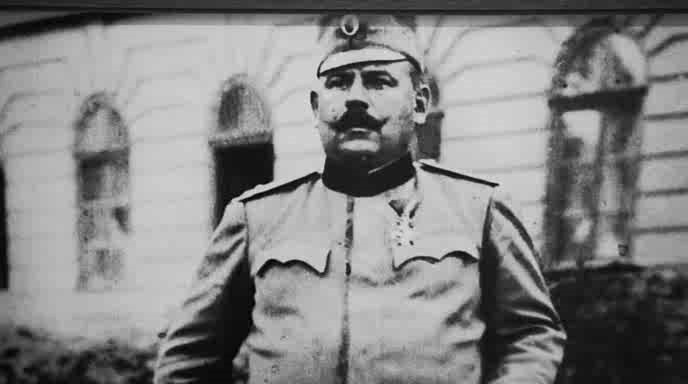
Dragutin Dimitrijevic: Serbia's Head of Military Intelligence. He not only wanted a general European war - he triggered it.
“Not only did they want it – they triggered it!”, exclaims
the Detective Sergeant. “Gavrilo Princip, the Bosnian assassin of the Archduke
Franz Ferdinand, heir to the Austro-Hungarian throne, was the wind-up toy of
Serbian military intelligence. The latter’s boss, Dragutin Dimitrijevic, was
certain that the Archduke’s death would provoke a war with Austria and that
this, in turn, would draw in Serbia’s protector, Imperial Russia. Once the
Russians moved, a general war was inevitable.”
“Hmmm”, says the Chief inspector, “it’s pretty thin.”
“Okay, but there’s more”, says the Detective Sergeant. “The
entire Serbian economy, bankrupted by the Balkan Wars of 1912 and1913, was
being kept afloat by French and Russian loans. So Dimitrijevic wasn’t going to
move without the go-ahead from Paris and St Petersburg.”
“Wait a minute. Are you saying that the French and the Russians
gave the green light to Franz Ferdinand’s assassination?”

Raymond Poincare: The French president was present in St Petersburg in the midst of the assassination crisis, which he helped to fan into war.
“Petty much, pretty much. Maybe not the assassination
specifically, but definitely something in the nature of a casus belli – a cause for war. How else do you explain the fact
that in the twelve months immediately preceding the outbreak of war, the French
President, Raymond Poincaré, was present in both London and St Petersburg.
Hell’s teeth! The man was actually in Russia at the exact moment the crisis was
unfolding!”
“What are you saying?”
“I’m saying that Poincaré, having confirmed the anti-German
faction at the British Foreign Office still had Foreign Secretary Sir Edward
Grey’s ear, made sure he was in St Petersburg to steady Tsar Nicholas’s nerves.”
“His motive?”
“Revanche! Chief Inspector. Revenge! Poincaré was born in
Alsace – the province stolen by Germany in 1871.”
“And the Russians?”
“Constantinople! They were terrified that Germany’s friendship
with the Turkish Empire would stymie their plans for seizing the Bosphorus –
gateway to the Mediterranean.”
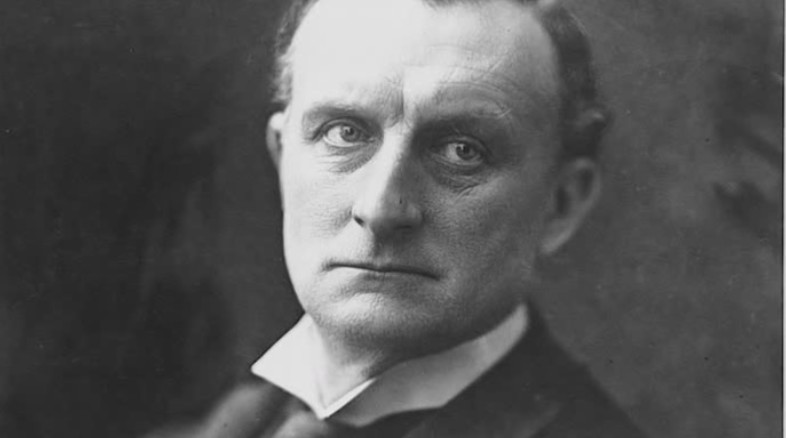
Sir Edward Grey: The British Foreign Secretary who famously remarked on the eve of World War I: "The lamps are going out all over Europe, we shall not see them lit again in our lifetime." Less well known is his role in extinguishing them!
“And Great Britain?”
“She had no choice but to go along – if only to keep St
Petersburg’s attention on the Balkans and away from India.”
“But Germany invaded Belgium!”, objected the Chief
Inspector.
“Facing a war on two fronts: what other choice did she have?”
Now, tell me these aren’t the ingredients for a gripping whodunit
– History’s ultimate cold case?
This essay was
originally published in The Waikato Times, The Taranaki Daily News, The
Timaru Herald, The Otago Daily Times and The Greymouth Star of Friday, 8 August 2014.
