|
| Never Let Go: If the violent prejudices of the Jim Crow South, echoing through contemporary struggles, teach us anything, it is that the defence of rationality, science and progressivism must never be allowed to falter. Those pre-modern night-riders, filled with unrelenting hate, are still out there. If the troops of Reason and Justice are withdrawn; if Liberty’s bayonets are sheathed; there will be Hell to pay. |
FOR WEEKS NOW, I’ve been racking my brains over why the anti-vaccination movement feels so very, very creepy. I’ve sought reassurance in Jess Berentson-Shaw’s gentle enjoinders to engage empathically and constructively with the vaccine resistant, but without success.
Jess reminds me of those naïve souls who argue that non-violent tactics could have brought the Third Reich to its knees. These folk always forget that non-violent tactics only work against a government that is still capable of feeling shame, or, at the very least, fears being despised in the eyes of the world. Regimes fully armoured in self-justifying ideological extremism cannot be successfully challenged by the tactics of Gandhi and Martin Luther King.
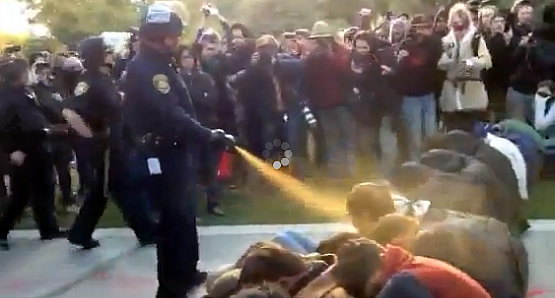
Jess’s humanistic faith did, however, set off a train of thought. It caused me to review the history of the Black civil rights movement through the prism of non-violence. Was it the key element in the movement’s success, or was there something else at work that caused the segregationist regimes of the southern states to step back and take stock? While there is no doubt that the imagery of the civil-rights struggle: of fire-hoses and Billy-clubs; savage Alsatian dogs and tear-gas; deployed for the world to see against unresisting, non-violent youngsters; was more than successive US administrations were willing to tolerate; it was not enough, on its own, to bring victory.
What effectively ended the official administration of Jim Crow was the Federal Government’s clear willingness to pick up where it left off in 1877. That was the year in which the last remaining garrisons of Federal troops were withdrawn from the South. The year when Washington effectively told Southern Whites that nothing would be done to prevent them from constructing violently racist regimes throughout the states of the defeated Confederacy. It was the 1957 decision of the Republican President, Dwight Eisenhower, to dispatch paratroopers from the 101st Airborne Division to Little Rock, Arkansas, to enforce the Supreme Court’s desegregation orders, that made it clear that “Reconstruction”, deferred for 80 years, was back.
After 1957, more and more of the heavy-lifting in defence of Jim Crow was taken up by the openly terrorist Ku Klux Klan. But the violence unleashed by the Klan, and the non-violent response of Black and White civil rights activists, only made the Federal authorities’ responsibility to uphold the Constitution more urgent. The FBI’s ruthless counter-intelligence tactics made the Klan’s terrorism increasingly ineffectual. The violence at Selma, the Jim Crow South’s last stand, merely ensured that the crucial 1965 Voting Rights Act was passed – sealing its fate.
Of what relevance is this to the anti-vaccination movement of 2021? Simply, the anti-vaccination movement draws its power from the same mental machinery that constructed the Jim Crow South nearly a century-and-a-half ago.
What enraged Southerners in the aftermath of the American Civil War was not simply that they had been defeated militarily, but that the racist ideological edifice that had sustained slavery was being demolished. The progressive view of humankind espoused by the Abolitionists had prevailed. In contemporary language, the old software no longer worked in USA 2.0.
Something very similar happened in the US, and New Zealand, with the arrival of Covid-19. Dangerous ideas and attitudes, which had been permitted to guide a minority of the population, were suddenly and unequivocally declared erroneous and unsafe by the State. The majority strongly concurred. Anti-scientific twaddle could no longer be ignored. In the context of a deadly viral pandemic, such ideas posed a direct threat to society’s well-being.
For those who saw science, and the progressive political and social ideas it underpinned, as the root of all evil, this was an intolerable situation. With some justification, they saw the war against Covid-19 as a war against their own, essentially pre-modern, world-view. Accordingly, the demands being made of them by the State were received as an existential threat – to be resisted at all costs, by any means necessary.
Exactly the same feelings of desperation and outrage gripped Southern Whites as they saw the triumphant principle of racial equality being given practical application in the 1870s. Under the protection of Federal bayonets, Black Southerners founded schools, established businesses and stood for public office. It was not to be borne.
An utterly uncompromising determination to destroy this new regime, and to obliterate the progressive ideology that inspired it, seized an unrelenting majority of White citizens across the Southern states. They would not rest until their version of reality was reinstated. Those who opposed them were shown no mercy. When the political weariness of the Northern states offered them the opportunity to reclaim political control, they grabbed it with both hands. Racist terror became the means of restoring calm to White Southern souls – for the next 80 years.
Peruse the Southerners’ “Lost Cause” propaganda of the Reconstruction Era (1869-1877) and you will find there the same unhinged extremism that throngs the dark recesses of the anti-vaxxer Internet. The same “Big Lies” are there. The same dumbfounding claims. The same threats of violence.
A vast international crisis, the Covid-19 Pandemic, has exposed the irrational underbelly of twenty-first century society. Neuroses and delusions that the majority had reluctantly tolerated (if only because the harm they caused was almost exclusively restricted to those who suffered from them) now threaten the general welfare.
If the violent prejudices of the Jim Crow South, echoing through contemporary struggles, teach us anything, it is that the defence of rationality, science and progressivism must never be allowed to falter. Those pre-modern night-riders, filled with unrelenting hate, are still out there. If the troops of Reason and Justice are withdrawn; if Liberty’s bayonets are sheathed; there will be Hell to pay.
This essay was originally posted on The Daily Blog of Thursday, 18 November 2021.