Showing posts with label Waitangi Day. Show all posts

Tuesday, 15 June 2021

To Speak, Or Not To Speak? That Is The Question.

Speaking Rights: The spectacle of the nation’s prime minister being denied the right to speak to her fellow citizens, personally, on New Zealand’s national day would generate massive antagonism among Pakeha of both sexes. A refusal to be guided by the customs of Ngāpuhi, on the other hand, would be regarded as a slap in the face by the whole of Maoridom. It would be interpreted as proof of the fundamental insincerity that still bedevils the Pakeha world when it comes to accepting and respecting the values of New Zealand’s indigenous culture.

WAITANGI DAY is still more than half a year away: still plenty of time for Ngāpuhi to put things “right”. The promise made at Waitangi earlier this year: that from 2022 women politicians would be “allowed” to speak for themselves; will in all likelihood be honoured. The possibility exists, however, that Ngāpuhi will refuse to be dictated to by Pakeha feminists. A stiff-necked people, they may decide that their time-honoured tribal customs are not to be overturned at the behest of “White Privilege”. Requiring the Prime Minister to nominate a male colleague to speak on her behalf would, after all, be an interesting test of Labour’s commitment to honour the ways of te ao Māori – a very interesting test.

Certainly, such a requirement would place Jacinda Ardern in a very uncomfortable position. The spectacle of the nation’s prime minister being denied the right to speak to her fellow citizens, personally, on New Zealand’s national day would generate massive antagonism among Pakeha of both sexes. A refusal to be guided by the customs of Ngāpuhi, on the other hand, would be regarded as a slap in the face by the whole of Maoridom. It would be interpreted as proof of the fundamental insincerity that still bedevils the Pakeha world when it comes to accepting and respecting the values of New Zealand’s indigenous culture.

Given that there are a great many more Pakeha than Maori, simple political arithmetic suggests that the Prime Minister’s best course of action would be to politely decline the invitation to attend the Waitangi Day celebrations on 6 February 2022, and find a less contentious venue from which to deliver her speech. That course of action would not, however, be politically cost-free. It is easy to anticipate the Maori Party’s response to Jacinda’s “slighting” of Ngāpuhi. It would be presented as confirmation that for all their fine words about “partnership”, with Pakeha it is always “My way – or the highway.”

In left-wing circles the debate would be even more intense. Critical Race Theory would enjoin Whites to step away from their cultural and political privileges and accept the judgement of Ngāpuhi’s decision-makers. To do anything else, it would be argued (at least by some) requires the elevation of Pakeha notions of equality and liberty over Ngāpuhi’s understanding of women’s and men’s roles in the ceremonies of welcome and the processes of deliberation. Any assumption that the Western liberal tradition must take precedence over indigenous custom, these leftists would contend, is prima facie evidence of white supremacism. The Prime Minister would, in effect, be saying to Ngāpuhi: “My people’s values are superior to your people’s values.”

What’s more, that would remain the message, even if she chose to spend Waitangi Day somewhere else. Indeed, these leftists would argue that, in those circumstances, the message would be made much worse. By choosing to deliver her speech on the grounds of Government House – or somewhere like it – the Prime Minister would be guilty of “othering” Ngāpuhi. No matter what the text of her address might say, the sub-text would be crystal clear:

Isn’t it a pity that the sexism of Ngāpuhi is so deeply entrenched that civilised interaction between New Zealand’s two principal ethnicities has, for the moment, become impossible? We must earnestly hope that in time – and we hope that time is soon – they will decide to join us all in the modern world.

That was, after all, the essence of the message sent out by the last National Government when it decided to steer well clear of Waitangi until Ngāpuhi were prepared to meet the expectations of the New Zealand Government vis-à-vis the dignified celebration of Waitangi Day. To declare – albeit sub-texturally – that on the 6 February 1840, Ngāpuhi did, indeed, surrender their sovereignty to the British Crown.

Within Labour’s parliamentary caucus there are plenty of MPs – and not just those holding the Maori seats – who would be extraordinarily uncomfortable with such a message being sent out by a Labour Government. For them, the steady progress being made towards the bi-cultural nation envisaged in the He Puapua Report represents the biggest and most important project in which they are ever likely to participate. They believe in te Tiriti o Waitangi, they believe in the partnership model, and they believe that kawanatanga and rangatiratanga are two distinct political concepts. Co-governance will not, however, be possible without consistent and mutual respect for the customs, practices and values of the Pakeha world and te ao Māori.

Which is why, if Ngāpuhi insist that Jacinda accept the tradition that women do not speak on the paepae, then the Prime Minister will nominate a male colleague to speak on her behalf. Equally, however, Ngāpuhi is most unlikely to demand that of her. Stiff-necked Ngāpuhi may be – but no one has ever called them stupid.


This essay was originally posted on The Daily Blog of Tuesday, 15 June 2021.

Tuesday, 6 February 2018

Can Sovereignty Be Shared?

Warm Words: Jacinda’s intentions and those of her Maori caucus colleagues are unquestionably benign. But in political circumstances as fraught as those presently confronting her government, good intentions are seldom enough. If, as the revisionist historians insist, Maori sovereignty was never ceded to the Crown, then the descendants of the Waitangi signatories’ determination to reclaim it; to exercise it; is entirely reasonable.

SPEAKING FROM THE PORCH of the whare runanga, overlooking the Waitangi Treaty Ground, Jacinda Ardern challenged Maori to challenge her. “[W]hen we return in one year, in three years, I ask you to ask of us ‘what have we done?’ Ask us what we have done to improve poverty ... ask us, hold us to account.”

Jacinda asked Maoridom to score her government on how well – or how badly – it has addressed the big issues confronting Maori. She spoke encouragingly about New Zealanders coming to terms with their country’s history and the Waitangi Treaty’s pivotal role in shaping that history.

What she was careful not to do, however, was openly concede – as the Green Party leader, James Shaw did – that Maori had never ceded sovereignty to the British Crown. As Prime Minister, such a concession would immediately pitch New Zealand into a protracted and extremely bitter constitutional crisis.

The authority of the Crown in the Realm of New Zealand is absolute and indivisible. To preserve that authority, the settler government of Sir George Grey invaded the Waikato in 1863. Through the bitterest strife, the kingitanga movement came to understand that Her Majesty’s Government would never accept the idea of a sovereignty shared between Pakeha colonists and tangata whenua. The only sort of Maori king acceptable to the British Crown was the sort that wielded no power.

The notion that sovereignty was never ceded to the Crown by Maori arises out of the radical and highly tendentious historiography of the Waitangi Tribunal. For this particular historical interpretation of what transpired at Waitangi on 6 February 1840 to stand, however, it is necessary to ignore all the subsequent actions of the Crown between that date and the early 1980s.

The construction and elaboration of the New Zealand State; the creation and interpretation of its laws; the legal status and inviolability of its citizens’ private property: all would be called into question if the idea that Maori sovereignty was never actually ceded to the Crown in 1840 was ever to be formally accepted by a New Zealand prime minister and her government.

Warm and inclusive though Jacinda’s speech from the whare runanga may have been, it was nevertheless the speech of a political leader in control of an absolute and indivisible state apparatus.

Was she promising to turn that apparatus to the urgent task of uplifting Maori New Zealanders out of poverty, homelessness and the bitter legacy of 178 years of colonial oppression? Yes, she was.

Was she proposing to unleash a constitutional revolution inspired by revisionist historians’ interpretation of the Waitangi Treaty? No, she was not.

Jacinda’s speech to the Iwi Leaders Forum at the beginning of her five-day sojourn in the Far North made clear her government’s intentions. In short, these were all about dealing with Maori material deprivation. Iwi leaders intent on pushing forward “cultural” issues – by which they mean constitutional issues – will very soon find they are pushing in vain.

Do the 13 Maori members in Labour’s caucus get this? Are they okay with this?

In all probability they are working very hard not to apprehend the dangerously contradictory currents into which Labour’s waka is drifting. All of them are eager to begin the process of uplifting their people. How many of them have thought through the medium-term consequences of this policy of empowerment is another matter altogether. What they will do when material uplift morphs into uncompromising cultural assertion is anybody’s guess.

The whole of Labour’s team is desperate to draw a line under the malign political effects of Helen Clark’s and Margaret Wilson’s Foreshore & Seabed Act. The demise of the Maori Party as a parliamentary force has raised hopes that this has, indeed, occurred. But it will take more than Jacinda’s warm words to cause the structures of sovereignty and executive power by which all New Zealand prime ministers are constrained to disappear in a puff of stardust.

Clark and Wilson did not overturn the Court of Appeal’s judgement out of racially-motivated spite. They overturned it because to do otherwise would have been to catch the judgement’s loosened legal thread in their fingertips, pull on it, and watch the entire constitutional garment of New Zealand unravel before their eyes.

Jacinda’s intentions and those of her Maori caucus colleagues are unquestionably benign. But in political circumstances as fraught as these, good intentions are seldom enough. If, as the revisionist historians insist, Maori sovereignty was never ceded to the Crown, then the descendants of the Waitangi signatories’ determination to reclaim it; to exercise it; is entirely reasonable.

The question which such a response immediately poses, however, is as difficult as it is portentous: Can two peoples exercise equal sovereignty in an undivided state?


This essay was originally posted on The Daily Blog of Tuesday, 6 February 2018.

Tuesday, 7 February 2017

Drawing Together, Not Breaking Away.

The Birth Of A Nation: On 6 February, New Zealanders celebrate not a severance of political ties, but their creation. The Treaty of Waitangi binds together two distinct entities: the indigenous people of New Zealand and the British Crown. It is a statement of undertakings and obligations: a drawing together, not a breaking away.
 
THE CITY OF PHILADELPHIA, in 1787, was roughly the size of Whanganui. Its muddy streets, ill-lit and reeking of horse dung, had for five months been thronged by representatives of the thirteen former colonies of King George III. Bewigged gentlemen in swallow-tail coats and silk stockings had laboured through a sweltering summer and on into the milder airs of Autumn to crown their successful war against the British with a constitution to unite the fractious states of America.
 
There is story, probably apocryphal, but beloved by Americans nonetheless, that one of the principal framers of the American constitution, Benjamin Franklin, upon emerging from the final session of the Convention on 27 September 1787, was accosted by a cluster of his fellow citizens demanding to know whether, after all that talking, Americans had been given a monarchy or a republic. Franklin’s reply was typically terse – and telling. Pausing amidst the jostling spectators, he answered: “A republic – if you can keep it.”
 
That day marks the true birth of the United States of America. It is not, however, the day upon which Americans celebrate their nationhood. America’s national day is the fourth of July – the day when, in 1776, the thirteen colonies declared their independence from Great Britain.
 
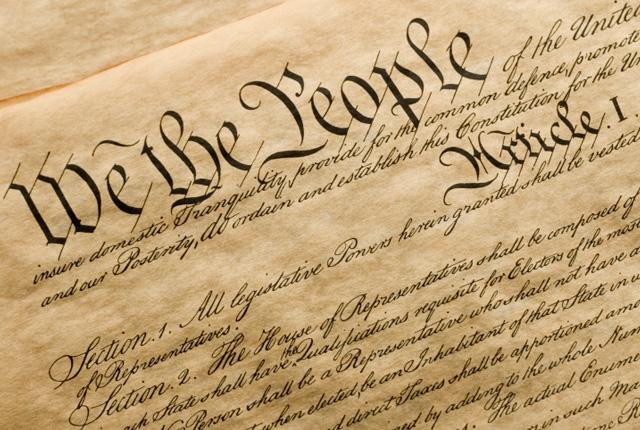
It is the promises of that declaration’s author, Thomas Jefferson: his ringing sentences about all men being created equal; possessing “certain unalienable rights”; specifically, “life, liberty and the pursuit of happiness”; that they remember and celebrate. The complicated machinery of their own self-government, the document which begins: “We the People” is honoured, but not with marching bands and fireworks.
 
How different America’s Independence Day is from our own Waitangi Day.
 
On 6 February, New Zealanders celebrate not a severance of political ties, but their creation. The Treaty of Waitangi binds together two distinct entities: the indigenous people of New Zealand and the British Crown. It is a statement of undertakings and obligations: a drawing together, not a breaking away.
 
The Treaty offered the descendants of its signatories’ only the roughest sketch of what a future New Zealand constitution might look like. A document more at odds with the universal pretentions of the American Declaration of Independence could hardly be imagined.
 
It is the contractual nature of the Treaty: the multiple opportunities for conjecture and dispute that it offers each successive generation; which has determined the manner in which New Zealanders mark the birth of their nation. It is the reason why, year after year, our political leaders are drawn back to the Waitangi Treaty Grounds.
 
Those who argue that New Zealanders, like Americans, should celebrate their national day with marching bands, fireworks and other noisy displays of chauvinistic self-congratulation, misunderstand Waitangi Day fundamentally. In moral terms, New Zealand is not an accomplished fact, but an evolving proposition. A proposition concerning which the two parties which came together on 6 February 1840 – the Crown and tangata whenua – still have a lot to say. That’s why Waitangi Day continues to be an argument-in-progress – rather than a celebration.
 
It is also why the Prime Minister’s absence from this year’s celebrations at Waitangi is so regrettable. Certainly, communications from Te Tii Marae were confused and disrespectful, but Bill English did not need to draw attention to their authors’ foolishness. He could, instead, have made a virtue of the Marae authority’s expectations of silence.
 
By characterising Waitangi Day as an occasion for the Crown to listen rather than speak, he could have affirmed the unique historical experiment which the Treaty represents. The moot that commenced at Waitangi 177 years ago: Can tangata whenua and the Crown construct a nation in which the claims of the former are not obliterated by the greed of the latter?
 
"A republic, if you can keep it." - Benjamin Franklin on the US Constitution.
 
It is a question that America’s founding fathers did not trouble themselves to either ask or answer. The only reference to the indigenous inhabitants of North America in Jefferson’s declaration describes them as “merciless Indian savages”. The United States Constitution, itself, in defiance of the egalitarian promises of 1776, took care to stipulate that, for the purposes of determining the states’ population, slaves would be counted as three-fifths of a person.
 
In 1863, as the argument over the Treaty’s meaning turned bloody in New Zealand, President Abraham Lincoln spoke at Gettysburg of “a new nation, conceived in Liberty, and dedicated to the proposition that all men are created equal”.
 
“Now we are engaged”, he continued, “in a great civil war, testing whether that nation, or any nation so conceived and so dedicated, can long endure.”
 
The United States endured – just. But, in the century-and-a-half since the Civil War, Lincoln’s proposition has been tested repeatedly.
 
Waitangi Day reminds us that our own proposition of nationhood is still to be resolved.
 
“A republic, if you can keep it.”
 
The Treaty, if we’re prepared to honour it.
 
 
This essay was originally published in The Press of Tuesday 7 February 2017.

Friday, 26 April 2013

The Living And The Dead (ANZAC Day 2013)

Mythos At Work: Collective memorialisation, or mythos, takes our basic values and attitudes and re-fashions them into the patterns of memory and meaning that re-present the past. ANZAC Day's cultural entrenchment is proof that the mythic transformation of this historical moment is almost complete. Waitangi Day, by contrast, remains a living issue whose meaning is yet to be settled.

THE LAST NOTES of The Last Post have faded into the dawn skies of ANZAC Day for another year. The words of Laurence Binyon’s poetic tribute, For the Fallen, have been intoned with due solemnity, and thousands of young New Zealanders, most of them blessedly untouched by war, have again repeated its final pledge: “We will remember them.”
 
Moments of sombre ceremony, in which old and young, past and present, are drawn together in the embrace of collective memorialisation, or mythos, are precious to all cultures. It is why, even in such a resolutely secular nation as New Zealand, christenings, marriages and funerals retain such enormous emotional power. And, almost certainly, it explains why sixty percent of New Zealanders say ANZAC Day means more to them than Waitangi Day.
 
But human memory is a most unreliable transmitter of truth. Indeed, what tends to get transmitted in ceremonies like the ones we engage in on ANZAC Day has almost nothing at all to do with historical reality.
 
Taken Binyon’s famous poem, for example.
 
Loaded upon that final, endlessly-quoted stanza of For the Fallen is all the consciousness of waste and horror that the peoples of the participating nations, ever since the guns fell silent in 1918, have brought to their assessment of World War One. The image conveyed in the words, “at the going down of the sun”, is not merely one of a descending star, but of something much closer to home: of countless fallen sons; a broken generation; the ending of an age.
 
And that is how mythos works. It takes our basic values and attitudes and re-fashions them into the patterns of memory and meaning that re-present the past.
 
Binyon’s poem, written in the thrilling weeks that followed the out-break of war in August 1914, and published a month later in The Times, was romantic nonsense.
 
Consider these lines:
 
Solemn the drums thrill: Death august and royal,
Sings sorrow up into immortal spheres.
There is music in the midst of desolation,
And a glory that shines upon her tears.
 
And then consider how all those thousands of young men, “straight of limb, true of eye, steady and aglow”, actually died. Choking on their own blood. Drowning in pools of stinking mud. Slowly, in agony, on the wire. The only music in no-man’s land was the staccato chatter of the machine-guns. Nothing there you’d call “august and royal”; no “glory that shines”; no one to dry the tears of eighteen year-old boys whose last word was almost always: “Mother.”
 
Binyon’s actual poem, written before World War One took on the hideous aspect that still appals us, bears no resemblance to the poem we recite on ANZAC Day. That poem was written by the men who came back, and by the mothers of the boys who didn’t. It was written by the old men who pondered the empty pews in the local church, the empty tables at the local pub, the empty positions in the local Rugby team.
 
Mythos wrote The Ode of Remembrance.
 
But mythos has not yet re-written Waitangi Day. Unlike ANZAC Day it has yet to congeal into ceremony and solemnity. Waitangi Day is still a living thing: it’s “truths” unsettled. As a nation, we are still working on the patterns of memory and meaning in which the signing of the Treaty of Waitangi will, eventually, be enmeshed.
 
In every community the grim obelisks stand, bearing the names of the fallen and registering the myriad futures that were never fulfilled. In the chill dawn of every ANZAC Day we have a duty to remember them. Not as the tragic, self-sacrificing heroes that mythos has turned them into, but as they really were: teenage boys who died far from home for old men’s dreams of empire and dominion.
 
And on the morning of Waitangi Day, filled as it always is with rancour and resentment, pride and protest, give thanks that New Zealand’s future is still ours to make.
 
This essay was originally published in The Dominion Post, The Waikato Times, The Taranaki Daily News, The Timaru Herald, The Otago Daily Times and The Greymouth Star of Friday, 26 April 2013.

Friday, 13 February 2009

That Loving Feeling

A new historic compromise? Just as the post-World War II "historic compromise" between capital and labour ushered in a 30-year period of working-class growth and consolidation, the new relationship between the Pakeha and Maori capitalist elites (symbolised here by Tariana Turia and John Key) looks set to transform New Zealand's economic, cultural and political environment - and not, in this case, to the Left's advantage.

WAITANGI was a love-in this year. We must put to one side the assault on the Prime Minister by two Northland Maori protesting the National-Maori Party alliance. Their action was small, uncoordinated and aggressive precisely because it did not enjoy the support (much less reflect the generally positive mood) of the Maori people. For the first time in a long time there were no angry denunciations of colonial treachery, no argy-bargy with the Police, and no ambushes in the wharenui. Indeed, recalling the dramatic events of past Waitangi Days, this year’s love-in seemed positively unpatriotic.

What has happened in the five years since Don Brash’s notorious Orewa Speech inspired genuine mud-slinging and abuse? How is it possible that John Key can be welcomed onto our national marae with the same genuine warmth Norman Kirk received way back in 1973? What lies behind this extraordinary rapprochement between Maori and Pakeha?

At the root of all these changes lies the succession of Treaty settlements negotiated by both the National and Labour parties since the late-1980s. Though representing only a fraction of the value of the lands, forests and fisheries alienated from Maori control by the 19th Century colonial authorities, the capital base provided by the settlement process is, nevertheless, slowly transforming iwi corporates into key players in the New Zealand economy.

In less than a decade it is likely that the big iwi corporations will constitute this country’s largest domestically-owned business enterprises. Their holdings in the tourism, forestry and fishing industries will generate a growing proportion of our national income, and, even more significantly, as the legislation controlling the use of Maori land-holdings is made increasingly facilitative of Maori commercial development, the iwi corporates will be exerting a growing influence over New Zealand’s core primary production industries – dairying, meat and wool.

The explanation for this revolution in economic and, inevitably, political power is simple. The nature of iwi corporate structures renders them immune to takeover by foreign interests. The owners of the Maori corporations will always define themselves as tangata whenua before they define themselves as financial stakeholders in a commercial enterprise. That being so, they would no more countenance losing control of the tribe’s assets – its taonga – than they would countenance the loss of their people’s mana – which, in the world of the Maori, amounts to much the same thing.

Remarkably, it was the Right which first recognised the true significance of the Treaty settlement process: that tribal capitalism was destined to become the critical guarantor of capitalist relations generally in New Zealand.

National and Labour’s attempts to roll back the Treaty-settlement process – whether it be Helen Clark’s and Michael Cullen’s effective re-nationalisation of the foreshore and seabed, or Don Brash’s swingeing attack on Maori "privilege" – represented what was almost certainly the last, concerted effort on the part of the traditional, European elites to re-colonise the Maori-Pakeha relationship.

Maoridom’s response: the massive hikoi which descended on Parliament in May 2004, along with the simultaneous formation of the Maori Party; demonstrated the futility of this strategy. Wiser political heads, most notably in the Business Roundtable, realised that a more intelligent strategy, one based on the carefully managed assimilation of Maoridom’s economic and political elites into a broader, bi-cultural Aotearoa-New Zealand ruling class, has become Kiwi capitalism’s most urgent priority.

The skill with which Don Brash’s successor, John Key, has managed this recalibration of the Right’s relationship with Maori has been considerable. Not only has he been able to replicate the close ties National enjoyed with the Maori aristocracy throughout the 1950s and 60s, but by his assiduous courtship of the Maori Party MPs, he has also been able to harness the goodwill of the Maori Party’s supporters to National’s new deal in New Zealand race relations.

In doing so he has almost effortlessly parted the Labour Party from one of its most reliable bases of electoral support. The respect Maori culture bestows upon leaders, along with its infatuation with prestige, means that the Maori-National alliance has every chance of enduring well into the future. Underlying the new relationship will be the expanding amount of ideological common ground shared by Maori and Pakeha capitalists.

It is, indeed, a new day for the Maori people, not because, at the level of the typical working-class Maori family, life has got materially better, but because for the first time in a long time they feel that the colonial victors want (and need) more from them as a people than their sullen acquiescence at being last hired, first fired.

For that, John Key will win not only their support, he’ll claim their love.

The above is a slightly modified version of an essay which first appeared in the Timaru Herald, The Taranaki Daily News, The Otago Daily Times and The Greymouth Evening Star on Friday 6th February 2009.