Saturday, 15 May 2010

Jus Soz U Knoz


CHRIS TROTTER’S POLITICS
As calibrated by The Political Compass

Economic Left/Right: -10.00
Social Libertarian/Authoritarian: -6.82

Discover your own political orientation at
http://www.politicalcompass.org/

An Open Letter to the National Party

The benign face of National: Ideological extremism, in alliance with radical Maori Nationalism, threatens to destroy the National Party's "brand" in exactly the say way that a similar combination destroyed the much-loved, New Zealand-based aid organisation, Corso.

Dear National Party Member,

I wonder how many people belonging to today’s National Party remember Corso? Older members of the party may vaguely recall Sir Robert Muldoon’s savage critique of Corso back in the late-1970s, but among the younger members of the National Party the name probably doesn’t ring any bells at all.

That’s a pity, because as I watch what is happening in today’s National Party I am strongly reminded of the political tragedy which overtook and ultimately destroyed the once-mighty Corso brand.

Corso is, of course, an acronym. The organisation began its life back in 1944 as the Council of Organisations for Relief Services Overseas. It’s charitable mission was to gather much-needed clothing and footwear for the millions of people around the world which the Second World War had uprooted and impoverished.

These needs persisted after the war and by the 1950s Corso had become New Zealand’s pre-eminent overseas aid organisation. It's annual appeals attracted donations from tens-of-thousands of New Zealanders from all walks of life. By December 1964 Corso had raised more than £4 million in cash and dispatched more than £8 million-worth of clothing and footwear to the world’s poor. The organisation boasted thousands of volunteers and was universally respected as the quintessential Kiwi charity: practical, non-political, down-to-earth, effective.

The radicalism of the late-60s and 70s precipitated a sequence of dramatic changes in Corso. Increasingly, the charitable model of overseas aid was being challenged. "Give a man a fish", went the oft-quoted slogan, "and you will feed him for a day. Teach him how to fish and he will feed himself for the rest of his life." A powerful left-wing element followed this anti-colonialist philosophy into Corso.

By the end of the 1970s the organisation – now thoroughly politicised – had decided that "justice begins at home". Rather than assist the poor overseas, Corso determined to tackle poverty right here in New Zealand. Not surprisingly, this radical change of direction attracted the ire of Prime Minister Rob Muldoon. In 1979 government support for Corso was withdrawn, and the amounts collected in subsequent public appeals plummeted.

Worse lay in store for the beleaguered organisation. Throughout the 1980s Corso was steadily infiltrated and eventually taken over by radical Maori nationalists and their Pakeha supporters. Led by the Harawira family, the radicals insisted that Corso recognise and promote tino rangatiratanga – the Maori right to self-determination. To prove its bona fides to the cause of the tangata whenua, Corso undertook to devote two-thirds of its aid budget to New Zealand-based (which usually meant Maori) projects.

When Corso workers and supporters objected to this takeover they were subjected to excoriating verbal and, on at least one occasion, physical assault. By 1990, the organisation was little more than a hollowed-out shell. New Zealand’s largest and most successful home-grown aid organisation had been destroyed: initially, by ideological extremism; and finally, by radical Maori nationalism.

If you, the members of the National Party, do not rouse yourselves, then your own, once-proud, political brand will suffer the same fate as Corso’s.

Already, ideological extremism has driven thousands of members out of the party. And now those same extremists, working hand-in-glove with radical Maori nationalists, are getting ready to tip both your government and your (dramatically re-structured) party organisation into the same death-spiral that destroyed Corso.

Never forget that it was with the best and most noble of intentions that Corso’s demise was set in motion. Men and women of good-will, seeking only what was "right" and "just", allowed themselves to be persuaded that the organisation’s steadily dwindling institutional membership was a case of "fewer, but better". And those who complained; those who warned; those who pleaded with them to reconsider the direction in which they were dragging Corso; were dismissed as being either pathetically misguided, or avowedly racist.

National, as its name attests, has always seen itself as the party not of one class, nor one race, but of the whole nation. When New Zealanders believed that, and when National’s policies reflected that, its membership numbered close to quarter-of-a-million.

In May 2010, can you honestly claim that National is governing for the whole nation? Can you really affirm that its brand is safe? And is it even remotely credible to suggest that, if it doesn’t immediately cease conniving in the dissolution of its own country’s core institutions, it will be in any position to win a general election in 2011?

This essay was originally published in The Dominion Post, The Timaru Herald, The Taranaki Daily News, The Otago Daily Times and The Greymouth Evening Star of Friday, 14 May 2010.

Friday, 14 May 2010

Leaders & Followers

A war host at their back: The anti-mining march up Auckland's Queen Street on May Day, in terms of providing powerful images, was much more effective than the photographs of "Warrior John" Key in Afghanistan.

JOHN KEY in body-armour. Thirty-thousand protesters marching up Queen Street. What are these images saying to us? Both events were deliberately contrived to convey a powerful message. So, what was it, in the language of symbols, that the image-makers were hoping to communicate – and to whom?

The first image, of "Warrior John", is all about the leader facing danger. Here is a man who, in his own words, is "not prepared to send people to a destination [that] I am not prepared to come to myself."

In propaganda terms it’s an old trick. As long ago as the First World War government publicists realised the value of having the nation’s leaders photographed in solemn (and potentially dangerous) communion with the troops. King George V did it. Prime Minister Lloyd George did it. Even New Zealand’s Prime Minister, Bill Massey, did it. Wartime presidents and prime ministers have been doing it ever since.

Symbolically speaking, the image taps into the deepest wells of human memory. Since men combined to bring down woolly mammoths one hundred millennia ago, leadership and danger have, conceptually-speaking, marched hand-in-hand. At its most basic level, leadership is about persuading people to trust you with their lives.

War-correspondent, Dexter Filkins, writes about leadership in The Forever War. With the US Marines "Bravo Company" in Falluja, he shadowed Captain Read Omohundro:

"It was an odd thing about leadership; people talked about it and CEOs wrote books about it. But there was nothing like facing death to feel it in the flesh. It was as if Omohundro wore a mask, and with that mask he gave everyone more courage than they knew they had."

Anyone who has seen combat says the same. Leaders are the people other people follow.

Will the image of Key in body armour encourage us to go on following him?

Probably not. New Zealanders no longer look upon the conflict in Afghanistan as their fight. In fact, polling suggests that a majority of voters would like to see, at the very least, the combat elements of New Zealand’s contribution withdrawn. Why? Because, to put it bluntly, the Taliban is not regarded as an existential threat.

In the aftermath of 9/11, with the images of the twin towers falling still vivid in their minds, New Zealanders were more than willing to throw in their lot with the aggrieved Americans. They were not alone. A visceral desire to avenge the victims of Al Qaeda’s devastating terrorist attack send military contingents flying towards Afghanistan from all over the world.

But that was eight years ago. Al Qaeda survives. Osama Bin Laden still lives. The Taliban have not been defeated. The democracy we promised to bring to the Afghan people has not materialised. And, according to The Sunday Star Times’ Jon Stephenson, 64 percent of the people we’ve supposedly been "assisting" in Bamiyan province don’t think very highly of our efforts.

In an existential struggle – like the Second World War – images of the leader at the front are extremely effective. That’s because, in an existential war, the troops on the ground are, literally, the nation’s children in arms, and the leader is there representing their parents and siblings back home. When they see him reach out to shake the hand of a soldier, it is their son or daughter, their brother or sister, that he is touching. His hand is their hand. The identification is deeply emotional and unequivocal: perfect propaganda.

In the case of Afghanistan, however, the emotional connection is weak, and the level of equivocation high. Instead of coming across as heroic, Key in body armour looks faintly ridiculous. As a consequence, most New Zealanders are going to decode the official images with their heads, not their hearts. His meeting with the troops will be perceived for what it actually was: a photo opportunity.

The contrast with the May-day anti-mining demonstration up Queen Street could hardly be more telling.

Here, too, the imagery stirs memories lodged deep into what Carl Jung called "the collective unconscious". For all humans, the sight of a large body of people moving purposefully towards them is invariably registered as a threat. What they see is a war-host – someone’s enemies on the march. And the first question they ask themselves is: "Who are they marching against? Is it me – or someone else?"

The protest demonstration is, thus, a double-edged weapon. It’s intended to frighten and intimidate those whose actions it opposes, while inspiring and encouraging those who share the demonstrators’ views.

That’s why estimates of the true size of an obviously large demonstration are so contentious. Those targeted are naturally concerned to minimise its significance. If they can make the march smaller, it not only becomes less threatening to people on their own side, but also less inspiring to their opponents.

It’s one of the first things protest organisers learn: never put a figure on the expected turn-out. Failure to meet a stated target will invariably be represented by the news media as proof that the organisers’ have inaccurately gauged public opinion. Further proof, perhaps, of the political demonstration’s double-edged character: "Suppose they organised a protest march – and nobody came."

But that certainly wasn’t the case on May-day in Queen Street.

The Government and its supporters were quite clearly shocked by its size, its energy, and even more importantly by the broad cross-section of the electorate represented in its ranks.

For Greenpeace and Forest & Bird – the demonstration’s organisers – the goal of intimidating and frightening their pro-mining opponents was achieved with stunning effectiveness. Even more stunning, however, was the environmental lobby’s success in inspiring and encouraging its supporters.

Crucial to that success was their choice of Lucy Lawless and Robyn Malcolm as the "faces" of the protest. Lawless is, of course, "Xena – The Warrior Princess", and Malcolm, in her role as Outrageous Fortune’s gutsy matriarch, Cheryl West, represents the quintessential "Waitakere Woman" – the precise demographic National cannot afford to lose if it is to win a second term.

In a curious way, therefore, the two images we have been discussing blur and merge. "Warrior John" turns out to have no more substance, in reality, than Princess Xena or Outrageous Cheryl.

The crucial political difference, however, is that while Key had a camera in his face, Lawless and Malcolm had a war-host at their back.

This essay was originally published in The Independent of Thursday, 13 May 2010.

Monday, 10 May 2010

From His Cold Dead Hands

In his sights: Jim Anderton's campaigning skills pose a deadly threat to Christchurch Mayor, Bob Parker.
JIM ANDERTON is not the sort of politician to gracefully surrender political office for a well-earned retirement. Indeed, the prospect of Jim sitting quietly in a garden somewhere, puzzling out The Press’s crossword in between sips of sweetened tea, is so preposterously unlikely that it can be immediately discounted. No, James Patrick Anderton will die with his political boots on. They will have to prise the musket of power from his cold dead hands.

No surprise, then, to learn that Jim is taking aim at "Sideshow Bob" Parker for the Christchurch mayoralty.

Should Parker be worried?

Frankly, yes – he should. Because Jim is one of this country’s great campaigners. The fact that he was able, against all predictions, to hold Sydenham (later to become Wigram) in 1990 bears testimony to his extraordinary organisational prowess. So does Christchurch’s centre-left 2021 Team, which Jim (and his wife, Carole) played a major role in establishing back in the 1990s. Parker will have to whistle-up a superior on-the-ground organisation to beat Jim’s machine – and that will take some doing. He will also be running against his own record as Mayor – and that, too, will be far from easy.

Parker came into office back in 2007 as something of a political "clean-skin". He carried no obvious baggage from either the Left or the Right – a perception he turned to his political advantage with obvious success. Combined with his enduring television celebrity persona; his impressive record as the Mayor of the Bank’s Peninsula District Council; and his youthful and affable personality, Parker’s "independent", non-ideological, image made him the ideal candidate to succeed the equally youthful and affable Gary Moore.

So strong were these positive perceptions that Parker was able to win the Mayoralty without a genuine on-the-ground organisation. He already had massive name-recognition, a friendly and uncontroversial image, and his predecessor’s tacit endorsement. All he needed to become Mayor was a decent-sized war-chest and a half-way competent PR team – and he had both.

Once in office, however, Parker soon revealed himself to be a man of the Right. His populist crusade against "Boy Racers" provided the first indication of his deeply authoritarian political instincts. Not that his "tough" approach to these wayward youngsters counted against him with most Christchurch voters – not initially anyway. The real political damage followed his Council's curious decision to invest $17 million in a number of the right-wing businessman, Dave Henderson’s, speculative property ventures, and his attempt to impose a 24 percent rent-hike on some of the City’s poorest citizens.

These decision’s were fatal to Parker’s most valuable political asset – his non-ideological, competent and friendly image. No longer was he "that nice Bob Parker". Taken with his right-wing-dominated Christchurch City Council’s moves against the municipally-owned bus company, and his own role in the National Government’s outrageous anti-democratic coup against Environment Canterbury – Parker’s "signature" decisions in favour of the Right transformed him into "Hendo’s mate", and the creepy "Sideshow Bob" off The Simpsons.

It is this, the politically-transformed, and much-diminished, Bob Parker, that Jim is running against. And Parker will need a lot more than wads of cash and PR spin to slough off the dirty-skin in which Jim has rhetorically encased him.

The Incumbent’s best bet will be to focus on Jim’s age, and to play up his refusal to stand down as the MP for Wigram. Slim reeds at best – and unlikely to off-set the voters’ negative perceptions of Parker’s mayoral performance.

Jim’s campaign will suffer, however, from an issue that is related to his age and his office. Probably not in the front of the voters’ minds, but quite likely at the back of them, will be a nagging question: "Why has Jim no obvious protégé - or successor?"

After 26 years as a Christchurch MP, Jim should have an obvious heir-apparent, someone who could step into the Wigram seat and hold it for the Progressives. Or, even better, someone who, with Jim’s (and Jim’s machine’s) support, could make a credible run for the Christchurch mayoralty.

Sadly, there is no such person.

Jim is a wonderful campaigner, but he has not proved to be the sort of leader who gives thought to finding and preparing the person who will preserve his achievements and champion his causes after he has gone.

It will be a poor epitaph for what has been a remarkable political life, if the person who prises the power from James Patrick Anderton’s cold dead hands turns out to be not his chosen successor – but his worst enemy.

Sunday, 9 May 2010

Silver Bullets

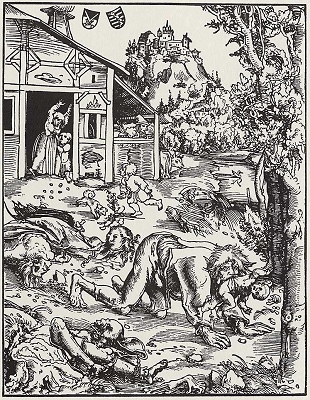
The Beast in Man: Folklore transports the conflicts of everyday social reality into a world of symbols where they can be more easily confronted and overcome. But the silver bullet that slays the werewolf, or the wooden stake that vanquishes the vampire, are magical, not substantial, remedies. Not even that modern "Philosopher's Stone" - the Internet - can free politicians from their obligation to develop real solutions to real problems in the real world.

SILVER BULLETS; wooden stakes through the heart; Philosophers’ Stones: all magical remedies for monstrous and besetting evils - and all derived from folklore.

Not that the lore of the volk should be despised, for it has much to teach us. But before we can draw any benefit from the tales of old wives, we must first learn how to read them.

The werewolf, for example, speaks to us of the beast that lurks in all men’s hearts.

Running in packs; singling out the weak and vulnerable; killing without mercy or regret; the wolf has for centuries symbolised the rapacious soldiery that laid waste to the fields and villages of a politically and militarily defenceless European peasantry. The only way to "slay" this ravening man-beast? Pay him off.

In symbolic terms: shoot him with a silver bullet.

And the vampire? The demon that does not die, but which feeds forever upon the lifeblood of its victims?

For the exploited and brutalised serfs of Eastern Europe, bled white by a parasitic class of undying aristocratic families, what more appropriate symbol of their condition could there be than the bloodsucking nosferatu?

Two things only could defeat them: the charitable ministrations of the Church; and the time-honoured remedy of assassination and revolt.

The power of the crucifix. Or, the poor man’s sword – a wooden stake – through the heart.

The Philosopher’s Stone – red sulphur – was the mythical catalyst through which, the medieval alchemists insisted, base metals could be transmuted into gold. It was also said to be the Elixir of Life, conferring upon its possessor the gift of eternal youth.

But what else is knowledge – if not the power to take the chaos and ugliness of existence and refine it into order and beauty? And don’t the insights of the wise, when put into words, live forever? Speaking to us down the ages with the same freshness and immediacy as the day upon which they were first committed to paper – or parchment?

The search for, and belief in, magical remedies is an abiding characteristic of the weak and oppressed. Folklore is their way of transporting the unconquerable realities of their lives into a universe of symbols – within which they can more easily be confronted and overcome. Soldiers become werewolves – to be brought down with silver bullets. Aristocrats become vampires – to be impaled. Chaos and ugliness – our base existence – awaits only the transmutative power of the mysterious Philosopher’s Stone.

The folklore of the 21st Century is, of course, very different from that of the Middle Ages. Ours is a more tangible age. We do not like our symbols to change shape or melt away at the touch of the first sunbeam. We believe in electronic magic.

Like the Internet.

In a world dominated by vast and powerful institutions we often feel like atoms flowing at the behest of forces we neither understand nor control. Against the corporate wolf and bureaucratic vampire we hold up the Internet as our very own version of the silver bullet; the wooden stake; the Philosopher’s Stone.

In the waste of lovelessness that is contemporary capitalism, Facebook offers an endless supply of "friends". Amidst all the white noise of corporate communications and PR spin, blogs will make us as powerful as The New York Times (or, at least, The New Zealand Herald).

Not even our politicians are immune.

Just the other day the Labour MP, Clare Curran, announced to readers of the "Red Alert" blog that her party was embarking on a bold experiment: "We want to hear all your ideas, suggestions, and the issues you think are important regards open and transparent government", says Clare. "At this stage any contribution is welcome and valid, no matter how left field."

Welcome to the virtual political party. Not for Labour the irreplaceable human chemistry of the public meeting, the branch debate, the annual conference floor-fight. No. Now you can sit in front of a keyboard and change the world – all by yourself.

No werewolf too fierce; no vampire too terrifying; no metal too base for "OpenLabourNZ"

Forgetting, of course, that politics is always made by those in the room. The real room – not the virtual town hall.

To pay-off the soldier, impale the aristocrat, learn from the wise – you have to be there and do it.

There’s no silver bullet to beat reality.

This essay was originally published in The Timaru Herald, The Taranaki Daily News, The Otago Daily Times and The Greymouth Evening Star of Friday, 7 May 2010.

Saturday, 8 May 2010

Bidding for Number Ten

Prime Political Objective: The door to No. 10 Downing Street, official residence of the UK Prime Minister.

SPARE A THOUGHT for poor Nick Clegg, the Liberal-Democrat party leader standing in the eye of the UK’s political hurricane. Only he commands the numbers necessary to resolve the parliamentary impasse served up by a frustrated and anxious UK electorate. Only he has the power to keep Labour’s Gordon Brown in office or hand over the keys to No.10 Downing Street to the Conservative Party’s David Cameron.

What will he do?

The smart money will be on Clegg deciding to throw in his lot with the Tories. This is certainly the decision the UK Establishment is hoping for.

A Tory-Lib-Dem accommodation is the only option which guarantees a clear parliamentary majority – something which the City of London, beset with deepening fears of financial collapse across the whole of the Eurozone, is desperate to secure in the shortest possible time.

In this they can count upon the wholesale support of the right-wing press, which will, no doubt, bombard the Liberal-Democrat leader with screaming headlines and trenchant editorials urging him to "do the right thing" by putting country ahead of party.

Away from all the cameras and tape-recorders, the UK’s "permanent government" of senior civil servants will be doing some bombarding of their own.

Clegg will be given confidential briefings on the looming financial crisis. He will be told how exposed the UK economy is to financial speculation and capital flight. He will be warned in no uncertain terms how extremely "destabilising" a ramshackle, cobbled-together, electorally battered Labour-Lib-Dem Government – supported by a motley collection of nationalist parties from the "Celtic fringe" – would be to the UK’s fragile economy.

Deploying their time-tested strategies of fawning flattery, high-minded exhortation and Machiavellian manoeuvring (all so brilliantly illustrated in the Yes Minister TV series) the "Men from Whitehall" will bend all their powers to trussing-up Clegg in the sticky webs of the UK state apparatus.

There will, of course, be all manner of threats and promises mixed in with the flattery and exhortation. The Good and the Great will subtly let him know how very generous the State can be to those who put "the wider interests of the country" before "petty, personal ambitions" at a time of "national crisis". He will also learn what long arms and sharp teeth the State possesses when it comes to settling scores with its enemies.

And, waiting in reserve, behind all the tinted glass and drawn curtains; the closed doors and smoke-free rooms; stands the ultimate appeal to duty and fealty – Her Britannic Majesty, Queen Elizabeth II.

Few Englishmen possess the political fortitude to withstand a direct appeal from the Crown. And make no mistake, if the UK Establishment senses that Clegg is seriously considering throwing in his lot with the Centre-Left, then somehow it will find a way of bringing "the Palace" into the equation.

Men like Lord Ashcroft, who has poured millions into the far-Right’s quest for a Tory government, has a very substantial stake in the outcome of the horse-trading which the voters have forced upon his party and its allies. He knows that, by any dispassionate reckoning, the Liberal-Democrats have only one plausible bargaining strategy. They must secure the immediate introduction of proportional representation.

Without PR Clegg is doomed to repeat the experiences of his predecessors Jeremy Thorpe and Paddy Ashdown, and his party will be forced to wait for the best part of another generation before it again gets the chance to reform fundamentally the UK’s manifestly inadequate and anti-democratic electoral system.

But Ashcroft and his allies also know that if such a deal is done, then the UK Right will find it next-to-impossible to ever again win power. Between them Labour and the Lib-Dems represent a clear majority of the UK electorate. An electoral system that allocated parliamentary seats on the basis of the popular vote would condemn the Right to almost permanent opposition.

This, after all, was the fate to which FPP condemned the UK Centre-Left for the best part of a century. The splitting of the anti-Conservative vote between Labour and the Liberals kept the Tories in government for 56 of the 75 years between 1922 and 1997 – and this in spite of the fact that, in all that time, the Conservative Party only once (1931) succeeded in winning more than 50 percent of the popular vote.

The Conservative Party and its right-wing allies will do everything within their power to dissuade Clegg from doing the one and only thing likely to secure his own and his party’s political survival. Sadly, he does not come across as the sort of politician to withstand the pressures that will be applied to him. The odds are, therefore, very high that he will succumb to the blandishments of the UK Establishment.

To Murdoch headlines screaming "We agree with Nick", Clegg will hand the keys of No.10 to Cameron and become indelibly stained by the brutal retrenchment the Tories he has helped into power are bound to unleash. Very much sooner than he might wish, he will find himself enjoying a comfortable and well-remunerated retirement – and his party will be reduced to a smouldering political ruin.

But if Clegg doesn’t buckle, if he stands firm? Well, that'll be the moment UK politics gets really interesting!

Thursday, 6 May 2010

Return of the Wowser

Wowserism Redux: Neoliberalism's greatest selling-point was its championing of "Freedom". The Law Commission's report on the supply and sale of liquor, presented by Sir Geoffrey Palmer, attempts to stuff the libertarian genie back into its bottle.

Wowser: A pious prude, one who condemns or seeks to curtail the pleasures of others or who works to have his or her own rigid morality enforced on all. – The Australian National Dictionary, 1900.

SIR GEOFFREY PALMER is a wowser. If he bridles at that description, then let him find a better one. Certainly, his long-awaited Review of Regulatory Framework for the Supply and Sale of Liquor, released last week in tones of moral absolutism that would have done Moses proud, can only be described as wowserism reborn.

For quarter-of-a-century the fast, free-flowing currents of liberalisation have scoured out the authoritarian foundations of New Zealand society. But now Palmer and the Law Commission propose to stem the libertarian flow by erecting a mighty dam of wowserish regulation. It will not stand.

That Palmer genuinely believes the genie of social freedom can somehow be stuffed back into its bottle, simply shows how little he knows about the neoliberal revolution which he and his Fourth Labour Government colleagues unleashed.

Does Palmer really think all those job-shedding, community-shrinking, expectation-shifting neoliberal reforms would have "stuck" if they hadn’t been accompanied by the wholesale destruction of the nay-saying, red-tape-entangling, fun-suppressing culture that made Sir Robert Muldoon’s economic authoritarianism possible? Has he forgotten David Lange’s iconoclastic wit? Sir Roger Douglas’ rigour? Richard Prebble’s wrecking-ball?

Come to think of it, wasn’t it Palmer himself who delighted the nation with plans for a "Great Quango Hunt"? (The Dr Seussian title Palmer invented to describe the necessary culling of dozens of "quasi-autonomous non-governmental organisations".)

Neoliberalism’s greatest selling-point has always been its association with "Freedom". So long as the voters construed their Government’s policies in terms of "freeing things up" the neoliberal revolution was safe. That these freedoms were almost always freedoms "to" – rather than freedoms "from" – didn’t seem to matter.

In theory, requiring all workers to join a union freed them from low wages and long hours. In practice, however, any institution upon which the neoliberals could pin the label "compulsory" got a one-way ticket to History’s dustbin.

It is, therefore, very easy to predict how much damage this Government’s reputation will sustain if it’s foolish enough to suddenly execute a 180-degree turn in the direction of those who believe "Nanny knows best".

Oh sure, it will garner armfuls of votes from those whose solution for every one of society’s ills is to do something unpleasant to "young people". They forget, of course, that when they were "young people" the supply and sale of liquor was regulated to within an inch of its life.

These were days of the "Six O’clock Swill", when New Zealand’s "mature" attitude to alcohol was reflected in the tiled walls of the nation’s public bars. (It made them so much easier to hose down after the punters had fled!)

The deep affection and respect in which those anti-liquor laws were held by the ordinary jokers and sheilas of that era is captured beautifully in Peter Cape’s 1958 composition Down the Hall on Saturday Night:

I had a schottische with the tart from the butchers
I had a waltz with the constable's wife
I had a beer from the keg on the cream-truck
And the cop had one too, you can bet your life

An ever-quickening sequence of liberalised liquor laws – beginning with the 1967 legislation that ushered in ten o’clock closing, and culminating in the 1999 Act lowering the "drinking age" to 18 years – put paid to that sort of wink-wink, nudge-nudge, "sly-grogging" hypocrisy. And no one deemed old enough to vote, marry, sign a contract, fight for their country and enjoy all the other rights of New Zealand citizenship is going to thank the political party that tells them they’re not old enough to buy a drink.

So, what on Earth possessed Palmer and the Law Commission to disinter the wowser’s long-dead corpse?

The simple answer, of course, is the enormous harm alcohol inflicts upon New Zealand and New Zealanders. It costs people their jobs, their marriages, their health and, all-too-often, their lives. Alcohol also absorbs billions of dollars every year from Vote Health, Justice and Corrections, and costs the nation billions more in terms of lost production. If alcohol had appeared on the New Zealand scene suddenly, like Ecstasy, the Ministry of Health would’ve classified it as a Class B drug – it would be illegal.

But it didn’t – and it isn’t. Indeed alcohol, in one form or another has been the drug-of-choice for most of humankind for more than five millennia. It’s as old as the domestication of animals; as old as agriculture; and without it civilisation would be much more difficult to sustain.

As the ALAC ads say: "It’s not the drinking. It’s how we’re drinking." But "how we’re drinking" cannot be remedied by either legislation or regulation. In fact, as the Prohibition Era in the US made clear: forcing people to stop being "bad" only makes them worse.

On the positive side, there are countries where people do seem to be able to consume alcohol without turning their streets into battlefields and their emergency rooms into field hospitals. According to Richard Wilkinson and Kate Pickett, authors of The Spirit Level, alcohol abuse is strongly correlated with those countries where high levels of social inequality have induced correspondingly high levels of individual and social anxiety.

But that was not what the Law Commission wanted to hear. Unlike the players in the Monty Python sketch, Palmer and his colleagues never considered indicting the socio-economic drivers of alcohol abuse to be "a fair cop".

Significantly, the most important of the Commission’s recommendations: the measure which all the researchers agree reduces alcoholic consumption most effectively – raising the price – was immediately ruled out by the Government.

It’s one thing, you see, to propose restricting the number and hours-of-operation of liquor outlets in the poverty-stricken suburbs of South Auckland – but quite another to seriously investigate the reasons why the neighbourhood bottle-store has so many eager customers.

Send a happy man into a pub for a few beers, and by the end of the evening you’ll have a happy drunk. Send in a stressed and angry man, and in no time the booze will have him frothing. Alcohol only amplifies the emotions we mix with it.

The fault, dear Wowser, is not in our jars – but in ourselves.

This essay was originally published in The Independent of Thursday, 6 May 2010.
