Showing posts with label Clare Curran. Show all posts

Friday, 10 July 2020

A Party Of Honourable Men?

Reprehensible: There is much that could be said about Michael Woodhouse, but what would be the point?  Any man who willingly involves himself in a situation as reprehensible as the one depicted in the above photograph has already vouchsafed all that decent people need to know about his character. That there have been no reports of the National MP apologising to Clare Curran, or making any other attempt to atone for this vile incident, merely confirms the futility of pursuing Mr Woodhouse any further.

IT’S ONE OF those rules that every politician lucky enough to have a responsible political mentor learns very early. Never say or do anything that you wouldn’t be happy to see reported on the front page of the daily newspapers.

The former National Party Prime Minister, John Key, must have been blessed with such a mentor at a very early age. No matter how hard the Labour Party trawled through Key’s past (and they trawled very hard indeed!) they always came away empty-handed.

This absence of dirt was all the more remarkable given Key’s chosen profession. Currency traders are notorious for their reckless lifestyles. But, while the future prime minister’s friends and colleagues were winging their way across the Atlantic to sample the manifold delights of New York and Las Vegas, Key was on his way home to his wife and kids in the suburbs. It was almost as if he was proactively protecting himself from the sort of past his political enemies would one day be desperate to exploit.

Clearly, National’s Michael Woodhouse has never made the acquaintance of a responsible political mentor. Had he done so he would never have allowed himself to be photographed holding up a toilet seat with Dunedin South MP Clare Curran’s face attached to it.

One must assume that Mr Woodhouse is far from happy that the image in question, and all it says about him, is everywhere on-line and in the news media. Moreover, if National’s Health spokesperson really has no memory of the circumstances in which this disgusting photograph was taken – and Mr Woodhouse insists that he does not – then he is far beyond the help of any sort of mentor.

Perhaps he should learn how to pray?

There is much more that could be said about Mr Woodhouse, but what would be the point?  Any man who willingly involves himself in a situation as reprehensible as the one depicted in the photograph has already vouchsafed all that decent people need to know about his character. That there have been no reports of the National MP apologising to Ms Curran, or making any other attempt to atone for this vile incident, merely confirms the futility of pursuing Mr Woodhouse any further.

The only entity worth pursuing in this whole sordid story is the National Party itself.

The comic maestro, Groucho Marx, once quipped that he could never join any club that was prepared to have him as a member. What, then, does it say about National that eight years after allowing himself to photographed displaying that appalling toilet seat, Mr Woodhouse remains a member in good standing of both the National Party and its caucus?

More importantly, what does it say about National’s new leader, Todd Muller?

For the sake of argument, let’s give Mr Muller the benefit of the doubt and say that he knew nothing of the toilet seat with Ms Curran’s face on it: that he was as shocked and appalled by its crudity as every other decent New Zealander. But if, as we all hope, that was Mr Muller’s reaction, then are we not entitled to ask why he didn’t take the next obvious step of demanding Mr Woodhouse’s immediate resignation?

Because that is what any decent, honourable leader of a political party looking to become the next government of New Zealand would have done. Such a leader would have transformed this sordid stain on his party’s reputation into a learning opportunity. He would have made it clear to every member of his caucus and party that anyone deriving any sort of perverse excitement from such scatological misogyny had no place in either. He would have used the occasion to reaffirm his determination to elevate politics above the bloody cruelty of the bearpit. To make of the word “honourable” something more than a perfunctory honorific. And, finally, to demonstrate his bona fides, Mr Muller would have tendered his apology to Ms Curran on behalf of every National Party member.

At the time of writing, however, Mr Muller has made no obvious effort to do any of these things. Mr Woodhouse remains a member in good standing of the National Party club.

Which raises the obvious question: If this malodorous boot was on the left foot of New Zealand politics, what would Jacinda Ardern be expected to do?

This essay was originally published in The Otago Daily Times and The Greymouth Star of Friday, 10 July 2020.

Friday, 28 September 2018

CTO-gate: Smoke Gets In Our Eyes.

To Good To Be True? Derek Handley, an old friend; someone of her generation; superbly qualified for a job that needs to be filled by someone sympathetic to her government’s aims and objectives; on his way back to settle permanently in New Zealand; gets in touch via her own party’s president. Why would Jacinda Ardern be suspicious? Where would the harm be in letting him have her private, private e-mail address?

THE BIG QUESTION is, can they pull it off? Can the National Party do to Jacinda Ardern what Labour tried, but failed, to do to John Key: destroy their opponents’ most powerful political asset? The slightly smaller question is: If this is National’s intention, then how deep does the conspiracy go?

In this morning’s edition (27/9/18) of Politik, Richard Harman reveals that, on Monday night, PR maven and former National Party president, Michelle Boag, contacted Politik and asked for its e-mail address. Within 24 hours, Harman reports, copies of Derek Handley’s e-mail messages and text conversations with Jacinda and her hapless minister, Clare Curran, had arrived in the website’s e-mailbox.

Put these facts together with Winston Peters statement, made in the House of Representatives, that Boag is working for Handley, and a number of troubling questions present themselves.

The first and the most obvious: Is it Handley’s intention to do political harm to his “friend” – Jacinda Ardern?

It certainly looks as though damaging the Prime Minister’s reputation is exactly what he’s trying to do. Why else would he release his electronic communications with Jacinda while she is in America? It is difficult to imagine he could be unaware of the effect his release of this information would have on what was shaping-up as a triumphal progress through the UN auditoria and television studios of New York.

That Handley might be angry with Jacinda is understandable. The position of Chief Technology Officer had been given to him – only to be snatched away without warning following the fall of Curran. It is entirely plausible that a person in his position would be feeling aggrieved and anxious to have people know the full story.

But why would Handley involve Boag in the process? Especially when he has his own PR adviser, Julie Landry, to handle the release of such material. Boag, in conformity with her long-standing policy, has refused to confirm or deny whether Handley is her client. It is, however, difficult – given her call to Politik – to form a more plausible conclusion.

And it’s here that the questions begin to go dark: especially for those with a conspiratorial turn of mind; because, immediately, the suspicion looms that the whole Handley-for-CTO exercise may have been an elaborate set-up.

Clare Curran was not, when all is said and done, the most robust minister in Jacinda Ardern’s Cabinet. If one was looking for a politician to weave a complicated plot around, Clare would be hard to go past.

What’s more, all those National Party MPs with cabinet experience are well aware of how useful it can be to have a private, back-channel means of communicating with friends and allies. Not every person who ministers meet, and not everything they need to talk to them about, is the sort of information they want all-and-sundry scrutinising in their official ministerial diaries. For people new to high office, the temptation to direct friends and allies past the official gatekeepers (and diary managers) is very strong. Entangling Curran in a web of unwise communications would not be all that difficult: indeed, with a bit of luck she would do it all by herself. National had only to ask the right questions and file the appropriate OIA requests.

And it’s right about here that the truly nagging doubt arises. Did our millennial Prime Minister; one of a generation for whom personal networking has become second-nature; someone who lives on and through her devices; fail to perceive the risks of continuing to work that way in an environment where every form of communication is recoverable – and may be used in evidence against her?

An old friend; someone of her generation; superbly qualified for a job that needs to be filled by someone sympathetic to her government’s aims and objectives; on his way back to settle permanently in New Zealand; gets in touch via her own party’s president. Why would she be suspicious? Where would the harm be in letting him have her private, private e-mail address?

Unless. Unless. Unless. No, the Nats just aren’t that clever – are they? Actually, some of them – Michelle Boag in particular – are extremely clever. Chess players from way back and as unforgiving as an executioner’s axe. More importantly, they have a target with only a fraction of the protection Key possessed. The “System” supplied the Prime Minister from Merrill Lynch with the sort of impenetrable political body armour the Prime Minister from the International Union of Socialist Youth can only dream about.

When Mike Williams flew across the Tasman in search of dirt on John Key, he could not be at all certain that, even if he found it, Key’s friends in the upper echelons of the mainstream news media would use it. Boag knows full well that National can rely upon a cabal of very senior political journalists and commentators to blow the smallest misstep by Jacinda Ardern into a full-blown decline-and-fall epic. She also knows that, contrary to Nietzsche’s claims, attacks which fail to kill politicians do not make them stronger – they make them weaker. The voters cannot see smoke without thinking of fire. Blow enough smoke in their eyes and they stop seeing clearly.

And that is all the National Opposition needs.

This essay was originally posted on The Daily Blog of Friday, 28 September 2018.

Friday, 14 September 2018

The Theatre Of Cruelty.

A Spectacle Of Punishment: Clare Curran’s fate: public, prolonged and filled with intense emotional pain; was out of all proportion to her transgressions. As always in the Theatre of Cruelty, we were treated to the spectacle of hate without cause; punishment without mercy; and the unimpeded triumph of institutional sadism.

“HARDER! HARDER! I want to hear her scream!” The awful images and dialogue from that late-night arts documentary, broadcast forty years ago, were unforgettable in the worst way. One of those highbrow British television networks was examining the “Theatre of Cruelty”: an artistic movement born out of the surrealist revolution of the 1920s and 30s which was making something of a comeback in the work of the French playwright, Jean Genet. The scene seared on my memory was an out-take lasting only a few seconds: but those few seconds were enough.

The shock-factor intrinsic to the Theatre of Cruelty was intended to demolish the smug assumptions of its audiences by exposing the violence and sadism lying just below the surface of everyday life. The playwright’s purpose was to lay bare the cruelty embedded in the institutions that educate, employ, entertain and govern us. It certainly had that effect on me, a callow youth of 16 or 17. The sheer delight with which one of the characters urged on the torturer to new heights of depravity was profoundly affecting.

Why am I reliving all this? Because the recent treatment of Clare Curran brought it all back. The Theatre of Cruelty and contemporary politics have converged in a truly alarming fashion.

What distinguishes the Theatre of Cruelty from traditional theatre is its rejection of the classical precepts of dramatic art. Traditionally, plays are both a representation and an affirmation of the accepted moral order, in which those who seek to overthrow or evade its strictures are judged and punished. Or, more colloquially: drama is about reassuring us that the good guys always win. In the Theatre of Cruelty, however, not only do the good guys not win, but they are subjected to the most appalling torments by the bad guys – who are not judged or punished in any way at all.

The parallels with contemporary politics are, hopefully, clear. What start out as morality plays: demonstrations of what happens to politicians when they break the rules; very quickly degenerate into something quite different. The villains of these political morality plays, it soon transpires, are, like Shakespeare’s King Lear “more sinned against than sinning”. Their fates: public, prolonged and filled with intense emotional pain; are out of all proportion to their transgressions. As always in the Theatre of Cruelty, we are treated to the spectacle of hate without cause; punishment without mercy; and the unimpeded triumph of institutional sadism.

The surrealist pioneer of the Theatre of Cruelty, Antonin Artaud, envisaged an entirely new configuration of the theatrical experience. He wanted his audiences huddled in the middle of the auditorium with the players performing not in front of them but all around them. His direction also called for them to be bombarded by all manner of startling special effects – to the point where their senses were overloaded and they became disoriented.

A more vivid anticipation of the twenty-first century media experience is difficult to imagine. Artaud wanted his audiences to be at the mercy of his players; to dissolve the boundaries, both physical and psychological, which conventional theatres use to keep the audience safe from the action on stage. But, it is precisely the absence of boundaries – most particularly moral boundaries – that defines the experience of contemporary social media. The players are, as Artaud foresaw, all around us, and their viciousness is without restraint. We are transformed into witnesses of cruelties from which we cannot turn away.

The damage caused by this extraordinary environment is difficult to assess. That a few seconds exposure to the Theatre of Cruelty’s horrors left such a deep scar on the imagination of my teenage self makes me wonder what the ubiquitous and almost casual cruelties of twenty-first century media are doing to the imaginations of today’s teenage viewers. What sort of moral order is being communicated in the very public crucifixions of politicians, sportspeople and every other variety of celebrity? And what do these endlessly repeated spectacles of punishment tell us about the tastes of the contemporary citizen?

Forty years ago, we looked back with a mixture of superiority and horror at the vast crowds which once gathered to watch public executions. Forty years later, in our panoptic on-line dystopia, Artaud’s intuitive apprehension that the virtues of civilisation are barely skin-deep can only be described as cruelly prophetic.

This essay was originally published in The Otago Daily Times and The Greymouth Star of Friday, 14 September 2018.

Thursday, 5 April 2018

Piling-On The Pressure.

An Unfortunate Perception: Can liberal democracy survive if the news media abandons evidence-based judgement and simply piles-on “as one” against a prime minister and her government? And what if it isn’t just the timing that’s consistent, but the message as well? What then? How is the public to avoid the impression that the news media is rooting for one side and not the other?

WERE YOU AWARE of the Easter “pile-on”? The media assault on Jacinda Ardern’s credibility when, according to Herald journalist, Fran O’Sullivan: “the commentariat … basically rose as one and questioned her prime ministerial abilities”.

Nothing remarkable in that, you might object, in a liberal democracy it is entirely right and proper for the news media to judge the performance of presidents and prime ministers. Yes, but shouldn’t such judgements be based on a sober and objective assessment of the leader’s actual performance? Isn’t that one of the critical (if unspoken) assumptions underpinning the whole notion of media freedom?

Can liberal democracy survive if the news media abandons evidence-based judgement and simply piles-on “as one” against a prime minister and her government? And what if it isn’t just the timing that’s consistent, but the message as well? What then? How is the public to avoid the impression that the news media is rooting for one side and not the other?

This is more than idle speculation. We have only to look at the United States to see what happens when a significant number of voters simply stop believing anything reported by media organisations which have not already identified themselves as co-partisans in the political struggle. Any negative story emerging from the other side’s “lying media” can be branded “fake news” and dismissed as further proof of its uncompromising mendacity.

When President Trump tweets his outrage at “the lying New York Times”, liberal New Yorkers may puff out their chests with pride. The eyes of mid-western conservatives, however, will narrow with suspicion and their hatred of the “coastal elites” intensify.

In a political environment as polarised as this, the openness and tolerance which liberal democracy needs to function withers and dies. It is impossible to engage in any kind of fruitful political discourse when every participant believes every other participant is lying.

The media picture in New Zealand is further complicated by the absence of newspapers and radio stations which loudly and proudly advertise their partisan allegiances. Kiwis do not have the option of subscribing to the equivalent of the UK’s Guardian or Daily Telegraph. There is no MSNBC for liberals to watch; no Fox News for Kiwi conservatives.

That being the case, the New Zealand news media has always strived to balance right-wing opinion with the perspectives of left-leaning commentators. This is not just a matter of fairness, it is vital to the maintenance of trust. Readers, listeners and viewers need to feel that somewhere in the mix of voices there is someone who speaks their language.

Even more important than ensuring a diversity of opinion, however, is the news media’s responsibility to separate fact from fiction and apply a critical eye to the news it reports.

With all these factors in mind, let us turn again to Ms O’Sullivan’s “Easter pile-on”.

The two news stories which generated so much common outrage in the “commentariat” were Jacinda Ardern’s and Winston Peters’ response to the poisoning of Sergei Skripal and his daughter Yulia in the UK city of Salisbury; and the Prime Minister’s handling of Broadcasting Minister Clare Curran’s coffee-date with RNZ’s head of news and content, Carol Hirschfeld.

In the Skripal case, the reportage and commentary (often filed by the same journalists and in the same story!) appeared to have been scripted by the UK Government. The only course of action which the commentariat was prepared to recognise as prime-ministerial is the one where Jacinda Ardern follows along behind the Russophobic UK Prime Minister, Teresa May, like a dutiful “Five Eyes” poodle.

The very notion that the NZ Government might withhold its judgement until it possessed hard evidence of the perpetrators’ culpability was laughed out of court. Laughter, indeed, featured heavily in just about all of these commentaries – as in “New Zealand has become an international laughing-stock”. As if an independently-minded New Zealand prime minister was simply too risible a notion to be taken seriously.

How quickly New Zealand’s political commentators have forgotten David Lange and the fourth Labour Government’s nuclear-free legislation. And how loath they are to recall the UK’s refusal to condemn the French perpetrators of state terrorism on NZ soil. That so many Kiwi journalists were willing to be guided by the same people who gave the world the “sexed-up dossier” on Saddam’s WMDs; the same country responsible for illegally invading Iraq; spoke very poorly of their ability to evaluate critically the news they were reporting.

The state of NZ journalism was the unspoken theme running through the breathless reportage and commentary of the Curran-Hirschfeld coffee-klatch. Or, perhaps, it is more accurate to call it the State and NZ journalism. Because, at the heart of so many of the piler-ons’ commentaries lies a deep and abiding disinclination to view public service journalism through anything other than an aggressively anti-state lens.

That Ms Curran may have enlisted the support of Ms Hirschfeld in her quest to reinvigorate public broadcasting was presented in the most sinister terms. That the RNZ Board may have been engaged in resisting the Government’s broadcasting policy was not considered sinister at all – quite the reverse.

Prime Minister Ardern was castigated for not reining-in a minister who was clearly determined to extend the reach of “Red Radio”. As an accusation it played beautifully into the commentariat’s subtextual insinuation that this government isn’t just unacceptably socialist, but that its policies are being delivered with a Stalinist inflection. Why else would the PM refuse to condemn the actions of the obviously guilty Russian state and its ex-KGB president?

A commentariat prepared to rise “as one” in its delivery of these rebukes risks alienating all but the most unreconstructed cold warriors and knee-jerk National supporters. Those less disposed to follow the lead of our “Five Eyes Partners” in the Skripal case, along with those who regard the reinvigoration of public service journalism as a very good idea, will feel both affronted and aggrieved by the “Easter pile-in”.

Genuine media freedom, embodied in a diversity of political voices, can only strengthen the public’s trust in journalism. That’s because the truth is always a composite picture – never a single frame.

When the commentariat “piles-in” with a single voice, it is not to our left-wing government that we should look for evidence of Stalinism.

This essay was originally posted on The Daily Blog of Thursday, 5 April 2018.

Friday, 30 March 2018

The Politics Of Public Service Broadcasting.

Jamming The Public's Voice: If they could have got away with it, John Key and his National Party colleagues would have commercialised (literally) Radio NZ in exactly the same way as the fourth Labour government (in the person of Richard Prebble) made TVNZ dependent on the advertisers’ dollars. Prevented from doing so by the many thousands of middle-class Kiwis who rely upon RNZ for intelligent and informed journalism and programmes of genuine cultural merit, Key’s government did the next best thing – it attempted to starve the publicly-owned radio network to death.

COLIN SCRIMGEOUR was the John Campbell of his day. A fearless radio broadcaster whose influence over the victims of the Great Depression was so great that the United-Reform coalition government jammed his election-eve broadcast. Remember that the next time the National Party presents itself as the champion of media freedom!

Michael Joseph Savage, the prime minister elect, was interviewed by Scrimgeour on the night of Labour’s historic 1935 victory. Scrimgeour later recalled: “When we were off air he told me Jack Lee would be the Minister of Broadcasting, and the next time he unveiled a transmitter he wouldn’t be tearing scrim off it.”

That last comment was a direct reference to the fact that the transmitter used to jam Scrimgeour’s broadcast had been hidden behind a thin wall of scrim. “Scrim”, or “Uncle Scrim” was also the name given to Scrimgeour by his tens-of-thousands of avid listeners. Savage message was crystal clear: Labour had a plan for broadcasting, and the country’s most influential left-wing broadcaster was an integral part of it.

That was how Labour rolled back in the 1930s. Its socialist leaders understood what today’s Labour politicians do not. That the media – be it print, electronic and/or digital – is crucial to the success or failure of any government; and that without the support of at least a very substantial fraction of that media, the government’s ability to implement its policies will be severely compromised.

Savage was well aware that his right-wing opponents could rely upon the unwavering support of the daily newspapers. That is why he was so keen for the new Labour Government to take control of the airwaves and appoint someone he could trust to run them. The Left needed to even-up the odds.

It still does.

Since the more-market reforms of the 1980s and 90s, and especially since the transformation of Television NZ into a state-owned enterprise (i.e. a publicly-owned institution legally obliged to conduct itself in the manner a privately-owned company) there has been a pronounced ideological shift in the news media’s political orientation. Increasingly reliant upon advertising and, therefore, upon ratings, the operational culture of TVNZ has grown less-and-less receptive to the public service broadcasters’ contention that it has a duty to elevate and educate – as well as to entertain.

Efforts to reinstate the public service broadcasting imperatives under Helen Clark’s fifth Labour government were unsuccessful. Not only were they resisted from within TVNZ (many of whose personnel now considered the whole concept of public service broadcasting to be elitist and condescending) but from within the Labour-led government itself.

Almost before she had got her feet under the Minister of Broadcasting’s desk, Marian Hobbs found herself fiscally hog-tied by the Finance Minister, Michael Cullen. It was the latter’s refusal to put up the money necessary to carry through a root-and-branch reform of TVNZ that left Radio NZ as the country’s sole purveyor of genuine public service broadcasting.

If they could have got away with it, John Key and his National Party colleagues would have commercialised (literally) Radio NZ in exactly the same way as the fourth Labour government (in the person of Richard Prebble) made TVNZ dependent on the advertisers’ dollars. Prevented from doing so by the many thousands of middle-class Kiwis who rely upon RNZ for intelligent and informed journalism and programmes of genuine cultural merit, Key’s government did the next best thing – it attempted to starve the publicly-owned radio network to death.

Only in the ninth year of Key’s Government was RNZ’s funding increased. By then, of course, National had stocked the RNZ Board with the sort of people who regarded the Right’s tendentious epithet “Red Radio” as a political critique which RNZ had to be seen to be taking seriously. With this sort of board overseeing RNZ, its employees’ operational options were strictly limited. ‘Do more with less’, and ‘Don’t upset the Board’ (i.e. the National-led government) became RNZ’s watchwords.

Enter Clare Curran. Labour’s broadcasting spokesperson came to her job already convinced that TVNZ was a lost cause and that if public service broadcasting was to be resurrected, then RNZ was the only state-owned institution remotely capable of doing the job. Hence “RNZ-Plus” – Curran’s plan for using public service radio to rebuild public service television.

Except that Curran, like Marian Hobbs before her, not only had to contend with the intense opposition of private broadcasters (many of whom found sympathetic ears on the RNZ Board) but also with the unhelpful interference of her own cabinet colleagues.

Was that the reason she was so keen to meet with RNZ’s Head of Content, Carol Hirschfeld? To learn from a person she clearly believed to be sympathetic to her cause, the precise location and identity of the forces resisting her plans for RNZ? Beleaguered by National’s “stay-behind” resistance-fighters, and foot-tripped by the reservations of her own overly cautious colleagues, did the Minister stumble with naïve enthusiasm (desperation?) beyond the mere pleasantries and personal networking which Hirschfeld had mistakenly assumed to be the purpose of their tête-à-tête over coffee at the Astoria café?

And once appraised of Curran’s hopes and fears, and quite possibly, of her intentions vis-à-vis the reappointment – or not – of RNZ Board Chairperson, Richard Griffin, did Hirschfeld suddenly find herself in possession of information as sensitive and compromising as it was potentially career-destroying? Did the Right and its media allies, informed of Curran’s meeting with Hirschfeld, simply seize an opportunity to kill two potentially very dangerous birds with a single stone?

It remains to be seen whether Curran’s opponents prefer to keep her in place – disgraced and powerless – or, by replacing her with someone considerably less committed to RNZ’s cause, allow the Right’s jamming of public service broadcasting to continue?

And this time, alas, there is no Jack Lee to track down the jammers’ transmitter in the Newmarket railway yards, and no Michael Joseph Savage to even-up the democratic odds by making sure that the voices of those who cannot afford to own shares in radio and television stations continue to be heard.

This essay was originally posted on The Daily Blog of Thursday, 29 March 2018.

Friday, 26 August 2011

Clare's Cri De Coeur

A Cry From The Heart: Wrong-headed and ham-fisted though Clare's postings on the Red Alert blog undoubtedly were, they at least attested to the fact that this Labour MP, unlike so many of her colleagues, still possesses a pulse.

CLARE CURRAN has done what no modern politician is supposed to do: she has spoken from her heart.

In a series of angry and transparently honest postings on the Labour Party’s “Red Alert” blogsite, the Dunedin South MP has given us just a sip of the gall Labour’s caucus is daily required to swallow. Laid bare is the hurt and shame of Labour’s unremitting political failure. Clare and her party feel scorned and abandoned. Defeat looms. No wonder she’s lashing out.

In the first of her postings, Clare tells us she’s “had a gutsful of the white-anting of Labour from both the right and the left of politics”. It’s not exactly clear what she means by this, or to whom, exactly, she’s referring. (Although, by the second posting, it’s pretty obvious she has the Greens in her sights.) Coming through loud and clear, however, is Clare’s immense frustration with what she obviously regards as the puerile quality of contemporary political discourse in New Zealand.

Why is it impossible to have a serious political discussion about the social and economic problems bearing down on Australia and New Zealand, or the major parties’ policies for dealing with them? Why are there so few forums for such discussions? Why is the news media so obsessed with trivia?

As an accomplished public relations practitioner, Clare should know the answers to all these questions. But then, Clare has always demonstrated a somewhat Pollyannaish understanding of PR. Seeing it, rather naively, as a suite of techniques for enhancing public understanding. That PR might, more realistically, be understood as the techniques employed by those with power to confuse and/or misdirect the public’s comprehension of important events and issues never seems to have registered.

Which is a pity. Because a little more familiarity with the dark arts of politics would do Clare and Labour the world of good.

Instead of calling dibs on that ever-decreasing pool of well-educated, middle-class New Zealanders interested in “politics”, and snarling at the Greens for dropping a line into what used to be Labour’s favourite political fishing-hole, Clare and her comrades should strike out for an altogether larger pond, bearing much more effective tackle.

Do that, and the feelings of impotent rage will quickly disappear.

In her third posting, Clare describes a man who turned up at her electorate office weighed down by burdens no single human-being should ever be expected to carry alone.

“This man was a valuable contributing member of our society. He paid taxes. His skills were worth something to our economy. As a direct result of this government’s policies, he, and others like him, do not have jobs.”

But then Clare says: “What are his options?”

And right there you have it – the reason why Labour is performing so badly. Less than 100 days to go before the General Election and Clare still cannot tell her constituent in unequivocal, easily understood language what his options, under Labour, would be.

Her constituent used to work at the Hillside Railway Workshops. Has Labour guaranteed to expand them? Will Labour, upon winning office, tell the world that henceforth all of Kiwi Rail’s rolling-stock will be manufactured in New Zealand?

Will they change this country’s industrial relations laws so that trade unionists employed in other Dunedin industries are free to stage solidarity strikes in defence of worksites like Hillside? Or make it possible for the Maritime Union of New Zealand to prevent the unloading of foreign-built machinery on the nation’s wharves?

Will Labour, in short, undertake to bring working-class New Zealanders back to the centre of the political stage (from which the Labour Party of the 1980s ruthlessly expelled them). Will it arm them with the same weapons the First Labour Government placed in their hands?

Or won’t it?

Has Labour got a story to tell the desperate working man on Clare’s doorstep?

Or hasn’t it?

Clare knows that Labour will not, and that Labour has not. And that is why she is so angry and so ready to lash out at others.

The Maori have a proverb: Ka pu te ruha, ka hao te rangatahi. The old net is cast aside, the new net goes fishing.

Labour must weave a new net, Clare, if it is to land the catch it is seeking.

If it is to become a fisher of men.

This essay was originally published in The Timaru Herald, The Taranaki Daily News, The Otago Daily Times and The Greymouth Star of Friday, 26 August 2011.

Sunday, 9 May 2010

Silver Bullets

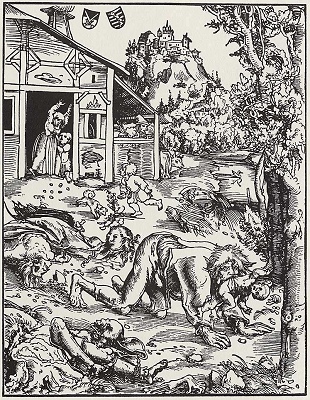
The Beast in Man: Folklore transports the conflicts of everyday social reality into a world of symbols where they can be more easily confronted and overcome. But the silver bullet that slays the werewolf, or the wooden stake that vanquishes the vampire, are magical, not substantial, remedies. Not even that modern "Philosopher's Stone" - the Internet - can free politicians from their obligation to develop real solutions to real problems in the real world.

SILVER BULLETS; wooden stakes through the heart; Philosophers’ Stones: all magical remedies for monstrous and besetting evils - and all derived from folklore.

Not that the lore of the volk should be despised, for it has much to teach us. But before we can draw any benefit from the tales of old wives, we must first learn how to read them.

The werewolf, for example, speaks to us of the beast that lurks in all men’s hearts.

Running in packs; singling out the weak and vulnerable; killing without mercy or regret; the wolf has for centuries symbolised the rapacious soldiery that laid waste to the fields and villages of a politically and militarily defenceless European peasantry. The only way to "slay" this ravening man-beast? Pay him off.

In symbolic terms: shoot him with a silver bullet.

And the vampire? The demon that does not die, but which feeds forever upon the lifeblood of its victims?

For the exploited and brutalised serfs of Eastern Europe, bled white by a parasitic class of undying aristocratic families, what more appropriate symbol of their condition could there be than the bloodsucking nosferatu?

Two things only could defeat them: the charitable ministrations of the Church; and the time-honoured remedy of assassination and revolt.

The power of the crucifix. Or, the poor man’s sword – a wooden stake – through the heart.

The Philosopher’s Stone – red sulphur – was the mythical catalyst through which, the medieval alchemists insisted, base metals could be transmuted into gold. It was also said to be the Elixir of Life, conferring upon its possessor the gift of eternal youth.

But what else is knowledge – if not the power to take the chaos and ugliness of existence and refine it into order and beauty? And don’t the insights of the wise, when put into words, live forever? Speaking to us down the ages with the same freshness and immediacy as the day upon which they were first committed to paper – or parchment?

The search for, and belief in, magical remedies is an abiding characteristic of the weak and oppressed. Folklore is their way of transporting the unconquerable realities of their lives into a universe of symbols – within which they can more easily be confronted and overcome. Soldiers become werewolves – to be brought down with silver bullets. Aristocrats become vampires – to be impaled. Chaos and ugliness – our base existence – awaits only the transmutative power of the mysterious Philosopher’s Stone.

The folklore of the 21st Century is, of course, very different from that of the Middle Ages. Ours is a more tangible age. We do not like our symbols to change shape or melt away at the touch of the first sunbeam. We believe in electronic magic.

Like the Internet.

In a world dominated by vast and powerful institutions we often feel like atoms flowing at the behest of forces we neither understand nor control. Against the corporate wolf and bureaucratic vampire we hold up the Internet as our very own version of the silver bullet; the wooden stake; the Philosopher’s Stone.

In the waste of lovelessness that is contemporary capitalism, Facebook offers an endless supply of "friends". Amidst all the white noise of corporate communications and PR spin, blogs will make us as powerful as The New York Times (or, at least, The New Zealand Herald).

Not even our politicians are immune.

Just the other day the Labour MP, Clare Curran, announced to readers of the "Red Alert" blog that her party was embarking on a bold experiment: "We want to hear all your ideas, suggestions, and the issues you think are important regards open and transparent government", says Clare. "At this stage any contribution is welcome and valid, no matter how left field."

Welcome to the virtual political party. Not for Labour the irreplaceable human chemistry of the public meeting, the branch debate, the annual conference floor-fight. No. Now you can sit in front of a keyboard and change the world – all by yourself.

No werewolf too fierce; no vampire too terrifying; no metal too base for "OpenLabourNZ"

Forgetting, of course, that politics is always made by those in the room. The real room – not the virtual town hall.

To pay-off the soldier, impale the aristocrat, learn from the wise – you have to be there and do it.

There’s no silver bullet to beat reality.

This essay was originally published in The Timaru Herald, The Taranaki Daily News, The Otago Daily Times and The Greymouth Evening Star of Friday, 7 May 2010.

Tuesday, 17 November 2009

Labour's Opportunity, Harawira's Choice

Standing on solid ground? The Dunedin South MP, Clare Curran's, assessment of the way the Hone Harawira controversy is playing out among Labour supporters is almost certainly more accurate than those of her critics on the Red Alert blog. Anecdotal evidence suggests that Phil Goff and the Labour Party have made considerable gains on the back of Hone's "White Mother****ers".

CLARE CURRAN at Red Alert has accused Matt McCarten of turning his Herald on Sunday column into an apology for Hone Harawira’s behaviour. Then, apparently not content with poking a stick at one of the most formidable beasts on the political block, she wagged an equally disapproving finger at Harawira’s mates, Willie Jackson and John Tamihere. (All three men have offered their support and counsel to Harawira over the past week.)

Interestingly, the initial reaction from Red Alert’s readers to Clare’s posting was negative. The first batch of comments found little to fault in McCarten’s analysis, and sharply criticised the Dunedin South MP for echoing Phil Goff’s "Brashesque" attacks on Harawira.

I am, however, very doubtful whether these comments fairly reflect most Labour voters’ response to Phil Goff’s comments. Indeed, I suspect the overwhelming majority of Labour’s constituency has joined the rest of Pakeha New Zealand in hailing Goff as the only parliamentary leader willing to condemn Harawira’s behaviour unequivocally.

Clare’s call on this issue is almost certainly more in tune with public opinion than her critics’.

Goff, himself, is clearly determined to use Harawira’s gaffes as an excuse for finally cutting the Labour Party adrift from the whole Maori Sovereignty movement – and hence the Maori Party. He is betting that most of the emerging Maori middle-class is in the process of doing the same, and that, in the not-too-distant future, Maori professionals will start drifting back to Labour.

Given that the overwhelming majority of the Maori middle-class derive their incomes from the State (rather than the conservative iwi corporates currently backing the Maori Party) my instinct is that Goff is making a pretty safe bet.

But that still leaves the Maori working-class.

Who is best-placed to represent these forgotten New Zealanders? That’s the question Maori leaders like McCarten, Jackson and Tamihere are asking. It’s also the issue which the Maori Party leadership is pig-headedly refusing to address. Why? Because the extraordinarily inconvenient answer is – Hone Harawira.

It's the Maori Party’s failure to acknowledge this elephant in the room – the issue of class – that explains the rather bemused tone of McCarten’s HoS commentary. It’s as if he can’t quite believe Tariana Turia and Pita Sharples are really as silly as they seem.

He also knows that a party calling itself the Maori Party simply cannot afford to shrug off the people of the Tai Tokerau. Not only does the electorate contain between a quarter and a third of all Maori Party members, but, as the largest Maori tribe, Ngapuhi's participation in the Maori Party is essential.

No one can credibly claim to speak for Maori without at least one of the three great tribes: Ngapuhi, Tainui and Ngati Porou standing behind them. With Labour still holding Ikaroa-Rawhiti and Hauraki-Waikato, it simply beggars belief that the Maori Party would seriously contemplate casting aside Te Tai Tokerau.

It is similarly impossible for a Maori Party to ignore the fact that the overwhelming majority of the people they claim to represent do not control large iwi corporations and are a very long way from being middle-class. Most of them cannot speak te reo and would feel as ill at ease on the marae as most Pakeha. If it refuses to speak for – and act for – these people, then the Maori Party risks being branded a political fraud.

Harawira knows this – it’s what fuels his anger and frustration. He also knows that every day the Maori Party remains in cahoots with the National Party its support among working-class Maori – whose numbers propelled the Maori Party into Parliament – is steadily eroding away.

But, Harawira is no friend of the Labour Party. He remembers too well the devastation Rogernomics wreaked upon his people, and how readily Helen Clark embraced the spirit of Orewa in 2004. He will not go that way.

But there’s another way he could go – and McCarten, Jackson and Tamihere know it. That’s why McCarten wrote his HoS column the way he did. Screaming out between the lines of his text was a blunt warning to Turia and Sharples – not to mention Goff and Curran:

"If you don’t want the young, angry, Maori and Pasifika working-class, there’s at least one man in Parliament who will take it off your hands. Expel him at your peril."

To which Harawira could reasonably add, in the immortal words of that white mother****er, Clint Eastwood:

"Go ahead, make my day."