Tuesday, 31 May 2011

In Perilous Times

In No Hurry To Change Horses: No more than in 2002, when, in the perilous times ushered in by 9/11, New Zealand voters opted to stick with the diplomatically savvy Helen Clark; the voters of 2011 are in no mood to abandon their commercially savvy Prime Minister, John Key.

SIX OUT OF TEN New Zealanders say they’re willing to back John Key’s bid for a second term. Four out of ten say they’d prefer some other combination of parties and politicians running the country.

We haven’t seen a gap that wide since 2002.

Back then, of course, the ideological boot was on the other foot. In the early months of 2002, just before the Alliance began the serious business of tearing itself into bloody little chunks, and well before Nicky Hager’s book, Seeds of Distrust, spawned the word “Corngate”, the Centre-Left gave every appearance of having taken out a mortgage on the treasury benches.

Could it be that Mr Key’s soaring popularity is being driven by forces very similar to those that persuaded Kiwis to again repose their political trust and confidence in Helen Clark? The forces erupting out of the tragic events of 9/11.

What happened on that fateful September morning changed everything.

It transformed an unpopular American president, shoe-horned into office by the US Supreme Court, into the symbolic leader of an embattled West. And behind George Bush, their briefcases bulging with geopolitical prescriptions of the most radical kind, crept a shadowy cabal of neo-conservative ideologues determined to pitch America into a state of permanent war.

New Zealand’s leader was also transformed by the events of 9/11. In a suddenly perilous world: where countries were either with the United States – or they were with the terrorists; New Zealanders quietly rejoiced in the fact that their Prime Minister was a woman whose whole adult life had been devoted to the study of international politics.

If anybody could bring New Zealand safely through the turmoil and travail of the “War on Terror” – it was Helen Clark.

Fast-forward six years to the general election of 2008.

Once again the world was convulsed. Not, this time, by Islamic terrorists, but by a collossal financial collapse that threatened to plunge the global economy into a second Great Depression.

And, once again, the New Zealand electorate counted its lucky stars that history had raised up an alternative prime-minister whose whole adult life had been devoted to mastering the ebb and flow of global financial markets.

John Key: raised in a state-house by his widowed mum; currency trader extraordinaire; self-made millionaire; married to his high-school sweetheart; father of two teenage children.

In the dangerously leveraged suburbs, where the governments of developed nations are made and broken, it was hard to imagine a politician better suited to the temper of his times. Truly, John Key was, as one waggish journalist noted, “the candidate from Central Casting”.

And he was lucky.

Though he and his party received scant thanks from the voters, Labour’s Minister of Finance, Dr Michael Cullen, had bequeathed the incoming National Government one of the healthiest sets of government accounts in the Western World. Dr Cullen’s surpluses enabled Mr Key and his Finance Minister, Bill English, to cushion New Zealanders from the worst effects of the global financial crisis.

Mr Key’s success cannot, however, be entirely attributed to extraneous influences and events. Politicians tend to be judged by their choices, and like his predecessor, Mr Key has chosen well.

Helen Clark faced the choice of joining, or staying out of, the Anglo-American invasion of Iraq. By fearing to tread where George Bush and Tony Blair rushed in, she amply confirmed the New Zealand voters’ faith in her political and moral judgement. Watching the unfolding nightmare of Iraq on the news, they quietly congratulated themselves for sticking with Labour.

The strategic choice which has defined Mr Key’s first term as prime minister is whether to embrace the radical neo-liberal policies urged upon him by his Far Right critics in 2009 and 2010; or, to hold fast to the policies of political and economic moderation which have secured his 2008 election victory. To his credit, Mr Key has steadfastly refused to abandon his moderate stance. Stratospheric poll results have been his reward.

In schweren Zeiten – in perilous times – the political trajectory of electorates is almost always towards the safety of the known and the reassurance of proven competence. Riders only change horses in mid-stream when they’re terrified their present mount will pitch them into the torrent.

In the perilous year of 2002, the voters were happy to let Helen Clark guide them safely out of the geopolitical flood. But, in the equally perilous year of 2008 they were only too happy to exchange Ms Clark’s tired red mare for Mr Key’s fresh blue stallion.

Much can happen in six months, but all the polls suggest that New Zealanders retain sufficient confidence in their National steed to dig in their heels and urge it forward to the farther shore.

It may cost them a few treasured possessions, but they’re not yet ready to mount anyone else’s.

This essay was originally published in The Press of Tuesday, 31 May 2011.

Friday, 27 May 2011

Full Disclosure

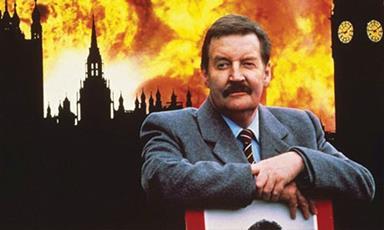
Let Justice Be Done - Though The Heavens Fall: In Chris Mullin's political thriller, A Very British Coup, the left-wing Labour Prime Minister, Harry Perkins, attempts to subvert the Establishment by adopting a policy of full disclosure of official information. Founded on secrecy and the manipulation of information, the Establishment (especially the Tory press) organises Perkin's removal. New Zealand's own Harry Perkins, Michael Joseph Savage, attempted something similar by mandating the live broadcasting of Parliament in 1936.

HARRY PERKINS, the hero of Chris Mullin’s brilliant political thriller, A Very British Coup, rides to office on a promise of open government.

To help him demystify the business of day-to-day politics, the newly-elected left-wing Labour prime minister recruits Fred Thompson, a top-flight investigative reporter. Together, the Prime Minister and his Press Secretary pursue a radical policy of full-disclosure.

Daily press conferences provide the news media with unprecedented access to Harry and his ministers. Cabinet papers are released automatically. The machinations of senior civil servants are no longer shielded from public scrutiny. What the government sees, the voters see too.

Pure fiction, of course, but Mullin (editor of the left-wing British weekly The Tribune when he wrote the novel in 1982) makes a very interesting point. What would happen to the news media’s power to shape public perceptions in an environment where rumour, speculation and tendentious political analysis loses all currency?

In circumstances of full disclosure, where there were no official secrets or confidential reports, the dark arts of the spin-doctor would no longer be required. Journalists who only told half the story would be laughed out of the Press Gallery. Speculation about ministerial motives, when the minister was ready and willing to answer all the journalists’ questions and make available the official advice upon which his or her decisions were based, would be pointless.

In such an open, information-rich, political environment, the analysis of the average political journalist would very soon be no more insightful or compelling than the ordinary citizen’s.


FOR A BRIEF PERIOD in the 1930s, New Zealand had a prime minister whose media instincts were remarkably similar to those of the fictional Harry Perkins.

In the two years he spent as Leader of the Opposition (1933-1935) Michael Joseph Savage gave considerable thought to Labour’s fraught relationship with the New Zealand news media.

With the exception of the union-supported Grey River Argus, the daily press was unrelentingly hostile to Labour’s political ambitions. The new medium of radio, however, offered a means of circumventing this near universal editorial hostility towards the Left.

In the United States, President Franklin Roosevelt’s “Fireside Chats” to the American people had proved extraordinarily effective at “cutting out the middle man”. And even in New Zealand, Colin Scrimgeour’s (Uncle Scrim’s) “Friendly Road” broadcasts on 1ZB offered ordinary citizens access to a much less jaundiced view of Labour and its ideas. (So much so that in the run-up to the 1935 general election the conservative National government jammed Uncle Scrim’s Sunday evening broadcast.)

More than ever, Mickey Savage was convinced that radio held the key to curbing the private presses’ power to shape political perceptions.

Prime Minister Savage’s first and most enduring media reform was to arrange for the live broadcasting of Parliament. The daily press had been highly selective in its reporting of parliamentary debates, but now ordinary citizens could tune into Parliament and hear their representatives explaining the new Labour Government’s policies directly to them.

Overnight, the highly partisan filters of conservative journalism became redundant. With the people able to hear for themselves what the Labour government was doing – and why – the daily newspapers had no option but to report the business of the House of Representatives honestly and impartially.


CHRIS MULLIN’S hero goes much further than Mickey Savage ever dared in opening up the business of government to public scrutiny – and pays a heavy personal price for his radical democratisation of official information.

But in having the British Establishment overthrow Harry Perkins’ government, Mullin is being no more than honest. Secrecy is indispensible to the sort of power that British – and New Zealand – politicians are accustomed to exercising. Just as the strict rationing of information is fundamental to the modern news media’s relationship with the wielders of political authority.

If knowledge is power, then the widest possible dissemination of knowledge must be the surest means of setting us free.

First and foremost, Mullin’s “very British coup” is a blow against the truth.

This essay was originally published in The Dominion Post, The Timaru Herald, The Taranaki Daily News, The Otago Daily Times and The Greymouth Star of Friday, 27 May 2011.

Tuesday, 24 May 2011

Lowered Expectations: Labour Party Congress 2011

All Together Now: Like the prospect of a hanging in the morning, a looming election concentrates the mind wonderfully. The brief interregnum between Helen Clark's departure and the bedding-in of Phil Goff's leadership, during which the rank-and-file's influence over Labour policy dramatically increased, appears to be over, and once again the parliamentary and organisational wings of the party are marching in lock-step.
 
“EXCLUDING THE MEDIA might be okay if you were 20 points ahead in the polls”, mused the senior political journalist seated at the end of the table, “but when your 20 points behind? Where’s the sense in having journalists hanging out in coffee shops?”

His colleagues, sipping their espressos, lattes and flat whites at Felix’s on Wakefield Street – just across the street from the Wellington Town Hall where the Labour Party was busy conducting its election-year congress behind closed doors – could only nod their heads in agreement.

The “tradition” (if a practice dating back to 1993 warrants such a term) of excluding the news media from all but the four or five set speeches at Labour’s election-year get-togethers was born of the paranoia that gripped the Helen Clark-led party in the aftermath of the fratricidal blood-letting of the 1980s.

Veterans of the Rogernomics era vividly recalled the 1987 Labour Party Conference where delegates actually booed and hissed the architects of the first two-term Labour Government since the war.

It was precisely this sort of carry-on that led the Labour MPs of that era (including Helen Clark) to view the party organisation as an ungrateful and dangerously unpredictable beast which, at the drop of a contentious policy remit, was perfectly willing to admonish and embarrass its parliamentary representatives while the news media gleefully reported every rhetorical slap and symbolic head-butt.

The decision to uphold the tradition of keeping the media out of Labour’s policy workshops in election year – in spite of the party’s parlous position in the polls – speaks eloquently of both the parliamentary and the organisational leaderships’ determination to lower rank-and-file expectations of exactly how far and how fast the party can be steered to the left.

The contrast with the 2010 conference could hardly have been starker. The buzz that greeted journalists as they entered Auckland’s Aotea Centre last October was unmistakeable. The excited talk back then was all about the party being ready, finally, to take itself out of the neoliberal consensus. Former Alliance members, now back in the Labour fold, grinned smugly and whispered behind their hands that, at long last, the likes of Phil Goff, Annette King and Trevor Mallard had seen the light.

Seven months later the mood of the Labour rank-and-file is much more subdued.

The vicious public backlash against the attempt to improve the wages and conditions of Actors Equity’s members – alluded to triumphantly by the Prime Minister, John Key, only last week in his castigation of Labour as “Hobbit Haters” – caught the labour movement almost entirely off-guard.

The message: that the electorate was nowhere near as ready to embrace radical gestures as the party rank-and-file; was not lost on the more conservative elements of Labour’s caucus.

The result has been a much more engaged caucus when it comes to defining the parameters of Labour’s election policy.

The decision of this year’s Congress organisers to invite 2010 New Zealander of the Year, Professor Sir Paul Callaghan, to deliver the keynote address was a clear signal that Labour’s economic policy was veering back towards the sort of thinking that first hit the headlines at the Helen Clark-sponsored 2001 Knowledge Wave Conference.

Sir Paul’s prescription: that New Zealand can only catch up with Australia by fostering the sort of high-end, high-tech manufacturing represented by exporting firms such as Rakon and Fisher & Paykel Healthcare; indicated, perhaps, that reports of the death of Labour’s “Third Way” had been greatly exaggerated.

This notion was reinforced by Phil Goff’s announcement that Labour would be offering manufacturers $800 million worth of tax credits for Research and Development (paid for by the agricultural sector entering the Emissions Trading Scheme two years earlier than planned) and lifting the minimum wage to $15.00 (a brutal but effective way of weaning New Zealand employers off the teat of cheap labour and forcing them to tool-up and innovate their way towards profitability).

Annette King’s policy announcement: that Labour will be “investing in and supporting people who are willing to raise children” was less impressive. Her proud boast that the next Labour Government would “eradicate child poverty in New Zealand” rang tragically hollow in the absence of any firm commitment to restore the purchasing power of the Domestic Purposes Benefit to pre-1991 levels.

While 225,000 children are being raised on the demonstrably inadequate post-Jenny Shipley DPB, child poverty can only endure.

Labour’s 2011 Congress marked the end of the heady period of radical policy innovation that followed the departure of “The Boss” to UN headquarters in New York. Like the prospect of a hanging in the morning, elections tend to concentrate the mind wonderfully. That the responsibility for determining policy and strategy would be reclaimed by Labour’s parliamentary wing was inevitable.

And, like artists, MPs know that you never show children – or journalists – unfinished things.

This essay was originally published in The Press of Tuesday, 24 May 2011.

Wednesday, 18 May 2011

Budget 2011: Front Line Casualty

Registered In Flesh and Blood: If Bill English could see what his numbers added up to, I wonder: would his calculations be different?

BUDGETS ARE WRITTEN for the sake of abstract nouns: Prosperity; Stability; Productivity. But they are experienced by people who are all-too-real. And, if the decisions of our Finance Minister are expressed in numbers, their effects are registered in flesh and blood. If Mr English could see what his numbers added up to; I wonder: would his calculations be different?


THE POLICE CONSTABLE stared at the blank page of his notebook and took a deep breath.

“Can you tell me why your father took his own life?”

The young woman seated opposite him lifted her head slowly, as if the knowledge inside it was too heavy for her body to bear.

“He’d lost everything that meant anything to him. His wife, his home, his job, his self-respect. I think he looked ahead and saw nothing but uselessness and loneliness. In the end, I reckon he just didn’t see any point in going on.”

“He was an educational consultant?”

The young woman snorted.

“That’s what he called himself after he’d been made redundant in that first round of cuts. Used nearly all his redundancy money setting himself up in business. God, he was so keen. But there were no contracts – not one. His whole life had been devoted to research. He picked the eyes out of other countries’ education policies and fed them into the Department. But no one wants ‘back-office bureaucrats’ any more. These days everything’s for the ‘workers on the front line’. He went bust.

“And your mother?”

The young woman smiled wanly.

“She tried – she really did. But the mortgage was just too big for one salary to service. They got behind. The bank was pressuring them to sell. Dad blamed himself. He got more and more depressed – started drinking. There were arguments – fights. In all my life, I’d never seen Dad raise a hand to anyone. But one night I got a call from Mum – she was crying. Dad had hit her. I told her to get out: ‘Go to Women’s Refuge’, I said. Mum just laughed. ‘You’re behind the times over there in Australia’, she told me. ‘The Government’s stopped funding the refuges, most of them have shut up shop.’ I told her I would fly back as soon as I could get a flight, but she told me to stay where I was. ‘They’ll be after you for that student loan of yours’, she told me. ‘You save your money. Your father and I will be all right’.”

“But they weren’t.”

“No. Dad thought he’d go back to varsity – do a law degree. But the Government had stopped lending to mature students – reckoned the over fifty-fives would never pay them back. Seemed like everywhere he turned someone slammed a door in his face. Mum says he just spiralled down and down. His GP referred him to a private psychotherapist, but they couldn’t afford the fees. The public mental health service was no bloody use – just filled him full of lithium. Mum said he was like a zombie. He’d just sit and sit and sit. She couldn’t bear to watch. The house was sold. Mum set Dad up in a little flat – arranged for him to go on the Sickness Benefit. What a joke that was! All he got were endless hassles from the MSD. Told him that if he wasn’t actively seeking work they’d stand him down. A Master’s degree in Education and they had him sweeping floors at the local primary school.

“And that’s where they found him?”

“Yes, that’s where they found him. He’d hanged himself from a metal beam in the school’s reception area.”

The young constable closed his notebook.

“I’m very sorry for your loss.”

The young woman looked out the window at the grey winter sky and blinked.

“You know what Mum said?”

The constable shook his head.

“She said: ‘Dad gave his whole adult life to the back office – but that wasn’t enough to save it from the bottom line’.”

This essay was originally published in The Dominion Post, The Timaru Herald, The Taranaki Daily News, The Otago Daily Times and The Greymouth Star of Friday, 20 May 2011.

Tuesday, 17 May 2011

Budget 2011: A Moderately Good Hand

Raising The Stakes - But Not Too High: John Key knows that if he's to keep on winning the electorate must be persuaded to keep on playing. That's why Bill English will not risk the voters betting everything on a change of government.

NEW ZEALAND should count itself fortunate in having a governing political party located in the centre of the political spectrum. In trying economic times the peddlers of extreme solutions are never without an audience. It takes genuine courage to embrace moderation when the political rewards for extremism can be so high.

For nearly three years now, John Key and Bill English have resisted the advice of extremists and kept the New Zealand economy right-side up. Reading the signals ahead of this week’s Budget, it’s clear they’ve no intention of turning it upside-down anytime soon.

As far as possible – without attracting the unwanted attentions of the international credit rating agencies – Bill English will strive to maintain the purchasing power of the voting public. He cannot avoid making some gestures in the direction of reining-in Government expenditure, but such cuts as there are in the Budget will not be felt universally (as happened with the GST increase) or even immediately.

Mr Key’s announcement of a “Zero Budget” in conditions of relatively strong inflation actually signals a 2-3 percent reduction in the real level of Government expenditure.

Government departments and agencies may receive the same appropriation as last year, but in dollars that are worth less. Maintaining the same level of services to the public in these circumstances will be a struggle. Civil servants will find it equally difficult to preserve (let alone increase) their incomes. Indeed, the value of their wages and salaries will almost certainly decline in real terms.

So, its name notwithstanding, there will be quite substantial public spending cuts in Thursday’s “Zero Budget”. It’s just that by being restricted to the public sector, and because they’ll be happening in slow-motion, most of the electorate won’t notice them.

Private sector savers, families with children, and tertiary students will, however, find it difficult not to notice the Government’s plans to cut-back the State’s contribution to Kiwisaver; tighten-up the eligibility for “Working For Families”; and take a more aggressive approach to the recovery of outstanding student loans.

But, even here, Mr Key and Mr English have made moderation their watchword. Very wisely they have ignored the advice of the business community’s more feral elements – which was to squander a huge chunk of the Prime Minister’s personal political popularity by rushing through these austerity measures under Urgency. Instead, Mr Key and his Finance Minister have chosen the impeccably democratic option of post-dating the reform of Kiwisaver, Working For Families and the recovery of student loans until after the General Election.

In effect, the Prime Minister is daring the electorate to abandon his government for an Opposition in varying degrees of disarray. “Back me or sack me!” is his cry – leaving the average voter in the agonising position of the poker player holding a weak hand who must decide whether or not to pony up his last dollar to discover if his opponent is bluffing.

John Key is asking voters to look at the Opposition parties, assign them playing cards according to their worth, and then decide whether or not their hand is stronger than the Government’s.

If they decide the Oppositions’ cards are too low, then they should give the Government what’s on the table. But, if they honestly believe the combination of Phil Goff (King?), Metiria Turei (Queen?), Winston Peters (Joker?) and Hone Harawira (Knave?) constitutes a winning hand, then, by all means, they should push all their chips forward. Lose a little or win a lot: that’s the wager. And it’s only their own, their children’s and their country’s future that’s at stake.

It’s high risk politics for Mr Key and his government, but the genius of the Prime Minister’s proposition lies in how little he has actually put on the table.

If he had followed the advice of the Business Roundtable, or Dr Don Brash, or the right-wing commentariat, Mr Key would have pushed everything into the centre of the table. All of the state assets; interest-free student loans; Working For Families in its entirety; Paula Rebstock’s welfare reforms; the whole kit and caboodle of neoliberal obsessions would have gone into the pot.

Had he done that, then the voters might have been willing to risk everything – even on the poor hand the Opposition parties have dealt them. The wager would have been a terrifying zero-sum choice: win it all or lose it all. Folding wouldn’t have been an option.

But John Key, the successful currency trader; the self-made millionaire; the high-stakes riverboat gambler; has made throwing-in our hand a reasonable option. The Key-English version of moderate-conservative poker may set the table limit low, but by reassuring the punters that they’re not engaged in an all-or-nothing gamble, it keeps them at the table.

And so long as they keep on playing, the Prime Minister knows he can keep on winning.

This essay was originally published in The Press of Tuesday, 17 May 2011.

Blogger Malfunction Has Put "Bowalley Road" Out Of Action. Readers Have My Sincere Apologies. Normal Service Will Be Resumed As Soon As The System Is Restored - Chris Trotter

Thursday, 12 May 2011

Talking Past Each Other

In search of protection: The true partnership that was sealed on 6 February 1840 was between the Maori leadership and the British government in London. The chiefs hoped that a London-appointed Governor would stand between their lands, forests and fisheries and the Pakeha they feared the most - the settlers who were coming to stay.

This posting is a response to the lively debate currently raging on the Kiwipolitico blogsite.

IT’S JANUARY 1840, two sailing vessels are fast approaching the North Island of New Zealand. His Majesty’s Ship Herald carries Captain William Hobson bearing instructions from the Colonial Office to organise the voluntary cession of the islands of New Zealand to the British Crown. The other ship, Aurora, carries settlers to the newly established settlement of Port Nicholson. It has been chartered by the privately owned and organised New Zealand Company.

Captain Hobson’s instructions are not unrelated to the purposes for which the Aurora and her passengers set sail. The islands of New Zealand, conveniently located in the temperate zone of the southern hemisphere, are large but sparsely populated (the indigenous Maori population numbers approximately 125,000). Unsurprisingly, they have begun to loom large in the sights of European entrepreneurs, missionaries and imperialists.

Under pressure from the aristocratic backers of the New Zealand Company, and wary of the pretensions of competing powers – particularly the French – the Colonial Office in London is determined to regularise the confused jurisdictions of Australasia. If the land titles being sold to settlers by the New Zealand Company are to be legally enforceable, the question of sovereignty must be settled – and quickly. By fair means or by foul, New Zealand is to be annexed to the British Crown.

The cheapest, the most politically expedient, and (in the face of the Missionary Society’s strenuous submissions) the most morally defensible means of securing possession of New Zealand is to persuade the indigenous Maori tribes to cede sovereignty to her Britannic majesty, Victoria, voluntarily. Indeed, British agents and missionaries in New Zealand have been assiduously laying the groundwork for just such a solution since the mid-1830s. The British Resident, James Busby, has even secured a “Declaration of Independence” from his purpose-built “Confederation of Chiefs” so the Crown has something to sit down with when the time to negotiate a plausible treaty of cession finally arrives.

As HMS Herald drops anchor in the Bay of Islands on 29 January1840, this is exactly what Hobson and his confreres, Busby and James Freeman, prepare to do.


THE MAORI LEADERS gathered at Waitangi to korero with Captain Hobson have come with an equally clear set of priorities.

First and foremost, they are seeking protection.

From the early 1830s, a rough “balance of terror” has prevailed among the combative Maori tribes as more and more of them acquired firearms. Even so, the slaughter and dislocation of the so-called “Musket Wars” are still a searing memory, and nobody’s ready to wager the lives of their whanau and hapu on the blood-letting not breaking out anew. Information gleaned from Maori who’ve travelled to Australia – and further afield – suggests that the British Empire holds out the best hope of keeping the peace between the tribes.

They’re also keen for the British to keep the roughly 2,000 unruly Europeans who’ve settled amongst them to trade, hunt whales and seals, or simply to outrun the writ of whoever’s justice system is after them, under some semblance of control. There’s a lot of wealth to be had from these folk, but only if the tribes can enlist the aid of an entity with sufficient power to make sure they keep their side of any bargain – and pay up.

Having learned the hard way how skittish the Pakeha become when Maori exercise their own robust forms of tribal justice, they reckon it will make things a lot easier if their “guests” are forced to live under their own laws.

Among the shrewder Maori – including the wily Hone Heke – there is also a nagging fear that the ever-increasing inward flow of European settlers will not stop. They’ve learned that these new arrivals are different – not the usual traders, whoremasters, grog-sellers, whalers, sealers and fugitives that the tribes have grown used to accommodating.

More than anything else, the settlers arriving on the New Zealand Company ships desire land – Maori land. And, as more and more of them arrive, that hunger for Maori land will only increase. It's why the better educated and more travelled Maori are determined to secure their tribal possessions against settler pressure by placing them under the protection of the world’s most powerful nation – Great Britain.

Also at Waitangi are the Christian Maori – the products of more than twenty years of missionary effort. To these men and women the Pakeha have vouchsafed an entirely different understanding of the human condition. Christianity has conferred upon its native converts a new kind of power: a new mana.

They understand that the Pakeha’s morality, knowledge and technology offer their people a way-in to a world their ancestors could never have imagined. For them the future lies in a voluntary melding of their own and the newcomers’ cultures – and that melding cannot happen soon enough.


THE SIMPLE CLAUSES of the Treaty of Waitangi masterfully embraced the complex agendas of both its British and Maori signatories. It is, however, naïve in the extreme to characterise the document as a contract.

Treaties are not contracts: at least not in the sense that a mortgage or hire-purchase agreement is a contract. What a treaty actually amounts to is a description of the power relations existing between two peoples at a precise moment in history.

Almost always (and the Treaty of Waitangi is no exception) the relationship between the signatories is an unequal one (usually reflecting the stronger party’s military victory over the weaker). What makes the Treaty of Waitangi so interesting is that it was signed in anticipation of – and as a way of avoiding – the military clash which would have become inevitable if a voluntary cession of sovereignty to the British Crown had been refused.

But Maori did not emerge from the negotiations of February 1840 empty-handed. The quid pro quo, in return for making things easy for the Colonial Office, was the guarantee of what they had been seeking all along – the protection of the Crown. Protection against any return to the slaughter of the Musket Wars; protection against social disorder and commercial trickery; and protection against the Pakeha they were most afraid of: the ones who were coming to stay.

This was the real partnership enshrined in the Treaty: the partnership between the Maori tribes and the Colonial Office, or, to put it more precisely, with the executive arm of the British Government in London. This was the power the chiefs had aligned themselves with: a power which, in the person of the Governor, would stand between them and the predatory approach to land acquisition represented by the New Zealand Company and its growing body of imitators.

And there’s no question that the chiefs’ fears in regard to the settlers were entirely justified. Here, for example, is how one of the Governors of the New Zealand Company viewed the Treaty:

“We have always had very serious doubts whether the Treaty of Waitangi, made with naked savages by a consul invested with no plenipotentiary powers, without ratification by the Crown, could be treated by lawyers as anything but a praiseworthy devise for amusing and pacifying savages for the moment.”


THAT OMINOUS “for the moment” offers us a chilling reminder of just how historically contingent all treaties are. Certainly the Treaty of Waitangi – as a means of protecting the things Maori treasured – did not long survive the moment when the settler population reached a size sufficient to persuade London to grant it a measure of self-government (1852).

It was at that point that the Crown effectively ceased to be the protector of New Zealand’s indigenous inhabitants, and became, instead, the protector of the new settler state. In vain did the chiefs appeal to the Governor to uphold the Crown pre-emption clause of the Treaty. And when, in growing desperation, they crowned their own king and attempted to defend what remained of their tribal lands, the Settler Government promptly declared them rebels and traitors, and the British Government in London dispatched a vast army to crush the resistance of their nascent Maori state.

It is difficult to envisage any other outcome. The moment London acquiesced in the formation of a self-governing New Zealand colony, they set in place an entity which could only grow and prosper at the expense of the country’s original inhabitants. Because, as the chiefs rightly apprehended back in February 1840, if the new breed of settlers came to stay – it could only be on Maori land.


TO SAY that the Treaty of Waitangi was breached is, therefore, an accurate but ultimately trivial historical observation. Had it not been breached, New Zealand – as a colonial society inextricably enmeshed in the political, economic, social and cultural life of the British Empire – wouldn’t have existed. For the Settler State to become real, the Treaty had to become, in Chief Justice Prendergast’s brutal phrase: “a simple nullity”.

Was that wrong? Should the undertakings given by Captain Hobson on 6 February 1840 have been honoured? Removed from its historical context, the question is easily answered in the affirmative. Except that those who go in search of such unencumbered moral judgements, do so without understanding that such questions can never be extracted from history.

To judge the dead may give some comfort to the living, but no matter how fervently the misdeeds of previous generations are condemned, they cannot be undone. Therefore, whatever justice we seek to do here and now, let it be done to right the wrongs of the present – not the past.

We fair-skinned Polynesians are not – and can never be – “Europeans”. Just as contemporary Maori are not – and can never be again – the Maori who inhabited these islands before colonisation. Both of us are the victims of historical forces too vast for blame, to permanent for guilt.

And both of us have nowhere else to go.

This essay is exclusive to the Bowalley Road blogsite.