Tuesday, 14 July 2015

Chinese Whispers.

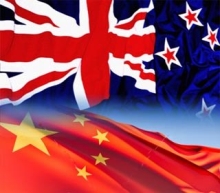
New Imperiums For Old: China now stands where Britain stood: an economic colossus with expectations of this country that New Zealanders are only reluctantly beginning to comprehend. The thought that the Chinese might want something in return for opening up their market to our milk powder and baby formula has come very late to the ordinary Kiwi.
 
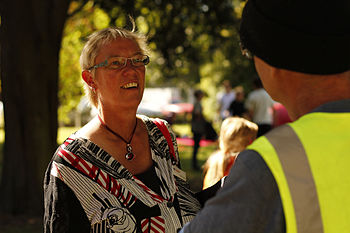
SONJA DAVIES was only in Parliament for six years. But, she could hardly have chosen a worse six-year period to be a Labour MP. Her time as MP for the Wellington seat of Pencarrow (1987-1993) coincided with the crescendo of Rogernomics and the splitting of the Labour Party. It was not a happy time for the celebrated feminist and trade union fighter, and she was only too happy to hand her seat over to Trevor Mallard and get out.
 
It wasn’t just the awfulness of life in the Labour Party in the late-1980s and early-90s that depressed Sonja Davies. As a shrewd observer of both local and international politics, she rapidly became aware that New Zealand was passing through a period of fundamental cultural and economic re-orientation. What concerned her most was how little New Zealanders were being told and, therefore, how little they knew, about the changes that were radically reshaping what it means to be a New Zealander.
 
“If people had any idea about the scale of these changes,” she confided to me early in her first term as MP for Pencarrow,” they’d be horrified. It’s been decided that New Zealand’s future lies in Asia. That’s got massive implications – but most people haven’t a clue. No one asked them and certainly no one’s telling them.”

 
Sonja Davies: People would be horrified.
 
New Zealand’s embrace of Asia (remember Jim Bolger’s startling comment that “New Zealand is an Asian country”?) was a policy driven by the same elite group of bureaucrats and businesspeople that had sponsored Roger Douglas’s “Quiet Revolution”. New Zealand’s once heavily-protected economy had been thrown open to the world in anticipation of the world’s major economies doing the same.
 
Significantly, the corollary of the free movement of capital, goods and services across international borders – the free movement of peoples – remained largely unexamined. Most New Zealanders simply did not realise that if their country was determined to trade freely with the whole world, then, more and more, its population would come to resemble the people with whom it was trading. If most of those people hailed from Asia, then New Zealand would, indeed, become “an Asian country”.
 
Why Asia? Simply because the traditional destinations for New Zealand’s exports, Europe and the United States, were largely satiated markets. Even worse, they remained highly protected markets. Throughout Asia generally, however, and, more specifically, in China, it was evident that millions of hitherto poor peasants and workers would soon be entering the ranks of a new and materialistically inclined “Middle Class”.
 
And, if history was any guide, one of the principal effects of these millions of Chinese becoming wealthy would be a dramatic change in their dietary habits. The demand would go up for protein, protein and more protein. And protein was – and is – what New Zealanders do best. Increasingly, the diplomatic and trade focus shifted from the global free trade chimeras of APEC and the Doha Round of the WTO, to the golden prize of a single, bilateral, free trade agreement with the People’s Republic of China.
 
That agreement was the crowning achievement of the Helen Clark-led Labour Government (1999-2008) and there can be no disputing its enormous and beneficial impact on the New Zealand economy. Equally indisputable, however, are the profound socio-cultural and political impacts of China becoming this country’s largest trading partner.
 
The New Zealand historian, James Belich, describes the political and socio-cultural effects of New Zealand being transformed into Britain’s “protein factory” as “The Great Tightening”. Essentially, this country was re-colonised by British capitalists and its population re- educated accordingly. That the process was carried out by people who looked like us and talked like us – our own kith and kin, as it were – did not make it any less destructive of our national sovereignty. More than 18,000 young New Zealanders’ died in World War I: their blood exchanged for our butter’s guaranteed access to the British market. New Zealand’s Prime Minister, William Massey, was happy to pay the butcher’s bill.
 
China now stands where Britain stood: an economic colossus with expectations of this country that New Zealanders are only reluctantly beginning to comprehend. The thought that the Chinese might want something in return for opening up their market to our milk powder and baby formula has come very late to the ordinary Kiwi.
 
That Labour is leading the discussion about how much, precisely, the Chinese have a right to expect from New Zealanders is entirely fitting. After all, it was Labour who sealed the deal. It was Labour, too, who presided over the electorally unmandated “turn” towards Asia in the late-80s. That they are, at last, addressing the misgivings expressed to me by Sonja Davies’ all those years ago, is to be applauded – not condemned.
 
Labour’s Chinese whispers have nothing to do with racism. They’re about national sovereignty and the people’s will.
 
This essay was originally published in The Press of Tuesday, 14 July 2015.

Dissident Solutions: What's Happening To Nicky Hager?

Targeted? The actions of the NZ Police in relation to Nicky Hager are deeply concerning. It is very difficult to avoid the conclusion that the ability of New Zealand's foremost investigative journalist to do his job is being deliberately undermined.
 
MARTYN BRADBURY’S LATEST POSTING on The Daily Blog should give every member of the democratic public serious pause. The allegations levelled at the NZ Police are serious and deeply concerning. It is very difficult, having read Martyn’s post, to avoid the conclusion that Nicky Hager may be the victim of deliberate political persecution, and that among the principal agents of that persecution may be members of the NZ Police Force.
 
With the specifics of the actions taken against Mr Hager forming a significant part of active legal proceedings, it would be improper to rehearse them on The Daily Blog. What can be examined, however, is the enormous risk posed to the integrity of our democratic institutions by the merest suspicion that senior politicians, senior civil servants, senior policemen and senior jurists might be involved in an effort to both frighten and silence what used to be called, back in the days of the Cold War, “political dissidents”.
 
What distinguishes the “political dissident” from the more familiar “political activist” is their specificity. Activists may give public voice to generalised complaints against individuals and institutions, but dissidents sharpen such complaints by supplying the public with hard evidence of specific wrong-doing – often supplied to them by a whistleblower or, in Mr Hager’s case, a hacker. Alternatively, the evidence may simply have been uncovered by applying the techniques of good, old-fashioned, investigative journalism.
 
Liberal democracies have very little to fear from activists. Objections to government policy and/or corporate behaviour based on political ideology or religious belief constitute no real threat to the smooth unfolding of long-prepared strategies and plans. After all, the actions of powerful institutions – be they public or private – are almost always undertaken within the law and are, therefore, extremely difficult to stop. Indeed, it is only when the placard-waving (but otherwise ineffective) activists avail themselves of a lawyer or two that they graduate to dissident status – at least in the eyes of their opponents.
 
Lawyers, like the best investigative journalists, have ways of extracting information the powers-that-be would rather they, their clients, and/or the general public, didn’t see. In the hands of a good team of lawyers, legal discovery can be an immensely powerful weapon. The constitutional separation of powers means that the Judiciary can require the Executive Branch of Government, or a private corporation, to divulge all manner of secret material. Discovery cuts both ways, however, so those who go after the secrets of the powerful must be prepared for the powerful to come after theirs.
 
But if lawyers pose a genuine threat to the secret dealings of the powerful, they are also extremely hazardous to their client’s bank balance. This enables the State, by dint of having its very own “law firm” – Crown Law – and a practically inexhaustible supply of funds, to adopt a strategy of litigation attrition. By extending and multiplying the mechanisms of the Law, the Crown is frequently able to wear down or financially exhaust its opponents. If an out-of-court settlement is arrived at by the contending parties it will almost always contain a comprehensive confidentiality clause. The dissident and his or her lawyers may “win” their case, but the State’s secrets remain just that – secrets.
 
What truly terrifies the wielders of public and private power are processes of “discovery” that owe nothing to the operation of the courts. Edward Snowden was able to use his privileged access to the secrets of the United States’ National Security Agency, to expose its highly questionable (and in some cases illegal) activities to the whole world. The specificity of the information he released (that the US eavesdropped on the conversations of the German Chancellor, for example) produced the most acute diplomatic embarrassment. Likewise his detailed description of the architecture of mass surveillance.
 
Nicky Hager’s book, Dirty Politics, delivered an equally destructive blow to the secret world of right-wing influence peddling and political character assassination. The hitherto unseen architecture of political manipulation in New Zealand was laid bare in a way that caught the subjects of Mr Hager’s investigation completely off-guard. It was the same with his earlier publications: Secret Power, Secrets and Lies, Seeds of Distrust, The Hollow Men and Other People’s Wars. In every case those under scrutiny had no idea that their activities were about to be exposed.
 
This “ambush” strategy has been criticised by Mr Hager’s opponents as unethical and contrary to the “rules of good journalism”. What it achieves, however, is the unimpeded distribution of his publications. Had the subjects of Mr Hager’s investigations been alerted to the fact that a book was in preparation, or, about to be published, it is highly likely that they would have attempted to legally injunct its release. Rather than offer his subjects the traditional right-of-reply, therefore, Mr Hager exhaustively checks and re-checks his facts to ensure that there is no possibility of legal restraint. That he has never been successfully sued bears testimony to the thoroughness of this pre-publication scrutiny.
 
What does a government “do” about a dissident of such consistent effectiveness as Nicky Hager? How reassuring it would be if we could answer, simply, that the powers-that-be, both public and private, redouble their efforts to conduct themselves ethically and openly. The revelations contained in Martyn Bradbury’s blogpost, however, strongly suggest that their reaction has been very different.
 
It’s as if someone, somewhere, has echoed the anguished cry of King Henry II.
 
When confronted with further evidence of the Archbishop of Canterbury’s, Thomas Becket’s, political and religious defiance, Henry bellowed: “Will no one rid me of this troublesome priest!” Did Henry know that four of his knights had taken him at his word and were on their way to slay the Archbishop before his altar? We shall never know. He always claimed ignorance of his men-at-arms’ intent, and did penance for the crime his words inspired. At the end of the day, however, his problem had, actually, been solved.
 
Rogue elements in the Police Force? Or a carefully devised plan to bring down a dissident? Either way, the outlook for the democratic public is grim.
 
This essay was originally posted on The Daily Blog of Monday, 13 July 2015.

Monday, 13 July 2015

Memory and Forgetting: Why Knowing Labour’s History Is So Important.

The Spirit Of Progressivism: The Czech-born writer, Milan Kundera, wrote that: “The struggle of man against power is the struggle of memory against forgetting”. In a curious way, the Labour Party was founded to keep the memory of the Liberal Party’s achievements, and of its vision of an economically just and socially progressive New Zealand, alive.
 
IT WAS 99 YEARS AGO, this week, that the principal elements of the New Zealand Left began arriving in Wellington. At a time of extraordinary social stress, they were gathering in search of unity and a clear way forward. Yes, the trade unions were well represented, but they were by no means the only progressive voices present. The New Zealand Labour Party, which was born 99 years ago, in July 1916, saw itself, rather, as a vehicle for the “democratic public” – that fraction of New Zealand society for whom political participation has always meant more than simply endorsing the decisions of the powerful.
 
The trade unionists and journalists, clergymen and temperance campaigners who came together that July were both alarmed and appalled at the imminent introduction of military conscription. They saw it as evidence of just how completely the war was swallowing New Zealanders’ civil liberty. The ruthless brutality of Bill Massey’s government; it’s willingness to deploy deadly force against its opponents; was raising doubts about the true purposes of the war.
 
What, exactly, were so many young men dying to defend? What had become of progressive New Zealand? Of “God’s Own Country”? The relentless din of wartime propaganda made it difficult to remember the 20-year-long Liberal Era of John Ballance and Richard Seddon. Censorship and sedition trials made it difficult – even dangerous – to object to what had taken its place. War mania had rendered rational argument impossible. The “democratic public” of New Zealand felt themselves to be (and, almost certainly, were) a beleaguered minority.
 
Over the course of the next twelve months much will be written and spoken about the formation of the New Zealand Labour Party. The celebration of the party’s centenary will be used, as all such occasions are, to bolster the authority of those currently in command of both the party and the wider labour movement. Every effort will be made to convince the Labour Party members and trade unionists of today that their present leaders are worthy successors to the men and women of 1916.
 
That is why it is so important that New Zealand’s left-wing historians spend the next twelve months acquainting today’s progressives with the facts of Labour’s history. They must loudly give the lie to those who attempt to deny the radicalism of Labour’s past; and who argue that moderation and compromise have always been the party’s watchwords. The blatantly political purpose of such historical revisionism is to promote the idea that the extreme timidity and ideological conservatism of today’s Labour Party is nothing out of the ordinary; that Labour has always been timid and conservative.
 
Nothing is more likely to ensure Labour’s demise than the triumph of this right-wing revisionist account of its history. Labour’s future depends upon how truthfully her struggle on behalf of the “democratic public” is retold. The progressives of today deserve to know how a beleaguered minority, in spite of vicious government persecution and constant media vilification, eventually transformed itself into a radical majority, and how that radical majority changed this country forever – and for the better.
 
The Czech-born writer, Milan Kundera, wrote that: “The struggle of man against power is the struggle of memory against forgetting”. In a curious way, the Labour Party was founded to keep the memory of the Liberal Party’s achievements, and of its vision of an economically just and socially progressive New Zealand, alive. Over the course of the next year the struggle to prevent Labour’s huge contribution to the history of New Zealand from being forgotten, or, worse still, misrepresented, must be waged unceasingly.
 
If the “democratic public” is ever again to become a radical majority, then the memory of how it fought – and won – the battles of the past needs to be kept alive in the hearts and minds of every progressive New Zealander.
 
This essay was originally posted on The Daily Blog of Friday, 10 July 2015.

Friday, 10 July 2015

Yanis Varoufakis: A Hero Worthy Of His Heritage.

Dropping The Pilot: The classical character of Varoufakis’s departure as Greece’s Finance Minister was made even more poignant by the fact that his own personal defeat was announced amidst the echoing tumult of a victory that he, more than anyone, had secured for his people.
 
WE OF THE LEFT know how to act collectively with no care for the privileges of office.” How long has it been since a left-wing leader talked like that? Yanis Varoufakis may have used a blogpost to announce his resignation to the world, but the sentiments he expressed were straight out of Homer. Like the hero of an ancient Greek legend, he showed that he understood both the duty he was bound to fulfil, and that he embraced it with a glad heart.
 
The classical character of Varoufakis’s departure as Greece’s Finance Minister was made even more poignant by the fact that his own personal defeat was announced amidst the echoing tumult of a victory that he, more than anyone, had secured for his people.
 
Across the whole of Greece, from Thrace in the north to Crete in the south, the Greek people had delivered a resounding “Oxi!” (No!) to the European Union’s demands for never-ending austerity.
 
Beneath a frenzy of flailing flags, in Athens’ Syntagma Square, tens-of-thousands of supporters of the Syriza Party-led coalition government shouted their defiance of the hated “Troika” (the European Commission, the European Central Bank and the International Monetary Fund). But, even as the Oxi voters celebrated, Prime Minister Alexis Tsipras was delivering the “Eurogroup’s” lethal ultimatum to his Finance Minister.
 
In Varoufakis’s own words: “Soon after the announcement of the referendum results, I was made aware of a certain preference by some Eurogroup participants, and assorted ‘partners’, for my… ‘absence’ from its meetings; an idea that the Prime Minister judged to be potentially helpful to him in reaching an agreement. For this reason I am leaving the Ministry of Finance today.”
 
If, as Troy burned, King Agamemnon had asked Odysseus to appease its tutelary deities by falling on his sword, the shock of injustice and ingratitude could hardly have been greater. But Varoufakis did not demur. “I consider it my duty to help Alexis Tsipras exploit, as he sees fit, the capital that the Greek people granted us through yesterday’s referendum.”
 
And yet, even as he abandoned his portfolio for the back-benches, Varoufakis could not resist one final, parting shot at the European hierarchs who, in their petulant fury, had demanded his political head.
 
“And I shall wear the creditors’ loathing with pride.”
 
This undisguised contempt for both the intellect and the character of Greece’s European creditors was, almost certainly, Varoufakis’s hamartia (in Classical Greek literary tradition, the fatal character flaw that causes the hero’s downfall). The son of a wealthy Greek industrialist, Varoufakis was never for a moment overawed by the European Union’s political bureaucrats and bureaucratic politicians. That he was, himself, an accomplished academic economist and author merely heightened his conviction that he had nothing to fear, and even less to learn, from the Eurogroup’s “participants and assorted partners”.
 
That Varoufakis’s professional analysis of Greece’s economic position was correct (as confirmed by at least two Nobel laureates – Stiglitz and Krugman – and, more recently, by the IMF itself) only made him more insufferable to the likes of Germany’s 72-year-old Finance Minister, Wolfgang Schauble. The hard-working German ant did not appreciate being lectured at by some upstart Greek grasshopper with a PhD – and no neckties.
 
Varoufakis’s sartorial insouciance was, of course, as carefully calculated as his economic analyses. His leather jackets and brightly coloured shirts (all-too-often unaccompanied by the required necktie) signalled his determination to carry just a little Mediterranean sunshine and machismo into the grey, staid and deeply conventional world of European finance. That these ageing Teutons in their dark suits and sensible ties felt upstaged by Varoufakis’s big fat Greek virility was as obvious as it was disruptive. A rock star at a Rotary meeting could not have been more out of place.
 
But disruption and non-conformity were essential ingredients of the Varoufakis shtick. What better way to demonstrate his radical new approach to doing business with the “suits” than by refusing to turn up in one? In a world increasingly informed by images rather than words, Varoufakis was signalling that Neoliberalism is not the only game in town: that economic alternatives do exist.
 
His people got the message. And even if he is not there to deliver it in person, Varoufakis’s vision of a better world will continue to dazzle the eyes of the “gods” who demanded this Greek hero’s sacrifice.
 
This essay was originally published in The Waikato Times, The Taranaki Daily News, The Timaru Herald, The Otago Daily Times and The Greymouth Star of Friday, 10 July 2015.

Thursday, 9 July 2015

Where Do You Stand On Greece? At Her Side - Or On Her Throat?

Forgiving Germany's Debt: In 1953, Hermann Josef Abs, centre, signed an agreement that effectively cut West Germany's post-World War II debt in half. That Greece was among the countries who forgave their former conquerors seems to have been completely forgotten by Germany's present rulers.
 
ON THE QUESTION OF GREECE, the New Zealand population divides itself neatly into three groups.
 
By far the largest of the three, is the group that knows three-fifths of bugger-all about what’s going on in Greece and cares even less. The less said about them the better.
 
Then there’s the group that regards the unfolding Greek crisis as a simple morality tale. According to this view, the Greeks awarded themselves a lifestyle they had not earned and paid for it with other people’s money. When the music stopped and their creditors came a-calling, the Greeks were required to discover just how unpleasant life can become when excessive debt falls due. As far as this group is concerned, the Greeks are in the process of being taught some very valuable lessons. On no account, therefore, should the EU be encouraged to remove its boot from Greece’s throat.
 
The third group’s response to Greece is born out of natural human empathy. They see a whole people suffering tremendous hardship and their first response is to do everything humanly possible to end it. The notion that this mass suffering must be continued – even intensified – to satisfy the demands of international finance strikes them as obscene. Responding to the second group’s pitiless moralising, they undertake some basic research into the Greeks’ predicament. What they discover makes them even more appalled. Greece isn’t a morality tale, it’s a horror story. The only ethical course of action is to stand in solidarity with the Greek people and offer full support to their courageous left-wing government.
 
It is a measure of how strong the grip of the free-market philosophy has become in this country that the third group finds itself being pilloried for its “soft” approach to Greece. The second group prides itself on being “hard-nosed” about such matters. What the Greeks need is the sort of “tough love” that parents are encouraged to dispense to wayward offspring. Unlike the “bleeding hearts” of the third group, the second group knows that sometimes you have to be cruel to be kind.
 
Those who recall the response of these hard-nosed New Zealanders to Campbell Live’s extraordinary broadcasts on child poverty in New Zealand will not have been in the least bit surprised by their reaction to the Greek Crisis. In almost every respect their reaction has been the same. We’ve heard how such deprivation that does exist is simply the result of poor personal choices. Like the spendthrift Greeks, irresponsible parents have contributed hugely to their own – and their children’s – poverty. To intervene with undeserved assistance would merely prolong an already interminable saga of material dependency and moral failure.
 
It’s been the same in this country for a very long time. On the one hand stand the people who judge the world according to a brittle set of inherited moral precepts – almost all of them thinly disguised justifications for selfishness and greed. While, on the other, stand the people who respond to the world as it presents itself to them. Where they see suffering they try to end it. Where they see injustice they try to fight it. Their moral code stipulates, simply, that they should do unto others as they would have others do unto them.
 
It’s the same simple principle which the Greeks applied in 1953 when they voted, with many others, to forgive 50 percent of Germany’s international debt. That the Germans have so signally failed to reciprocate says much more about their morals than it does about the Greeks’.
 
This essay was originally posted on The Daily Blog of Wednesday, 8 July 2015.

Tuesday, 7 July 2015

One Tick For Labour Isn't Enough.

Split Decision: Labour’s woeful 2014 Party Vote, at just 25 percent, was the party's worst electoral performance since 1922. Not so well known, however, is the number of votes cast for Labour Party candidates across the country’s 71 electorates. That total, at 801,287 (34 percent!) is 196,752 larger than the 604,535 Party Votes Labour received. If every Electorate Vote for Labour had been matched by a Party Vote, the National Government would, almost certainly, have fallen.
 
IF EVERYONE who voted for their Labour candidate in last year’s election had also given Labour their Party Vote, National would have lost. The discrepancy between the two vote tallies is startling. Everybody’s heard about Labour’s woeful 2014 Party Vote. At just 25 percent, it was Labour’s worst electoral performance since 1922. Nowhere near as well known, however, is the number of votes cast for Labour Party candidates across the country’s 71 electorates. That number, at 801,287, is 196,752 larger than the 604,535 Party Votes Labour received. If every Electorate Vote for Labour had been matched by a Party Vote, the percentage figure alongside Labour’s name on election night would not have been a derisory 25, but a much more respectable 34 – almost certainly enough to have changed the government.
 
Such a huge discrepancy between the Party and Electorate Votes indicates a political party in serious trouble. What it reveals is that where voters are either well acquainted with, or have been introduced effectively to their Labour Party candidate, they are much more likely to place a tick beside his or her name. When it comes to Labour as an entity in its own right, however, the inclination to give the party a tick is nowhere near as strong. In the Christchurch electorate of Port Hills, for example, the long-serving Labour candidate, Ruth Dyson, received 18,161 electorate votes. The Labour Party on its own, however, mustered just 9,514 Party Votes – a whopping 9,205 less than National’s 18,719 Party Votes. Small wonder, then, that 27 of the 32 MPs in Labour’s caucus are electorate MPs, with only 5 coming in off the Party List.

Ruth Dyson, Labour MP for Port Hills: 2014 Electorate Vote : 18,161; 2014 Party Vote: 9,514.
 
Unless this situation is turned around – and quickly – Labour’s electoral performance can only deteriorate. As the party’s well-known and affectionately regarded electorate MPs retire, the assumption that Labour people will replace Labour people is being called into question. Once again, Christchurch supplies the example. The parliamentary seat of Christchurch Central was for decades regarded as one of the safest of Labour’s “safe” seats. True to form, in the 2005 General Election Labour’s majority was 7,836. In 2008, however, with a new candidate, it’s majority shrank to just 935. Three years later, National’s Nicky Wagner took the seat with a majority of 47 votes. In last year’s election National increased its majority to 2,420. Significantly, National’s share of the Party Vote over those four general elections rose from 30.5 to 44.6 percent. Labour will have to work very hard to recover Christchurch Central in 2017.

Nicky Wagner, National MP for Christchurch Central: Increased her majority from 47 in 2011 to 2,420 in 2014.
 
What is to be done? Clearly, the most important issue that Labour must address is the current, very different, perceptions Labour voters have of familiar political faces – like Ruth Dyson’s – and the political face of the Labour Party itself. Inevitably, the face of the Party, per se, and that of the Party Leader become blurred in the minds of the voters. It is, therefore, essential that whoever is Labour’s Leader takes great care of the party’s “brand”. David Cunliffe’s “I’m sorry I’m a man” comment, though well meant, nevertheless inflicted enormous damage on Labour’s image – especially (and obviously) among its male supporters.
 
But if protecting and projecting the party’s brand is an important part of any Labour Leader’s job, having a clear idea of what the brand stands for is, surely, just as important? At the electorate level (and Labour’s electorates are mostly poor, brown and working-class) the local MP is generally perceived as being on “our side” – someone they can turn to for help in times of trouble. That perception of being on the side of the poor, the brown and the working-class once constituted the core of Labour’s brand.
 
That up to twice the number of poor, brown and working-class voters now vote for Labour candidates, rather than the party itself, suggests that their perception of what Labour stands for is very different from what they perceive their local MP to stand for.
 
The needs and problems of elderly folk soak up an enormous amount of Labour MPs’ time and energy – and that’s greatly appreciated. Not so appreciated, however, was Labour’s election promise to raise the age of eligibility for NZ Superannuation from 65 to 67. In the eyes of poor, brown and working-class people, that didn’t come across as a very Labour-like thing to do.
 
Labour’s challenge is to persuade its voters to give it two ticks. But that won’t happen until poor, brown and working-class people can be persuaded that Labour and its local candidates stand for the same things. Offering Labour’s traditional supporters economic policies that look and sound like those of the National Party will not rebuild Labour’s Party Vote.
 
The now demolished Christchurch Trades Hall once bore the graffiti: “You were supposed to help.” If Labour’s not very careful, those words may also become its epitaph.
 
This essay was originally published in The Press of Tuesday, 7 July 2015.

The Power of No: The Greeks Expose Neoliberalism's Anti-Democratic Agenda.

No! The decision of the Greek people has shown us that Neoliberalism can be challenged. Whether it can be beaten will require more than the bravery of a single nation. To defeat the neoliberals’ greed and cruelty, not just Greece but the whole world will have to find the courage to say: “No!”
 
THE UNFOLDING CRISIS in Greece has stripped Neoliberalism of its protective disguise and the world is recoiling from its ugliness. In normal circumstances the true purposes of the world’s neoliberal elites are masked by their use of opaque economic jargon. In the case of Greece, however, the social science of economics has been turned against them by some of its most impressive exponents. Nobel laureates Joseph Stiglitz and Paul Krugman have told the world that what is being done to Greece has nothing to do with economics, and everything to do with politics. A whole country is being driven to the wall in a desperate bid to destroy its left-wing government. Neoliberalism simply cannot allow the Greek Prime Minister’s, Alexis Tsipras’s, powerful lessons in democracy to go unpunished. If his Syriza Party is allowed to defeat austerity in Greece, what is there to prevent Podemos from defeating it in Spain? Or Sinn Fein in Ireland?
 
Hence the ugliness. Deprived of credible economic arguments for insisting that the Greek government persist with an austerity programme that has already shrunk Greece’s GDP by 25 percent and kept upwards of 60 percent of her young people out of the paid work force, the EU’s neoliberal elites – particularly the German holders of the neoliberal franchise – have been forced to resort to outright lies and childish insults.
 
Germany’s 72-year-old Finance Minister, Wolfgang Schauble, has clearly been unable to cope with his 54-year-old Greek counterpart, Yanis Varoufakis. Everything about the free-wheeling Greek economics professor offends the unyielding German ideologue. Varoufakis has been unsparing in his criticism of Germany’s inability to grasp the necessity for Greek debt relief (which even the IMF now acknowledges). It’s an act of insubordination which Schauble and his colleagues are resolutely determined to punish. So unchallenged has neoliberalism’s ideological hegemony been since the collapse of Soviet-style socialism that it finds itself unable to adequately respond to Varoufakis’s neo-Keynesian populist critiques. Their greatest fear is that, like the little boy in the Hans Christian Andersen fairy tale, the Greek Finance Minister will draw the world’s attention to the fact that the neoliberal German Emperor is wearing no clothes.
 
With Schauble and his neoliberal colleagues forced on to the defensive by the combined diplomatic and intellectual onslaught of Tsipras and Varoufakis, mobilisation orders were swiftly issued to neoliberalism’s reserve units located in the global news media. These latter lost no time in launching vicious attacks against the Syriza leadership – especially Varoufakis – and redoubled their blatantly racist denigration of the Greek people as a whole. This latter tactic had been in operation ever since Greece’s creditors had forced successive Greek governments into slashing the living standards of their own people. Cast as indolent Mediterranean grasshoppers (so unlike the hard-working Teutonic ants, whose borrowed Euros they had fecklessly frittered away) the Greek victims of neoliberal extremism were told that they had no one to blame but themselves.
 
Even at a distance of 17,000 kilometres from Athens, New Zealand’s neoliberal journalists and commentators have been working hard to maintain the two central arguments for neoliberalism’s assault on Greece. That the Syriza Government’s position is economically untenable; and that, in any case, the Greek people had it coming and richly deserve everything they have got. To pull this off they have had to studiously ignore the highly critical contributions of leading economists, while attempting to preserve the fiction that Greece has no alternative except to swallow still more of the austerity poison.
 
The most disturbing aspect of the mainstream news media’s adherence to the neoliberal line has been its willingness to go along with ethnic defamation. Just substitute the word “Maori” for “Greeks” in these neoliberal tirades and the full racist character of the attacks becomes clear. Newspapers and networks that would never allow contributors to get away with calling Maori lazy, good-for-nothing, ne’er-do-wells with no one to blame for their poverty but themselves, were quite happy to have it said of the Greeks.
 
It was, however, Tsipras’s decision to put the question of whether or not to persist with the EU’s austerity programme to a referendum that stripped away the last vestiges of Neoliberalism’s technocratic disguise. Now they were required to openly disparage not just Syriza, not just the Greek people, but democracy itself. In extremis, the neoliberals had no choice but to demonstrate, in a fashion that people who value democratic principles could not miss, that the interests of those who are both empowered and enriched by their control of the markets; and the interests of the people whose lives are cheapened and constrained by the operations of those same markets; have always been, and are still, on a collision course.
 
The decision of the Greek people has shown us that Neoliberalism can be challenged. Whether it can be beaten will require more than the bravery of a single nation. To defeat the neoliberals’ greed and cruelty, not just Greece but the whole world will have to find the courage to say: “No!”
 
This essay was originally posted on The Daily Blog of Monday, 6 July 2015.