
Showing posts with label Cultural Hegemony. Show all posts

Wednesday, 10 November 2010

Redefining "Common Sense"

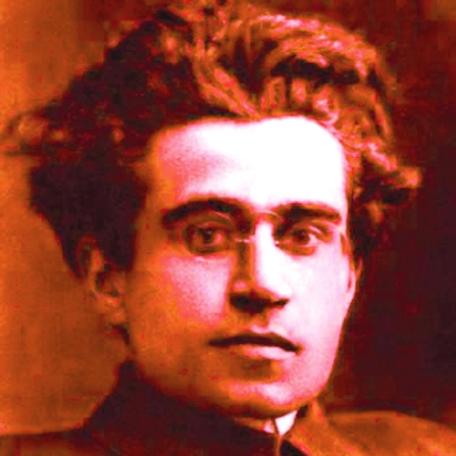
Antonio Gramsci (1891-1937): Gramsci's revolutionary insights into the nature of political authority are dramatically illustrated in the "counter-hegemonic" decision of 220 primary and intermediate school boards of trustees to challenge the "common sense" of the National Government's untested and widely criticised regime of "national standards".

THE MAN was considered so dangerous the Prime Minister had him jailed for 20 years. His crime? Heinous. He’d come up with a new way of explaining things.

The question he’d asked himself was simple. What makes people obey their governments?

On one level, the answer’s straightforward: because if we don’t obey our governments we end up – as he did – in jail.

At a deeper level, however, the answer is much more complex than that. Yes, the state enjoys a monopoly on the legitimate use of physical force. But, if you think about it, an exclusive reliance on force is a very inefficient and ultimately self-defeating way to run a country – just ask the Burmese generals.

A much more efficient way is to persuade people to obey their government voluntarily.

Our man’s great insight was that to secure popular obedience the state requires not only a monopoly on the use of force, but also a monopoly on what the overwhelming majority of the population regard as "common sense".

The man we’re talking about, Italian political theorist, Antonio Gramsci (1891-1937) described this state monopoly on common sense as "hegemonic".

This past week we have witnessed an open challenge to the New Zealand state’s hegemonic control. Two hundred and twenty primary and intermediate school Boards of Trustees (BoTs) have announced their intention to obstruct the Government’s policy of requiring all primary and intermediate schools to implement "national standards" in reading, writing and numeracy.

In what is fast becoming a classic Gramscian confrontation, the 220 BoTs (representing one tenth of the total) are contesting the common sense of the National Government’s policy.

In defence of their position they cite the research of leading educational scholars and point to the superiority of assessment mechanisms already in place. The real experience of teachers and pupils in school classrooms, they say, matches the data of empirical research in contradicting the claims of the Education Minister, Anne Tolley. According to the rebel BoTs, Ms Tolley’s claims are not rational but ideological.

But the Minister is not without ammunition of her own. To the mostly middle-class New Zealanders who support the National Party, requiring the nation’s primary and intermediate schools to focus on ensuring all children are proficient in the "Three Rs" is unquestionably a matter of common sense. To these folk, it is the BoTs and the teaching profession who are behaving "ideologically".

Gramsci would clap his hands in delight. Because the way in which the stand-off between the Government and its opponents is unfolding dramatically illustrates why the concept of "hegemony" embraces not only the struggle between state and citizen, but also the ideological struggle between antagonistic social classes over what exactly constitutes common sense.

The middle class, with its ready access to "cultural capital" (books, computers, overseas travel, family associations with the universities, professions and the arts) enjoys a strong advantage in education systems geared towards competition and ranking.

The working-class, with much less access to cultural capital, relies upon the public education system to make up the experiential deficit between itself and the middle-class. A focus on the process of learning, and on helping each student to master a steadily expanding range of skills, rather than a harshly competitive, pass/fail results-based pedagogy, is thus of much more benefit to working-class families.

That so many BoTs are willing to challenge the National Government’s education policies strongly suggests that it (and its middle-class allies) are losing the hegemonic struggle.

Perhaps the fierce, recession-driven competition for a dwindling number of high-paying jobs (and the social status that goes with them) and the not unrelated exodus of their children to Australia, is persuading more and more middle-class parents that the way New Zealand society is currently configured has very little to do with common sense.

Like Dr Don Brash and his colleagues on the 2025 Task-Force, Ms Tolley appears to be defending a version of common sense that has fewer and fewer adherents. This process of reality overtaking ideology, Gramsci dubbed "counter-hegemonic".

But the steady advance of counter-hegemonic thinking, Gramsci warned, could only end one way: in what he called a "crisis of authority".

Already in the dispute between Ms Tolley and the rebel BoTs we are hearing veiled references to the Ministry of Education’s extensive powers of to "discipline" those schools which refuse to come back into line.

Already, what Gramsci called the "mask of consent" is slipping, and beneath it the metallic gleam of the State’s monopoly on force is clearly visible.

And what happens when the citizens’ new definition of what constitutes common sense is resisted by the iron fist of the State?

Ah well, that is how Gramsci defined revolution. And that is why, at Gramsci’s 1926 trial, Mussolini’s fascist prosecutor told the Court:

"For twenty years we must stop this brain from functioning."

This essay was originally published in The Press of Tuesday, 9 November 2010.

Friday, 31 July 2009

This Week Ten Years Ago: (Private Vices, Public Virtues")

Gliding On: Playwright Roger Hall's characters came to epitomise the solid, decent - but uninspiring - central government bureaucracy. The Right dubbed them the "woolly-pulley brigade" after the sensible woollen pullovers Wellington civil servants wore to protect them against the capital's notorious southerlies.

POOR CHRISTINE RANKIN, reprimanded for displaying a lack of "financial discipline". It must be embarrassing, standing up there on your little WINZ podium, suffering our slings and arrows for the outrageous fortune expended on charter flights to Taupo. But for those of you experiencing a sense of grim satisfaction at the outcome of State Services Commissioner Wintringham’s inquiry, I have some bad news. Neither Ms Rankin, nor her reputation, are going to suffer the slightest long-term damage. Not where it counts. Not in the private sector.

For the past twenty years we have been told that the public service must follow the example set by private enterprise. To speed up the process, civil servants were transformed into objects of derision; figures of fun to be pilloried and laughed at. Sir Robert Jones liked to talk about the "grey shoes wearers". Richard Prebble laughed at the public servant’s fondness for "woolly pulleys". Even Bill Ralston was once moved to describe the Wellington of the early 1980s as a "grey, East European city". But it was the mild-mannered Roger Hall, who – in a caring way – inflicted the deepest wounds, with his hilarious play Glide Time and the Gliding On television series. And it still goes on. Only the other day, the Prime Minister, Mrs Shipley, was moved to remind her Federated Farmers audience of the bad old days when Social Welfare bureaucrats came to work in "walk-shorts and jandals".

It is a measure of what the Italian socialist, Antonio Gramsci, called "capitalist hegemony" that we take all this nonsense about the superior efficiency of the private sector seriously. The private sector is, by its very nature, inefficient. After all, what else is "profit" but the result of deliberately distorted pricing? Virtually any commercial service you care to name could be provided more cheaply if it were not for the private owners’ personal "cut".

Having trouble getting your head around this? Well, that’s the power of genuinely "hegemonic" institutions – in the end their arguments begin to sound a lot like "common sense".

To help you understand what I mean, consider the Mafia. In a recent newspaper article it was reported that thanks to the sterling efforts of the FBI, most of the great Mafioso crime families have been broken. This has led to a dramatic fall in the prices of the goods and services formerly under Mafia control – garbage disposal, the garment trade, building construction, etc. To extract their "profits" the criminal entrepreneurs of the Mafia imposed a sort of "tax" on the businesses they controlled. To pay this "tax" (and continue to make a profit of their own) businesspeople were forced to build it into their overall cost structures. The near elimination of Mafia extortion on the Eastern Seaboard of the United States has made life a lot cheaper for everyone.

That is what profit really is – a private "tax" on consumers. And that is why the New Right hates publicly owned businesses with such passion. Not because they are inefficient and wasteful, but because they have no need to "make a profit". They just can’t bear the fact that properly run public enterprises will always be cheaper and more efficient than their private sector rivals.

What’s more, the key motivation of public enterprise – to provide the best possible service at the lowest possible cost – instils a set of values radically at odds with the selfishness and greed of private sector players. Genuine public "servants" may not wear smart suits, or prattle on about "teamwork", but neither do they expect – or get – six-figure salaries, five star accommodation, and chartered air travel.

It’s private – not public – taxes that pay for those things. (Unless, of course, you’re Christine Rankin!)

This essay was originally published in The Dominion of Friday, 6 August 1999.

Monday, 4 May 2009

None so blind ...

The Wests of Outrageous Fortune - not a class for itself, but a disaggregated collection of individuals out for themselves.

STEVE Cowan has a problem. Somehow, as a revolutionary Marxist, he must preserve the illusion that the New Zealand working class is still a "class for itself". This requires him to depict Kiwi workers as both ideologically conscious: able to distinguish their friends from their enemies; and politically conscious: capable of formulating coherent strategic and tactical responses to the daily ebb and flow of domestic and international events.

He has no choice in the matter - not if he wants to go on insisting that the working class perceives no ideological, strategic or tactical advantages in backing the Labour Party over the National Party. And Steve does insist upon this, as his latest posting on "Against the Current" shows.

I take strong issue with the idea that the New Zealand working-class is any longer a "class for itself" in the classic Marxist sense. My reasoning is straightforward. A class for itself would have maintained an effective set of economic, social and political institutions tasked with both protecting and advancing its interests. These would include a trade union movement to which a clear majority of working people belonged; economic entities such as co-operatives, friendly societies and credit unions in every working-class community; and, most important of all, a political party based in, and aggressively representing the needs and aspirations of, working-class people.

But, on his blog, "Against the Current", Steve is constantly lamenting the fact that none of these institutions exist anymore. He rails against the NZ Council of Trade Unions and the EPMU for their failure to adequately protect and advance the interests of workers. He laments the fact that workers are being forced to pay the price of the latest capitalist crisis. And, again and again, he condemns the Labour Party for being just another cog in the neo-liberal machine.

How can Steve go on insisting that workers remain a class for themselves while constantly posting evidence to the contrary?

I’m buggered if I know.

My argument – fully expounded in my book No Left Turn – is that the New Zealand working-class used to be a "class for itself", but is one no longer. The dramatic economic and social changes of the past 30 years at first disoriented, then fragmented, and finally, almost entirely atomised New Zealand’s working-class communities. As a result, the institutions they created to defend themselves have been hollowed out and/or taken over by other, more powerful, socio-economic groups. The trade unions by white-collar professionals; the co-ops and friendly societies by larger and more competitive capitalist enterprises; and the Labour Party by social-liberal, middle-class careerists.

Steve should not be in the least surprised by these observations. You’d have to be deaf, dumb and blind to think that today’s Labour Party, in particular, bears the slightest resemblance to the political party of Harry Holland, Mickey Savage and Peter Fraser. Or that Helen Kelly, the President of the NZCTU, offers exactly the same kind of trade union leadership as her father, Pat Kelly.

From the perspective of the capitalist class, this 30-year exercise in disorientation, destruction and subordination has been extraordinarily successful, and the gains thereby acquired must be defended constantly. It accomplishes this, for the most part, by maintaining a ruthless cultural hegemony over working-class New Zealand. Crucial to its hegemonic project has been the relentless "dumbing-down" of those prime conveyor-belts of culture – the education system and the media.

For the past 30 years our schools and universities have been simultaneously steeped in neo-liberal orthodoxy and starved of critical pedagogy. The commodification of the educational experience has meant that, more than ever, heterodox thought is regarded as both politically dangerous and personally counter-productive.

The cultural devastation wreaked upon New Zealand’s media is best illustrated by comparing two local television dramas set in the working-class: Moynihan and Outrageous Fortune. The former was centred on the activities of a trade union secretary, played by Ian Mune, and pitted the hero’s moral and professional resources against those of his members, their employers, and the State. Outrageous Fortune features a West Auckland family, the Wests, who rely for their survival not upon the protective institutions of the working class, but upon the criminal ingenuity of the family’s individual members. Moynihan ran from 1976 to 1977. Outrageous Fortune is the most successful locally-produced drama of the early- 2000s. It is hard to imagine a better illustration of what 30 years of neo-liberal hegemony has done to the New Zealand working-class’s perceptions of itself.

Because, the most important thing to note about Outrageous Fortune is that the drama is outrageously popular – not least among the working-class New Zealanders who make up the bulk of its viewing audience. The bizarre mixture of sex, violence, criminality, anti-authority individualism and family solidarity that constitutes the West’s cultural milieu certainly does not noticably jarr with the experiences of the people who tune in to watch. Outrageous Fortune depicts not a "class for itself", but a socially disaggregated collection of individuals out for themselves.

Precisely the sort of working-class New Zealanders who deserted Helen Clark’s Labour Government for John Key’s National Party. In them, the traditions of solidarity and struggle which distinguished the culture of their parents and grandparents run very thin indeed. More obvious are the "aspirational" values of Key – the state-house boy made good. Money, status, power: these are what drive them.

Little that turned out to be any good has ever emerged from such folk. Here is Marx’s description of them - from The Eighteenth Brumaire of Louis Bonaparte:

"Alongside decayed roués with doubtful means of subsistence and of doubtful origin, alongside ruined and adventurous offshoots of the bourgeoisie, were vagabonds, discharged soldiers, discharged jail-birds, escaped galley-slaves, swindlers, mountebanks, lazzaroni, pickpockets, tricksters, gamblers, maquereaux, brothel-keepers, porters, literati, organ-grinders, rag-pickers, knife-grinders, tinkers, beggars, in short the whole indefinite, disintegrated mass thrown hither and thither, which the French term la Bohème".

For all its many and glaring faults, the Labour Party does not yet rely for its electoral success upon the votes of such lumpenproletarians, but upon the support of those whose memories and values remain rooted in the balance of class forces which produced Moynihan – not Outrageous Fortune.

The values of the Wests will never produce a socialist revolution – but they are absolutely critical to the success of fascism.

If Steve Cowan doesn’t know this by now – he damn well should!