Showing posts with label Antonio Gramsci. Show all posts

Thursday, 17 February 2022

Reality and the Left – A Bitter Divorce.

Things Fall Apart: The events of the past ten days offer ample evidence of just how seriously social decay has weakened New Zealand society. A more confident New Zealand Left, recognising the weakness of the system, and its acute vulnerability to those who would enlist the aid of “gangsters, racketeers, swindlers, petty criminals” would have no hesitation in identifying the so-called “Freedom Convoy” as the reactionary, quasi-fascist, enterprise it has always been.

WHERE IS REALITY HIDING amidst all these claims and counter-claims concerning the protest encampment in Parliament Grounds? In an excruciatingly post-modern political moment, reality seems to have gone AWOL, leaving behind only a noisy collection of competing narratives.

To make matters worse, the state itself, supposedly the supreme arbiter of what is and is not politically real, is refusing to do its job. Even though it is his sworn duty, the Commissioner of Police, Andrew Coster, has made it frighteningly clear to the public that he lacks both the will and the means to assert the state’s authority. The New Zealand Defence Force, meanwhile, holds itself aloof from the fray. Jacinda Ardern and Christopher Luxon, powerless to intervene, look on ineffectually. The crisis deepens.

Ask yourself: what does it mean when tow-truck drivers, asked to assist the Commissioner of Police, refuse? At what point during the last decade did citizens begin to tell themselves that they had no obligations to the society in which they live? That nobody had the right to tell them what to do – not even the Police? What business is it of theirs if the people of Wellington, their neighbours, need their help?

It has been reported that at least one towie openly declared his support for the protesters encamped on Parliament Grounds. Entirely understandable. The occupiers don’t accept that their government has the right to require their vaccination against Covid-19. Nor do they believe that they owe their fellow citizens even the slightest co-operation in the fight to limit the harm of the virus. That tow-truck driver recognised kindred spirits when he saw them. Andrew Coster and Wellingtonians could go fuck themselves.

Not all the towies were so bloody minded. According to media reports, some of them were just plain scared. They claimed to have been threatened with dire retribution if they allowed their trucks to be used by the Police. Considering those trucks carried the names and phone numbers of their owners, it’s not difficult to understand the impact of such threats. Were someone to burn down a towing company’s premises, torch its trucks, that would be multiple livelihoods lost and a business ruined. Who wouldn’t think twice?

Such tactics are, however, remarkably effective. I remember reading about Jimmy Hoffa and the Teamsters’ bitter battles with the trucking companies. The bosses could rely on local politicians, local judges, local editors and local cops to defend them against Hoffa’s strikers. The union was on a hiding-to-nothing, until Hoffa reached out to the Mafia. It only took a few dozen torched trucks for the bosses to get the message. The Teamsters won their improved contract. But the spoon Hoffa took to his dinner with the Devil wasn’t quite long enough. His beloved Teamsters’ Union now belonged to the Mob.

Now, you might think that people on the left of New Zealand politics would recognise the danger of holding up the occupation of Parliament Grounds as a praiseworthy assertion of working-class power. As if poverty and marginalisation, frustration and anger, ignorance and credulity are always and everywhere evidence of moral force and progressive intent.

Karl Marx himself recognised the acute political danger inherent in what he called the Lumpenproletariat. According to the Encyclopedia of Marxism, this social formation is composed of the “outcast, degenerated and submerged elements” of industrial society:

It includes beggars, prostitutes, gangsters, racketeers, swindlers, petty criminals, tramps, chronic unemployed or unemployables, persons who have been cast out by industry, and all sorts of declassed, degraded or degenerated elements. In times of prolonged crisis (depression), innumerable young people also, who cannot find an opportunity to enter into the social organism as producers, are pushed into this limbo of the outcast. Here demagogues and fascists of various stripes find some area of their mass base in time of struggle and social breakdown, when the ranks of the Lumpenproletariat are enormously swelled by ruined and declassed elements from all layers of a society in decay.

That our society is in decay can hardly be doubted. The events of the past ten days offer ample evidence of just how seriously that decay has weakened New Zealand society. A viable Left, recognising the weakness of the system, and its acute vulnerability to those who would enlist the aid of “gangsters, racketeers, swindlers, petty criminals” would have no hesitation in identifying the so-called “Freedom Convoy” as the reactionary, quasi-fascist, enterprise it has always been.

Alas, New Zealand no longer possesses a viable Left. Identity politics has schooled a whole generation to accept the self-definitions of “oppressed groups” at their face value. Drilling down into the actual character of such groups, and scrutinising their relationship to the ruling class, is not encouraged. Even among those leftists who still acknowledge the primacy of class politics there is a pronounced unwillingness to subject movements like the Freedom Convoy to any kind of rigorous class analysis.

For these leftists, it is enough that the occupiers of Parliament Grounds are, or were, members of the working-class. So desperate are these “revolutionaries” for the slightest hint of revolutionary consciousness that they are willing to overlook the absence of anything remotely resembling a concrete programme for the social and economic emancipation of the working class. The only programme in evidence among the occupiers is the one demanding the instant cessation of all measures aimed at minimising the hurt and suffering of Covid-19.

How self-proclaimed “socialists” could possibly mistake such a noxious potpourri of anti-social attitudes for anything remotely progressive is a mystery. Perhaps it is no more than the curious allure of the demi-monde, coupled with the magnetic eccentricities of the Bohemian temperament, that has led these desperate socialists to mistake reactionaries for revolutionaries. Clearly they have forgotten that Adolf Hitler himself was a Lumpenproletarian. A more “declassed, degraded and degenerated” specimen History has yet to supply!

It was the Italian socialist, Antonio Gramsci (1891-1937) who understood most completely the extraordinary fluidity of reality in periods of acute social stress and political disintegration. Moments in history when the hegemonic explanations of the ruling-class have lost, or are beginning to lose, their power to allay the fears and misgivings of subordinate classes. In such times – and we are living through them now – people are desperate for new and more persuasive narratives about the nature of reality.

Not all of those narratives are addressed to the best that is in human nature. Sorting out the lies of charlatans and demagogues from genuine revolutionary truths isn’t always easy – especially in this age of social-media algorithms. Leftists are often surprised to learn that Mussolini was a socialist before he became a fascist.

Gramsci put it best when he wrote: “The crisis consists precisely in the fact that the old is dying and the new cannot be born; in this interregnum a great variety of morbid symptoms appear.”

Or, more succinctly: “Now is the time of monsters.”


This essay was originally posted on The Daily Blog of Thursday, 17 February 2022.

Friday, 23 July 2021

Morbid Symptoms: Why Are Māori Vaccination Rates Plummeting?

Not Enough Shots In The Arm: The percentage of 8-month-old Māori babies in Counties Manukau receiving their primary course of immunisation on time has fallen from 85 percent in May 2020 to 68 percent in May 2021. A report prepared for the Counties Manukau DHB attributes this startling drop-off to: “Cultural microaggressions, white privilege, stereotyping and prejudice.” This is not, however, the only explanation.

MĀORI VACCINATION RATES are plummeting. The percentage of 8-month-old Māori babies in Counties Manukau receiving their primary course of immunisation on time has fallen from 85 percent in May 2020 to 68 percent in May 2021. The data for Pasifika also shows a fall-off in timely immunisation. From 93 percent of babies receiving their primary course on time in October 2020, to 82 percent in May 2021. Those New Zealanders who do not fall into the Māori, Pasifika or Asian categories – presumably the Pakeha population – also registered a slight fall-off. From around 92 percent in 2020 to just under 90 percent in 2021. Only Asian New Zealanders immunised their children in numbers above the 95 percent target rate. Fully 98 percent of their 8-month-olds are receiving their jab on time.

These statistics are grim. Clearly, something important has happened over the course of the past 18 months to discourage Māori parents from immunising their children on time. The most obvious suspect is, of course, the Covid-19 Pandemic. Its disruptive effects tend to be concentrated among the poorest sections of any given population: African-Americans in the USA; peasants and slum-dwellers in India. After the elderly and the chronically-ill, it is the poorly-paid, the poorly-housed and the poorly-educated members of society that Covid-19 strikes down.

An evaluation of the immunisation services provided to the Counties Manukau DHB does not, however, blame Covid-19 for the sudden drop-off in the Māori vaccination rate. The failure to maintain the pre-Covid percentage is, instead, attributed to: “Cultural microaggressions, white privilege, stereotyping and prejudice.” The authors of this evaluation identified “a failing and culturally incompetent system” as the culprit. “Whānau were in a constant state of stress forced to engage in a system that is inherently racist. Implicit and explicit biases, as forms of racism, were present in both whānau and staff interviews.”

The NZ Herald (whose investigative efforts are responsible for bringing the report of the Counties Manukau DHB’s innovation and improvement centre, “Ko Awatea”, to the public’s attention) suggests that its authors are firmly of the view that the racism identified can only be remedied by setting up a framework for radical cultural change within the institution:

“This should aim to decolonise dominant discourse and biases … Understanding of the journey from historical trauma to the manifestation of Māori health status today is integral for staff to increase cultural competency and responsiveness.”

One can only assume that, in this instance, the “dominant discourse and biases” in need of decolonisation is medical science itself. The obvious implication being that the whole notion of “medical science” is a white supremacist construct which arrogantly denies the possibility of any other rational system for understanding and managing the health of human beings.

The scientific method does not, however, acknowledge a place for this kind of relativistic thinking. Quite correctly, scientists warn that if we say that vaccination is just one way among many of successfully controlling potentially fatal communicable diseases, then we are effectively giving anti-vaxxers carte blanche to spread their dangerous lies far and wide. Indeed, one could argue that it would be a particularly pernicious form of racism that pretended to acknowledge the efficacy of indigenous medicines while quietly ensuring that those who placed their trust in “White Medicine” enjoyed measurably better health outcomes than those who were encouraged to believe otherwise.

One might further speculate that the attribution of all Māori misfortunes to the effects of ‘colonisation’, up to and including the transmission of colonial-era trauma (presumably genetically) through successive generations of the colonised, is almost certain to foster a deep-seated mistrust of the colonialists’ descendants. That being the case, there is scant reason for any Māori accepting this explanation to trust a single word the Pakeha Plunket nurses/vaccinators, contracted by the Counties Manukau DHB to lift the level of Māori immunisation, might say.

If so, then the consequences can only have been made more serious by the contemporaneous global upsurge in anti-racist activism driven by the Black Lives Matter movement following the murder of George Floyd by a White American police officer in May 2020. These protests intensified dramatically the conviction (among Whites as well as Blacks) that the evils of White Supremacy were both universal and irreversible. The Day of Jubilee would only come when People of Colour took their futures into their own hands. As that unfolds, they advised, the best thing Whites can do is shut up and get out of their way.

Though essentially unrelated to the anti-racist upsurge, the rapid spread of outlandish conspiracy theories which accompanied the intensification of the global Covid-19 Pandemic contributed hugely to a growing loss of faith in all forms of authority. Not only scientists were challenged, but so, too, were mainstream politicians and journalists. Social-media-generated conspiracies filled the vacuum which this widespread rejection of “the system” had created – especially among those who felt excluded from the good life so many others seemed to enjoy.

Overlay these deep-seated feelings of social inferiority and rejection with ethnicity, and you have the makings of a perfect storm.

That the very health-sector groups most likely to benefit from the Labour Government’s radical plans to restructure the New Zealand health service, might seize upon this opportunity to offer up yet more evidence of the urgent need to create a health service run by Māori, for Māori, within an aggressively decolonised co-governance structure, is hardly surprising.

Most of all, it was important for the decolonisers to keep at bay the most obvious socio-economic explanations for the sudden drop-off in Māori vaccinations. Any notion that the failure to vaccinate their kids on time might have less to do with the fact that they were brown, and a lot more to do with the fact that they were poor, had to be excluded from the explanatory framework.

Certainly, the contribution of Dr Nikki Turner, director of the Immunisation Advisory Centre, would not have been welcomed by the ‘It’s All the Fault of Colonisation’ brigade. In this respect, the final paragraph of Nicholas Jones’ Herald article is the clincher:

“There were many factors behind the drop off, Turner said, including badly stretched health services, the need for more cultural sensitivity, and increasing poverty and stress on families, who move more because of the housing crisis.”

Tragically, the interests tied up in the transformation of the New Zealand health system have little incentive to alienate the economic elites with whom they are, for the moment, collaborating. Māori-Pakeha co-governance may be possible under Capitalism, but the elimination of social and economic injustice is not. The system change we need is not the one foreshadowed in He Puapua.

It was the Italian socialist, Antonio Gramsci, who said it best:

“The crisis consists precisely in the fact that the old is dying and the new cannot be born; in this interregnum a great variety of morbid symptoms appear.”

Like plummeting Maori vaccination rates.


This essay was originally posted on The Daily Blog of Tuesday, 20 July 2021.

Friday, 8 November 2019

Too Late To Change Capitalism’s Flightpath?

Collision Course? In conditions of ideological white-out, the international bankers’ “Woop-Woop! Pull Up!” warning may have come too late to save global capitalism.

WHAT DOES IT MEAN when international bankers are more willing to embrace radical solutions than our politicians and their electors? At both the International Monetary Fund and the World Bank, Keynesianism is back in fashion. The economic doctrine which underpinned the thirty golden years of rising prosperity and declining inequality between 1950 and 1980 has risen from the grave – much to the horror of its erstwhile undertaker, Monetarism.

The monetarists and their guru, Milton Friedman, insisted that the problem of inflation was always and everywhere a monetary problem. Deficits, they insisted, were evil. Expanding the money supply to kick-start the economy would only produce a further inflationary surge. Moreover, increased government spending, by crowding out the private sector, was inimical to capitalist profit. The inevitable upshot of John Maynard Keynes’ pernicious doctrines, Friedman’s followers predicted, would be an economy forever engaged in chasing its own tail.

Unfortunately for the monetarists, the experience of the past ten years has left their theory in tatters. Since the Global Financial Crisis of 2008-09, the global money supply has undergone an unprecedented expansion. In theory, innovations such as Quantitative Easing and negative interest rates should have generated runaway inflation. In reality, prices have stubbornly refused to spike. Monetarism has been weighed in the balance and found wanting. For the monetarists, the writing should be on the wall.

But it isn’t. At least, not on the walls that matter at Treasury and in the caucus-rooms of our parliamentary parties. In those places monetarism continues to be treated as Holy Writ. Regardless of whether the call for a major, state-led, fiscal stimulus comes from the IMF or New Zealand’s own Reserve Bank Governor, our political class remains unmoved. Deficits are for getting down. Surpluses are for building up. The Government must take great care not to crowd out the private sector by intervening too actively in the economy.

Never mind that it was massive state spending (necessitated by a succession of destructive earthquakes) that pulled New Zealand through the Great Recession with so little in the way of serious economic and social damage; the political class remains unconvinced. In their minds, the superiority of the free market as an allocator of scarce resources is indisputable. Large-scale state intervention is absolutely the wrong way to go.

Nor is it the political class, alone, which responds to social and economic need in this way. Four years ago, a senior lecturer at AUT, Peter Skilling, published an article in which he revealed the extraordinary tenacity of the idea that the “market” is best left to decide who gets what in our society.

In the focus groups he’d convened to study people’s attitudes towards inequality he found that:

“In keeping with survey results, most focus group participants – when asked individually – expressed a preference for a more equal distribution of incomes (better wages for the low-paid; restraint in executive compensation). In the subsequent group discussion, however, these preferences were marginalised by the view that, while a more equal distribution might sound nice, it was likely not feasible given the ‘realities of the market’.”

Even more interestingly, Skilling discovered that: “while this ‘market reality’ trope was typically advanced by only one person in each group, it seemed able to over-ride a majority preference for greater equality.”

Seldom has the Italian communist, Antonio Gramsci’s concept of “hegemony” – formulated in the 1920s – been vindicated so convincingly. Except in extremis, Gramsci argued, ruling classes maintain their position not by physical force, but by the force of ideas which the overwhelming majority of citizens have been persuaded to accept as “common sense”.

This is the extraordinary irony of the present situation. Forty years ago, the ruling classes of Western capitalist societies convinced their citizens that the Keynesianism which had so improved their lives was a flawed and deficient economic doctrine which needed to be abandoned in favour of a new doctrine that elevated and privileged the role of “market forces”. Forty years later, with a substantial portion of those same ruling elites now convinced that monetarism has failed, and that Keynesianism is, indeed, the doctrine which offers the best hope of economic, social and political stability, the political class – and we, the people – remain firmly wedded to our “common sense”.

In conditions of ideological white-out, the bankers’ “Woop-Woop! Pull Up!” warning may have come too late.

This essay was originally published in The Otago Daily Times and The Greymouth Star of Friday, 8 November 2019.

Thursday, 13 November 2014

Morbid Symptoms: Can Labour Be Born Anew?

What Have I Done? Perhaps the saddest aspect of the entire 2014 Leadership Contest is not the deposition of the members’ choice for leader, but of David Cunliffe’s signal failure to meet the expectations he himself had done so much to raise.

THE CHAIRS in the final meeting venue have been stacked away. All that expensive signage, commissioned for the benefit of the television cameras, no longer has a purpose. For the second time in just 14 months, Labour’s Leadership Contest is all over bar the voting.
 
The contrast between the road-show just concluded and what was, effectively, the David Cunliffe Coronation Tour of 2013 could hardly be starker. Then, it was the rank-and-files’ and the affiliates’ moment to deliver a very emphatic one-fingered message to a caucus it had grown to despise – and they delivered it with both hands. This time, it’s been the Labour Caucus’s Victory Tour.
 
In both 2012 and 2013, Labour’s MPs had warned the party’s members and affiliates that Cunliffe was unacceptable – but they refused to listen. Now they know what happens when a leader lacks the fulsome support of his caucus colleagues. No one’s saying it out loud, but the most important single feature of this year’s leadership contest is David Cunliffe’s absence. No matter which of the four grey eminences emerges from the complicated processes of preferential voting as Labour’s new leader – Caucus has won.
 
Had Cunliffe’s name been on the ballot paper, he would, almost certainly, have triumphed again. I don’t think it’s stretching the truth to say that among Labour’s staunchest supporters – Maori and Pasifika – the Member for New Lynn is loved. When informed that their champion had withdrawn from the race, a hall packed with Maori and Pasifika trade union delegates audibly groaned and tears flowed. Only when told that Nanaia Mahuta had entered the fray did their spirits noisily recover.
 
But, no matter how strong the loyalty shown to Cunliffe by the true believers who give Labour two ticks, it was made abundantly clear to the party membership just how ugly things would get if he insisted, once again, on soliciting their support.
 
The embittered David Shearer may have led the charge, but every political journalist in the country knew that his acidic tongue was just the poisoned point of a much larger spear. Shearer’s mission was to demonstrate to the rank-and-file and affiliates that the longer Cunliffe persisted in his fantasy of continuing to lead the party the worse things would get. They had to know that Caucus was perfectly willing to destroy the Labour Party in order to save it.
 
Rather than unleash a no-holds-barred civil war at every level of his Party; one from which it would likely not recover; Cunliffe bowed to the inevitable and withdrew from the contest.
 
From that point on, the outcome of the 2014 Leadership Contest ceased to matter very much.
 
The four candidates are all committed to a slow, bureaucratically-driven process of ideologically insipid rebuilding and repair. The party membership should certainly not put any stock in the candidates’ rhetorical commitment to respect the achievements of the 2011-2013 democratisation process. Given the exemplary fate of the man the members chose to be their leader, it is already abundantly clear just how far Democracy’s writ now runs in the Labour Party. The candidates’ solemn promises to respect members’ decisions lack any purchase in political reality.
 
Perhaps the saddest aspect of the entire 2014 Leadership Contest is not the deposition of the members’ choice for leader, but of David Cunliffe’s signal failure to meet the expectations he himself had done so much to raise. When the moment came to take control of New Zealand’s oldest political party and make it fit for purpose in the Twenty-First century, the man who’d painted himself in the brightest colours of rejuvenation and renewal, proved to be as clueless as the proverbial dog who caught the car.
 
Cunliffe, alone among his colleagues, had possessed the necessary combination of wit and ambition to understand that Neoliberalism has, in the aftermath of the Global Financial Crisis become a zombie ideology. What he did not possess, however, was the temperament (or, as Herald columnist, Fran O’Sullivan, might put it, the cojones) to usher either his party – or the wider electorate – to the logical conclusions of his own analysis. Truth to tell, when it came right down to it, Cunliffe just wasn’t up to describing, even to himself, exactly what a post-Neoliberal New Zealand would look like.
 
In this respect, the Herald’s series of photographs showing Cunliffe, abandoned and alone, sketching aimlessly in the sand on the beach below his Herne Bay home, provided a sad but fitting symbol for the whole historical dilemma currently immobilising contemporary social-democracy.
 
In the early-1930s, the Italian socialist, Antonio Gramsci, observed, in his Prison Notebooks, that: “The crisis consists precisely in the fact that the old is dying and the new cannot be born; in this interregnum a great variety of morbid symptoms appear.”
 
In November 2014, these “morbid symptoms” even have names.
 
·        Grant Robertson: the consummate insider, who seems, at times, to have forgotten what the outside looks like.
 
·        David Parker: the frustrated entrepreneur, who shows every sign of wanting to substitute New Zealand’s whole fragile economy for the little businesses he very nearly went broke setting-up in Dunedin.
 
·        Nanaia Mahuta: the Maori princess, who has made a much better than expected fist of proving to her Pakeha colleagues that it’s whakapapa that counts.
 
·        Andrew Little: (Cunliffe’s choice) who rescued the Engineers Union from civil war and might, just, be able to repeat the miracle for Labour.
 
Which of these “symptoms” is more likely to contribute to the demise, or recovery, of the Labour Party is now the historic duty of its membership to determine. For the country’s sake, as well as their own, we must hope they make the right choice.
 
This essay was posted simultaneously on The Daily Blog and Bowalley Road blogsites on Thursday, 13 November 2014.

Wednesday, 10 November 2010

Redefining "Common Sense"

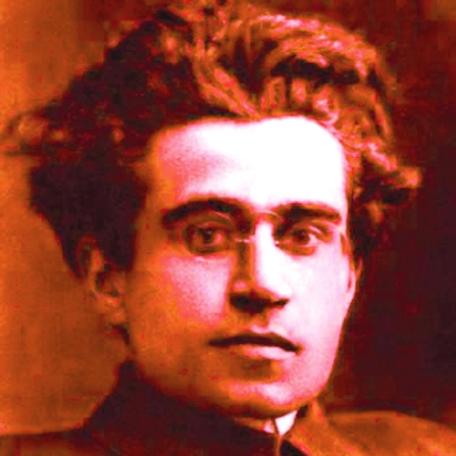
Antonio Gramsci (1891-1937): Gramsci's revolutionary insights into the nature of political authority are dramatically illustrated in the "counter-hegemonic" decision of 220 primary and intermediate school boards of trustees to challenge the "common sense" of the National Government's untested and widely criticised regime of "national standards".

THE MAN was considered so dangerous the Prime Minister had him jailed for 20 years. His crime? Heinous. He’d come up with a new way of explaining things.

The question he’d asked himself was simple. What makes people obey their governments?

On one level, the answer’s straightforward: because if we don’t obey our governments we end up – as he did – in jail.

At a deeper level, however, the answer is much more complex than that. Yes, the state enjoys a monopoly on the legitimate use of physical force. But, if you think about it, an exclusive reliance on force is a very inefficient and ultimately self-defeating way to run a country – just ask the Burmese generals.

A much more efficient way is to persuade people to obey their government voluntarily.

Our man’s great insight was that to secure popular obedience the state requires not only a monopoly on the use of force, but also a monopoly on what the overwhelming majority of the population regard as "common sense".

The man we’re talking about, Italian political theorist, Antonio Gramsci (1891-1937) described this state monopoly on common sense as "hegemonic".

This past week we have witnessed an open challenge to the New Zealand state’s hegemonic control. Two hundred and twenty primary and intermediate school Boards of Trustees (BoTs) have announced their intention to obstruct the Government’s policy of requiring all primary and intermediate schools to implement "national standards" in reading, writing and numeracy.

In what is fast becoming a classic Gramscian confrontation, the 220 BoTs (representing one tenth of the total) are contesting the common sense of the National Government’s policy.

In defence of their position they cite the research of leading educational scholars and point to the superiority of assessment mechanisms already in place. The real experience of teachers and pupils in school classrooms, they say, matches the data of empirical research in contradicting the claims of the Education Minister, Anne Tolley. According to the rebel BoTs, Ms Tolley’s claims are not rational but ideological.

But the Minister is not without ammunition of her own. To the mostly middle-class New Zealanders who support the National Party, requiring the nation’s primary and intermediate schools to focus on ensuring all children are proficient in the "Three Rs" is unquestionably a matter of common sense. To these folk, it is the BoTs and the teaching profession who are behaving "ideologically".

Gramsci would clap his hands in delight. Because the way in which the stand-off between the Government and its opponents is unfolding dramatically illustrates why the concept of "hegemony" embraces not only the struggle between state and citizen, but also the ideological struggle between antagonistic social classes over what exactly constitutes common sense.

The middle class, with its ready access to "cultural capital" (books, computers, overseas travel, family associations with the universities, professions and the arts) enjoys a strong advantage in education systems geared towards competition and ranking.

The working-class, with much less access to cultural capital, relies upon the public education system to make up the experiential deficit between itself and the middle-class. A focus on the process of learning, and on helping each student to master a steadily expanding range of skills, rather than a harshly competitive, pass/fail results-based pedagogy, is thus of much more benefit to working-class families.

That so many BoTs are willing to challenge the National Government’s education policies strongly suggests that it (and its middle-class allies) are losing the hegemonic struggle.

Perhaps the fierce, recession-driven competition for a dwindling number of high-paying jobs (and the social status that goes with them) and the not unrelated exodus of their children to Australia, is persuading more and more middle-class parents that the way New Zealand society is currently configured has very little to do with common sense.

Like Dr Don Brash and his colleagues on the 2025 Task-Force, Ms Tolley appears to be defending a version of common sense that has fewer and fewer adherents. This process of reality overtaking ideology, Gramsci dubbed "counter-hegemonic".

But the steady advance of counter-hegemonic thinking, Gramsci warned, could only end one way: in what he called a "crisis of authority".

Already in the dispute between Ms Tolley and the rebel BoTs we are hearing veiled references to the Ministry of Education’s extensive powers of to "discipline" those schools which refuse to come back into line.

Already, what Gramsci called the "mask of consent" is slipping, and beneath it the metallic gleam of the State’s monopoly on force is clearly visible.

And what happens when the citizens’ new definition of what constitutes common sense is resisted by the iron fist of the State?

Ah well, that is how Gramsci defined revolution. And that is why, at Gramsci’s 1926 trial, Mussolini’s fascist prosecutor told the Court:

"For twenty years we must stop this brain from functioning."

This essay was originally published in The Press of Tuesday, 9 November 2010.