
Showing posts with label John Banks. Show all posts

Friday, 10 August 2012

Theatre Of The Absurd

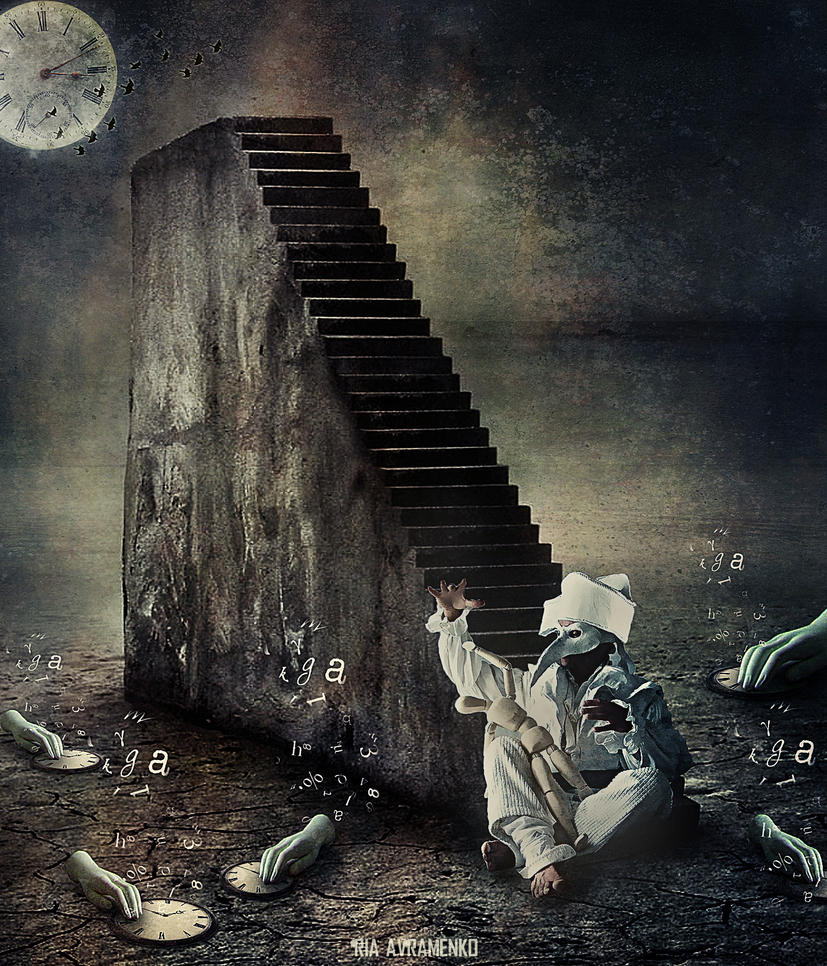
Whose Hands? It's not what's happening out on the political stage that we should worry about, but who is directing this theatre of the absurd from behind the scenes.

“THE WORLD”, said Benjamin Disraeli, “is governed by very different personages from what is imagined by those who are not behind the scenes.” Just as well. Because the poor players currently strutting and fretting their hour upon New Zealand’s political stage clearly learned their craft in the Theatre of the Absurd. Incoherent and disconnected posturing may now be de rigueur, but even the most sophisticated audience grows weary of a play without a plot.

If the players and the play are mere distractions, however, and Mr Disraeli’s unseen personages, operating behind the scenes, do truly govern the world; then this theatrical, National-led government’s failure to develop either plot or character is of no real consequence.

In fact, to discover that there is nothing remotely resembling logic underpinning the Government’s public statements comes as a huge relief. Some of us were developing the most acute headaches trying to reconcile Education Minister, Hekia Parata’s, unwavering commitment to placing teachers of the highest possible quality, possessing all relevant qualifications, in every one of the nation’s public classrooms, with her Associate Education Minister, John Banks’, advocacy of privately run “Partnership Schools” staffed by unregistered teachers lacking even the rudiments of professional training. Now that we know the Government’s education policy is supposed to be absurd, incoherent and posturing, the pain grows less.

Behind the scenes, of course, the personages who really call the shots are gearing up for the incremental privatisation of New Zealand’s education system. Their logic is impeccable. First: Make it easy for middle class people, with money, to identify the public schools that are failing, so they can send their children somewhere else. Second: Set up “Partnership Schools” next to these failing schools and fill them up with the best and brightest children from the surrounding neighbourhoods. Third: Expand the network of “Independent” schools to take advantage of middle-class parents’ headlong flight from what they now regard as a fatally compromised public system.

Not only do the Personages get to clip the ticket all the way down the line, from the humblest early-childhood education centre to the flashest secondary school, but they also achieve their much larger purpose. The egalitarian and meritocratic public education system, built up over more than a century by the parties of the Left, can now be replaced with the sort of privately run, socially exclusive and unashamedly elitist system New Zealand’s deeply unequal society so obviously craves.

National Standards, League Tables, Partnership Schools, Public-Private Partnerships. It seemed to be nothing more than the politicians’ sound and fury. Now it all makes perfect sense.

The Afghanistan War’s sound and fury burst on to the stage last weekend in the most tragic fashion. And, once again, there was no sense to be made of the on-stage dialogue. The absurdity of the politicians was only matched by the opacity of the Army’s top brass.

In each of the nearly ten years New Zealand troops have been stationed in Afghanistan we have been told that their only purpose was to help the Afghan people to help themselves. In Bamiyan Province that involved Kiwis helping the local tribesmen to build schools and medical clinics. Our Provincial Reconstruction Team was lucky in its mission, we were told, because Bamiyan was one of the safest places in that unhappy country.

Why then are our soldiers dying? If, by our presence, we were supposed to make the country safer, why has it become more dangerous?

Now that our troops have become targets for Taliban forces supposedly reeling before the American “surge”. Now our “reconstruction team” is expected to confront an enemy capable of fighting highly-trained Kiwi infantry to a standstill. What purpose is served by remaining?

The Prime Minister and his Minister of Defence speak confidently about “restoring stability” to a country that grows more unstable by the day. But, like that other tragic military theatre of the absurd, the Western Front, no politician’s answer makes the slightest sense. Back then, the Diggers sang: “We’re here because we’re here, because we’re here, because we’re here.” The explanation for New Zealand’s presence in Afghanistan seems to boil down to: “We’re there because we’re there, because we’re there, because we’re there.”

“Oh, and to keep our American and Australian friends happy”, add Mr Disraeli’s  “very different personages’, in a loud stage whisper, from behind the scenes.

This essay was originally published in The Waikato Times, The Taranaki Daily News, The Timaru Herald, The Otago Daily Times and The Greymouth Star of Friday, 10 August 2012.

Friday, 18 November 2011

Two's Company ...

Crowded Out: Act's leader, Dr Don Brash, who might have been expected to be included in this very public tea party, was actually one of the main topics of John Key's and John Banks' now notorious conversation - and not in a good way.

THE AMERICAN HUMOURIST, Mark Twain, once described a conspiracy as “nothing but a secret agreement of a number of men for the pursuance of policies which they dare not admit in public.” Generally speaking, voters are wary of politicians who agree privately to do things they’re too scared to announce publicly. What am I saying? “Wary” simply doesn’t do the voters’ feelings justice. “Mistrustful” would be a better word; “Suspicious” better still. Which is why, if the Prime Minister, John Key, hasn’t allowed the news media to reveal the contents of the notorious “teapot tape” by the time this column is printed, then he’s a damn fool.

But, even assuming he has relented, and everyone now knows exactly what transpired in Newmarket’s Café Urban  between the Prime Minister and Act’s Epsom candidate, John Banks, chances are the true victim of these wily politicians’ tête-à-tête is only slowly grasping his role in the larger conspiracy animating the National-Act tea-party.

Several months ago, at an undisclosed location (but you can be fairly sure it wasn’t Newmarket’s Café Urban ) a number of men and women came together to plot the overthrow of Rodney Hide. At the centre of the plot was the former Reserve Bank Governor and National Party leader, Dr Don Brash, who was convinced that when it came to keeping the National-led Government on the straight-and-narrow neoliberal path he was the only man for the job.

Dr Brash, you’ll recall, had been commissioned by the Prime Minister to lead a taskforce dedicated to closing the wages-gap with Australia. The good doctor’s hard-line neoliberal prescription for lifting New Zealand’s productivity did not, however, impress the Prime Minister, who more-or-less dismissed Dr Brash’s recommendations out-of-hand. Not surprisingly, Dr Brash felt slighted.

His mood was not improved when Rodney Hide’s perk buster reputation was forced to die for love, and David Garrett’s youthful enthusiasm for Frederick-Forsyth-inspired cloak-and-daggering transformed Act from what Dr Brash had fondly hoped would be an invaluable ideological thorn in the Government’s side, to an embarrassing whoopee-cushion under the Neoliberal Establishment’s bottom.

“Hell, I could do better than that!”, mused the Good Doctor, and then proceeded to prove himself wrong.

Dr Brash’s fatal error was to invite Auckland’s former Mayor and National’s former Police Minister, John Banks, to step into the soon-to-be-deposed Rodney Hide’s shoes as Act’s Epsom candidate. Now, the hapless Dr Brash claims to have known Mr Banks for years and years and years, yet in all that time he’s somehow missed the rather important fact that his bosom friend and business partner is an outrageous right-wing populist in the mould of Sir Robert Muldoon. Just how outrageous Dr Brash would soon discover when he mused in public about decriminalising marijuana.

Only then, I suspect, did Dr Brash become vaguely aware of the trap into which his eagerness to rehabilitate Act had led him. Far from becoming a rallying beacon for the neoliberal cognoscenti of the libertarian Right, Act was just an election-day away from reverting to what it had been under the unsentimental leadership of Richard Prebble: a repository for every red-necked, right-wing crackpot who ever ran a small business or operated a dairy farm on what had once been Maori land.

The meeting in the Café Urban: that much bally-hooed “cup of tea” featuring the Prime Minister and John Banks; it would, of course, send a message to “the good people of Epsom” about the desirability of giving “that nice Mr Key’s” government a reliable coalition partner; but that wouldn’t be the only message it sent. To those who knew how to read the tea-leaves in the bottom of the two Johns’ teacups, it also signalled that the electoral alliance being forged was not between conservatives and neoliberals, it was between the centre-right and the far-right. Between the genial and urbane Mr Key and the aggressive and provincial Mr Banks.

Why wasn’t Dr Brash invited to that much-hyped photo-op? Because as soon as the votes of “the good people of Epsom” have been counted, the members of Act’s Board will be holding an election of their own. And when those votes have been counted, Dr Brash will almost certainly find himself joining Mr Hide and Mr Prebble in the Ex-Leaders of Act Club.

Yep, the two Johns have played Dr Brash – and the country – like a guitar.

This essay was originally published in The Otago Daily Times, The Waikato Times, The Taranaki Daily News, The Timaru Herald and The Greymouth Star of Friday, 18 November 2011.

Friday, 18 June 2010

Brown & Dirty

Not waving, but drowning? With John Banks lagging well behind Len Brown, the Left’s candidate for the Auckland Super-City mayoralty (above), the Auckland Right has only one viable strategy for victory: Get Len Brown! Go negative!

THE AUCKLAND ‘SUPER-CITY’ is a prize worth fighting for. It is also, as the strategic exposure of Mayoral front-runner, Len Brown’s, personal spending problems confirms, a prize worth fighting dirty for. The next five months will reveal exactly how dirty.

It wasn’t supposed to be like this.

The story of Auckland’s unification was supposed to end with the triumphant coronation of the region’s commercial, administrative and political elites. The people who knew what needed to be done, and the people who knew how to do it, were about to take their rightful places around the Super-City’s council table.

The age of puffed-up mayoral popinjays, ponderous city councillors, and tiresome community-board busybodies was over. Replacing the cacophony of competing municipal voices would be the soft susurrus of murmured expertise and the quiet assurance of accumulated wealth. Finally, power would be the hands of those who merited it.

Auckland would be ruled by a twenty-strong board of directors – one for every 71,000 residents. The board chairman – still rather quaintly referred to as The Mayor – would preside over the board’s deliberations and be the city’s principal spokesperson. The role of the Board itself would be limited to receiving and approving the reports of seven "Council Controlled Organisations" (CCOs).

To all intents and purposes these CCOs would operate as independent, stand-alone businesses dedicated to the efficient provision of core municipal services. They would be governed by experienced business leaders who, having gone through the motions of public "consultation" and endured whatever slings and arrows the news media contrived to cast in their direction, would be free to make operational decisions in an environment that was, essentially, "democracy-proof".

The fiction that the new ‘Supercity’ offered its residents genuine "local representation" would be maintained by a score of powerless "Local Boards" whose unenviable duty would be to convey the demands of the hapless citizenry to the all-powerful and constitutionally imperturbable Council, which, like all good boards of directors, would respond to the cavilling of its small shareholders with a judicious mixture of condescension and contempt.

The venerable promise of "More Business in Government, less Government in Business" would, at last, be fulfilled.

That was the Plan.

But, from the very start, things started going wrong.

The natural enemies of the Plan, the Left, were supposed to have been neutralised – they weren’t.

Because it was the Labour Government of Helen Clark which had set up the Royal Commission on Auckland Governance it was simply assumed that the standard neoliberal prescription presented by its carefully selected members would be endorsed without demur by the Labour Opposition. And yet, somehow, and without actually repudiating the Royal Commission’s fundamental principles, Phil Goff’s Labour Party managed to position itself as the defender of local democracy against the ruthless "Gauleiter of Auckland" – Local Government Minister, Rodney Hide.

That was unfortunate, but even more unsettling was the fact that the Left – against all expectations and precedent – threw its weight behind a single candidate. The Citizens & Ratepayers (C&R) group were confident that at least two, and possibly as many as three, left-wing candidates would emerge to contest the mayoralty and split the progressive vote.

The best qualified was Mike Lee, Chair of the Auckland Regional Council. Lee was the darling of the old Alliance Left, and for that reason alone was bound to be challenged by the Manukau Mayor – and Labour Party flagbearer – Len Brown. There was even a chance that the former Green MP, Sue Bradford, might throw her hat into the ring.

With the Left’s votes going all over the place, the C&R choice, Auckland Mayor John Banks, would romp home.

Only slowly did it dawn on C&R that the Left had more-or-less amicably decided upon Brown as its candidate and that Lee had no intention of breaking ranks. Bradford, unloved and unwanted by the Greens, backed away too. For the first time in a long time the Auckland Left was demonstrating some old-fashioned political discipline.

It was rewarded with a string of poll results that showed just how well this unified approach was being received. Backed by a small but strong campaign team, Brown had opened up a healthy lead on Banks – the most recent UMR survey placing him 14 points ahead of his right-wing opponent.

Labour’s assault on National’s and Act’s handling of the Super-City (brilliantly led by the Party List MP, Phil Twyford) melded seamlessly into Brown’s campaign, making it the preferred vehicle for all those voters in the Auckland region who either opposed outright, or had serious problems with the implementation of, the Right’s Super-City Plan.

Far from securing a council of commercially-savvy philosopher kings to preside over the long-awaited neoliberal transformation of the Auckland region, the C&R Group is faced with the terrifying possibility that the whole, immensely powerful political instrument which John Key’s government had created for them will fall into the hands of people with a very different social and economic agenda.

What’s left for the Right to do – except resort to dirty politics ? Even if C&R had a better alternative (which they do not) it is now far too late to ditch their candidate. Their neoliberal vision is not saleable in anything remotely resembling a mass political market but they can offer Auckland voters only minor alterations to the grand Super-City blueprints. When it comes to devising a winning strategy, digging the dirt on Brown is the only play they can make.

Will it work? The answer lies in Brown’s hands. If he borrows from Bill Clinton’s 1992 playbook and sets up a high-speed response unit, staffed with hard-hitting counter-punchers, then C&R’s blows will probably not connect with sufficient nerve and tissue to secure a knock-out.

But, if he behaves like the Democrat’s 2004 presidential candidate, John Kerry, and gifts his opponents the time and space required to negatively frame him, then not only will he lose, but so will the Left. For Labour and City Vision to win control of the first Super-City Council, Len Brown's going to need some very long coat-tails.

So, hold onto your hats, because the race for the Auckland Super-City is about to get down – and very dirty.

This essay was originally published in The Independent of Thursday, 17 July 2010.

Friday, 4 September 2009

Browned Off

Len Brown: An ambitious, overconfident and woefully inexperienced political parvenu.

WHEN will Labour ever learn? A party whose membership now numbers less than 5,000 nationwide, and probably less than 1,000 north of Taupo, has decided – unilaterally – to select the Left’s mayoral candidate for the new Auckland "supercity".

"Cheek" is too small a word to describe this sort of behaviour. Why? Because, if we accept the well-established rule-of-thumb that only ten percent of any organisation’s paper membership should ever be considered active players, fewer than 100 people took it upon themselves to choose the person aiming to represent 1.4 million.

For the sheer, jaw-dropping arrogance of this pre-emptive strike against democratic procedure, Labour deserves a hefty political smack – to say nothing of the "good parental correction" required for putting its own, narrow, partisan interests ahead of Auckland’s future.

The creation of the new "supercity" offered the old political players of Left and Right a rare opportunity to come up with new ways of choosing their respective flag-bearers.

They could, for example, have adopted the "primary election" model operating in the United States. Surely, in the age of Facebook and Bebo, it’s not beyond the wit of Auckland’s political geeks to devise a secure system of on-line primary voting? And, for the voters who prefer to judge their political horseflesh up close, what stopped Citizens & Ratepayers and City Vision from organising a region-wide round of public meetings and straw-polls?

The answer, of course, is that there was nothing stopping either group from doing one, or even both, of these things – except the over-riding fear of having the choice of political flag-bearers taken out of their hands.

That the Right was reluctant to let its own supporters choose their candidate did not, I have to confess, surprise me. After all, the whole "supercity" plot was hatched by a cabal of right-wing Auckland businessmen intent on making the city’s "governance" much more efficient – and much less prone to interference from "interest groups" unsympathetic to market forces.

Of Labour (and City Vision, its front organisation) I did, however, expect something more imaginative (and democratic) than an old-fashioned "deal", hammered out in a variety of smoke-free rooms, between a clutch of anonymous party hacks and the Mayor of Manukau City.

Strategically commissioned opinion polls, notwithstanding, Mr Brown has long been the Auckland Right’s preferred opponent. He comes across as an evangelical social-worker, who, when he’s not mouthing bogus Pasifika street-slang, delivers earnest speeches in which the buzz-words "vision", "passion" and "community" are endlessly repeated. Up against a ruthless political veteran like John Banks, Mr Brown will be made to look exactly what he is: an ambitious, over-confident, and woefully inexperienced political parvenu.

I do, however, give Labour points for staking its claim so early and with such clarity. The other potential candidates: be he Waitakere City Mayor, Bob Harvey, or the Chairman of the Auckland Regional Council, Mike Lee; can now be intimidated into withdrawing from the race – on pain of "splitting the Left vote".

The truth, of course, is that the only splitters operating in the broader Auckland Left are Labour and its allies. By dividing the field of mayoral hopefuls into Mr Brown and "the rest", they have very foolishly, and selfishly, made the best candidate the enemy of the first.

How much better things would have looked – both ethically and strategically – had Labour held off throwing its weight behind any candidate until progressive Auckland had been given the opportunity to test all of the potential candidates in circumstances not too dissimilar from the conditions prevailing during the campaign proper.

In Mr Banks, the Right knows exactly what it’s getting: a successful business entrepreneur; a former National Party cabinet minister; and the twice-elected Mayor of Auckland City. They can be confident (because he has done it before) that Mr Banks possesses the political grit to drive through a radical right-wing agenda.

But, if the Left accepts Labour’s fait accompli, what will it be getting in Mr Brown? A Palangi lawyer from Manukau, with a very thin portfolio of municipal achievements (unlike his illustrious predecessor, Sir Barry Curtis) and a rather goofy grin.

At stake is the economic and cultural future of our largest city – a city well on its way to encompassing half New Zealand’s population.

Given the prize, I believe Auckland, and New Zealand, deserves a better choice than either Mr Banks – or Mr Brown.