Showing posts with label Auckland Mayoral Politics. Show all posts

Sunday, 7 July 2019

Goff And Tamihere Are Both Wrong. (But Bernard Hickey Is Right On The Money!)

Show Me The Money! The alternative to state funding of infrastructure is, of course, to fund it by taking on massive amounts of private debt. On this issue, at least, Auckland mayoral challenger, Tamihere, has some solid points to make. In his own colourful turn of phrase, the incumbent mayor, Phil Goff, and the Auckland Council, have “maxed-out the credit card”. If the City is to preserve its international credit rating of AA, then it simply cannot afford to take on any more debt.

NEITHER PHIL GOFF, nor John Tamihere, are telling Aucklanders the truth about their city, but Bernard Hickey has given it a pretty good shot. In a powerful and deeply insightful article, posted on the Newsroom website, Hickey not only explains why KiwiBuild failed, but why it could never have succeeded. In the process, he lays bare the fundamental failures of political and economic intelligence fuelling New Zealand’s conjoined national and local infrastructure crises. Goff and Tamihere are part of that intellectual failure, and that is why neither politician is giving Aucklanders meaningful answers to their most pressing questions.

Tamihere has proposed selling 49 percent of Watercare to either the Accident Compensation Corporation, or the Superannuation Fund, or both, and using the proceeds (estimated at around $5 billion) to fund Auckland’s urgent infrastructure needs. Goff, who, in his years as a member of the Fourth Labour Government, never once voted against the privatisation of state-owned monopolies, has come out as a staunch defender of the municipally-owned Watercare company. He is warning Aucklanders that Tamihere’s plan would increase the average Aucklander’s water bill by $200-400 per year – falling most heavily on the poorest Auckland families.

What does Hickey say about the funding of local government infrastructure?

“After the mid-1980s, the Government saw the private sector as the provider of housing and saw any infrastructure as a cost that needed to be borne by those building the new houses and local Government, not the wider taxpaying public. Even now, that thinking is infused through Treasury and into the minds of the current Labour leadership, going from Ardern through Finance Minister Grant Robertson to Twyford.”

In other words, the neoliberal principle of “user pays” has been extended well beyond its original target, the hapless individual consumer of government services, to encompass everyone: consumers, businesses, central and local government institutions; everyone. The contrast between the neoliberal approach and the nation-building approach, which, historically, has informed the policies of successive New Zealand governments, could hardly be starker.

As Hickey makes clear:

“[N]neither the National or Labour-led governments of the last 35 years have seen it as their role to pay for [housing’s] underlying infrastructure. Their instincts have been to get others to pay for it, unlike during the golden eras of the 1930s, 40s, 50s, 60s and early 1970s when governments of both colours used the national balance sheet to build and subsidise that infrastructure through the Ministry of Works, State Advances Corp and various Group Building schemes and child benefit capitalisation policies.”

The alternative to state funding of infrastructure is, of course, to fund it by taking on massive amounts of private debt. On this issue, at least, Tamihere has some solid points to make. In his own colourful turn of phrase, Goff and the Auckland Council have “maxed-out the credit card”. If the City is to preserve its international credit rating of AA, then it simply cannot afford to take on any more debt. What’s more, the rest of the country cannot afford for Auckland to take on any more debt.

Hickey tells us why:

“The technical problem is the Auckland Council is almost at its debt-to-revenue limit ratio of 270 percent, which is the level specified by Standard and Poor’s for Auckland to keep its AA credit rating. This is important because taking on more debt would mean Auckland’s credit rating would be downgraded, which would increase the interest costs on existing debt and force up rates. But it would also breach the rules set by the Local Government Funding Agency [LGFA] about Auckland’s credit rating not falling more than one notch below the Government's AA+ rating. That’s important because Auckland’s rating essentially sets the base for all local government borrowing through the LGFA. It means there is enormous political pressure locally and financial pressure from other councils (and the LGFA) for Auckland not to borrow much more. Councils beyond the Bombays and north of Orewa would scream blue murder if their interest bills went up because the Auckland Council decided to solve a funding problem the central Government won’t solve.”

Unable to take on any more debt, Tamihere knows that the only way for Goff to fund infrastructure development in Auckland is by increasing rates, raising user-charges, and/or adding another 5-10 cents to the price of a litre of petrol. Tamihere is far from convinced that Goff (or anyone else) is willing to risk a ratepayers’ revolt by leading Auckland up that particular garden path, hence his plan to access five billion desperately needed dollars for urgent infrastructure development by selling 49 percent of Watercare.

The politics of this is quite clever, because, by the time ACC and/or the Superfund take the necessary steps to secure their standard rate-of-return from Watercare by taking it out of everybody’s water bill – Goff is quite right about that – Tamihere may have earned himself enough public good-will to be re-elected Mayor in 2022. (Assuming, of course, that this partial privatisation policy enables him to beat Goff in October 2019.) Five billion dollars builds a lot of infrastructure, so, who knows, Tamihere’s use of Peter’s central government funds, to pay for Paul’s local government needs, might just work. “The Mayor who rebuilt Auckland without plunging us all into deeper debt!” – has a rather nice political ring to it.

In the long run, however, Tamihere’s gambit can only be a bust. Liquidating and then spending Auckland’s capital assets can only end up dragging the city to the same point Goff has already reached. Namely, facing the politically unpalatable reality of requiring people to give up an increasing proportion of their income to the Council and/or its commercial arms. While the New Zealand political class – and that includes you, Jacinda Ardern, Grant Robertson and James Shaw – remains incapable of thinking outside the neoliberal box, New Zealand’s crumbling infrastructure, not to mention the many large-scale public works projects that will be required to meet the challenges of the future, cannot be addressed.

Goff and Tamihere would be better advised to jointly demand, as the leading mayoral candidates, that the State once again steps up to the plate of nation-building. In a country whose entire population is smaller than that of a medium-sized global city, there never has been, and still isn’t, any other viable alternative to turning the state into New Zealand’s angel investor.

This essay was originally posted on The Daily Blog of Thursday, 4 July 2019.

Thursday, 27 October 2016

Board Games: Can Phil Goff Really Make Auckland Transport More “Accountable”?

Not Auckland's Emperor - Just Its Mayor: Phil Goff as Auckland’s emperor, before whom the CCOs haughty CEOs must bend their knees and render full account, is an arresting image. Unfortunately, although the Mayor can ask for full accountability from the CCOs, he cannot compel it. Auckland Transport, like the Ports of Auckland, exists at arm’s length from the Governing Body of the Auckland Council. The city may own it, but it does not run it.
 
PHIL GOFF has declined to reappoint Councillors Mike Lee and Christine Fletcher to Auckland Transport’s (AT) Board of Directors. Auckland’s new mayor is unconvinced that councillor directors are the solution to the city’s Council Controlled Organisations’ (CCOs) alleged unaccountability. Rather than maintain the current arrangement linking the citizens of Auckland and their elected representatives with the opaque entity responsible for the city’s public transportation services, Goff intends to make AT and all the other CCOs directly answerable to himself.
 
If only Auckland’s Mayor possessed the legal authority to do such a thing. Goff as Auckland’s emperor, before whom the CCOs haughty CEOs must bend their knees and render full account, is an arresting image. Unfortunately, although the Mayor can ask for full accountability from the CCOs, he cannot compel it. AT, like the Ports of Auckland, exists at arm’s length from the Governing Body of the Auckland Council. The city may own it, but it does not run it.
 
What the Mayor does possess the power to do is nominate two directors to sit on the AT board. Could he nominate himself? The presence of the Mayor would certainly make AT’s other directors sit up and take notice. It would not, however, deliver as much accountability as one might think. Directors are legally responsible to the company that appoints them – and to no one else. They are also legally bound to accept the decisions of their fellow directors. The confidentiality of the deliberations out of which board decisions arise is also legally enforceable.
 
In extremis, the Mayor and the Governing Body of Auckland Council could pass a resolution sacking the board of directors of the legal entity responsible for appointing the boards of directors of the CCOs. The replacement board could then, theoretically, purge the CCO boards of any director insufficiently committed to the radical idea that council controlled organisations should be – in fact as well as in name – controlled by the Council.
 
But even this is doubtful. Faced with a Governing Body of such uncompromising radicalism, it is highly likely that the entity constitutionally located between the Council and the CCOs would send for its lawyers and the whole matter would be taken out of the political arena and placed before the courts. A speedy resolution of the issues in dispute would be … unlikely.
 
And even if the Mayor and the Governing Body won the right to demand accountability from the CCOs, their problems would not be over. Persons with the legal, commercial and administrative expertise required to oversee an organisation as large and complex as Auckland Transport are few and far between. Persons in possession of the requisite qualifications and who are also willing to offer their services to a council whose “commercially irresponsible” actions have been condemned by practically all of their colleagues would be even harder to find.
 
The word would go out to every company director in the city that taking the place of any CCO board member sacked by the Council would be a seriously career-limiting move. Solidarity is not a quality reserved exclusively for the working-class. The bourgeoisie has every bit as much reason to stick together as the proletariat – and they’re surprisingly good at it.
 
They are also surprisingly good at letting politicians know how disappointed they could be should certain individuals be reappointed to certain boards of directors. Someone with Phil Goff’s experience doesn’t need too much in the way of hints to appreciate the political difficulties that could suddenly arise if Mike Lee and Christine Fletcher were to resume their seats at AT’s boardroom table.
 
But those fine young people from Generation Zero; those indefatigable supporters of the Unitary Plan; just think of the impression appointing people like that would make. A new Mayor clearing the way for new blood. Why, the polls would go through the roof!
 
This essay was originally posted on The Daily Blog of Wednesday 26 October 2016.

Tuesday, 17 December 2013

Laughing-Stock City?

Testing Times: Auckland's Mayor, Len Brown, not only faces the certainty of being formally censured by his Council, but will also have to contend with a concerted effort by councillors to pare down the considerable executive powers granted to the "super-city's" leader by its principal political architect, the then Local Government Minister, Rodney Hide.
 
IS AUCKLAND about to join Toronto? A city with a mayor some would dearly like to be rid of but cannot sack?
 
Auckland’s Len Brown may not have smoked crack cocaine or clean-bowled an elderly councillor in the council chamber, like the rampaging Toronto Mayor Rob Ford, but he is fast engendering a very similar sort of cringe factor.
 
Like Toronto, Auckland is its country’s commercial heart. Politically, it plays a similarly pivotal role. Who leads a city like Toronto or Auckland matters. Getting stuck with a laughing-stock mayor would be but a short step away from becoming a laughing-stock city.
 
That Auckland could finds itself contemplating that possibility is due to a peculiar constitutional anomaly.
 
At the national and regional levels of government in New Zealand our leaders are chosen from representatives elected by the people. The prime minister serves at the pleasure of a parliamentary majority. Regional chairs are similarly answerable to a majority of their fellow councillors.
 
 At the level of our districts, towns and cities, however, the position of mayor is filled by direct election. It is a very curious constitutional arrangement, because, with the exception of Auckland City, the people elected to lead our local bodies are vested with no special executive powers, do not control their council’s budget and may not even enjoy the support of a majority of their fellow councillors.
 
Quite how New Zealand ended up with these popularly elected but essentially powerless mayors is a bit of a mystery. We certainly didn’t inherit the practice from our colonial forebears. In the United Kingdom – and Australia – the mayoral chain goes around the neck of the council’s majority leader (or his or her nominee).
 
Certainly, the British and Australian practice makes for a much more powerful and coherent style of local government. Mayors chosen in this fashion know, from the very beginning of their terms, that the numbers are there around the council table to carry forward the plans they announced during their election campaigns. Majority support also protects them from having the council’s budget wrested from their control.
 
Most importantly, if they suddenly start behaving bizarrely – like smoking crack cocaine – or embark on an orgy of unauthorised spending, then their fellow councillors can simply bust them back to the ranks and elect a new mayor.
 
The new Auckland “super city” was intended to be something else entirely. Its principal political architect, former local government minister Rodney Hide, wanted a city that could get things done swiftly and efficiently. That ruled out the parliamentary model of the UK and Australia which, being dominated by local political parties, was prone to pork-barrelling and horse-trading. Not being a conspicuous fan of either pork-barrelling or horse-trading, Hide opted instead for a lean, mean governance machine presided over by a mayor equipped with unprecedented executive powers.
 
No doubt the sort of figure Hide had in mind as the first mayor of his new super-city was a charismatic business tycoon; someone who could transform the Office of the Mayor into the workplace of a tough-minded, no-nonsense political CEO.
 
But that was not what he got.
 
Auckland’s first “super mayor” turned out to be a rather daffy family lawyer from South Auckland. A great emoter and prone to random outbursts of song, Mayor Len Brown did not, in my view, appear to be either tough-minded or no-nonsense. He was, however, possessed of a keen legal mind and very quickly appreciated the possibilities inherent in the “executive mayoralty” Hide had bequeathed him.
 
Using the super mayor’s budgetary independence and patronage powers, Brown very rapidly constructed what I believe was a well-nigh impregnable political position within the governance structures of Auckland City. So much so that he could, without the slightest trace of irony, instruct his councillors to “leave their politics at the [council chamber] door”.
 
One of the greatest dangers confronting politicians who, like Brown, have been successful in protecting themselves from just about every kind of political attack, is to mistake impregnability for invulnerability. Those who believe themselves safe from their enemies’ attacks are all-too-often un-done by their own personal weaknesses.
 
So it proved with Toronto’s Rob Ford, and, in a very different way, I believe Auckland’s Len Brown has suffered the same fate.
 
In both cases, it is their council and their city that is being forced to pay the price.
 
So eager was Hide to set up his new and streamlined governance structure for the super-sized Auckland City that he neglected to include in its constitutional design any mechanisms for bringing a wayward super mayor to heel.
 
Even the president of the United States is subject to impeachment. But, short of being convicted of a serious crime, adjudged a bankrupt or declared insane, the mayors of Toronto and Auckland are effectively unsackable.
 
A bad mayor could, potentially, do a lot of damage in three years. The people of Toronto and Auckland deserve better mechanisms for keeping their elected Mayors on the straight and narrow.
 
This essay was originally published in The Press of Tuesday, 17 December 2013.

Tuesday, 12 October 2010

Making Connections

Big-ups to the new Super-Mayor: Len Brown’s mayoral campaign provides a text-book example of "the politics of connection".

HAD THE EARTH not moved on 4 September, it’s highly likely New Zealanders would have woken up on 10 October to find four new mayors in the four main centres.

The devastating earthquake which struck Canterbury, and Mayor Bob Parker’s response to the crisis it created, dramatically changed the electoral equation in Christchurch City.

In Mr Parker’s own words: "During the earthquake enough people saw something in me that they thought was worthy of their support. The community had a chance to see me experiencing all of the same trauma and getting on with the job, just like they had to, and I’m sure that did me no harm."

Few would dispute that assessment, and in a curious way Mr Parker’s explanation of why Cantabrians flocked to the incumbent’s mayoral banner also explains why in Auckland, Wellington and Dunedin so many voters deserted theirs.

Right across the country there is a growing sense of disconnection between ordinary citizens and the people who govern them.

For democracy to work, voters need to feel that their communities and their country are being run by people committed to serving their interests. More importantly, they strongly believe that big changes – the sort that have a real impact on their day-to-day lives – should never be made without their prior consent.

Before the earthquake, most Cantabrians were of the view that Mayor Parker had shown insufficient deference to the wishes of Christchurch voters, and that too many important Council obligations were being undertaken (or set aside) behind closed doors.

Mr Parker’s challenger, Jim Anderton, tapped into this vein of popular discontent with considerable success: the one big poll conducted prior to the earthquake placed him well ahead of his opponent.

It was only when Christchurch voters were able to see with their own eyes that their Mayor was experiencing the same intense emotions as themselves; that he, too, was worried about his family, his home, his neighbours and his city; only when their shared suffering had transformed him into one of them could Mr Parker be reconnected to the democratic power-grid.

And the moment that reconnection was made, Mr Anderton’s cause was lost.

In Auckland, Wellington and Dunedin, however, there was no natural disaster to reconnect the rulers with the ruled. In these cities (and many others besides) the voters’ growing disaffection with unaccountable politicians and bureaucrats was given dramatic political expression.

In Auckland, particularly, Len Brown’s mayoral campaign provides a text-book example of "the politics of connection".

From the get-go he aligned himself with the majority of Aucklanders who were either opposed to or uneasy about the way the amalgamation of Auckland’s eight local authorities into a single "super-city" was being managed.

Many people feared the new entity would become a political vehicle for the sort of far-right economic policies associated with the Act Party leader (and Minister for Local Government) Rodney Hide. They were angry that the new structures of local governance were being imposed on them without a clear democratic mandate.

Mr Brown became their champion. He promised to make the new super-city work for everyone – not just a wealthy few.

It would be futile to deny that there was a left-wing flavour to Mr Brown’s rhetoric, but what mattered much more was the strong connection which existed between the Manukau Mayor and Manukau’s voters.

In many ways Mr Brown is the antithesis of a modern-day leftist. He is a devout Christian who evinces what the Americans like to call "traditional family values", and he’s old-fashioned enough to use expressions like "for the love of the people" when explaining his political motivation.

Mr Brown’s traditional values are, however, the reason why so many Pasifika and Maori voters living in South Auckland look upon him as one of their own. It’s why so many Samoan ministers and Tongan pastors stood up in their churches and urged their congregations to go home and vote for the Palangi lawyer who – more than any other Mayoral candidate – makes a genuine connection with their people.

Some commentators are characterising the victories of Len Brown, Dunedin’s Dave Cull and (possibly) Wellington’s Celia Wade-Brown as harbingers of a 2011 Labour victory.

I’ve yet to be convinced.

The question that must be answered before predicting a change of government in 2011 is whether or not Labour, and its leader, Phil Goff, are making the sort of vital connections with their electoral base that swept Mr Parker and Mr Brown to victory.

The pollsters suggest that Labour’s not there yet. More importantly, they’re saying that the Prime Minister, John Key, still is.

Unless and until Labour and Phil Goff (or some fresher face) can bring about a seismic shift equal in magnitude to the real one of 4 September, any connection between the voting behaviour of 2010 and 2011 must remain moot.

This essay was originally published in The Press of Tuesday, 12 October 2010.

Monday, 28 June 2010

For the Love of the People

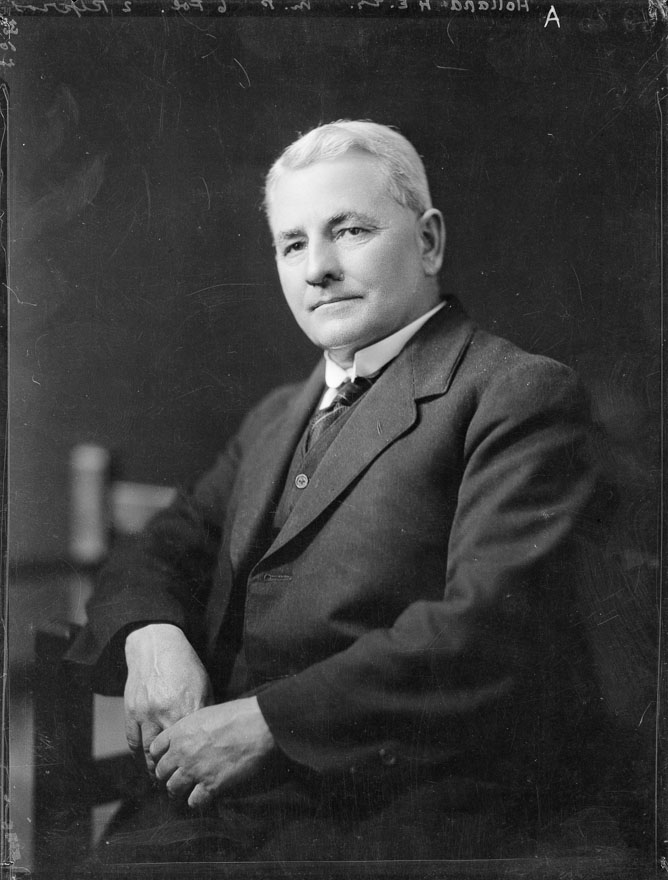
More than a rhetorical flourish: Harry Holland, the left-wing journalist who led the NZ Labour Party from 1919 until his death in 1933, demonstrated what "for the love of the people" meant to the first generation of Labour leaders by giving away much of his meagre parliamentary salary to his poverty-stricken constituents.

"FOR THE LOVE of the People." Who says that sort of thing anymore? Surely not a politician!

Though some might object to including the words "Len Brown" and "politician" in the same sentence, it was indeed the Mayor of Manukau City, and front-runner in the race for the new Auckland "supercity" mayoralty, who declared his love for the voters.

Responding to criticism that he had misused his mayoral credit card, Brown asked a special meeting of the Manukau City Council:

"Do you think I got off that bloody bed and came back here because I was worried I could spend some more money on the credit card?

"You know why I came back here. You saw me when I walked back into this place, I was a bloody skeleton. I came back here for the love of the people and you know that’s damn right."

Brown’s near-death experience following a massive heart attack, his determined recuperation, and his triumphant return to office, are all key elements of his personal political narrative. And according to his friend, the popular broadcaster and talk-back host, Willie Jackson, the people of South Auckland reciprocate Brown’s love, and admire his gritty dedication to their service.

"Len Brown is an honest man," Jackson told TV3’s Campbell Live, "people know that."

A clear majority of Manukau’s city councillors agreed. After four hours of what the NZ Herald described as "testy" debate, and a powerfully emotional appeal from Brown, his apology for misusing the credit card was accepted and all the relevant documentation (or lack of it) passed on – at Brown’s insistence – to the office of the Auditor-General for final judgement.

"If I survive this savaging, and end up in another mayoral chair," Brown reassured the meeting, "I can assure you I have learned from this experience."

There is something endearingly goofy and sentimental about Brown that makes all his talk about getting into politics "for the love of the people" and of having "learned his lesson" entirely believable. Careless to a fault he may have been, but only his most venomous political opponents are willing to argue that his actions were inspired by simple venality.

Was there poor judgement? Yes. Was there an excess of naïve enthusiasm and insufficient attention to detail? Absolutely. But, now that he’s been called to such public account, few are willing to predict that Brown will make the same mistakes twice.

The same almost certainly applies to past, present and future ministers of the Crown. Like Brown, cabinet ministers from the Clark era – and even a few from the present government – have been forced to suffer the ignominy of having their errors of judgement exposed and held up to public scrutiny.

Some, like the former Building & Construction Minister, Shane Jones, have accepted the resulting public opprobrium with disarming frankness and humility. Others, like the former Conservation Minister, Chris Carter, have recklessly challenged the public’s judgement with, in Carter’s case, entirely predictable and disastrous consequences – as far as his political future is concerned.

But none of the politicians who’ve been subjected to the disinfecting sunlight of public exposure over the past fortnight have responded with words even remotely akin to Brown’s "for the love of the people". And very few, if any, voters would have believed them if they had.

It was not always so.

As Dr Bryce Edwards, of the University of Otago’s Political Studies Department, pointed out on his "Liberation" blogsite on 11 June, Labour’s first prime minister, Michael Joseph Savage, was extraordinarily sensitive to the expectations of the working-class voters who had carried his Labour Party to victory.

"Being a representative of workers to him meant that he shouldn’t just take on the material comforts of the ruling class once he was elected to represent those workers. The extravagance and luxuries of office were to him associated with the interests of right-wing politicians. Hence he refused to live in Premier House on Tinakori Road, near Parliament."

According to Edwards, Savage regarded such a "mansion" as "inappropriate for any politician, let alone one representing the proletariat". Instead, he purchased a modest bungalow in the Wellington suburb of Northland.

Premier House itself was converted into a large dental clinic as part of the Labour Government’s public health programme. (Helen Clark’s aunt later trained there.)

It required the election of a very different kind of Labour Government in the 1980s before the prime-ministerial residence was finally restored to its former opulence – at a cost to the taxpayer of $1.8 million.

And Savage was by no means the only Labour hero to abjure all the trappings and perquisites of office. His predecessor as party leader, Harry Holland, gave away a large portion of his meagre parliamentary salary to needy constituents. "For the love of the people" was more than a mere rhetorical flourish in the 1920s and 30s.

It is, perhaps, no accident that the first Labour Prime Minister to occupy Premier House was Sir Geoffrey Palmer – the politician largely responsible for modernising and professionalising what had formerly been the vocation of politics. When Palmer got through with it, the role of the people’s representative had become indistinguishable from that of any other highly-paid civil servant. Small wonder that talk-back hosts began referring to MPs as "our employees in Wellington".

Except, of course, they’re not our employees, they’re our representatives: a very important difference. Ideally, the bond between Members of Parliament and their constituents should go much deeper, and be infinitely stronger, than the relationship between a master and his servants.

Besides, if we, the people, are sufficiently competent to look upon parliamentarians as mere employees, it raises the question of why bother with them at all? Why not heed the urgings of the anarchists and libertarians and do away with the state and its minions altogether? Why not cut out the middlemen and rule ourselves?

We all know the answer to that.

In the end, only the rich and powerful possess the effrontery to treat politicians as their hirelings, and wherever that occurs the rights and needs of the poor and the weak must inevitably suffer.

We value democracy so highly because it is the only system that allows men and women to serve not merely for the love of money, but also – if we’re lucky – "for the love of the people".

This essay was originally published in The Independent of Thursday, 24 June 2010.

Friday, 18 June 2010

Brown & Dirty

Not waving, but drowning? With John Banks lagging well behind Len Brown, the Left’s candidate for the Auckland Super-City mayoralty (above), the Auckland Right has only one viable strategy for victory: Get Len Brown! Go negative!

THE AUCKLAND ‘SUPER-CITY’ is a prize worth fighting for. It is also, as the strategic exposure of Mayoral front-runner, Len Brown’s, personal spending problems confirms, a prize worth fighting dirty for. The next five months will reveal exactly how dirty.

It wasn’t supposed to be like this.

The story of Auckland’s unification was supposed to end with the triumphant coronation of the region’s commercial, administrative and political elites. The people who knew what needed to be done, and the people who knew how to do it, were about to take their rightful places around the Super-City’s council table.

The age of puffed-up mayoral popinjays, ponderous city councillors, and tiresome community-board busybodies was over. Replacing the cacophony of competing municipal voices would be the soft susurrus of murmured expertise and the quiet assurance of accumulated wealth. Finally, power would be the hands of those who merited it.

Auckland would be ruled by a twenty-strong board of directors – one for every 71,000 residents. The board chairman – still rather quaintly referred to as The Mayor – would preside over the board’s deliberations and be the city’s principal spokesperson. The role of the Board itself would be limited to receiving and approving the reports of seven "Council Controlled Organisations" (CCOs).

To all intents and purposes these CCOs would operate as independent, stand-alone businesses dedicated to the efficient provision of core municipal services. They would be governed by experienced business leaders who, having gone through the motions of public "consultation" and endured whatever slings and arrows the news media contrived to cast in their direction, would be free to make operational decisions in an environment that was, essentially, "democracy-proof".

The fiction that the new ‘Supercity’ offered its residents genuine "local representation" would be maintained by a score of powerless "Local Boards" whose unenviable duty would be to convey the demands of the hapless citizenry to the all-powerful and constitutionally imperturbable Council, which, like all good boards of directors, would respond to the cavilling of its small shareholders with a judicious mixture of condescension and contempt.

The venerable promise of "More Business in Government, less Government in Business" would, at last, be fulfilled.

That was the Plan.

But, from the very start, things started going wrong.

The natural enemies of the Plan, the Left, were supposed to have been neutralised – they weren’t.

Because it was the Labour Government of Helen Clark which had set up the Royal Commission on Auckland Governance it was simply assumed that the standard neoliberal prescription presented by its carefully selected members would be endorsed without demur by the Labour Opposition. And yet, somehow, and without actually repudiating the Royal Commission’s fundamental principles, Phil Goff’s Labour Party managed to position itself as the defender of local democracy against the ruthless "Gauleiter of Auckland" – Local Government Minister, Rodney Hide.

That was unfortunate, but even more unsettling was the fact that the Left – against all expectations and precedent – threw its weight behind a single candidate. The Citizens & Ratepayers (C&R) group were confident that at least two, and possibly as many as three, left-wing candidates would emerge to contest the mayoralty and split the progressive vote.

The best qualified was Mike Lee, Chair of the Auckland Regional Council. Lee was the darling of the old Alliance Left, and for that reason alone was bound to be challenged by the Manukau Mayor – and Labour Party flagbearer – Len Brown. There was even a chance that the former Green MP, Sue Bradford, might throw her hat into the ring.

With the Left’s votes going all over the place, the C&R choice, Auckland Mayor John Banks, would romp home.

Only slowly did it dawn on C&R that the Left had more-or-less amicably decided upon Brown as its candidate and that Lee had no intention of breaking ranks. Bradford, unloved and unwanted by the Greens, backed away too. For the first time in a long time the Auckland Left was demonstrating some old-fashioned political discipline.

It was rewarded with a string of poll results that showed just how well this unified approach was being received. Backed by a small but strong campaign team, Brown had opened up a healthy lead on Banks – the most recent UMR survey placing him 14 points ahead of his right-wing opponent.

Labour’s assault on National’s and Act’s handling of the Super-City (brilliantly led by the Party List MP, Phil Twyford) melded seamlessly into Brown’s campaign, making it the preferred vehicle for all those voters in the Auckland region who either opposed outright, or had serious problems with the implementation of, the Right’s Super-City Plan.

Far from securing a council of commercially-savvy philosopher kings to preside over the long-awaited neoliberal transformation of the Auckland region, the C&R Group is faced with the terrifying possibility that the whole, immensely powerful political instrument which John Key’s government had created for them will fall into the hands of people with a very different social and economic agenda.

What’s left for the Right to do – except resort to dirty politics ? Even if C&R had a better alternative (which they do not) it is now far too late to ditch their candidate. Their neoliberal vision is not saleable in anything remotely resembling a mass political market but they can offer Auckland voters only minor alterations to the grand Super-City blueprints. When it comes to devising a winning strategy, digging the dirt on Brown is the only play they can make.

Will it work? The answer lies in Brown’s hands. If he borrows from Bill Clinton’s 1992 playbook and sets up a high-speed response unit, staffed with hard-hitting counter-punchers, then C&R’s blows will probably not connect with sufficient nerve and tissue to secure a knock-out.

But, if he behaves like the Democrat’s 2004 presidential candidate, John Kerry, and gifts his opponents the time and space required to negatively frame him, then not only will he lose, but so will the Left. For Labour and City Vision to win control of the first Super-City Council, Len Brown's going to need some very long coat-tails.

So, hold onto your hats, because the race for the Auckland Super-City is about to get down – and very dirty.

This essay was originally published in The Independent of Thursday, 17 July 2010.

Friday, 4 September 2009

Browned Off

Len Brown: An ambitious, overconfident and woefully inexperienced political parvenu.

WHEN will Labour ever learn? A party whose membership now numbers less than 5,000 nationwide, and probably less than 1,000 north of Taupo, has decided – unilaterally – to select the Left’s mayoral candidate for the new Auckland "supercity".

"Cheek" is too small a word to describe this sort of behaviour. Why? Because, if we accept the well-established rule-of-thumb that only ten percent of any organisation’s paper membership should ever be considered active players, fewer than 100 people took it upon themselves to choose the person aiming to represent 1.4 million.

For the sheer, jaw-dropping arrogance of this pre-emptive strike against democratic procedure, Labour deserves a hefty political smack – to say nothing of the "good parental correction" required for putting its own, narrow, partisan interests ahead of Auckland’s future.

The creation of the new "supercity" offered the old political players of Left and Right a rare opportunity to come up with new ways of choosing their respective flag-bearers.

They could, for example, have adopted the "primary election" model operating in the United States. Surely, in the age of Facebook and Bebo, it’s not beyond the wit of Auckland’s political geeks to devise a secure system of on-line primary voting? And, for the voters who prefer to judge their political horseflesh up close, what stopped Citizens & Ratepayers and City Vision from organising a region-wide round of public meetings and straw-polls?

The answer, of course, is that there was nothing stopping either group from doing one, or even both, of these things – except the over-riding fear of having the choice of political flag-bearers taken out of their hands.

That the Right was reluctant to let its own supporters choose their candidate did not, I have to confess, surprise me. After all, the whole "supercity" plot was hatched by a cabal of right-wing Auckland businessmen intent on making the city’s "governance" much more efficient – and much less prone to interference from "interest groups" unsympathetic to market forces.

Of Labour (and City Vision, its front organisation) I did, however, expect something more imaginative (and democratic) than an old-fashioned "deal", hammered out in a variety of smoke-free rooms, between a clutch of anonymous party hacks and the Mayor of Manukau City.

Strategically commissioned opinion polls, notwithstanding, Mr Brown has long been the Auckland Right’s preferred opponent. He comes across as an evangelical social-worker, who, when he’s not mouthing bogus Pasifika street-slang, delivers earnest speeches in which the buzz-words "vision", "passion" and "community" are endlessly repeated. Up against a ruthless political veteran like John Banks, Mr Brown will be made to look exactly what he is: an ambitious, over-confident, and woefully inexperienced political parvenu.

I do, however, give Labour points for staking its claim so early and with such clarity. The other potential candidates: be he Waitakere City Mayor, Bob Harvey, or the Chairman of the Auckland Regional Council, Mike Lee; can now be intimidated into withdrawing from the race – on pain of "splitting the Left vote".

The truth, of course, is that the only splitters operating in the broader Auckland Left are Labour and its allies. By dividing the field of mayoral hopefuls into Mr Brown and "the rest", they have very foolishly, and selfishly, made the best candidate the enemy of the first.

How much better things would have looked – both ethically and strategically – had Labour held off throwing its weight behind any candidate until progressive Auckland had been given the opportunity to test all of the potential candidates in circumstances not too dissimilar from the conditions prevailing during the campaign proper.

In Mr Banks, the Right knows exactly what it’s getting: a successful business entrepreneur; a former National Party cabinet minister; and the twice-elected Mayor of Auckland City. They can be confident (because he has done it before) that Mr Banks possesses the political grit to drive through a radical right-wing agenda.

But, if the Left accepts Labour’s fait accompli, what will it be getting in Mr Brown? A Palangi lawyer from Manukau, with a very thin portfolio of municipal achievements (unlike his illustrious predecessor, Sir Barry Curtis) and a rather goofy grin.

At stake is the economic and cultural future of our largest city – a city well on its way to encompassing half New Zealand’s population.

Given the prize, I believe Auckland, and New Zealand, deserves a better choice than either Mr Banks – or Mr Brown.