Showing posts with label Political Strategy. Show all posts

Thursday, 16 May 2024

More Harm Than Good.


How Labour’s and National’s failure to move beyond neoliberalism has brought New Zealand to the brink of economic and cultural chaos.

TO START LOSING, so soon after you won, requires a special kind of political incompetence. At the heart of this Coalition Government’s failure to retain, and build upon, the public support that won it the 2023 General Election are two fundamental errors: one tactical, the other strategic. Tactically, it is a huge mistake to tolerate concentrations of opposition dedicated to thwarting your government’s policy. Strategically, it is fatal to pursue goals that cannot be realised without doing more harm than good. A government committed to radical change must, therefore, be satisfied that its key objectives are both desirable and obtainable, and then be ready to remove all serious obstacles to their fulfilment. So far, the National-Act-NZ First coalition government has failed to do any of these things. That’s why it’s losing.

National and Act (the jury’s still out on NZ First) are both incapable of grasping the central fact of the last forty-five years: that the neoliberal dream of a world governed exclusively by market forces is not only unrealisable, but would be utterly intolerable. Human-beings are complex and contradictory creatures, not cooly rational utility maximisers. In attempting to transform humanity into beings that could survive and thrive in their free-market utopia, neoliberals would first have to inflict immense and unceasing suffering upon the unconvinced majority. Such misery could not be sustained for very long in a democratic context. Thus, only two scenarios confront the serious neoliberal regime: either it will be voted out of office; or it will transform itself into a ferocious tyranny.

That National and Act don’t get this is truly astonishing. Recent New Zealand history offers plenty of lessons concerning what happens to governments who attempt to push the neoliberal project too forcefully. They are defeated electorally. National’s refusal to be guided by the fate of the Fourth Labour Government produced the salutary lesson of MMP – New Zealand’s Brexit – which instantly rendered the neoliberal project even more illusory. National’s and Act’s problem was that they couldn’t come up with anything better.

The abiding tragedy of New Zealand politics is that Labour and the Greens have proved equally incapable of abandoning the neoliberal project. No doubt there are many in both parties who would like to, but the obvious building blocks of an alternative economic and social project – re-nationalisation, re-regulation, workplace democracy – tend to be dismissed out of hand as either an impossible return to the “failed policies of the past”, or, even worse, “communism”. The restraining hands of those who have accepted, however sadly, the claim that “there is no alternative” to neoliberalism, are forever reaching out to prevent the re-creation of the Left. While, on the Right, the promise is always that “just one more big push” will usher in the neoliberal nirvana.

This colossal failure of courage and imagination has brought New Zealand to the brink of economic and cultural chaos. It wasn’t an easy country to break – a truly outstandingly bi-partisan effort was required to wreak such ruin.

Helen Clark and Michael Cullen had the smarts, and their Alliance coalition partner even had the policies, but both of them lacked the faith that anything lay beyond the neoliberal consensus but an arid conceptual desert and electoral death.

John Key knew the neoliberal model was broken – he was sworn in as prime minister as the Global Financial Crisis was breaking it. But, reconstituting a responsible conservatism simply wasn’t in him, and so he smiled and waved for nine years, while everything that mattered in New Zealand rotted away beneath his feet.

Jacinda Ardern and Grant Robertson had the hearts, but not the heads, for transformation. Then Covid-19 granted them their wish – but not in a kind way.

There was so much that could – and should – have been done. Labour could have done it fast – and with flair. National could have done it at a slower pace – but with more consideration. As things turned out, however, neither were ready to give up on the market. Why would they? Neoliberalism’s success as an ideology is mostly attributable to its core message: leave the economy alone and everything will turn out for the best, interfering with market forces only makes everything worse. It is seldom necessary to tell a politician to do nothing twice.

But, if people are prevented from being useful, then they’ll very quickly learn to be stupid. With the road to a more just economy blocked, leftists opted to re-define human-beings and change their cultures. If you can’t stop the oil companies from cooking the planet, then drive people crazy by demanding that they sort their rubbish into three different bins. If you can’t give working people simple human dignity, then give them some new pronouns. If the neoliberals won’t allow left-wing governments to build homeless Māori houses, then keep them warm with offers of “decolonisation” and “indigenisation”. Let them live under a 184-year-old piece of rat-eaten parchment, instead.

Such was the stupidity that National was elected to stop. But, really, they didn’t have a clue how to go about it. When Roger Douglas and Richard Prebble swallowed the Treasury’s neoliberal Kool-Aid, they were careful to make sure that every economic and administrative institution that mattered in New Zealand swallowed the same brew. Those that tried to fight back, like the Ministry of Works, were simply abolished. The rest were sold. The state sector was required to behave like the private sector. The Nazis called this getting with the programme process Gleichschaltung – co-ordination.

What the Coalition Government doesn’t realise is that, although the Left was prevented from co-ordinating the economy by Rogernomics and Ruthanasia, that didn’t mean that they weren’t left free to co-ordinate just about everything else: the judiciary, the universities, the news media, the arts. If they are serious about rolling-back the Left’s stupidity, then the Coalition Government will have to engage in a little Gleichschaltung of their own. All those concentrations of opposition dedicated to thwarting government policy will have to be dispersed.

Not easy in a democracy, and impossible when the neoliberal dream this government is pursuing has long been exposed as a waking nightmare. If National, Act and NZ First are to fulfil the mandate handed to them by the electorate – to take back their country from the wealthy and the woke – then they will need more than a philosophy that reassures its followers that “greed is good” and that giving humanity’s worst impulses free rein – laissez-faire – is the answer to every problem.

Abandoning the promised tax cuts would be a good beginning.


This essay was originally posted on The Democracy Project Substack site on Friday, 10 May 2024.

Friday, 12 December 2014

Andrew Little: Wanted And Wondered At

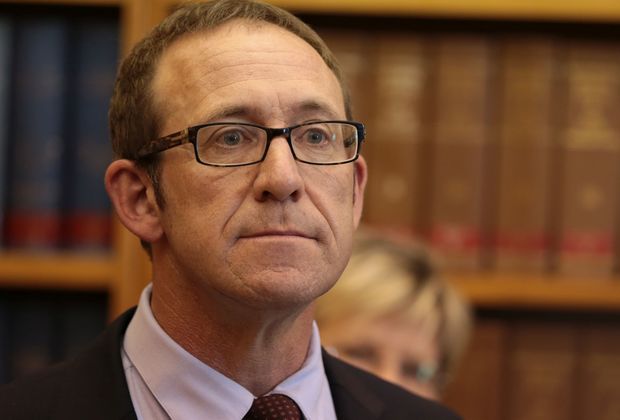
Here Comes The Sun: Andrew Little's political career has prospered in no small way by the care he has taken to mask both his ambition and his talent until the most propitious moment. Like Shakespeare's Prince Hal he has imitated the sun; hiding his brilliance behind "base contagious clouds" until the moment "when he please again to be himself" so that "being wanted, he may be more wondered at".
 
HAS THERE EVER BEEN a leader who commanded absolute loyalty? A king, a party boss, a prime minister so blessed with the attributes of leadership that not even one of his barons, ward-heelers or cabinet ministers ever felt moved to ask the question: “Why not me?”
 
Even in the court of King Arthur, Mordred plotted murder and ruin. The “one brief shining moment” that was the Kennedy White House shivered in the shadow of Lyndon Johnson’s unappeasable ambition. On the plane-ride back from Norman Kirk’s Waimate funeral his colleagues lobbied furiously for the numbers to succeed him.
 
The acid of political power dissolves all friendships, all pacts, all solemn pledges of loyalty. All leaders knows this and conduct themselves accordingly. On the battlefield, they bring victory. At the ballot box, more votes than their opponents. On the Government Benches, favourable polls and reliable majorities.
 
The moment a leader fails to furnish the victories, votes and validation promised to his followers, challenges – and challengers – are inevitable.
 
Power belongs to those with courage to take it – and the skill to wield it.
 
Which is why the initial conclusions of Labour’s election review panel made me chuckle. One of the reasons the party performed so poorly, reported the four wise heads appointed to identify where Labour went wrong in 2014, is that its parliamentary caucus failed to unite around the leadership of David Cunliffe.
 
Well, duh!
 
David Cunliffe knew that he faced a caucus full of enemies when he put his name forward for the Labour leadership. What he did not appear to understand was how urgently he needed to neutralise that enmity.
 
In this respect, the behaviour of Mr Cunliffe’s successor is instructive.
 
To begin at the beginning: Andrew Little’s whole parliamentary career appears to have been inspired by Prince Hal’s soliloquy from Shakespeare’s Henry IV, Part One:
 
Yet herein will I imitate the sun, 
Who doth permit the base contagious clouds 
To smother up his beauty from the world, 
That, when he please again to be himself, 
Being wanted, he may be more wonder’d at, 
By breaking through the foul and ugly mists 
Of vapours that did seem to strangle him
.
 
There are times when one’s leadership ambitions are better served by keeping them hidden than by openly parading them before one’s colleagues and the world. Like Prince Hal, Mr Little was at pains to smother up his leadership qualities until such time as his party had most need of them.
 

Prince Hal In Glasses? Labour's Andrew Little.
 
And what a masterful job he made of it! As far as most of the political class was concerned there was very little to be hoped for from Mr Little’s wafer-thin victory over Grant Robertson. Commentators almost gloated that Labour’s new leader was everybody’s second choice; had never won a seat; carried neither his caucus nor the party membership; and almost didn’t make it into Parliament at all! Needless to say, the wider electorate’s expectations were similarly modest.
 
But Mr Little, like Prince Hal, understood that:
 
By how much better than my word I am, 
By so much shall I falsify men’s hopes.
 
Far from being “a modest little man, with much to be modest about” – as Winston Churchill famously described his nemesis, Clement Atlee – Mr Little burst out of Labour’s corner with his dander well-and-truly up, landing punches on a Prime Minister whose reaction to this new leader’s wholly unexpected onslaught was almost as disbelieving as the Press Gallery’s.
 
For the first time in a long time the whole of the Labour Party experienced that surge of energy and hope that comes from seeing one’s champion lay low the enemy’s best fighter. MPs, party grandees, union bosses and ordinary members alike heard Mr Little tell the Prime Minister to “cut the crap” and knew that Labour had, at long last, a leader worthy of the name.
 
Mr Cunliffe failed dismally to unite his caucus for the very simple reason that nothing he did gave his enemies cause to cease questioning his right to lead them. Like a medieval king defeated on the field of battle, Mr Cunliffe was forced to endure, through the whole duration of his long retreat, the contemptuous scorn and open hostility of his embarrassed barons.
 
Mr Little, by contrast, having demonstrated the requisite courage and skill, can now present that surest proof of leadership.
 
Followers.
 
This essay was originally published in The Waikato Times, The Taranaki Daily News, The Timaru Herald, The Otago Daily Times and The Greymouth Star of Friday, 12 December 2014.

Friday, 7 October 2011

The Not-So-Happy Prince (A Guest Posting by Dr Charles Pigden)

The Prince Who Refused To 'Get Real': People who talk of adapting to reality are in effect suggesting that we should put up with a social reality created by other people rather than trying to remake it in accordance with what we think is right. By doing so, they reinforce that very reality. And by refusing to be actors in history they become the accomplices - perhaps ultimately the victims - of the processes of which they profess to disapprove.

ONCE UPON A TIME there was a Prince. The Prince was very rich and very happy and enjoyed the favor of his master the Emperor. He liked to attend court functions in his fine clothes. He loved dancing and parties and enjoyed fulfilling the not very onerous tasks demanded of a nobleman of his rank and station. He knew that the Emperor was far from perfect but he did not see fit to question his actions. After a while the old Emperor abdicated and left the realm to his son, the King of S.

The King of S did not like the Prince very much but he thought he was a fine gentleman, ideal to be sent as the ornamental ambassador to the King of F. The real business was to be left to the Prince's deputy. But the King of F did not know about this and made the mistake of discussing the real business with the ornamental ambassador. Apparently the two Kings were planning to roast thousands of people who disagreed with them on matters of religion. The Prince was upset about this as he disapproved of roasting people even when they disagreed with him on religious topics.

Soon after this the King of S left for his southern dominions leaving the realm to his half-sister the Duchess who was to act as regent. The Prince tried to persuade the Duchess not to roast people. There were many who thought he was doing the wrong thing. (Let us call them his feeble counsellors.)

'Look', they said, 'the reality is that thousands of people are going to be roasted. You must adapt to that reality. If you don't like it perhaps you can persuade the Duchess to have people roasted in a more orderly and less cruel way.'

But the Prince thought that roasting people was wrong and he would not listen to their advice. But the Duchess (obedient to the orders of her brother the King) was not persuaded. Then the Prince got together a group of other fine gentlemen who disapproved of roasting people to help him persuade the Duchess.

Again, the Prince's feeble counsellors spoke up. 'Look', they said, 'the reality is that thousands of people are going to be roasted.  You must adapt to that reality. You have tried once and failed. Give it up and enjoy your position at court.

But the Prince thought that roasting people was wrong and he would not listen to their advice. Nevertheless the Duchess (obedient to the orders of her brother the King) was not persuaded by the Prince and his fine gentlemen friends. Indeed, she had some of them arrested and the Prince declared an outlaw.

The Prince decided that since persuasion did not work, he would have to try force and raised a rebellion against the King of S's government. There were many who thought he was doing the wrong thing.

'Look', they said, 'the reality is that thousands of people are going to be roasted. You must adapt to that reality. You have tried twice and failed. Give it up and if you say you are sorry, perhaps you can recover your position at court.'

But the Prince still thought that roasting people was wrong and he would not listen to their advice. Now the Prince was not a very good soldier and he was utterly defeated by the Duke of A (The King of S had replaced the Duchess as regent because he did not think she was sufficiently keen on roasting people. The Duke of A was much more fierce and could be relied on to carry on the roasting project with much more vigour.) The Prince lost his money, his estates and his eldest son, who was kidnapped and carried off to be a prisoner at the King of S's court. (The Prince never saw him again.) He was forced to flee to the castle of his brother the Count of D.

Just to show that he was serious, the Duke of A had some of the Prince's fine gentleman friends executed. Many people (the feeble counsellors) thought that the Prince would at last have learnt his lesson. 'Look', they said, 'the reality is that thousands of people are going to be roasted.  You must adapt to that reality. You have tried three times and failed. Give it up and if you say you are very sorry, and if you lie low for a few years, perhaps the King will allow you to recover some of your estates.'

But the Prince still thought that  - reality or no reality - roasting people was wrong. And in addition he disliked the fact that his country was ruled by someone as fierce as the Duke of A. So despite the good advice, after several years of plotting, he scraped together an army and rebelled again.

Well, to cut a long story short, the Prince's second rebellion was but a partial success. He was still not a very good soldier and was only able to establish control over part of the country (where to be sure, roasting and other such cruelties were forbidden). His armies were often defeated and his brother was killed. Most of his money and his estates remained forfeit.  Instead of parties and jousts his life was devoted to planning and committees. He was tired all the time and sometimes ill. In the end, the King of S put a price on his head and had him murdered. So perhaps he would have done better to listen to his feeble counselors and respect the 'realities' after all.


BUT THEN AGAIN, perhaps not. This Prince was William the Silent, Prince of Orange, founder of the Dutch nation, which remained in the hundred years after his death, the true home of liberty and enlightenment in Europe. His actions helped to create a new and rather better 'reality' than the one that would have existed had he tamely acquiesced in the King of Spain's commands. Even today - even here - we enjoy the benefits of his courage and resolution.

Now, what is the point of this story?

What I want to suggest is this. Though physical reality is not made up by us, social reality is in part a human creation since it is the product of human actions and decisions. What is made by human actions and decisions can often be un-made by other human actions and other human decisions. People who talk of adapting to reality (like the Prince's feeble counsellors in my story) are in effect suggesting that we should put up with a social reality created by other people rather than trying to remake it in accordance with what we think is right. By doing so, they reinforce that very reality. And by refusing to be actors in history they become the accomplices - perhaps ultimately the victims - of the processes of which they profess to disapprove.

Of course, there are some fights you cannot win. But there are also a good many that can be won if people are prepared to make the necessary effort. 'Realism' is too often the excuse offered by those too cowardly or too lazy to make that effort. And when advanced by those in power it is too often a fig-leaf designed to conceal the fact that there are no good arguments for the policies suggested. I would like to say (following Dr Johnson) that 'realism' is the last refuge of the scoundrel. But that would not be accurate. Often it is his first resort.

Dr Charles Pigden is an Associate Professor of Philosophy at the University of Otago. This is his first Guest Posting on the Bowalley Road blogsite (but, hopefully, not his last).

Thursday, 29 April 2010

Cynical Politics

Don't ask - don't tell: As Bobby Kennedy is said to have quipped after the 1960 Presidential Election: "Democracy is like a good sausage. Tastes great - but you really don't want to know what went into it."

CYNICISM is one of the great occupational hazards of politics. Born out of the inevitable collisions between idealism and reality, its corrosive effects are displayed to best advantage in representative democracies – where the consequences of political failure are only occasionally fatal.

All politicians are at risk from cynicism, and the few who escape its clutches generally prefer to keep the electorate ignorant of the moral damage it inflicts. As Bobby Kennedy put it: "Democracy is like a good sausage. It tastes great – but you really don’t want to know what went into it."

All of which suggests that the person (or party) approaching political life with a swag of weighty ideals is likely to come to grief. Conversely, those who enter politics unburdened by excessive sentiment can almost certainly look forward to a much easier ride.

This is good news for the Right – which prides itself on its "unsentimental" and "realistic" approach to political affairs. Historically averse to "airy-fairy" ideas, right-wingers also have the better chance of escaping the ravages of cynicism. It’s hard to become disillusioned and cynical if you have no illusions to discard: no ideals for a head-on collision with reality to damage.

The Right enjoys another advantage: knowing what it’s in politics to achieve. Unlike the Left, whose mission, at least historically, has been to improve the world; the traditional task of the Right is to make sure it stays the same. While the Left is riven with sectarian arguments about the nature and extent of the changes it should (or shouldn’t) attempt, the Right’s mandate is essentially conservative: to ensure that the proper people remain in the proper places and deliver the proper results.

Above all else, this mandate requires the Right to remain in office for as long as possible. The only changes a right-wing government should ever be prepared to countenance are the changes required to win the next election. In or out of power, for the Right, "winning" is everything.

John Key’s government embodies these conservative principles to a truly remarkable degree. It’s major achievement to date has been the restoration of the "proper people" to their "proper places". Labour’s appointees have been ruthlessly purged from the State apparatus and their replacements are hard at work delivering the "proper results". The pace and scope of that delivery is set to increase dramatically if/when Key wins a second term.

Even more remarkable, however, has been Key’s extraordinary political flexibility.

Unburdened by the ideological shibboleths that weigh down politicians like Act’s Sir Roger Douglas, Key manoeuvres with astonishing adroitness to keep a clear majority of the electorate in National’s corner. For the benefit of the urban liberals he reaffirms his support for the anti-smacking legislation. To Act’s law-and-order brigade he delivers the "Three Strikes" bill.

And to the Maori Party, which he and his colleagues correctly identify as the pivot upon which all future New Zealand governments will turn, he delivers a series of policy concessions which, for their political audacity, can only be described as "breathtaking". The repeal of the Foreshore & Seabed legislation; the launch of whanau ora; and, most recently, supporting the UN Declaration on the Rights of Indigenous Peoples.

These three concessions to Maori nationalism illustrate with particular clarity just how seriously the Prime Minister takes the Right’s "winning is everything" mantra – and just how determined he is to do everything to win.

The contrast with Labour could hardly be more dramatic. Nowhere are the corrosive effects of cynicism more clearly evident than on the Left.

Labour’s collision with reality back in the 1980s drove cynicism deep into the heart of the Parliamentary Party. What remained of Labour’s left-wing idealists migrated to the Alliance, where they thrived briefly before crashing head-on into the reality of Jim Anderton. In the first decade of the new century it was the Greens who kept the idealistic flame fluttering – until untimely death and resignation led them to their own damaging rendezvous with realpolitik.

The ironic conclusion to all of this electoral self-destruction isn’t that the Left has become too cynical, but that it hasn’t become cynical enough.

When National crashed to 21 percent in 2002 it had the wit to heed the advice of professional cynics like Peter Keenan, Bryan Sinclair and Matthew Hooton.

If National had to embrace its inner redneck to recapture the scattered tribes of the Right, then so-be-it. If it had to offer up a leader embodying the Right’s most radical neoliberal beliefs, then "Amen" to that as well. And if, after reconstituting National’s electoral base, the focus-groups told them it was time to switch from negative to positive messages, then "that nice Mr Key" would have Dear Old Don gone by lunchtime.

But Labour’s cynicism is neither as deep nor as ruthless as National’s. Rather than appeal to their party’s inner Bolshevik, and then, having run National close, genially postpone the revolution until Labour’s second term, the Opposition’s strategists have embarked on a public relations-inspired quest to rejuvenate the party’s "brand". Its risible goal? To make Labour "edgy", "out-there", "funky", "fresh" and "cool".

This is cynicism writ small: the paltry contribution of politicians who are no longer able to calculate the price, or recognise the value, of political nerve on an Orewa scale.

Labour’s cynicism prevents it from trusting either its own instincts or the better angels of the electorate. Public opinion is to be followed – not led. Innovative and inspiring policies (assuming, by some miracle, Labour acquired some) are always to be kept under wraps in case a political opponent steals them. What little faith remains to it is all in the power of negativity. The one question that must never be answered is: "What would Labour do?" The one question that must never be asked: "What should Labour do?"

In 1966, and again in 1981, Labour was defeated at the polls because it took a stand on principle. That its positions on Vietnam and Apartheid were later vindicated by history - and emphatic electoral victories – should be all the proof today’s Labour Party needs that in the inevitable collisions between idealism and reality both are changed – and not necessarily for the worse.

This essay was originally published in The Independent of Thursday, 29 April 2010.

Friday, 12 February 2010

Who's Scared of Labour?

Something scary at your back: Labour needs to be able to frighten its enemies as well as encourage its friends - but first it has to make some!

ONCE AGAIN, the polls look bad for Labour and its leader, Phil Goff. And, once again, the punditocracy waxes eloquent on the Opposition’s seemingly insuperable electoral hurdles: the steady erosion of the Maori vote; a Green Party in decline; the enduring popularity of Mr Key and his National Party.

All true. But none of these so-called "hurdles" are insuperable. The real barriers confronting the Left aren’t to be found in the external world, but in the interior world of the left-wing mindset. Labour has become electorally implausible because it no longer projects itself as either psychologically, or morally, convincing.

Phil Goff in last week’s "State of the Nation" speech spoke of a Labour Party dedicated to serving the needs of "the many – not the few". He lambasted those who avoided paying their fair share of tax, and he vowed to cap the salaries of State Sector CEOs at the level of the Prime Minister’s annual income. A traditional Labour message, and by all accounts powerfully delivered.

But was it real?

No, not really. It took the redoubtable right-wing blogger, Cactus Kate, less than a day to uncover the fact that a significant number of Labour MPs belonged to one or more Family Trusts – the very same tax avoidance device that Mr Goff was railing against.

And what about all those State Sector CEOs on excessive salaries? Well, Mr Goff is to be congratulated for wanting to share the "pain" of economic recession more equitably. But, in order to restore a measure of equity to the pay-scales of the public service, surely Mr Goff would have to renounce his own, and Labour’s, continuing support for the State Sector Act?

After all, Mr Goff was a Cabinet Minister in the Fourth Labour Government which introduced the State Sector Act. It’s purpose? To bring the private sector’s market-driven discipline into the public service: to give the heads of government agencies the same powers and responsibilities as corporate CEOs – and pay them accordingly.

If Mr Goff is now acknowledging that the ideology underpinning the State Sector Act is flawed, then I, for one, will cheer him to the echo. But if he still adheres to the neoliberal ethos which gave it birth, then he should let the market in CEO salaries find its own level, and like the original author of the State Sector Act, Stan Rodger, remain steadfastly on the sidelines – and keep his mouth firmly shut.

To become the genuine champion of "the many – not the few", Mr Goff is going to have to do more than toss his core voters an occasional chunk of raw populist meat. To win back the love Labour’s lost, the Leader of the Opposition must learn how to channel not only the hopes and aspirations of Labour’s educated middle-class minority, but also the fear and antagonism of its sullen working-class majority.

A genuine political leader will gladly and gloriously reflect the idealistic light of his best followers, but, when pressed, he must also be capable of tapping into the darkest impulses of his worst. True leaders are feared as much as they are loved. Think of Helen Clark in the midst of the "Corngate" scandal: chilling. Think of Rob Muldoon ordering Tom Scott out of the Beehive Theatrette: terrifying.

Watching TVNZ’s Guyon Espiner interviewing Mr Goff on the Q+A programme, I was struck by how keen the Leader of the Opposition was to please. Where was the menace? Where was the sense that, like Aragorn in The Lord of the Rings, Mr Goff has at his back a phantom host – all those forgotten New Zealanders – just waiting to strike down his enemies?

Democracy, it is said, substitutes ballots for bullets. And that’s fine – so long as, like the metal projectiles they replace, ballots also have the capacity to inflict real damage.

Labour needs policies that not only help – but hurt. Out there in the electorate some groups need to understand that they will be paying for Mr Goff’s promises. Sweet reason and bi-partisanship, as President Obama has discovered, makes for poor politics. There’s nothing the voter enjoys more than the whiff of fear and panic – especially in high places.

No politician gets elected purely on the strength of being everyone’s friend. At least symbolically – and preferably in reality – a party leader must also be somebody’s enemy.

This essay was originally published in The Dominion Post, The Timaru Herald, The Taranaki Daily News, The Otago Daily Times and The Greymouth Evening Star of Friday, 5 February 2010.