
 |
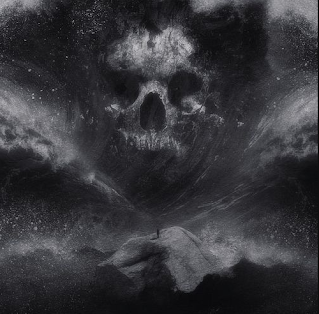
| “Stare not too long into the abyss, lest the abyss stare back into you.” - Friedrich Nietzsche. |
“How could a benevolent God allow bad things to happen to good people?” That was one of the questions. Inevitably followed by: “And isn’t a God that allows bad things to happen to good people himself one of the bad guys? Or, if not bad himself, then powerless to prevent evil from doing its worst?”
Except, of course, that a powerless deity is not a deity at all – but a fraud. Which not only means that evil is more powerful than good, but also more powerful than God. And that is not a comforting thought.
Nor, I’m afraid, a very original thought. Indeed, the notion that this world is in the grip of a malevolent deity harks all the way back to the earliest decades of Christianity. Some called this evil being “Rex Mundi” – King of the World. His was the realm of matter. It was Rex who personally made certain that our all-too-solid flesh would melt, burn, decay, and otherwise fail to endure.
Given the fate of those who subscribed to this, the Gnostic, heresy, it is difficult to fault their theology. Over the centuries Rex Mundi has got a lot of blood on his hands.
I wonder, sometimes, whether undergraduates still argue over the problem of evil. Certainly, it is difficult to imagine them arguing about the nature of God – not when surveys show most of them rejecting the notion of divinity altogether. That said, it isn’t in the least bit difficult to imagine them arguing about the problem of climate change.
Ideally, this would be a rigorously scientific exchange, but I strongly suspect that any argument about climate change will very quickly morph into our old friend, the problem of evil.
Not that God will be standing in the dock at this trial. Much more likely the discussion will turn on whether there is enough good in the human species to warrant its survival, or, whether our overwhelming propensity to tear apart the delicate threads of Nature’s ecological web has led humanity to an evolutionary dead-end.
It is not a debate to which Rex Mundi would be invited. In my imagination, I see Gaia as the smiling hostess of this existential colloquium. Proving just how difficult it is for the human mind to free itself entirely from the notion of a benign and/or just deity.
Then again, voting for their own species’ extinction is a pretty hard ask of the undergraduates of the Twenty-First Century. But, if the species itself isn’t all bad, then, perhaps, the “problem” of evil is best resolved by examining who has done the most.
Who was it who enslaved the peoples of Africa? Who wiped out the world’s indigenous cultures? Who planted their flags in the soil of sovereign nations and claimed them for their own? Who spread their capitalistic economic system across the face of the whole planet without thought for the exorbitant human and environmental costs? Who denied women their rights? Who persecuted homosexuals and the gender-diverse? Who invented racism, heavy artillery, poison gas and the H-Bomb? Who is the living embodiment of evil?
Yes, well, we all know the answer to those questions, don’t we?
Us, the world’s white, heterosexual, males: marching down the centuries with our swords and guns and bombs; slaying the innocent; enslaving the weak; bending all to our implacable will; consuming the whole world to satisfy our insatiable appetites. Us, seated upon our ivory thrones, white as death, ruling the world of matter absolutely. Rex Mundi in human form. Evil personified.
It’s all our fault.
And it’s not just undergraduates who argue this way – their professors write books about it!
They characterise evil as the problem born out of power over others. The power that creates victims. The power to be overcome only when its victims seize their own power – and use it.
Making evil a paradox. When we fear it, we feed it. In attempting to defeat it, we only make it stronger.
“Stare not too long into the abyss,” warned Nietzsche, “lest the abyss stare back into you.”
This essay was originally published in The Otago Daily Times and The Greymouth Star of Friday, 7 October 2022.
