
Showing posts with label The Problem of Evil. Show all posts

Friday, 7 October 2022

The Problem Of Evil.

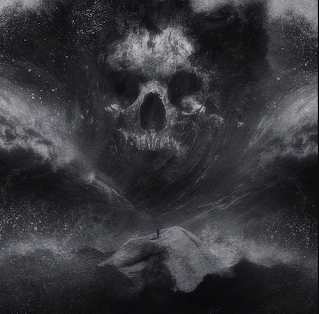
“Stare not too long into the abyss, lest the abyss stare back into you.” - Friedrich Nietzsche.
 
THE PROBLEM OF EVIL – ah yes – an old and flavoursome chestnut. How many nights, fuelled by Velluto Rosso (and other brave attempts at a palatable New Zealand red) did I wrestle with my fellow undergraduates as to why, or even if, evil exists in this world.

“How could a benevolent God allow bad things to happen to good people?” That was one of the questions. Inevitably followed by: “And isn’t a God that allows bad things to happen to good people himself one of the bad guys? Or, if not bad himself, then powerless to prevent evil from doing its worst?”

Except, of course, that a powerless deity is not a deity at all – but a fraud. Which not only means that evil is more powerful than good, but also more powerful than God. And that is not a comforting thought.

Nor, I’m afraid, a very original thought. Indeed, the notion that this world is in the grip of a malevolent deity harks all the way back to the earliest decades of Christianity. Some called this evil being “Rex Mundi” – King of the World. His was the realm of matter. It was Rex who personally made certain that our all-too-solid flesh would melt, burn, decay, and otherwise fail to endure.

Given the fate of those who subscribed to this, the Gnostic, heresy, it is difficult to fault their theology. Over the centuries Rex Mundi has got a lot of blood on his hands.

I wonder, sometimes, whether undergraduates still argue over the problem of evil. Certainly, it is difficult to imagine them arguing about the nature of God – not when surveys show most of them rejecting the notion of divinity altogether. That said, it isn’t in the least bit difficult to imagine them arguing about the problem of climate change.

Ideally, this would be a rigorously scientific exchange, but I strongly suspect that any argument about climate change will very quickly morph into our old friend, the problem of evil.

Not that God will be standing in the dock at this trial. Much more likely the discussion will turn on whether there is enough good in the human species to warrant its survival, or, whether our overwhelming propensity to tear apart the delicate threads of Nature’s ecological web has led humanity to an evolutionary dead-end.

It is not a debate to which Rex Mundi would be invited. In my imagination, I see Gaia as the smiling hostess of this existential colloquium. Proving just how difficult it is for the human mind to free itself entirely from the notion of a benign and/or just deity.

Then again, voting for their own species’ extinction is a pretty hard ask of the undergraduates of the Twenty-First Century. But, if the species itself isn’t all bad, then, perhaps, the “problem” of evil is best resolved by examining who has done the most.

Who was it who enslaved the peoples of Africa? Who wiped out the world’s indigenous cultures? Who planted their flags in the soil of sovereign nations and claimed them for their own? Who spread their capitalistic economic system across the face of the whole planet without thought for the exorbitant human and environmental costs? Who denied women their rights? Who persecuted homosexuals and the gender-diverse? Who invented racism, heavy artillery, poison gas and the H-Bomb? Who is the living embodiment of evil?

Yes, well, we all know the answer to those questions, don’t we?

Us, the world’s white, heterosexual, males: marching down the centuries with our swords and guns and bombs; slaying the innocent; enslaving the weak; bending all to our implacable will; consuming the whole world to satisfy our insatiable appetites. Us, seated upon our ivory thrones, white as death, ruling the world of matter absolutely. Rex Mundi in human form. Evil personified.

It’s all our fault.

And it’s not just undergraduates who argue this way – their professors write books about it!

They characterise evil as the problem born out of power over others. The power that creates victims. The power to be overcome only when its victims seize their own power – and use it.

Making evil a paradox. When we fear it, we feed it. In attempting to defeat it, we only make it stronger.

“Stare not too long into the abyss,” warned Nietzsche, “lest the abyss stare back into you.”


This essay was originally published in The Otago Daily Times and The Greymouth Star of Friday, 7 October 2022.

Tuesday, 14 August 2018

Who Are You Calling "Evil"?

This ordinary-looking man, who lived in an ordinary-looking house, on an ordinary-looking street, who was tried in this ordinary-looking courtroom - for mass murder:  Could this balding, middle-aged man wearing horn-rimmed glasses and an ill-fitting suit really be responsible for the deaths of six million innocent people? Far from resembling Lucifer, Adolf Eichmann looked like a worn-out bureaucrat – which is exactly what he was. The philosopher, Hannah Arendt, referred to this profoundly demoralising discrepancy as “the banality of evil”.

THE PROBLEM OF EVIL has taxed the minds of men and women for millennia. Is evil a force, like gravity, that drags human-beings down into the depths of depravity? Does this force reside in a single conscious entity: immensely powerful and seemingly immortal? If so, is this entity motivated to pour its essence into individual human-beings: transforming them into monsters? Or is it, rather, that certain individuals open themselves voluntarily to the malignant forces of the cosmos: deliberately absorbing them in order to unleash evil upon others?

Many theologians (yes, theologians, because any discussion of evil cannot help straying into the realms of religion and metaphysics) reject the idea of evil as a universal force and dismiss entirely the idea that evil can be personified. Their definition of evil employs the concepts of absence and distance. Evil, they say, manifests itself in the behaviour of people who have become separated from God. (Or, if you prefer, from what is Good.) The more prolonged the absence; the greater the distance; the greater their capacity to behave in “un-good” ways.

Since religion and metaphysics make a great many people living in the twenty-first century uncomfortable, the Problem of Evil is often transferred into the realm of science – most particularly, the disciplines of psychiatry, psychology and neurology.

Of course, if the explanation for evil is neurological – i.e. some form of brain malfunction – then the concept is immediately stripped of its moral dimension. If someone behaves violently, inflicting pain and suffering upon the innocent because of some physical defect they cannot control, then they cannot be considered evil. Dangerous, certainly. But not evil.

The psychiatrists, by contrast, search for the causes of predatory and sadistic behaviour in the individual’s past. Traumatic events, experienced in infancy, are believed to influence the individual’s adult conduct. Violence and cruelty, especially, are thought to manifest themselves intergenerationally. Or, as the English poet, W. H. Auden, expresses the idea in his famous poem, “1 September 1939”:

I and the public know
What all schoolchildren learn,
Those to whom evil is done
Do evil in return.

But, even this approach to the Problem of Evil leaves many people feeling troubled. Since we cannot control the things that are done to us in our infancy then, surely, it is unfair to hold adult individuals responsible for their aberrant behaviour. If the harm they inflict on others is generated by harms inflicted on them, then how can we call them evil? Our unease becomes even more pronounced when we discover that extreme trauma can leave not only emotional, but also very real neurological scars on its victims’ minds and brains. And, if that is true, then, once again, the concept of evil dissolves before our eyes.

Psychology only compounds these concerns. If human behaviour is the result of “drives” impelled by the mitochondria in our cells, our instincts; and if religious, philosophical and ideological systems are overlaid upon these drives in order to control and channel their social effects; then, again, the scope for individual human agency is severely limited. As the American socialist writer, Upton Sinclair, shrewdly observed: “It is very difficult to make a man understand something when his salary depends upon his not understanding it.”

The other great difficulty presented by the Problem of Evil is the way in which human-beings, upon being convinced that a certain course of action is not only entirely justified but entirely right, will proceed methodically to ensure that the course of action is implemented – no matter what the cost.

Dr Stanley Milgram’s horrible experiment, in which people were instructed to inflict electric shocks on participants who failed to answer set questions correctly, offers grim confirmation of this human weakness. Responding to the instructions of the authority figure overseeing the experiment, fully two-thirds of the participants were prepared to deliver potentially lethal shocks. They could hear the person screaming (or thought they could since no one was actually being hurt) but, when ordered by the man in the white coat to “continue with the experiment”, they obeyed.

In a society divided by class, gender and ethnicity there will inevitably be people whose salaries depend upon their willingness to deliver shocks – both real and symbolic – to their fellow human-beings. It is extremely difficult to convince such people that they are doing anything wrong. While the prevailing social and economic system and its practices are believed to be both justified and right, the actions of these people, and the consequences of their actions, will be similarly regarded.

The German philosopher, Hannah Arendt, observing the trial of Adolf Eichmann (one of the leading planners and executors of the Holocaust) in a Tel Aviv courtroom was struck by how ordinary he looked. Could this balding, middle-aged man wearing horn-rimmed glasses and an ill-fitting suit really be responsible for the deaths of six million innocent people? Far from resembling Lucifer, Eichmann looked like a worn-out bureaucrat – which is exactly what he was. Arendt referred to this profoundly demoralising discrepancy as “the banality of evil”.

Because, unfortunately, evil looks nothing like the artist’s impression: there are no horns, no tail, no cloven hooves, no whiff of sulphur. Life would be so much easier if there were! No, if you really want to know what evil looks like, then examine the faces of the people who live next door; the people on the bus; the people in the lunchroom at work. But don’t stop there. If you truly want to examine the face of evil – just take a look in the mirror.

This essay was originally posted on The Daily Blog of Tuesday, 14 August 2018.