Showing posts with label Shane Taurima. Show all posts

Friday, 16 May 2014

Should Journalists Have To Declare Their Ideological Predispositions?

Helpful Hint: Nobody reading my own newspaper columns has ever had to waste any time working out from which side of the political divide I draw my inspiration. Would we be better or worse off if all journalists' work was so clearly identified?
 
IF YOU’RE READING this column you know already that it’s coming to you “From the Left”. You are, therefore, free to absorb its contents with a rare foreknowledge of its author’s ideological predispositions.
 
But how often can you say as much? How many of the stories, columns and feature articles published every day carry such a useful consumer warning? And how easy is it, Dear Reader, in the absence of such a warning, to discern how those stories, columns and feature articles have been put together and why?
 
Because, make no mistake, everything you read, watch and listen to, every newspaper article, television programme and radio broadcast, has been carefully constructed by an individual, or individuals, working consciously, or unconsciously, from well-established ideological predispositions.
 
The information a journalist decides to include in a story is very often less important than the information he or she decides to leave out. Indeed, this is almost always the case. Because in any “newsworthy” event there will always be many more details and contributory causes than a journalist’s employers could ever possess either the time or the space to relate.
 
A few mornings ago, for example, I listened to a correspondent reporting on the referenda on regional autonomy that had just taken place in Ukraine’s eastern provinces. His report concentrated on irregularities in the way the referenda were conducted. He then linked these irregularities to statements from European Union and United States officials in which the “Russian-backed separatists’” referenda were angrily condemned as “illegal”.
 
Another journalist, reporting from the same country, might just as easily have started her report by reiterating the illegal status of the government in Kiev. She could have pointed to the presence of the overtly fascist political formations within the Western-backed regime and linked this to the determination of ethnic Russians and Russian-speakers to protect themselves by voting in hastily organised referenda for regional autonomy. After all, these so-called “separatists” are living in territory which had, up until 1922, been part of Russia-proper.

Hero Or Villain? It depends on which facts journalists choose to put into their stories about the crisis in Ukraine, and which they decide to leave out.
 
What made the media outlet I was listening to choose the first report over the second? Both are constructed out of facts which, thanks to Google and Wikipedia, are readily checkable. And yet, the Ukraine which emerges from the way these facts are either included or excluded differs wildly. In the first report the referenda symbolise illegal Russian-backed separatism. In the second, the referenda represent East Ukraine’s determination to protect itself from Western-backed fascists in Kiev. In the end, it probably came down to the news editor’s ideological predispositions.
 
Or, alternatively, the news editor made a rational assessment of the way his bosses would react to his broadcasting the second report, and opted for the first. Such self-censorship is extremely common, reflecting the fact that individuals are not the only things with ideological predispositions – institutions have them too. And if you would discover the political direction of an institution’s bias, just find out who pays the bills.
 
In the light of the recent report on political bias released by Television New Zealand, the question of a journalist’s ideological predispositions has acquired an unusual moral salience.

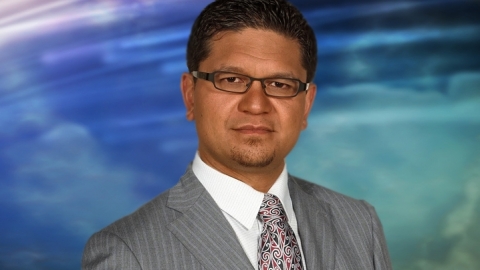
Shane Taurima: Conflict of interest?
 
Mr Shane Taurima was forced to resign from his job at TVNZ because he allegedly failed to adequately separate his political ambitions from his statutory obligations, as a public broadcaster, to be politically neutral and only broadcast news and current affairs that is fair and balanced. TVNZ plans to avoid any future suggestion of political partiality by requiring its news and current affairs staff to declare and relinquish any existing ties and/or affiliations to political parties.
 
But, surely, this can only be regarded as a mixed blessing? At least an open declaration by all TVNZ journalists of their ideological predispositions would allow viewers to judge their output with a greater understanding of what kinds of facts they are more likely to put into, and leave out of, their stories. Just like the readers of this column, TVNZ’s viewers would then be able to calculate an appropriate political discount.
 
The Law may require our public broadcaster to be fair and balanced, but the Law can’t be there to witness what goes into or gets left out of everything we see.
 
Would we not be better served if all journalists were required to identify themselves as coming “From the Left’ or “From the Right”?
 
This essay was originally published in The Waikato Times, The Taranaki Daily News, The Timaru Herald, The Otago Daily Times and The Greymouth Star of Friday, 16 May 2014.

Friday, 21 February 2014

A Labour Cell In TVNZ's Vast Castle

Stairway To Hell: Like the decrepit dynasty at the heart of Mervyn Peake's grotesque fantasy novel, Gormenghast, the "Heads" at TVNZ's Auckland sprawling headquarters lost track of what was going on within their immense domain.

GORMENGHAST is one novel of a hell. Imagine J.R.R. Tolkien on acid, C.S. Lewis on speed, and you’ll hardly have made a mental dent in Mervyn Peake’s grotesque trilogy. I won’t spoil the books by giving away the plot in detail. Suffice to say that Gormenghast is an immense castle. So immense that the decrepit dynasty of Groan, to whom it ostensibly belongs, cannot possibly keep track of everything that goes on within its walls.
 
Watching Patrick Gower unfold (with ever increasing glee) the activities of Shane Taurima and his colleagues at TVNZ headquarters in Auckland, I couldn’t help being reminded of Peake’s gothic fantasy.
 
Like Gormenghast Castle, the sprawling TVNZ site had somehow spawned a secret cell of resistance. How was that possible? Because, like the Groans, TVNZ’s bosses appear to have become preoccupied with “the obscure and esoteric tenets” of their governance functions.
 
For the most part this involves large numbers of middle managers running up and down the great staircase that dominates TVNZ’s Auckland headquarters, ducking into tiny offices, and exchanging information with other middle managers who undertake to pass it on to yet more middle managers. Only very occasionally (or by accident) does this information ever trickle down to the people who actually make the television programmes we see on air.
 
Only very rarely do all the various functionaries of TVNZ gather together. And when they do it is almost always to pay homage to something called “The Ratings”. These are collections of viewing data gathered according to specifications laid down at some point in the far distant past but which are now almost completely irrelevant to the way people use their television sets, Sky decoders, PCs and iPhones.
 
The grand interpreters of The Ratings are the “Heads” (Head of Programming, Head of Marketing, Head of Sport, Head of News and Current Affairs). Their job is to advise the CEO who, in his turn, advises “The Board”.
 
TVNZ HQ - The higher you climb the less you know.
 
It is widely acknowledged within the sprawling edifice of TVNZ that the higher you climb in the organisation, the less you know about television. At the level of the Board, for example, virtually nothing is known about the rights and duties of a state broadcaster.
 
The similarities between TVNZ’s top brass, the Groans of Gormenghast, and the peculiar determination of both elites to cling to the “obscure and esoteric tenets” of their respective institutions are quite uncanny.
 
Certainly, it is very difficult to fathom how else Shane Taurima and his colleagues could run what amounted to a Labour Party branch out of the Maori and Pacific Television Unit – practically under the noses of TVNZ’s senior executives – without employing something like the Gormenghast metaphor.
 
And, really, can you blame them? It has been years since TVNZ management demonstrated the slightest respect for the news and current affairs obligations of what is still, officially, the people’s television network. They are required to operate in a culture of contempt for the principles of public service television – an attitude epitomised by the TVNZ CEO who claimed Police Ten-Seven as an example of Maori programming by pointing to the large number of young Maori men and women arrested on the show!
 
The atmosphere broadcasters are required to inhale at TVNZ may not be party political, but it is unquestionably ideological. Since 1989, when Labour removed all references to the public good from the Broadcasting Act, TVNZ has understood that its real (albeit unwritten) charter mandates the relentless promotion to New Zealanders of the virtues of neoliberalism, while rigorously eliminating all those programming options capable of constructing an alternative worldview.
 
Mr Taurima’s and his Maori and Pacific Television Unit colleagues’ biggest mistake – apart from believing that they could ever get away with behaving in such a nakedly party political fashion – was to hang their hats on securing the election of a Labour-led Government.
 
In the nine years that Helen Clark’s Labour Party governed New Zealand no serious effort was made to root-out the pernicious operational culture at TVNZ or, indeed, to address the manifold defects of this country’s recklessly deregulated media industry.
 
Even had TV3’s Patrick Gower not exposed Shane “Steerpike” Taurima’s cell of resistance in the bowels of the TVNZ Gormenghast, a change of government would only have confirmed for him The Who’s immortal line:
 
“Meet the new boss – same as the old boss.”
 
This essay was originally published in The Waikato Times, The Taranaki Daily News, The Timaru Herald, The Otago Daily Times and The Greymouth Star of Friday, 21 February 2014.