Showing posts with label Voter Mobilisation. Show all posts

Tuesday, 18 March 2014

The Ecology Of Poverty

The Ecology Of Poverty: The range of common experiences between the comfortably off New Zealander and the struggling beneficiary has narrowed dramatically. The days of "getting out the vote" may be over.
 
THERE’S A STORY I like to tell about “getting out the vote”. I’m sharing it with you today because unless Labour is able to substantially increase the number of New Zealanders participating in the electoral process its chances of becoming the next government are negligible. The story is also important because I’m not that confident it could be repeated. And if it isn’t repeatable, then the whole character of electoral politics in New Zealand has already changed – irrevocably.
 
But first – the story. I have changed the name of the woman at the centre of this true tale because it happened a long time ago and she has since gone on to carve out a highly successful career in a major New Zealand company.
 
But, back in the day, Mary was living in one of those provincial centres where the city fathers (and mothers) like to keep all the unemployed, solo mums, invalids and sickness beneficiaries in one shabby suburb so that the authorities can keep an eye on them. Just about everybody rented: either from the state or from the folks who lived in the nicer parts of town. The houses had mostly seen better days, even if the people inside them hadn’t much hope of doing the same.
 
Mary and her little boy subsisted on the DPB and whatever extra help her (proudly left-wing) family could provide. Survival, under the tender legacy of Christine Rankin’s WINZ, was a full-time job for most beneficiaries. Very few of them had any time for politics or politicians. And, if we’re being honest, most politicians didn’t have that much time for them.
 
Though Mary lived in a Labour-held electorate, her MP really wasn’t much cop – at least not as far as the people who lived on Mary’s street were concerned. She had made her way up through the mostly middle-class Women’s Network of the Labour Party which meant that her working knowledge of the working-class was, to put it kindly, somewhat limited.
 
But, as I said, Mary came from an intensely political working-class family. Both her parents and two of her siblings were left-wing party activists and Mary had acquired the ability to formulate a better-than-average political analysis practically by osmosis. Unlike most of her neighbours, she saw a General Election looming. And just like the city’s shrewder party bosses, she was pretty sure her local MP was in trouble.
 
Sure enough, the polling booths had only been open a few hours on Election Day when Labour’s scrutineers noticed a frightening trend. If the hundreds of “natural” Labour supporters in Mary’s suburb continued to stay at home (as they were doing in droves) the incumbent MP was going to lose. Somehow word was got to Mary: “Can you get your neighbours out? If Labour doesn’t maintain its vote at your local booth, the Nats will win.”
 
Now Mary may not have cared much for the Labour Party but she cared for the National Party a whole lot less. So, as the day wore on, Mary wore her knuckles raw on the doors of her friends and neighbours.
 
She knew them and they knew her. More importantly, they trusted her. So when she told them: “You gotta get down to the school and vote. Yep, right now. Coz if all of us living round here don’t vote Labour, the Nats will win.”
 
And it worked. Mary’s neighbours squeezed their babies into their strollers, and their voting papers into the ballot box – and Labour held the seat.
 
I told this story to my brother last Christmas, and he shook his head. He’s been a social worker for 40 years and he told me, sadly, that “the ecology of poverty” (as he memorably described the social relations of deprivation) has undergone a dramatic change since he first ventured into those hard-scrabble suburbs back in the late-1970s. He’s not so sure that the species of citizen to which Mary belonged – already on the edge of extinction 20 years ago – exists anymore.
 
Had he been dropped into Mary’s social ecosystem 20 years ago, he said, finding a path to survival, though difficult, would still have been possible. The poor still had enough in common with “Middle New Zealand” for a reasonable measure of mutual comprehension. Today, he said, it would be much harder. The range of common experiences between the comfortably off New Zealander and the struggling beneficiary has narrowed dramatically.
 
“I don’t think I could do it.”
 
And, believe me, if he couldn’t do it, and if the sort of well-read, politically-aware, working-class families that made Mary possible no longer exist, then the mission of “getting out the Labour vote” has become a fool’s errand.
 
Twenty years ago the ecology of poverty still possessed a sufficiently political dimension to preserve Labour’s honour. Twenty years later – it’s gone.
 
This essay was originally published in The Press of Tuesday, 18 March 2014.

Tuesday, 14 January 2014

Get Ready For A Megaparty Of Serious Fun

Serious Funster: Kim Dotcom's ability to mix serious politics with the digital playfulness so defining of the 18-25-year-old age-group raises the possibility of his putative "Megaparty" mobilising a significant number of first-time and/or abstaining voters, thereby, as Fairfax journalist, Vernon Small, put it: "throwing a spanner in the works" of the 2014 General Election.
 
JOHN KEY must be hoping that Kim Dotcom is extradited before the election, because if Dotcom is still here in November there’s every chance that Mr Key’s Government won’t be.
 
Those who make it their business to know what’s going on politically began hearing the rumours more than two months ago. That talk of a Dotcom inspired and funded political party was no longer talk: that action was being taken to make it happen; that high-profile individuals were being approached to take on the public roles required to bring a new political party into existence.
 
These individuals are young, wired and mercifully free of the sort of ideological and historical baggage that connects both National and Labour politicians to the “failed policies of the past”. Dotcom’s “Megaparty” (its working title) will not be about the past, it will be about the future.
 
As a party of the future, Megaparty will appeal mostly to those voters with the most future to appeal to – the young.
 
Its electoral base will be the generation born into the Internet Age: young New Zealanders in their late teens and early twenties; tech savvy, media wise, eager to make their mark but frustrated by an older, Baby-Boom, generation which refuses to make way for those best-placed to deal with the daunting challenges and changes of the digital age.
 
It’s a demographic that is at once aggressively individualistic and touchingly collective: keen to make their personal contribution, but equally eager to share it. A generation which, ideologically-speaking, finds little to connect with in either National or Labour. If these kids vote at all, it is probably for the Greens – but even there the wagging finger of environmental correctness is as likely to offend their anarchic instincts as it is to engage them.
 
Dotcom has already issued a compressed version of the Megaparty’s manifesto – tellingly to the international website/magazine, Vice:
 
“Government is supposed to serve us, the people. We are paying with our taxes [in the expectation] that they do a good job for us. But look what they do: they undermine our rights, they destroy our freedoms, they censor our internet. So we are the ones who have to bring that change.
 
“That is why I get involved in politics because I am f…ing tired of this nonsense and someone has to stand up and change this.”
 
That Mr Dotcom cannot actually stand for election (he is not a New Zealand citizen) will likely make his party more, rather than less, electable. The idea that someone might set up a party for strictly altruistic and politically limited purposes: to roll back the legislative assaults on individual rights and freedoms and preserve the independence of the Internet; will have huge appeal among the young who tend to view the political class in general and professional politicians in particular with withering disdain.
 
The documentary in which Vice News’s Tim Pool talks to Dotcom reveals a man with an unusually powerful grasp on what makes the younger generation sit up and take notice. Pool’s reaction to the larger-than-life Dotcom is equally fascinating. The mansion, the sprawling lawns, the high-tech toys, nothing on the multi-millionaire’s estate is either enviously resented or even slyly denigrated. On the contrary, the young reporter behaves like a child in a toy store and Dotcom shares in his excitement.
 
Business, commerce, capitalism itself: the younger generation doesn’t damn these things as bad in themselves. It’s the evil capitalism enables that they condemn. Like the Bible says: “The love of money is the root of all evil”. Dotcom’s singular gift is his ability to turn money into fun – and then share it.
 
Statistics New Zealand estimate that on 30 June 2013 there were 333,840 New Zealanders aged 20-24 – more than enough to surmount the 5 percent MMP threshold. A huge number of these young people are conveniently concentrated on the nation’s campuses – making the universities and polytechs Megaparty’s prime recruitment sites.
 
It’s even possible that the tightly-packed electorate of Auckland Central, with its tens-of-thousands of young, upwardly-mobile, inner-city apartment-dwellers, might end up being persuaded to guarantee Dotcom’s and Megaparty’s success by electing their (carefully chosen) candidate to Parliament.
 
Impossible?
 
Not when one considers the 1984 success of that other high-profile, beguilingly- roguish, self-made millionaire, Sir Robert Jones. Or the surprise defection of Auckland Central voters from Labour’s Richard Prebble, to the Alliance’s Sandra Lee, back in 1993.
 
Given his history of making the Internet dance to his tune, Dotcom’s political apps and communication strategies are likely to give Megaparty a reach and a level of sophistication that New Zealanders have never before encountered.
 
“Let the masses see your talent and your gifts”, the ebullient German entrepreneur told Vice’s Tim Pool. With the launch of his party in late-January, Kim Dotcom is poised to follow his own advice.
 
This essay was originally published in The Press of Tuesday, 14 January 2014.

Wednesday, 1 January 2014

"The Defining Challenge Of Our Time"

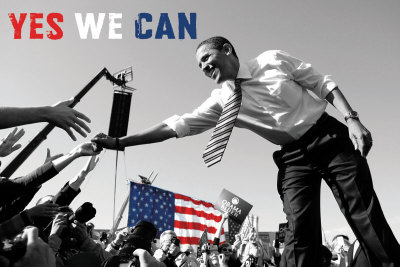
Progressive Populism: Barack Obama's promise of collective empowerment was crucial to his 2008 election victory. On 4 December he signalled that combatting economic inequality would be the motivating theme of the Democratic Party's 2014 bid to reclaim control of the House of Representatives. If our own David Cunliffe was wise he would make the fight against inequality similarly central to Labour's 2014 election campaign.
 
2014 IS NOT ONLY an election year in New Zealand, it is also the year of the “mid-term” elections in the United States. In both countries the debate between Left and Right will be focus on rising economic inequality and what, if anything, should be done to reduce it.
 
Speaking to a meeting of the Centre for American Progress in Washington DC on 4 December, President Barack Obama described economic inequality as “the defining challenge of our time” – immediately touching off a spirited debate, not only between liberals and conservatives, but between the moderate and radical wings of his own Democratic Party.
 
The rhetorical struggle on the American Left, will be over whether or not the term “economic populism” is presented as being a good thing or a bad thing. The Democratic Senator for Massachusetts, Elizabeth Warren, has seized the initiative by boldly laying claim to the progressive legacy of American populism – a tradition enthusiastically endorsed by the Nobel-Prize-winning economist, Paul Krugman, who ended a recent New York Times blog posting with the words: “go populism go.”
 
The debate in New Zealand has yet to reach this level of noisy excitement, but within the Labour Party a similar struggle between moderates and radicals is underway.
 
At the Party’s annual conference, held in Christchurch in early November, the impetus towards economic populism was readily apparent. Ordinary branch members and the party’s trade union affiliates, fresh from their triumph in the leadership primary, were keen to rally Labour’s traditional support-base around a populist banner.
 
Significantly, their calls for a rethink of Labour’s policy of raising the age of eligibility for NZ Superannuation to 67, and for Labour to distance itself from the Trans-Pacific Partnership Agreement (both of which fall squarely under the rubric of economic populism) were finessed away by party bosses behind-the-scenes.
 
The biggest stumbling blocks to a campaign based on economic populism are Labour’s economic spokesperson, David Parker, and its trade spokesperson, Phil Goff. Both of these senior Opposition politicians believe that if Labour is to win the 2014 General Election, then it must present a moderate and responsible face to both the electorate and (perhaps more importantly) to the country’s opinion leaders.
 
Both men subscribe to the view that elections are won or lost in the middle-ground of politics, where men and women of moderate opinions congregate. Without the endorsement of these moderate voters, runs the argument, a change of government will not happen.
 
At work here is a powerful sub-text in which political moderation is conflated with the middle-class. If only by implication, the Right associates economic populism (which it regards as a form of extremism) with politicians purporting to speak for working-class voters and beneficiaries.
 
And this produces another, more sinister, twist to the idea of the “Moderate Middle”. In both the USA and New Zealand, the non-white population is strongly over-represented among low-paid workers and beneficiaries.  It does not, therefore, take much to persuade the mostly white middle-class voters of either country that economic populist policies designed to uplift Blacks and Latinos, Maori and Pasifika, can only be implemented at their expense.
 
The unacknowledged racism inherent in the strategy of appealing to the “Moderate Middle” forced Barack Obama, the Democratic party’s first black presidential candidate, to pursue a strategy of going around the white middle-class and mobilising those Americans least likely to participate in the electoral process: young people and poor people.
 
The extraordinary power of his campaign rhetoric in 2008 – his famous “Yes We Can” slogan – was designed to persuade those alienated and marginalised citizens who habitually dismissed politics as having nothing in it for them that – this time – they could make a difference.
 
And once they were “in” the electoral process, the Democratic Party’s extraordinary political machine made sure that they remained accessible to President Obama’s appeal for a second term. The Democrats ability to identify and mobilise an unusually large proportion of their 2008 vote was a crucial factor in Barack Obama’s defeat of Mitt Romney in 2012.
 
And now the President’s party is preparing to mobilise those same voters by presenting the 2014 mid-term elections as an opportunity to strike a blow for economic equality by helping “progressive populist” Democrats reclaim the House of Representatives from the far-right “Tea Party” Republicans.
 
If Labour is to retake New Zealand’s House of Representatives it needs to learn from the Democratic Party’s example. A strategy based on competing for the support of the Pakeha middle-class will do nothing to mobilise the 750,000 mostly young and poor voters who sat out the 2011 General Election.
 
Only an unashamedly populist campaign that declares “Yes we can eliminate economic inequality in New Zealand!” offers Labour the slightest hope of convincing the young and the poor that by casting a vote in 2014 they, too, can make a difference.
 
This essay was originally published in The Press of Tuesday, 24 December 2013.