
Friday, 5 February 2021

The Woke Supremacy.

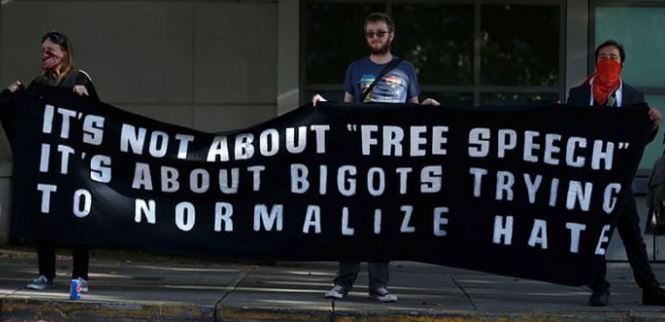
Sowing The Wind: The backlash against wokeism will be made much more aggressive by the difficulties its opponents encounter in making their voices heard. The mainstream news media – and especially the state-owned media – have become increasingly intolerant of ideas and opinions which directly, or indirectly, challenge the wokeists’ view of the world. 

IT IS DIFFICULT to attach a name to the ideology currently guiding the actions of the New Zealand ruling-class. For the past twenty years the Left has been content to call it neoliberalism, but in the third decade of the twenty-first century that term has less and less purchase on reality. The new ideology which has emerged, let’s call it “wokeism”, is a radical fusion of neoliberalism, environmentalism and identity politics – and its powerful enough to disrupt profoundly the political, social and economic institutions of New Zealand society.

That wokeism will generate massive resistance is certain. Its assault on the traditional order will leave more and more people feeling unmoored and vulnerable. Inevitably, a political movement will arise to contest the wokeists’ claims and policies. This movement will not, however, be driven by the traditional Left, it will be the creation of an angry and radically populist Right. What’s more, the transformational ambitions of wokeism will provoke its opponents into advancing an equally comprehensive programme of revocation and reconstitution. The result will be a deeply divided society, with tolerance and empathy in short supply.

The backlash against wokeism will be made much more aggressive by the difficulties its opponents encounter in making their voices heard. The mainstream news media – and especially the state-owned media – have become increasingly intolerant of ideas and opinions which directly, or indirectly, challenge the wokeists’ view of the world. Stuff, the largest newspaper publisher in the country has embraced wokeism wholeheartedly and set its face resolutely against the errors of “racist” New Zealanders. Even more significantly, citizens determined to spread “unacceptable” ideas can no longer rely upon the major social media platforms for their dissemination. Increasingly, Twitter, Facebook and Instagram are “de-platforming” individuals and groups (including a former President of the United States!) whose beliefs have been anathematised by the woke.

This de-platforming of dissenters by the woke media – often facilitated by threats from major corporate advertisers to withdraw their financial support – will complicate the mobilisation of wokeism’s opponents, but it will not prevent it. Inevitably, the sheer number of New Zealanders shut out of the wokeist discourse will persuade conservative investors to offer them a Fox News-like outlet for traditional views and values. As Rupert Murdoch knows well, there are big profits to be made out of alienation and anger. Those corporates hitherto persuaded to embrace (and enforce) wokeism may experience second thoughts when the enormous size of the traditionalist audience is revealed.

Right-wing political parties will likewise be forced to decide whether or not the game of accommodating themselves to the demands of wokeism is, in the long term, worth playing. If they decide not to place themselves at the head of a movement fuelled by rising anger and resentment and strongly supported by a major media outlet devoted to its cause, then, most assuredly, someone else will. National and Act will not be slow to understand that if they do not get on board the radical right-wing populist bandwagon, then it will roll right over the top of them. As with the Republican Party in the United States: they may not like it, but they will not fight it. Their biggest challenge will be to find a Trump-like politician to front it.

The key insight of the world’s most successful populist leaders is that the voters will not punish a politician for farting in the wokeist church: who simply refuses to be daunted by charges of racism, sexism, homophobia, Islamophobia, or any of the many other “thought crimes” promulgated by the woke. The politician who responds to all such accusations with a straightforward “Yes, I am. And if you expect me to apologise for it, you’re going to be bitterly disappointed!” That sort of politician: Trump, Duterte, Bolsonaro, Orban; receives as many cheers as jeers – probably more. Yes, liberal Americans were horrified when Trump branded Mexican border-crossers drug-dealers, rapists and thieves; but conservative Americans were delighted to have finally encountered someone willing to “tell it like it is”.

The other key insight of the right-wing populists is that most people really don’t like the news media. The politician who viciously attacks reporters: who accuses them of manufacturing “fake news”; who bans them from his press conferences and brands the newspapers and networks they work for “enemies of the people”; will emerge from the conflict stronger – not weaker. So long as they have their own equivalent of Fox News to carry their message to their “base”, it simply does not matter if wokeist media outlets rebuke and revile them as right-wing “fanatics”. Indeed, such charges will only succeed in further burnishing their reputations as champions of the “deplorables”. CNN didn’t bring Donald Trump down. What defeated him was his own woefully inadequate response to the Covid-19 pandemic.

Couldn’t happen in New Zealand. How often has that “argument” been advanced by those whose salaries depend upon it being true? If these political Pollyannas had the slightest familiarity with the history of their own country, they would know that it already has.

Much of the populist National Party prime minister Rob Muldoon’s popularity was generated by his heated exchanges with journalists. Long before Donald Trump crossed swords with CNN’s White House correspondents, Muldoon was ordering the removal of the Listener’s parliamentary reporter, Tom Scott, from the Beehive theatrette. When the TV news showed the prime minister ordering his aides to “take him away”, liberal New Zealand was horrified. For “Rob’s Mob” of conservative New Zealanders, however, is was thrilling proof of their leader’s strength. The media had it coming!

Muldoon’s most apt pupil in the dangerous game of right-wing populist politics was Winston Peters. Openly challenging the news media and arguing aggressively with journalists live on television became a key component of his enduring electoral appeal. Once again, liberal New Zealanders were perplexed: what could Peters possibly hope to gain by such vulgar displays of political truculence?

What Peters understood, and his well-educated and refined critics tended to forget, was that half the population falls on the wrong side of the bell-curve. Instinctively, the vulgar masses recoil from the lofty condescension of professional middle-class journalists. By attacking the news media, and its “sickly white liberal” assumptions, Peters, like Trump, secured the votes of the “poorly educated”.

All of which raises the critical question: Who will take on the right-wing populist mantle of Muldoon and Peters? Certainly, National’s Judith Collins and Act’s David Seymour would like to, but are they temperamentally suited to the role? Do they have the necessary slivers of ice-cold steel driven deep enough into their souls? Are they able to deploy the sort of cruel humour that lacerates their opponents’ self-confidence? Can they make people laugh at their vicious jokes in spite of themselves? It is certainly very difficult to imagine either Collins or Seymour successfully delivering Muldoon’s brutally funny quip: “I have seen the shivers running around Bill Rowling’s back, looking for a spine to crawl up!”

There is no shortage of applicants for the job of radical right-wing populism’s “drummer”: the leader who will make the hearts of the angry and the marginalised beat faster. The rabble-rouser who will cause them to clench their fists and clutch at their grievances more tightly. The messiah who will inspire them to set aside their ingrained sense of inferiority and their deep fear of being laughed at and/or condemned, and demand their own version of paradise. The demagogue who will impel the unmoored and vulnerable towards the clamour of ideological battle with the relentless and pitiless beating of his rhetorical drum. Oh yes, we’ve seen Billy Te Kahika, Jami-Lee Ross, even Hannah Lee Tamaki, make their pitches. But – no sale. The next drummer has yet to step out upon the national stage.

While New Zealand waits for that perilous person to appear, the woke supremacy will continue. Hate speech will be outlawed. The nation’s history will be re-written. Even the country’s name will be driven relentlessly towards the memory hole. Were these assaults upon tradition to be offset by decisive governmental action making rents and homes affordable, forcing the rich to pay their fair share of tax, and restoring a rough balance of power in the workplace, then they might be forgiven. If the democratic rights of New Zealand citizens were being beefed-up – instead of being whittled away – then wokeism might have a future. But, they aren’t, and it doesn’t.

Only when the drum-beat of right-wing populism starts to shake New Zealand’s windows and rattle its walls, will wokeism’s fondness for silencing its enemies finally begin to make a kind of desperate sense.


This essay was originally posted on The Daily Blog of Thursday, 4 February 2021.

Safeguarding Maori Wards: A Significant Treaty Victory.

Nothing New Here: At the level of national affairs, ethnicity has been recognised as a significant aspect of political representation since 1867. That was the year New Zealand’s 13-year-old parliament deemed it expedient to create four “Maori Seats”, for the purposes of giving a voice to, and representing the interests of, New Zealand’s “native” population. Extending the principle to local government does not seem unreasonable.

MAORI HAVE A SIGNIFICANT victory to celebrate this Waitangi Day. Monday’s announcement by Local Government Minister Nanaia Mahuta heralds a significant shift in the representative breadth of local government in New Zealand. Maori wards are about to become a common feature of this country’s democratic architecture. Mahuta’s reforms will be remembered as an important historical step towards realising fully the bi-cultural constitutional assumptions implicit in the treaty signed at Waitangi on 6 February 1840.

Not all New Zealanders will celebrate Mahuta’s legal changes. Many will decry the Government’s decision to retrospectively eliminate the legal rights of New Zealand citizens. They will further lament the damage Mahuta’s reforms will inflict upon the unitary character of the New Zealand state.

The world does not look kindly upon states that openly proclaim the existence of two (or more) categories of citizenship. It condemned the United States of America’s “Jim Crow” South (1878-1954). Likewise South Africa’s apartheid regime (1948-1994). The Israeli state’s legal elevation of Jewish over non-Jewish citizens raises similar misgivings. The liberal-democratic tradition – out of which the United Nation’s Universal Declaration of Human Rights was born - proclaims the equality of all human-beings, and looks askance at any state which bestows legal rights upon one group of its citizens while statutorily withholding them from another.

In the case of Maori wards, the arguments in opposition are generally represented by the phrase “single standard of citizenship”. Local government representation is based upon the number of New Zealanders living within the democratically determined geographical boundaries of regions, districts and cities. Constitutionally, the ethnicity of those New Zealand citizens (or permanent residents) is not supposed to signify.

Except that, at the level of national affairs, ethnicity has been recognised as a significant aspect of political representation since 1867. That was the year New Zealand’s 13-year-old parliament deemed it expedient to create four “Maori Seats”, for the purposes of giving a voice to, and representing the interests of, New Zealand’s “native” population.

Conceptually, it is but a short step from “Maori seats” to “Maori wards”.

If New Zealand’s constitution has survived its deviation from strict liberal-democratic theory at the national level for 154 years, without serious mishap, then what possible objection can their be to replicating that deviation at the local level? Anomalous though New Zealand’s special “indigenous” provisions may be in terms of liberal-democratic theory, they have proved remarkably successful in practice. Proof to many New Zealanders of their country’s improvisational genius.

Ours may be a No. 8 Wire constitution – but it works.

Why, then, was legal provision made for citizens to challenge councils’ decisions to create single, or multiple, Maori wards? After all, no such provision exists allowing citizens-initiated referenda to overturn the creation/composition of general council wards. What was it that made it acceptable for plans to provide effective local representation for New Zealand’s indigenous minority to be vetoed by its local ethnic majority?

It is very difficult to escape the conclusion that the referenda provision vis-à-vis Maori wards was nothing more than a sop to a deeply racist colonial Cerberus. The well-meaning framers of the legislation understood that it would be impossible for them to deliver Maori wards with their progressive left hand, without at the same time giving Pakeha electors an opportunity to snatch them back again with their reactionary right.

The framers’ understanding of Pakeha prejudice was validated repeatedly when nearly all attempts to establish Maori wards were voted down by huge majorities. The descendants of the Pakeha settlers who made the country called “New Zealand” clearly possessed a strong intuition that the colonial state erected on the tribal lands of its conquered “natives” would not long survive any concerted effort to take the bi-cultural implications of the Treaty of Waitangi seriously.

The results of those referenda make it clear that, were the democratic anomaly of New Zealand’s Maori seats put to the vote, their retention would, almost certainly, be rejected decisively. The Pakeha majority’s disdain for the principle of local Maori representation is likely exceeded only by its antipathy for special Maori representation in the New Zealand parliament.

This is the obverse side to the constitutional coin Mahuta and her Labour, Green and Maori Party colleagues have just tossed.

To the Pakeha majority, the principles of liberal-democracy are morally and constitutionally unassailable. To the Maori minority, they’re simply unbeatable.


This essay was originally published in The Otago Daily Times and The Greymouth Star of Friday, 5 February 2021.

Monday, 1 February 2021

“Where Our Ambition Lies”

Time To Choose: Climate Change Commissioner, Rod Carr’s advice to Jacinda Ardern’s Government is uncompromising. The measure of our success at coping with global warming will be determined by how profoundly New Zealanders are willing to change their way of life.


“WE GOT THIS”
, would seem to be the Labour Government’s response to the Climate Change Commission’s (CCC) uncompromising report. The media statement released on Sunday, 31 January, under the names of Prime Minister Jacinda Ardern and the Minister for Climate Change James Shaw, is nothing if not calming and reassuring.

“The report demonstrates we have the tools we need to achieve our target, but calls on us to accelerate our work. As a Government we are committed to picking up the pace and focusing much more on decarbonisation and reducing emissions rather than overly relying on forestry.”

Such remarkable sang-froid in the face of what some commentators are already describing as a change agenda every bit as revolutionary as Roger Douglas’ and Ruth Richardson’s. Having steadfastly refused to achieve transformation, the Prime Minister and her government are at risk of having transformation thrust upon them.

It is encouraging to learn that the Government is confident it possesses the tools to do the job. Encouraging – but not surprising. No one has ever suggested that successive New Zealand governments lacked the means to address the rapidly intensifying problems of global warming. For the best part of three decades, the question has rather been: “Do they have the will?” And for 30 years the answer has come back as: “No.”

The CCC’s report makes it clear that this lack of commitment is no longer acceptable if the target of reducing New Zealand’s net carbon emissions to zero by 2050 is to be met:

“[T]he Government must pick up the pace. Aotearoa will not meet its targets without strong and decisive action now to drive low emissions technologies and behaviour change across all sectors. 2050 is not far away – particularly if you consider the life span of infrastructure, vehicles, buildings – and people.”

It is about here that the problems begin. Outside the exceptional spheres of the Christchurch Mosques Massacre and Covid-19, the Ardern Government has, to date, offered no persuasive evidence that it knows how to do “decisive”.

Promise decisive action? Check.

Ask for advice on how best to take decisive action? Check.

Deliver decisive action? Ah well, you know, there are no silver bullet solutions to the problems this government inherited from its predecessors.

If the CCC’s recommendations are to be implemented, however, this government is going to need a significant quantity of silver.

Two of the principal contributors to our carbon emissions profile are the agriculture and transportation sectors. If our recent history is any guide, then driving down emissions levels in these key areas will be resisted furiously by industry lobbyists of every stripe.

To resist such pressure will require of our political leaders and senior public servants a so far unmanifested degree of staunchness. The exploiters of our soils and the users of our roads are not known for their willingness to compromise. They are, however, in/famous for getting what they want. And, at this moment, what they want most, and will move heaven and earth to get, is time.

For decades the industries in the crosshairs of carbon emissions reduction (most particularly the oil industry) devoted the greater part of their defensive effort to denying the reality of anthropogenic global warming. In this they were tragically successful, most notably in the United States, where, for the last four years, big emitters have enjoyed the protection of a climate-change-denying President. With the arrival of the Biden Administration, however, that protection has been removed. What the industries at the heart of the climate emergency in both the United States and New Zealand are rolling-out as fast as they can is a strategy of distraction, diversion and delay.

New Zealand’s dairy industry has begun already. Pre-empting the release of the CCC’s “Advise to Government” report by several days, Dairy NZ released a report indicating that the New Zealand dairy industry is already delivering the world’s lowest carbon footprint.

Measures intended to further reduce this country’s already small footprint, the Ag-Research produced report argues, will compromise seriously its international competitiveness and bring about an economically damaging reduction in New Zealand’s dairy production. The report further argues that any serious reduction in New Zealand’s dairy exports will only lead to foreign dairy producers, with much larger carbon footprints, making up the shortfall. New Zealand dairy farmers will suffer; the New Zealand economy will suffer; the New Zealand people will suffer; and the quantity of greenhouse gasses emitted globally will not be reduced. In short: a lose, lose, lose, lose situation.

As Richard Harman, writing for his Politik website, sees it:

“[A]s far as Dairy NZ is concerned the real point of the [report] and its publication [on Wednesday, 27 January 2021] is to try and get in ahead of what starting on Monday will be a national debate on who should cut what to enable New Zealand to reach its Paris Agreement targets.”

The road transport industry and private vehicle owners will be no less interested than dairy farmers in making sure that they are not the “who” lumbered with the burden of fulfilling New Zealand’s obligations.

So it has ever been when push comes to shove on Climate Change: everybody wants to go to heaven, but nobody wants to die.

The CCC’s boss, Rod Carr, is only too aware of this problem. He knows that the measure of our success will be determined by how profoundly New Zealanders are willing to change their way of life:

“Now we must decide where our ambition lies. For my part, I want to be able to say I did as much as I could as soon as I knew about the impact I am having on this world. Increasingly I am sharing this sentiment with my fellow New Zealanders. To achieve a cleaner, greener, healthier and more sustainable future, no emission reduction is too small – or too soon. All of us have a part to play and a contribution to make.”

As ever, Greenpeace NZ Director, Russel Norman – the bane of the dairy and road transport industries alike – cuts to the heart of the matter in his tweet on the CCC’s report:

“The Climate Commission message in its draft advice today that fossil gas is no bridge to zero energy emissions and that pine forestry can only be a marginal part of the NZ strategy is really welcome.”

If Norman’s right, then this is a truly revolutionary admission on the part of the CCC. Contained within it is the crucial recognition that ours is a civilisation based on the ready availability of coal, oil and natural gas. That this extraordinary twenty-first century world we inhabit could not exist without the cheap and abundant energy extracted from fossil fuels. Unfortunately, those same fossil fuels lie at the heart of the threat posed to humanity’s future by runaway climate change. So if, as Norman alleges, the CCC’s draft advice to the government envisages a fundamental shift away from fossil fuels, then the level of economic and social transformation New Zealanders will be expected to shoulder between now and 2050 is enormous. It is not only the source of our energy that the CCC is calling upon us to revisit, but the entire shape of our society.

In the report’s own words:

“We have heard consistently through our engagement that localised transition planning will be needed where communities work together to tailor a transition plan to their particular needs and aspirations. We also heard that this localised transition planning will need to be proactive, inclusive and transparent, and co-developed through a bottom up approach that involves iwi/Māori, local government, local communities, businesses, civil society groups and other stakeholders.”

What’s being demanded here is not a silver bullet, Jacinda, but a red/green one. You got that?


This essay was posted on the Interest.co.nz website on Monday, 1 February 2021.

Friday, 29 January 2021

Judith Collins’ State Of The Nation Speech Fails To Comfort – Or Connect.

Nothing New: State-of-the-Nation speeches are opportunities for those charged with their delivery to demonstrate renewed political credibility. Those hoping that Collins’ SOTN address to the Auckland Rotary Club on Tuesday, 26 January would constitute a significant step towards restoring her credibility must be feeling disappointed.

JUDITH COLLINS, remember her? She’s the woman who led the National Party to its second-worst defeat in 85-years. In a normal political party, leadership of that quality would have left the politician responsible with only one option: resignation. But, National hasn’t been a normal party for quite some time. Not since the departure of its last credible leader, Bill English, in 2018.

State-of-the-Nation speeches are opportunities for those charged with their delivery to demonstrate renewed political credibility. Those hoping that Collins’ SOTN address to the Auckland Rotary Club on Tuesday, 26 January would constitute a significant step towards restoring her credibility must be feeling disappointed. Certainly, National’s normality hasn’t been reclaimed.

A political party trounced as badly as National in 2020 owes the electorate two gestures – at the very least. The first is an apology to the voters for so egregiously misreading their mood and intent. The second is a promise to move beyond its clearly inadequate diagnosis of the nation’s ills and towards a whole new suite of remedies.

Collins’ speech did neither of these things. For the most part it was content to rehash the promises made to the electorate last October. The balance consisted of all the usual bromides of lazy conservatism.

The worst of these was Collins’ reflexive rejection of the Government’s plan to lift the minimum wage:

“Labour’s intentions are laudable but they are focused on alleviating the symptoms of stretched working families struggling to make ends meet rather than on the root causes of prosperity – supporting businesses to be more productive, investing in new capital, taking on new staff and lifting wages.”

We have heard it all before. The only way to lift wages is not to lift wages.

What would really make New Zealanders sit up and pay attention is an admission from National that it is precisely its own and the business community’s ingrained opposition to lifting wages that keeps New Zealand’s productivity so low. Recognition by Collins that only by winnowing-out our weakest businesses – i.e. removing the crutch of low wages – will this country’s long-delayed investment in skills, innovation and new technology become unavoidable. A brave declaration that low-wage economies are low-productivity economies. Now, that would have shaken the nation out of its Covid fever-dreams!

Another of those lazy conservative bromides holds that households and economies are subject to exactly the same constraints. That living beyond one’s means is as disastrous for countries as it is for individuals. Save all we can, reduce our debts as quickly as possible, keep the government’s nose out of our businesses’ business: these are National’s new remedies – same as the old remedies.

For the homeless, the solution is equally traditional – and facile. Make a bonfire of as many regulations as possible. Collins has promised her party’s support for emergency legislation designed to strip away what’s left of New Zealand’s social and physical environmental protections. It would be open-slather for property investors and developers.

“We need to reform our planning and RMA processes with one goal: freeing up land and getting more houses built”, Collins told the Rotarians. “And if councils won’t do it, we will do it for them.” (Some forms of state intervention, it would seem, cannot be done without.)

So far, so “same-old, same-old” from the Collins-led National Party. That familiar conflating of the particular interests of farmers and businessmen with the general interest of the whole nation.

“[W]e had a strong sense of community”, confided Collins, recalling her childhood in the Waikato. “We were surrounded by farming families who got stuck in and helped each other out, particularly when times were tough. It wasn’t something to be remarked on or exclaimed over, it was just the way things were – as a Collins, as a farmer, as a Kiwi.”

As if working-class families, a layer of New Zealand society considerably more familiar with tough times than Collins’ comfortable cockies, wouldn’t know how to get stuck in and help their neighbours.

It has always been there: National’s profoundly objectionable assumption that the only real Kiwis are people like themselves. That the rest of the nation are either parasites or problems. Probably both.

Collins has yet to learn the lessons of Holyoake, Bolger, Key and English. That National only regains credibility electorally by opening its arms wider – not to crush voters, but to comfort them.


This essay was originally published in The Otago Daily Times and The Greymouth Star of Friday, 29 January 2021.

Tuesday, 26 January 2021

Community Or Chaos: Chris Trotter Talks To Marvin Hubbard.


MARVIN HUBBARD, US citizen by birth, New Zealand citizen by choice, Quaker and left-wing activist, has been broadcasting his show, "Community or Chaos", on Otago Access Radio for the best part of 30 years. On 24 November last year, I spoke with him about the outcome of the 2020 General Election. The podcast may be accessed here. (Just scroll down the list until your reach 24/11/20.)


This posting is exclusive to Bowalley Road.

Monday, 25 January 2021

The Winds Of Change.

Yesterday's Gone: Cold shivers are running up and down the spines of conservatives everywhere. Donald Trump may have gone, but all the signs point to there being something much more momentous in the wind-shift than a simple return to the status quo ante. A change is gonna come.

ONE COULD ALMOST feel sorry for them. Until, that is, their propositions are subjected to robust interrogation. All around the world, conservatives are feeling the fresh winds blowing out of Washington – and they are shivering. They fear that ideas hitherto denied the full imprimatur of state power have been issued arms and are on the march. In short, today’s conservatives are feeling what old-fashioned Labourites and social democrats felt in 1981 when Ronald Reagan was sworn-in as the fortieth President of the United States.

President Joe Biden is 78 years old. He has trod the floor of the Capitol Building for nigh on 40 years, trimming his sails to the prevailing winds as all successful politicians learn to do. All those years of experience are speaking to him now: warning him that the mighty gale currently filling the sails of the American ship of state cannot be tacked against, only run before. This will not be a “trimming” presidency: the Biden years will be a time of surging forward.

As one recent comment on The Daily Kos put it: “This isn’t Biden 2008. Something in the last 12 years has broadened his horizon and pushed him to centre-left territory. He put RFK’s bust in his office along with Caesar Chavez. If that’s where he’s looking for inspiration, I’m happy.”

Which explains the cold shivers running up and down the spines of conservatives everywhere. Donald Trump may have gone, but all the signs point to there being something much more momentous in the wind-shift than a simple return to the status quo ante.

Biden’s victory was built on the votes of America’s youth, America’s women, and, most triumphantly, on the votes of America’s people of colour. “Sleepy Joe” knows that his campaign was dead in the water until the veteran black congressman from South Carolina, James Clyburn, rallied his people behind the former Vice-President and pushed him all the way to the White House. As a long-time mover-and-shaker in the US Senate, Biden also knows that without the astonishing efforts of black activist Stacey Abrams in Georgia, neither he nor his party could have uplifted the legislative tools of change.

Someone else who knows this is the forty-third President of the United States, George W. Bush. Encountering James Clyburn in the Capitol Building on Inauguration Day, ‘Dubbya’ told the veteran congressman that he was America’s “saviour”. Without his intervention, said Bush, the only politician who could have beaten Trump would not have won the nomination.

Most certainly it was no accident that the person who ended up stealing the show on Inauguration Day was young, female and black. Rightly celebrated for the power of “The Hill We Climb”, her poem in honour of the new President, Amanda Gorman was also a flesh and blood celebration of the new America that is rising. Clearly, it is not going to be an America dominated by the values of conservative white males. Equally clearly, that message has been received loud and clear by conservative white males everywhere.

Fourteen thousand kilometres to the south, the Weekend Herald’s columnist, John Roughan, offered words of advice on the best way to reach out to Trump’s defeated army of followers. He addressed his remarks not only to the US Democratic Party, but also the American news media:

“If American Democrats and the country’s respected newspapers and television networks really would like to bridge their country’s cultural divides, rather than simply saying they do, they need to come halfway over the bridge. They need to overcome their aversion to certain views and respect the fact that a lot of people, about half the population, think that way.”

Wrapped up in those two sentences is pretty much the whole of the world view that conservatives believe to be threatened and which they are moving heaven and earth to protect. Under no circumstances should “respected” media outlets give extensive access (and, by implication, validation) to the voices of those on the receiving end of these “certain views” held by “about half the population”. Rather, it is the duty of the mainstream news media to “overcome their aversion” to such views.

Another way of saying this might be to invite responsible journalists to come halfway across the bridge (Selma Alabama’s Edmund Pettus Bridge, perhaps?) to meet the racism, sexism, climate change denial and white supremacist thinking that has allegedly enthralled half their fellow citizens – along with every other ideological defence of inequality the political right sees fit to advance.

Failure to display such tolerance will have consequences. “If the world is not to suffer more populist disasters,” warns the author of hundreds of NZ Herald leader articles, “possibly even an encore for Donald Trump, news media have to find an open mind again.”

Or, it might have to narrow its mind somewhat.

“Many journalists have had a tertiary education in liberal arts and it shows”, writes Roughan. “Some of their news angles reflect the values and explanations of a social science seminar where nobody’s misfortune can be attributable to poor personal decisions, society is always to blame, if an ethnic minority is underperforming it is evidence of ‘systemic’ racism.”

Is Roughan accusing the graduates of New Zealand’s universities and journalism schools of disseminating “fake news”? Or, is he merely giving credence to Kellyanne Conway’s classic Trumpian assertion that it is perfectly acceptable, when debating politics, to advance “alternative facts”?

Then again, if we are not to trust the evidence of social scientists: or, if we are being asked not to rely upon evidence at all; then in who and in what should we repose our trust? In the scepticism of those whose world views cannot survive the introduction of contradictory evidence? In the ‘reckons’ of people who believe democracy consists of one’s own ignorance being regarded in every respect as the equal of others’ knowledge? Or, are we simply being invited to accept that, politically-speaking, everything goes more smoothly when educated citizens agree to meet ignorance and prejudice half way?

John Roughan argues that Joe Biden struck a series of “clanging notes” when he used his inaugural address to call out “political extremism, white supremacy, domestic terrorism . . . anger, hatred, extremism . . . racism, nativism, fear . . . facts that are manipulated, even manufactured”. What the Weekend Herald columnist did not explain, however, is how the new President could possibly have kept faith with the eighty million Americans whose votes put him in the White House if he had refused to strike the Liberty Bell so forcefully.

The consequences of heeding Roughan’s advice are there in American history for all to see. In the decades following the Civil War, politicians and newspaper editors from North and South insisted with ever-increasing fervour that it was time for the people of the United States to put the rancour of those bloody years behind them. Increasingly, it was asserted that far from being about the abolition of slavery and “a new birth of freedom” for the American republic, the war had only been about its noble antagonists’ differing definitions of freedom. Before long, the veterans of Blue and Gray were warmly embracing each other like long lost brothers.

Thus was racism reprieved in the United States. As white men’s willingness to meet each other half way condemned African-Americans to a life that offered them no way at all to the full and equal enjoyment of their constitutional rights.

Amanda Gorman’s poem spells out the moral obligation this historical failure places upon her fellow citizens:

because being American is more than a pride we inherit,
it’s the past we step into and how we repair it.


New Zealanders should learn from America’s experience. Truth owes nothing to falsehood. Knowledge owes nothing to ignorance. Tolerance owes nothing to prejudice. Equality owes nothing to racism. Justice owes nothing to injustice. And anyone who suggests otherwise is most definitely offering you fake news.


This essay was originally posted on the Interest.co.nz website on Monday, 25 January 2021.

Friday, 22 January 2021

The Economic Consequences Of Mr Hickey.

"Come The Revolution!" The key objective of Bernard Hickey’s revolutionary solution to the housing crisis is a 50 percent reduction in the price of the average family home. This will be achieved by the introduction of Capital Gains, Land, and Wealth taxes, and by the opening up of currently RMA-protected real-estate. As revolutionary programmes go, it’s admirably succinct. But, what else would Mr Hickey’s deflationary property revolution bring?
 
JOHN MAYNARD KEYNES, whose economic ideas are enjoying a modest revival in this time of Covid, was a formidable communicator. He shot to global prominence in 1919, following the signing of the disastrous Versailles peace treaty. His hastily written pamphlet, The Economic Consequences of the Peace, prophesied with considerable accuracy Versailles’ fatal economic impact upon victors and vanquished alike. Six years later, leveraging linguistically off his first great success, Keynes published another pamphlet – The Economic Consequences of Mr Churchill – in which he set forth with equal prescience the price Great Britain would pay for its Chancellor of the Exchequer’s pig-headed decision to resurrect the Gold Standard.

The tragedy enshrouding both of Keynes’ Economic Consequences pamphlets is that their author had been powerless to prevent the disasters whose outcomes he so clearly foresaw. How much better the world would have fared had Keynes’ advice been heeded – both the Great Depression and The Second World War would likely have been avoided. Against entrenched viciousness and ignorance, however, even intellectuals as prodigiously gifted as Keynes find it impossible to make headway. In a battle between reason and passion the smart money has always favoured the emotionally incontinent.

Right now, in New Zealand, for example, feelings are running high on the vexed questions of homelessness and housing affordability. Perhaps the most passionate spokesperson for those currently struggling to house themselves securely is the financial journalist, Bernard Hickey. His call-to-arms on the housing issue has, of late, acquired a decidedly revolutionary tone. Behind his indisputably cogent expositions of the problem, one senses a rising anger, and what can only be described as a ruthless determination to sweep aside what he unabashedly identifies as the economic, social and political forces barring the path to homes for all New Zealanders.

The radicalism of his analysis is certainly not diminishing. In a recent opinion piece he lamented the absence of a clear bipartisan consensus on the measures needed to solve the housing crisis:

“National and Labour aren’t there on a bipartisan approach yet: not even close. They combined in the late 1980s and early 1990s to wage war on double-digit consumer price inflation by giving the Reserve Bank independence and setting a formal target of keeping inflation around 2 per cent. That involved passing acts of Parliament and essentially promising voters they would stick to that 2 per cent. It worked. Expectations changed.”

They did indeed, but only after New Zealanders were required to shoulder the enormous social costs of the economic revolution driven through with unparalleled ruthlessness by Roger Douglas and Ruth Richardson. Was that the sort of transformation Mr Hickey had in mind when he warned listeners to RNZ’s Sunday Morning Show late last year: “Come the Revolution”?

Certainly, Mr Hickey, following the historical precedent of Douglas and Richardson, has already picked out the enemies of the people upon whose necks his revolutionary blade is intended to fall. In the case of Rogernomics and Ruthansia the targets of the economic Jacobins were all those Kiwis too firmly attached to the State’s munificent teats. In Mr Hickey’s case, Madame Guillotine’s guests will be the generation of New Zealanders born between 1946 and 1965 – the notorious “Baby Boomers”. (You know them – they’re the ones with all the houses!)

The key objective of Mr Hickey’s revolutionary programme is a 50 percent reduction in the price of the average family home. This will be achieved by the introduction of Capital Gains, Land, and Wealth taxes, and by the opening up of currently RMA-protected real-estate. As revolutionary programmes go, it’s admirably succinct. But, what else would Mr Hickey’s deflationary property revolution bring?

The answer is, of course, social, economic and political mayhem. Thousands of ordinary middle-class New Zealanders would be ruined. The country’s leading banks would teeter on the brink of failure. Credit would dry up overnight. New Zealand would be plunged headlong into a deep recession. Thousands of “millennial” Kiwis would lose their jobs, closely followed by thousands of redundant Gen-Xers. Poverty would surge upwards to engulf layers of society untouched by deprivation for more than eighty years. In short order, shock and disbelief would give way to unrelenting political rage – and a lust for inter-generational vengeance.

House prices would, however, be halved. By that measure, at least, the economic consequences of Mr Hickey might be adjudged as entirely positive.


This essay was originally published in The Otago Daily Times and The Greymouth Star of Friday, 22 January 2021.