Showing posts with label John Maynard Keynes. Show all posts

Monday, 19 February 2024

Keynesian Wisdom.


When the facts change, I change my mind - what do you do, sir?
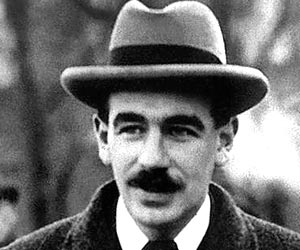
John Maynard Keynes (1883-1946)


This posting is exclusive to Bowalley Road.

Friday, 22 January 2021

The Economic Consequences Of Mr Hickey.

"Come The Revolution!" The key objective of Bernard Hickey’s revolutionary solution to the housing crisis is a 50 percent reduction in the price of the average family home. This will be achieved by the introduction of Capital Gains, Land, and Wealth taxes, and by the opening up of currently RMA-protected real-estate. As revolutionary programmes go, it’s admirably succinct. But, what else would Mr Hickey’s deflationary property revolution bring?
 
JOHN MAYNARD KEYNES, whose economic ideas are enjoying a modest revival in this time of Covid, was a formidable communicator. He shot to global prominence in 1919, following the signing of the disastrous Versailles peace treaty. His hastily written pamphlet, The Economic Consequences of the Peace, prophesied with considerable accuracy Versailles’ fatal economic impact upon victors and vanquished alike. Six years later, leveraging linguistically off his first great success, Keynes published another pamphlet – The Economic Consequences of Mr Churchill – in which he set forth with equal prescience the price Great Britain would pay for its Chancellor of the Exchequer’s pig-headed decision to resurrect the Gold Standard.

The tragedy enshrouding both of Keynes’ Economic Consequences pamphlets is that their author had been powerless to prevent the disasters whose outcomes he so clearly foresaw. How much better the world would have fared had Keynes’ advice been heeded – both the Great Depression and The Second World War would likely have been avoided. Against entrenched viciousness and ignorance, however, even intellectuals as prodigiously gifted as Keynes find it impossible to make headway. In a battle between reason and passion the smart money has always favoured the emotionally incontinent.

Right now, in New Zealand, for example, feelings are running high on the vexed questions of homelessness and housing affordability. Perhaps the most passionate spokesperson for those currently struggling to house themselves securely is the financial journalist, Bernard Hickey. His call-to-arms on the housing issue has, of late, acquired a decidedly revolutionary tone. Behind his indisputably cogent expositions of the problem, one senses a rising anger, and what can only be described as a ruthless determination to sweep aside what he unabashedly identifies as the economic, social and political forces barring the path to homes for all New Zealanders.

The radicalism of his analysis is certainly not diminishing. In a recent opinion piece he lamented the absence of a clear bipartisan consensus on the measures needed to solve the housing crisis:

“National and Labour aren’t there on a bipartisan approach yet: not even close. They combined in the late 1980s and early 1990s to wage war on double-digit consumer price inflation by giving the Reserve Bank independence and setting a formal target of keeping inflation around 2 per cent. That involved passing acts of Parliament and essentially promising voters they would stick to that 2 per cent. It worked. Expectations changed.”

They did indeed, but only after New Zealanders were required to shoulder the enormous social costs of the economic revolution driven through with unparalleled ruthlessness by Roger Douglas and Ruth Richardson. Was that the sort of transformation Mr Hickey had in mind when he warned listeners to RNZ’s Sunday Morning Show late last year: “Come the Revolution”?

Certainly, Mr Hickey, following the historical precedent of Douglas and Richardson, has already picked out the enemies of the people upon whose necks his revolutionary blade is intended to fall. In the case of Rogernomics and Ruthansia the targets of the economic Jacobins were all those Kiwis too firmly attached to the State’s munificent teats. In Mr Hickey’s case, Madame Guillotine’s guests will be the generation of New Zealanders born between 1946 and 1965 – the notorious “Baby Boomers”. (You know them – they’re the ones with all the houses!)

The key objective of Mr Hickey’s revolutionary programme is a 50 percent reduction in the price of the average family home. This will be achieved by the introduction of Capital Gains, Land, and Wealth taxes, and by the opening up of currently RMA-protected real-estate. As revolutionary programmes go, it’s admirably succinct. But, what else would Mr Hickey’s deflationary property revolution bring?

The answer is, of course, social, economic and political mayhem. Thousands of ordinary middle-class New Zealanders would be ruined. The country’s leading banks would teeter on the brink of failure. Credit would dry up overnight. New Zealand would be plunged headlong into a deep recession. Thousands of “millennial” Kiwis would lose their jobs, closely followed by thousands of redundant Gen-Xers. Poverty would surge upwards to engulf layers of society untouched by deprivation for more than eighty years. In short order, shock and disbelief would give way to unrelenting political rage – and a lust for inter-generational vengeance.

House prices would, however, be halved. By that measure, at least, the economic consequences of Mr Hickey might be adjudged as entirely positive.


This essay was originally published in The Otago Daily Times and The Greymouth Star of Friday, 22 January 2021.

Friday, 17 July 2015

The Economic Consequences Of Angela Merkel.

Dragons' Teeth: The German Chancellor, Angela Merkel's, torture of Greece marks the end of the European project. Europe's acquiescence at Versailles in 1919 meant that, within 20 years, Europe was, once again, at war with itself. The EU's refusal to stand in solidarity with the Greeks against German aggression (deploying banks this time, not tanks) has set the continent on the path to ever-increasing conflict and economic sclerosis.
 

Once all the Germans were warlike and mean
But that couldn’t happen again.
We taught them a lesson in 1918
And they’ve hardly bothered us since then!


YANIS VAROUFAKIS openly compares the Eurozone’s diktat to Greece with the Treaty of Versailles. The former finance minister’s comparison is well made. The Carthaginian peace imposed upon the German people in 1919 was not only intended to devastate their economy it was supposed to crush their spirit.
 
As punishment for launching the most catastrophic military conflict in human history, the Germans were to be kept in a state of economic servitude for decades to come. Nor was the victorious allies claim that Germany was solely responsible for the outbreak of the First World War a matter of mere rhetoric. The British naval blockade of Germany, which was gradually starving the defeated nation to death, would not be lifted until Germany’s “negotiators” (not that these were, in any genuine sense, negotiations) accepted the Treaty’s “War Guilt Clause”.
 
As the brutally punitive intentions of the Versailles diktat gradually emerged, three members of the Imperial British delegation, Harold Nicolson, Jan Smuts and John Maynard Keynes were filled with a terrible sense of foreboding. All three were convinced that nothing good could come from such an inhuman document. Each understood, with a chilling certainty, that the victorious allies were sowing dragons' teeth.
 
John Maynard Keynes: A terrible sense of foreboding.
 
The young economist, Keynes, quit the negotiations and returned to England where he spent the summer months of 1919 writing The Economic Consequences of the Peace. In his book (which instantly became an international best-seller) Keynes argued that the massive reparations demanded of Germany, combined with the Americans’ insistence that all Allied war debts be repaid, could only result in a fundamental derangement of the global economy. Throw in the German people’s Versailles-inspired sense of grievance and disaster was guaranteed. With uncanny accuracy, he predicted that Europe would be at war with itself, again, in just 20 years.
 
Flogging A Dead Horse: The imposition, by the victorious allies of World War I, of impossibly harsh economic conditions on the German people, constituted the first step on the road to World War II.
 
Of course, Greece is not Germany. Her people are not about to pull on jackboots and stomp all over the peace of Europe. But Germany is Germany and it is nothing short of tragic that the nation that went through the experience of Versailles – and all that followed from it – has so easily forgotten how it feels to be ganged-up on by a Europe determined to drive your country to the wall economically and strip it of what little self-respect it has managed to retain.
 
This failure of memory is particularly worrying in the light of what happened in 1953. That was the year in which Germany’s European neighbours, including Greece, wrote off up to 50 percent of her still outstanding Versailles debts. Yes, it was the Cold War. Yes, Germany was divided and it was important to give those Germans living in the West a sense of hope and confidence in the future. Even so, barely 14 years had passed since, as Mick Jagger put it: “the blitzkrieg raged/and the bodies stank”. Europe had considerably more to forgive Germany for in 1953 than it has to forgive Greece for in 2015.
 
Germany's Angela Merkel and Wolfgang Schauble: Executioners of the European dream.
 
The spectacle of Germany’s Chancellor, Angela Merkel, and her flinty-faced Finance Minister, Dr Wolfgang Schauble, squeezing the last drops of blood from the broken stones of Greece has sent a collective shudder through the rest of Europe. It’s a reaction with which Dr Schauble will be well pleased. It has long been the German Finance Minister’s plan to render Germany’s economic hegemony over Europe permanent by turning the continent into a “glorified debtors’ prison”. Greece is to serve as an example of what will befall any Eurozone member foolhardy enough to challenge the one-way flow of wealth to Europe’s biggest banker.
 
Frau Merkel is convinced that by allowing Greece to remain in the Eurozone she has demonstrated her bona fides as a “Good European”. It is, after all, vital that all Europeans understand that debts must be repaid, and that only orthodox economic policies should be pursued. If that requires German technocrats to second-guess the decisions of elected Greek politicians, then so be it. The Greek people need to understand that democracy has its limits; that saying “No” has a price.
 
The economic consequences of Angela Merkel, like the economic consequences of Versailles, will be a Europe at war with itself – within 20 years.
 
This essay was originally published in The Waikato Times, The Taranaki Daily News, The Timaru Herald, The Otago Daily Times and The Greymouth Star of Friday, 17 July 2015.
Friday, 15 June 2012

In Praise Of Heresy

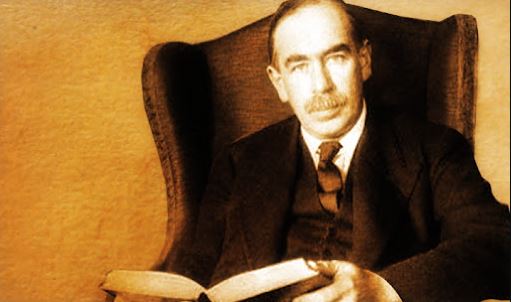
The Arch-Heretic of Twentieth Century Economics: John Maynard Keynes was one of those rare heretics whose ideas worked so well in practice that they became (for thirty extraordinary years) the new orthodoxy. His radical economic thinking inspired everyone from Adolf Hitler to Mickey Savage.

IS IT POSSIBLE to be both a politician and a heretic? With the times so out of joint it’s a question more and more voters around the world are asking. Observing the peculiar unanimity with which the international political class has responded to the global financial crisis, this voter scepticism appears entirely justified. In only a handful of countries (the most obvious being Greece) have politicians either voluntarily, or by the sheer force of public opinion, promoted policies unsanctioned by the global guardians of economic and political orthodoxy.

This was certainly not the case the last time the world was mired in economic catastrophe. One of the most intriguing historical aspects of the Great Depression of the 1930s is the willingness of contemporary political leaders to challenge the economic orthodoxy of their day.

On the Right, in Germany, Hitler tackled his country’s massive unemployment and stagnant industry by embarking on a programme of comprehensive rearmament – what later came to be known as “militarised Keynesianism”. On the Left, in the Soviet Union, Joseph Stalin’s “Five Year Plans” mobilised the entire population behind a crash programme of industrialisation. Somewhere between these two extremes, Franklin D. Roosevelt’s “New Deal” put hundreds-of-thousands of Americans to work on bold public infrastructure projects such as the Tennessee Valley Authority and the Grand Coulee Dam.

Spend, FDR, Spend! The Grand Coulee Dam became one of the enduring symbols of the New Deal's massive investment in US infrastructure. When everyone else is broke, the state is both practically and morally obliged to stimulate the economy out of trouble.

What made these programmes so unorthodox was the way they were paid for. Herr Doktor Hjalmar Schacht, Hitler’s Minister of Economics, deployed his infamous “Mefo Bills” to pump-up the German arms industry. This financial device was somewhat akin to our first Labour government’s use of “Reserve Bank credit” to fund its state housing programme – only bigger. FDR was similarly persuaded to pay for his public works schemes by sending the United States’ budget into the red. By contrast, Stalin’s economic success was based on the super-exploitation of his own unfortunate people – especially the unpaid labour of the millions of political prisoners his secret police had poured into the “gulags” (Soviet concentration camps).

While Stalin followed the brutal methods adopted by Western capitalists in the early stages of the industrial revolution, and then throughout the wretched territories of their sprawling colonial empires during the late-nineteenth and early-twentieth centuries (check out the history of the “Belgian” Congo for the most gruesome example of pre-Soviet super-exploitation) both Roosevelt and Hitler were inspired (either directly or indirectly) by the thinking of the greatest economic heretic of the twentieth century, John Maynard Keynes.

Defying his orthodox colleagues’ advocacy of austerity measures to bring their respective governments’ books into balance, Keynes argued that politicians must counter the “paradox of thrift” by borrowing and spending their way back to prosperity: “For Government borrowing of one kind or another is nature’s remedy, so to speak, for preventing business losses from being, in so severe a slump as the present one, so great as to bring production altogether to a standstill.” His 1933 book, The Means to Prosperity, was read with great enthusiasm by FDR’s “Brains Trust” of economic advisers. German economists read it too.

So effective were Keynes’ heretical ideas at relieving the misery of the Great Depression and financing the Allies’ victory in World War II that, by 1946, they had become the new economic orthodoxy. And, if the proof of his theoretical pudding was in the eating, then the extraordinary longevity of the post-war boom (1945-1975) provides ample evidence for the efficacy of Lord Keynes’ economic recipes. Indeed, one could argue that the concerted (and unfortunately successful) campaign by corporate capitalism’s intellectual apologists to convince the world that the classical economists’ 1930s critique of the Keynesian “heresy” was correct, lies at the root of all our present evils.

It is tempting to say that what the world needs is “another Keynes” to lead it out of its present economic woes. But that would be wrong and foolish. Keynes’ ideas are there on the bookshelves: just waiting for a politician with the will to use them. Our world’s predicament lies precisely in the fact that its self-serving and morally compromised political class is simply too gutless and too heartless to risk the accusation of heresy.

As Keynes himself observed, these peddlers of neo-classical orthodoxy “resemble Euclidean geometers in a non-Euclidean world who, discovering that in experience straight lines apparently parallel often meet, rebuke the lines for not keeping straight”.

This essay was originally published in The Otago Daily Times, The Waikato Times, The Taranaki Daily News, The Timaru Herald and The Greymouth Star of Friday, 15 June 2012.