Showing posts with label Germany. Show all posts

Friday, 24 November 2017

Raising Hitler's Ghost.

Another Wild Ride Through Germany? As Germany struggles to construct a government, Eastern European nationalism, the nationalism of Russia, Poland, Hungary and the Ukraine, is having its revenge. The unabashedly white supremacist and Islamophobic populism that has taken hold in the lands to Germany’s east, is summoning from its grave the ghost of Hitler’s psychopathic god. (Painting: "The Wild Ride", 1889, by Franz Von Stuck.)

GERMANY’S TROUBLES always blow in from the East. Unsurprising really, since, geographically speaking, there’s not a lot to stop them. Those fastnesses of steppe, plain and forest, home to all manner of divine scourges, have haunted the Germanic imagination for centuries. Indeed, “guarding the borders” against the ravages of barbarian Lithuanians, Poles and Russians “from the east” has proved to be one of the most consistent themes of Germanic history. Teutonic Knights and Prussian grenadiers; the warriors of Empire and Reich: all have braved the dragons of the East, until, as Germany’s poet-philosopher, Friedrich Nietzsche, rightly predicted – they turned into dragons themselves.

What began as a mission to protect the volk, eventually morphed into a mandate for conquest. For a thousand years, Germans have inflicted upon their neighbours the very horrors they feared their neighbours were conspiring to inflict upon them. Germanic culture’s unrelenting Drang nach Osten (drive towards the east) stirred up a witches’ brew of ethnic and cultural resentments which continue to trouble the dreams of Europe. The nations born out of the bleeding corpses of the Hohenzollern and Hapsburg empires were never able to transcend the circumstances of their post-World War I creation. Eastern European nationalism remains as extreme in its expression as the German chauvinism which gave it birth.

And now, as Germany struggles to construct a government, all that Eastern European nationalism, the nationalism of Russia, Poland, Hungary and the Ukraine; is having its revenge. The unabashedly white supremacist and Islamophobic populism that has taken hold in the lands to Germany’s east, is summoning from its grave the ghost of Hitler’s psychopathic god. Is it possible that these populist regimes actually believe that a reanimated German fascism will be their friend and ally? That the political genes of the beast which laid waste the physical and human infrastructure of their homelands 75 short years ago, have somehow been altered?

It’s as if the populist governments of Eastern Europe have somehow been persuaded to take seriously Joseph Goebbels’ last ditch propaganda campaigns of 1944-45 – in which the same German armies that had slaughtered millions of Jews and Slavs were re-presented as Europe’s last, best hope against the Asiatic hordes of the Bolshevik East. Are the populists hoping that, in 2017, Germany can be persuaded to undertake another racist crusade: this time against the “Islamisation” of Europe?

Sadly, the unintentional author of this hellish narrative is Germany’s moderate and motherly Chancellor, Angela Merkel. It was she who metaphorically spread wide the arms of her prosperous, post-fascist/post-communist Germany to receive the anguished victims of the Syrian civil war. Upwards of a million refugees poured across Germany’s borders – initially to a warm welcome from tens-of-thousands of generous German citizens. But, even as the new Germany welcomed them in, the flood of Arab refugees prodded awake some of the German nation’s oldest fears. For many of Angela Merkel’s compatriots the refugees represented the archetypal “other”. Syria may be located to Germany’s south, but in the volkish imagination of millions of older Germans they will always be “Easterners”.

Small wonder, then, that the German President, Frank-Walter Steinmeier, is so determined to avoid another federal election. Unike Chancellor Merkel, Steinmeier, the Social-Democratic Party and the Greens, are terrified that if another election is forced, the authoritarian populist Alternative für Deutschland (AfD) already Germany’s third-largest party – will take even more votes off Merkel’s Christian Democrats and its Bavarian sister-party the Christian Social Union.

In the days following the 24 September federal election, it was hoped that a black-yellow-green “Jamaica Coalition” (after the signature colours of the Christian Democrat, Free Democrat and Green parties) could be cobbled together. This ideologically implausible combination of conservatives, neoliberals and ecologists was required because the Social-Democrats had already ruled themselves out of another “Grand Coalition” with Merkel – in part because they did not want to cede the AfD the status of Germany’s largest opposition party.

So corrosive has the anti-immigrant, Islamophobic atmosphere in Germany become, however, that large numbers of rank-and-file members of the leading right-wing parties are falling into step with the AfD’s ideological drummers – forcing their leaders to follow them. The AfD may have secured only 12.6 percent of the Party Vote, but its sympathisers are estimated at three-times that number.

Those rising winds from the East are laden with ashes and tears.


This essay was originally published in The Waikato Times, The Taranaki Daily News, The Timaru Herald, The Otago Daily Times and The Greymouth Star of Friday, 24 November 2017.

Friday, 29 September 2017

A No. 8 Wire Constitution - That Works.

That'll Do: An awful lot of Kiwis either do not understand, or do not approve of, the way MMP operates. What we have here is MMP – with FPP characteristics. A No. 8 Wire constitution – that works.

NEW ZEALAND AND GERMANY share a common electoral system, and last weekend both countries went to the polls. That’s where the parallels would appear to end, however, because the Germans draw the line at offering-up hostages to political fortune. Every German voter entering a polling booth last Sunday was well aware that should the far-right Alternative For Germany (AfD) party cross the 5 percent MMP threshold, none of the other parties represented in the German Bundestag (federal parliament) would have anything to do with it.

Left-wing German voters entered the polling booth with even more information. They knew that if the far-left Die Linke party re-entered the Bundestag, then neither the centre-left Social Democratic Party (SDP) nor the Greens, would have anything to do with it. Bear in mind that, for the last four years, a theoretical centre-left majority has existed on the Bundestag floor. Regardless, neither the SPD nor the Greens wavered in their opposition to Die Linke’s political connections to the remnants of the former East Germany’s Socialist Unity (i.e. Communist) Party.

Now, consider New Zealand’s predicament. Upwards of two million Kiwi voters went into the polling booths last weekend without a clue as to which of the two major political parties NZ First would join forces with in the event that such an arrangement became necessary. Even more astonishingly, neither of the two major parties was willing to rule out entering into a coalition deal with NZ First.

It is difficult to imagine such a scenario unfolding in Germany. Confronted with a political party committed to stripping a vulnerable ethnic minority of their guaranteed parliamentary representation; tearing up the country’s founding document; reducing the number of parliamentary seats by a sixth; and dramatically diminishing the flow of immigrants across the nation’s border; there can be little doubt that it would have been shunned by Germany’s mainstream political parties in exactly the same fashion as the AfD.

Many New Zealanders will, of course, object that no one takes these NZ First promises at their face value – least of all National and Labour. To accept this, however, is to confirm that neither our leading politicians, nor the electorate itself, take New Zealand’s parliamentary democracy all that seriously. By refusing to regard the policies of NZ First and the promises of its leader, Winston Peters, as truthful statements of genuine intent, we identify ourselves as citizens whose understanding of politics is instinctive rather than cerebral.

It points to an electorate whose constitutional sensibilities are overwhelmingly informed by the custom and practice of successive generations of politicians. Not so much Hegel and Heidegger, as “don’t worry, mate, she’ll be right”. We inhabit a political culture in which a generous helping of cynicism is considered essential to getting the democratic recipe right. New Zealand’s constitutional theory elevates good-old Kiwi common-sense well above strict Germanic ratiocination.

No matter how many times our formal constitutionalists insist (quite correctly) that there is no rule which says the party with the most votes gets to form the next government, New Zealand’s common-sense constitutionalists, guided by political precedent, will reply: “Yeah, yeah, we know there’s no ‘rule’, mate, but, at the end of the day, the largest party will be the party that calls the shots in the next government. Wouldn’t be fair, otherwise!”

Most certainly, that is not in “the spirit of MMP”. For the very simple reason that most Kiwis either do not understand, or do not approve of, the way MMP operates. What we have here is MMP – with FPP characteristics. A No. 8 Wire constitution – that works.

The Germans would, no doubt, respond to all this evidence of our simplicity with a sad smile. “Yours has been an extremely lucky country”, they would say. “But what will you do when your luck runs out? What will you do when you are confronted with a politician and/or a party which is deadly serious about the policies it puts before you? How well will your easy-going cynicism about politics and politicians serve you when you are confronted by a party that is fuelled by the most uncompromising idealism? We Germans have experience of such politicians and parties. Which is why, when we encounter them, we shun them, and shut them out. You should do the same.”

“Shut out Winston? Nah, mate, that wouldn’t be fair!”


This essay was originally published in The Waikato Times, The Taranaki Daily News, The Timaru Herald, The Otago Daily Times and The Greymouth Star of Friday, 29 September 2017.

Friday, 23 October 2015

A Time Of Fear

Terror Drives Them Westward: Syrian refugees trudge the dusty roads of Serbia en route to "Angela's" country - Germany. It is impossible to view the great throngs of migrants, piling up like driftwood against the newly-erected fences of the European Union, and not recall the Great Migration of uprooted peoples into the Western Roman Empire between 300-800 AD.
 
IT WAS A TIME of fear. People cast worried glances to the East, where rumour reported whole peoples on the move. Travellers said they were fleeing in terror from men who laid waste to villages, towns and cities without scruple or regret. Women, children, the temples of the gods: none were spared. Military commanders looked to the strength of the Empire’s defences: to the mighty walls and high gates that had stood for so long – and they wondered.
 
Between 300 and 800AD successive waves of migrant peoples beat against and washed over the borders of the Western Roman Empire. During these turbulent centuries, the component peoples of the “Great Migration” laid down the ethnic foundations of modern Europe. Some of its most powerful nations still bear the titles of these “Dark Age” migrants. The Frankish tribes settled in what is now France. The Angles gave their name to England. Rome’s empire, however, did not endure. The West fell.
 
It is impossible to view the great throngs of migrants piling up like driftwood against the newly-erected fences of the European Union and not recall the Great Migration. Impossible, too, not to imagine the panicky communications between all those provincial governors and the Emperor’s servants back in Rome. “What are we supposed to do with all these people! Should we feed them – or slay them?”
 
Rome’s answer, then, was the same as Chancellor Angela Merkel’s, now: “Let them in.” Like the ranks of Rome’s fourth century legions, the ranks of Germany’s industrial workers have been thinning of late. Dangerously low birth-rates dictate that the Empire of Porsche and Mercedes Benz admit as many auxiliaries as it can lay its hands on.
 
No doubt the bureaucrats in Rome, fervent believers in the Empire’s ability to make loyal Roman citizens out of the most unprepossessing of barbarian material, reassured their provincial governors that all would be well. These Goths were doughty warriors, they said. Properly trained they would ensure that the Emperor’s legions remained invincible.
 
Chancellor Merkel is equally upbeat. The upwards of a million refugees pouring across Germany’s borders from the civil war in Syria, and all those other great concentrations of misery along the North African coast, will soon be made into “Good Germans”. In the coming decades, the Fatherland’s complexion may grow a few shades darker, but Germany’s culture will survive unscathed.
 
The Romans’ optimism was misplaced. The migrant peoples admitted to the Empire may have swelled the legions depleted ranks, but they were never accepted as equals by “real” Romans. In the years ahead, ethnic rivalries would erupt into riots: blood would be spilled; hatreds flare and burn. The legions, increasingly composed of “barbarians”, would hear of these massacres, and the Emperor’s military resources would haemorrhage like an untended wound. In 410AD, the Visigoth chieftain, Alaric, sacked Rome. Saint Jerome, hearing the news in far off Bethlehem, lamented: “The city which had taken the whole world was itself taken.”
 
Alaric's Visigoths conquer Rome 410 AD.
 
Chancellor Merkel’s confidence may be equally misplaced. As the so-called “Summer of Smiles” – during which trainloads of exhausted refugees were met by Germans beaming with love and goodwill – gave way to Autumn gales and cold driving rain; and the refugees’ tent cities began springing up outside quiet German villages and towns; anti-immigrant demonstrators started appearing in the streets. The German people would appear to be much less confident of their assimilationist capacities than their increasingly unpopular Chancellor.
 
Forty years after the sack of Rome, Visigoth and Roman fought side-by-side on the Catalaunian Plains of Western Gaul against Attila and his Huns. It was from such fierce Asiatic tribesmen, the Huns especially, that so many of the peoples who joined the Great Migration were fleeing. By combining their strength, and defeating Attila, the Roman general, Flavius Aetius, and his Visigothic ally, Theodoric, were able to give the civilised communities of the Western Empire a few more decades of security and stability.
 
Modern day equivalents of Attila's Huns - Soldiers of the Islamic State.
 
How sad it is that the modern-day equivalents of Flavius and Theodoric – Barack Obama and Vladimir Putin – cannot emulate their predecessors’ success by putting aside their differences and combining their strengths against the modern-day equivalent of Attila the Hun – Islamic State and its army of jihadis.
 
What other means is there of stemming the human tide lapping at Europe’s borders? The West looks down from its crumbling walls – and it wonders.
 
This essay was originally published in The Waikato Times, The Taranaki Daily News, The Timaru Herald, The Otago Daily Times and The Greymouth Star of Friday, 23 October 2015.

Friday, 17 July 2015

The Economic Consequences Of Angela Merkel.

Dragons' Teeth: The German Chancellor, Angela Merkel's, torture of Greece marks the end of the European project. Europe's acquiescence at Versailles in 1919 meant that, within 20 years, Europe was, once again, at war with itself. The EU's refusal to stand in solidarity with the Greeks against German aggression (deploying banks this time, not tanks) has set the continent on the path to ever-increasing conflict and economic sclerosis.
 

Once all the Germans were warlike and mean
But that couldn’t happen again.
We taught them a lesson in 1918
And they’ve hardly bothered us since then!


YANIS VAROUFAKIS openly compares the Eurozone’s diktat to Greece with the Treaty of Versailles. The former finance minister’s comparison is well made. The Carthaginian peace imposed upon the German people in 1919 was not only intended to devastate their economy it was supposed to crush their spirit.
 
As punishment for launching the most catastrophic military conflict in human history, the Germans were to be kept in a state of economic servitude for decades to come. Nor was the victorious allies claim that Germany was solely responsible for the outbreak of the First World War a matter of mere rhetoric. The British naval blockade of Germany, which was gradually starving the defeated nation to death, would not be lifted until Germany’s “negotiators” (not that these were, in any genuine sense, negotiations) accepted the Treaty’s “War Guilt Clause”.
 
As the brutally punitive intentions of the Versailles diktat gradually emerged, three members of the Imperial British delegation, Harold Nicolson, Jan Smuts and John Maynard Keynes were filled with a terrible sense of foreboding. All three were convinced that nothing good could come from such an inhuman document. Each understood, with a chilling certainty, that the victorious allies were sowing dragons' teeth.
 
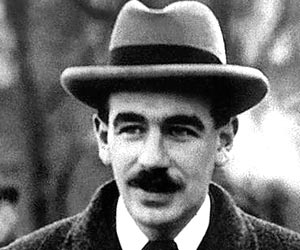
John Maynard Keynes: A terrible sense of foreboding.
 
The young economist, Keynes, quit the negotiations and returned to England where he spent the summer months of 1919 writing The Economic Consequences of the Peace. In his book (which instantly became an international best-seller) Keynes argued that the massive reparations demanded of Germany, combined with the Americans’ insistence that all Allied war debts be repaid, could only result in a fundamental derangement of the global economy. Throw in the German people’s Versailles-inspired sense of grievance and disaster was guaranteed. With uncanny accuracy, he predicted that Europe would be at war with itself, again, in just 20 years.
 
Flogging A Dead Horse: The imposition, by the victorious allies of World War I, of impossibly harsh economic conditions on the German people, constituted the first step on the road to World War II.
 
Of course, Greece is not Germany. Her people are not about to pull on jackboots and stomp all over the peace of Europe. But Germany is Germany and it is nothing short of tragic that the nation that went through the experience of Versailles – and all that followed from it – has so easily forgotten how it feels to be ganged-up on by a Europe determined to drive your country to the wall economically and strip it of what little self-respect it has managed to retain.
 
This failure of memory is particularly worrying in the light of what happened in 1953. That was the year in which Germany’s European neighbours, including Greece, wrote off up to 50 percent of her still outstanding Versailles debts. Yes, it was the Cold War. Yes, Germany was divided and it was important to give those Germans living in the West a sense of hope and confidence in the future. Even so, barely 14 years had passed since, as Mick Jagger put it: “the blitzkrieg raged/and the bodies stank”. Europe had considerably more to forgive Germany for in 1953 than it has to forgive Greece for in 2015.
 
Germany's Angela Merkel and Wolfgang Schauble: Executioners of the European dream.
 
The spectacle of Germany’s Chancellor, Angela Merkel, and her flinty-faced Finance Minister, Dr Wolfgang Schauble, squeezing the last drops of blood from the broken stones of Greece has sent a collective shudder through the rest of Europe. It’s a reaction with which Dr Schauble will be well pleased. It has long been the German Finance Minister’s plan to render Germany’s economic hegemony over Europe permanent by turning the continent into a “glorified debtors’ prison”. Greece is to serve as an example of what will befall any Eurozone member foolhardy enough to challenge the one-way flow of wealth to Europe’s biggest banker.
 
Frau Merkel is convinced that by allowing Greece to remain in the Eurozone she has demonstrated her bona fides as a “Good European”. It is, after all, vital that all Europeans understand that debts must be repaid, and that only orthodox economic policies should be pursued. If that requires German technocrats to second-guess the decisions of elected Greek politicians, then so be it. The Greek people need to understand that democracy has its limits; that saying “No” has a price.
 
The economic consequences of Angela Merkel, like the economic consequences of Versailles, will be a Europe at war with itself – within 20 years.
 
This essay was originally published in The Waikato Times, The Taranaki Daily News, The Timaru Herald, The Otago Daily Times and The Greymouth Star of Friday, 17 July 2015.

Thursday, 9 July 2015

Where Do You Stand On Greece? At Her Side - Or On Her Throat?

Forgiving Germany's Debt: In 1953, Hermann Josef Abs, centre, signed an agreement that effectively cut West Germany's post-World War II debt in half. That Greece was among the countries who forgave their former conquerors seems to have been completely forgotten by Germany's present rulers.
 
ON THE QUESTION OF GREECE, the New Zealand population divides itself neatly into three groups.
 
By far the largest of the three, is the group that knows three-fifths of bugger-all about what’s going on in Greece and cares even less. The less said about them the better.
 
Then there’s the group that regards the unfolding Greek crisis as a simple morality tale. According to this view, the Greeks awarded themselves a lifestyle they had not earned and paid for it with other people’s money. When the music stopped and their creditors came a-calling, the Greeks were required to discover just how unpleasant life can become when excessive debt falls due. As far as this group is concerned, the Greeks are in the process of being taught some very valuable lessons. On no account, therefore, should the EU be encouraged to remove its boot from Greece’s throat.
 
The third group’s response to Greece is born out of natural human empathy. They see a whole people suffering tremendous hardship and their first response is to do everything humanly possible to end it. The notion that this mass suffering must be continued – even intensified – to satisfy the demands of international finance strikes them as obscene. Responding to the second group’s pitiless moralising, they undertake some basic research into the Greeks’ predicament. What they discover makes them even more appalled. Greece isn’t a morality tale, it’s a horror story. The only ethical course of action is to stand in solidarity with the Greek people and offer full support to their courageous left-wing government.
 
It is a measure of how strong the grip of the free-market philosophy has become in this country that the third group finds itself being pilloried for its “soft” approach to Greece. The second group prides itself on being “hard-nosed” about such matters. What the Greeks need is the sort of “tough love” that parents are encouraged to dispense to wayward offspring. Unlike the “bleeding hearts” of the third group, the second group knows that sometimes you have to be cruel to be kind.
 
Those who recall the response of these hard-nosed New Zealanders to Campbell Live’s extraordinary broadcasts on child poverty in New Zealand will not have been in the least bit surprised by their reaction to the Greek Crisis. In almost every respect their reaction has been the same. We’ve heard how such deprivation that does exist is simply the result of poor personal choices. Like the spendthrift Greeks, irresponsible parents have contributed hugely to their own – and their children’s – poverty. To intervene with undeserved assistance would merely prolong an already interminable saga of material dependency and moral failure.
 
It’s been the same in this country for a very long time. On the one hand stand the people who judge the world according to a brittle set of inherited moral precepts – almost all of them thinly disguised justifications for selfishness and greed. While, on the other, stand the people who respond to the world as it presents itself to them. Where they see suffering they try to end it. Where they see injustice they try to fight it. Their moral code stipulates, simply, that they should do unto others as they would have others do unto them.
 
It’s the same simple principle which the Greeks applied in 1953 when they voted, with many others, to forgive 50 percent of Germany’s international debt. That the Germans have so signally failed to reciprocate says much more about their morals than it does about the Greeks’.
 
This essay was originally posted on The Daily Blog of Wednesday, 8 July 2015.

Tuesday, 7 July 2015

The Power of No: The Greeks Expose Neoliberalism's Anti-Democratic Agenda.

No! The decision of the Greek people has shown us that Neoliberalism can be challenged. Whether it can be beaten will require more than the bravery of a single nation. To defeat the neoliberals’ greed and cruelty, not just Greece but the whole world will have to find the courage to say: “No!”
 
THE UNFOLDING CRISIS in Greece has stripped Neoliberalism of its protective disguise and the world is recoiling from its ugliness. In normal circumstances the true purposes of the world’s neoliberal elites are masked by their use of opaque economic jargon. In the case of Greece, however, the social science of economics has been turned against them by some of its most impressive exponents. Nobel laureates Joseph Stiglitz and Paul Krugman have told the world that what is being done to Greece has nothing to do with economics, and everything to do with politics. A whole country is being driven to the wall in a desperate bid to destroy its left-wing government. Neoliberalism simply cannot allow the Greek Prime Minister’s, Alexis Tsipras’s, powerful lessons in democracy to go unpunished. If his Syriza Party is allowed to defeat austerity in Greece, what is there to prevent Podemos from defeating it in Spain? Or Sinn Fein in Ireland?
 
Hence the ugliness. Deprived of credible economic arguments for insisting that the Greek government persist with an austerity programme that has already shrunk Greece’s GDP by 25 percent and kept upwards of 60 percent of her young people out of the paid work force, the EU’s neoliberal elites – particularly the German holders of the neoliberal franchise – have been forced to resort to outright lies and childish insults.
 
Germany’s 72-year-old Finance Minister, Wolfgang Schauble, has clearly been unable to cope with his 54-year-old Greek counterpart, Yanis Varoufakis. Everything about the free-wheeling Greek economics professor offends the unyielding German ideologue. Varoufakis has been unsparing in his criticism of Germany’s inability to grasp the necessity for Greek debt relief (which even the IMF now acknowledges). It’s an act of insubordination which Schauble and his colleagues are resolutely determined to punish. So unchallenged has neoliberalism’s ideological hegemony been since the collapse of Soviet-style socialism that it finds itself unable to adequately respond to Varoufakis’s neo-Keynesian populist critiques. Their greatest fear is that, like the little boy in the Hans Christian Andersen fairy tale, the Greek Finance Minister will draw the world’s attention to the fact that the neoliberal German Emperor is wearing no clothes.
 
With Schauble and his neoliberal colleagues forced on to the defensive by the combined diplomatic and intellectual onslaught of Tsipras and Varoufakis, mobilisation orders were swiftly issued to neoliberalism’s reserve units located in the global news media. These latter lost no time in launching vicious attacks against the Syriza leadership – especially Varoufakis – and redoubled their blatantly racist denigration of the Greek people as a whole. This latter tactic had been in operation ever since Greece’s creditors had forced successive Greek governments into slashing the living standards of their own people. Cast as indolent Mediterranean grasshoppers (so unlike the hard-working Teutonic ants, whose borrowed Euros they had fecklessly frittered away) the Greek victims of neoliberal extremism were told that they had no one to blame but themselves.
 
Even at a distance of 17,000 kilometres from Athens, New Zealand’s neoliberal journalists and commentators have been working hard to maintain the two central arguments for neoliberalism’s assault on Greece. That the Syriza Government’s position is economically untenable; and that, in any case, the Greek people had it coming and richly deserve everything they have got. To pull this off they have had to studiously ignore the highly critical contributions of leading economists, while attempting to preserve the fiction that Greece has no alternative except to swallow still more of the austerity poison.
 
The most disturbing aspect of the mainstream news media’s adherence to the neoliberal line has been its willingness to go along with ethnic defamation. Just substitute the word “Maori” for “Greeks” in these neoliberal tirades and the full racist character of the attacks becomes clear. Newspapers and networks that would never allow contributors to get away with calling Maori lazy, good-for-nothing, ne’er-do-wells with no one to blame for their poverty but themselves, were quite happy to have it said of the Greeks.
 
It was, however, Tsipras’s decision to put the question of whether or not to persist with the EU’s austerity programme to a referendum that stripped away the last vestiges of Neoliberalism’s technocratic disguise. Now they were required to openly disparage not just Syriza, not just the Greek people, but democracy itself. In extremis, the neoliberals had no choice but to demonstrate, in a fashion that people who value democratic principles could not miss, that the interests of those who are both empowered and enriched by their control of the markets; and the interests of the people whose lives are cheapened and constrained by the operations of those same markets; have always been, and are still, on a collision course.
 
The decision of the Greek people has shown us that Neoliberalism can be challenged. Whether it can be beaten will require more than the bravery of a single nation. To defeat the neoliberals’ greed and cruelty, not just Greece but the whole world will have to find the courage to say: “No!”
 
This essay was originally posted on The Daily Blog of Monday, 6 July 2015.