Showing posts with label NZ News Media. Show all posts

Friday, 5 February 2021

The Woke Supremacy.

Sowing The Wind: The backlash against wokeism will be made much more aggressive by the difficulties its opponents encounter in making their voices heard. The mainstream news media – and especially the state-owned media – have become increasingly intolerant of ideas and opinions which directly, or indirectly, challenge the wokeists’ view of the world. 

IT IS DIFFICULT to attach a name to the ideology currently guiding the actions of the New Zealand ruling-class. For the past twenty years the Left has been content to call it neoliberalism, but in the third decade of the twenty-first century that term has less and less purchase on reality. The new ideology which has emerged, let’s call it “wokeism”, is a radical fusion of neoliberalism, environmentalism and identity politics – and its powerful enough to disrupt profoundly the political, social and economic institutions of New Zealand society.

That wokeism will generate massive resistance is certain. Its assault on the traditional order will leave more and more people feeling unmoored and vulnerable. Inevitably, a political movement will arise to contest the wokeists’ claims and policies. This movement will not, however, be driven by the traditional Left, it will be the creation of an angry and radically populist Right. What’s more, the transformational ambitions of wokeism will provoke its opponents into advancing an equally comprehensive programme of revocation and reconstitution. The result will be a deeply divided society, with tolerance and empathy in short supply.

The backlash against wokeism will be made much more aggressive by the difficulties its opponents encounter in making their voices heard. The mainstream news media – and especially the state-owned media – have become increasingly intolerant of ideas and opinions which directly, or indirectly, challenge the wokeists’ view of the world. Stuff, the largest newspaper publisher in the country has embraced wokeism wholeheartedly and set its face resolutely against the errors of “racist” New Zealanders. Even more significantly, citizens determined to spread “unacceptable” ideas can no longer rely upon the major social media platforms for their dissemination. Increasingly, Twitter, Facebook and Instagram are “de-platforming” individuals and groups (including a former President of the United States!) whose beliefs have been anathematised by the woke.

This de-platforming of dissenters by the woke media – often facilitated by threats from major corporate advertisers to withdraw their financial support – will complicate the mobilisation of wokeism’s opponents, but it will not prevent it. Inevitably, the sheer number of New Zealanders shut out of the wokeist discourse will persuade conservative investors to offer them a Fox News-like outlet for traditional views and values. As Rupert Murdoch knows well, there are big profits to be made out of alienation and anger. Those corporates hitherto persuaded to embrace (and enforce) wokeism may experience second thoughts when the enormous size of the traditionalist audience is revealed.

Right-wing political parties will likewise be forced to decide whether or not the game of accommodating themselves to the demands of wokeism is, in the long term, worth playing. If they decide not to place themselves at the head of a movement fuelled by rising anger and resentment and strongly supported by a major media outlet devoted to its cause, then, most assuredly, someone else will. National and Act will not be slow to understand that if they do not get on board the radical right-wing populist bandwagon, then it will roll right over the top of them. As with the Republican Party in the United States: they may not like it, but they will not fight it. Their biggest challenge will be to find a Trump-like politician to front it.

The key insight of the world’s most successful populist leaders is that the voters will not punish a politician for farting in the wokeist church: who simply refuses to be daunted by charges of racism, sexism, homophobia, Islamophobia, or any of the many other “thought crimes” promulgated by the woke. The politician who responds to all such accusations with a straightforward “Yes, I am. And if you expect me to apologise for it, you’re going to be bitterly disappointed!” That sort of politician: Trump, Duterte, Bolsonaro, Orban; receives as many cheers as jeers – probably more. Yes, liberal Americans were horrified when Trump branded Mexican border-crossers drug-dealers, rapists and thieves; but conservative Americans were delighted to have finally encountered someone willing to “tell it like it is”.

The other key insight of the right-wing populists is that most people really don’t like the news media. The politician who viciously attacks reporters: who accuses them of manufacturing “fake news”; who bans them from his press conferences and brands the newspapers and networks they work for “enemies of the people”; will emerge from the conflict stronger – not weaker. So long as they have their own equivalent of Fox News to carry their message to their “base”, it simply does not matter if wokeist media outlets rebuke and revile them as right-wing “fanatics”. Indeed, such charges will only succeed in further burnishing their reputations as champions of the “deplorables”. CNN didn’t bring Donald Trump down. What defeated him was his own woefully inadequate response to the Covid-19 pandemic.

Couldn’t happen in New Zealand. How often has that “argument” been advanced by those whose salaries depend upon it being true? If these political Pollyannas had the slightest familiarity with the history of their own country, they would know that it already has.

Much of the populist National Party prime minister Rob Muldoon’s popularity was generated by his heated exchanges with journalists. Long before Donald Trump crossed swords with CNN’s White House correspondents, Muldoon was ordering the removal of the Listener’s parliamentary reporter, Tom Scott, from the Beehive theatrette. When the TV news showed the prime minister ordering his aides to “take him away”, liberal New Zealand was horrified. For “Rob’s Mob” of conservative New Zealanders, however, is was thrilling proof of their leader’s strength. The media had it coming!

Muldoon’s most apt pupil in the dangerous game of right-wing populist politics was Winston Peters. Openly challenging the news media and arguing aggressively with journalists live on television became a key component of his enduring electoral appeal. Once again, liberal New Zealanders were perplexed: what could Peters possibly hope to gain by such vulgar displays of political truculence?

What Peters understood, and his well-educated and refined critics tended to forget, was that half the population falls on the wrong side of the bell-curve. Instinctively, the vulgar masses recoil from the lofty condescension of professional middle-class journalists. By attacking the news media, and its “sickly white liberal” assumptions, Peters, like Trump, secured the votes of the “poorly educated”.

All of which raises the critical question: Who will take on the right-wing populist mantle of Muldoon and Peters? Certainly, National’s Judith Collins and Act’s David Seymour would like to, but are they temperamentally suited to the role? Do they have the necessary slivers of ice-cold steel driven deep enough into their souls? Are they able to deploy the sort of cruel humour that lacerates their opponents’ self-confidence? Can they make people laugh at their vicious jokes in spite of themselves? It is certainly very difficult to imagine either Collins or Seymour successfully delivering Muldoon’s brutally funny quip: “I have seen the shivers running around Bill Rowling’s back, looking for a spine to crawl up!”

There is no shortage of applicants for the job of radical right-wing populism’s “drummer”: the leader who will make the hearts of the angry and the marginalised beat faster. The rabble-rouser who will cause them to clench their fists and clutch at their grievances more tightly. The messiah who will inspire them to set aside their ingrained sense of inferiority and their deep fear of being laughed at and/or condemned, and demand their own version of paradise. The demagogue who will impel the unmoored and vulnerable towards the clamour of ideological battle with the relentless and pitiless beating of his rhetorical drum. Oh yes, we’ve seen Billy Te Kahika, Jami-Lee Ross, even Hannah Lee Tamaki, make their pitches. But – no sale. The next drummer has yet to step out upon the national stage.

While New Zealand waits for that perilous person to appear, the woke supremacy will continue. Hate speech will be outlawed. The nation’s history will be re-written. Even the country’s name will be driven relentlessly towards the memory hole. Were these assaults upon tradition to be offset by decisive governmental action making rents and homes affordable, forcing the rich to pay their fair share of tax, and restoring a rough balance of power in the workplace, then they might be forgiven. If the democratic rights of New Zealand citizens were being beefed-up – instead of being whittled away – then wokeism might have a future. But, they aren’t, and it doesn’t.

Only when the drum-beat of right-wing populism starts to shake New Zealand’s windows and rattle its walls, will wokeism’s fondness for silencing its enemies finally begin to make a kind of desperate sense.


This essay was originally posted on The Daily Blog of Thursday, 4 February 2021.

Tuesday, 8 September 2020

Government of the Media, by the Media, for The Media.

Ambush! The leader of a political party – precariously poised on the edge of political oblivion – is invited to appear on a television programme whose producers’ and host’s intention is to ambush and embarrass him. Not, it is important to note at this point, to question him on evidence gathered by its own journalists, and about which he, having been given fair warning, will be invited to make comment. No, no, no: that would be what honest-to-God professional journalists would do.

I MUST HAVE MISSED the news bulletin in which the appointment of Jack Tame as  People’s Prosecutor was announced. I guess Winston Peters missed it, too. Otherwise, why would he have put himself in the dock on Q+A last Sunday morning? (6/9/20) Not that Winston was ever in real trouble, not from “James” – as the NZ First leader kept calling him. Winston’s been around too long to be seriously discommoded by an ambitious young journalist less than half his age. But, as he angrily told Tame and his producer, he had plenty of other things to be going on with, 40 days out from a general election in which he is fighting for his political life and legacy, than to submit himself to the inquisitorial fury of People’s Prosecutor Tame.

 Anyone who knows anything about the way current affairs shows like Q+A are put together will share Winston’s outrage. Securing the appearance of a prominent politician on such shows is always a delicate exercise. The person, or, more likely, his or her minders, will want to know what the programme intends to talk to their boss about. And believe me, if they are told that the programme intends to ambush him with a whole series of questions of the “Are you still beating your wife?” variety, then the show’s producers will be told, very politely, to fuck right off.

 So, you can bet your bottom dollar that Winston and his minders weren’t told anything remotely like that. He’d made himself available for an interview on the understanding it would mostly be about the tragic loss of the live-cattle-carrier capsized by a typhoon in the East China Sea. He did this believing, perhaps naively, that he was dealing with honest broadcasting professionals, not media bushwhackers.

 You can also lay down a fairly heavy bet that Tame and his producers talked through the interview with considerable care, deciding exactly when the ugly shift from friendly interviewer Jack, to pitiless inquisitor Jack, would take place. Equally likely is the encouragement Tame would have been receiving through his earpiece from the control room as the interview unfolded. Were it a case of an interviewer gone rogue, Tame would have been shut down immediately. So, the Tame-Peters interview didn’t just happen – it was organised.

 Just think about that for a moment. The leader of a political party – precariously poised on the edge of political oblivion – is invited to appear on a television programme whose producers’ and host’s intention is to ambush and embarrass him. Not, it is important to note at this point, to question him on evidence gathered by its own journalists, and about which he, having been given fair warning, will be invited to make comment. No, no, no: that would be what honest-to-God professional journalists would do.

 I’ll never forget my old boss at The Independent Business Weekly, Warren Berryman, drumming it into me that real journalists don’t do ambushes. The subject of a story must always be offered the opportunity to respond to its content. It’s called “fairness” and there was time when TVNZ understood the meaning of the word.

 Not anymore it would seem. If Tame had anything solid in the way of evidence of Winston’s and NZ First’s wrongdoing, then he and his producers kept it to themselves. All we got to hear was a series of quick-fire questions cleverly constructed to leave their guest with nowhere safe to go. Maybe they really did have the goods on Winston, and what they were trying to winkle out of him was a flat denial, which they could then expose as a lie – as the cameras rolled. Then again, maybe they didn’t.

 Which leaves me – and I’m pretty sure a pretty large chunk of the Q+A audience – wondering what TVNZ’s game is. This is, after all, a public broadcaster. That should mean, at the very least, that the highest possible standards, not just of journalism, but also of common human decency, are drummed into every single staff member. Because, you know what, they used to be. Back in the days when news and current affairs constituted a sort of holy order, separated and secured from Hunter S Thompson’s “cruel and shallow money trench where pimps and thieves run free and good men die like dogs for no good reason” – i.e. the rest of the television industry.

 For what it’s worth, this is what I think their game is. I think it’s about the substitution of the news media (young journalists in particular) for the people. And since democracy itself is about “government of the people, by the people, for the people”, what we’re actually looking at is a bunch of journalists who no longer put much faith in democracy. Because, you know, there are so many people out there who are racists, misogynists and homophobes. As such, they shouldn’t really be allowed to govern the country – should they?

 What we’ve got is a bunch of journalists who, wittingly or unwittingly, are dragging us all in the direction of government of the media, by the media, for the media. They’re doing it for us – of course they are – because, you know, most of us really aren’t up to the job of doing it ourselves.

 Joining a political party, earning the trust and confidence of its members, being selected as a parliamentary candidate, getting elected. It’s all so tedious, so demeaning. Having to listen to ordinary citizens, secure their votes, stay on their good side. So much easier to cast the cloak of the media’s protection over the weak and stupid. So much more satisfying to slay the monsters – like Winston Peters – who, these journalists are pretty sure, are cheats and misleaders, live on the people’s airways, or luridly on private-sector newsprint.

 Because, you must know that if the media doesn’t take on the role of the People’s Champion; the People’s Prosecutor; if charlatans and extremists aren’t lured in front of the cameras and microphones to be ambushed and politically executed; then there’s every possibility that the people – idiots that they are – will re-elect them.


This essay was originally posted on The Daily Blog of Tuesday, 8 September 2020.

Friday, 26 October 2018

Too Close For Comfort.

Hand In Hand: Is there not then a serious risk that their constant breathing-in of the aphrodisiacal perfumes of naked power will seduce the Parliamentary Press Gallery from their role of Democracy’s gamekeepers and transform them into poachers on the people’s estate? What is the electorate supposed to do if those entrusted with reporting the actions of the principal political players, themselves become important actors in the drama?

IN THE BACKWASH of the Jami-Lee Ross debacle, the National Party has announced an internal review of its organisational culture. The exercise will not be open to public scrutiny. National’s board will undoubtedly argue that a confidential review is more likely to encourage a “warts and all” representation of the party’s features. It won’t, of course. Before you could say “Copy” and “Send”, any honest estimation of National’s strengths and weaknesses would be leaked. Understanding this, the reviewers will produce a document as bland as it is unhelpful.

National’s proposed review does, however, serve as a useful pointer to our capital city’s flawed culture of power – as well as to its long-standing imperviousness to reform. There is simply too much power on offer in Wellington for anyone with the slightest chance of wielding it, limiting it.

Proximity lies at the heart of the capital’s power culture. The higher an ambitious person climbs, the closer they get to the people who exercise decisive political authority. This proximity works both vertically and horizontally. The higher one climbs, the more opportunities one finds to influence the course of events. This, in turn, encourages other ambitious souls to get as close as possible to the successful climber. Power in Wellington thus flows not only up and down the city’s many hierarchies, but also through them, spreading outwards in all directions.

In the centre of this three-dimensional web of power looms the parliamentary complex. The Beehive and the House of Representatives are the most obvious repositories of executive and legislative authority. Easily forgotten, however, when mapping the distribution of power, is the Parliamentary Press Gallery. Its members enjoy an enviable degree of access to the entire cast of Government and Opposition players. In the proximity-to-power stakes, few get as up-close-and-personal as political journalists.

The justification for allowing political journalists such easy access to Government and Opposition politicians is that it allows them to observe and interrogate the nation’s leaders and thereby hold them accountable for their actions. Ostensibly, this is done in the interests of the voters: without an unimpeded flow of political information, democracy cannot work.

Except that the above is not the real job description of a parliamentary press gallery journalist. The common-or-garden parliamentary journalist’s primary function is to preserve the best possible access to the movers and shakers of Government and Opposition. Their editors need to know that when a story breaks, or a major announcement is signalled, their reporters will have no difficulty getting into the media conference, and that every few weeks they will be in line for a “strictly-background, not-for-attribution” ministerial briefing.

The parliamentary journalist who made a habit of holding Cabinet Ministers to genuine account; or who successfully uncovered secrets she or he wasn’t supposed to expose; would not only be guilty of writing about matters that nobody else was writing about (a cardinal sin) but, even worse, would be provoking increasingly bitter complaints to their bosses from ministerial press secretaries (former parliamentary press gallery journalists for the most part) along the lines of: “What the hell does so-in-so think she’s doing? You tell her that unless she plans to stay on the salary she’s receiving forever, she needs to pull her bloody head in!”

It usually works.

But this poses a real problem for those who assume that the purpose of the “Fourth Estate” is to “keep the bastards honest”. If the true function of a parliamentary press gallery journalist is act as the glove into which power inserts its steely hand, then their formal democratic role is nothing but a sham.

It gets worse. If political journalists are positioned close to power, but warned against antagonising the powerful, then doesn’t it make more sense for them to befriend and enable the Government and Opposition players they are supposed to be observing and interrogating? Is there not then a serious risk that their constant breathing-in of the aphrodisiacal perfumes of naked power will seduce them from the role of Democracy’s gamekeepers and transform them into poachers on the people’s estate? What is the electorate supposed to do if those entrusted with reporting the actions of the principal players, themselves become important actors in the drama?

Was Jami-Lee’s downfall the result of him having too many enemies in National’s caucus – or too many friends in the Press Gallery?

This essay was originally published in The Otago Daily Times and The Greymouth Star of Friday, 26 October 2018.

Tuesday, 24 April 2018

Letting In The Light.

Lighting Up The International Stage: New Zealand's young, pregnant prime minister has won the hearts of the French, German and Commonwealth leadership. Her easy familiarity and great personal warmth has proved to be as captivating as it was refreshing. Even the Deputy Leader of the Opposition, Paula Bennett, was moved to describe Jacinda Ardern as "beautiful".

IT’S IMPOSSIBLE for fair-minded Kiwis to be anything other than immensely proud of their prime minister. Watching Jacinda Ardern interact with the likes of Emmanuel Macron, Angela Merkel and Justin Trudeau, one is repeatedly struck by her easy familiarity and personal warmth. That she has captivated these leaders is obvious to all but her most hardened opponents.

According the latest One News/Colmar-Brunton opinion poll, the Labour-NZF-Green government continues to be the clear choice of a comfortable majority of the New Zealand electorate. The same survey puts Jacinda an embarrassing 27 points ahead of the Leader of the Opposition, Simon Bridges, in the preferred prime minister stakes. There is a strong sense of purpose about this government which is keeping the electorate on-side. Its supporters should be feeling confident and relaxed about the future.

So why aren’t they?

At the core of their uneasiness is a sense that Jacinda’s government is seen by an alarmingly large number of New Zealanders as something akin to the sort of puppet regime an occupying army might impose on a conquered population. They look at Jacinda and her ministers through narrowed eyes – suspicious of everything they do.

Even when the measures this government announces are for the benefit of themselves and their families – like the winter energy subsidies soon to take the sting out of cost of keeping their houses warm – there’s a sullen refusal to be impressed. As if the payment was nothing more than a bribe.

This deep-seated cynicism towards Jacinda’s government has its origin in New Zealand’s very own Dolchstoßlegenden. (Stab-in-the-back myth) Just as the German Right refused to believe that Germany’s armies had been beaten decisively in World War I: preferring instead to believe that they had been betrayed by treacherous left-wing politicians and shadowy Jewish influencers in the rear; the New Zealand Right is firmly convinced that the National Party was kept out of power by the self-interested (and probably unconstitutional) machinations of Winston Peters.

That a government which does not include the party receiving the largest number of votes can nevertheless be accepted as legitimate by the “liberal elites” is, for the Right, a mystery reeking of treason.

The position of Jacinda’s government is not made any easier by elements within the news media who act as if the Right’s suspicion and resentment is, in some unexplained way, justified. In spite of the fact that the Labour-NZF-Green government has been in office barely six months, and ignoring the almost daily revelations of the previous government’s extraordinary derelictions and mismanagement, they lash Jacinda’s ministers as if they alone are responsible for the fact that the country’s infrastructure is, quite literally, rotting away.

These alarming displays of the media’s mendacity have lately acquired a much more sinister tone. It’s as if every editorial office in the country has received a memo from somewhere deep inside the Five Eyes’ national security apparatus that “Russophobia” is the order of the day; and that, for failing to follow its orders with sufficient enthusiasm the Ardern Government must be brought to heel by unrelenting media pressure.

We are thus treated to the spectacle of Newstalk-ZB’s Mike Hosking taking Jacinda to task for putting her faith in diplomacy and the UN Charter – as if the doctrine of “Might Makes Right” has not, over the course of the last 104 years, turned the world into a charnel house and made possible the worst crimes in human history.

It was the American journalist, Upton Sinclair, who remarked that “it is very difficult to make a man understand something when his salary depends upon him not understanding it”. The near unanimity now prevailing in the New Zealand news media that the West must “stand up to Russia”, coupled with its refusal to subject the claims of the United States, the United Kingdom and France to even a modicum of critical interrogation, speaks to a level of hysteria which, in the past, has been the prelude to war.

This is the bellicose atmosphere in which Jacinda, with all her openness and warmth, has been determined to represent her country’s long-standing allegiance to the UN Charter and her own transparent preference for a peaceful resolution to the Syrian crisis. Her courage and honesty are contagious: as may plainly be observed in her colleague Megan Woods’ steely determination to bring the EQC into line; and in Andrew Little’s fulfilment of Labour’s promise to open the Pike River drift.

It is the illumination which this government’s actions continue to generate which explains the rising level of hostility to its policies. For nearly ten years this country was kept in the dark. In that darkness, tragedy and failure could be kept hidden: and what too many eyes refused to see, too many hearts declined to grieve over. But now a majority of New Zealanders’ eyes are open, and they can see the decay, destruction and delay that are John Key’s and Bill English’s true legacy. For the 44.5 percent of the nation who voted for National, the shame of its legacy is hard to bear. Much easier, is to translate that shame into hatred for the people who forced them to feel it.

In a country where darkness and deceit allowed the lucky to grow fat undetected, while others less fortunate suffered unseen, a government determined to bring light and uncover truth will always, by some, be regarded as the puppet regime of an occupying army.

The question facing New Zealanders now is: “Do you intend to fight that army – or join it?”

This essay was originally posted on The Daily Blog of Friday, 20 April 2018.

Monday, 4 September 2017

Time For The News Media To Become "Relentlessly Positive".

Golden Girl: Jacinda Ardern's extraordinary popularity poses a serious problem for the news media. What social and political influence it retains is based largely on its representation of itself as the public’s first and most reliable line of defence against the banality, venality and downright stupidity of elected politicians. But how does that work when the public suddenly decides that some politicians are actually pretty damn good?

JACINDA ARDERN poses a deeply perplexing problem for the New Zealand news media. Her determination to remain “relentlessly positive” runs directly counter to contemporary journalism’s reflexive negativity towards all things political. Especially alarming for the so-called “mainstream” media is the fact that Ardern’s “sunny ways” are working. Her positive, “let’s do this” strategy has rekindled a hitherto deeply alienated population’s interest in politics. Her own, and Labour’s, reward has been rapidly rising levels of public support.

This clear popular endorsement of Ardern’s political tactics places the media in a difficult position. What social and political influence it retains is based largely on its representation of itself as the public’s first and most reliable line of defence against the banality, venality and downright stupidity of elected politicians. Without us, say the media, there would be no one to protect you from all this despicable trickery and all these terrible lies. You may not like us, but, by God, you need us!

It’s a strategy that remains viable only for as long as their viewers, listeners and readers can be persuaded that all politicians are, indeed, the self-serving predators upon the public purse that the news media proclaims them to be.

Nowhere is this strategy more in evidence than in the interviewing techniques of the twenty-first century broadcaster. Gone are the days when interviewers asked open-ended questions of politicians and then allowed them the time to make their case for or against a particular policy. Today’s interviewers prefer the role of the People’s Prosecutor: aggressive cross-examiner of “the accused” – i.e. the politicians – whose job it is to expose the latter’s invariably evil intentions for everyone to see.

Crucial to the success of this technique is the practice of interrupting and talking-over the interviewee. The last thing these “People’s Prosecutors” want is for the politician to deliver a clear and persuasive argument to the “jury”. Trial by media falls squarely into the tradition of the show trial – not the fair trial.

But what if the politician in the media dock has already become the people’s champion before the trial begins? In those circumstances, prosecutor becomes persecutor, and the audience bridles with indignation and disgust at what they, quite correctly, regard as the unfair persecution of their hero – or heroine. If the journalistic persecution persists, the politician’s popularity will not only be boosted, but he or she will also be given the opportunity to cast the offending journalists as “enemies of the people”.

For those with the wit to see it, the example is there in the person of Donald Trump. The US president has effectively inoculated himself against the attacks of the mainstream “liberal” media. Nothing it can do or say has the slightest impact on Trump’s electoral base. He has succeeded in persuading “ordinary Americans” that their White House champion is the victim of “fake news”: untrue stories manufactured by the “lying media” in order to prevent him from “Making America Great Again”.

Although Jacinda Ardern is a thousand miles away from being a Donald Trump, she already enjoys the benefits of a very similar sort of media inoculation. Placing her in the dock and treating her like some sort of dangerous criminal: interrupting her replies and talking-over her every attempt to explain her party’s policies will serve only to make her even more popular in the eyes of a politically reinvigorated electorate.

Clearly, this was an important factor in Mike Hosking’s moderation of the first Leaders’ Debate. He was extremely careful to be an equal opportunity interrupter and talker-over. He simply could not (and, to his credit, did not) appear to be treating one of the contenders like a hero and the other like a zero. The very pleasing result was a debate in which rather than being accused and denounced, both politicians were given the opportunity to reveal themselves.

Neither contender emerged entirely unsullied by their own testimony.

Paddy Gower, moderator of the next Leaders’ Debate, would do well to follow his colleague’s example. The essence of being a good interviewer is to so conduct oneself journalistically that the qualities of the interviewee emerge naturally. If Bill English and Jacinda Ardern possess what it takes to be a good prime minister, then that will very quickly become evident in the depth and persuasiveness of their answers to the moderator’s questions.

It is neither the place, nor the right, of the news media to crucify politicians on behalf of the voting public. The journalist’s job is to give our political leaders just enough rope to hang themselves – or not. The only enemy Jacinda should have to be wary of is herself.


This essay was originally posted on The Daily Blog of Saturday, 2 September 2017.

Wednesday, 18 June 2014

The Devil's Advocate

Advocatus Diaboli: The Nation's Lisa Owen takes on the role of Promoter of the Neoliberal Faith in her interview with Dr Russell Wills, a Promoter of the Cause of ending child poverty in New Zealand.

IT IS VERY DIFFICULT sometimes to identify exactly where a journalist is coming from. This is especially true of those journalists tasked with interviewing politicians on radio and television. To elicit information from the interviewee it is often necessary for the interviewer to adopt an adversarial – sometimes even a prosecutorial – stance. To become, in effect, the “Devil’s Advocate”.
 
The origins of the advocatus diaboli may be traced back to the Catholic Church of the  Renaissance. Known officially as the “Promoter of the Faith”, this officer’s role was to subject the claims of those wishing to create a new saint to the closest scrutiny. Acting on behalf of the Church, his job was to pick holes and expose discrepancies in the prospective saint’s case, as set forth by the “Promoter of the Cause” – the Devil’s Advocate’s opposite number.
 
The metaphor as applied to broadcast journalism is, therefore, very apt. The latter’s role, like that of the Promoter of the Faith’s, is to act on behalf of the viewers and listeners by subjecting the claims of all kinds of causes promoters – most especially politicians – to the closest scrutiny. Requiring them to demonstrate that their case is a sound one.
 
For this to happen, however, the interviewer must first allow the promoter of the cause to state their case. If this is not permitted, then viewers and listeners will have no clear idea of what the interview is about. When this occurs what follows is little more than a verbal brawl generating considerably more heat than light.
 
Of even less use to viewers and listeners is the interviewer who plunges into the interview brandishing a whole series of assumptions about the causes, effects and solutions to the problem under discussion and then attempts to extract some form of concurrence from the hapless interviewee.
 
A disturbing example of this interviewing style was evident in last Saturday’s edition of The Nation on TV3. The interviewer, Lisa Owen, had been tasked with interviewing the Children’s Commissioner, Dr Russell Wills, on the subject of child poverty.
 
Rather than allow Dr Wills to make his case, Ms Owen proceeded to make her own. The problem, as she saw it, was that New Zealand’s elderly citizens currently had it too good, and that, in the zero sum game she clearly assumed social resource allocation to be, the amelioration of child poverty could only be effected by transferring resources from the old to the young. Or, to use Ms Owen’s own grim formulation, by the elderly being required to “take a hit”.
 
Fortunately, and in spite of Ms Owen’s clear intention of cornering him into calling for a wholesale shift of resources away from the very old to the very young, Dr Wills proved sufficiently well-informed, quick-witted and forthright to seize control of the discussion and make out the case for additional public spending on behalf of New Zealand’s poorest children.
 
And what a bold case it was.
 
“We need to decide as a society what an adequate standard of living is for children. Not just to be fed, but to participate, particularly for our youngest kids because that’s when they’re most vulnerable. So what the science tells us is it’s about where it was when I was delivering Dad’s scripts around the poor part of Maraenui, back in the late 80s and 90s. So that’s roughly half as much again as it is now. So let’s restore it back to where it was when we were kids. I don’t think that’s unachievable.”
 
Yes, the Children’s Commissioner was proposing a 50 percent-plus increase in payments for our most deprived children, and proposing it be paid for by increasing taxes on the wealthy. Or, as Dr Wills explained it, gesturing to include the clearly sceptical Ms Owen: “People like us.” What’s more, he challenged the National and Labour parties to reach a consensus on the elimination of child poverty – just as they had on maintaining the living standards of the elderly.
 
Thinking about the interview afterwards I kept coming back to Ms Owen’s line of questioning. To her strenuous attempts to frame the argument as one between the needs of the young and the needs of the old. About why she tried to trap the Children’s Commissioner into becoming the Elderly’s persecutor?
 
Ms Owen was someone’s advocate last Saturday – an unmistakeable “Promoter of the Faith”. The question is: Whose faith? Most certainly not the faith of Pope Francis who has made himself the advocate for the world’s poor and the hungry. And not the faith of egalitarian New Zealand which remembers proudly its world leadership in social welfare provision.
 
Sadly, the “faith” Ms Owen seemed to be promoting was the belief system known as Neoliberalism: the reigning religion among those for whom charity is a zero-sum game.
 
The Devil’s advocate indeed.
 
This essay was originally published in The Press of Tuesday, 17 June 2014.

Tuesday, 6 August 2013

Democracy versus The Majority

Those Ain't The Torches Of Liberty, Springfield! But is it even possible to argue for democracy against the will of the people? What if the majority just isn't that keen on liberty and justice for all?

IT’S EVERYWHERE: coming at you, confusingly, from both the Right and the Left. The former express their views emphatically, as fact: “Nobody gives a damn about the GCSB – or Andrea Vance. It’s a media beat-up!” The Liberal-Left convey their scepticism in question form: “Does the public really care about all this state surveillance and freedom of the press stuff? I mean, seriously? If they did, then surely National would be suffering in the polls? And they’re not.”
 
How should we respond to these responses? How does one argue against the expansion of the state’s surveillance powers, and the violation of a journalist’s privacy, when the reaction of the overwhelming majority of the population is either bland indifference, or (even more alarmingly) active support for the Government’s position?
 
Is it even possible to argue for democracy against the will of the people?
 
It’s a question of particular relevance to New Zealanders because, historically-speaking, we have never, as a people, been particularly interested in either recognising or upholding the civil and political rights of minorities. Majoritarianism is the strongest of our political traditions. Indeed, the idea that the shape and purposes of society can only be legitimately determined by a majority of its population has been the driving force behind the evolution of New Zealand’s informal constitution.
 
It is worth elaborating on this point a little.
 
Many, if not most, New Zealanders either do not know (or have forgotten) that their country once had two houses of Parliament. There was the House of Representatives, elected by universal suffrage, and the Legislative Council, whose members were appointed for seven years by the Governor-General on the advice of his ministers (i.e. by the government of the day). The “upper” chamber had the power to amend, review and delay legislation sent up to it from the House of Representatives. Its acknowledged purpose was to act as a check upon the majority derived and driven demands of the “lower” house.
 
The lower house did not care to be “checked”. In 1950, just three years short of its centenary, The Legislative Council was abolished by the First National Government.
 
Nothing now stands between the House of Representatives (and the governments drawn from its members) and the individual citizen. In New Zealand, a parliamentary majority cannot be gainsaid by anyone or anything. Lacking the “supreme law” of a written constitution, the legislative acts of Parliament cannot be challenged in the courts or struck down as “unconstitutional” by judicial fiat. About the only force capable of staying the hand of a government in possession of a solid parliamentary majority is the force of public opinion – and, even then, there are limits.
 
New Zealand parliamentarians – along with just about every other legislator in the world – are driven by one great desire: to be re-elected. This renders them particularly sensitive to shifts in public opinion – especially those shifts strong enough to make people change their electoral allegiances.
 
Think about the “anti-smacking bill”. The passage of this bill was sufficiently resented by Labour’s core voters to cause a significant number of them to either transfer their support to another party, or abstain. Labour’s failure to understand the mood of its supporters thus contributed materially to its 2008 defeat. National, by contrast, was confident that although a majority of its supporters (and, indeed, of all electors) were opposed to the anti-smacking legislation, they were not opposed enough to vote for National’s enemies.
 
And this is where I believe New Zealand public opinion currently stands in relation to the GCSB Amendment Bill, and the apparent, state-sanctioned, invasion of journalists Andrea Vance’s and Jon Stephenson’s professional and personal privacy.
 
If directly challenged on these issues, I suspect most Kiwis will come out unequivocally for the protection of their own personal privacy and, rather less enthusiastically, for the freedom of the press. What they remain to be convinced of, however, is that the GCSB Amendment Bill constitutes a serious threat, either to themselves or people like them.
 
So, a few political activists will have their “metadata” analysed and their e-mails intercepted. So what? It’s probably prudent to keep a watchful eye on such people. And, as for the rights of journalists? Well, for these exploiters of personal grief and political misadventure, the public has only one question: “How does it feel?”
 
Labour and the Greens have come out swinging on behalf of the public’s right to privacy and the freedom of the press because their MPs know that the people who vote for them care passionately about such things and expect them to take a strong stand in their defence.
 
National MPs, by contrast, are quietly confident that the Centre-Left’s concerns are minority concerns. Mr Key’s majority support is not about to abandon his government for left-wing activists, or journalists. At least, not any time soon.
 
This essay was originally published in The Press of Tuesday, 6 August 2013.

Tuesday, 16 July 2013

Coups, And Rumours Of Coups

Tweet Surrender: Paradoxically, Duncan Garner's use of Twitter to announce a move against the leadership of David Shearer may, by alerting his supporters, have caused its organisers to hastily abort whatever it was they were trying to achieve. Or, the former TV3 political editor may simply have been played.
 
DUNCAN GARNER has been roundly criticised this week for falsely predicting the imminent resignation of Labour leader, David Shearer. Comparisons have been drawn between Mr Garner’s infamous “tweet” and the media tactics used to bring down the Australian Labor Prime Minister, Julia Gillard. Questions are now being raised about the ethics of journalists and commentators becoming players in a game they’re only supposed to watch.
 
All of which is the purest humbug. Politicians and journalists have always lived out of each other’s pockets. This is because politics isn’t just about the use of power; it’s also about how the use of power is explained and justified.
 
The truly effective politician leaves as little of that task to journalists as possible. There wasn’t a lot more that a journalist could have added to Abraham Lincoln’s Gettysburg Address, or Winston Churchill’s “Finest Hour” speech. Nor could Kiwi scribes much improve upon David Lange’s crushing dismissal of Sir Robert Muldoon’s interventionism: “You can’t run a country like a Polish shipyard!”
 
Not all politicians are, however, blessed with such memorable rhetorical skills. For those who struggle to explain and/or justify their political actions, a measure of journalistic assistance is usually required.
 
We have learned to call these people “spin doctors”. It’s an evocative title, recalling those legendary spin bowlers who could turn a cricket ball in whatever direction they pleased. The reality, however, is that nearly all spin doctors have, at one time or another, been senior political journalists.
 
As such, they have a fairly shrewd idea of who it is among their former colleagues that should be called in for an interview – and who should be kept as far away from their bosses as possible. As skilled journalists they can also spot the weaknesses and strengths in the stories that are written about their employers.
 
Tony Blair’s formidable spin doctor, Alastair Campbell, certainly wasn’t shy about letting errant journalists know exactly what he thought of their work – and them.
 
The environment in which politicians and journalists move is, therefore, one of both familiarity and contempt. Only the very best performers, on either side, have no need for the back-scratching of the other.
 
Stories are leaked. Rumours are started. Judgements are made – or encouraged. Politicians and journalists constantly use each other – not only to build themselves up, but also to tear down their colleagues (who are more often than not their competitors and rivals).
 
Which brings us back to Mr Garner and his tweet.
 
Labour MPs have accused Mr Garner of “making up” his story about a coup being underway against Mr Shearer. But only a moment’s thought is required to expose this accusation for the nonsense it is.
 
Mr Garner has confirmed that his informant was a member of the Labour Party Caucus. Presumably, he or she was someone who had vouchsafed information to Mr Garner in the past – information which had proved to be reliable.
 
The maelstrom of criticism into which Mr Garner has been unceremoniously pitched, since his predictions of last Thursday night were proved wrong, provides the strongest argument as to why he would not have tweeted without feeling extremely confident about the rumour’s veracity. (Just to make sure, however, he sought and received confirmation from a second Labour Party source.)
 
That Mr Garner was given what the Americans call “a bum steer” should tell him (and us) that the atmosphere in Labour’s Caucus is becoming increasingly toxic. And, as Julia Gillard would no doubt confirm, such a poisoned political environment makes rumours of an imminent leadership spill both inevitable and believable.
 
So, why did Mr Garner’s coup rumour fail to stack up? Let’s go through the explanatory options.
 
1) Some sort of leadership coup was on, but Mr Garner’s tweet alerted Mr Shearer’s supporters and the organisers were forced to abort. (Despairing Labour MPs may simply have been gathering sufficient signatures to persuade their leader to go gracefully and preserve the party from a debilitating civil war.)
 
2) No coup was imminent, but Mr Garner’s source considered it vital that Mr Shearer be forced to endure yet another destabilising round of media speculation concerning the viability of his leadership. (So vital that they were willing to abuse and lose Mr Garner’s trust.)
 
3) For reasons of their own, Mr Shearer’s backers decided to undermine Mr Garner’s journalistic credibility by deliberately misinforming him that a coup was underway.
 
Each of these explanations offers a slightly different take on the dire state of affairs within the Labour Caucus. Underlying all of them, however, is the undeniable fact of a leader (and the faction backing that leader) under extraordinary and unremitting pressure.
 
Mr Garner’s prediction may have failed to materialise, but it did, at least, remind us of Bismarck’s famous quip: “Never believe anything in politics until it has been officially denied.”
 
This essay was originally published in The Press of Tuesday, 16 July 2013.

Friday, 8 February 2013

"Seven Sharp" Needs A Point (Of View)

Perfecting The Sales Pitch: Seven Sharp's young target audience was raised in a culture completely saturated in commercial values. The measure of the show's success will be in how successfully it subverts those values; how viciously its presenters bite the hands that feed them. Seven Sharp's producers should look for inspiration not to the late, NZ Establishment-loving, Paul Holmes, but to the bitingly satirical US broadcaster, Jon Stewart.
 
BY THE TIME you read this Seven Sharp will be four shows old. Some of the nervousness evident in the first outing of TVNZ’s new prime-time product will be gone – replaced, one hopes, by the easy rhythms and rapport so essential to this kind of television. On the basis of that first outing, however, Seven Sharp does have a future. Traditionalists may balk at the judgement, but to my eyes, at least, the show has positioned itself squarely in the zeitgeist’s postal-code.
 
Seven Sharp’s critics will object that the show lacks seriousness: that the multiple economic and social challenges currently assailing New Zealand deserve something more from prime-time free-to-air television than the hip flippancy of Ali Mau, Greg Boyed and Jesse Mulligan.
 
Those critics will certainly get no argument from me concerning the seriousness of the problems facing New Zealand. Where we may part company, however, is over the tone in which a commercially-driven television network might best address its target audience.
 
Just consider the 18-34 year-olds at whom Seven Sharp is directed. At the top of the band we’re looking at people born in 1979;  at the bottom, at kids born in 1995. All of these young New Zealanders grew up during or after the Rogernomics “revolution”. None of them have any personal memories of what “public service television” looks like. Most of them grew up with a TV remote in one hand and a computer mouse in the other. The doctrine enunciated by Lord Reith, the first Director-General of the BBC, that broadcasting should “elevate, educate and entertain” the ignorant masses (and in that order) would be laughed out of court by Generations X and Y.
 
Many older New Zealanders like to dismiss these generations as narcissistic know-nothings. But Generations X and Y aren’t so much selfish as sceptical. The grand transformational “narratives” of the Twentieth Century were all busted flushes by the time they were old enough to even notice capitalised nouns like Socialism and Fascism. And their relationship to the last grand narrative left standing – Capitalism – is analogous to the relationship of a fish to the sea. They live in it, they live with it, and they can’t live without it.
 
These are the generations who regard just about every attempt at communication – including their own – as a sales-pitch. Only a sap takes words and images at face value. Maturity is defined in terms of how completely one is able to see through and decode the World’s deceptions: by how finely-tuned one’s ears have become to its “spin”.
 
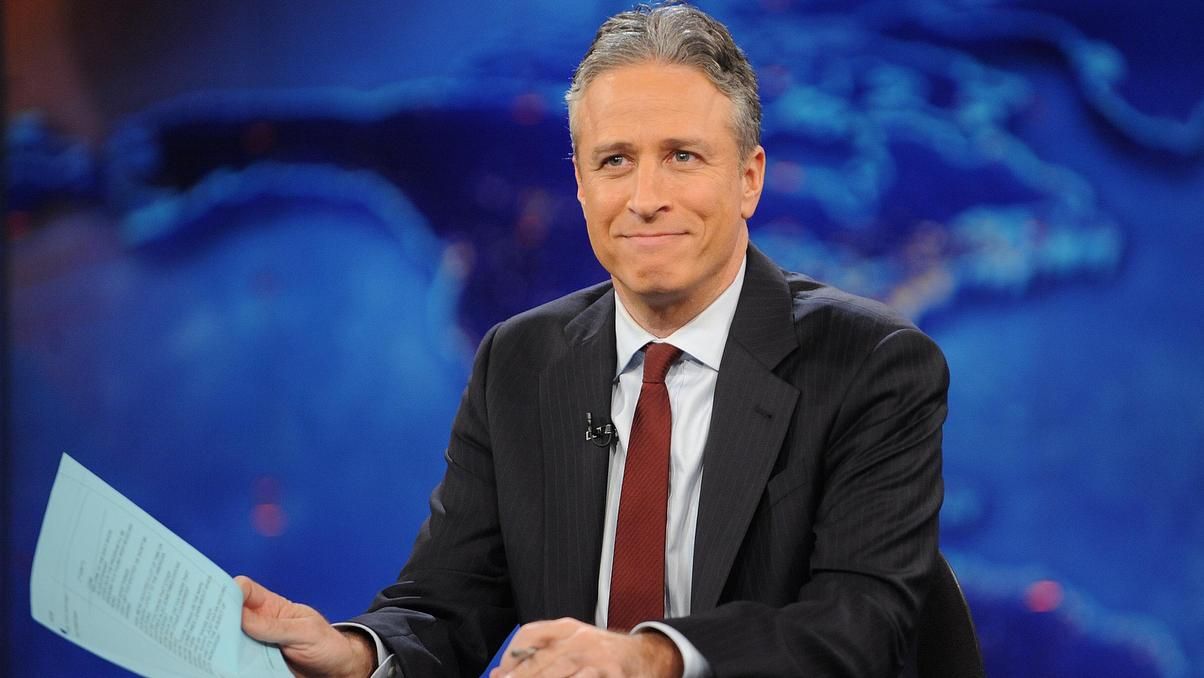
Jon Stewart: Exposing the absurd realities behind the Establishment's ever more elaborate lies.
 
The name we give to those who guide us through the world’s deceptions, exposing as they go the absurd reality behind the lies - and who then reward our attention with the gift of laughter - is “comedian”. It’s why, to so many members of Generations X and Y the journalists sound like clowns, and the clowns sound like journalists. President Barack Obama owes more to comedian Jon Stewart’s The Daily Show than he does to the New York Times or Washington Post. It’s why YouTube has more to say to Generations X and Y than TVNZ or TV3.
 
Seven Sharp’s producers, Raewyn Rasch and Tim Wilson get this – sort of. It’s why they’ve set the ambient mood of the show to “Sceptically Humorous”. Mr Mulligan understands – sort of. And Ms Mau and Mr Boyed will pick it up soon enough. But they’ll only “nail” that flibbertigibbet zeitgeist when they summon up the courage to ride their comedic horses off the reservation.
 
On Monday-night’s show it was Heather du Plessis-Allan who came closest to escaping TVNZ’s leaden conservatism. Revealing a PM who eats Wattie’s Baked Beans from the can at the end of a long day. Somehow – please don’t ask me how – that mattered.
 
But why-oh-why did Jesse Mulligan think it was funny to follow the lead of TV3’s Patrick Gower and put horns on David Cunliffe? Since when do we laugh at comedians who kick the victims of political duplicity? And why didn’t Seven Sharp ask their army veteran what lay behind his PTSD-induced nightmares? What had he and the NZ Army done to those Afghan civilians?
 
The young people whose eyes Seven Sharp is so determined to capture will not stay focused on humour that butters-up the Establishment, or watch pre-recorded items that gloss over its crimes.
 
This essay was originally published in The Waikato Times, The Taranaki Daily News, The Timaru Herald, The Otago Daily Times and The Greymouth Star of Friday, 8 February 2013.

Thursday, 13 December 2012

Journalism In Twenty-First Century New Zealand

The Nature Of The Beast: How should journalism be defined in Twenty-First Century New Zealand?

WHAT DOES IT MEAN to be a journalist in Twenty-First Century New Zealand? Why do thousands of young people every year sign up (and pay for) tertiary courses in journalism and communications studies? It certainly isn’t for the journalist's starting salary. Modern journalism is a high-stress, unrelenting, poorly-paid and (if the trust and confidence surveys are to be believed) almost universally despised profession. Why bother?
 
The oldest and still the most common answer journalists, both real and aspiring, offer to those who ask this question is: “To make a difference.” Ever since the invention of the printing press, people with something to say have seized the opportunity communication technology provides to reach a mass audience. In other words, people become journalists to access the power of the media. Their motivation is political.
 
Most journalists are loath to admit that power and politics have even the slightest bearing on their reasons for joining the profession. They’ll object that their motivations were much more honourable than the crude pursuit of power. Many will insist that they were only interested in sharing information with the public. Some will say they joined to right wrongs and correct abuses. Others will plead simple curiosity – an overwhelming need to know what’s going on.
 
They should not be believed.
 
The first thing that any journalist encounters – no matter whether he or she is in print, radio, television or web journalism – is their new employers’ editorial culture. This will determine practically every aspect of their job. If they’re interested only in gathering and disseminating information, the editorial culture of the newspaper, magazine, radio station or TV network will very soon make it clear which information is to be gathered and disseminated and which is best left alone. If they’re out to slay ogres and dragons they’ll be told which ones are fair game and which ones to leave undisturbed. If they’re simply curious they’ll learn very swiftly that there are institutions and individuals about whom it is positively dangerous to ask too many questions.
 
Every journalist entering the profession, therefore, has a choice. Submit to the culture, or walk away. That so few choose to walk away speaks volumes about the professional temperament of journalists. The thrill of reaching and influencing a mass audience trumps just about every other consideration. As is the case with all mercenaries, money is important to the working journalist – but it isn’t crucial. They do what they do because nothing else comes close. Who cares if the issues being addressed and the editorial line being followed are dictated by somebody else? It’s the journalists’ words, and their images, that make the difference on the ground.
 
If you remain doubtful that journalists are essentially power-seeking politicos with keyboards and/or cameras, just consider the twenty-first century “communications” career-path. In the process of making a master communicator journalism is only the apprenticeship phase. A few years of “churnalism”, of demonstrating that he or she possesses a safe pair of hands, and the apprentice is taken up into the public relations industry.
 
Providing there’s nothing in the journalist’s career suggesting some unwillingness to embrace the culture of their paymasters, the shift to PR work will generally double their income overnight. In this world there’s no place for idealistic self-justifications. Here, the journalist’s talents for effective communication are to be placed unashamedly at the disposal of corporate power – end of story.
 
An alternative path to becoming a well-paid shill for the rich and the powerful is via the offices of Government and Opposition politicians. For ambitious members of the Parliamentary Press Gallery, becoming a “spin-doctor” is easily the quickest route to a six-figure salary. It does, however, require a solid grasp of the realities of political reporting: hunt as a pack; share the spoils; and under no circumstances attempt to write your own words or music to the unfolding drama.
 
Above all else, the successful political journalist understands and accepts that democratic politics can only be about the replacement and replenishment of elites. Faces may come and go, but the fundamental story must always be the same. Politicians and journalists who attempt to construct and/or popularise a political narrative substantially at odds with the version provided by “official sources” should anticipate neither a lengthy nor a successful career.
 
This examination of Twenty-First Century New Zealand journalism cannot, however, be concluded without a word or two concerning the glittering exceptions to the profession’s new rules. These are the celebrity journalists – the handful of political editors, presenters, news-readers, talk-back hosts and entertainers who dominate the electronic media and are, thus, the principal shapers of public opinion.
 
Like the actors of Ancient Greece, their role is to demonstrate how little we human-beings control the urges and forces that shape our universe. To explain, in short, the ways of gods to men.
 
In the Twenty-First Century these deities are the great private and public organisations to which most of us offer up our daily labour. Through the celebrity journalists' own carefully constructed masks and most particularly through the heroes and heroines they create, we are invited to participate vicariously in both the comedy and tragedy of the human condition. In their stories we learn to recognise hubris and hamartia, the overweening pride and the fatal flaws, that first raise up and then cast down the dramatis personae of our ruling elites.
 
What they dare not do – on pain of themselves being cast down from the electronic Olympus – is encourage their audience to believe that the greatest story of all; the story yet to be written; is the story ordinary people will one day write for themselves.
 
This posting is exclusive to the Bowalley Road blogsite.

Thursday, 29 November 2012

Islands In The Mainstream

Keeping The Story Straight: But if a conflict arose between the mainstream media's version of events and the version presented by the citizen journalists of the blogosphere - what then? Even more alarming - what if the bloggers' version proved to be the more believable?

SOMEWHERE THERE’S GOT TO BE a focus-group report. Nothing else adequately explains the current behaviour of the “mainstream media” (MSM). Somewhere, somehow, someone has been incautious enough to ask a representative sample of MSM readers, listeners and viewers how often they visit, and what sort of credence they give to, the blogs. Their answers appear to have shocked some journalists into full-scale retaliation.
 
My guess is that the consumers of news and opinion are not abandoning the MSM altogether – not yet. Most probably it’s still just a case of people turning to the blogosphere for a second opinion. The big problems will only arise when the stories people read on the blogs begin to sharply contradict stories being printed in the newspapers and broadcast over radio and television. That’s when the MSM should really begin to worry.
 
But if the note of alarm that has crept into the MSM’s coverage of blogs – especially political blogs – over the past few weeks is anything to go by, some of that worrying has already begun. The final edition of The Nation, broadcast on TV3 last weekend, warned ominously of the potentially destabilising political influence of the left-leaning blog The Standard. Senior Parliamentary Press Gallery journalists have launched repeated attacks against “anonymous bloggers” with many eagerly accusing their blogs of playing a sinister role in David Cunliffe’s alleged “attempted leadership coup” at the Labour Party’s Annual Conference.
 
The tone of these attacks leaves little doubt that not only do these political journalists consider bloggers to be unwelcome and illegitimate contributors to the nation’s political discourse, but that nothing would make them happier than to see them tightly regulated and controlled. It’s an attitude that should send a shiver down every New Zealander’s spine. A genuine “Fourth Estate” would welcome the democratisation of the gathering and distribution of news which the Internet has made possible. That so many MSM journalists have greeted the competitive spur of the blogosphere with a mixture of self-serving patch-protection and outright authoritarianism is cause for considerable concern.
 
It also casts much of their recent reporting of political news in a new and worrying light. If the truth is indeed out there, then presumably it’s as readily accessible to bloggers as it is to members of the Parliamentary Press Gallery? If both are present at the same event, then their reports should be (making obvious allowance for nuance and emphasis) at least broadly similar? But what if they are not similar? What if the MSM’s coverage of Event X is radically at odds with both the experience of participants and the reportage of bloggers? Wouldn’t that raise some extremely disturbing questions about the credibility and trustworthiness of MSM journalism?
 
The recent Labour Party conference demonstrated in the most dramatic fashion the MSM’s capacity to misrepresent and mislead the NZ public. The political journalists covering the conference were either collaborators with, or the dupes of, a faction of the Labour Party Caucus which, fearing the consequences of radical changes to the party’s constitution, manufactured a leadership challenge to Opposition Leader, David Shearer, by his front-bench colleague, David Cunliffe.
 
That the rule changes endorsed by the rank-and-file offered Mr Cunliffe a route to the leadership of the party which allowed him to by-pass his Caucus enemies was obvious to anyone familiar with the agreed reforms. Quite legitimately (if somewhat maladroitly) the MP for New Lynn declined to rule-out taking advantage of these new constitutional opportunities at some point in the future. To translate this sequence of events into a full-scale leadership challenge, as TV3’s Patrick Gower did, lacked even the slightest evidential foundation. It did not prevent him, however, from telling Mr Shearer that Mr Cunliffe was “coming for you” and demanding to know what he was going to do about it.
 
The peculiar political-economy of news reporting from the Parliamentary Press Gallery ensured that Mr Gower’s conspiracy theory became the core of the MSM’s reporting. Effective Gallery reporting is based on easy access to the principal political newsmakers of both the Government and the Opposition. Once it becomes clear that those principals have agreed upon an interpretation of events it is extremely hazardous for any political journalist to offer an alternative view. It would risk not only an immediate denial of access to the principal players, but also the wrath of one’s editor. Any narrative at odds with the main media outlets’ agreed version of events has the potential to make the perpetrator appear both eccentric and/or ill-informed. These are not epithets with which most MSM editors feel comfortable. Multiple interpretations of the same event might also encourage the public to question the competence of the MSM’s journalistic staff. Much safer all round if the coverage remains consistent across all media.
 
But consistent is not the same as accurate. What happened at the Labour Party Conference, far from being an attempted leadership coup, bore all the signs of a pre-emptive strike against the man most likely to front a successful leadership challenge under the new rules. Political journalists who rejected the principal players version of events, could have spoken to conference delegates who witnessed incidents strongly suggestive of the attacks on Mr Cunliffe being carefully orchestrated well in advance of the actions which ostensibly provoked them. Persistent questioning would also have uncovered evidence that it was supporters of Grant Robertson, not Mr Cunliffe, who had been gauging the level of support for a leadership spill in the weeks leading up to the Conference. No hint of these alternative narratives appeared anywhere in the MSM.
 
They have, however, been appearing in both the postings and commentary threads of the political blogs. Is this the real explanation for the sudden spate of attacks on the anonymity of these citizen-journalists? Has a focus group warned the MSM that the stories it declines to tell – and which are now turning up in blogs – are being believed? Are more and more of the MSM’s readers, listeners and viewers coming to the conclusion that the Fourth Estate, far from speaking truth to power, has become its willing stenographer?
 
If this is true, then the decision by so many active participants in the blogosphere to remain anonymous or write under a pseudonym becomes entirely reasonable. Any system powerful and mendacious enough to suborn the one institution specifically charged with exposing its malfeasance is probably not the sort of system to be openly challenged or taunted by vulnerable individuals using their real names.
 
The day focus groups and their deliberations cease to be confidential is the day bloggers will gladly abandon their pseudonyms and the current “pandemic of anonymity” will be ended.
 
This posting is exclusive to the Bowalley Road blogsite.

Friday, 2 September 2011

No Politics Please - We're Consumers

Not Interested! In sharp contrast to the New Zealanders of 25 years ago, the New Zealanders of 2011 feel themselves to be the objects of mediated political discourse - rather than its subjects. In other words, while political news is aimed at us, it's no longer about us.

TWENTY-FIVE YEARS AGO just under half of the news items on the six o’clock news were devoted to politics. Today, less than a quarter qualify as political coverage.

If you ask news editors and producers why the number of political stories is so low, they will tell you it’s because viewer tolerance for politics is equally low. Run too many political stories and the audience will simply “vote with their remote”, the network’s ratings will fall, and journalists’ jobs will be on the line.

I do not doubt the truth of this explanation. What does perplex me, however, is what happened to us – the viewers? When did we decide that politics had become so vexing, boring and/or irrelevant that we no longer needed, or wanted, anything more than the barest of summaries included in our daily news-fix?

The biggest clue lies in the chronology. What happened a quarter-of-a-century ago that might explain the dramatic decline in the public’s interest and engagement in politics?

The answer, of course, is “Rogernomics”.

At the heart of the neoliberal revolution that Roger Douglas and the Fourth Labour Government ushered in was a profound hostility towards, and impatience with, New Zealand’s highly participatory political tradition.

In his celebrated essay, The Labour Caucus and Economic Policy Formation 1981-1984, the political sociologist, W. Hugh Oliver, writes: “According to Douglas, governments behave irresponsibly when they allow economic policy to be influenced by the demands of the people for better and more secure standards of living and social provision. It follows that the formulation and implementation of economic policy should be the concern of a small elite, standing apart from, and immune to, social and electoral pressures.”

And, even in the mid-1980s, those social and electoral pressures could be formidable. New Zealanders’ participation in political parties was the highest in the world. Under the presidency of Sir George Chapman, the National Party’s membership topped out at roughly quarter-of-a-million. Labour’s membership, under Jim Anderton, numbered 85,000 (not counting the party’s affiliated trade unionists).

Public participation in the political process was by no means restricted to membership of a political party. Writing about the New Zealand of the early 1970s, the British political scientist, Austin Mitchell, noted that: “One of the great Kiwi skills is organising bureaucracies. Give them a problem and they’ll set up a committee, or an organisation.”

In addition to organisations such as CARP (Campaign Against Rising Prices) and HART (Halt All Racist Tours) the institution of compulsory unionism meant that in every major city there existed what amounted to a miniature workers’ parliament – the “Trades Council” – which felt free to, and did, make its views known on everything from the level of public expenditure to nuclear disarmament.

This was the vibrant political culture that “Rogernomics”, along with its partner in crime, “Ruthanasia”, laid waste in the years between 1984 and 1993.

A precipitate decline in party membership showed that most New Zealanders’ had quite quickly figured-out that, in the eyes of politicians, business leaders and Treasury officials, they’d become unwanted baggage. Between 1984 and 1990, for example, Labour’s membership plummeted from 85,000 to less than 10,000.

What chance did Austin Mitchell’s “committees and organisations” have against the unbridled power of the “free market”? Little by little, active citizens morphed into passive consumers: inhabitants of a world in which those with the most dollars cast the most votes. Today, the most potent political messages aren’t found in network news-bulletins, but in the advertisements that fund them.

“Politics” has become a sort of professional sport, and is reported in much the same way. Experts comment on the strength of the respective captains and their teams. We are granted “sneak peeks” at the protagonists’ strategic and tactical game-plans. The polls tell us who’s ahead and who’s behind.

When the gap narrows, we pay a little more attention. When it widens, who – apart from an oligarchical political class – really cares?

After 25 years, we get it: politics isn’t about us anymore.

This essay was originally published in The Dominion Post, The Timaru Herald, The Taranaki Daily News and The Greymouth Star of Friday, 2 September 2011.