Showing posts with label Donna Awatere. Show all posts

Friday, 5 March 2021

The Revolution All Around Us.

Revolutionary Formula: "A new Aotearoa is on the rise. Tangata Whenua (Māori) + Tangata Tiriti (all other ethnicities who are committed to a tiriti centric Aotearoa) = the Aotearoa I believe in fighting for." - Rawiri Waititi, Co-Leader of the Maori Party.

NEW ZEALAND is in the early stages of a revolution. No, not one of those revolutions. The streets are not overflowing with revolutionary crowds. The factories have not been taken over by the workers. The old constitutional order has not been cast aside. The nation’s historical time-line has not been reset to Year Zero. But, make no mistake, a revolution is underway.

At the heart of this revolution is an evolving understanding of what sort of country we live in – and would like to live in. The clearest description of this revolution and its ultimate objectives that I have read so far is contained in a tweet posted in the name of Maori Party co-leader, Rawiri Waititi. To describe the tweet as jarring would be something of an understatement:

The cau casity of Caucasian’s and their ‘active assimilation agenda’. Pay them no attention, their archaic species is becoming more extinct as new Aotearoa is on the rise. Tangata Whenua + Tangata Tiriti = Aotearoa > Tangata Whenua + Pakeha = Old Zealand.

Waititi was quick to distance himself from this message, describing it as the work of someone in his office who acted without his authority. Setting to one side the obvious question: “What kind of office is Waititi running?”, the tweet’s content offers New Zealanders a raw and unmediated synopsis of the Maori Party’s revolutionary agenda. “Transformative” barely covers it!

The first element to note is the highly charged racial vocabulary. “Caucasian” is being used, rather than Pakeha, in much the same way as the latter once referred to Maori as “Polynesians”, and for the same purpose. To subsume a geographically and culturally specific identity into a much larger and more general racial category.

Very clearly, it is not a nice category. In the exercise of their “caucacity”, Caucasians are accused of pursuing an “active assimilation agenda”.

This is a curious charge. Historically, “assimilation” was very much on the agenda of the New Zealand state. In the years after World War II, as Maori began migrating from the countryside to the big cities in large numbers, doing everything possible to turn them into “ordinary” New Zealanders was generally regarded as the most “progressive” policy response available to the authorities. Think of it as an early iteration of the “They are Us” formulation.

The intention was to create a “colour-blind” society. The key category was “citizen” – with all that implied about equality of access to gainful employment, housing, health and education. An excessive focus on racial identity was seen as unhelpful in this regard. The objective was a nation in which the terms “Maori” and “Pakeha” counted for much less than “New Zealander”. It is to the policy of assimilation that the members of “Hobson’s Pledge” pay homage with their insistence that we must all become “one people”.

What makes the tweet’s claim that an “active assimilation policy” is still part of the New Zealand state’s agenda so odd, is that the term “assimilation” long ago became a very dirty word in the corridors of power. From the 1980s onwards the clear policy of successive governments has been to support and strengthen the unique features of te ao Maori. From the Treaty of Waitangi Act of 1975 to the establishment of Kohanga Reo and the recognition of Maori as an official language, the direction of travel has been all one way: from mono-culturalism to bi-culturalism.

It was Donna Awatere, author of the seminal series of Broadsheet articles entitled “Maori Sovereignty”, who rejected this new goal of a bi-cultural New Zealand as insufficiently ambitious. Inspired by the irredentist national strategy of the Palestinian Liberation Organisation, she argued for a sovereign Maori nation, freed from the constitutional, economic, political and cultural hegemony of the colonial culture which had, through the judicious application of force and guile, supplanted her own.

Following the Palestinians, Awatere argued for a strategy which is best described as “reverse colonisation”. On the one hand, delegitimise the colonisers’ occupation of lands that were never theirs; on the other, offer them the opportunity of assimilating themselves into Aotearoa, the sovereign Maori state that would slowly, surely, and non-violently, replace the colonial relic known as New Zealand. (Those with long memories will recall that for as long as it remained a revolutionary socialist organisation, the creation of a unitary, secular, Palestinian state, continued to be the PLO’s ultimate goal.)

Although Awatere’s personal evolution took her further and further away from the revolutionary vision that inspired “Maori Sovereignty”, her ideas and perspectives were taken up and developed by Maori nationalists across the country.

Perhaps the best way to get an idea of the revolutionary processes at work in this country, is to conduct a thought experiment involving another one.

Imagine that the Palestinians living in the occupied territories, rather than descending ever deeper into terrorism and religious zealotry, had adopted the non-violent civil-disobedience tactics of Gandhi and Martin Luther King. Further imagine that the progressive Israeli political parties, urged on by the Americans, had responded by negotiating seriously with the PLO.

Consider the speed with which the whole situation in Israel/Palestine might have been transformed; the exciting possibility that young Jews and Arabs, together, might have mapped out a future in which the land of Israel/Palestine was deemed to have physical and cultural space enough for both peoples. Who knows, they may even have persuaded their political leaders to set up a permanent tribunal to hear and settle the many grievances arising out of the excesses of Zionist colonisation.

Gradually, thanks in no small part to the state education system and state media, the fearless elucidation of Zionism’s manifest injustices might have persuaded a critical mass of young Israelis to abandon their country’s name altogether. Slowly, surely, non-violently, “Israel” might have come to be known, once again, as “Palestine”.

Impossible? Certainly, Israel/Palestine has a great many more obstacles to overcome than New Zealand/Aotearoa. Still, if Jew and Arab had stopped firing bullets at each other way back in the 1870s and started marrying each other in great numbers – who knows where that unfortunate land might be today?

Which brings us back to that interesting tweet: and to what is undoubtedly its most objectionable sentence: “Pay them no attention, their archaic species is becoming more extinct as new Aotearoa is on the rise.”

Now, viewed from the perspective of those whose ancestors were, at the turn of the 19th Century, confidently expected to become “die out”, this sort of gloating racism is, perhaps, forgivable. From the perspective of the descendants of the colonisers, however, it sounds unnervingly like a direct challenge – an existential threat.

That sentiments like these could so easily put the chant of the White Supremacists at Charlottesville: “You will not replace us!”; into the mouths of angry Pakeha, clearly never occurred to whoever sent out the tweet in Rawiri Waititi’s name. Or (and this is a much more distressing thought) maybe it did?

Waititi is, therefore, to be commended for the speed with which he moved to defuse this political IED. Within a few hours, he had re-written the tweet, and clarified his own position on the slow revolution unfolding all around us:

A new Aotearoa is on the rise. Tangata Whenua (Māori) + Tangata Tiriti (all other ethnicities who are committed to a tiriti centric Aotearoa) = the Aotearoa I believe in fighting for.

Strewth! When you put it like that, Rawiri, so do I.


This essay was originally posted on The Daily Blog of Friday, 5 March 2021

Friday, 20 November 2009

Asset or Liability?

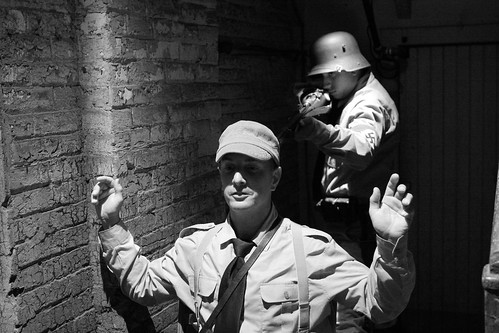
Up against the wall Motherf**ker! There comes a moment in the history of every revolutionary nationalist movement when street level activism ceases to be an asset and becomes a liability. The most infamous example of revolutionary liabilities being liquidated is the "Night of the Long Knives" of July 1934, when Hitler eliminated the leadership of the brown-shirted SA (stormtroopers). The latter had foolishly taken the socialist half of "National Socialism" seriously. If Tariana Turia and Pita Sharples decide the Maori Party has reached a similar moment of decision, then Hone Harawira’s career as a Maori Party MP will be over.

THE PRIME MINISTER called it an "apology of sorts". He would leave it to New Zealanders to decide on its merits.

And therein lies the problem. New Zealanders – that is to say all those New Zealand citizens whose names appear on the General Electoral Roll – will NOT get to decide the merits, or otherwise, of Te Tai Tokerau MP, Hone Harawira’s, "apology".

The only New Zealanders Harawira has to convince are the New Zealanders whose names appear on the Maori Roll for the parliamentary seat of Te Tai Tokerau. Theirs are the only opinions that matter in this situation, and all the evidence so far presented concerning the electors of Te Tai Tokerau suggests that they regard Harawira as a man who understands their situation, and speaks their language.

The Prime Minister can’t even hope that electors registered in other seats won by the Maori Party will feel moved to pass judgement on this "edgy firebrand" from the North. To do that they’d have to vote the Maori Party out of Parliament. But Maori electors are unlikely to punish Tariana Turia and Pita Sharples for the sins of their foul-mouthed colleague? They weren’t the ones who referred to Pakeha New Zealanders as "White Motherf**kers".

 
IF EVER the National Party had occasion to reflect upon the wisdom of retaining the Maori Seats – this is it.

Since 1867 the Maori Seats have provided not only a safety valve for Maori frustrations, and a forum in which to present Maori grievances, but also a means of including Maori politicians in the broader political leadership of the whole country. On balance, therefore, New Zealand’s 142-year-old experiment in special Maori representation should be (and for the most part has been) acclaimed rather than condemned.

No longer.

The people currently occupying the ever-expanding number of Maori seats (in 1989 there were four, today there are seven) are very different from early 20th Century Maori leaders like James Carroll and Apirana Ngata. Nor are they the representatives of Maoridom’s "lost ones" – the people Wiremu Ratana shepherded into the broader Labour movement during the 1930s.

No, the Maori Party MPs who currently occupy five of the seven Maori seats are unreconstructed Maori nationalists: proponents of tino rangatiratanga – which they construe to mean the full restoration of Maori sovereignty over Aotearoa/New Zealand.

Their credo is that of the Maori intellectual who literally wrote the book on Maori sovereignty, Donna Awatere. Back in the 1980s (before she transformed herself into an Act MP) Awatere wrote: "This country is Aotearoa. It is ours. White people of any generation have no business being in this country." In an interview with the Auckland journalist, Brian Rudman, she rejected out of hand the liberal Pakeha ideology of biculturalism: "[W]e can never have biculturalism", she declared, "because the Pakeha, with their in-built hatred towards other cultures, will never allow it."

The argument which has broken out between Harawira and rest of the Maori Party caucus is over tactical, not strategic, questions. It’s the style of his political rhetoric which has upset Turia and Sharples – not the substance. In their common desire to bring about a constitutional, political, economic and cultural revolution in this country, all five Maori Party MPs are as one.

So, what are these tactical disagreements? Primarily, it’s a question of where to insert the levers of change. Under the large tribal corporations, with all their resources and their growing links with the wealthiest and most influential Pakeha? Or under the materially impoverished, politically marginalised and increasingly restive Maori masses?

Harawira has aligned himself unequivocally with the latter. He still calls himself an "activist" and maintains close links with the revolutionary wing of the tino rangatiratanga movement. As the field commander of the tens of thousands of Maori who joined the hikoi of protest against the Foreshore & Seabed Act in 2004, Harawira’s radical credentials are unimpeachable. Without that mobilisation the Maori Party would have lacked the mass base of support required to achieve parliamentary representation.

He has a strong case.

Turia’s and Sharples’ argument is more subtle. Mobilising the Maori masses is all very well, they say, if all you want to do is frighten Pakeha. If, however, you want them to repeal legislation, devolve resources, and institute a broad-ranging review of New Zealand’s constitutional architecture – then a relationship of trust and mutual respect is required. This is not a time for scary hikoi, it’s a time for persuading the economic and political leaders of Pakeha New Zealand to manufacture, supply and pay for the rope that will ultimately hang them.

 
IT’S A DILEMMA common to all revolutionary nationalist leaders. How to demobilise the mass support which propelled your movement into office? Once you’ve been admitted to the inner-sanctums of economic and political power – how to persuade your "activists" to abandon their revolutionary dreams?

It was the problem Adolf Hitler faced in 1934 – eighteen months after he had been appointed Chancellor, and his revolutionary nationalist Nazi Party had joined the Reich government. Out on the streets, the Sturmabteilung (SA or "Stormtroopers") commanded by Ernst Rohm were demanding full implementation of the revolutionary economic and social reforms Hitler had promised during the national-socialists’ rise to power. Numbering close to 3 million, the SA, and Rohm, openly threatened the dominant position of the Army in German society, and Hitler’s conservative backers were becoming increasingly apprehensive.

Hitler’s response was the infamous "Night of the Long Knives", during which he effectively decapitated the SA. Over the course of seventy-two hours, beginning on the evening of 30 June 1934, Rohm, along with scores of other "enemies of the Reich", was arrested and executed on the Fuhrer’s orders.

What Tariana Turia and Pita Sharples must decide is whether the Maori Party is now so deeply embedded in the Pakeha power-structure that it no longer needs its street-level activists – or their leader.

Are the financial resources of the big tribal corporations sufficient to maintain the Maori Party as a viable electoral force, or should Harawira’s unmatched skill at mobilising the Maori masses (and frightening Pakeha) be retained – for the time being?

If the decision is made that Harawira and his radical supporters – like Rohm and the SA – have become a political liability, then it won’t be Phil Goff who finds himself being lined up against a wall and shot.

This essay was originally published in The Independent of Thursday, 19 November 2009.