Showing posts with label Republicanism. Show all posts

Saturday, 13 May 2023

Time To Reign.

Reigning But Not Ruling: Republics are generally a people’s political response to a sovereign who has ruled them badly. Oliver Cromwell famously “cut off the King’s head with the crown on it” because Charles Stuart had plunged Britain into a bloody civil war. King Louis XVI lost his head because the French people were no longer willing to starve while Versailles glittered. Once a monarchy has been tamed by its people, however, it becomes an invaluable instrument for isolating the role of head of state from the vicissitudes of politics.

WHAT WOULD MY YOUNGER SELF have said to the person he had become on Saturday night (6/5/23) as the Coronation unfolded? Would he have upbraided the old man seated in front of the television, watching another old man being crowned king? Certainly, he would have reminded him of the day long ago, in the Student Union of Otago University, just days before Prince Charles was due to visit Dunedin, during a debate on the monarchy, when someone (it might have been Michael Laws) shouted “Long live the King!”, and Chris Trotter leapt to his feet and shouted “Long live Oliver Cromwell!” How did that radical young republican turn into a sentimental old monarchist?

A large part of the answer to that question is bound up with the fact that the event recalled was so long ago. Because, at the heart of the monarchical principle lies the brutal reality of time. The span of a human life and all of the experiences that are crammed into it is what a reign is all about. It is not what a presidential term is all about.

The difference between a reign and a term is of no small importance. In a constitutional monarchy such as ours the identity of the head of state is known years in advance. A king or queen accedes to the throne immediately upon the death of their predecessor. Barring some awful catastrophe, the next monarch will already be a known quantity and the succession will be seamless.

The contrast between a royal accession and a presidential election could hardly be starker. Inevitably, the elected head of state will be the product of political choices. Either, he or she will be nominated and confirmed by Parliament – as our Governors-General are now – or, the head of state will be the product of a vote. In the latter case, a number approaching half of the electorate (more if there are multiple contenders) cannot help feeling bitterly disappointed that their candidate failed to attract the requisite support.

If the republic is a healthy one, the losers of the presidential contest will look forward to the next opportunity to assert their will. If it is not, then the losers may refuse to concede defeat – throwing the legitimacy of the head of state into doubt. Presidential terms are, therefore, necessarily short – four to five years – if only to keep the losing sides’ spirits up. Any longer and the president’s opponents might be tempted to shorten his or her term … by other means.

With these potential problems in mind, some republics limit their heads of state to a single term. Providing the president’s role is largely ceremonial, as in the Republic of Ireland, such limitations are generally accepted without objection. In those republics where a president exercises executive power, however, as in the USA and France, the incumbent is generally given the opportunity to win a second term.

Time is as important to the constitution of republican leadership as it is to the subject’s experience of monarchy. In a republic, time becomes the ally of those who see the orderly rotation of political elites – and their chosen leaders – as vital to the health of the state. Republicans regard political permanence as tantamount to tyranny. From their perspective, power is best served up in relatively short periods of time.

As we New Zealanders say: “Three years is too short for a good government, and too long for a bad one.”

Everything changes, however, when the head of state is not only ceremonial, but hereditary. Historically-speaking, republics are an angry people’s political response to a sovereign who has ruled them badly. Oliver Cromwell famously “cut off the King’s head with the crown on it” because Charles Stuart had plunged Britain into a bloody civil war. King Louis XVI lost his head because the French people were no longer willing to starve while Versailles glittered. Once a monarchy has been tamed by its people, however, it becomes an invaluable instrument for isolating the role of head of state from the vicissitudes of politics.

More than that, a constitutional hereditary monarchy, being the enterprise of a single family, mirrors the experiences of the people over whom it reigns. My father was the subject of three kings and a queen. But, for most of my life, I have been the subject of just one monarch, Queen Elizabeth II. As such, I grew up contemporaneously with the sovereign’s children. Like them, I married and began a family. Like them I got older and, hopefully, wiser.

All the ups and downs of the Windsors have been tolerated by their subjects because they, too, have had their ups and downs. Charles is not the only man who married the wrong woman. Harry is not the only grandson to give his grandmother grief. Certainly, the Windsors’ wealth is immeasurably greater than all but a handful of their subjects, but that has never appeared to bother the vast majority of those who, for 70 years, referred to Elizabeth Windsor as, simply, “The Queen”. Monarchs are supposed to live in palaces and ride in golden carriages – that’s what it means to be “royal”. In all the life transitions that truly matter, however, their subjects saw the Windsors as people like themselves.

Crucial to this identification is the very strong sense that the Windsors’ subjects know them. People of my generation recall the Queen’s “royal visits”. We remember Charles and Diana and baby William playing with a Buzzy-Bee on the lawn of Government House. We all felt the shock of Diana’s tragic death. Younger Kiwis watched the marriage of William and Kate and counted-off their offspring. All of us have watched Charles grow older and older, and wondered how he endured his seemingly endless apprenticeship.

No elected president can possibly provide a nation with this sort of story, for that length of time. Nor can an elected head of state offer a backstory stretching back centuries, or an historical drama peopled with such a compelling cast of characters.

That’s why the older Chris Trotter could be found seated in front of the television on Saturday night, watching the man he had always known finally coming into his inheritance. Oliver Cromwell had no option but to behead Charles I. I am glad his revolution, and the French, and the Russian, drove home the lesson that, ultimately, kings and emperors, like presidents, are only entitled to rule with the consent of the governed.

“I come not to be served, but to serve”, said Charles Windsor.

And I said: “God save the King!”


This essay was originally posted on The Daily Blog of Tuesday, 9 May 2023.

Friday, 23 September 2022

The Magic Of Monarchy

Grief is the price we pay for love.”  –  Queen Elizabeth II 

IT WAS HEART-BREAKING. It was heart-warming. It was as contemporary as a smartphone. It was as old as the Middle Ages. It was the antithesis of democracy. It was what the people wanted.

The Queen, at 96, has passed away, but what remains is older still. And what remains is the deep, deep magic of monarchy.

So many people, when asked by reporters why they had come to pay their last respects to Elizabeth II, confessed to being baffled. Some even owned up to being republicans, and yet, here they were, waiting in a queue for nine hours, for just a few seconds in front of the catafalque.

Anyone who has witnessed a hypnotist’s on-stage performance would immediately have recognised their condition. Quite simply, monarchy had mesmerised them. They were under its spell.

How else to explain the numerous heads-of-government and heads-of-state who consented to being driven by bus to Westminster Abbey to pay their last respects to this doughty woman – a curious mixture of primness and joy – who, wholly enthralled to the ideal of service, had redefined the meaning of leadership. Constitutionally powerless, Elizabeth II was also astonishingly powerful. Would so many world leaders have turned out to offer the tribute of their presence to a woman who wasn’t?

No leftists worthy of the name would concede any of these points. They would argue that all rational persons long ago abandoned the intellectually bankrupt notion of hereditary rule. Nations committed to democracy, they’d say, cannot in good conscience accept even a constitutional monarchy – not if they are genuinely committed to the idea that all human-beings are born equal in rights and dignity. Monarchy is the conceptual and political enemy of equality, and democracy is equality in action.

Understanding how the Left came by its aversion to hereditary rule isn’t difficult. It was no fun being a commoner in an aristocratic society. You were stuck at the bottom of the heap in a world constructed to keep you there. If you spoke up, you were slapped down. If you lifted a hand against the established order, you were hanged by the neck until you were dead. Short of rebellion, there was no way of improving the lot of people like yourself. Political power could not be earned, it could only be inherited. “Born to rule” wasn’t just a cheap political jibe, it was an accurate description of the constitution.

At the end of the American Civil War, emancipated slaves liked to tease the soldiers of the defeated Confederacy by shouting out: “Bottom rail on top!” Human-beings who had been treated as beasts of burden, were now citizens with rights. The racist world of the American South had been turned upside down.

But this triumph of equality and democracy: “government of the people, by the people, for the people”; was short-lived. Abraham Lincoln’s famous summation of democracy overlooks the inescapable fact that “the people” are not a homogeneous mass. Some of the people want one thing, and some of the people want something else. You can count votes to determine who gets what, but you can’t make the losers like the final result.

Democracy works well when the stakes are low. But raise the stakes and watch democracy come apart at the seams. One way or another, the head-of-state of a republic takes office through a process of election. Chose a president when the political stakes are dangerously high, and the legitimacy of the winner will, inevitably, be questioned by the loser – and his followers. We have seen it happen with Donald Trump, we will likely see it again if Jair Bolsonaro loses the Brazilian presidential election.

Watching the final moments of the Queen’s funeral, it was impossible not to marvel at the complex simplicity of constitutional monarchy. With the line of succession decided, there was no argument about who would replace Elizabeth II. Nobody had to stand for the office of monarch. No party had to lick its wounds and mutter darkly about a “rigged” election. The transfer of power from Mother to Son was instantaneous and seamless. Moreover, the power transferred was of an apolitical nature.

As the Lord Chamberlain broke in twain his wand, and a lone piper skirled his lament through the lofty majesty of St George’s Chapel, it was clear that magic – and monarchy – had prevailed.


This essay was originally published in The Otago Daily Times and The Greymouth Star of Friday, 23 September 2022.

Thursday, 31 March 2016

God Save The Royal Republic!

The English Revolution: In 1649, Oliver Cromwell famously decided to "Cut off the King's head with the Crown upon it" . The English Commonwealth, which replaced the monarchy, was a parliamentary republic, constituted in a fashion remarkably similar to our own. We have yet to cut off the Queen's head, but that's only because there's no real need to. Unlike Charles I, Elizabeth II wields no power. If she, or her Vice-Regal representative, the Governor General, ever attempted to interfere in our democratic politics, however, New Zealand's decorative royal figurehead would be gone - probably by lunchtime.
 
IS MITCH HARRIS RIGHT? Is New Zealand, for all intents and purposes, already a republic? Are all the monarchical appurtenances of our unwritten constitution nothing more than an entertaining illusion, as the veteran broadcaster insists? Full of pomp and ceremony, certainly. But in a nation where the people, as embodied by Parliament, are indisputably sovereign, of no relevance whatsoever to the way in which New Zealanders actually govern themselves.
 
Harris’ heretical opinions, broadcast on Tuesday night’s (29 March 2016) Waatea – Fifth Estate, cast the outcome of the flag referendum, and the earlier, almost totally ignored deliberations of the Constitutional Review Panel, in a new and very interesting light. Stripped of its talkback host’s bravado, Harris’s thesis asserts that over the course of the last 176 years New Zealanders have, with a minimum of fuss, fashioned one of the purest and least constrained democratic regimes on Earth.
 
What’s more, says Harris, we’ve done it surreptitiously. The Prime Minister may proudly proclaim himself a fan of Constitutional Monarchy, but he, like most New Zealanders, would bridle at the slightest suggestion that the legislature he dominates is anything other than absolutely sovereign. The idea that an unelected judiciary might one day possess the power to strike down legislation passed by the House of Representatives would strike him as a dangerous and undemocratic extension of judicial power. New Zealand is, and must continue to be, governed by those in command of a parliamentary majority – and nobody else.
 
You’ve got to go back a long way in the history of the English-speaking peoples to find a constitutional set-up like New Zealand’s. All the way back to the conclusion of the English Revolution, in fact, and the establishment in 1649 of the “English Commonwealth” – the world’s first parliamentary republic. Having cut off the King’s head with, in Oliver Cromwell’s memorable phrase, “the Crown upon it”, and dissolved the House of Lords, England was now governed by a 14-member Council of State, answerable (at least in theory) to the House of Commons. This latter body, representing the common people of England, was deemed to be the repository of “all just power” in the state. It was a principle destined to endure long after the English Commonwealth succumbed to Cromwell’s dictatorial “Protectorate”.
 
New Zealand, too, is governed by a council of state – The Cabinet – drawn from and answerable to the elected representatives of the people. Our own equivalent of the House of Lords, the Crown-appointed Legislative Council, was abolished with barely a murmur by the first National Party government, led by Sid Holland, in 1950.
 
For all practical political purposes, therefore, our unwritten constitution makes Parliament the supreme organ of power in the state. It passes the laws, makes appropriations of money for the administration of the state, and, if moved to do so, can bring down any government at any time simply by withdrawing its support from the Prime Minister and his or her Cabinet. The only other example of a unicameral parliament operating without the restraint of a written constitution is the State of Israel.
 
But what about the Queen? I hear you say. Legally and constitutionally Elizabeth II is Sovereign in Right of the Realm of New Zealand, and her Vice-Regal Representative is the Governor General. Quite true. But Harris’s point – and I agree with it – is that all this monarchical mummery is just a grand distraction from the realities of political power in New Zealand.
 
The only way the Queen could hope to influence events in New Zealand would be if she allowed herself to be drawn into a plot to topple a democratically elected government – as happened in the infamous conspiracy to bring down the Australian Prime Minister, Gough Whitlam, and his beleaguered Labor Government, in 1975. The only thing that saved the Queen and her Governor General, Sir John Kerr, on that occasion was the fact that the interim regime installed to replace the “dismissed” government went on to win the obligatory general election. Had Whitlam’s Labor Party been returned to office, Australia would, today, be a republic of 40 years standing.
 
What the “Dismissal” did demonstrate, however, was that royal and/or vice-regal interference in the democratic political process, unbuttressed by the electorate’s ex post facto validation, can only end in constitutional tears. Her Majesty was extremely fortunate that a majority of the Australian people concluded, notwithstanding the machinations of vice-regal ratbags, that Whitlam’s government wasn’t worth reinstating. The important lesson to take away being that the political decision was theirs – not hers – to make.
 
It is to be hoped that both Charles and William Windsor have absorbed this lesson, and that in the event of a New Zealand Governor General asking the Palace to support his or her plan to dismiss a government (or, more likely, refuse to appoint a government that the “business community” doesn’t like) the correct constitutional response is to immediately ask the New Zealand politician commanding a majority in the House of Representatives to advise him to dismiss the incumbent Governor General and propose a new one.
 
Because any other course of action: any attempt to circumvent the will of the New Zealand people; any reassertion of the royal “prerogatives” destroyed by Oliver Cromwell in 1649; will instantly see the monarchy’s gloriously retro decorativeness brought to an abrupt and permanent end. The Queen and the Governor General are like the diminutive Bride and Groom on the top of the Wedding Cake: sentimental favourites – but you wouldn’t expect them to impart serious marital advice.
 
Some would say it’s a typically Kiwi solution to the fraught business of defining the exact nature of the New Zealand state. A republic presided over by a queen may cause the political scientists to tear out their hair in bewilderment, but, as Mitch Harris might say, “we know what we mean”, and somehow, like a Taranaki gate, it works.
 
What our royal republic appears to represent, and what it actually stands for, would appear to be, like the flag we just voted to keep, two very different things.
 
This essay was originally posted on The Daily Blog of Thursday, 31 March 2016.

Tuesday, 15 April 2014

A Matter of Time: Reflections Of A Waning Republican

Time Lords: The historical transition of the Monarchy: from that which rules, to those who reign, was a remarkable constitutional innovation. Neither a true monarchy, nor yet a full republic, Britain’s constitutional monarchy offered its subjects something unique. "[A] constitution made by what is ten thousand times better than choice, it is made by the peculiar circumstances, occasions, tempers, dispositions, and moral, civil, and social habitudes of the people, which disclose themselves only in a long space of time.”
 
I’M A REPUBLICAN. At least, I used to be. Now, I’m not so sure. And, yes, this reassessment is, indeed, the result of the just completed visit of the Duke and Duchess of Cambridge and Prince George.
 
So, what has changed? What’s become of that young university debater who, way back in 1981, when the royalist team called for “Three cheers for Her Majesty, the Queen!” leapt to his feet and called for “Three cheers for Oliver Cromwell!”?
 
The answer, I’m afraid, is “Time”.
 
Two years on from that fiery debate in the Otago University Union, the Prince and Princess of Wales were seated on the lawn at Old Government House and their little son, William, was hot in pursuit of a Buzzy Bee.
 
And now, impossibly, that little boy has a little boy of his own. Through all the happy and farcical, inspiring and tragic events that have shaped both his life and my own over the  intervening 30 years, a connection – something more than mere sentiment – has grown. It was not there in my republican youth, but it has sprouted as my youth faded: watered by the storms of experience; growing stronger with each circuit of the sun.
 
And now, impossibly, that little boy has a little boy of his own.
 
I understand now what I could only smile at in my youth – my late mother’s undying affection for the Queen. I realise now that she, too, had memories to measure her own life by. Of a serious little girl staring warily at the newsreel cameras in the last years of peace before the outbreak of the Second World War. Of that little girl, grown now into a young woman, on the arm of her new husband. Of that same young woman, now a mother, proudly displaying her first-born son to the world.
 
That connection again: through war and marriage and motherhood; always there, always growing and subtly binding this super-family – half German, half Scot – to that vast commonwealth of families who, growing older, had learned to recognise the signposts of their own maturity in the unfolding history of this strange and exalted reflection of themselves.
 
The Royal Family - a strange and exalted reflection of our own.
 
Time has also taught me to recognise the true identity of the forces I railed against in my youth. In opposing monarchy I was, in fact, opposing the exercise of unelected and unaccountable authority: the arbitrary and violent intervention of state power into the lives of the powerless and the innocent.
 
But if that is the measure, then the government of Oliver Cromwell does not merit even one cheer. He and his “plain, russet-coated troopers” were nothing less than Christian mujahedeen. England during the Interregnum became a ruthless military theocracy. Cromwell’s New Model Army, for a brief moment the crucible of democratic debate, would emerge, finally, as the Taliban in breastplates.
 
And was the Monarchy really so politically unaccountable? When the Cromwellian regime collapsed, and the Stuart dynasty was restored in 1660, the executed King Charles I’s son landed at Dover. And all the way to London, a distance of 75 miles, the road was lined with his cheering subjects. Had it been put to a vote, Charles II would have been elected in a landslide.
 
What Cromwell did do, however, was prove that monarchs could not rule, indefinitely, without the people’s consent. This radical notion was reconfirmed in the Glorious Revolution of 1688. Henceforth kings and queens would reign – but they would not rule. Our monarchs thus ceased to be creatures of politics and became creatures of time. For what else is a “reign” but the temporal measure of the monarch’s tenure on the throne?
 
This historical transition of the Monarchy: from that which rules, to those who reign, was a remarkable constitutional innovation. Neither a true monarchy, nor yet a full republic, Britain’s constitutional monarchy offered its subjects something unique. In the words of the man who understood the innovation best, Edmund Burke:
 
“[I]t is a constitution made by what is ten thousand times better than choice, it is made by the peculiar circumstances, occasions, tempers, dispositions, and moral, civil, and social habitudes of the people, which disclose themselves only in a long space of time.”
 
And this, of course, is the great distinction, between a royal family and an individual head-of-state elected for a short term of office. A family embodies a relationship with time that is quite distinct from that of the individual. The hereditary principle itself is meaningless without the reality of those who have come before – and those who will come after.
 
And that is what we see when William and Kate and George step off the plane. Not just themselves, but all who have come before them, and all who shall succeed them. It is an image embodying not just the Royal Family, but our own.
 
And that is something we shall never be able to elect.
 
This essay was originally published in The Press of Tuesday, 15 April 2014.

Saturday, 5 October 2013

Crowning The Dummy

Like A Beckett Play: An overwhelming sense of fragility; of life in suspension; of history sucking up every available atom of breathable air. When will New Zealanders stop looking up to a monarch and start looking around - to themselves?

IT WAS A SCENE that would have done Samuel Beckett proud.
 
An old woman sits primly in an armchair, warmed by an electric fire. The fussily furnished room is festooned with family photographs and ceramic knick-knacks. The atmosphere of the scene is stuffy and oppressive. There’s an overwhelming sense of fragility; of life in suspension; of history sucking up every available atom of breathable air.
 
Seated opposite the old woman is a middle-aged man with an over-eager smile. He is dressed like a prosperous provincial accountant, and it is clear that just being in the room with the old woman represents the fulfilment of a boyhood dream.
 
They are talking to one another – although it is difficult to say what about. The old woman’s conversation is polite but inconsequential. She speaks as if she’s reading the lines of a play once popular, but now only ever performed to modest and ageing audiences.
 
Undaunted, the middle-aged man listens intently: his attention not at all diminished by the old woman’s sing-song delivery. Clearly, some weird alchemical miracle is taking place. In the middle-aged man’s brain the old woman’s leaden commonplaces are being transmuted into the purest rhetorical gold.
 
Beyond this and all the other rooms in the castle, the world goes on its merry way. Fallen empires refuse to rise. Children are blown to pieces by suicide bombers. Billions are wagered on stock markets and trillions consigned to tropical tax havens. Ice melts in the arctic. Deserts advance. Lovers embrace.
 
But in this stuffy drawing room nothing changes. The old woman sits and talks inconsequentially to “galloping colonial clots” who hang upon her every word, believing, in spite of everything that they have seen and done and made of themselves, that the bizarre tableau of which they are a part is more than it seems.
 
That it matters.
 
Another notable scene occurs in Ettore Scola’s 1982 movie That Night In Varennes. The plot revolves around a group of travellers who get caught up in King Louis XVI’s abortive attempt to escape the revolution in Paris.
 
As the revolutionary government’s officials dither, a debate ensues concerning the nature of monarchy among those now stranded at the local inn. Some of the travellers, in true Enlightenment fashion, dismiss monarchy as irrational. Others remain convinced of its quasi-religious power. Its magic.
 
As if to prove both sides correct, the King’s servants roll into the room a tailor’s dummy adorned with the royal regalia of France.
 
In a wonderful cinematic moment, the waiting peasants bare their heads and fall to their knees. Even the sceptical intellectuals find it difficult to resist the urge to doff their hats and bow low.
 
Monarchy weilds only as much power as people are willing to give it. Our ancestors long ago stripped the British monarchy of all but a recondite residue of its former political authority. What is it, then, about Queen Elizabeth and her peculiar family that continues to enthral a clear majority not only of her British subjects, but of New Zealanders as well? What is it that could possibly make our ruthless, currency-trader Prime Minister sit like an excited schoolboy on the edge of his seat in a stuffy Balmoral drawing-room?
 
The Frankfurt School’s, Erich Fromm (1900-1980) would tell us that New Zealanders’ on-going love affair with the British Royal Family, and the monarchical institutions they inhabit, stems from our abiding fear of, and desire to “escape from freedom”.
 
To be truly human, Fromm argued, men and women must free themselves from all that obscures the realities of existence. Our unique capacity to reason and to love makes each human life a challenging and painful experience; it can also make life glorious and transcendent.
 
For too many of us, however, the dangers and uncertainties of freedom keep us in a child-like state of fear and neediness. Thinking for ourselves is difficult and risky; better by far to adhere to the collective wisdom. Ruling ourselves is also difficult and risky; better by far to be guided by the myths and traditions of the past.
 
Living in a republic there is nothing and no one to look “up” to: we can only look “around” – to ourselves.
 
But, in a monarchy, there is always somewhere safe to hide.
 
Even behind a prim old woman, in a stuffy drawing-room, in Scotland.
 
This essay was originally published in The Waikato Times, The Taranaki Daily News, The Timaru Herald, The Otago Daily Times and The Greymouth Star of Friday, 4 October 2013.

Tuesday, 11 September 2012

A Democratic Canterbury - If You Can Keep It

If You Can Keep It: Framer of the US Constitution, Benjamin Franklin, understood what many New Zealanders seem to have forgotten: that democracy is not, and must never become, someone else's game; a spectator sport. If Cantabrians wish to keep their democratic institutions - they must fight for them.
 
CANTABRIANS, why aren’t you on the streets? This National-led Government has overturned your democratic rights for a second time – to barely a murmur of protest. In the face of such political passivity, what’s to prevent the politicians responsible for cancelling two regional council elections from cancelling twenty?
 
There is a cautionary (and possibly apocryphal) tale which describes Benjamin Franklin emerging from the 1787 Constitutional Convention in Philadelphia and being accosted by a local woman who demanded to know what form of government he and his fellow delegates had given her. “A republic, madam,” Franklin is supposed to have replied, “if you can keep it.”
 
A Republic, if you can keep it. Roughly translated from the Latin, res publica means “this thing of ours”. Franklin knew what many New Zealanders appear to have forgotten, that democracy is not, and must never become, someone else’s game; a spectator sport.
 
This thing of ours. This arrangement we have worked out among ourselves. This set of rules we have devised to keep us free, and to prevent the high and mighty from traducing our rights, making off with our property and turning us into slaves. This is the most valuable thing we, as ordinary New Zealanders, possess. And if we allow “this thing of ours” to become “that thing of theirs”, then all our constitutional guarantees and safeguards are rendered useless – and we are lost.
 
Apart from the passivity of Canterbury’s people, there is another indicator that the province is in danger of relinquishing its grip on res publica. It is contained in the joint declaration from Local Government Minister, David Carter, and Environment Minister, Amy Adams. Right here, in this sentence:
 
“In the interests of Canterbury’s progress, and to protect the gains the Commissioners have made, the Government has decided the best option is to continue with the current governance arrangement.”
 
Note, particularly, David Carter’s use of the word “governance”. Over the course of the past quarter-century this word has slithered, unbidden and almost unremarked, into our leaders’ political vocabulary. Most people assume that “governance” is simply a dandified version of “government”. An expression used by politicians and bureaucrats in order to sound more knowledgeable than the average citizen.
 
But, most people would be wrong. “Governance” is the word used by those who seek to curb and control the naturally obstreperous and decidedly messy processes of democratic government. Why? Because “government of the people, by the people, for the people” – as Abraham Lincoln so succinctly defined the democratic impulse – cannot be relied upon to deliver the “right” results. “Governance” is all about delivering the outcomes that “government” cannot deliver. The outcomes which unfairly benefit minorities and/or vested interests. The private designs and schemes which the open and unfettered transaction of public business inevitably expose to the scorn and sanction of an outraged electorate.
 
Canterbury’s current “Governance” has, therefore, some very important questions to answer.
 
What, precisely, is the nature of “the gains” that its Government-appointed Commissioners have made? Cantabrians might well ask. They might also ask which individuals and groups have benefited most from the “progress” Canterbury’s appointed rulers have (allegedly) been making? And by what right Central Government continues to deny the citizens of the Canterbury region access to the machinery of self-government, and the democratic authority to determine their own future?
 
The answers to these (and many more) questions are certainly not to be found in the Ministers’ Joint Statement. Neither, I might add, is the word “democracy”.
 
That these constitutional and political burdens should be laid upon a city and a province already groaning beneath the weight of natural disasters and a stuttering economic recovery rubs additional salt into already-painful wounds. It’s almost as if, perceiving the region’s capacity for resistance to be dangerously compromised, the Government has seized the opportunity to conduct a malign constitutional experiment upon its exhausted population.
 
For its appointed Regional Council is not Canterbury’s only instance of elite “governance” supplanting local and democratic “government”. The Christchurch Earthquake Recovery Authority and its all-powerful Minister, Gerry Brownlee, are further expressions of the Government’s determination to be presented with only the “right” results. Cantabrians might also contemplate how frequently the word “governance” trips off the tongues of Christchurch City Council bureaucrats, and how often City Councillors determined to do their democratic duty are charged with making the city council “dysfunctional” – the very same charge which condemned their regional council to death.
 
Cantabrians, the love you bear for your region, along with your determination to shape its destiny, is being tested. The promise you were given, that regional democracy would be restored in 2013, has been broken. This National-led Government now waits to see how far you, the people of Canterbury, will go to keep your res publica.  Every New Zealander who still believes in democracy waits with them.
 
This essay was originally published in The Press of Tuesday, 11 September 2012.

Monday, 4 June 2012

Long Live The Republic!

Sixty Glorious Years: But Elizabeth Windsor was not born to be Queen. Indeed had her wicked uncle, Edward VIII, been just a little cleverer (and a lot wickeder) England may well have been burdened with a royal fascist dictator. Such are the fatal vagaries of the hereditary principle. Heads-of-state should be chosen by more rational - and democratic - means.

A LOATHING OF MONARCHY is one of the many benefits of living with an avid student of Tudor history. You learn about the huge political, economic and social costs of hereditary rule. How utterly dependent society becomes upon the health and fecundity of royal fathers and mothers. Of the dangers posed to political and social order by physically and mentally deficient monarchs. And, most especially, of the horrors and injustices to which royal personages and their families are exposed on account of the constitutional principle of hereditary succession.

To which all you monarchists out there will smugly reply: “Just as well, then, that our Queen is a constitutional monarch.” Well, if you want to comfort yourself with that notion, feel free. But if you believe the “conventions” of constitutional monarchy offer us the slightest political protection, then you are quite mistaken.

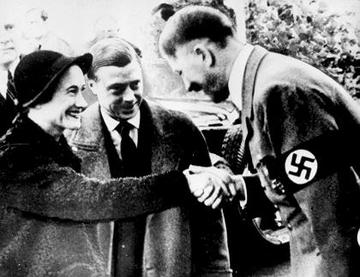
Take our present sovereign, Queen Elizabeth II. When she was born very few people believed she would inherit the throne. Her uncle, Edward, Prince of Wales, was heir apparent and was duly proclaimed King-Emperor upon the death of his father, King George V, in 1936. We are all extremely lucky that Edward VIII was nowhere near as clever as he was selfish, vain and irresponsible. Had he been as smart as his youngest brother, George, the Duke of Kent, he could well have turned the constitutional crisis arising out of his determination to marry Mrs Wallis Simpson into an opportunity to establish a fascist monarchical dictatorship. He would certainly have been able to count on a great deal of public support, not to mention the solemn oaths of loyalty sworn to his person by the armed forces and the police.

Democracy’s stocks were not very high in 1936, and the Windsor’s connections with Hitler’s Nazis were much stronger than they now care to admit. The Duke of Kent, in particular, moved freely in the highest Nazi circles. He was convinced that the British Empire could not survive another war with Germany. had he ever been in a position to do so, he would have guarded Germany’s back while she demolished the Soviet Union, and thereafter remained confident of her support against the economic ambitions of the USA. It is not difficult to understand why the German Ambassador to Great Britain, Joachim von Ribbentrop, kept in such close touch with both the Duke of Kent and Mrs Simpson.

Dangerous Liaisons: Wallis Simpson and the former King Edward VIII are welcomed to Germany by Adolf Hitler.

Had King George VI named Lord Halifax, and not Winston Churchill, prime minister in 1940, exactly the same calculations that made life for the surviving members of the Plantagenet dynasty so precarious during the reign of Henry Tudor would have been made about both himself and the little princesses, Elizabeth and Margaret. For there is no disputing the fact that, in the first six months of the war, a substantial “fifth column”, committed to making peace with the Nazis, florished in Britain – especially among the aristocracy. A negotiated peace with Germany could very easily have seen Edward VIII restored to the throne – leaving the erstwhile King George and his family to the tender mercies of a triumphant Adolf Hitler.

So, we are, indeed, extremely fortunate that Edward VIII was not equal to the many political opportunities that came his way. And, by “we” I certainly refer to New Zealand. Because you may be absolutely sure that if Great Britain had signed a peace treaty with Germany in mid-1940, our own government, and the governments of Canada, Australia, and South Africa, would have ceased hostilities immediately. And if, in a fit of madness, Peter Fraser had attempted to carry on the fight (counting, perhaps, on help from the United States) then it is certain that the new King-Emperor’s representative in New Zealand, the Governor-General, Viscount Galway GCMG DSO OBE PC, would have dismissed the Labour Government from office and invited the National Party leader, Adam Hamilton, to form a new ministry.

This is, of course, a very long way from the version of constitutional monarchy peddled by Dr Sean Palmer, Chair of Monarchy New Zealand, who shills for the hereditary principle on the grounds that it offers a much more stable foundation than popular election when determining a nation’s head-of-state.

His argument boils down to a recitation of those mostly European countries whose heads of state are kings and queens. Do you see how stable and non-threatening Norway, Sweden, Denmark and the Netherlands are? asks Dr Palmer. That has nothing to do with the democratic character of their politics, the homogeneity of their populations, or the pluralistic nature of their societies. No, no, no! It’s because their heads-of-state were raised to that office not by virtue of their talent, their courage, their generosity or their contribution to their fellow human-beings, but because they were clever enough to choose royal parents.

This is the same Dr Palmer who told Radio New Zealand’s Queen’s Birthday host, Richard Langston, that his homeland, Canada, and New Zealand had very similar constitutional arrangements. I suppose you could make out a case for that proposition – providing, of course, you set aside the fact that Canada has a written constitution, a bi-cameral parliament and a federal system of provincial governments. Apart from these small and inconsequential constitutional differences, Canada and New Zealand are practically identical!

We are, however, alike in being ruled over by a Governor-General (when Her Majesty isn’t going walkabout) and so I would have expected a constitutional expert, like Dr Palmer, to have had something intelligent to say about the Canadian Governor-General, Michaelle Jean’s, egregious failure to uphold the principle of parliamentary sovereignty.

Egregious Failure: Canada's unparliamentary sovereign, Governor General, Michaelle Jean.

Her 2009 decision to prorogue the Canadian House of Commons, thereby preventing it from debating a No Confidence motion in the Conservative Government of Stephen Harper, was made in defiance of the near unanimous opinion of Canada’s leading constitutional experts. Like the Australian Governor-General, John Kerr’s, decision to dismiss the Whitlam Labour Government in 1975, Jean’s abrogation of democratic norms lays bare not the stability, but the capriciousness, of “constitutional” monarchies, and demonstrates how extremely vulnerable their “subjects” are to the anti-democratic proclivities of these unelected heads-of-state.

All constitutional questions turn on the direction in which one believes power ought to flow: from the top to the bottom; or from the bottom to the top? It is quite impossible to cast monarchical institutions as anything other than top-down and, hence, profoundly undemocratic.

The “honours” announced to mark the sixtieth anniversary of Elizabeth Windsor’s coronation, provide stark proof of just how corrupting service to such monarchical institutions can be. In addition to a union-buster and a neoliberal hatchet-woman, Prime Minister Key has announced that the Duke of Edinburgh, Phillip Mountbatten, the man the late Chris Hitchens memorably described as “a dingy fascist”, has been made a member of the Order of New Zealand. Worse than this, however, was the news that Dr Michael Cullen, the man who taught me about the Levellers and the Diggers, Oliver Cromwell and the Putney Debates, has accepted a knighthood.

I felt a great wave of shame wash over me on his behalf. Could this be the same man whose university office once boasted a full-size poster depicting humanity’s putative parents above the revolutionary slogan of the English Peasants Revolt of 1381?

 
May my vanity and pride never play me so false, Dr Cullen. Rather, let me invoke on this, Queen's Birthday holiday weekend, the spirit of Oliver Cromwell’s plain, russet-coated troopers; whose contribution to human liberty a younger Michael Cullen once kept fresh; and cry out again, with a great voice:

“Long live the Republic!”

This posting is exclusive to the Bowalley Road blogsite.

Tuesday, 19 July 2011

Trick Questions

She'd Swear No Oath To An English King: Constance Markiewicz was the first woman elected to the British Parliament but was never seated because, in line with the nationalist and republican principles of the Sinn Fein Party, she refused to swear allegiance to the monarchy which had oppressed the Irish people since the 12th Century. The New Zealand Speaker's recent refusal to seat Hone Harawira until he swore allegiance to Queen Elizabeth II shows that the feudal traditions of our parliament still have teeth.

IT’S ONE of those trick trivia questions that always catches the pub-quiz whiz-kids off balance.

“Who was the first woman elected to the British House of Commons?”

Quick as a flash, all the amateur historians chime in with “Nancy Astor!” (the American-born Vicountess who famously declared: “Mr Churchill, if you were my husband I’d put poison in your tea.” To which Winston Churchill, even more famously, replied: “Madam, if you were my wife, I’d drink it.”)

The amateur historians would, however, be wrong.

Lady Astor was indeed the first woman to take up a seat in the House of Commons (she won her husband’s old constituency of Plymouth Sutton in a by-election in 1919) but she was not the first woman to win one.

That honour belongs to Constance Markiewicz, the Irish nationalist revolutionary, who won the constituency of Dublin St Patrick’s for the Irish nationalist party, Sinn Féin, in the British General Election of 1918.

That Constance Markiewicz never took her seat in the House of Commons was due entirely to her nationalist and revolutionary republican beliefs. As a champion of Irish independence from Great Britain and a staunch republican, she was not about to swear allegiance to an English king, or a monarchy which had oppressed her people since the 12th Century.

And therein lies the insurmountable problem – as New Zealanders, witnessing the aborted swearing-in of a member of their own House of Representatives  93 years later, have discovered.

The Oath of Allegiance, like so many of the other feudal relics that still clutter this country’s constitutional arrangements, may seem to be nothing more than a harmless anachronism, but, when challenged, turns out to have a cutting edge as keen as any medieval broadsword.


LIKE IRELAND’S SINN FÉIN (“Ourselves Alone”), the newly-formed Mana Party is a revolutionary nationalist political movement seeking to bring about fundamental social, economic and political change within the framework of a constitutional monarchy.

To get around this central contradiction at the heart of Mana’s political project, it’s leader, Hone Harawira, is required to swear an oath, or make an affirmation, which he has no intention of honouring. Or, to put it more bluntly: before Mr Harawira can take up his parliamentary seat, the Speaker of the House, Dr Lockwood Smith, is requiring him to perjure himself.

The Mana Party leader is committed to establishing a bi-cultural Aotearoan republic, with the Treaty of Waitangi enshrined at the heart of its constitution.

Why, then, should he be required to “solemnly swear” to: “… be faithful and bear true allegiance to Her Majesty Queen Elizabeth the Second, Her heirs and successors, according to law. So help me God.”

The legal experts, like the Speaker, will argue that “the law is the law”. It’s a fair point, but it is also a profoundly hypocritical objection.

For many years, now, Members of Parliament who have not been able, in good conscience, to swear an oath before God, have been able to make an affirmation instead. Why then, if our legislators are willing to make provision for the tender consciences of atheists, have they not extended the same courtesy to republicans?

We know how swiftly the House of Representatives can act when it wants to (just ask the executives of Warner Bros.) so why doesn’t it allow Mr Harawira to swear to:

“ … [B]e faithful and bear true allegiance to Te Tiriti o Waitangi, that I will be honest and forthright in my efforts to advance the rights of the people of Tai Tokerau, that I will do my utmost to help all Maori people become full empowered citizens of this land and that I will do whatever I can to reduce inequalities in this country, so that all may one day be proud to call Aotearoa home.”


THE SPEAKER OF THE HOUSE, in deciding to stand firm on the Oath of Allegiance, has brought the evolving tradition of MPs swearing or affirming allegiance to Treaty, Nation, Democracy and Queen to an abrupt halt.

This is regrettable. Because, by re-infusing the Oath with all of its ancient, feudatory power, Dr Smith may end up driving the Mana Party to adopt the tactics of Sinn Féin in 1918.

Rather than take up her seat in the King’s parliament, Countess Markiewicz, along with dozens of other Irish MPs elected under Sinn Féin’s banner, unilaterally constituted themselves as the Dáil Éireann – the first parliament of the Irish Republic.

Thus began the Irish War of Independence.


JUST AS POWERFUL CURRENTS of water have carved out the courses of Canterbury’s rivers, powerful currents of history are carving out the future contours of the New Zealand state.

It will indeed be ironic if future pub-quiz whiz-kids identify Dr Lockwood Smith as the man whose neo-colonialist actions sparked the birth of the Bicultural Republic of Aotearoa.

This essay was originally published in The Press of Tuesday, 19 July 2011.

Friday, 22 January 2010

Bonnie King Billy

Sucession Planning: Skipping a generation and proclaiming Prince William the next King of New Zealand is the Kiwi monarchists' best bet when it comes to preserving the institution in this country. Can't be done? Of course it can! Just take a look at English history.

WHY NOT KING BILLY? Seriously. It would make the monarchy interesting again – and God knows it needs it!

The alternative is Keith Locke’s worthy (but dull) Head-of-State Referenda Bill, which, if it becomes law, will almost certainly deliver some worthy (but dull) former judge or prime minister (Dame Sylvia Cartwright. Jim Bolger? Helen Clark!) as New Zealand’s first president.

No, if the monarchists are serious about preserving our current constitutional monarchy, HRH Prince William is their best bet.

Now before you all object that we have to endure King Charles III before we can enjoy King William V, let me just say this: Bollocks!

Strict succession has never been the English way. In fact it’s probably not drawing too long a bow (as the popular British historian, David Starkey, has done already) to suggest that the kings and queens of England have always governed by the consent of the English people.

It is certainly true that those who have attempted to rule the English without first obtaining their assent have not had an easy time of it. Duke William of Normandy (not unreasonably known as "The Bastard") was shrewd enough to realise that, his victory over King Harold at Hastings notwithstanding, he wouldn’t be able to govern England effectively without first getting the thumbs up from the English themselves. This they duly gave (no doubt with one eye on those sharp Norman spears).

King William I’s grand-daughter, Matilda, on the other hand, tried to assume the throne without the people’s assent, and learned the hard way that it’s always polite to ask first. Her cousin, Stephen, did just that – and became King.

England’s disdain for the strict rules of succession were again on display with the accession of King William III – who was a Dutchman. The "rightful" monarch of England was the Scotsman, James Stuart – younger brother of the late King Charles II.

Now, given the fate of James’s dad (whose failure to properly grasp this popular consent business left him shorter by a head) and the political caution of his brother, one might have expected James to pull his head in a bit. When he failed to do so, the English staged what they called "The Glorious Revolution of 1688" and called in James’s sister Mary, and her husband, William of Orange – the original King Billy, saviour of Protestant Ireland – to fill the vacancy.

The truth of the matter is that the English have never been content to suffer bad kings either gracefully, or for long. King Edward II, for example, who struck both the nobility of England (and his randy French wife, Isabella) as having a personality that was (how to put this delicately?) a little too – artistic – was forced (mostly by Isabella’s ambitious boyfriend, Mortimer) to abdicate in favour of his son.

Poor old Richard II (another "artistic" king) was deposed by his cousin, the rip-snorting Henry Bolingbroke. A similar fate overtook Henry VI, Edward V and, of course, the horse-less Richard III.

The last king called William (known by one and all as "Silly Billy") very nearly brought the English monarchy to an end. Had it not been for the star quality of his niece , Victoria, and the political savvy of her German husband, Albert, Great Britain might well have become a republic about the same time New Zealand became a colony.

So, you see, there is really no reason why, in the Realm of New Zealand, we shouldn’t take a leaf out of the Realm of England’s historical play-book and simply inform Prince Charles that his services here, as King, will not be required, and that, upon the death of his dear old Mum, he must relinquish his New Zealand throne in favour of his son, William. In fact, if the English themselves have got any sense (and we’ve seen that they do) that’s exactly what they will demand.

Flipping steaks on the barbie, and sucking down a few cool ones under Godzone’s searing summer skies, sounds lots more fun than enduring forty more dreary English winters waiting for Daddy to pop his clogs.

So come on Prime Minister, introduce your own "Royal Succession Bill" and turn HRH Prince William into our very own "King Billy".

If he refuses his antipodean subjects, he’ll be effectively declaring the New Zealand Republic.

President Helen Clark – anyone?

This essay was originally published in The Dominion Post, The Timaru Herald, The Taranaki Daily News, The Otago Daily Times and The Greymouth Evening Star of Friday, 22 January 2010.