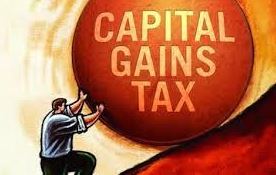
Showing posts with label Capital Gains Tax. Show all posts

Friday, 12 April 2019

Making The Tradies Pay.

Crunching The Numbers: On the subject of the Capital Gains Tax, it is simply not sufficient to assert that all income is the same and, therefore, must be taxed the same. Those who say this ignore the fact that, as RNZ’s Guyon Espiner so rightly observed, not all income is made the same. The working life of the small business owner is very different from that of wage and salary earners. In addition to plying their trade and/or providing their service, they are saddled with a great many other responsibilities.

IT’S A CLASS WAR – of a most unusual kind. The looming battle over Labour’s Capital Gains Tax (CGT) pits a pampered and overpaid Professional and Managerial Class (PMC) against the constantly expanding class of tradespeople, service providers and independent contractors: the tens-of-thousands of small businesspeople whose daily labours continue to make, move and mend this country.

The PMC is determined to protect its cosy position in New Zealand society by making sure that any expansion of the state’s revenues is secured by taxing something other than their salaries.

They have been made aware of the rapidly rising incomes of the “tradies”. How could they not, with their brand new SUVs clogging the streets outside the local school every morning and afternoon? What’s more, they strongly suspect that all this new-found wealth is not being taxed in the same way that their incomes are taxed. They may not know much about running a business that isn’t funded by someone else’s money, but they’re pretty sure these nouveaux riche boofheads are dab hands at short-changing the IRD.

Clearly, these upstarts need to be taxed at the same rate as themselves – 33 cents in the dollar. And because, as the owners of small businesses, they can get away with paying themselves ludicrously low wages, they must be made to hand over to the IRD one-third of the currently tax-free capital gains they make when they sell their businesses.

They’ll squeal and moan, of course, but a CGT is by far the fairest fiscal solution. Capital gain is a form of income – and all income must be taxed. Besides, it’s just not right that people with nothing more than a trade certificate (or whatever they call it) and often with no qualifications whatsoever, should be making more money than someone who spent four or five years at a university getting properly qualified. A university, mind you, not a dreary polytechnic tucked away in some provincial hell-hole like Wanganui or Invercargill!

But simply saying that all income is the same, and must be taxed the same, ignores the fact that, as RNZ’s Guyon Espiner so rightly observed, not all income is made the same.

The impressively credentialled members of the PMC, large numbers of whom are employed by the state, turn up for work every day and are paid every fortnight. All the necessary deductions for tax and ACC have been taken care of by their employer. If they’re teachers, nurses, social-workers, or just plain, common-or-garden civil servants, there’s a very high probability they’ll be members of a union. Regular pay-rises and improved working conditions are expected – and delivered.

Life for the small business owner is very different. In addition to plying their trade and/or providing their service, they are saddled with a great many other responsibilities. They have to take care of their own tax payments – as well as the tax payments of any staff they may employ. Then there’s Kiwisaver and ACC payments to sort out. They must conform to the provisions of OSH legislation and deal with the infernal complexities of the RMA. For many, being able to pay their bills depends upon other people paying theirs – and getting some debtors to cough-up can be a nightmare.

So, Guyon is right. Not all income is made the same. Which is why not all income is taxed the same.

Which leaves the PMC with a problem. They are only too aware of the need for increased government spending on health, housing, education and the environment. After all, so many of their jobs are about providing these public goods. On the other hand, they have a lifestyle to maintain; overseas trips to pay for; kids to finance into university and home ownership. Yes, their salaries may be large – but they’re fully extended. They are not keen on paying higher income tax. Not keen at all.

It might not be so bad if all these tradies; these restaurateurs; these independent contractors were caring and responsible citizens. But dammit! What’s with all these monster SUVs? Haven’t they heard of global warming? And the things they say! Honestly, it borders on hate speech. Sexists, racists, homophobes: the whole kit and kaboodle. To call them “deplorables” would be to seriously understate the problem. And then they get to retire with a cool million bucks – tax-free.

No bloody way!

This essay was originally published in The Otago Daily Times and The Greymouth Star of Friday, 12 April 2019.

Friday, 1 March 2019

Who Possesses The Plain, Old-Fashioned Common Sense To Say “No” To Labour’s CGT?

Yay Sayers: Prime Minister Jacinda Ardern and her Finance Minister, Grant Robertson, who recoil in horror at the very suggestion that Labour should tax the incomes of the very wealthy without mercy, remain absolutely convinced that taxing the local dairy owner’s capital gains will produce nothing but sweetness and light. They’ve run their blue pencils through Inheritance Tax, Land Tax, Financial Transaction Tax and Carbon Tax: but in spite of its emphatic rejection in two successive elections, they continue to give their CGT the big tick.

WHY CAN’T LABOUR take “No” for an answer? When the party first offered voters a Capital Gains Tax (CGT) in 2011 they responded by giving Labour 27 percent of the Party Vote. Undaunted, David Cunliffe and his team doubled-down on the CGT in 2014. Labour’s Party Vote slumped to a risible 24 percent. Point taken?

For a while it looked as though Labour’s ears had started working again. Cunliffe’s successor, Andrew Little, moved swiftly (if unilaterally) to take the twice-rejected CGT off the table. Which should have been the end of the story. But, it wasn’t. Within Labour’s caucus there remained a tight little clutch of CGT supporters who simply refused to let the policy go.

That tight little clutch: led by the current Finance Minister, Grant Robertson; which recoils in horror at the very suggestion that Labour should tax the incomes of the very wealthy without mercy; remains absolutely convinced that taxing the local dairy owner’s capital gains will produce nothing but sweetness and light. They’ve run their blue pencils through Inheritance Tax, Land Tax, Financial Transaction Tax and Carbon Tax: but in spite of its emphatic rejection in two successive elections, they continue to give their CGT the big tick.

Jacinda Ardern’s unopposed election to the Labour leadership provided a huge fillip to the CGT promoters’ club. With Little out of the way, the great crusade to tax the family bach could resume in earnest. Some insist that Jacinda’s “captain’s call”, to enact a CGT in the first term of a Labour-led government, was all her own work. Others claim that her dramatic policy adjustment was made at Robertson’s urging. Whoever was responsible, the sudden decline in Labour’s poll numbers was enough to give both politicians serious pause.

The upshot, of course, was the peculiar, two-stage, policy process whose radical recommendations New Zealanders are currently attempting to get their heads around. The most puzzling aspect of “Stage 1” – the Tax Working Group – was why the former Labour Finance Minister, Sir Michael Cullen, was roped-in to chair it.

In the media “lock-up” which immediately preceded the release of the Tax Working Group’s report, Sir Michael vouchsafed to journalists the following, typically cryptic, observation:

“I had a brief period as finance spokesperson for the Labour Party for some 17 years. You will not find a single comment by me publicly advocating a capital gains tax. You might draw your own conclusions from that fact.”

You think!

Cullen’s aside, properly decoded, offers up just one meaning: “This is a damn fool’s political errand, which I only accepted so that I could deliver these twerps a CGT of such breadth and bite that only a complete idiot would consider implementing it!” If that is not what it means, then we must, reluctantly, conclude that the former Finance Minister has lost his wits.

The problem exercising voters, now, is whether or not the behaviour of the CGT promoters’ club, consistent over an entire decade, admits of its members being anything other than twerps and idiots? In all that time, only one Labour politician, Andrew Little, has demonstrated the plain, old-fashioned common-sense to hurl the electorally and economically toxic CGT out the window.

What does it say about the Prime Minister and her Finance Minister that the very first thing they did following Little’s very own “captain’s call” (inspired, presumably, by Captain Oates’ heroic, if unavailing, act of self-sacrifice at the end of Robert Falcon Scott’s doomed Antarctic Expedition) was to rush outside, pick up the discarded CGT, dust it off, and replace it reverently on Labour’s table? Clearly, Ardern and Robertson are not the sort of Gen-Xers who enjoy being told that they are wrong!

The Greens, however, are much, much worse. Co-leader James Shaw has declared that, if the 2020 General Election arrives and a CGT has not been enacted, then his party does not deserve to be re-elected. The problem which he and his party may be forced to confront is that if the CGT proposed by the Tax Working Group is enacted next year (effective in 2021) then the electorate may feel moved to give the Greens exactly what they deserve!

Which leaves the responsibility for demonstrating plain, old-fashioned common sense to the politician who has spent 25 years insisting that only he and his party possess it.

Winston Peters.

This essay was originally published in The Otago Daily Times and The Greymouth Star of Friday, 1 March 2019.

Wednesday, 27 February 2019

Dying In A Ditch For A Capital Gains Tax That Half The Country Doesn’t Want.

Why Is This Man Smiling? Is Sir Michael Cullen's Capital Gains Tax really worth this government dying in a ditch for? Especially if that means all hope of making progress on the issues ordinary Labour and Green voters really do care about will be lost. Even though it will allow the Right to come storming back to power on populist promises of saving the family batch and making it possible, once again, for hard-working Kiwis to cash-in their dreams.

THE LABOUR-GREEN TECHNOCRATIC LEFT is clearly preparing to die in the very same ditch in which the Right hopes to bury the proposed Capital Gains Tax (CGT). This is unfortunate, since one of the more annoying, if unintended, consequences of such folly is likely to be the fall of the Coalition Government. Assuming, of course, that Winston Peters and NZ First are willing to die alongside their Labour and Green comrades. The sheer improbability of that happening is really the only ray of hope illuminating what is otherwise a pretty dreary situation.

It is to be hoped that the partisans of a CGT are stockpiling their rhetorical and evidentiary weaponry with the same eager energy as the National Party, Act and the Taxpayers Union. This latter trio can barely contain their glee that Sir Michael Cullen and his Tax Working Group are preparing to gift them such a large consignment of political dynamite.

Presumably, the advocates of a CGT are confident that this dynamite will explode in the Right’s face. That a CGT, opposed (according to Reid Research) by 54 percent of voters, will nevertheless rouse the “Missing Million” voters from their slumbers and send them marching towards the barricades. Because, according to these same advocates, the CGT is about “fairness”, and fairness is as Kiwi as … umm … voting National and grumbling about tax.

Strangely enough, the Right’s campaign against the CGT will also be based on “fairness”. They will be arguing that it’s only fair that people who have worked hard all their lives to make a success of a farm, a small business, or a rental property, are entitled to be rewarded for all that effort and self-sacrifice by pocketing the capital gain – tax free.

Will the Right focus on the multi-millionaire who invests $10 million, walks away with $50 million, and pays not one cent of tax on his ill-gotten capital gains? Of course not! They’re relying on most New Zealanders not knowing anyone like that. The sort of people most Kiwis do know, however, is the couple who set up their own business, slogged their guts out, and then cashed it in for a tidy sum. Do most Kiwis begrudge these folk their windfall? Not at all. They know what it cost them to get it.

The Right is also betting that the Kiwi dream of becoming one’s own boss remains as strong as ever. At least as strong as any desire to stick it to the rich. That confidence is in no way misplaced since neither the Labour Party, nor the Greens, were willing to make “sticking it to the rich” a central plank of their respective election policy platforms.

Certainly, an invitation to come up with new and inventive ways to “stick it to the rich” formed no part of the Tax Working Group’s terms-of-reference. If it had, then I strongly suspect Sir Michael Cullen would have refused to serve!

In fact, if we think about them, those terms-of-reference were pretty damn lame. The Working Group was not permitted to consider increasing income tax on the very wealthy. They were prohibited from investigating a land tax, or recommending the re-introduction of inheritance tax. Even worse, it was soon made clear by Michael Cullen’s protégé, and Finance Minister, Mr Grant (Budget Responsibility Rules) Robertson, that any revenue raised from a “broad-based” CGT would have to be offset elsewhere in the fiscal system.

So much for the fond hopes of misguided progressives that the additional billions raised by a CGT would be used to fund desperately needed increases in social expenditure.

Nope. Labour and the Greens were having none of that. All they wanted was a CGT. Indeed, so badly did the Greens want it that their male co-leader, James Shaw, recently declared that they didn’t deserve to be re-elected if a CGT was not delivered.

Certainly, when it comes to causes for which activists are ready to endanger their party’s grip on power, the Labour-Green Technocratic Left’s determination to die in a ditch for a CGT is equalled only by the Alliance’s Left’s determination to die in a ditch over the USA’s post-9/11 intervention in Afghanistan. There were many causes for which the Alliance Left might honourably have committed political suicide, but saving the Taliban wasn’t one of them!

The common factor here: what links the Labour-Green Technocratic Left with the old Alliance Left; is a peculiar kind of political tone-deafness. The suggestion that a Western political party eager to be re-elected should stand in the way of punishing those responsible for the atrocities of 9/11 should have sounded absurd in the ears of practical political activists. Similarly, the notion that the single most important change for which ordinary New Zealanders are clamouring is a CGT. Not effective action to eliminate poverty and homelessness; not immediate and drastic measures to combat climate change; not cleaning up our rivers and streams; or improving our mental health services. None of these things – judging by the lethargy and prevarications of this government and its technocratic supporters – are worth dying in a ditch for.

But a CGT is, apparently, deserving of the ultimate sacrifice. Even if it means that all hope of making progress on the issues ordinary Labour and Green voters really do care about will be lost. Even though it will allow the Right to come storming back to power on populist promises of saving the family batch and making it possible, once again, for hard-working Kiwis to cash-in their dreams.

This essay was originally posted on The Daily Blog of Thursday, 21 February 2019.

Tuesday, 19 February 2019

Just Like “Rogernomics”, A Capital Gains Tax Would Traumatize The New Zealand Economy.

Pushing CGT Uphill: The prospect of collecting a tax-free capital gain at the end of a life of hard work and deferred gratification is what keeps “Middle New Zealand” going. The farmer, the small businessperson, the professional couple who diligently paid off their mortgage and then leveraged the freehold into a second property: these are the people whose undying enmity will destroy any party foolish enough to enact a CGT.

LATER THIS WEEK, the recommendations of the Tax Working Group will become public. It is highly likely that a Capital Gains Tax (CGT) of some description will be near the top of the Working Group’s “To Do” list. How should Labour handle this extremely hot potato? The tax which all the experts tell us we have to have has much to recommend it theoretically, but, in the bluntest of practical political terms, it could very easily destroy this government.

The most important aspect of the CGT issue, and the one the Coalition Government should keep in mind at all times, is that the expectation of capital gain is now “baked in” to the economic expectations of a huge number of New Zealanders. One might even say that it is the beating heart of this country’s economic culture. The prospect of collecting a tax-free capital gain at the end of a life of hard work and deferred gratification is what keeps “Middle New Zealand” going. The farmer, the small businessperson, the professional couple who diligently paid off their mortgage and then leveraged the freehold into a second property: these are the people whose undying enmity will destroy any party foolish enough to enact a CGT.

Only those who conceive of our society as some sort of mechanism could possibly advocate a CGT. These are the people who believe that with a just few judicious adjustments to the social mechanism everyone’s lives will be immeasurably improved. Doubters will find themselves wondering what all the fuss was about when they see how brilliantly the technical changes are working. Opponents should be ignored. They just don’t get it.

Anyone who lived through the “technical adjustments” of the Rogernomics era knows that this line of argument is complete and utter bollocks. The “short-term pain for long-term gain” mantra that was advanced by the Fourth Labour Government (and amplified to ear-drum rupturing levels by the news media) was a lie.

Very few of New Zealand’s social indices have registered a clear improvement in the lives of New Zealanders as a result of the so-called “Rogernomics Revolution”. The wage-earner’s share of company surpluses has reduced in comparison to the shareholder’s. The number of New Zealanders owning their own homes has declined sharply. The dramatic surge in average life expectancy that distinguished the 30 years following World War II has plateaued.

The explanation for New Zealand society’s resolute refusal to be improved by the Fourth Labour Government’s neoliberal “reforms” is very simple. Society is not a mechanism, it is an organism. Ripping things out from, or cutting them off, a living system doesn’t improve it. All that happens is that the system is left wounded and bleeding. Given sufficient time, an organism may adapt to the loss of a limb, or an organ. Wounds do heal. But attempting to pass off the maimed subject of your surgery as a vast improvement over what existed before, is a fool’s errand. Trauma endures.

Has this government, dominated as it is by the Labour Party, learned anything from what happened between 1984 and 1999?

If it politely receives the Tax Working Group’s recommendations, only to consign them, quietly, to the archives, then we may be confident that Labour has absorbed the lessons of its recent history. If, however, Labour presses ahead: proclaiming, once again, the mighty improvements that are bound to follow the suggested adjustments to the mechanism; then we must anticipate the same disastrous consequences.

What farmer (who is not a corporation) will persist with the heartbreak and stress of extracting value from the land, if the tax-free reward awaiting him at the end of his stewardship is transformed into a crippling tax bill?

Will the small-business owner be content to pay herself less than the staff she employs; will she continue to pour her blood, sweat and tears into her enterprise; if a third of the capital gain she hopes to realise at the time of its eventual sale is payable to the IRD?

Will the professional couple with some capital to invest continue to put it into a rental property if a CGT is introduced? Will they go on putting-up with the often appalling behaviour of delinquent tenants? Will they continue to spend a small fortune keeping their properties warm and watertight? They might as well put all their savings into KiwiSaver.

Which is, of course, exactly what the economists want them to do. But will KiwiSaver rent out properties to students? Will it give young tradespeople somewhere decent to live while they amass the capital resources necessary to fulfill the Kiwi Dream of becoming one’s own boss?

Money flows around the social organism we call New Zealand in a unique way. We are not Germany, with its hugely facilitative regional banking structures and its comprehensive tenant protections. Nor are we the USA, with its vast domestic market and its middle-class households’ longstanding propensity to invest in stocks and shares. Ours is an economy driven by delayed gratification: by putting in the hard yards now, on the promise of tax-free capital gains later. Rip that expectation away from aspirational Kiwis, and the economic organism will suffer yet another massive trauma.

Those responsible for inflicting a Capital Gains Tax on New Zealand should not expect to be re-elected for a generation – at least.

This essay was posted simultaneously on The Daily Blog and Bowalley Road of Tuesday, 19 February 2019.

Tuesday, 19 May 2015

The Least They Could Do

Tinkerer-in-Chief: John Key announces changes to the law relating to property speculation. Many of John Key's opponents, and some journalists, accused him of executing a U-turn on the issue of Capital Gains Tax. Labour's Andrew Little disagreed, tweeting that Key's announcement was nothing of the sort. The Prime Minister, said Little, was merely "tinkering with the housing market".
 
IT WAS THE LEAST THEY COULD DO. Indeed, had they done anything less it might have been mistaken for doing nothing at all. Still, the measures announced to the Lower North Island Regional Conference of the National Party on Sunday by John Key and Bill English were better than nothing. It’s always encouraging to see a government taking law enforcement seriously. Providing the IRD with the resources it needs to enforce already existing legislation against property speculation (including speculation by foreigners!) may even help to slow down Auckland’s runaway housing market. No, seriously, it might!
 
The government’s announcement is being represented by some Labour and Green MPs (and some of the news media) as a major U-turn. National’s hitherto staunch opposition to the introduction of a Capital Gains Tax (CGT) has, according to this reading, simply melted away.
 
Labour’s Jacinda Ardern, for example, tweeted archly that she had received the news at a Labour regional conference “otherwise known as the place we come up with ideas that National dismisses and then adopts.”
 
In a media release, the Greens’ co-leader, Metira Turei, echoed Ardern’s sentiments, saying: “This is a welcome U-turn from the Government. Only last week they were saying that capital gains taxes don’t work, so it is great they have changed their mind so quickly.”
 
The jibes of its opponents notwithstanding, the term “Capital Gains Tax” appears nowhere in the National Government’s media releases. On the contrary, the measures announced are all couched in terms of making the existing property tax regime more effective.
 
Interestingly, this is also the way that the Labour Party leader, Andrew Little, chose to characterise the Prime Minister’s announcement: “National is tinkering with the housing market”, opined Mr Little, whose preference for ditching Labour’s pledge to introduce a CGT is well known. He described National’s moves as “tentative and incremental”, and accused the Prime Minister of “creating a massive loop hole with his new ‘bright line’ test which will exempt speculators who hold onto their properties for longer than two years.”
 
Perhaps Mr Little was recalling the fate of the Third Labour Government’s Property Speculation Tax, introduced to Parliament in 1973 by Norman Kirk’s Finance Minister, Bill Rowling. Ironically, this measure was aimed at curbing a similarly rampant Auckland property market, and it, too, exempted speculators who held onto their properties for longer than two years.
 
The response of the targeted speculators is well described in a 2010 piece by Fairfax NZ’s business columnist, Bruce Shepherd:
 
“This tax did alter behaviour, in that those who held real estate held on to it for the requisite period and were gratified to do so as the market rose even faster. Simple, really, with hindsight: if you want to reduce property prices, pretty dumb to compress supply.”
 
Pretty dumb? Well, yes, it is pretty difficult to argue that the speculators of 2015 will be any less quick to spot the “massive loop hole” in the two-year rule than the speculators of the mid-1970s.
 
“But, hold on!”, National’s supporters will object. “Isn’t the government putting its thumb on the supply side of the housing crisis scales by bringing more and more residential-zoned land onto the market?”
 
Yes, they are. Although, it’s also fair to say that the measures adopted to date in no way compel land-bankers to relinquish their property at a rate sufficient to achieve the sudden and appreciable drop in the price of sections that first home buyers are so desperately seeking.
 
These sorts of voluntary, private sector-driven half-measures will never satisfy the supply side of the Auckland housing market. The National Party is quite simply incapable, for all the obvious ideological reasons, from launching the measures that will deflate Auckland’s swelling speculative bubble.
 
That task can only fall to a party with an ideological preference for state and municipal intervention in the housing market. Such intervention would necessarily entail the formation of a state-owned design and construction force along the lines of the highly innovative and creative Ministry of Works that grew out of the massive state house construction programme of the 1930s and 40s.
 
Complementing all its actual house construction, however, a future centre-left government would also need to undertake a thorough-going reform of New Zealand’s antiquated and deeply unjust tenancy laws and regulations. Genuine and long-term security of tenure, of the sort enjoyed by the municipal apartment dwellers of Germany and Scandinavia, would drive the shift in accommodation expectations so urgently needed in New Zealand’s major cities.
 
The demographic structure of New Zealand is changing very rapidly and it is increasingly clear that nothing short of a revolution in housing policy will allow our planners, developers and builders to keep pace.
 
Sunday’s housing policy announcements were about the very least the National Government could do. But so much more remains to be done.
 
This essay was originally published in The Press of Tuesday, 19 May 2015.

Wednesday, 1 August 2012

Labour Could "Just As Easily" Be National

Behind The Mask: When businessmen can no longer distinguish between National's and Labour's spokespeople, it's time for left-wing voters to start asking searching questions about the true beneficiaries of Labour's policies.

“IF YOU CLOSED YOUR EYES and just listened to Parker speaking – it could just as easily have been someone from National.” The business leader who said this of Labour’s finance spokesperson, David Parker, was being complimentary. And why not? The prospect of the two main political parties offering similar economic policies possesses charms to soothe the most savage capitalist breast. With nothing untoward to beset it, electorally, the business community can plan its future with confidence.

Labour supporters, however, have every reason to feel suspicious when businessmen heap praise upon the Opposition. The last time Labour pulled New Zealand capitalism’s irons out of the fire, the “Rogernomics” period of 1984-1993, still lies within the living memory of at least two-thirds of New Zealanders. Considerably less than half of them have cause to recall the economic disruption of those years with any fondness.

Much of the reason why Mr Parker’s speech to the “Mood of the Boardroom” breakfast in Auckland fell so mellifluously upon his wealthy listeners’ ears is attributable to Labour’s unwavering commitment to raising the age of eligibility for New Zealand Superannuation from 65 to 67. The opportunities which this policy opens up for the financial services industry (especially when combined with Labour’s pledge to make Kiwisaver compulsory) are considerable. Among the broader business community, however, Labour’s Superannuation stance represents an unstated promise not to pay for the pension by raising business and personal income taxes.

The one substantial tax measure Labour is promising, a Capital Gains Tax (CGT) enjoys strong support among certain sectors of the business community. The manufactured exports sector, for example, will welcome its ability to re-direct much needed investment away from the property speculation which has become New Zealand’s royal road to riches. Many other business leaders will welcome the CGT as a means of filling up the fiscal hole left by the 2010 tax-cuts.

For all those tax-payers born after 1966, however, Labour’s policies on NZ Superannuation, Kiwisaver and a CGT may well result in a reduction of living-standards.

As it stands, Labour’s plans to lift the age of eligibility for NZ Super will more-or-less exempt the so-called “Baby Boomers” from contributing to its “rescue”. Though described as a way of preserving “intergenerational equity”, and in spite of the Opposition’s increasing recourse to rhetorical Boomer-bashing, Labour’s carefully phased increase will still allow the Boomers to kick-back at 65. It is Generations X and Y who will have to work an extra two years for a purely inflation-adjusted and quite possibly means-tested pension.

A compulsory Kiwisaver Scheme, administered by the private sector, has the potential to not only reduce the actual take-home pay of already hard-pressed low-paid workers and their families, but to further strengthen the finance sector’s already unhealthy grip on the New Zealand economy. Were these savings to accumulate in a state-owned and run investment fund, then workers’ deductions could be classed as contributions to the social wage. Sadly, Labour will not countenance the creation of such a fund. (Too much like socialism, perhaps?) It may, however, allow employers to offset their increased contributions to the workforce’s Kiwisaver accounts against future wage rises.

Labour’s decision to exclude the family home from its proposed CGT, may yet lead to an even more rapid escalation in house prices. Rather than purchasing multiple properties in expectation of pocketing substantial tax-free capital gains, wealthy home-owners may instead decide to redirect their investment into the house (or houses) their family lives in. Labour could have avoided such behaviour by setting a family home valuation above which the CGT would apply. Instead, by opting to exempt them, it’s exposed both itself, and young people trying to buy their first home, to the perverse law of unintended consequences.

Why, then, does Labour persist with these business-friendly, Rich List-cossetting policies? Why not adopt fiscal measures more in keeping with its social-democratic principles? Throughout the 1950s, 60s and 70s, when the top bracket of personal income tax was frequently well in excess of 65 percent, New Zealand enjoyed the longest period of sustained economic growth in its history. The provision of social needs like old-age pensions, entry-level housing, ready access to health and education services and cheap utility prices were all predicated on citizens paying their fair share of tax.

Not any more. Rather than making the case for full employment and a just distribution of the nation’s wealth through a genuinely progressive system of taxation, Labour seems determined to base its economic programme on the fiscal status quo. Such a position cannot help but make it difficult to distinguish Labour’s finance spokesperson from National’s finance minister.

Poverty cannot be eliminated by cossetting wealth. Living standards cannot be lifted by reducing workers’ take-home pay. Homes cannot be made more affordable by offering tax-free rewards for making them more expensive.

Labour cannot serve labour by turning itself into National.

This essay was originally published in The Press of Tuesday, 31 July 2012.

Friday, 15 July 2011

The Price We Pay For Civilisation

A Winning Team?: Phil Goff and David Cunliffe (with a great deal of help from David Parker) have seized the high moral ground on fiscal policy. The 2011 General Election has finally become a genuine contest.

LABOUR’S TAX POLICY is as much a moral declaration as it is an economic statement. It speaks to our notions of fairness and equal treatment every bit as directly as it addresses the investor’s love affair with real estate.

This re-focusing of the electorate’s attention on the revenue-gathering aspects of fiscal policy is as timely as it is necessary. For far too long politicians of conservative mien have pretended that the only good tax is a dead one. That governments can go on blithely emptying-out the revenue side of the public ledger, (or, as they prefer to characterise it: “putting money back in the tax-payer’s pocket”) with impunity.

Not that they believed a word of their own propaganda. Even the densest conservative politician must have been aware that drastic cuts in revenue would, eventually, have to be balanced by equally drastic cuts in expenditure.

Nor were the more conservative sorts of politicians ever truly averse to a fiscal policy of slash and burn. Indeed, there are many on the Right who regard slashing and burning as the whole point of the exercise.
 

MY GOAL”, boasted the far-Right American lobbyist, Grover Norquist, “is to cut government in half in twenty-five years, to get it down to the size where we can drown it in the bathtub.”

Nor was this idle rhetoric on Norquist’s part.

As anyone who follows American politics knows only too well, Norquist and his corporate sponsors have been as good as their eliminationist word. All over the United States, federal and state expenditures are being slashed, and tens-of-thousands of public servants laid-off.

And, in America, these firings have moved way beyond “the back office”. The United States’ once proud system of public education is being systematically starved of funds while massive sums are being voted to the corporate providers of private education in so-called “charter schools”.

To undercut the inevitable resistance from aggrieved public-sector workers, Republican Party governors have stripped the public-sector unions of the right to organise, strike, or engage in any effective form of collective bargaining.

So crazed has the American Right become since the onset of the global financial crisis, that the Republican majority in the House of Representatives is threatening to pull the plug on the US Government’s ability to pay its bills. Unmoved by the warnings of Wall Street that such a move would cause the United States to default on its debt – plunging the world into a new and exponentially more serious global crisis – the far-right “Tea Party” faction of the Republican Party refuses to be swayed.

Unless President Obama agrees to reduce federal expenditures by more than a trillion dollars, congressional permission for his administration to exceed the “debt ceiling” – i.e. honour America’s debts – will be refused.

That expenditure cuts on this scale would effectively dismantle what remains of the United States’ anaemic social-welfare system, far from restraining the Tea Partiers, explains why they have so far rejected every one of the President’s attempts at reaching a compromise. As one American pundit put it: “The Republicans are refusing to take ‘Yes’ for an answer!” 


THIS, THEN, is the logical end-point of the tax-cutting, expenditure-slashing, “austerity” mania currently gripping the Right – not just in the US but also here in New Zealand.

That’s why Labour’s embrace of a Capital Gains Tax is so important. It signals that a line in the sand has been drawn by the Labour caucus.

On one side stand all the democratic achievements of the New Zealand people: the public provision of health, education and welfare services; the State’s active engagement in the provision and maintenance of New Zealand’s basic infrastructure; it’s guardianship of our natural environment; its stewardship of our culture.

On the other side stand all those commercial interests slavering to turn these collective achievements into opportunities for private gain. The ideologues who would drown our state – along with all that it stands for and protects – in Mr Norquist’s bathtub.

The Norquists of this world see the welfare state as an unnecessary evil. But, in its place they would raise something even more malign: plutocracy. A state in which a citizen's worth is measured exclusively by their wealth, and where the only truly punishable crime is poverty.

It was the US Supreme Court Justice, Oliver Wendell Holmes, who said: “Taxes are the price we pay for civilisation.”

Labour agrees.

This essay was originally published in The Timaru Herald, The Taranaki Daily News, The Otago Daily Times and The Greymouth Star of Friday, 15 July 2011.