Showing posts with label New Zealand Economy. Show all posts

Thursday, 7 May 2020

Our Hometown.

Bitter Sweet Song Of Farewell:  Bruce Springsteen's achingly nostalgic ballad "My Hometown" chronicles the decline of a US textile town. New Zealand's tourism industry is poised to become yet another victim of the same ruthless forces of globalisation: "These jobs are going boys, and they ain't coming back."

ONE HUNDRED THOUSAND: that’s the number of jobs likely to be lost as New Zealand’s tourist industry collapses. Very few of those involved in the accommodation, refreshment and entertainment of international visitors are open to the idea that most of their enterprises are gone for good. Many appear to believe that domestic tourists will fill the gaping hole in their business plans. Others are counting on Winston Peters’ trans-Tasman bubble to save the industry. Such hopes are almost certainly vain. As the foreman in Bruce Springteen’s classic song “My Hometown” puts it: “These jobs are going, boys, and they ain’t coming back.”

Those tourism jobs, though, they’re not like the jobs in Springsteen’s soon-to-be-closed textile mill. The factory jobs of the post-war boom underpinned a whole way of life. Unionised and well-paid, they conferred dignity and security on a working-class that was still conscious of its power and purpose. Those jobs paid for houses, cars, household appliances and holidays at grandad’s batch or a seaside holiday camping ground. Those jobs were solid and they made the people who did them solid too. When the factories closed and the solid livelihoods they provided simply melted into air, New Zealand’s proud but fragile working-class culture evaporated along with them.

When all the hotels and restaurants constructed to accommodate the millions of international visitors who poured into New Zealand during the age of hyper-tourism shut down, their workforces will simply scatter. Mostly young, mostly untethered, and mostly flexible – in  the approved neoliberal fashion – they will suffer, struggle, adapt and survive. The vast majority of these hospitality workers will experience the collapse of their industry as a purely individual misfortune. The mass unionism of 1936-1991, which made the closure of any workplace a powerful collective experience (and generally resulted in some form of redundancy compensation) has not been a feature of working-life in the private sector for quarter-of-a-century.

Overwhelmingly, the collapse of hyper-tourism in New Zealand will be a small-business tragedy. These enterprises were the Remora fish who fed off the massive shark of international travel. Their fate will be the fate of all businesses born out of the extraordinary expansion of global markets which has defined the economic history of the past fifty years. Having taken advantage of global forces over which they exercised not the slightest control, they now find themselves caught up in an equally uncontrollable, exogenously generated, sequence of global events. Sadly, there is almost nothing that the small business owners can do to prevent these new global realities from smashing their enterprises and shattering their dreams.

Naturally, they will turn to the Government for assistance, even though the Government is almost as powerless to redirect the global tide as the small business-person.

The brute facts of the Covid-19 catastrophe toll over the tourist industry like a funeral bell.

The unprecedented affordability of global travel – largely the effect of cost-saving innovations in the aviation industry – cannot endure. The Pandemic is destroying the world’s airlines. When it ends, the number of carriers will have shrunk significantly. Where there were once hundreds, experts are predicting that there will be only a few dozen airlines. That means fewer flights and higher fares. The number of international travellers will plummet. New Zealand will find itself in possession of a tourist infrastructure several times too large for its dramatically reduced visitor traffic.

There is nothing any government can do about this. No politician can conjure up millions of tourists out of thin – or even smoky Australian – air. Covid-19 has transformed those streams of passengers pouring off the airliners and cruise ships from prized spenders into potentially dangerous carriers of deadly diseases. Borders will become a lot harder to penetrate. Foreigners will no longer receive such a warm welcome.

Not that the foreigners will be much inclined to come anyway. It is a universal feature of economic crises that the ordinary person in the street becomes extremely risk averse and reluctant to spend. People become very careful with their money. Having being thoroughly drenched by the rainy day overhead, they immediately begin saving for the largest possible umbrella to protect them during the next. From seeing one last carefree hurrah aboard a cruise ship as their bound and due, the Baby Boom Generation may even start thinking about the generations coming after them.

Nothing politicians can do about that, either.

It all sounds very grim, and it will be, but only for a while. That strange combination of creativity, thrill-seeking and greed, which propels the entrepreneur towards new ventures will soon respond to new incentives and new opportunities. It is here that politicians can do something. In fact, it is here that they can do quite a lot. Governments can help with finance and advice; they can help with the imparting of new skills to new workforces; they can build affordable homes and lodgings for new workers to live in; they can re-empower those workers with the right to organise and participate in the new ventures – growing into new industries – that, phoenix-like, will rise out of the ashes of the old.

New Zealanders were surely made for nobler occupations that making beds, cooking food, pouring drinks and providing thrills and entertainment for wealthy foreigners. It is one of the great paradoxes of the Covid-19 Pandemic, that the places so many millions travelled so far around the world to see only revealed their true selves when the tourists stopped coming. Fish swam in the fresh clear water of Venice’s canals. The Taj Mahal glittered under azure skies. And we, in our bubbles, looked into the faces of the people we loved and realised for the first time in a long time how very beautiful they were. There is so much more to see in our hometowns when, like the little boy riding with his father in Springsteen’s song, we are given the opportunity to “take a good look around”.


This essay was originally posted on The Daily Blog of Thursday, 7 May 2020.

Wednesday, 27 February 2019

Dying In A Ditch For A Capital Gains Tax That Half The Country Doesn’t Want.

Why Is This Man Smiling? Is Sir Michael Cullen's Capital Gains Tax really worth this government dying in a ditch for? Especially if that means all hope of making progress on the issues ordinary Labour and Green voters really do care about will be lost. Even though it will allow the Right to come storming back to power on populist promises of saving the family batch and making it possible, once again, for hard-working Kiwis to cash-in their dreams.

THE LABOUR-GREEN TECHNOCRATIC LEFT is clearly preparing to die in the very same ditch in which the Right hopes to bury the proposed Capital Gains Tax (CGT). This is unfortunate, since one of the more annoying, if unintended, consequences of such folly is likely to be the fall of the Coalition Government. Assuming, of course, that Winston Peters and NZ First are willing to die alongside their Labour and Green comrades. The sheer improbability of that happening is really the only ray of hope illuminating what is otherwise a pretty dreary situation.

It is to be hoped that the partisans of a CGT are stockpiling their rhetorical and evidentiary weaponry with the same eager energy as the National Party, Act and the Taxpayers Union. This latter trio can barely contain their glee that Sir Michael Cullen and his Tax Working Group are preparing to gift them such a large consignment of political dynamite.

Presumably, the advocates of a CGT are confident that this dynamite will explode in the Right’s face. That a CGT, opposed (according to Reid Research) by 54 percent of voters, will nevertheless rouse the “Missing Million” voters from their slumbers and send them marching towards the barricades. Because, according to these same advocates, the CGT is about “fairness”, and fairness is as Kiwi as … umm … voting National and grumbling about tax.

Strangely enough, the Right’s campaign against the CGT will also be based on “fairness”. They will be arguing that it’s only fair that people who have worked hard all their lives to make a success of a farm, a small business, or a rental property, are entitled to be rewarded for all that effort and self-sacrifice by pocketing the capital gain – tax free.

Will the Right focus on the multi-millionaire who invests $10 million, walks away with $50 million, and pays not one cent of tax on his ill-gotten capital gains? Of course not! They’re relying on most New Zealanders not knowing anyone like that. The sort of people most Kiwis do know, however, is the couple who set up their own business, slogged their guts out, and then cashed it in for a tidy sum. Do most Kiwis begrudge these folk their windfall? Not at all. They know what it cost them to get it.

The Right is also betting that the Kiwi dream of becoming one’s own boss remains as strong as ever. At least as strong as any desire to stick it to the rich. That confidence is in no way misplaced since neither the Labour Party, nor the Greens, were willing to make “sticking it to the rich” a central plank of their respective election policy platforms.

Certainly, an invitation to come up with new and inventive ways to “stick it to the rich” formed no part of the Tax Working Group’s terms-of-reference. If it had, then I strongly suspect Sir Michael Cullen would have refused to serve!

In fact, if we think about them, those terms-of-reference were pretty damn lame. The Working Group was not permitted to consider increasing income tax on the very wealthy. They were prohibited from investigating a land tax, or recommending the re-introduction of inheritance tax. Even worse, it was soon made clear by Michael Cullen’s protégé, and Finance Minister, Mr Grant (Budget Responsibility Rules) Robertson, that any revenue raised from a “broad-based” CGT would have to be offset elsewhere in the fiscal system.

So much for the fond hopes of misguided progressives that the additional billions raised by a CGT would be used to fund desperately needed increases in social expenditure.

Nope. Labour and the Greens were having none of that. All they wanted was a CGT. Indeed, so badly did the Greens want it that their male co-leader, James Shaw, recently declared that they didn’t deserve to be re-elected if a CGT was not delivered.

Certainly, when it comes to causes for which activists are ready to endanger their party’s grip on power, the Labour-Green Technocratic Left’s determination to die in a ditch for a CGT is equalled only by the Alliance’s Left’s determination to die in a ditch over the USA’s post-9/11 intervention in Afghanistan. There were many causes for which the Alliance Left might honourably have committed political suicide, but saving the Taliban wasn’t one of them!

The common factor here: what links the Labour-Green Technocratic Left with the old Alliance Left; is a peculiar kind of political tone-deafness. The suggestion that a Western political party eager to be re-elected should stand in the way of punishing those responsible for the atrocities of 9/11 should have sounded absurd in the ears of practical political activists. Similarly, the notion that the single most important change for which ordinary New Zealanders are clamouring is a CGT. Not effective action to eliminate poverty and homelessness; not immediate and drastic measures to combat climate change; not cleaning up our rivers and streams; or improving our mental health services. None of these things – judging by the lethargy and prevarications of this government and its technocratic supporters – are worth dying in a ditch for.

But a CGT is, apparently, deserving of the ultimate sacrifice. Even if it means that all hope of making progress on the issues ordinary Labour and Green voters really do care about will be lost. Even though it will allow the Right to come storming back to power on populist promises of saving the family batch and making it possible, once again, for hard-working Kiwis to cash-in their dreams.

This essay was originally posted on The Daily Blog of Thursday, 21 February 2019.

Tuesday, 19 February 2019

Just Like “Rogernomics”, A Capital Gains Tax Would Traumatize The New Zealand Economy.

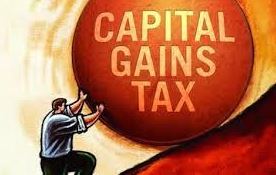
Pushing CGT Uphill: The prospect of collecting a tax-free capital gain at the end of a life of hard work and deferred gratification is what keeps “Middle New Zealand” going. The farmer, the small businessperson, the professional couple who diligently paid off their mortgage and then leveraged the freehold into a second property: these are the people whose undying enmity will destroy any party foolish enough to enact a CGT.

LATER THIS WEEK, the recommendations of the Tax Working Group will become public. It is highly likely that a Capital Gains Tax (CGT) of some description will be near the top of the Working Group’s “To Do” list. How should Labour handle this extremely hot potato? The tax which all the experts tell us we have to have has much to recommend it theoretically, but, in the bluntest of practical political terms, it could very easily destroy this government.

The most important aspect of the CGT issue, and the one the Coalition Government should keep in mind at all times, is that the expectation of capital gain is now “baked in” to the economic expectations of a huge number of New Zealanders. One might even say that it is the beating heart of this country’s economic culture. The prospect of collecting a tax-free capital gain at the end of a life of hard work and deferred gratification is what keeps “Middle New Zealand” going. The farmer, the small businessperson, the professional couple who diligently paid off their mortgage and then leveraged the freehold into a second property: these are the people whose undying enmity will destroy any party foolish enough to enact a CGT.

Only those who conceive of our society as some sort of mechanism could possibly advocate a CGT. These are the people who believe that with a just few judicious adjustments to the social mechanism everyone’s lives will be immeasurably improved. Doubters will find themselves wondering what all the fuss was about when they see how brilliantly the technical changes are working. Opponents should be ignored. They just don’t get it.

Anyone who lived through the “technical adjustments” of the Rogernomics era knows that this line of argument is complete and utter bollocks. The “short-term pain for long-term gain” mantra that was advanced by the Fourth Labour Government (and amplified to ear-drum rupturing levels by the news media) was a lie.

Very few of New Zealand’s social indices have registered a clear improvement in the lives of New Zealanders as a result of the so-called “Rogernomics Revolution”. The wage-earner’s share of company surpluses has reduced in comparison to the shareholder’s. The number of New Zealanders owning their own homes has declined sharply. The dramatic surge in average life expectancy that distinguished the 30 years following World War II has plateaued.

The explanation for New Zealand society’s resolute refusal to be improved by the Fourth Labour Government’s neoliberal “reforms” is very simple. Society is not a mechanism, it is an organism. Ripping things out from, or cutting them off, a living system doesn’t improve it. All that happens is that the system is left wounded and bleeding. Given sufficient time, an organism may adapt to the loss of a limb, or an organ. Wounds do heal. But attempting to pass off the maimed subject of your surgery as a vast improvement over what existed before, is a fool’s errand. Trauma endures.

Has this government, dominated as it is by the Labour Party, learned anything from what happened between 1984 and 1999?

If it politely receives the Tax Working Group’s recommendations, only to consign them, quietly, to the archives, then we may be confident that Labour has absorbed the lessons of its recent history. If, however, Labour presses ahead: proclaiming, once again, the mighty improvements that are bound to follow the suggested adjustments to the mechanism; then we must anticipate the same disastrous consequences.

What farmer (who is not a corporation) will persist with the heartbreak and stress of extracting value from the land, if the tax-free reward awaiting him at the end of his stewardship is transformed into a crippling tax bill?

Will the small-business owner be content to pay herself less than the staff she employs; will she continue to pour her blood, sweat and tears into her enterprise; if a third of the capital gain she hopes to realise at the time of its eventual sale is payable to the IRD?

Will the professional couple with some capital to invest continue to put it into a rental property if a CGT is introduced? Will they go on putting-up with the often appalling behaviour of delinquent tenants? Will they continue to spend a small fortune keeping their properties warm and watertight? They might as well put all their savings into KiwiSaver.

Which is, of course, exactly what the economists want them to do. But will KiwiSaver rent out properties to students? Will it give young tradespeople somewhere decent to live while they amass the capital resources necessary to fulfill the Kiwi Dream of becoming one’s own boss?

Money flows around the social organism we call New Zealand in a unique way. We are not Germany, with its hugely facilitative regional banking structures and its comprehensive tenant protections. Nor are we the USA, with its vast domestic market and its middle-class households’ longstanding propensity to invest in stocks and shares. Ours is an economy driven by delayed gratification: by putting in the hard yards now, on the promise of tax-free capital gains later. Rip that expectation away from aspirational Kiwis, and the economic organism will suffer yet another massive trauma.

Those responsible for inflicting a Capital Gains Tax on New Zealand should not expect to be re-elected for a generation – at least.

This essay was posted simultaneously on The Daily Blog and Bowalley Road of Tuesday, 19 February 2019.

Thursday, 19 October 2017

Winston’s Dream Can Only Be Realised By Putting New Zealand Second.

Zealandia Redux? What Winston Peters and his party now have to decide, is whether transforming their homeland into an economic, political and cultural colony of the People’s Republic of China was what they meant when they promised to put New Zealand first.

WHAT DOES NZ FIRST WANT? More than anything else, NZ First and its leader, Winston Peters, would like to reconstruct the New Zealand economy of the 1950s and 60s. These were years of extraordinary economic and social progress, during which more and more New Zealanders were lifted into relative affluence. The country’s infrastructure (especially its hydro-electric energy generation capacity) was similarly enhanced. NZ First’s desire to replicate this success is, therefore, commendable. But, is it possible? In a world so very different from the one that emerged from World War II, is it reasonable to suppose that the remedies of ‘Then’ are applicable – or even available – ‘Now’?

At the end of World War II the United States of America stood completely unchallenged: militarily, economically and culturally it was without peer. The American mainland remained untouched by the fascist enemy; its factories were geared to levels of production without parallel in human history; and the sophistication of its science, which had bequeathed to the world both cheap antibiotics and the atomic bomb, promised a future of unbounded promise – and unprecedented peril.

Accounting for half the world’s production and nearly two-thirds of its wealth, the United States nevertheless faced a problem. If the rest of humanity was not to slide into the most wretched poverty and, once again, fall prey to the purveyors of extreme political ideologies, then it would have to be given the wherewithal to lift itself up into prosperity. Except that, when the Americans spoke of humanity, they were not really thinking of the human-beings who lived in the Soviet Union, or civil-war-ravaged China, or in the vast continent of Africa. It was in the rehabilitation of the peoples of Europe, South America and Australasia that the USA was most interested.

New Zealand, also materially unscathed by the ravages of war, was ideally positioned to benefit from the Americans’ self-interested altruism. The United Kingdom constituted an insatiable market for this country’s agricultural products, and the United States made sure its enfeebled British ally received sufficient cash to go on buying (among other things) all the butter, cheese, lamb and wool New Zealand could send it. It was an arrangement which very quickly transformed New Zealand into one of the wealthiest nations on earth.

Sixty-five years on from the fat 1950s, however, the world is a very different place. Europe and Japan rebuilt themselves, and the USA’s effortless hegemony became harder and harder to sustain. In lifting its own people, and much of the rest of the world, out of poverty, American capitalism had facilitated the rise of powerful working-classes in all the major Western nation-states. They had created increasingly self-conscious and militant labour movements which, if not tamed, would soon be in a position to transition their societies out of capitalism and into a new, post-capitalist, form of economic and social organisation.

The world currently inhabited by New Zealanders reflects the self-defensive policies set in motion by the ruling classes of the leading capitalist nations in the mid-to-late 1970s – the period of Capitalism’s maximum danger. Perhaps the most important of these policies involved the integration of the populations of the Soviet Union and China into what was intended to become, as soon as they were brought safely under its influence, a truly global capitalist economy. Against such a massive expansion in the supply of cheap labour, the working-classes of the West stood no chance. The golden age of post-war social-democracy – the age which Winston Peters and NZ First would so like to re-create – was at an end.

Or was it? The Chinese Communist Party’s embrace of “Socialism – with Chinese  characteristics” (a.k.a State Capitalism) following the death of Mao Zedong, not only assisted China’s integration into the global capitalist economy, but unleashed pent-up forces of commercial dynamism which, in the space of just 40 years, transformed China into an economic behemoth. It is now China which offers New Zealand an insatiable market for its agricultural products. Indeed, so constant is Chinese demand for New Zealand exports that the same level of state-sponsored economic and social uplift which characterised this country in the 1950s and 60s is, once again, becoming a possibility. But only under Chinese hegemony.

What Winston Peters and his party now have to decide, is whether transforming their homeland into an economic, political and cultural colony of the People’s Republic of China was what they meant when they promised to put New Zealand first.


This essay was originally posted on The Daily Blog of Thursday, 19 October 2017.

Tuesday, 17 March 2015

Inflation Is Defeated - But At Whose Expense?

Inflation Buster: As Governor of the Reserve Bank of New Zealand from 1988 until 2002, Dr Don Brash oversaw the anti-inflation programme of the new neoliberal order he had played such a vital role in unleashing upon New Zealand. The financial sector and the ticket-clipping classes were delighted by his success, workers and borrowers paid with stagnating real wages and diminished expectations. And now, an even more frightening spectre looms: Deflation.
 
THE PROSPECT of zero inflation is difficult for many New Zealanders to grasp. Those of us over fifty will recall the years when the annual inflation rate was this country’s most contentious political issue. Hardly surprising, when rates of up to 18 percent were recorded. A nation experiencing that sort of monetary pressure has reason to be concerned.
 
But, persistent high inflation affects different groups in different ways. Like most human creations, it produces both winners and losers.
 
In a country where most wage-workers belonged to a trade union, and there were powerful political incentives for the annual round of wage negotiations to produce results roughly reflective of increases in the cost of living, inflation was more of an irritant than a danger. If a worker’s union was strong, he and his family could keep ahead of inflation. The members of the weaker unions, however, were forever playing catch-up.
 
If those workers were the recipient of a 3 percent (!) State Advances loan, however, inflation was their friend. Every year that high inflation persisted, young couples could pay off the mortgage on their first home with dollars that were, in real terms, worth less than when the debt was originally incurred. Persistent levels of high inflation were a huge boon to borrowers.
 
Between 1965 and 1985, governments of both the left and the right were content to see inflation lift tens-of-thousands of young baby-boomers onto the lower rungs of the property ladder. Indeed, it is possible to argue that the creation and maintenance of National’s “property-owning democracy” would have been all-but-impossible without a persistently high rate of inflation.
 
Persistent high inflation was also of crucial assistance to running an effective welfare state. Thanks to the phenomenon known as “fiscal drag”, inflation-driven increases in wages and salaries were constantly lifting workers into higher tax-brackets, allowing the government’s own revenue needs to be met without recourse to more regular, explicit, and, therefore, politically unpopular, tax adjustments.
 
Persistent high inflation’s biggest losers, obviously, were those whose loans were being repaid at a fixed rate of interest in devalued dollars, along with people attempting to live on incomes that could not easily be adjusted for the effects of inflation. Returns on investment; the real value of private pensions, annuities and legacies; all tended to fall in circumstances of persistent high inflation.
 
It is never a good idea for politicians to antagonise those who control their nation’s financial system. Equally unwise is a government that even looks like it is prepared to beggar the social class most dependent on legacies, annuities, private pensions and the income generated from investments. That persistent high inflation, with its beneficial impacts on workers, borrowers and social-democratic politicians, would, by the end of the 1970s, convince bankers, rentiers, and other sundry members of the ticket-clipping classes that some pretty major reforms were long overdue, was entirely predictable.
 
That a constant theme, running through all of the dramatic economic changes of the next 30 years, would be “driving inflation out of the economy”, was equally foreseeable. Nor should we be surprised that these reforms neatly reversed the position of winners and losers. That the banks and the ticket-clipping classes would benefit disproportionately from their anti-inflationary crusade was really the whole point of the exercise.
 
And who, now, can say that inflation isn’t beaten? With the inflation rate hovering tantalisingly above zero - nobody. The costs, however, have been substantial.
 
The radical reduction of trade union power by the Employment Contracts Act shattered the mechanisms that had allowed workers and their families to keep pace with inflation. Despite improvements in workforce productivity, the purchasing power of New Zealand workers’ wages has stagnated or declined.
 
Politicians, too, lost their ability to turn monetary policy to the advantage of workers and borrowers. The moment controlling inflation became the Reserve Bank’s first (and some would say only) priority, the old social-democratic goals of full-employment, home ownership for all, and a generous welfare state funded through progressive taxation, became inoperative.
 
There’s a paradox here. As New Zealand’s inflation rate declines towards zero, the Reserve Bank must confront the possibility of deflation. But, persistently declining prices are a reflection of declining demand, which is, in its turn, a reflection of oversupply and a market that cannot clear itself except by selling below cost. Deflation is, therefore, the sign of an economy that’s slowing down. It is the harbinger of busts, slumps, recessions and (God forbid!) another Great Depression.
 
Some economists argue that inflation allowed the Free World to pay-off World War II in record time. Others affirm that it underpinned the great post-war boom. Is it pure coincidence then, that at the peak of the boom, inflation was suddenly branded Public Enemy No. 1?
 
If zero inflation is a triumph, then perhaps we should ask: “For whom?”
 
This essay was originally published in The Press of Tuesday, 17 March 2015.

Friday, 13 March 2015

By Other Means: Eco-Terrorist Holds New Zealand Over A Barrel Of 1080 Poison.

New Zealand's Worst Nightmare: The threat to contaminate infant formula with pure 1080 poison is, indisputably, an act of eco-terrorism - and it's working. The dispatch of two letters and a few milligrams of 1080 has produced hugely disproportionate consequences. The asymmetry is striking.
 
NEW ZEALANDERS are angry. News that the country’s youngest and most vulnerable citizens are being treated as pawns in a dangerous game of political blackmail has been received with a mixture of fear, fury and frank disbelief. Many people simply refuse to believe that the threat to mix the deadly 1080 poison with infant formula is genuine. They have dismissed the whole shameful business as nothing more than a criminal hoax.
 
But it is not a hoax. A hoax is defined as a humorous or malicious deception. To perpetrate a hoax is to trick and/or deceive. But, at no point in this crisis has anyone been tricked or deceived. Someone sent a letter to Federated Farmers and Fonterra. Inside each letter was a small package containing what the sender claimed to be a mixture of 1080 poison and infant formula. Tests confirmed the sender’s claim. This was, indeed, a mixture of 1080 poison and infant formula. No trick. No deception. And no one at Federated Farmers or Fonterra was laughing.
 
What New Zealand is being subjected to is eco-terrorism – and it’s working. Already the person, or persons, behind this attempt to force the Government to stop using 1080 pesticide has cost “NZ Inc” as much as $20 million. A vast and ruinously expensive testing regime has been established. The importers of New Zealand infant formula have been contacted – with incalculable effect upon the nation’s reputation. Even more ominously, the moment the four-month-old crisis was officially acknowledged, the value of the NZ Dollar dipped sharply. The asymmetry of the situation is striking. The dispatch of two letters and a few milligrams of 1080 has produced hugely disproportionate consequences.
 
And it is far from over. The Eco-Terrorist sent his letters in November 2014. (The masculine pronoun is being used here, but the perpetrator could just as easily be female.) But the threat to set in motion the fatal contamination of New Zealand’s infant formula was post-dated to the end of March 2015. That deadline is still 18 days away. The assumption, therefore, must be that the Eco-Terrorist has spent the last four months devising a way of demonstrating to both the New Zealand Government and the importers of our infant formula, that he can introduce 1080 into the product at will. Indeed, the Prime Minister’s refusal to abandon 1080, coupled with his point-blank refusal to negotiate, more-or-less requires the Eco-Terrorist to make such a demonstration. If some proof of capability is not forthcoming, then the threat evaporates and the crisis is over.
 
The temptation is strong to dismiss the Eco-Terrorist as a “nutter”. This would be a mistake. What has been revealed over the past 72 hours is a carefully planned and executed terrorist attack on the New Zealand State. Indeed, the blackmail threat which the Eco-Terrorist has made falls squarely under the heading of “New Zealand’s worst nightmare”. As an exporter of high-quality food products this country has always been acutely vulnerable to any event – natural or human – which renders its exports unsaleable. The most terrifying “doomsday event” would be an outbreak of Foot and Mouth Disease. But Poison-In-The-Baby-Formula comes a pretty close second. The potential for massive economic damage is frightening.
 
What sort of person could do this? Who should the authorities be looking for?
 
The key to identifying the Eco-Terrorist lies in tracking down the source of the pure 1080 that was mixed-in with the infant formula. Was the poison smuggled into the country from the United States? Was it stolen from the Whanganui factory that manufactures the 1080 pellets used by the Department of Conservation? Or, did it come from one of the small number of research facilities which, according to the Environmental Protection Agency (EPA) hold small quantities of the chemical in their laboratories?
 
A consensus is forming that the most likely source of the poison is one of these research facilities. If so, then the profile of the Eco-Terrorist/s more-or-less writes itself. He would have a background in scientific research – quite possibly into 1080 itself – and that research, or the research of someone with whom they have worked closely, may have led him to the conclusion that the Government’s use of 1080 is environmentally and morally indefensible. That the Government has refused to be swayed by the international and domestic evidence of 1080’s toxicity, and simply over-ruled the objections of thousands of New Zealand citizens, may have driven him to the conclusion that only by imposing a crippling economic cost on its continued use can 1080 be banished from our shores.
 
The Eco-Terrorist’s concerns may have been further exacerbated by the pro-1080 stance of individuals and groups he had trusted to come out in opposition. The Commissioner for the Environment, Forest and Bird and the Greens have all, to the surprise and frustration of the anti-1080 lobby, publicly declared their support for the pesticide. This unexpected “betrayal” of the cause may have been the final straw. In the Eco-Terrorist’s mind, the Government’s stance will only be changed by “other means”.
 
It’s a truism of terrorism that a person who, under normal circumstances, could be relied upon to live a quiet, productive and thoroughly law-abiding life, may, given the right sequence of provocations, be transformed into a radically different being. The moment such a person is convinced that the ends he is now pursuing are both noble and necessary, then any means, no matter how heinous, which serve to bring those ends closer, are permissible. Once that particular mental Rubicon has been crossed, a human-being is capable of doing just about anything – with a clear conscience.
 
Even poisoning babies? Possibly. Although infant formula may have been targeted by the Eco-Terrorist on account of its already proven capacity to inflict massive damage to the New Zealand economy. Even so, there is a strong possibility that by drawing babies into the threat environment the Eco-Terrorist has inadvertently given the Police’s criminal profilers access to long-buried hurts, unacknowledged conflicts and deep psychological wounds.
 
Experts are already speculating that the “unsub” [unknown subject] may have lost a beloved pet to 1080 poisoning. Others insist that, because no parent could use babies as bargaining chips, the Eco-Terrorist must be childless. The image arises of an isolated, highly intelligent, but very lonely person, who masks his furious desire to strike back at the world (which he experiences as cruel and unresponsive) behind a passionate public commitment to protecting the natural environment.
 
So, how does this crisis end? Well, that depends on how successful the Eco-Terrorist is at evading apprehension, and whether or not he is able to keep on ramping-up the pressure.
 
We must all hope that, in the 18 days that remain before his post-dated cheque is due to be cashed, the authorities are able to identify and apprehend this criminally misguided individual. By bringing the public into the process, the senior political, bureaucratic, military, police and security personnel on ODESC – The Officials Committee for Domestic and External Security Co-ordination – now have 4.5 million pairs of eyes at their disposal.
 
Let us pray that 4.5 million is enough.
 
This essay was originally posted on The Daily Blog of Thursday, 12 March 2015.

Tuesday, 28 May 2013

A Place At The Table

Showtime! Winston Peters knows how to exploit New Zealanders' long-standing fear of all things Chinese. But he also knows better than to seriously threaten New Zealand's increasing reliance of the Chinese markets - or to undermine the thirty-year effort it has required to ensure this country's continued access to them.
 
IT’S “SHOWTIME!” for Winston Peters. Once again New Zealanders’ fears have found an obliging political impresario. In his latest speech, to a Grey Power audience on Auckland’s North Shore, Mr Peters has targeted New Zealand’s rapidly changing demographic profile – most particularly the burgeoning rate of Chinese immigration. For those accustomed to thinking of New Zealand as the “last, loneliest, loveliest” outpost of European civilisation, this dramatic change in the shape of their country’s population is confusing, alarming – even threatening.
 
Mr Peters’ critics have attempted to characterise his latest observations as “racist” and “xenophobic”. These are easy shots to take. Any immigration trend which suggests that the balance of ethnic power within the national community is shifting will inevitably inspire all manner of racially-inflected political discussions. To condemn such discussions as “racist” is tantamount to ruling all but positive assessments of New Zealand’s current population policy out-of-bounds.
 
There are plenty of Kiwis who would insist that such mandatory positivism is – and has been for years – the firm policy of New Zealand Governments. Regardless of their partisan composition, successive administrations have extolled the virtues of immigration policies that focus almost exclusively on the economic value of each new immigrant. Any consideration of the socio-cultural dislocations historically associated with such policies has always come well behind the professed priorities of reducing New Zealand’s skills deficit and stimulating domestic demand.
 
Which is not to say that there weren’t those within the Department of Immigration anxious to forestall any rebirth of the atavistic anti-Chinese sentiment that shaped the immigration policies of nineteenth and early-twentieth century New Zealand. And these efforts to supress all forms of Kiwi Sinophobia would have been strongly supported by the Ministry of Foreign Affairs and Trade. Preparing for the increasingly important role the People’s Republic of China was going to play in the New Zealand economy has been a central feature of this country’s foreign and trade policies for the last thirty years.
 
The final triumph of the Chinese Communist Party’s “capitalist roaders” over Mao Zedong’s “iron rice bowl” socialists in the late-1970s anticipated the emergence of the so-called “Washington Consensus” favouring neoliberal capitalism and globalisation in the 1980s. The British called it “Thatcherism”, the Americans “Reaganomics”, and New Zealanders dubbed it “Rogernomics”. At the heart of the new economic paradigm was a vision of the future in which capital, goods (and, ultimately, even labour) would flow freely across a borderless planet.
 
Ever since both of New Zealand’s major political parties accepted globalised neoliberalism as the fixed shape of the future, the policy mandarins at MFAT have worked tirelessly to ensure that New Zealand would have a place at the table of the economic behemoth China promised to become.
 
Viewed from this perspective, the vast influx of Chinese nationals to New Zealand makes perfect sense. Whether in the form of fee-paying students, highly-skilled workers, property speculators or financial investors, official New Zealand has consistently welcomed the people upon whose complex personal, business and political networks this country’s economic prosperity has, increasingly, come to depend.
 
Mr Peters’ North Shore Grey Power audience would undoubtedly receive this largely untold recent history of New Zealand with considerable alarm and dismay. But, tellingly, it’s not the story Mr Peters told. (Even though, as a former Minister of Foreign Affairs, he will know it inside out). Instead, the NZ First leader chose to scratch the familiar itches of Chinese property speculation and the involvement of a very small number of Chinese businessmen in the gambling and sex industries.
 
Mr Peters knows there are votes to be won from the older generations of New Zealanders (especially those living in Auckland) who are having a harder and harder time reconciling the New Zealand they grew up in with the New Zealand they see all around them today. No doubt he has studied recent political trends in the United States and recognised the huge electoral rewards that can flow to a political party willing to identify itself with those ageing, comfortably-situated, conservative whites who, in one form or another, are feeling the demographic pinch.
 
What has clearly been a failing strategy for the far-right-driven Republican Party in the United States (where there are now simply too few conservative whites to win the presidency without at least some ethnic allies) it promises to be a real winner for Mr Peters. NZ First is not in a two-party, FPP, fight to the finish. As the consummate MMP politician, Mr Peters will be perfectly content with anything between five and 10 percent of the Party Vote. A few more, carefully calibrated, appeals to “Old New Zealand’s” Sinophobia ought to do the trick.
 
But Mr Peters remains too much the steadfast patriot to seriously put at risk the place Labour and National have laid for New Zealand at the Chinese table.
 
This essay was originally published in The Press of Tuesday, 28 May 2013.

Tuesday, 19 June 2012

Who Is "Everyone"? Some Thoughts On The Superannuation Debate

Tout le Monde? - C'est Moi! At the core of the current "debate" about the sustainability of NZ Superannuation are the same forces that have dismantled so much of the welfare state already: the forces of domestic and global finance. All the more curious, therefore, that Labour should be lining up behind them.

MY DAUGHTER AND I were driving back from the mall Saturday afternoon, listening to the news on the car radio. “Everyone” was saying that New Zealand’s superannuation scheme was in trouble. “Everyone” was similarly in agreement that the retirement age would have to be raised from 65 to 67 years. “Everyone” was also absolutely convinced that if this didn’t happen soon the whole scheme would become unsustainable.

I remember saying to my daughter: “Whenever you hear a news bulletin like that you should always ask yourself who this ‘Everyone’ is.”

“Everyone” certainly does not include a clear majority of New Zealand’s political parties.

The governing party, National, is resolutely opposed to making any changes at all to New Zealand Superannuation. NZ First is equally adamant that there should be no change – unless it involves lifting the percentage of the net average wage paid to superannuitants from 66 to 68 percent. The Green Party, likewise, opposes changing the scheme. Ditto for Mana and the Maori Party. (Indeed, given Maori New Zealanders’ lower life expectancy, they believe the eligibility-age should be lowered – not lifted!) United Future also supports keeping the age at 65, but proposes that citizens be encouraged to remain in the workforce a little longer, and uplift their super’ later at a higher rate. Or, retire earlier, but at a lower rate.

The only major party currently advocating increasing the age of eligibility (from 65 to 67) is the Labour Party. In this they are supported (albeit very quietly) by the tiny, far-right, Act Party.

Labour justifies its position by pointing out that in just a few years New Zealand will be spending as much on superannuation as it does on education. What a curious argument. Why would a social-democratic party be suggesting that the state should spend less on its older citizens than it does on the young? We can only hope that Labour’s strategists are not planning to turn the younger voters of Generations X and Y against the “selfish” Baby Boomers. David Shearer hasn’t quite accused this latter group of “intergenerational theft” – but that’s the electoral logic of his position.

Having established that “Everyone” does not include most of the country’s politicians, let’s take a look at who it does include. Perhaps the most significant member of the “Everyone” group is the Retirement Commissioner, Diana Crossan. Charged with providing the Government with “independent” advice on retirement issues, the Commissioner’s views should, on the face of it, be accorded considerable weight.

The only problem with being guided by the Retirement Commissioner is that her views on this crucial matter are starkly contradicted by a significant number of economists – including those working for the OECD. As these economists indicated in their recent survey of international retirement policies, New Zealand’s superannuation scheme compares extremely favourably with all those operating in the 34 “First World” countries it covers.

Right now, in 2012, our scheme absorbs less than 5 percent of New Zealand’s GDP – that’s about half the amount spent by the other OECD countries. Yes, it is going to rise as the “Baby Boom” generation reaches retirement age, but only to the percentage of GDP most wealthy countries are paying right now. New Zealanders should be very proud of their scheme, which is not only extremely cost effective, but also ensures that all our elder citizens are entitled to a level of income security unsurpassed anywhere else in the world.

So why is our Retirement Commissioner crying “Wolf!” on the cost and sustainability of the New Zealand scheme? Perhaps Ms Crossan’s views have been influenced by her former employer – the financial institution which started out as the Australian Mutual Provident Society – now known as AMP. This massive financial institution merged last year with AXA Asia and Pacific Holdings, and just under half its shares are held by HSBC, JP Morgan and Citigroup.

And that’s the scary thing. When you dig into the people and institutions making up “Everyone”, you discover that just about all of them, in one way or another, are bound up with vast financial corporations, all possessing a powerful vested interest in wrenching the provision of citizens’ basic retirement income out of the hands of the state and into their own, private, talons.

As is so often the case, these vast corporate bodies, working through their highly skilled and fearsomely resourced PR organisations, have contrived to create an apparently genuine consensus that change is both necessary and inevitable. So successful have they been that, in a recent TV3-Reid Research poll, nearly two-thirds of New Zealanders dutifully regurgitated the opinion, force-fed to them by the finance industry, that the eligibility-age for National Super should rise from 65 to 67.

“Everyone” does not believe superannuation is unsustainable, but repeat the lie often enough and everybody just might think it’s true.

This essay was originally published in The Press of Tuesday, 19 June 2012.

Friday, 25 May 2012

Bill's Bigoted Budget

"Stimulus? Hah! That's A Good One!" Finance Minister, Bill English, like an Eighteenth Century quack, has only one remedy for his unfortunate patient: "Bleed him, bleed him, bleed him and then bleed him some more!"

“THE SOFT BIGOTRY of low expectations” is a phrase attributed to George W Bush. It’s more likely author, however, is Michael Gerson, President Bush’s speechwriter. Some of the other, equally memorable, signature lines he supplied were “armies of compassion” (to describe America’s faith-based charities) and “axis of evil” (to describe Saddam Hussein’s partners in tyranny). Regardless of who authored “the soft bigotry” phrase, it makes an excellent starting-point for a discussion of Bill English’s fourth budget.

Whatever else might be said of Sir Roger Douglas and the economic programme which bears his name, as New Zealand’s finance minister he always aimed high. Indeed, There’s Got To Be A Better Way – the slim volume on economic reform he produced in 1980 – opens with a comment from no less a philosophical earth-shaker than Friedrich “God is Dead” Nietzsche.

The quotation is taken from Nietzsche’s Human, All Too Human, published in 1878, in which the German philosopher declares that: “A nation usually renews its youth on a political sickbed; and there finds again the spirit which it had gradually lost in seeking and maintaining power.”

The image of a nation weakened by a debilitating illness; its people divided, confused and dispirited; was clearly a powerful motivation for Mr Douglas. New Zealand, he warned: “stands on the brink of economic ruin”. It has “stifled innovation for mediocrity”, and, as a result, the country “is losing thousands of New Zealanders, most of them young, each year.”

The Finance Minister-in-Waiting’s anguished cri de coeur: “New Zealand is a nation that has lost its spirit, the fire in its belly!”, is followed by the question: “How much further will New Zealand sink before we start to fight back?”

All of which, surveying New Zealand’s present predicament, possesses a very familiar ring. The big difference, of course, is that our present Finance Minister lacks his predecessor’s fervent belief in New Zealanders’ ability to make big decisions and absorb big changes. Mr English’s budget is a bigoted budget – not only because it evinces the bigot’s signature incapacity to entertain any ideas but his own, but also because, in the Bush/Gerson sense, it holds such offensively low expectations of its recipients’ capabilities.

It is a budget of “cant’s” not “cans”. For everything it gives, it makes a parsimonious virtue of taking something away. If New Zealand, to employ Nietzsche’s sickbed analogy, is a weak and dispirited patient, then Mr English must be cast as an Eighteenth Century quack, whose only answer to his patient’s declining health is to “bleed him, bleed him, bleed him and then bleed him some more”. The same leech-craft that is killing Europe, is being touted by Mr English and the Prime Minister as our own unfortunate country’s sovereign cure.

Is a more competent physician waiting outside the door? Is the Labour Opposition ready to stride into the sick room, cast back the dingy curtains, throw open the windows to fresh air and sunshine, and bid the patient, in the words of John 5:8, to: “Rise, take up thy bed and walk”?

Sadly, there is not. Labour’s David Parker bustles about with his sheaf of papers, muttering dutifully of thrift and probity, sounding for all the world like a provincial family lawyer, concerned about his ailing client’s unpaid debts, and anxious to settle the terms of his will.

Only the Green’s Russel Norman shows the slightest sign of possessing the Nietzsche/Douglas spirit. He, unlike Mr Parker, will not bow down to the deficit idol. The Greens co-leader simply refuses to go on heaping sacrificial victims (beneficiaries, public servants, the sick, students) upon the corpse-strewn altar of “Returning the Government’s Books to Surplus by 2014/15”.

Given the chance, I believe Dr Norman would cast back the curtains and throw open the windows of New Zealand’s economic sick-room. With the highest expectations of his fellow New Zealanders’ recuperative powers, he shows them a vista of blue skies and green fields, and invites them to get out of bed.

This essay was originally published in The Dominion Post, The Otago Daily Times, The Waikato Times, The Taranaki Daily News, The Timaru Herald and The Greymouth Star of Friday, 25 May 2012.