Showing posts with label Class Conflict. Show all posts

Sunday, 12 August 2018

The Government v. The Business Community: Playing Chicken Over Employment Law Reform

But Has Grant Got His Leather Jacket Caught In The Handle? Declining business confidence and how the government should respond to it is fast developing into a game of political and economic ‘chicken’. Both sides know they are being challenged. They also know that the longer they delay responding the greater the risk of a tragic outcome. (Screen shot from Rebel Without A Cause) 

EVERY TIME the Prime Minister and the Minister of Finance address the “Business Community” I wince. It’s painful to watch them abase themselves in the way they do. As if their endless protestations of good will and their oft-repeated promise to “listen” will make the slightest difference. The Business Community is acutely aware that there is nothing with more potential to cause them harm than a left-wing government. If it cannot be tamed, then it must be broken.

At the moment the attention of the government’s business opponents is focused on its reaction to the evidence of plummeting business confidence. This is fast developing into a game of political and economic ‘chicken’. Both sides know they are being challenged. They also know that the longer they delay responding the greater the risk of a tragic outcome. The Business Community is, however, convinced that, on the basis of its previous experience with left-wing governments, Jacinda Ardern and Grant Robertson will swerve first.

By “swerving” they mean backing away (if not actually backing down) from their proposed employment law reforms. The more intelligent members of the business community are only too aware of the head of steam that is building up in the workforce for a decisive shift in the power relationships prevailing in the workplace. Any reform that makes it easier for workers in the private sector to be organised into unions – let alone aggregated into the occupational collectivities of the pre-Employment Contracts Act era – has the potential to set off a wave of unionisation that could fundamentally disadvantage shareholders of all sizes.

Such a “revolution of rising expectations” has, however, been on the cards from the moment Jacinda began scattering her stardust hither and yon in the run-up to last year’s election. That stardust poses a huge problem for Labour. Without it, there was – and is – no possibility of the party winning anything like enough support to form a government. In deploying her politics of hope and kindness, however, Jacinda has raised New Zealanders hopes and dreams to dangerous new heights.

New Zealanders are expecting the Labour-led government to usher-in real and positive changes in the way they live their lives. Failure to meet these expectations will, almost certainly, result in the fall of the Labour-NZF-Green Government.

Jacinda and her team know this. They may have bought themselves some time by setting up scores of working-groups and inquiries, but at some point before the 2020 general election they are going to have to start delivering real gains to the people who voted for them. Being seen to back away, albeit under fierce business pressure, from restoring a modicum of fairness to the workplace will be seen by many traditional Labour supporters (especially the present and former members of trade unions) as a betrayal.

And yet, as the wage campaigns of public sector workers (the only groups who have been able to retain a credible measure of union density) are rolled out and resolved in settlements involving double-figures, the restiveness of the largely un-unionised private sector workforce can only grow. The Business Community do not need to have the consequences of this restiveness spelled out for them. Employment law reform could quite easily result in an unprecedented and largely unorganised strike-wave sweeping across the country.

That’s enough to shake the confidence of even the most unflappable CEO.

Unfortunately, it is also more than enough to unsettle the nerves of a social-democratic government that would (to paraphrase the shrewd observation of an old trade unionist pal of mine) retain control of the losing side in an argument about employment law reform than lose control of the winning side.

In spite of its name, the last thing Labour wants is the New Zealand working-class taking matters into its own hands.

Those who have put their money on Jacinda and Grant swerving at the last minute have, if history is any guide, made a pretty safe bet.

This essay was originally posted on The Daily Blog of Friday, 10 August 2018.

Saturday, 30 June 2018

Employers On The Warpath.

Excellent! So blow you employer windbags: crack your cheeks! Rage, blow! Spew forth cataracts of media releases, unleash your Facebook hurricanoes. Spout your nonsense about the Seventies until the voters are drenched with lies and the public square awash with fake news.

WELL, THAT DIDN’T take very long, did it? Nine months into this government’s first term and employer organisations up and down the country are on the warpath. There are full-page adverts and billboards for all the old folks who still respond to the printed word and a digital campaign for everybody else. The message? Simple. The proposed reforms to the Employment Relations Act must be “fixed”. Not “fixed” as in repaired, you understand, but “fixed” as in “the fix is in” and “the fight is fixed”. Basically, the bosses’ reps are telling the Labour-NZF-Green government that their members are happy with the way things are in the workplace and that no changes are necessary. Got that? No changes!

Wait a minute! Are these the same employer groups who, just a few weeks ago, were announcing their determination to be “part of the solution”? Yep, they sure are. But, a lot can happen in a few weeks. For example, you can be bombarded with hundreds of angry e-mails (from the businesses large and small that fund these groups) saying: “What the fuck do you idiots think you’re doing!”

Seems that New Zealand’s employers are not about to let union officials onto their premises at any time of the day or night simply because they’ve received an anguished call for help from one of their members. And why should it only be the small employers with fewer than twenty staff who get to have all the fun of waiting until Day 89 to fire their naïve 90-day probationers? No. New Zealand’s employers have made it very clear that they’re not paying their subs to have a bunch of pinko politicians order them to go on negotiating with their employees in good faith until a settlement is reached. No way. If Simon Bridges could be persuaded let them walk away from the negotiating table whenever they decide there’s nothing more to say, then so can Iain Lees-Galloway.

He’s a weak link that Iain Lees-Galloway. Ever since he backed away from his party’s solemn promise to repeal the hated “Hobbit Law”, it’s been clear that the guy isn’t what you’d call a tower of union-backing strength. Word is that the MBIE bureaucrats had him house-trained in a matter of days. Hugh Watt he’s not. Nor Stan Rodger neither. [Ministers of Labour in the Kirk and Lange Labour Governments respectively – Ed.]

But, if Iain Lees-Galloway is a weak link, then the NZ First caucus is a frayed rope. The various employer groups saw what just one full-page ad from the Sensible Sentencing Trust could do to the populists’ reluctant agreement to repeal the Three Strikes legislation. How long is their willingness to sing “Solidarity Forever” with the unions likely to last once they’ve driven past a few 10-metre-long billboards encouraging them to “fix” the employment relations legislation?

The answer – as always when the question is NZ First – depends on Winston Peters. A decision to throw in the towel of workplace relations reform would be a decision to leave a legacy of gutlessness and surrender. Certainly, it would make a nonsense of his determination to give capitalism a human face. It would also render incomprehensible his post-Cabinet press conference remarks about workers seeing his coalition government as a friend willing to listen. Winston won’t turn his back on all that just yet. He’s not about to let the unions carve the single word “Scab” on his political tombstone.

The other reason why Winston is more likely than not to urge resistance to the employers’ campaign is because he, unlike so many of the youngsters writing National’s attack-lines, remembers very clearly what happened in the 1970s.

Rather than the grey Polish shipyard so beloved of neoliberal revisionist historians like Michael Bassett, Peters remembers a New Zealand in which a dirt-poor Maori family from Northland could send their talented son to Auckland University without going into debt. He will recall, too, an era when working people did not live in fear of the boss. Yes there were strikes, and they could be damned inconvenient. But, seeing what happened to New Zealand after 1984 and 1991, Peters – along with his old comrade Jim Bolger – has come to understand that it was precisely because working people had trade unions to defend them that they also had jobs that paid them a living wage, houses they could afford, and children who could, and did, expect their lives to be better than their parents’.

So blow you employer windbags: crack your cheeks! Rage, blow! Spew forth cataracts of media releases, unleash your Facebook hurricanoes. Spout your nonsense about the Seventies until the voters are drenched with lies and the public square awash with fake news.

Spit and rage all you want. This government is determined to put a human face upon New Zealand capitalism – regardless of its well-funded protests.

Not for the bosses’ sake – but for ours.

This essay was originally posted on The Daily Blog of Friday, 29 June 2018.

Wednesday, 13 December 2017

Yanis Varoufakis Would Tell Grant Robertson That Neoliberalism’s Rules Are For Breaking – Not Keeping.

 Progressive Economist: Yanis Varoufakis is one of neoliberal capitalism’s most outspoken and acute critics. Winston Peters might have declared his determination to give capitalism a human face, but Varoufakis would likely argue that the necessary transplant operation would entail far more effort than it was worth! Hardly surprising given his belief that the leading capitalist nations have been waging an unrelenting war on their poorest citizens for the past forty years.

IMAGINE THE REACTION if Finance Minister, Grant Robertson, announced a broad-ranging, government-sponsored seminar on progressive economics chaired by Yanis Varoufakis. Vilified and demonized by EU bankers and politicians for his heterodox economic ideas, Varoufakis resigned as Greece’s Finance Minister in 2015 rather than impose yet another of the European Central Bank’s crushing economic diktats on his impoverished homeland.

Inviting Varoufakis to chair a seminar on progressive economics would constitute the clearest possible proof that the Labour-NZ First Coalition’s promise to be a “transformational government” was genuine. International and domestic market reaction to such an announcement would, however, be instantaneous and extreme. New Zealand’s government would be portrayed as having taken leave of its senses.

And, in many respects, the markets would be right. Varoufakis is one of neoliberal capitalism’s most outspoken and acute critics. Winston Peters might have declared his determination to give capitalism a human face, but Varoufakis would likely argue that the necessary transplant operation would entail far more effort than it was worth! Hardly surprising given his belief that the leading capitalist nations have been waging an unrelenting war on their poorest citizens for the past forty years.

Writing for the latest newsletter of Project Syndicate, Varoufakis marvels at the “bourgeois rage” directed at the “militant parochialists” responsible for Brexit and Trump:

“The range of analysis is staggering. The rise of militant parochialism on both sides of the Atlantic is being investigated from every angle imaginable: psychoanalytically, culturally, anthropologically, aesthetically, and of course in terms of identity politics. The only angle that is left largely unexplored is the one that holds the key to understanding what is going on: the unceasing class war unleashed upon the poor since the late 1970s.”

As evidence for his class war claim, Varoufakis presents the following stark statistics:

“In 2016, the year of both Brexit and Trump, two pieces of data, dutifully neglected by the shrewdest of establishment analysts, told the story. In the United States, more than half of American families did not qualify, according to Federal Reserve data, to take out a loan that would allow them to buy the cheapest car for sale (the Nissan Versa sedan, priced at $US12,825). Meanwhile, in the United Kingdom, over 40% of families relied on either credit or food banks to feed themselves and cover basic needs.”

Unleashing Varoufakis on the equivalent New Zealand data would doubtless produce a series of equally startling conclusions. Which is why Grant Robertson, himself, would, almost certainly, resign rather than invite someone like Varoufakis to draw the obvious policy conclusions from the last 30 years of class war in New Zealand – especially since many of that war’s most destructive campaigns were conducted under the generalship of Labour Party politicians!

Robertson’s pitch to New Zealand’s capitalist class is very different from Varoufakis’s unabashed “economic humanism”. Only this morning, (11/12/17) speaking to the Auckland Chamber of Commerce, Robertson declared:

“For us to keep being able to afford the policies necessary to achieve higher living standards we must remain fiscally responsible. It goes without saying that a Government that presides over high deficits, increasing debt, or a shrinking economy could not provide the quality public services that New Zealanders want and deserve. That is why we have developed and committed to our Budget Responsibility Rules.”

Which is precisely the sort of language that Varoufakis encountered when he travelled to Brussels on his doomed missions to secure a more rational approach to managing the consequences of Greece’s crippling indebtedness. That Robertson shows every sign of being as committed to following “the rules” as the European Central Bank’s pitiless bailiffs, strongly suggests that, even if he could, somehow, be prevailed upon to organise a seminar on progressive economics, and invite Varoufakis to chair it, the maverick Greek economist would feel obliged to decline.

The former Greek Finance Minister’s own experience tells him that “the rules” formulated by the world’s economic and political elites; “the rules” bankers and politicians consider themselves bound in solemn duty to uphold and enforce at all costs; are, in reality, no more than “the rules of engagement” in neoliberal capitalism’s “unceasing class war” against the poor. If Varoufakis was ever to accept an invitation to chair a government-sponsored seminar on progressive economics, it would only be because he had already been convinced, by their actions, that the politicians asking him to elaborate a more “transformational” political economy were rule-breakers – not rule-keepers.


This essay was originally posted on The Daily Blog of Tuesday, 12 December 2017.

Thursday, 14 September 2017

This Is Still A Fight: Some Thoughts On The Newshub-Reid Research Poll.

Enough of "Let's do this", Jacinda. It's time to say "Let's do them!" Labour thought it could bluff its way through this election with warm fuzzies and vague promises. They assumed that these would be enough because the electorate has grown weary of the National Government. Well, the Newshub-Reid Research Poll has reminded them in no uncertain terms that this is still a fight.

FIRST OF ALL, it’s just one poll. And, one poll does not a Labour election loss portend. RNZ’s Poll of Polls which averages out the results of the three or four most recent polls, presents a considerably calmer picture. In a nutshell, National and Labour are level-pegging; NZ First and the Greens are drifting dangerously close to the 5 percent MMP threshold; the Maori Party looks set to take two seats; Act just one; and the rest (including The Opportunity Party) simply aren’t in the race.

Even so. The latest Newshub-Reid Research Poll has delivered a pretty solid kidney-punch to the Centre-Left’s morale. What had begun to feel like a smooth escalator ride to certain victory has been brought to a sudden, stomach-lurching halt. The Nat’s are sitting pretty on 47 percent – enough, with the Greens out of the running, to let them govern on their own.

The cynical genius of the Crosby-Textor pairing has armed the National Party with a pretty serviceable baseball bat and they are swinging it hard. Frustratingly, that Nat bat has been carved out of Labour’s errors. In a fine example of Crosby-Textor’s standard operating procedure. National’s fightback strategy zeroes-in on Labour’s point of maximum vulnerability: their MPs’ abiding fear of stating clearly what it is that they intend to do – and how they intend to pay for it.

Instead of responding to National’s “Let’s Tax This” jibe with a resounding “Hell, Yeah!”, Jacinda has been persuaded to double-down on the Little-led Labour Party’s “keep it vague until the election’s safely won” strategy. The Tax Working Group was supposed to save Labour’s blushes by placating voters with the promise of wise and disinterested expertise. Clearly, the party strategists failed to read the Brexit Memo. Had they done so, they would have been alerted to the fact that the electorate’s faith in “expert opinion” has grown rather thin of late. The stock response of 2017 voters to the prospect of having their future decided by a committee of experts is: “Whose experts will they be?” and “Which side will they be working for?”

Forced to rule out more and more of the promised Working Group’s most predictable recommendations, Jacinda has been made to look as if she already knows what her committee’s findings are going to be – but is reluctant to tell us. This merely reinforces the doubts National has been at such pains to sow. Tactically, her position is grim. As Paddy Gower observes:

“Part of Labour’s problem is that it keeps ruling certain tax variations out during heavy interviews. That keeps the story going. And the problem now is there is no way out for Labour – it cannot backtrack on this. It has to take its vague tax policy all the way to the election – and National will hack at it every step of the way. Labour must find a way out of the tax vortex. Suggestions on back of an envelope to J. Ardern of Mt Albert please.”

Unfortunately, there just isn’t enough time for snail mail. So, Jacinda, please accept the following as my best shot at describing “a way out of the tax vortex”.

Strategically, Labour’s best bet is to go on the offensive over tax. Not by responding to endless challenges to rule this or that tax out of contention, but by reminding voters why they pay taxes in the first place. Give it to the voters straight. That if they want better health care, better education, more affordable housing, improved mental health services and clean rivers and streams, then they cannot avoid the question of how all these things are to be paid for. Tell them that Labour’s Tax Working Group will be asked to come up with the fairest ways to gather revenue, but also tell them that they should not be in any doubt that gathering-in more revenue is, simply, what her government has to do if it is to fulfil its promises to repair the damage wrought by nine years of National rule.

Jacinda should remind the electorate that the determination of tax policy: how much should be gathered, and from whom; goes to the very heart of the democratic tradition. It’s why Kings were required to summon Parliaments. It provided the rallying cry for the American Revolution: “No taxation without representation!” Taxes are the price we pay for civilisation – and democracy.

And then she should turn her attention to the farmers. Because, with their bare-faced lies and angry demonstrations, they have shown the rest of New Zealand exactly why a Working Group to improve the fairness of our taxation system is needed. The farming sector’s dirty dairying has been subsidised by urban taxpayers for long enough. A reasonable contribution from farmers to the cost of cleaning up the waterways they have so recklessly befouled is only fair. Jacinda should invite all those who believe farmers should pay a water tax to join her and James Shaw outside the headquarters of Federated Farmers in Wellington. The spiteful decision of Waikato cow-cockies to protest in Jacinda’s home-town of Morrinsville should be answered in kind.

Labour thought it could bluff its way through this election with warm fuzzies and vague promises. They assumed that these would be enough because the electorate has grown weary of the National Government. Well, the Newshub-Reid Research Poll has reminded them in no uncertain terms that this is still a fight.

The National Party doesn’t do surrender. It understands what the Centre-Left appears to have forgotten: that every general election involves a deliberate intensification of what Labour’s founders referred to unashamedly as “the class struggle”. Or, in the words of Leonard Cohen: “the homicidal bitchin’ that goes down in every kitchen to determine who will serve and who will eat.”

“Sunny Ways” have taken Jacinda a long way, but now it is time for her to unleash a blast of true arctic fury. “Fear and lying” is a good start, but, to put it bluntly, at this point in the campaign Labour’s voters are in need of a much more visceral morale boost. The opportunity is there to deliver a blunt message to all those who believe that taxes are what other people pay.

National’s friends in the countryside have raised their hands against “Let’s do this”. It’s time to show them what it means.


This essay was originally posted on The Daily Blog of Wednesday, 13 September 2017.

Thursday, 29 September 2016

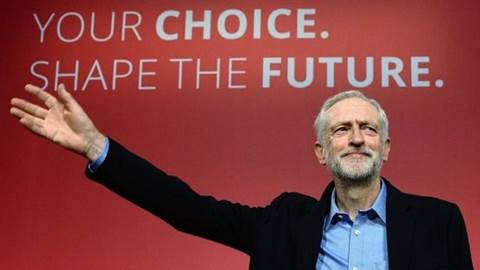
The War Goes On: With Corbyn’s Re-Election, The Class Struggle In Labour Will Intensify.

The Unintended Consequence: It was to forever silence the intra-party remnants of working-class power that the Blairite Right brought in the “one-person-one-vote” rule. Not even in their worst nightmares did they apprehend that their cynical gesture towards ‘democratisation’ would produce a Jeremy Corbyn. 
 
JEREMY CORBYN’S RE-ELECTION should signal an outbreak of peace and unity in the British Labour Party. Especially given his support among Labour members has gone up, not down, since he was first elected in September 2015. Not a chance. His enemies in Labour’s parliamentary caucus simply will not relent. The war of attrition will go on until Corbyn is no longer leader. Why?
 
The answer is as bleak in its essence as it is in its implications. From its very inception, more than a century ago, the British Labour Party has been the product of two powerful political impulses: working-class unionism and middle-class reformism. Though they were not perceived to be so at the time the party was formed, these two impulses would, ultimately, prove contradictory.
 
No matter how modest the ambitions of Britain’s moderate trade union leaders, the pursuit of “a fair day’s pay for a fair day’s work” was always destined to run into the brute realities of capitalism’s zero-sum equations. And when that day came, as it did in the 1970s, the middle-class reformers of the Fabian Society were never going to align themselves with Labour’s working-class voters.
 
There was a reason for this reformist disdain. They simply did not believe that working-class people were capable of managing themselves. Working people, in the reformers’ opinion, lacked the experience, the education and, yes, the ‘breeding’ necessary for self-government. That being the case, Labour’s ultimate objective must be to erect a state-funded and administered system of social organisation and control, that would allow highly trained middle-class professionals will ‘look after’ and ‘improve’ the ‘labouring masses’.
 
Policies promising the public administration of health, education and housing services, and the public ownership of key industries, may have sounded like socialism, but in one vital respect they were deficient. The administrators and managers of this Brave New World would not be drawn from the ‘labouring classes’ in whose name they were being created, but from a middle class which saw itself as the meritocratic inheritors of Britain’s louche and incompetent aristocracy.
 
This dystopic game of bait-and-switch provides the theme for some of British literature’s most famous political fables. From “The Time Machine” and “Things To Come” by H. G. Wells’ (himself a hard-line eugenicist and prominent Fabian) to George Orwell’s “Animal Farm” and “1984”. In British social-democracy, no less than on Animal Farm: “All animals are equal – but some are more equal than others.”
 
What the Fabian Society reformers were never game enough to ask themselves was: “What happens when publicly administered health, education and housing services raise up a generation of workers who are no longer content to let middle-class bureaucrats control their lives?”
 
When “The Who’s” famous invitation to “meet the new boss – same as the old boss” is rejected. When thousands of young shop-stewards finally work out what their corpulent union bosses have always been too frightened to admit: that “a fair day’s pay” is beyond the remit of even the most thoroughly reformed capitalist society. What happens then?
 
What happens then – as every member of both the British and New Zealand Labour Party who lived through it will confirm – is that class struggle begins to manifest itself not only in the workplace and on the picket line, but also in the ranks of the political party of the working-class. And when that party has allowed itself to become “professionalised”, especially at the parliamentary level, then the outcome of that class struggle is a forgone conclusion.
 
But history is not a clockwork mechanism, or, if it is, then there’s a ghost in the machine. Tony Blair may have filled the upper echelons of his government and party with a plethora of “pretty straight guys”, but within the shell of the professionalised Labour Party there still existed the perennially disruptive trade unions and constituency party organisations. It was to forever silence these working-class voices that Blair’s successors brought in the “one-person-one-vote” rule. Not even in their worst nightmares did they apprehend that their cynical gesture towards ‘democratisation’ would produce a Jeremy Corbyn.
 
So now they find themselves caught between a leader dedicated to creating precisely the sort of emancipatory labour movement that Blair and his professionalised predecessors worked so hard to destroy in the 1970s and 80s; and a fast-growing movement of citizens determined to seize control of their own future. Already the largest socialist organisation in Europe, the 600,000-strong British Labour Party threatens to become something much more dangerous than the ruling class’s second eleven. Corbyn is determined to turn Labour into a people’s movement for radical change. A project so impossibly horrific that it has united the entire British Establishment against him.
 
Only two things can stop Corbyn now. Either, his parliamentary caucus enemies will contrive some way to fundamentally constrain his power (by forcing him to accept an elected shadow cabinet, perhaps?) Or, the hidden hand of the “deep” British state will arrange for his removal “by other means”.
 
For the newly re-elected leader and his party the moment of maximum peril draws near. We must hope that the ghost in the machine continues to nudge history in Labour’s – and Jeremy Corbyn’s – direction.
 
This essay was originally posted on The Daily Blog of Monday, 26 September 2016.

Tuesday, 17 March 2015

Inflation Is Defeated - But At Whose Expense?

Inflation Buster: As Governor of the Reserve Bank of New Zealand from 1988 until 2002, Dr Don Brash oversaw the anti-inflation programme of the new neoliberal order he had played such a vital role in unleashing upon New Zealand. The financial sector and the ticket-clipping classes were delighted by his success, workers and borrowers paid with stagnating real wages and diminished expectations. And now, an even more frightening spectre looms: Deflation.
 
THE PROSPECT of zero inflation is difficult for many New Zealanders to grasp. Those of us over fifty will recall the years when the annual inflation rate was this country’s most contentious political issue. Hardly surprising, when rates of up to 18 percent were recorded. A nation experiencing that sort of monetary pressure has reason to be concerned.
 
But, persistent high inflation affects different groups in different ways. Like most human creations, it produces both winners and losers.
 
In a country where most wage-workers belonged to a trade union, and there were powerful political incentives for the annual round of wage negotiations to produce results roughly reflective of increases in the cost of living, inflation was more of an irritant than a danger. If a worker’s union was strong, he and his family could keep ahead of inflation. The members of the weaker unions, however, were forever playing catch-up.
 
If those workers were the recipient of a 3 percent (!) State Advances loan, however, inflation was their friend. Every year that high inflation persisted, young couples could pay off the mortgage on their first home with dollars that were, in real terms, worth less than when the debt was originally incurred. Persistent levels of high inflation were a huge boon to borrowers.
 
Between 1965 and 1985, governments of both the left and the right were content to see inflation lift tens-of-thousands of young baby-boomers onto the lower rungs of the property ladder. Indeed, it is possible to argue that the creation and maintenance of National’s “property-owning democracy” would have been all-but-impossible without a persistently high rate of inflation.
 
Persistent high inflation was also of crucial assistance to running an effective welfare state. Thanks to the phenomenon known as “fiscal drag”, inflation-driven increases in wages and salaries were constantly lifting workers into higher tax-brackets, allowing the government’s own revenue needs to be met without recourse to more regular, explicit, and, therefore, politically unpopular, tax adjustments.
 
Persistent high inflation’s biggest losers, obviously, were those whose loans were being repaid at a fixed rate of interest in devalued dollars, along with people attempting to live on incomes that could not easily be adjusted for the effects of inflation. Returns on investment; the real value of private pensions, annuities and legacies; all tended to fall in circumstances of persistent high inflation.
 
It is never a good idea for politicians to antagonise those who control their nation’s financial system. Equally unwise is a government that even looks like it is prepared to beggar the social class most dependent on legacies, annuities, private pensions and the income generated from investments. That persistent high inflation, with its beneficial impacts on workers, borrowers and social-democratic politicians, would, by the end of the 1970s, convince bankers, rentiers, and other sundry members of the ticket-clipping classes that some pretty major reforms were long overdue, was entirely predictable.
 
That a constant theme, running through all of the dramatic economic changes of the next 30 years, would be “driving inflation out of the economy”, was equally foreseeable. Nor should we be surprised that these reforms neatly reversed the position of winners and losers. That the banks and the ticket-clipping classes would benefit disproportionately from their anti-inflationary crusade was really the whole point of the exercise.
 
And who, now, can say that inflation isn’t beaten? With the inflation rate hovering tantalisingly above zero - nobody. The costs, however, have been substantial.
 
The radical reduction of trade union power by the Employment Contracts Act shattered the mechanisms that had allowed workers and their families to keep pace with inflation. Despite improvements in workforce productivity, the purchasing power of New Zealand workers’ wages has stagnated or declined.
 
Politicians, too, lost their ability to turn monetary policy to the advantage of workers and borrowers. The moment controlling inflation became the Reserve Bank’s first (and some would say only) priority, the old social-democratic goals of full-employment, home ownership for all, and a generous welfare state funded through progressive taxation, became inoperative.
 
There’s a paradox here. As New Zealand’s inflation rate declines towards zero, the Reserve Bank must confront the possibility of deflation. But, persistently declining prices are a reflection of declining demand, which is, in its turn, a reflection of oversupply and a market that cannot clear itself except by selling below cost. Deflation is, therefore, the sign of an economy that’s slowing down. It is the harbinger of busts, slumps, recessions and (God forbid!) another Great Depression.
 
Some economists argue that inflation allowed the Free World to pay-off World War II in record time. Others affirm that it underpinned the great post-war boom. Is it pure coincidence then, that at the peak of the boom, inflation was suddenly branded Public Enemy No. 1?
 
If zero inflation is a triumph, then perhaps we should ask: “For whom?”
 
This essay was originally published in The Press of Tuesday, 17 March 2015.