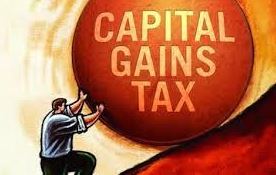
Yay Sayers: Prime Minister Jacinda Ardern and her Finance Minister, Grant Robertson, who recoil in horror at the very suggestion that Labour should tax the incomes of the very wealthy without mercy, remain absolutely convinced that taxing the local dairy owner’s capital gains will produce nothing but sweetness and light. They’ve run their blue pencils through Inheritance Tax, Land Tax, Financial Transaction Tax and Carbon Tax: but in spite of its emphatic rejection in two successive elections, they continue to give their CGT the big tick.
WHY CAN’T LABOUR take “No” for an answer? When the party
first offered voters a Capital Gains Tax (CGT) in 2011 they responded by giving
Labour 27 percent of the Party Vote. Undaunted, David Cunliffe and his team
doubled-down on the CGT in 2014. Labour’s Party Vote slumped to a risible 24
percent. Point taken?
For a while it looked as though Labour’s ears had started
working again. Cunliffe’s successor, Andrew Little, moved swiftly (if
unilaterally) to take the twice-rejected CGT off the table. Which should have
been the end of the story. But, it wasn’t. Within Labour’s caucus there remained
a tight little clutch of CGT supporters who simply refused to let the policy
go.
That tight little clutch: led by the current Finance
Minister, Grant Robertson; which recoils in horror at the very suggestion that
Labour should tax the incomes of the very wealthy without mercy; remains
absolutely convinced that taxing the local dairy owner’s capital gains will
produce nothing but sweetness and light. They’ve run their blue pencils through
Inheritance Tax, Land Tax, Financial Transaction Tax and Carbon Tax: but in
spite of its emphatic rejection in two successive elections, they continue to
give their CGT the big tick.
Jacinda Ardern’s unopposed election to the Labour leadership
provided a huge fillip to the CGT promoters’ club. With Little out of the way,
the great crusade to tax the family bach could resume in earnest. Some insist
that Jacinda’s “captain’s call”, to enact a CGT in the first term of a
Labour-led government, was all her own work. Others claim that her dramatic
policy adjustment was made at Robertson’s urging. Whoever was responsible, the
sudden decline in Labour’s poll numbers was enough to give both politicians
serious pause.
The upshot, of course, was the peculiar, two-stage, policy
process whose radical recommendations New Zealanders are currently attempting
to get their heads around. The most puzzling aspect of “Stage 1” – the Tax
Working Group – was why the former Labour Finance Minister, Sir Michael Cullen,
was roped-in to chair it.
In the media “lock-up” which immediately preceded the
release of the Tax Working Group’s report, Sir Michael vouchsafed to
journalists the following, typically cryptic, observation:
“I had a brief period as finance spokesperson for the Labour
Party for some 17 years. You will not find a single comment by me publicly
advocating a capital gains tax. You might draw your own conclusions from that
fact.”
You think!
Cullen’s aside, properly decoded, offers up just one
meaning: “This is a damn fool’s political errand, which I only accepted so that
I could deliver these twerps a CGT of such breadth and bite that only a
complete idiot would consider implementing it!” If that is not what it means,
then we must, reluctantly, conclude that the former Finance Minister has lost
his wits.
The problem exercising voters, now, is whether or not the
behaviour of the CGT promoters’ club, consistent over an entire decade, admits
of its members being anything other than twerps and idiots? In all that time,
only one Labour politician, Andrew Little, has demonstrated the plain, old-fashioned
common-sense to hurl the electorally and economically toxic CGT out the window.
What does it say about the Prime Minister and her Finance
Minister that the very first thing they did following Little’s very own
“captain’s call” (inspired, presumably, by Captain Oates’ heroic, if
unavailing, act of self-sacrifice at the end of Robert Falcon Scott’s doomed
Antarctic Expedition) was to rush outside, pick up the discarded CGT, dust it
off, and replace it reverently on Labour’s table? Clearly, Ardern and Robertson
are not the sort of Gen-Xers who enjoy being told that they are wrong!
The Greens, however, are much, much worse. Co-leader James
Shaw has declared that, if the 2020 General Election arrives and a CGT has not
been enacted, then his party does not deserve to be re-elected. The problem
which he and his party may be forced to confront is that if the CGT proposed by
the Tax Working Group is enacted next year (effective in 2021) then the
electorate may feel moved to give the Greens exactly what they deserve!
Which leaves the responsibility for demonstrating plain,
old-fashioned common sense to the politician who has spent 25 years insisting
that only he and his party possess it.
Winston Peters.
This essay was
originally published in The Otago Daily Times and The Greymouth Star of Friday,
1 March 2019.