Showing posts with label The Russo-Ukrainian War 2022. Show all posts

Tuesday, 20 September 2022

A Song Of Iron And Blood.

Unequivocal: Blood and iron, ah yes, the solution that does not equivocate. The power that is won with bullets – not ballots. The combination that ended the “speeches and majority decisions” of 1848 and the Arab Spring. And even now, on the broad plains of Ukraine, the grim drama of blood and iron is being played out. For what other answer is there to those who speak only the language of blood and iron, but iron and blood in equal measure?

THE YEAR OF REVOLUTIONS – that was how the year 1848 came to be known. Clear across Europe: from Hungary in the East to France in the West; massive eruptions of popular discontent, harnessed by mostly young liberal intellectuals, brought the reactionary regimes re-established following the final defeat of Napoleon Bonaparte, in 1815, very close to collapse.

Weeks went by, idealists gathered, constitutions were proposed and debated, but nothing truly revolutionary happened. Slowly at first, and then with gathering speed, the emperors, kings and aristocrats picked themselves up out of the dust, straightened their tunics, and set about putting their noble houses in order. By 1849 it was all over. As things turned out, 1848 had been a year of revolts – not revolutions.

If the story sounds familiar, it’s because something very similar happened roughly ten years ago. Clear across the Arab World, from Tunisia in the West to Egypt and Syria in the East, mostly young liberal intellectuals, using social media, sparked massive eruptions of popular discontent. Months went by. Idealists gathered. Elections were held. New names had to be learned. New faces won recognition. But, nothing truly revolutionary happened.

As Mao Zedong cynically observed: “All political power grows out of the barrel of a gun.” By 2013, the men with guns were either back in power or applying the lessons of the deposed military leaders they were replacing. The Arab Spring was fast becoming the Arab Winter.

Imagine how they felt: all those young liberal intellectuals; all those angry workers and peasants. Imagine city squares seething with masses of hopeful people. The extraordinary combination of elation and relief when the regime’s soldiers refused to fire on “the people”. Those great arcs of political electricity illuminating the social darkness when word came of similar uprisings taking place in neighbouring states. It must truly have seemed to the “revolutionaries” that they were witnessing the birth of a new heaven and a new earth.

Now imagine the despair: the sheer, soul-destroying anguish of seeing it all fade and wither and turn to dust on the fickle winds of history. Imagine the dashing of hopes, the detention of friends, the execution of leaders. Imagine the clatter of boot heels on stone, the ringing of sharpened steel, the crackle of rifle fire, the chatter of machine-guns, the roar of artillery. Imagine the death of a million common dreams.

What do people do when their revolution fails? When their Spring of Hope turns to a Winter of Despair? Where do they go?

We know that many refugees from the failed 1848 revolution in Germany made their way to the United States. In the USA, at least, the idea of popular sovereignty had been able to send down roots and acquire a measure of solidity. In America there were no kings and queens, no aristocrats. The Americans, like the French, had made a republic.

But even in Eden, serpents gathered. The German immigrants were shocked to witness black men and women being abducted in broad daylight by the agents of Southern plantation owners – all of them operating perfectly legally under the Fugitive Slave Act. Here was something even more depraved than the dark pretensions of monarchs. Abraham Lincoln warned that an America “half-slave and half-free” could not endure.

Twelve years after the failure of German liberalism, the Union Army was welcoming former Prussian officers into its ranks. Slavery was an evil that simply had to be rooted out. Lustily they sang the new Battle Hymn of the Republic:

In the beauty of the lilies
Christ was born across the sea,
With a glory in His bosom
That transfigures you and me;
As He died to make men holy,
Let us die to make men free;
While God is marching on.

It was splendid, but it was bloody. Could freedom and justice ever be established with the sword? Maybe – maybe not. But nations could. As the American Civil War was raging, so, too, were the wars of German unification. In 1862, the great architect of German unity (but not German democracy) Count Otto von Bismarck, with the example of the failed German revolution set firmly before his eyes, delivered his most memorable speech:

The position of Prussia in Germany will not be determined by its liberalism but by its power [...] Prussia must concentrate its strength and hold it for the favourable moment, which has already come and gone several times. Since the treaties of Vienna, our frontiers have been ill-designed for a healthy body politic. Not through speeches and majority decisions will the great questions of the day be decided—that was the great mistake of 1848 and 1849—but by iron and blood.

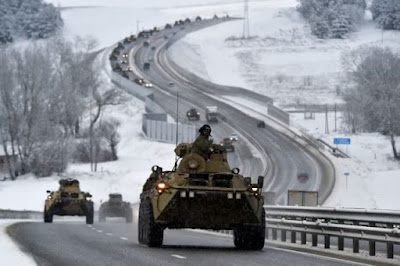
Blood and iron, ah yes, the solution that does not equivocate. The power that is won with bullets – not ballots. The combination that ended the “speeches and majority decisions” of 1848 and the Arab Spring. And even now, on the broad plains of Ukraine, the grim drama of blood and iron is being played out. For what other answer is there to those who speak only the language of blood and iron, but iron and blood in equal measure?

Do not pretend that it does not thrill you – this open recourse to force. Not when all the tweets on Twitter cannot match the effectiveness of a single artillery shell exploding in the right place at the right time. Not when you see how swiftly all the petty squabbles of the identarians disappear in the all-embracing shadow of a nation’s battle flag.

Denis Diderot: French philosopher, atheist, and republican; quipped that “Mankind will never be free until the last king is strangled with the entrails of the last priest.”

What, then, should we make of the fact that 174 years after the Year of Revolutions, an astonishing number of human-beings around the planet are mourning the death of a queen and welcoming a king to his throne? Against the pomp of Charles III, and the heroism of Volodymyr Zelensky, where are we to set the “speeches and majority decisions” of democracy?

Who does not welcome the comity of blood? Who does not hunger for the reassurance of iron?


This essay was originally posted on The Daily Blog of Tuesday, 20 September 2022.

Tuesday, 29 March 2022

Double Standards: What’s Evil In Ukraine Is Apparently Good For The Solomon Islands.

Hypocrisy In Arms: The “international rules-based order” has encouraged the rest of the world to declare economic war on the Russian Federation in retaliation for its illegal invasion of Ukraine. Only time will tell whether that very same order will demand the imposition of equally swingeing sanctions on Australia and New Zealand should they decide to intervene in the Solomon Islands.

THERE HAS TO BE something wrong with us. It’s the only explanation that makes sense. Some sickness of mind and spirit that blinds us to our own extraordinary diplomatic hypocrisy. The hypocrisy on display in relation to the Solomon Islands’ proposed security agreement with the Chinese is, however, beyond astounding. Indeed, with the attention of the world focused so intently on Russia’s invasion of Ukraine, the reaction of our own government, and those of New Zealand’s friends and allies, is scarcely believable.

What is it, after all, that the entire Western World is denouncing in Ukraine? Is it not the idea, expounded by the Russians, that Ukraine is located within the Russian Federation’s sphere of influence, and that its oft-expressed desire to join Nato constitutes a clear and present threat to Russia’s national security?

Have not the Russians repeatedly denounced the extension of Nato’s military reach to the very borders of their Federation? Do they not present this as conclusive evidence of the West’s predatory designs upon the national territory and resources of the Russian state?

And has not the West rejected Russia’s claims? Most particularly, has it not rejected the notion that it is any longer acceptable to speak about nations having “spheres of influence”? Is the West’s vehement condemnation of Russia’s invasion of Ukraine not based upon the principle that nation states have an inalienable right to determine their own destinies?

The governments of all the Western powers, including our own, are doing everything within their power, short of actually joining the conflict, to support Ukraine, and to punish the Russian Federation for violating the territorial integrity and national sovereignty of an independent nation state and United Nations member by an act of military aggression.

The Australian Government has been loud in its condemnation of Russia – as has its news media – and yet, just a few days ago, the following opinions were given wide coverage by the Rupert Murdoch-owned News.com.au under the headline: “Australia ‘must ready Solomon Islands invasion’ to stop China security deal”

According to David Llewellyn-Smith, publisher of MacroBusiness and former owner of The Diplomat, a journal dedicated to Asia-Pacific affairs, the coming into full effect of the proposed security pact between the Solomon Islands and the Peoples Republic of China would mean “the effective end of [Australia’s] sovereignty and democracy”.

“There is no way that Australia can allow this deal to proceed” wrote Llewellyn-Smith. “If it must, the nation should invade and capture Guadalcanal such that we engineer regime change in Honiara. There are other soft power levers to pull first and we should pull them forcefully. But we should also immediately begin amassing an amphibious invasion force to add pressure.”

If it was put to Llewellyn-Smith that his own reasoning is identical to that of Vladimir Putin, he would, almost certainly, reject the comparison. And yet, he is proposing to engineer regime change in the Solomon Island’s capital, Honiara, by invading and capturing Guadalcanal – the island in which the city is situated. The difference between Llewellyn-Smith’s proposal and Putin’s attempts to engineer regime change by invading Ukraine and capturing its capital city, Kyiv, is extremely difficult to discern.

And, just in case, we feel tempted to dismiss these sentiments as the rantings of yet another bellicose Australian pundit, with which that increasingly belligerent country seems infested, New Zealand’s very own Professor Anne-Marie Brady has told RNZ’s “Mid-Day Report” host, Māni Dunlop, that: “the draft agreement to station military forces on Solomon Islands could see the South Pacific cut off and encircled by Chinese forces.” 

Brady’s interview reveals just how deeply the instincts of Western imperialism are embedded in New Zealand’s foreign affairs community. According to the University of Canterbury professor, the Solomon Islands represent a “failed state”, riddled with corruption and Chinese influence-peddling, problems with which, in spite of 14 years of Australian and New Zealand military occupation in the guise of the Regional Assistance Mission to Solomon Islands (RAMSI) its political class is still plagued. Accordingly, it can only benefit from stepped-up “assistance” from its Australian and New Zealand “friends”.

Like a good Kiwi, Brady shies away from Llewellyn-Smith’s call for a return to the gunboat diplomacy of the Nineteenth century. But, quite how the deal with China can be stopped short of resorting to the use of force and/or rampant Anzac influence-peddling and corruption, the professor does not say.

What makes Brady’s intervention even more interesting is her connections with a research-project-cum-think-tank known as SSANSE - “Small States and the New Security Environment”. As The Daily Blog noted back in May 2020, SSANES was/is based in Iceland and was/is at least partially funded by Nato. Brady’s assessment of New Zealand’s strategic predicament back in 2020 was nothing if not dramatic:

The global environment has not been so challenging for New Zealand since 1942 when British forces in Singapore, who were New Zealand’s shield, fell to the advance of the Japanese. New Zealand must now face up to the national security risk of the Covid-19 outbreak. The current situation poses a risk not only to New Zealand, but collectively, for our Pacific, Five Eyes and NATO partners, as well as like-minded states who uphold the international rules-based order.

That “international rules-based order” is, presumably, the same order which has encouraged the rest of the world to declare economic war on the Russian Federation in retaliation for its illegal invasion of Ukraine. Only time will tell whether that order will demand the imposition of equally swingeing sanctions on Australia and New Zealand should they “invade and capture Guadalcanal” in order to secure “regime change in Honiara.” Since neither Canberra nor Wellington would dare contemplate such an action without the endorsement of “our Pacific, Five Eyes and NATO partners”, it is reasonably safe to conclude that it would not.

It might be wise, however, for the likes of Llewellyn-Smith and Brady to ask themselves whether China might not be playing an extremely clever game here. Thinking about it, what better demonstration of Western hypocrisy could there be than a frankly imperialist and racist re-imposition of Five Eyes control in Honiara to protect the English-speaking people’s “sphere of influence” in the Pacific?

How much easier could the West make it for China to convince all those nations on the receiving end of the “international rules-based order” that its rules are meant for “thee” but not for “me”? That while it is an unconscionable violation of international law to invade the territory of people whose skins are white; it is no more than an act of friendship to invade and capture the islands of people whose skins are brown.


This essay was originally posted on The Daily Blog of Tuesday 29 March 2022.

Friday, 4 March 2022

Russia vs Ukraine: The Story Changes.

Fearsome Aggressor: The monstrous Russian bear, in its fury, may kill the brave Ukrainian hunting dog. It may even kill his brothers and sisters who fight alongside him. But the Russian Bear cannot stay on the Ukrainian farm. It is a beast of the forest, and to the forest it will, in the end, be forced to retreat.

HOW THE STORY HAS CHANGED. Last week it was all about the baiting of the Russian Bear. In that story, the bear, hard-pressed by its enemies, prepared to lash out defensively against its tormenters.

But, as Harold Wilson memorably observed: “A week is a long time in politics.”

Translating the tragic events currently unfolding across Eastern Europe into a new story requires a new plot, and, if not a new cast of characters, then a ruthless reassigning of the roles of hero and villain.

In this story, a brave Ukrainian hunting-dog lifts his muzzle to the eastern wind and catches the unmistakable scent of bear. His sharp ears have already detected the snapping of twigs beneath leathery paws and the rhythmic huffing of this most feared of beasts. As the great Russian bear lumbers towards him out of the forest, the much smaller creature lets out a low growl and bares its teeth. Fearless and furious the Ukrainian hunting dog hurls itself upon the predatory giant.

From the houses and outbuildings of the farmstead other dogs come running. Leaping into the unequal contest: claws raking, jaws biting. The bear, confused and bleeding, pauses. All around him, the frigid air carries the angry protests of the neighbouring farmers’ dogs.

Miraculously, the Ukrainian hunting dog’s teeth make it through the monster’s hide – and what it bites, it holds.

Enraged, the bear rises up on its hind legs, roaring in pain and fury.

This is not what it expected.

This is not what any of us expected.

What has become of the shrewd and cynical Vladimir Putin? The ex-KGB officer who mixed boldness and caution in equal measure? The Russian President who always took as much as the West would let him bite off, but never more than he could chew – and swallow? A little chunk of Georgia, here; the whole of the Crimean peninsula, there; and, since 2014, a third of the Donbass.

For twenty years, that Vladimir Putin: Putin the chess-player; had slowly but remorselessly restored to Mother Russia her stolen pieces.

But Ukraine? Geographically, the second largest country in Europe, population 41 million, and boasting a much stronger and better equipped army than eight years ago. Ukraine was always going to stick in the Russian Federation’s throat and, if he wasn’t extremely careful, choke its president.

With his seventieth birthday just nine months away, did Putin feel the icy breath of his own mortality chill upon his neck? Was he struck with terror by the realisation that his time on this earth was fast running out, and with it all hope of making Russia great again? Did he feel the disappointment and reproach of those merciless ghosts gathered at his shoulder: Ivan the Terrible, Peter the Great, Stalin, the man of steel?

Did no one tell Putin that history is a poor teacher – and an even worse guide? Did his Marxist instructors not instill in him the great truth that men do not make history, history makes them.

Like the former comedian-turned-Ukrainian-President, Volodymyr Zelenskyy. Dismissed as a pawn by friend and foe alike: a joke. But nobody’s laughing now. His social media broadcasts from the heart of his besieged capital would have done Winston Churchill proud.

Cometh the hour, cometh the one liners. Zelenskyy telling his American sponsors that he needed “ammunition – not a ride”. Telling his people: “I’m right here, where I’m supposed to be.” Or, the doomed Ukrainian garrison of Snake Island, ordered to surrender, snapping back defiantly: “Go fuck yourself!”

Putin saw a Ukraine wreathed in the mists of history: Ukraine as the mystical heart of Mother Russia. But, while he pursued this medieval mirage, History, in full battledress, was making a new Ukraine. A Ukraine that, henceforth, will define herself by the sacrifice and suffering of her heroes: the men and women who made her – at last – a free and independent nation.

That monstrous bear, in its fury, may kill the brave Ukrainian hunting dog. It may even kill his brothers and sisters who fight alongside him. But the Russian Bear cannot stay on the Ukrainian farm. It is a beast of the forest, and to the forest it will, in the end, be forced to retreat.

And Vladimir Putin? He will go to his grave with the taste of failure on his lips. Bitter as gall.


This essay was originally published in The Otago Daily Times and The Greymouth Star of Friday, 4 March 2022.

Monday, 28 February 2022

Russia Invades Ukraine: A Crime – And A Mistake.

Be Careful What You Wish For: Putin has conjured into being the very strategic nightmare he spent the last 20 years attempting to forestall. His actions have given all the nations of Western and Eastern Europe a terrifying reminder of the wisdom of banding together against the Russian Bear.

I’M WHAT’S KNOWN, on the Left, as a “Tankie”. That is to say I am not a reflexive opponent of the Russian regime. In the Georgian border regions; in Syria; and until 24 February 2022, in the Ukraine; I have, by and large, been sympathetic to the aims and objectives of the Russian Federation. More specifically, right up until this past week, I have had a sneaking admiration for the way in which President Vladimir Putin, in spite of finding himself in some extremely difficult positions, has nevertheless managed to checkmate his Western opponents.

But that’s all over now. It’s one thing to silence with tanks and artillery the Washington-inspired braggadocio of Georgia’s opportunistic leader. Or, to throw Russia’s military support behind the least worst protagonist in the Syrian civil war. But, to order a full-scale invasion on Ukraine? That’s not Chess, that’s Draughts – and not even very good Draughts. Putin has over-reached himself – quite possibly fatally.

It is difficult to understand why Putin couldn’t understand just how much ground he had made, diplomatically, by staging large-scale military manoeuvres on the Ukrainian border. The increasingly hysterical shrieks and yells emerging from Washington and NATO Headquarters in Brussels were achieving nothing useful for the West – apart from validating Putin’s critiques of NATO’s expansionist doctrine. As prediction after prediction of a Russian invasion of Ukraine proved inexact, Moscow gave every indication of being grimly amused. The Russian talent for irony and sarcasm was on full display.

Even better, the hysterical reactions of Washington and Brussels, were prompting the appearance of some no doubt very satisfying (to Moscow) cracks in the NATO alliance. To the evident delight of the Russian foreign ministry, Germany and France (both of which are guilty of invading Russia in the past, and then paying a terrible price for their aggression) took up their roles as guarantors of the Minsk Accords. For the price of an extended round of annual manoeuvres, the Russian Federation, and its Belarussian ally, were on the verge of reaping a bountiful diplomatic harvest.

So, what went wrong? How was the Kremlin’s master Chess-player suddenly robbed of both his strategic and his tactical senses?

In the harsh light of Russia’s invasion of the Ukraine, during which so many of the predictions and descriptions of the Russian armed forces’ battle-plans have been proved correct, it is surely reasonable to speculate that the Americans may have cracked the Russian military codes, giving them full access to all of the Kremlin’s strategic and tactical conversations. Or, they may have a highly-placed spy on the inside who is relaying to them the same information. They may even have both.

For Putin, a political leader schooled in the security services of the old Soviet Union, the revelation of such a catastrophic security breach would be devastating. The paranoid style of politics that pervaded the old KGB would have been intensified in Putin, the former KGB officer, to the point where he may simply have stopped thinking clearly.

If the debilitating revelation that Russia’s national security had been fundamentally compromised was further aggravated by serious disinformation concerning the character and intentions of the Ukrainian Government, then Putin’s descent into an enraged and murderous paranoia is readily explained.

Whatever happened, it was clear, several days out from the invasion, that something in Moscow had changed. RT, the Federation’s worldwide propaganda arm (now unavailable on New Zealand’s Sky Network, it’s former host) seemed to flounder as it struggled to come to grips with the Kremlin’s rapidly darkening tone.

Up until Putin’s rambling history lecture of 22 February, immediately followed by the recognition of the Donetsk and Luhansk breakaway republics, it had seemed as though RT’s leading lights were perfecting their scornful one-liners for the day Russia’s military forces on the Ukrainian border proved NATO wrong by simply turning around and returning to barracks.

Certainly, that was the outcome for which Putin’s government had been preparing the Russian people over the preceding weeks and months – and, it must be said, it was also the outcome the Ukrainians were expecting. Very few people on either side of the border wanted, or were prepared for, a full-scale invasion. The very fact that spontaneous anti-war rallies erupted all over the Russian Federation bears testimony to the shock and dismay provoked by Putin’s aggression against his fellow Slavs.

It is instructive to contrast Putin’s total failure to prepare his people for a full-scale invasion of Ukraine with the many months George W. Bush spent convincing the American people that his equally illegal invasion of Iraq was both militarily necessary and morally justified.

One is reminded of the decidedly unenthusiastic reception given to the Wehrmacht’s tanks as they rolled through the streets of Berlin in the early stages of the so-called “Munich Crisis” of September 1938. The German people did not want war with Britain and France, which is why they cheered to the echo the peacemaker, Neville Chamberlain, as he made his way through the streets of Munich – much to the disgust of the Fuhrer, who most emphatically did want war with Czechoslovakia.

It is worth contemplating the historical lessons of the Munich Crisis in relation to the crisis currently unfolding in Ukraine. Had Chamberlain, backed by France and Italy, not signed over the largely German-speaking Sudetenland to Adolf Hitler and, instead, warned him that Czechoslovakia would not be abandoned, then it is highly likely that Hitler’s generals (who were quite unconvinced that Germany could win such a war) would have deposed him in a military coup d’état. Had that happened, it is entirely possible that the Second World War could have been avoided.

The Russian Federation’s possession of nuclear weapons rules out any overt military response on the part of NATO, but the harshness of the economic sanctions regime it has imposed is bound to give Putin’s generals and oligarchs pause.

Nothing is more expensive than full-scale war. While, geographically, Russia may be a vast country, economically it is smaller than Italy. Far from heralding the restoration of Russian greatness, a drawn-out war against Ukrainian resistance fighters (supported and supplied by a ferociously united West) coupled with the debilitating economic and political effects of swingeing sanctions (not to mention the financial and human costs of a prolonged occupation) can only weaken the Russian Federation profoundly.

Even from the perspective of hard-line Russian nationalists, Putin’s wild gambit makes no sense. Indeed, those of a Machiavellian disposition among the Russian elites may come to the conclusion that some of Putin’s more rational geopolitical objectives stand a much greater chance of being achieved if Putin is no longer on the scene. Amidst the palpable and near universal relief which a change of regime in Moscow, followed by the withdrawal of all Russian forces from Ukraine, would undoubtedly bring, a comprehensive revision of European security arrangements might end up being welcomed – by all sides.

As matters now stand, however, Putin has conjured into being the very strategic nightmare he spent the last 20 years attempting to forestall. His actions have given all the nations of Western and Eastern Europe a terrifying reminder of the wisdom of banding together against the Russian Bear.

Ironically, the Ukrainians Putin dismissed as “drug addicts and neo-Nazis” stand revealed as heroes and patriots: men and women willing to lay down their lives for their country. Certainly, President Volodymyr Zelensky has demonstrated communication skills even more impressive than those of our own Jacinda Ardern. His social-media broadcast from the heart of besieged Kyiv was nothing short of inspirational. No one, now, is interested in accusations of undue Washington influence, widespread corruption, and neo-Nazi militias.

Russia’s “tankie” support in the West was based on Putin’s moral, political and military jiu-jitsu: his hitherto impressive knack for using the weight and power of his Western antagonists against them; and his skill at exposing the crass hypocrisy of those powers who have never hesitated to commit the very same sins they are forever attributing to Russia.

But, there is nothing clever about Putin’s invasion of the Ukraine. It will achieve nothing but massive material destruction and untold human suffering. Even worse, from the perspective of the unfortunate Russian people, Putin’s invasion has provided an ex post facto justification for their enemies’ most predatory designs .

As the deeply cynical, but nonetheless brilliant, French statesman, Charles Maurice Talleyrand (1754-1838) said of Napoleon’s ill-judged decision to abduct and execute the politically unfortunate Duke d’Enghien:

“This is worse than a crime, it’s a mistake.”


This essay was originally posted on the Interest.co.nz website on Monday, 28 February 2022.

Friday, 25 February 2022

Evening On The Land.


For all the ordinary men and women, Ukrainian and Russian, who stand upon the edge of disaster, as the wheels of diplomacy spin uselessly and gigantic aeroplanes, their holds stuffed with weapons, criss-cross the skies above them, oblivious to their shattered hopes and dreams.


Take my hand, beloved. Come.
The day is almost done.
Be at my side, behold the sight,
Of evening on the land.

Our life, my love’s, been hard
And heavy is my heart.
How should I live, if you should leave,
And we should be apart?

Let’s hold each other tight.
Upon the edge of night.
As shadows fall, and nightmares crawl,
The sun slinks out of sight.

The world hangs by a thread.
And all the heroes fled.
Like weathered stone, we stand alone,
And watch the east in dread.

Be with me in the storm.
When angry gods are born.
When flesh is rent, and love is spent,
And bloody is the dawn.

Take my hand, beloved. Come.
The day is almost done.
Be at my side, behold the sight,
Of evening on the land.


Chris Trotter


This poem was originally posted on The Daily Blog of Friday, 25 February 2022.