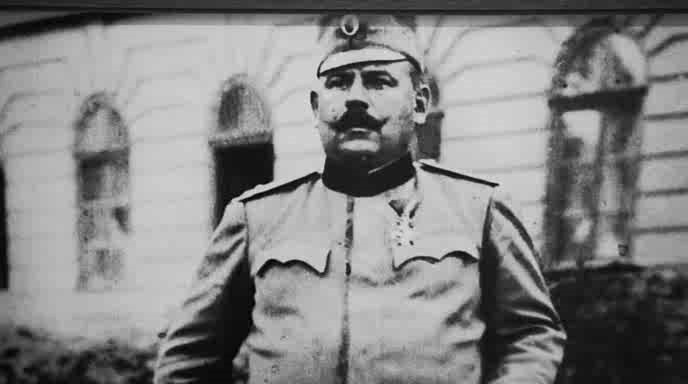
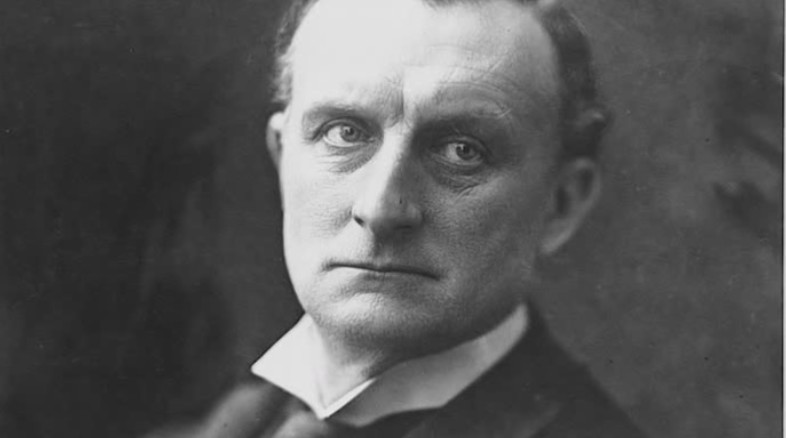
The Art Of The Deal: “[T]he old prejudices and practices worked as obstacles, but we have overcome them and we are here today.” North Korea's Kim Jong Un responds to President Donald Trump's introductory remarks at their historic summit-meeting in Singapore on Tuesday, 12 June 2018.
THE NOTE OF SURPRISE in the voices of the talking heads on
CNN was unmistakable. How could this be happening? How could these two men –
both of them routinely ridiculed by those claiming expertise in international
relations – have gotten even this far? The leaders of USA and the Democratic People’s
Republic of Korea, meeting in Singapore on Tuesday, 12 June 2018 and exchanging warm handshakes across the table. The eccentrically-coiffed
and generously-fleshed scion of the redoubtable Kim dynasty, Kim Jong Un,
offering up to the world the amazing soundbite: “the old prejudices and
practices worked as obstacles, but we have overcome them and we are here
today”. How was any of this possible?
One might as well ask – how was the 1972 meeting between Mao
Zedong and President Richard Nixon possible? American GIs and the Chinese
People’s Liberation Army had been in a shooting war barely 20 years before that
historic summit in Beijing. For quarter-of-a-century the US Pacific Fleet had
shielded the Nationalist regime on Taiwan from the People’s Republic’s wrath.
And yet, it happened.
In Oliver Stone’s movie “Nixon” there is a memorable scene
in which Chairman Mao, through his interpreter, asks Nixon: “Is peace all you
are interested in? The real war is in us. History is a symptom of our disease.”
The dialogue is, of course, the work of the film’s screenwriters: Stephen J.
Rivelle, Christopher Wilkinson and Stone himself; but it succinctly captures an
essential truth about such extraordinary political figures as Mao Zedong, Kim
Jong Un, Richard Nixon and Donald Trump.
Some political leaders are content to be guided by their
advisers – like George “Dubbya” Bush. For others, it is the events in which
they are caught up that provide the opportunities for extraordinary displays of
leadership. Think Winston Churchill in World War II, or, Lyndon Johnson and the
struggle for Black civil rights 1964-65.
Then there are the leaders who, for a whole host of reasons,
become the authors of events to which all these other, lesser, statesmen must
respond. Grandiloquent and narcissistic, often paranoid, they are prey to deep existential
fears and driven by inner-demons of unrelenting ferocity. This kind of leader has
the power to project the turmoil and tumult of their own psyches onto the world
around them. The ability to, in Stone’s memorable formulation, make History a
symptom of their disease.
The rest of humanity has every reason to fear such
individuals. Who in their right mind would cast themselves as a plaything in
someone else’s paranoid fantasy? Democracies, in particular, should reject such
individuals, in whose character there is much more of the emperor and dictator
than there is the citizens’ humble representative.
Except, of course, History has a way of infecting
individuals with the diseases whose morbid symptoms they will subsequently
cause it to display. A nation rent by anxieties and resentments can hardly
avoid throwing up the exceptional individual in whom those anxieties and
resentments have not only been distilled to an uncommon purity, but who is also
able to express them with extraordinary clarity and force.
Democracies in decay are particularly vulnerable to such
individuals. The causes of a nation’s inner corruption, when given individual
political expression, become accentuated and the process of decomposition is speeded-up.
A malign feedback loop emerges by which the neuroses of the nation are both fed
by – and feed – the person it has made its own. Be it Julius Caesar, Adolf
Hitler or Donald Trump, the people’s “drummer” renders a double service: he is
both the person who beats – and the person who is beaten.
Is it really so unbelievable, then, that the America which
has grown so deeply resentful and untrusting of its political elites should be
willing-on the President who has so openly defied them? That the more the
experts deplore Trump’s ignorance and denounce his unwillingness to be guided,
the more his supporters thrill to his insouciance.
“It’s about attitude. It’s about willingness to get things
done”, declared the President, who went on to claim that he would know within
the first minute of their meeting whether Kim Jong Un was serious about
reaching a deal. When asked how, he replied simply: “My touch, my feel – that’s
what I do.”
Encountering this phenomenon, it is hardly surprising that
Kim, a genuine emperor, could believe that all the old prejudices, practices
and obstacles might – just – be overcome.
This essay was
originally published in The Otago Daily Times and The Greymouth Star of
Friday, 15 June 2018.