Showing posts with label Origins Of The First World War. Show all posts

Tuesday, 13 November 2018

A Diet Of Lies.

Imperial Beast: Very few New Zealanders ever grasped what the rest of the world saw when it looked upon the British Empire: a huge blood-smeared lion whose sharp teeth and vicious claws struck terror into the hearts of all those too weak to resist them.

WE HAVE JUST CONCLUDED four years of commemorating the First World War. What amazed me about all that official amplification of 100 year-old echoes is how little new information it contained. As is the case with Sir Peter Jackson’s stunning colourisation and all-round technical enhancement of First World War film footage, we have learned nothing that we did not know before. Our troops wore khaki uniforms. Their buttons were made of brass. They sang as they marched. In a strange way, by being stripped of their black-and-white historical dignity, they have been rendered ordinary: indistinguishable from the inhabitants of the here-and-now. They look and sound like extras in one of Sir Peter’s movies.

Perhaps it was always so with official attempts to appropriate the past? To dress contemporary problems in antique costumes and pack the past’s dialogue with all the lies our masters would like us to mistake for history.

It is a task which, tragically, is becoming easier with every passing decade. Reading some of the comments to Mike Treen’s latest post, I was astounded by the number of readers who had no idea of what was happening in 1918. They were clearly astonished by Mike’s snapshot of the dramatic events which drove the Allied and Central Powers to sign the Armistice of 11/11. But, then, why shouldn’t they be astonished? The “official” commemorative programme did not appear to regard the revolutionary wave washing across Europe in 1917-18 as in any way relevant to the War’s end.

Those same officials were even more determined to keep from New Zealanders living at 100 years remove from the First World War just how authoritarian the government of their grandparents’ and great-grandparents’ was. Far better to simply go on insisting that the young men fighting and dying in far-off Gallipoli, Flanders and Palestine were engaged in advancing the cause of freedom, justice and democracy. Informing young Kiwis that their forebears were actually fighting to secure for Great Britain the strategic oil reserves of the Middle East might cause them to ask – given the number of wars (some quite recent) that have been fought for the same prize – whether it was worth the sacrifice of 18,000 young New Zealanders.

The historians’ problem is that they assume that everyone knows the story when, as Mike’s post makes clear, hardly anybody understands what actually happened 100 years ago. How the fighting ships of Great Britain, the world’s greatest naval power, had made the transition from coal (of which the British had plenty) to oil (of which the British had none). How the Brits key oil supplier, the Anglo-Persian Oil Company, had suddenly become vulnerable to the intertwined military and economic ambitions of the German and Ottoman Empires. How the rapidly expanding German High Seas Fleet and the proposed Berlin-to-Baghdad Railway convinced the Foreign and Colonial Office that the Germans had to be stopped. How the British Government could have prevented the outbreak of war in 1914 – but chose not to. How the big losers of the First World War were, you guessed it, Germany and the Ottomans. How Great Britain’s new best friends in the Middle East all just happened to live on top of a sea of oil.

And it’s still going on. New Zealand, whose Governor-General, Lord Liverpool, declared war on Germany in 1914 without bothering to consult the NZ House of Representatives, remains a loyal member of the Anglo-Saxon “Club”. (John Key’s term for the “Five Eyes” security pact linking  Britain’s ‘white empire’: The UK, Canada, Australia and New Zealand; with that other great Anglo-Saxon power, the United States of America.)

The great disadvantage of being a member of the Anglo-Saxon Club is that it makes it practically impossible for most New Zealanders to see their country and its allies for what they are – imperialist bullies.

The present Coalition Government has made much of the “danger” China poses to the micro-states of the South Pacific. So much so that our Foreign Minister, Winston Peters, has declared the need for a “Pacific Re-set”. Exactly why the presence of China should pose a danger to the peoples of the South Pacific, while the ongoing presence of its former imperial and colonial powers does not, is never explained. It is simply assumed that “we” are the good-guys and the Chinese are the bad guys.

No one asks the question: Is it appropriate that Australia is essentially re-colonising Papua-New Guinea? Or wonders why the Australians have turned the tiny tropical state of Nauru into a sweltering island prison for Middle Eastern refugees, utterly destroying its democratic institutions in the process.

Most New Zealanders remain blissfully unaware that 100 years ago the New Zealand military occupation force of what had been German Samoa allowed a ship carrying the deadly influenza virus to dock in Apia. Or that, over the course of the next few weeks, that criminally negligent decision led to the death of fully one quarter of the inhabitants of the western half of Samoa. Or that, a few years later, New Zealand soldiers shot down unarmed Samoans demanding their country’s independence from New Zealand colonial rule.

We forget that both the British and the Americans, the good guys, held the Pacific peoples in such high regard that they turned their home islands into test sites for their atomic and hydrogen bombs. The radioactive fallout from these atmospheric tests poisoned the Pacific environment – along with the peoples who lived off its fruit, root vegetables and fish.

Such is the heritage of the Anglo-Saxon powers in the South Pacific. And yet “we” are not perceived to be a “danger” to its peoples. Rather it is the Chinese: a nation which has seized no colonies; created no pandemics; and exploded no nuclear devices in this part of the world who are considered “dangerous”. The country that kept New Zealand prosperous through the Global Financial Crisis is slowly but surely being transformed into our enemy, while the country that has imposed tariffs on our steel and which demands that we endanger our own health by dismantling Pharmac, is hailed as our “very, very, very good friend”.

One hundred years ago, New Zealand was a small but vigorous limb of the great heraldic beast known as the British Empire. Being so, we were able to see only the great heraldic beasts identified as our enemies: the German and Austrian eagles; the Ottoman’s crescent moon and star. Having laid them low, we hailed our victory as a good thing. Very few New Zealanders ever grasped what the rest of the world saw when it looked upon the British Empire: a huge blood-smeared lion whose sharp teeth and vicious claws struck terror into the hearts of all those too weak to resist them.

Perhaps it is time for New Zealanders to give up their diet of imperial lies and learn, at last, how to digest the truth?

This essay was originally posted on The Daily Blog of Tuesday, 12 November 2018.

Wednesday, 26 April 2017

Why They Went To War - Anzac Day 2017

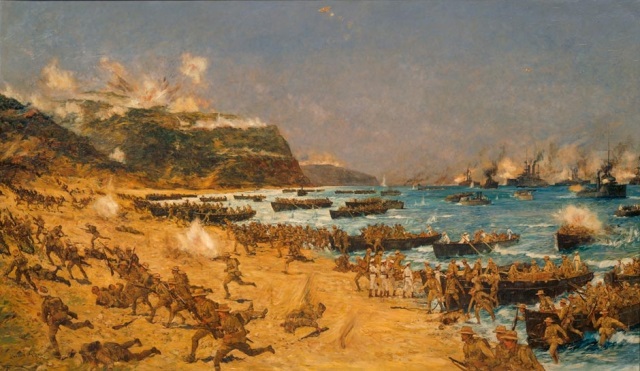
Heroism At ANZAC Cove: Hundreds of young New Zealanders and Australians died on the Gallipoli Peninsula on 25 April 1915. We can ask ourselves whether furthering Great Britain's imperial ambitions was worth the blood sacrifice - confident in the wisdom of hindsight that it was not. It is sobering, however, to reflect that, asked the same question, most the boys coming ashore that fateful morning would have answered with a resounding "Yes!"

“THEY DIDN’T EVEN THINK ABOUT IT.” That was the awestruck assessment of the young man interviewed for Television New Zealand’s Q+A programme. He was one of a small crowd of Wellingtonians gathered around New Zealand’s handsomely refurbished National War Memorial to hear the playing of the Last Post and the ritual recitation of “For The Fallen”. Every one of the 1,560 days of New Zealand’s participation in the First World War, now a hundred years in the past, is being commemorated in this fashion. The great tragedy of that conflict: a tragedy which endures; is that, like the thousands of young men who rushed to join up in August 1914, far too many New Zealanders still decline to even think about why they went to war.

If pressed, most Kiwis will mutter something about defending freedom and democracy. But that is the answer to another question. Defending freedom and democracy was why New Zealand and the other Dominions of the British Empire went to war against Nazi Germany in 1939.

Except, truthfully, it’s a trick question. Because, if the international crisis of June-August 1914 had been handled differently, then there would have been no need to go to war against Adolf Hitler in September 1939. World War I and World War II constitute the bookends of a single conflict. And what New Zealanders were fighting for at the beginning of this calamitous thirty-year struggle was very different from what they were fighting for at its end.

To say that World War I was spawned by imperial rivalries is simply to state the obvious. The question New Zealanders needed to (but didn’t) ask themselves in 1914 was: “Why is the empire we belong to – the British Empire – so willing to invest its blood and treasure in a quarrel between the empires of Russia, Germany, Austria-Hungary and France?”

The answer is simple: because the British Empire was frightened.

It was frightened of Russia’s growing capacity to project its military power in the direction of Britain’s most important, and vulnerable, imperial possession: India. The Royal Navy could not defend the Indian sub-continent from a concerted, land-based, Russian advance. It was, therefore, in Britain’s economic, military and diplomatic interests to keep Russia focused on opportunities for expansion in Europe – not Asia.

The British Empire also feared Germany. Since reunification in 1871, German industrial expansion had been phenomenal. Britain’s pre-eminent economic position, along with her ability to defend it, faced a formidable challenger. Unchecked, Germany would soon become the economic arbiter of Europe (just as it is today!) and that economic power, strapped to her undisputed military prowess, would soon make Germany the most powerful nation on earth.

That was not a position the British Empire was willing to relinquish – not yet.

The diplomatic outcome of all this was the Triple Entente. By aligning herself with Russia and France, Britain was able to neutralise the threat posed by the former, while quietly encouraging the anti-German ambitions of the latter. The designated victims of all this geo-strategic manoeuvring were to be the two weakest members of the imperial club: the Austro-Hungarian and Ottoman Empires. The prospect of dividing-up the territories of these decrepit dynasties (along with those of a defeated Germany) made Russia, France and Britain salivate like hungry dogs.

Not surprisingly, the Germans reacted to the machinations of the Triple Entente with considerable alarm. Faced with the prospect of the Russian “steamroller” lumbering towards them from the East, and the “revanchist” French rushing at them from the West, Germany’s generals applied themselves to devising a plan for fighting a successful two-front war. The one they finally settled on demanded the destruction of the French army before Russia’s could build up steam. It did not require a particularly brilliant strategic brain to realise that this would necessitate a massive flanking manoeuvre through neutral Belgium.

Long before August 1914, therefore, the British understood that Belgian neutrality could only be preserved by ensuring that the military obligations enshrined in the Triple Entente were never activated. In other words, by preventing the outbreak of a full-scale European war.

The British Empire thus found itself in the absurd position of wanting France to recover her lost provinces; Germany to be economically prostrated; Russia to be distracted from any southward push towards India: while, simultaneously, hoping that all these key strategic outcomes could be accomplished without anyone firing a single shot.

By August 1914, however, the British Government had reluctantly accepted that none of its objectives could possibly be secured without committing the peoples of the British Empire to a murderous global conflict. When, 1,560 days later, that conflict ended, Britain’s objectives were secured: Germany crushed; Russia imploding; the Middle-East theirs.

Freedom and Democracy? They could come later.

If we’d thought about it, I wonder, would we still have done it?


This essay was originally published in The Press of Tuesday, 25 April 2017.

Tuesday, 26 April 2016

Only Anger: Thoughts On Anzac Day 2016.

The First World War: A crime so colossal that it simply overpowered the imaginations of those who lived through it and after it.
 
IF YOU WERE ASKED”: What emotion is appropriate for Anzac Day? How would you answer?  Pride? Respect? Gratitude? My answer has always been, and continues to be, Anger. Bitter, searing, righteous anger at the waste of so many young lives, and at the lies told to justify a crime so colossal that it simply overpowered the imaginations of those who lived through it and after it.
 
For more than a hundred years those lies have transformed the terrible losses of the First World War into a perverse source of pride, respect and gratitude. Not only have they kept the truth about the war’s origins and objectives hidden, but they have also made it practically impossible to challenge the official version of events. This is no small achievement when the consequences of those events are still shaping our lives.
 
At the heart of the darkness that sent millions of young men to their deaths was Great Britain’s determination to destroy the thriving German economy and seize the strategic resources of the decrepit Ottoman Empire.
 
Unchecked, the German economy would have dominated the whole of Europe by the second or third decade of the twentieth century (much as it dominates Europe today). Even more worryingly, the German Empire’s increasingly close economic, diplomatic and military relationship with the Ottoman Empire would have ensured its privileged access to the strategic super-fuel of the twentieth century – oil. From the early years of the century, therefore, the reduction of Germany became the idée fixe of British foreign-policy.
 
Great Britain’s natural ally in this policy was France. Decisively defeated by the Germans in 1871, France was acutely aware that its influence in Europe was steadily being eroded by Germany’s dramatic economic growth. It’s only hope of remaining a major player in world affairs was, therefore, to strike its neighbour a crushing blow.
 
France’s key strategic problem, however, was that it could not deliver such a blow on its own – it needed allies. The first of these, the Russian Empire, was made available by the German Emperor, Wilhelm II’s, failure to renew his country’s crucial Reinsurance Treaty with Russia. The French were only too happy to fill the diplomatic vacuum created by the German Emperor’s strategic blunder.
 
This new Franco-Russian “understanding” suited British interests extremely well. Not only was Germany now faced with a war on two fronts, but, by drawing the Russians towards Europe, the French were relieving Russian pressure on the borders of the “jewel” in Britain’s imperial crown – India.
 
All that Britain required to unleash a devastating conflict upon its most dangerous economic rival was a plausible pretext. This it acquired by allowing the French and the Russians a free hand in the Balkans.
 
Europe’s flashpoint, the Balkans were the point of intersection of multiple imperial interests: Austro-Hungarian; Russian; Ottoman; and Serbian. Any move by the Austro-Hungarian Empire against its ultra-nationalist neighbour, Serbia, was bound to draw in the latter’s Russian protectors. A Russian thrust against Germany’s ally, Austria-Hungary, would, likewise, draw Germany into the conflict. German involvement would activate the Franco-Russian alliance – immediately plunging Germany into a strategically perilous two-front war.
 
Britain knew that if Germany was to avoid being caught between the French hammer and the Russian anvil, it would have to deliver a knockout blow to the French before the full weight of Russia’s vast army could be brought to bear on its eastern front. The only effective means of delivering such a blow was to direct Germany’s army through neutral Belgium and come at Paris from the north-west.
 
In other words, to enter the war with “clean hands”, Britain had only to give France its head in the Balkans. It was pretty sure that the French, with Russian connivance, would find a way to set Austria-Hungary at Serbia’s throat – thereby initiating a general European war. The assassination of the heir to the Austro-Hungarian throne in the little Bosnian town of Sarajevo on 28 June 1914 by Serbian terrorists proved to be an admirably serviceable trigger.
 
Once the Germans detected the preparations for a Russian mobilisation against not only their Austro-Hungarian ally, but also themselves, the die was cast. Germany mobilised pre-emptively, her armies smashed their way through neutral Belgium, and Britain was supplied with the morally unassailable excuse for doing what she had been planning to do for the best part of a decade – unleashing war on Germany.
 
It was in pursuit of these blunt imperial objectives that more than 12,000 young New Zealanders were sent to their deaths. Not for democracy: our allies, the Russians, were governed by an absolute monarch; and our enemies, the Germans, boasted a more inclusive franchise that Britain’s. And certainly not for freedom: imperialism and liberty do not mix. As for the “values” New Zealanders were supposedly defending on the slopes of Gallipoli. I’d like to think that these: extreme racism, unthinking obedience to those in authority; and the extension of British power across the globe; would be rejected out-of-hand by the vast majority of modern New Zealanders.
 
As I note in, No Left Turn:
 
A patriotic painting from the depths of the war says it all. Entitled “The Casualty List”, it depicts a grief-stricken mother, her head bowed before the framed photograph of her soldier son on the mantelpiece, a copy of The New Zealand Herald dangling limply from her hand. In the top left-hand corner of the painting we see the moment of his death – the young hero’s body reeling backwards as his comrades press on towards the foe. It is a sombre work, and skilfully rendered, but it does not tell the truth about the war. Captured instead is the sense of loss; the awful ache that clawed at the hearts of practically every New Zealand family in the aftermath of the carnage. That much – but no more – was all the nation was permitted to feel. Questions about what it had all been for were met with the palliative care of capitalised nouns: Justice, Honour, Liberty, Country, Democracy. The unbearable reality – that they had died to preserve the prosperity of those who stayed behind – had to be, and was, suppressed.
 
It is still being suppressed. And if none of the arguments advanced above are sufficient to rouse your indignation, then the ongoing and deliberate suppression of the truth about the origins and objectives of the First World War should make you very angry indeed.
 
This essay was originally posted on The Daily Blog of Monday, 25 April 2016.

Wednesday, 22 April 2015

What Were The ANZACs Fighting For?

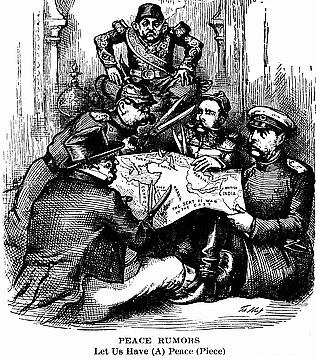
The Lion's Share: As the hapless Ottoman Sultan looks on, the major imperial powers openly bid for huge chunks of his empire. New Zealanders died in their thousands so that John Bull (him with the scissors) could keep the Royal Navy supplied from its Middle-Eastern oil-wells. The very same oil-wells that the German Kaiser (him with the shears) was so keen to get his hands on.

DIPLOMACY AND WAR have always been uneasy bedfellows. Uneasy because, when diplomacy fails it is usually war that triumphs. Sometimes, however, the baton is passed on quite deliberately. In those cases: when diplomacy is allowed to fail; the uneasiness arises out of war’s wild contingency. It is upon the bodies of warring states that the Law of Unintended Consequences inflicts its most dreadful wounds.
 
On 25 April, Australians and New Zealanders will mark the hundredth anniversary of a catastrophic military defeat. Close to 3,000 young New Zealanders died in the Gallipoli campaign and many thousands more were wounded. These shattering losses (New Zealand’s population in 1915 was barely 1 million) provided but a foretaste of the bitter repast that awaited New Zealanders in Flanders and Picardy. From a very little country, diplomacy and war were about to extract a very high price.
 
This would have been tragic enough if the diplomatic and military decisions that sent so many young New Zealand men to their deaths had been made by New Zealanders themselves. That they died as a result of the deliberate failure of British diplomacy, in a war intended to enrich and enlarge the British Empire, renders their sacrifices even more absurd and obscene.
 
Such, however, are the hard, cold facts of the matter. The Dominions of Australia and New Zealand entered the First World War at precisely the same moment as Great Britain (11:00am 4 August 1914) because constitutionally, diplomatically and militarily they were appendages of the British Crown. Where Britain stood, we stood. Her enemies were our enemies. Where she led – we followed.
 
That we ended up following Great Britain on to the territory of the Ottoman Empire was only partially accidental. One of the most important reasons British diplomacy did so little to prevent the outbreak of hostilities in 1914 was the British Empire’s rising concern at the Germans’ lengthening strategic reach. British policy makers were especially wary of Germany’s rapidly expanding diplomatic, military and economic ties with the Ottoman Empire. The British had observed the dramatic benefits of French investment in the Russian Empire and were fearful that Germany’s administration of a similar tonic to the tottering Ottomans could compromise Britain’s strategic future.
 
It was Winston Churchill who, as First Lord of the Admiralty, made the decision (just one year out from the First World War) to power the Royal Navy with oil rather than coal. With Churchill’s primary source of oil being the Anglo-Persian Oil Company (whose wells were perilously close to the Ottoman border) Germany’s “peaceful” expansion into the oil-fields of the Middle-East loomed instantly as a major strategic threat.
 
The decision to invade the Ottoman Empire, which swept the hapless ANZAC’s into the doomed assault on Gallipoli, was first and foremost Churchill’s. Ostensibly an attempt to come at the Central Powers from a new direction, its true purpose was to secure for the British Empire and its French allies the strategic oil reserves located in Ottoman territory. Britain’s other ally, Tsarist Russia, would receive Constantinople (modern-day Istanbul) and control of the crucial straits linking the Black and Mediterranean Seas.
 
The Sykes-Picot Agreement: In complete secrecy, the British and French negotiators (Sir Mark Sykes and Francois George-Picot) carved up the Ottoman Empire to their respective governments' satisfaction. The peoples who actually lived there were never consulted. Had the Bolsheviks not published its contents (Britain and France had thoughtfully provided their Tsarist Russian ally with a copy) the Arabs would never have known what they were fighting for - and neither would we! Modern-day borders are overlaid.
 
The first of these strategic objectives were confirmed in the notorious Sykes-Picot Agreement of 1916, in which the Ottoman provinces of Syria, Palestine and Mesopotamia (modern-day Iraq) were divvied up between the British and French Empires. The top-secret deal was to be delivered militarily not only by British arms, but also by the Ottoman Empire’s Arab subjects (inspired to revolt by T.E. Lawrence “of Arabia”) with additional assistance from the New Zealand Mounted Rifles and the Australian Light Horse.
 
The New Zealand Mounted Rifles
 
The second objective – Russian control of Constantinople and the Bosphorus – was thwarted only by the intervention of the Russian people, who overthrew the Romanov dynasty in 1917.
 
Undaunted, the British simply revised their plans. Just how inimical these would have proved to the people of modern-day Turkey was revealed in the extraordinary Treaty of Sèvres. Had the latter been allowed to stand, virtually the entire empire of the Ottomans would have been parcelled out between the British, French, Italians and Greeks.
 
That this did not happen was due to the efforts of a man not unknown to the ANZAC’s – one Mustapha Kemal. The man who had held the heights at Gallipoli rallied the Turkish people behind him, drove out the Greek invaders, forced the Allied occupiers of Istanbul to withdraw, and established the Turkish Republic – where Saturday’s ANZAC centennial commemorations will unfold.
 
On TVNZ’s Q+A programme (19/4/15) Chief of Defence Force, Lieutenant General Tim Keating, declared that New Zealand entered World War I to fight “a great evil”. Presumably, he was referring to Kaiser Wilhelm’s Germany. History refutes him. The First World War was a war between rival empires. The “great evil” was Imperialism. And New Zealand’s sons were fighting for it – not against it.
 
This essay was originally published in The Press of Tuesday, 21 April 2015.

Saturday, 9 August 2014

World War I - Whodunit?


I’VE AN IDEA for a television documentary – one I probably should have had two years ago. If it had occurred to me then, and I’d found someone to back it, it would be on your screens right now. This is, after all, the week in which we commemorate the outbreak of the First World War.
 
My idea is to treat the outbreak of the war as a cold case, with a crusty old Chief Inspector and an idealistic young Detective Sergeant.
 
The documentary (“docu-drama” is a better description) begins with the Detective Sergeant approaching the Chief Inspector with what he claims is evidence of a gross miscarriage of justice.
 
He points out that Germany’s confession of “war guilt” in the Treaty of Versailles was extracted under duress.
 
“For goodness sake!”, he tells the Chief Inspector, “the country was still being blockaded. It’s population was starving. There was rioting in the streets. And, as if that wasn’t enough, the armies of France, the British Empire and the USA were camped on its doorstep. What choice did she have?”
 
“That’s all very well,” says the Chief Inspector, “but for the past 100 years the evidence of Germany’s guilt has been regarded as overwhelming: proved beyond reasonable doubt.”
 
“Well, the Allied Powers would say that, wouldn’t they?”, says the Detective Sergeant. “I mean, they were hardly going to admit that the death of so many of their sons was the result of their own nefarious machinations – were they?”
 
The Chief Inspector demands to know if the Detective Sergeant has anything in the way of fresh evidence. Something solid enough to have the whole case re-opened.
 
The Detective Sergeant slams down a book by Cambridge historian, Chris Clark – The Sleepwalkers: How Europe Went to War in 1914.
 
“The question, as always, in a crime such as this is ‘Cui bono?’ – who benefits? The evidence suggests that it was Serbia that had the most to gain. Its great dream was a South Slav nation – ‘Yugoslavia’ – which Serbia would dominate. But Yugoslavia could only be constructed upon the ruins of the Austro-Hungarian Empire, and that would require a general European war.”
 
“You’re saying Serbia wanted a general European war?”
 
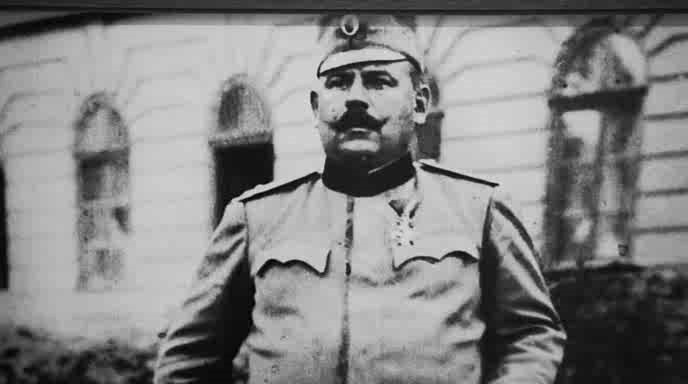
Dragutin Dimitrijevic: Serbia's Head of Military Intelligence. He not only wanted a general European war - he triggered it.
 
“Not only did they want it – they triggered it!”, exclaims the Detective Sergeant. “Gavrilo Princip, the Bosnian assassin of the Archduke Franz Ferdinand, heir to the Austro-Hungarian throne, was the wind-up toy of Serbian military intelligence. The latter’s boss, Dragutin Dimitrijevic, was certain that the Archduke’s death would provoke a war with Austria and that this, in turn, would draw in Serbia’s protector, Imperial Russia. Once the Russians moved, a general war was inevitable.”
 
“Hmmm”, says the Chief inspector, “it’s pretty thin.”
 
“Okay, but there’s more”, says the Detective Sergeant. “The entire Serbian economy, bankrupted by the Balkan Wars of 1912 and1913, was being kept afloat by French and Russian loans. So Dimitrijevic wasn’t going to move without the go-ahead from Paris and St Petersburg.”
 
“Wait a minute. Are you saying that the French and the Russians gave the green light to Franz Ferdinand’s assassination?”
 
Raymond Poincare: The French president was present in St Petersburg in the midst of the assassination crisis, which he helped to fan into war.
 
“Petty much, pretty much. Maybe not the assassination specifically, but definitely something in the nature of a casus belli – a cause for war. How else do you explain the fact that in the twelve months immediately preceding the outbreak of war, the French President, Raymond Poincaré, was present in both London and St Petersburg. Hell’s teeth! The man was actually in Russia at the exact moment the crisis was unfolding!”
 
“What are you saying?”
 
“I’m saying that Poincaré, having confirmed the anti-German faction at the British Foreign Office still had Foreign Secretary Sir Edward Grey’s ear, made sure he was in St Petersburg to steady Tsar Nicholas’s nerves.”
 
“His motive?”
 
“Revanche! Chief Inspector. Revenge! Poincaré was born in Alsace – the province stolen by Germany in 1871.”
 
“And the Russians?”
 
“Constantinople! They were terrified that Germany’s friendship with the Turkish Empire would stymie their plans for seizing the Bosphorus – gateway to the Mediterranean.”
 
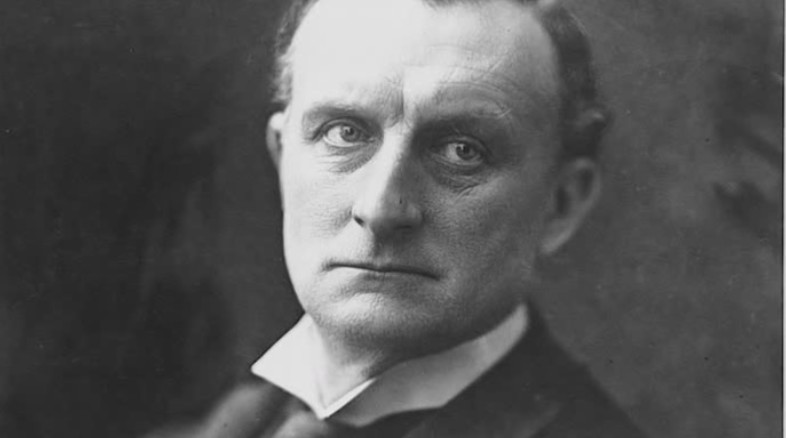
Sir Edward Grey: The British Foreign Secretary who famously remarked on the eve of World War I: "The lamps are going out all over Europe, we shall not see them lit again in our lifetime." Less well known is his role in extinguishing them!
 
“And Great Britain?”
 
“She had no choice but to go along – if only to keep St Petersburg’s attention on the Balkans and away from India.”
 
“But Germany invaded Belgium!”, objected the Chief Inspector.
 
“Facing a war on two fronts: what other choice did she have?”
 
Now, tell me these aren’t the ingredients for a gripping whodunit – History’s ultimate cold case?
 
This essay was originally published in The Waikato Times, The Taranaki Daily News, The Timaru Herald, The Otago Daily Times and The Greymouth Star of Friday, 8 August 2014.