Friday, 19 November 2010

No Second Term For "Efficient Totalitarians"

George Orwell's Chilling Image: "If you want a picture of the future, imagine a boot stamping on a human face— forever." With his latest legislative assault on our civil liberties, the Minister of Justice, Simon Power, has not only pulled the boot onto his foot, he's lacing it up.

A SECOND TERM for National? Not if we’re serious about protecting our civil liberties.

On Monday, 15 November 2010, the Justice Minister, Simon Power, secured Cabinet approval for the introduction of the Criminal Procedure (Reform and Modernisation) Bill – his 526-page "reform" of the way the State treats New Zealanders accused of a criminal offence.

If that last sentence jars a little in your ears, it’s because the State generally prefers to describe the citizen’s experience of criminal prosecution as "The Justice System".

But "Justice" is the outcome we all hope the process will deliver. The process itself is an altogether different phenomenon. And, as anyone who has ever been arrested and brought to trial will tell you, it is far from pleasant.

The first thing that strikes you upon being arrested is the extraordinary disparity, in both power and resources, between you, the citizen, and the State agencies into whose hands you have fallen.

And those "hands" are anything but metaphorical. Police officers really do lay hands on you. You’re tossed into a malodorous concrete cell, a steel door slams in your face, and you’re "held in custody" until such time as they, or a judge, decide to let you go.

No one who’s ever suffered this deprivation of personal liberty ever forgets it. To say it inspires something close to pure panic seriously understates the experience of being locked up. Some people simply cannot endure it – as the grim tally of holding-cell suicides attests.

And have you ever wondered why they call what happens next a "trial"?

When you, "the accused", enter a courtroom the first thing that strikes you is how many people there are NOT on your side.

There are the Police officers, of course, the ones responsible for your arrest and detention. There’s the Crown Prosecutor – surrounded by a team of thin-lipped lawyers and clerks. Assisting these formidable-looking personages is another team of austere court officials. And presiding over them all is the Judge – another lawyer who, prior to being "elevated to the bench" by a bunch of politicians, was probably also a Crown Prosecutor.

And what have you, "the accused", got? Who’s on your side?

Strange as it may seem, the most important thing you’ve got on your side is history: the long history of ordinary people’s struggle against the overwhelming power of the State. Hundreds of years of subjects and citizens imposing upon the agencies of Crown and State a set of rules designed to protect all those unfortunate enough to fall into their hands.

Rules that make it possible, at least some of the time, for the outcome of these grotesquely unequal struggles between ordinary people and the State to be worthy of the name "justice".

Like the rule that the accused must be considered innocent until the State is able to prove him guilty. Or the rule that no accused person can be forced to incriminate, or testify against, himself. Or the rule that the State must disclose to the accused all the evidence which it claims to have against him. Or the rule which says that the accused must be permitted to confront his accusers. Or the rule that says he is entitled to professional legal counsel.

Or the most ancient and important rule of all: the rule which says the accused is entitled to be judged by a jury of his peers.

Because if anyone is on the accused’s side in a court of law it’s the twelve ordinary people sitting in the jury box. The twelve ordinary people the State is required to convince "beyond reasonable doubt" that the accused is guilty.

The twelve ordinary people which Simon Power, in the name of efficiency, is proposing to remove from the courtroom for all but the most serious crimes.

Mr Power is also proposing to dilute many of the hard-won protections against arbitrary state power described above.

Small wonder that Dunedin lawyer and Vice-President of the New Zealand Law Society, Anne Stevens, told the Otago Daily Times that the Criminal Procedure (Reform and Modernisation) Bill, introduced to Parliament on Monday, sets up the "efficient regime totalitarians dream about".

Re-elect a regime of efficient totalitarians?

Not if the Criminal Procedure (Reform and Modernisation) Bill goes through unamended.

Not in the thousand years it took us to win our rights and freedoms.

Biographical Note: During the 1981 Springbok Tour, Chris Trotter was arrested, charged, photographed, fingerprinted, held in a cell for six hours, released on bail, eventually brought to trial and triumphantly acquitted of the heinous crime of "Obstructing a Footpath".

This essay was originally published in The Timaru Herald, The Taranaki Daily News, The Otago Daily Times and The Greymouth Evening Star of Friday, 19 November 2010.

Wednesday, 17 November 2010

The Perfect Sting

The Smiling Assassin: Pete Hodgson's mastery of the dark arts of politics goes back a long way, but his latest scalp - Pansy Wong's - was taken in a 'sting' operation that came pretty close to perfection.

IN RETROSPECT, the year I spent editing the Otago student newspaper, Critic, probably did me no good. In terms of journalism, I started at the top and have been working my way down ever since. In terms of sheer fun and excitement, however, being the editor of Critic in the tumultuous year of 1981 was hard to beat.

As a sort of insurance policy against what I suspected would be a strong on-campus reaction to the mass protests planned for the Springboks Rugby tour in July-September 1981, I agreed to give a young, right-wing history tutor, Michael Laws, his own weekly column – "Dragonfly". Things were going to get ugly, and I wanted the students of Otago to know that their newspaper was open to all shades of political opinion.

After Critic I left varsity and got a job at the University Book Shop. Years passed. And while I was making my way up the ranks of the trade union movement in Dunedin, Michael was working in the National Party Research Unit in Parliament. His highly successful association with Winston Peters marked him out as "one to watch". Certainly, I had little doubt that he would enter Parliament within a very few years.

Another man on his way towards a parliamentary career in the 1980s was Pete Hodgson. When I first met Pete he was selling vegetables out of a barrow on the student union lawn, where "The Ancient & Royal Anti-Scurvy League" had become something of a fixture in the 1970s. In the 1980s, however, Pete had left the barrow behind and was rapidly winning himself a reputation for formidable political craftsmanship as the Labour Party’s Otago Regional Organiser. Following the Labour victory of 1984, Pete’s talents were re-directed towards protecting Labour’s marginal seats.

What this meant only became clear to me one day in the mid-80s when Pete sauntered into the University Book Shop and asked me if I still had copies of Michael Laws’ "Dragonfly" columns from 1981. A little alarm-bell started ringing somewhere far off in the back of my mind, but as a loyal Labour Party member, I dutifully photocopied a complete set of Michael’s 1981 columns and handed them over to Pete.

In the 1987 General Election Michael Laws ran as the National Party candidate against Labour’s Bill Sutton in the highly marginal electorate of Hawke’s Bay. He lost, but only narrowly. Just 859 votes separated to two leading candidates.

When I asked him about it, many years later, Michael told me it had been a dirty campaign. Labour, he said, had dug up all sorts of embarrassing material from his past.

Ahh, but it’s a dirty business altogether, is politics – just ask Pansy Wong.

Pete Hodgson’s talents as a plotter, schemer and highly skilled political manipulator have seldom been better displayed than in the downfall of the Minister of Women’s and Ethnic Affairs.

The first act of the drama was to accuse Ms Wong of improperly using her ministerial title to support a private business contract involving her husband, Sammy Wong. An indignant Ms Wong denied doing any such thing. She’d simply added her signature to a Deed of Variation and given her occupation – quite correctly – as "Minister of NZ Government" and her address as "Parliament Buildings, Wellington, NZ".

At first it appeared as if Pete Hodgson’s rocket had misfired. The Cabinet Office absolved Ms Wong of any impropriety, and her husband rallied to her defence by publicly admitting that, with hindsight, he was foolish to embroil his wife in a private business deal.

Pete Hodgson was beginning to look like an utter (and seriously incompetent) cad.

But Pete’s rocket hadn’t misfired. In releasing the information about the Minister’s signature on the Deed of Variation, he had merely put a match to his rocket’s blue touch-paper.

Perhaps Pete began the final act of the drama by quietly prompting one or two friendly Press Gallery journalists to start asking questions about exactly who paid for the flight to China back in April 2008 (when the Deed was signed).

Or, maybe he didn’t have to. Maybe the final act began with him waiting for the spousal international travel rules ‘penny’ to drop of its own accord. Either way, his rocket was always bound to score a direct hit.

The moment anyone – journalist, Prime Ministerial aide, fellow Cabinet Minister, anyone – asked Pansy Wong if her husband’s travel costs had been subsidised on their April ‘08 "holiday" to China, her political career was over.

Allowing one’s spouse to do business on the taxpayer’s tab is a resignation offence.

All-in-all, it was pretty close to being the perfect ‘sting’ operation. Certainly, poor Pansy never saw it coming.

But perhaps we shouldn’t be too surprised at Pete Hodgson claiming yet another political scalp.

After all, he’s had plenty of practice.

This essay was originally published in The Press of Tuesday, 16 November 2010.

Friday, 12 November 2010

As If You Were Free

The "right time" is right now: Matt McCarten's campaign for the working-class parliamentary seat of Mana is a timely reminder that the fight for justice preceeds us, envelops us, and will go on long after us. And though, as Marx observed, working people are everywhere in chains, the most important revolutionary lesson is learning to act "as if you were free".

WHEN MATT McCARTEN told me he was thinking of putting his name forward for the Mana by-election, I shuddered inwardly.

"For God’s sake, Matt," I wanted to say, "what about your health?"

I didn’t, of course. I just waited for Matt to make his case and, as always, he produced a host of compelling reasons for proceeding with his plan.

By choosing Kris Faafoi, a journalist with no discernible links to either the Labour Party or the wider progressive movement – until he became Phil Goff’s press secretary – Labour’s leadership have made it very clear that, as far as the Mana electorate is concerned, it’s going to be business as usual.

Even though, as Matt pointed out to me in the most forceful terms, "business as usual" in the streets of Porirua means poverty, unemployment, homelessness, crime and despair.

The political analyst in me pursed his lips and shook his head.

"With the Labour Party moving steadily to the Left," he intoned disapprovingly, "this is precisely the wrong time to challenge Goff’s hand-picked candidate in an important by-election in one of the party’s safest seats."

Then I caught the gleam in Matt’s eye, and I told my inner political analyst to go stick his objections where the sun don’t shine.

Because if being on the Left means waiting for the "right time" to fight for your principles, then, as the hero of Howard Spring’s wonderful political novel, Fame Is The Spur, discovered, when the fight comes to you, the bright sword of principle can no longer be drawn. Through all those years, while you were waiting for the "right time", the sword’s blade was rusting fast to the scabbard.

Matt McCarten has never been that sort of leftist. His sword never rests long enough in its scabbard to gather a speck of rust. And the trade union he built from scratch – Unite! – has never waited for the "right time" to do anything.

The way Matt set about organising the supposedly "unorganisable" workers of the service sector always reminded me of General Woundwort, the fearless rabbit leader in Watership Down. No matter how formidable the enemy, he always attacked. Watching Unite’s young, low-paid workers take on MacDonald’s, Sky City Casino, and Restaurant Brands, you could almost hear General Woundwort’s rallying cry rising-up from the picket lines: "Come on lads, dogs aren’t dangerous!"

And now Matt’s out there in the Spring sunshine, standing on the street-corners of Mana with his crew, talking to state house tenants about homelessness; to low-paid workers about a minimum wage of $15.00 per hour; to unemployed workers about creating jobs.

And there’s work to be done. Matt’s canvassers have already discovered several empty state houses, while just a few streets away a young family, crowded into a friend’s garage, waits for Housing New Zealand to find them somewhere to live. The empty properties are already being vandalised and the copper piping is long gone.

"What do we need?", asks Unite organiser, Joe Carolan: "We’ve got carpenters, we’ve got plumbers, we’ve got electricians. We can fix this place up. We’ve got people in need. A young family in need … Are you telling me that the only thing we need is to wait for a bureaucrat for another year or two years? We should move people in now."

That’s the way the Labour Party used to talk – back in the days when it still remembered how to fight.

I asked Matt if he’d heard of Slavoj Zizek – the Slovenian socialist currently setting a principled cat among the fat, pragmatic pigeons of the European Left.

"I’m busy, Chris", he chuckled, "of course I haven’t."

"Well, Matt", I replied, "Zizek is challenging Europe’s social-democrats to stop looking over their shoulder at the European Central Bank; to govern ‘as if they were free’.

"Maybe that’s what you should ask the Mana electors, Matt. To stop looking over their shoulder at Labour.

"Could be your slogan.

"Vote – as if you were free."

This essay was originally published in The Dominion Post, The Timaru Herald, The Taranaki Daily News, The Otago Daily Times and The Greymouth Evening Star of Friday, 12 November 2010.

Wednesday, 10 November 2010

Redefining "Common Sense"

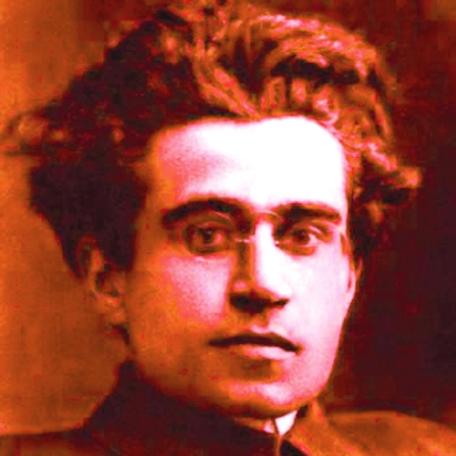
Antonio Gramsci (1891-1937): Gramsci's revolutionary insights into the nature of political authority are dramatically illustrated in the "counter-hegemonic" decision of 220 primary and intermediate school boards of trustees to challenge the "common sense" of the National Government's untested and widely criticised regime of "national standards".

THE MAN was considered so dangerous the Prime Minister had him jailed for 20 years. His crime? Heinous. He’d come up with a new way of explaining things.

The question he’d asked himself was simple. What makes people obey their governments?

On one level, the answer’s straightforward: because if we don’t obey our governments we end up – as he did – in jail.

At a deeper level, however, the answer is much more complex than that. Yes, the state enjoys a monopoly on the legitimate use of physical force. But, if you think about it, an exclusive reliance on force is a very inefficient and ultimately self-defeating way to run a country – just ask the Burmese generals.

A much more efficient way is to persuade people to obey their government voluntarily.

Our man’s great insight was that to secure popular obedience the state requires not only a monopoly on the use of force, but also a monopoly on what the overwhelming majority of the population regard as "common sense".

The man we’re talking about, Italian political theorist, Antonio Gramsci (1891-1937) described this state monopoly on common sense as "hegemonic".

This past week we have witnessed an open challenge to the New Zealand state’s hegemonic control. Two hundred and twenty primary and intermediate school Boards of Trustees (BoTs) have announced their intention to obstruct the Government’s policy of requiring all primary and intermediate schools to implement "national standards" in reading, writing and numeracy.

In what is fast becoming a classic Gramscian confrontation, the 220 BoTs (representing one tenth of the total) are contesting the common sense of the National Government’s policy.

In defence of their position they cite the research of leading educational scholars and point to the superiority of assessment mechanisms already in place. The real experience of teachers and pupils in school classrooms, they say, matches the data of empirical research in contradicting the claims of the Education Minister, Anne Tolley. According to the rebel BoTs, Ms Tolley’s claims are not rational but ideological.

But the Minister is not without ammunition of her own. To the mostly middle-class New Zealanders who support the National Party, requiring the nation’s primary and intermediate schools to focus on ensuring all children are proficient in the "Three Rs" is unquestionably a matter of common sense. To these folk, it is the BoTs and the teaching profession who are behaving "ideologically".

Gramsci would clap his hands in delight. Because the way in which the stand-off between the Government and its opponents is unfolding dramatically illustrates why the concept of "hegemony" embraces not only the struggle between state and citizen, but also the ideological struggle between antagonistic social classes over what exactly constitutes common sense.

The middle class, with its ready access to "cultural capital" (books, computers, overseas travel, family associations with the universities, professions and the arts) enjoys a strong advantage in education systems geared towards competition and ranking.

The working-class, with much less access to cultural capital, relies upon the public education system to make up the experiential deficit between itself and the middle-class. A focus on the process of learning, and on helping each student to master a steadily expanding range of skills, rather than a harshly competitive, pass/fail results-based pedagogy, is thus of much more benefit to working-class families.

That so many BoTs are willing to challenge the National Government’s education policies strongly suggests that it (and its middle-class allies) are losing the hegemonic struggle.

Perhaps the fierce, recession-driven competition for a dwindling number of high-paying jobs (and the social status that goes with them) and the not unrelated exodus of their children to Australia, is persuading more and more middle-class parents that the way New Zealand society is currently configured has very little to do with common sense.

Like Dr Don Brash and his colleagues on the 2025 Task-Force, Ms Tolley appears to be defending a version of common sense that has fewer and fewer adherents. This process of reality overtaking ideology, Gramsci dubbed "counter-hegemonic".

But the steady advance of counter-hegemonic thinking, Gramsci warned, could only end one way: in what he called a "crisis of authority".

Already in the dispute between Ms Tolley and the rebel BoTs we are hearing veiled references to the Ministry of Education’s extensive powers of to "discipline" those schools which refuse to come back into line.

Already, what Gramsci called the "mask of consent" is slipping, and beneath it the metallic gleam of the State’s monopoly on force is clearly visible.

And what happens when the citizens’ new definition of what constitutes common sense is resisted by the iron fist of the State?

Ah well, that is how Gramsci defined revolution. And that is why, at Gramsci’s 1926 trial, Mussolini’s fascist prosecutor told the Court:

"For twenty years we must stop this brain from functioning."

This essay was originally published in The Press of Tuesday, 9 November 2010.

Monday, 8 November 2010

Who Dares Wins - Cash!?

Hero - or side-show attraction?: It's hard to see how hawking the reputation of Victoria Cross winner, Corporal Willie Apiata, to fee-paying Boy's Own businessmen is going to boost the Special Air Service's morale. Blurring the line between the mission of our our armed forces and the objectives of private sector interests can only set a very dangerous precedent.

THE SPECIAL AIR SERVICE (SAS) agrees to host a group of senior business leaders for a cool $35,000. The Government’s Defence White Paper encourages Public/Private Partnerships in our armed forces. Both stories are broken in the same week. Are we supposed to believe this is a coincidence?

That’s not how the world works.

Quite obviously the SAS story was leaked to The Sunday Star-Times’ Jonathan Marshall – but by whom?

Did it come to him from an SAS source outraged at what is happening within the unit, and even more fearful of the changes about to overwhelm the New Zealand Defence Force as a whole?

Or, was it released to Marshall by the Top Brass of the NZDF as a sort of pre-emptive strike against SAS dissidents passing-on the details of the businessmen’s Boy's Own adventure to a genuine investigative journalist like Jon Stephenson?

Did Stephenson (whose series of painstakingly researched, impeccably sourced and on-the-spot reports from Afghanistan in The Sunday Star Times has seriously embarrassed the NZDF) already have the story? Was that why the Top Brass leaked it to a celebrity-chasing reporter like Marshall – who stands for everything genuine journalists despise?

If so, it was a shrewd move. While the Defence Minister, Dr Wayne Mapp, has vowed to investigate the civilian use of SAS weaponry and ammunition, the Prime Minister has airily dismissed any suggestion that what occurred constitutes either a serious breach of military regulations, or a dangerous precedent.

I beg to differ. It is inconceivable to me that allowing civilian businessmen to fraternise with our special forces personnel, be admitted to their base, learn their identities, handle and discharge their weapons, and study (albeit at the most rudimentary level) the principles and protocols of their leadership training could be anything other than the most egregious breach of military regulations.

I also fail to see how introducing Corporal Willie Apiata to these businessmen in exchange for a substantial monetary donation to the unit’s private family-welfare fund can be interpreted as anything other than a gross insult to this country’s highest military decoration, as well as a gratuitous affront to the honour and dignity of a courageous soldier.

Turning a hero into a side-show attraction doesn’t strike me as the best way to improve SAS morale.

Nor, I must say, does the White Paper’s idea of blurring the lines between Her Majesty’s Armed Forces, the Civil Service, and private sector businesses.

Even the most cursory examination of the United States’ experience of "outsourcing" traditional military functions to private sector contractors should have been enough to warn our government off the idea. Do the names Brown & Root, Haliburton and Blackwater mean nothing to Dr Mapp? To Bill English? To the PM?

They should, because the effective privatisation of many of the United States’ most sensitive and vital security and military functions has not only resulted in a massive transfer of taxpayer wealth to private business interests, but it has also tangled-up the lines of military authority.

American army officers swear allegiance to the American Constitution and the popular sovereignty which it enshrines. But, who do Haliburton business executives and Blackwater security guards swear allegiance to?

It is clear that the neoliberal project has moved well beyond its original acceptance of "The Night-Watchman State", in which the military, police, judicial and custodial functions of the polity remain firmly in public hands. Neoliberalism now proposes a radically new "Neo-Feudal" model of social control in which the coercive powers formerly monopolised by the State are transferred into private hands.

Free Market Leninists that they are, the neoliberal revolutionaries have clearly come to the conclusion that, with the destruction of all other independent centres of non-market power, the armed forces will be the only institution capable of physically overthrowing the neoliberal order. Far better to decommission its potentially dangerous service ethos and disperse its coercive military power among private corporations and individuals. Only then will the Neoliberal Revolution truly be safe.

Fiji knows all about this blurring of the lines between businessmen and soldiers. It was, after all, the treasonous collaboration between a shadowy group of Fijian businessmen and the Fijian Army’s SAS equivalent – the Counter Revolutionary Warfare Unit – which accomplished the coup d’etat of 2000. Just as it was Commodore Frank Bainimarama’s energetic reassertion of the Fiji Republic’s executive authority which brought "Speight’s Coup" to an end.

It was Bainimarama again, in 2006, who carried through the neoliberal Right’s worst nightmare – by ordering, in the name of the people, the military overthrow of the corrupt racist kleptocracy which was bleeding Fiji dry.

The Royal New Zealand Army, Navy and Air Force remain this country’s last line of defence – in more ways than one. They deserve not only our moral and political support, but also the full measure of public spending required to preserve the safety and dignity of service personnel, their families, and the free citizens of New Zealand.

Friday, 5 November 2010

Terrorist or Fall-Guy?

Seize him!: King James's men arrest Guy Fawkes in the "undercroft" directly beneath the House of Lords on 5 November 1605. Hidden beneath a screen of firewood were 36 barrels of gunpowder. Should the foiling of the most audacious "terrorist" plot in British history be attributed purely to good fortune, or was the dramatic "discovery" of "gunpowder, treason and plot" engineered by the authorities to further their own political purposes? (The Discovery of the Gunpowder Plot. Painting by Henry Perronet Briggs, 1823.)

Remember, remember the fifth of November
Gunpowder, treason and plot.
I see no reason why gunpowder treason
Should ever be forgot.

HAD IT COME OFF, the "Gunpowder Plot" of 1605 would have ranked alongside 9/11 as one of the most audacious and world-altering terrorist attacks in human history.

To mark the 400th anniversary of the Plot, a British television network constructed a replica of the 17th Century Houses of Parliament, installed the 36 barrels of gunpowder Guy Fawkes and his fellow conspirators are said to have hidden in the basement, and ignited them. The resulting massive explosion completely destroyed the replica structure. Explosive experts told the programme’s producers that anyone within 100 metres of the detonation point would have been killed instantly.

So, the target of the Catholic Gunpowder Plotters – the Protestant King of Scotland and England, James Stuart – would certainly have been killed if the barrels of crude explosive had been allowed to do their job. The British Isles would have been plunged into civil war, and the plotters’ ultimate aim – the restoration of Catholic ascendancy – may even have been achieved.

What fascinates me about the Gunpowder Plot, however, is that almost from the moment the plotters were apprehended, tortured, tried and executed, their contemporaries started questioning the truth of the Government’s version of events.

From the very beginning, these "5/11 Truthers" – as they’d be called today – cast doubt upon the Government’s key assertion: that it was entirely ignorant of the plot.

According to the King’s chief minister, the first Earl of Salisbury, Robert Cecil, if one of the plotters hadn’t sent a letter to a Catholic Lord, warning him to stay away from the Houses of Parliament on 5th November, not only the King, but the whole House of Lords and the entire House of Commons would have been blown to Kingdom Come.

The 17th Century "Truthers" – like their 21st Century counterparts – weren’t buying it.

Everybody in London knew that Cecil (the son of Elizabeth I’s long-serving chief minister, Sir William Cecil) had been schooled in the arts of statecraft and intelligence-gathering not only by his father, but by Elizabeth’s spymaster, and the man regarded by many as the Father of England’s "Secret State" – Sir Francis Walsingham.

Walsingham had masterminded the operation which resulted in the execution of Elizabeth’s Catholic cousin, Mary, Queen of Scots. The so-called "Babington Plot" had been run almost from beginning to end by Walsingham himself, in order to snare Mary in an act of treason. The 5/11 "Truthers" argued that the Gunpowder Plot was no different.

In a capital city swarming with Cecil’s spies, they said, it simply beggared belief that the ever-increasing number of Catholic plotters (most of whom would have been under surveillance) and the constantly postponed plot (outbreaks of disease in London had led to the date of the Royal Opening of Parliament being changed several times) went entirely undetected by James’ spymasters.

Like the 9/11 Truthers, the 5/11 doubters argued that a terrible act of terrorism (or, in the case of the Gunpowder Plot, attempted terrorism) was just what the Government of the Day "needed" to further its foreign and domestic policy goals.

The case both would make is that the destruction of the Twin Towers (or the only-just-averted elimination of England’s Protestant rulers) were deliberately engineered by the "secret statesmen" of 21st Century America (or 17th Century England) to persuade their populations that "drastic measures" were necessary to protect the State from its terrorist foes.

Misdirection’s an old and dirty game – as old as politics itself. Robert Cecil learned it from his father and Walsingham, who’d simply followed the example set by Henry VIII’s chief minister, Thomas Cromwell, who had learned it in the palace corridors of Renaissance Italy, where the heirs of the Roman Empire practised the dark arts of treachery and deception with a skill only centuries of hands-on experience can impart.

And, of course, it was Walsingham’s and Cecil’s heirs who taught the Americans how to play. The Office of Strategic Services – which President Roosevelt established during the Second World War (and which later morphed into the Central Intelligence Agency) was tutored by Britain’s Secret Intelligence Service.

Something to think about as you set a match to the blue touch-paper this November night.

Was Guido Fawkes a terrorist – or was he simply the spymasters’ fall-guy?

This essay was originally published in The Timaru Herald, The Taranaki Daily News, The Otago Daily Times and The Greymouth Evening Star of Friday, 5 November 2010.

Thursday, 4 November 2010

Still Cringing

"The trick of standing upright here": After the cringing fiasco that was 'The Hobbit Affair', it's depressingly clear that most New Zealanders have yet to master the art of living as if they were free.

WHO ARE WE NOW? What have we become? Where, exactly, is New Zealand?

I only ask because last weekend I saw people holding up placards informing me in no uncertain terms that "New Zealand IS Middle Earth".

What the placard-wavers seemed to be saying was that all those Kiwis willing to sacrifice everything to ensure Sir Peter Jackson’s production of J.R.R. Tolkien’s classic children’s tale remained in New Zealand, should consider themselves "Hobbits". While those New Zealanders with the temerity to join unions and bargain for better wages and conditions should be lumped-in with the goblin enemies of all that is good and true and wholesome in "Middle Earth".

How did it come to this? When did New Zealanders lose touch with their country’s own identity to such a degree that many now take more pride in being associated with a work of literary fantasy than their own homeland?

These are serious questions. New Zealand’s immediate future contains a daunting number of economic, social and constitutional challenges. Overcoming these challenges will test this nation’s mettle in ways not experienced since the 1930s and 40s.

The New Zealand that came through the Great Depression and the Second World War was configured very differently from the New Zealand of today.

The Labour Government of Michael Joseph Savage and Peter Fraser, by drawing all the various sectors of New Zealand society – employers, unions, farmers, professional organisations, churches, community groups, artists – into a collective struggle for national survival, fostered a nationalistic spirit of unity and purpose which enabled our small and vulnerable population to emerge from the period stronger, more prosperous and vastly more self-assured than before.

The artists, in particular, played a vital role in creating New Zealand’s national identity. Though the bonds of empire remained strong, it was possible to discern, through the war-torn and increasingly thread-bare Union Jack, a new and independent nation slowly but unmistakably acquiring a distinctive form and shape.

This emerging New Zealand was an unequivocally Pacific nation with its own indigenous Polynesian culture (as tens-of-thousands of Kiwis serving overseas realised with a sudden pang of homesickness whenever they heard Maori music played).

The novelist, John Mulgan, had high hopes for this emerging New Zealand:

I have had visions and dreamed dreams of another New Zealand that might grow into the future on the foundations of the old. This country would have more people to share it. … [M]en who want the freedom which comes from an ordered, just community. There would be more children in the sands and sunshine, more small farms, gardens and cottages. Girls would wear bright dresses, men would talk quietly together. Few would be rich, none would be poor. They would fill the land and make it a nation.

It was the dream of the younger Labour men and women returning home from the war. The dream of Finance Minister, Arnold Nordmeyer, and Industries & Commerce Minister, Phil Holloway. The dream for which Norman Kirk died in 1974.

It is also the dream which Roger Douglas, Ruth Richardson and the whole neoliberal economic order they brought into being, have spent the last quarter-century attempting to root out of New Zealand’s collective memory.

Central to that task has been the deliberate falsification of this country’s recent history. For New Zealanders to become the ‘global citizens’ of the ‘borderless world’ that neoliberalism requires, all generators of national identity; all the mechanisms of economic sovereignty, must be dismantled.

To present this as a positive achievement, New Zealanders – especially young New Zealanders – must be persuaded to perceive their country’s recent past in darkly negative terms. Kirk’s New Zealand, the New Zealand of social equality and full-employment had to presented as, in David Lange’s witheringly dismissive phrase: "a Polish shipyard".

In place of Mulgan’s quiet, egalitarian New Zealand, neoliberalism has erected a raucous culture of rampant greed and conspicuous consumption. In neoliberal New Zealand, only losers care about losers. All that matters in the brave new world of the all-conquering free market is winning.

Sir Peter Jackson is a winner. Ipso facto, a Hollywood blockbuster located in New Zealand and directed by "Wellywood’s" Oscar-festooned maestro makes all of us winners too. Anyone attempting to block the great man’s path (like NZ Actors Equity or the CTU) must, therefore, be dismissed as, to use Paul Holmes’ ripe vocabulary – "filth".

Sixty-seven years ago, in his poem The Skeleton of the Great Moa in the Canterbury Museum Allen Curnow prophesied that: "Not I, some child, born in a marvellous year/Will learn the trick of standing upright here".

Surveying last week’s placard-waving crowd in Wellington’s Civic Square – and after watching our Prime Minister’s supine surrender to Sir Peter Jackson’s and Warner Bros.’ demands – it has become dispiritingly clear to me that "standing upright" is a trick we’ve yet to master here – in "Middle Earth".

This essay was originally published in The Press of Tuesday, 2 November 2010.