
Showing posts with label Anne Tolley. Show all posts

Tuesday, 12 April 2016

Fostering Maori Success

Shaking-Up CYF: Minister of Social Development, Anne Tolley, must balance the urgent need to "modernise" the delivery of New Zealand's child and family support services against the equally pressing need to improve the delivery of such services to Maori. Achieving both objectives without alienating large sections of the Maori community will not be easy.
 
FAR-REACHING CHANGES LOOM if the ideas of the Expert Panel set up to “modernise” Child Youth and Family (CYF) are implemented. Their just released report: “Investing in New Zealand’s Children and their Families” envisages both a new approach to child welfare, and a new set of structures to give their re-ordered priorities practical effect. At the same time, however, the Expert Panel was also asked to address the disproportionate number of Maori children requiring the intervention of child welfare professionals. Achieving both objectives without alienating large sections of the Maori community will not be easy. The Minister, Anne Tolley, does not want an embarrassing cultural stand-off.
 
At the core of most explanations for the appalling social statistics in which New Zealand’s indigenous people are enmeshed is the continuing impact of colonialism on the lives of Maori people. For one-and-a-half centuries, the loss of land, and the economic consequences of that loss, has not only impoverished Maori, but has also led to the tragic manifestations of that enforced poverty being used to justify the dominant Settler Society’s racist assumption of cultural superiority.
 
The problem with this argument is that, if it is true, then all the tragic manifestations of Maoridom’s enforced poverty: domestic violence, child abuse, drug and alcohol addiction, criminal offending, chronic illness, homelessness and educational under-achievement; must also be true. That being the case, the most obvious solutions which present themselves to the dominant Settler Society, will all tend to involve extracting Maori from the negative consequences of colonialism, and replanting them in environments which reflect its more positive features.
 
In the words of the Expert Panel’s Final Report:
 
“There has been considerable debate in the past three decades on the place of children in Māori society and on the place of whānau. Much has been said in order to emphasise the differences in Māori society from others and this is not always accurate or true. Some interpretations have confused the issue. The safety of Māori children is paramount and any work we do must be child-centred. A well-functioning whānau provides a sound basis to help solve the problems that face these children at particular times in their lives, but a badly functioning whānau can be dangerous. We must never compromise the safety, security, and sense of belonging of any child in their care arrangements.”
 
Decoded, this paragraph signals the abandonment of the policy that the best interests  of vulnerable and/or abused Maori children will always be best served by keeping them in the care of their extended family group. The policy itself arose out of the grim experiences of both Maori and other indigenous people (most particularly Aboriginal Australians) at the hands of Settler Societies whose official child welfare policy held that it was in the afflicted child’s best interest to be raised in strict isolation from its parents’ culture.
 
This was the policy approach that led to such eugenicist tragedies as the so-called “Stolen Generation” of Aboriginal children. Maori nationalists were determined that such pernicious examples of Settler Society racism would never be repeated. CYF’s “Whanau First” approach, first implemented in the late 1980s, was intended to ensure that young Maori were not cut loose from their cultural moorings and transformed into Brown Pakeha.
 
In practical terms, however, CYF’s Whanau First approach all-too-often saw abused Maori children thrown out of the frying-pan and into the fire. With the toxic legacies of colonialism still at work across broad swathes of Maori society – how could it be otherwise?
 
How can Anne Tolley, and the new organisation she intends to erect in CYF’s place, square this vexing circle? At least part of the answer lies in that interestingly euphemistic phrase, “a well-functioning whanau”.
 
Logic would suggest that the chances of serious abuse occurring in a well-functioning whanau are reasonably slim. In all societies there are virtuous as well as vicious familial cycles. Could Ms Tolley be wondering: “If success breeds success, perhaps it can also foster it?”
 
As anyone who’s read Charles Dickens’ novels will attest, that is certainly how the Victorians viewed the problem. What better fate could there be for a helpless waif raised in an Orphanage than to end up as the adopted son of a well-to-do middle-class gentleman?
 
Is this how Ms Tolley and her Neo-Victorian colleagues propose to rescue the neglected and abused children of Maoridom? Not by replicating the racist horrors of the Stolen Generation, but by taking full advantage of the fact that the Maori Renaissance of the 1980s and 90s has given birth to a rapidly expanding Maori Middle-Class. Is she hoping to see them doing well by doing good? First, as the providers of the sort of “early intervention” and “wrap-around services” envisaged by National’s “social investment” strategy; or, if that fails, by offering Maoridom’s battered babies a well-functioning foster whanau?
 
This essay was originally published in The Press of Tuesday, 12 April 2016.

Tuesday, 25 January 2011

Maximum Damage

Evidence? Why would I need evidence after accumulating 50 years of National Party prejudices? Education Minister, Anne Tolley, refuses to defend New Zealand's national curriculum or its national qualifications system. When confronted with Auckland Grammar's full-scale attack on the NCEA, her response was: "Where's the harm?"

HOW STUPID do they think we are? Do they really expect us to believe that the week in which tens of thousands of young New Zealanders received their NCEA certificates, the headmaster of Auckland Grammar just happened to announce that, in 2011, only his "weaker students" will be sitting the official New Zealand exam?

Come on! Doesn’t it make more sense that the announcement Auckland Grammar will be directing 90 percent of its pupils towards the Cambridge International Examinations (CIE) – a decision the school’s Board of Trustees made several months ago – was deliberately timed to inflict the maximum damage to the NCEA?

But, to what purpose? Who are these mysterious "they"? And what is it they’re hoping to achieve? Well, let’s answer those questions by making it very clear who "they" are not.

They are not experts in the field of education. The overwhelming consensus of expert opinion both here and overseas is that the NCEA examination is a highly effective educational response to the cultural and vocational challenges confronting young New Zealanders in the 21st Century.

They are also very far from being representative of the overwhelming majority of school principals and teachers who have worked tirelessly, alongside the New Zealand Qualifications Authority, to correct the inevitable malfunctions and address the (surprisingly few) conceptual and/or procedural shortcomings exposed during the introduction of the new system.

No, the NCEA is not being attacked on educational grounds. The objections "they" have with our national secondary school qualifications are entirely political.

There’s a certain type of New Zealander who views this country’s young people in the same way that a farmer views a mob of ewes and lambs. For these New Zealanders, our school qualifications regime is supposed to operate like the farmer’s drafting race. The kids are funnelled-in, and, as they pass through, the examination system slams the drafting-gate to the left or to the right, sorting out the sheep (to be returned to green pastures) from the lambs (to be sent to the works).

Except this educational sorting system is nowhere near as objective as the farmer’s. At least the cockey divides his flock according to an objective test: is this a sheep, or a lamb? The opponents of NCEA, however, aren’t interested in a system which sorts young New Zealanders according to their abilities. What they're after is one which sorts students according to the socio-economic status of their parents.

And how better to signal to your children’s prospective employers that they have been educated at a private school, or at one of the elite state secondary schools (like Auckland Grammar) than by substituting the CIE for the NCEA? After all, it’s only the very wealthy who can afford to pay the fees of the most prestigious private institutions. Just as it’s only the very wealthy who can afford to own a house in the highly-prized "Grammar Zone".

The CIE is certainly no better, and arguably a marginally less effective predictor of academic success, than the NCEA. But, of course, that’s not it’s purpose. Like the star on the belly of Dr Seuss’s infamous "Sneetches", the CIE qualification is supposed to signal that the bearer is "One of Us": a superior form of life; someone to be preferred over all those unfortunate, plain Sneetches with "none upon thars".

Now, you don’t have to be a genius to see where New Zealand’s going to end up if the CIE becomes associated with high social status, and the NCEA is reserved for "weaker students". In no time flat, this country’s education system will be driven almost entirely by considerations of class (and in New Zealand that all-too-often comes down to issues of race and ethnicity).

Since the 1930s, New Zealand’s education system has been driven by the determination that: "every person, whatever the level of his academic ability, whether he be rich or poor, whether he live in town or country, has a right, as a citizen, to a free education of the kind for which he is best fitted, and to the fullest extent of his powers."

The keepers of that promise: the guardians of educational equality in this country; have traditionally been New Zealand’s Ministers of Education. And that is why, when the headmaster of Auckland Grammar made his deeply offensive announcement, parents and teachers across New Zealand turned to National’s Anne Tolley. Surely, they reasoned, the Minister of Education will not stand back and watch the NCEA reduced to something only "weaker students" sit? Surely, she will instruct Auckland Grammar, as part of the state secondary system, to step back into line.

But that’s not what Anne Tolley did. The Minister of Education’s extraordinary response was: "Where’s the harm?"

Well, Minister, of one thing I’m certain. The harm unleashed by your unconscionable refusal to defend the NCEA will not be found in your neighbourhood.

This essay was originally published in The Press of Tuesday, 25 January 2011.

Wednesday, 10 November 2010

Redefining "Common Sense"

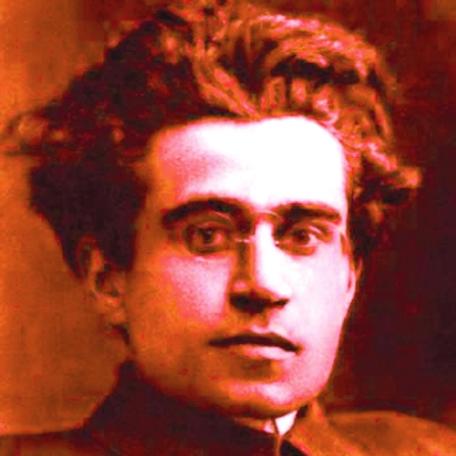
Antonio Gramsci (1891-1937): Gramsci's revolutionary insights into the nature of political authority are dramatically illustrated in the "counter-hegemonic" decision of 220 primary and intermediate school boards of trustees to challenge the "common sense" of the National Government's untested and widely criticised regime of "national standards".

THE MAN was considered so dangerous the Prime Minister had him jailed for 20 years. His crime? Heinous. He’d come up with a new way of explaining things.

The question he’d asked himself was simple. What makes people obey their governments?

On one level, the answer’s straightforward: because if we don’t obey our governments we end up – as he did – in jail.

At a deeper level, however, the answer is much more complex than that. Yes, the state enjoys a monopoly on the legitimate use of physical force. But, if you think about it, an exclusive reliance on force is a very inefficient and ultimately self-defeating way to run a country – just ask the Burmese generals.

A much more efficient way is to persuade people to obey their government voluntarily.

Our man’s great insight was that to secure popular obedience the state requires not only a monopoly on the use of force, but also a monopoly on what the overwhelming majority of the population regard as "common sense".

The man we’re talking about, Italian political theorist, Antonio Gramsci (1891-1937) described this state monopoly on common sense as "hegemonic".

This past week we have witnessed an open challenge to the New Zealand state’s hegemonic control. Two hundred and twenty primary and intermediate school Boards of Trustees (BoTs) have announced their intention to obstruct the Government’s policy of requiring all primary and intermediate schools to implement "national standards" in reading, writing and numeracy.

In what is fast becoming a classic Gramscian confrontation, the 220 BoTs (representing one tenth of the total) are contesting the common sense of the National Government’s policy.

In defence of their position they cite the research of leading educational scholars and point to the superiority of assessment mechanisms already in place. The real experience of teachers and pupils in school classrooms, they say, matches the data of empirical research in contradicting the claims of the Education Minister, Anne Tolley. According to the rebel BoTs, Ms Tolley’s claims are not rational but ideological.

But the Minister is not without ammunition of her own. To the mostly middle-class New Zealanders who support the National Party, requiring the nation’s primary and intermediate schools to focus on ensuring all children are proficient in the "Three Rs" is unquestionably a matter of common sense. To these folk, it is the BoTs and the teaching profession who are behaving "ideologically".

Gramsci would clap his hands in delight. Because the way in which the stand-off between the Government and its opponents is unfolding dramatically illustrates why the concept of "hegemony" embraces not only the struggle between state and citizen, but also the ideological struggle between antagonistic social classes over what exactly constitutes common sense.

The middle class, with its ready access to "cultural capital" (books, computers, overseas travel, family associations with the universities, professions and the arts) enjoys a strong advantage in education systems geared towards competition and ranking.

The working-class, with much less access to cultural capital, relies upon the public education system to make up the experiential deficit between itself and the middle-class. A focus on the process of learning, and on helping each student to master a steadily expanding range of skills, rather than a harshly competitive, pass/fail results-based pedagogy, is thus of much more benefit to working-class families.

That so many BoTs are willing to challenge the National Government’s education policies strongly suggests that it (and its middle-class allies) are losing the hegemonic struggle.

Perhaps the fierce, recession-driven competition for a dwindling number of high-paying jobs (and the social status that goes with them) and the not unrelated exodus of their children to Australia, is persuading more and more middle-class parents that the way New Zealand society is currently configured has very little to do with common sense.

Like Dr Don Brash and his colleagues on the 2025 Task-Force, Ms Tolley appears to be defending a version of common sense that has fewer and fewer adherents. This process of reality overtaking ideology, Gramsci dubbed "counter-hegemonic".

But the steady advance of counter-hegemonic thinking, Gramsci warned, could only end one way: in what he called a "crisis of authority".

Already in the dispute between Ms Tolley and the rebel BoTs we are hearing veiled references to the Ministry of Education’s extensive powers of to "discipline" those schools which refuse to come back into line.

Already, what Gramsci called the "mask of consent" is slipping, and beneath it the metallic gleam of the State’s monopoly on force is clearly visible.

And what happens when the citizens’ new definition of what constitutes common sense is resisted by the iron fist of the State?

Ah well, that is how Gramsci defined revolution. And that is why, at Gramsci’s 1926 trial, Mussolini’s fascist prosecutor told the Court:

"For twenty years we must stop this brain from functioning."

This essay was originally published in The Press of Tuesday, 9 November 2010.

Friday, 12 February 2010

Professional Standards

The Meat in the Sandwich: The National Government's determination to impose its education policies over the near universal objections of teachers and scholars has more to do with ideology than pedagogy - and New Zealand's children will pay the price.

WHO WILL WIN the battle over National Standards – and at what cost?

History suggests that in any confrontation between blue-collar workers and the forces of the State, the State wins. The historical record is not so clear, however, when it comes to confrontations between the State and professionally trained white-collar workers.

The stunning success of former Alliance MP, Laila Harré’s, "Nurses Are Worth More" campaign highlights the huge risk John Key and his National-led Government are taking by casting the New Zealand Educational Institute (NZEI) – the primary teachers’ professional organisation – as Public Enemy No. 1.

If the Government is eventually forced to back down, Key’s hitherto all-conquering reputation will be seriously damaged, and the political career of his Education Minister, Anne Tolley, will be over.

The use of the term "professional organisation" – as opposed to "union" – in this context is quite deliberate. White-collar workers with tertiary qualifications generally eschew the more proletarian designation "union" in favour of less inflammatory nouns like "organisation" (NZ Nurses Organisation), "association" (Public Service Association, Post-Primary Teachers Association, Association of Salaried Medical Specialists) or "institute".

The entirely voluntary nature of the membership of these professional bodies (which long pre-dates the Employment Contracts Act) is another pointer to their collegial status. Like the tradespeople of the so-called "craft" unions, the professionals’ primary goal is the preservation and refinement of the hard-won bundle of skills they have acquired. Proper recognition and remuneration for those skills is important – but it isn’t paramount. A carpenter’s identity derives from his craft – not his income. Teachers are no different.

So why on earth has John Key drawn the battle-lines over National Standards so crudely?

At a post-caucus press conference held in the Beehive Theatrette on 2 February the Prime Minister declared: "There will always be those that resist change, who fear increased accountability and who put their own vested interests ahead of New Zealand’s young people. We will not bow down to those critics."

Describing the NZEI as "a union protecting their [sic] members", Key went on to frame the issue as one of unaccountable teachers versus powerless parents and their ill-served children.
Parents, said Key, shouldn’t have to put up with "declining education standards, being kept in the dark about their children's progress or creeping political correctness in our schools."

This is an extraordinary statement – not only because all three of the charges levelled against the New Zealand education system and its teachers are false – but also because it sets forth in the most unabashed fashion the stridently ideological objectives of the Government’s National Standards policy.

An uncompromising commitment to "lifting education standards" – most typically by focusing on the "Three Rs" – has become a common feature of conservative party manifestos across the English-speaking world. That such policies have failed miserably wherever they’ve been introduced (most notably in the UK and the USA) has in no way lessened the enthusiasm of their right-wing promoters.

It’s this apparent indifference to the real-world harm inflicted by National Standards regimes upon the very children they’re intended to assist that betrays the conservatives’ true (albeit unacknowledged) objectives.

As the President of the NZ Principals Federation, Ernie Buutvelt, told Radio New Zealand on 3 February:

"Originally we were talking about standards for students and we were looking forward to what useful benchmarks we could make for that and suddenly its been turned into performance measures for teachers … Suddenly we’ve found where the Government’s original starting place was ... a tool to bash schools and blame teachers."

Modern conservatives’ obsession with disciplining teachers, and their profound dissatisfaction with the objectives and methodology of modern pedagogy, both stem from what they see as the profession’s deliberate failure to adequately prepare their children for the rigors of twenty-first century capitalist life.

Conservatism’s "tough love" approach to learning is neatly encapsulated in the "Why National Standards?" section of the party-political pamphlet currently being distributed (at the taxpayers’ expense) to the parents of New Zealand’s primary and intermediate schoolchildren:

"Many parents tell us", report the pamphlet’s National Party authors, "they’re not happy with the ‘politically correct’ and ‘sugar-coated’ school reports they receive."

Consider for a moment what’s being rejected here. These parents do not want the school to treat their children as unique, multi-faceted human-beings who will engage with the learning process in their own way and at their own speed. On the contrary, they want the school to treat their children purely as future components in the global economic machine. And all they want the school to tell them is how much bigger (or smaller) their little components are – compared to all the others.

This ruthless competitiveness gives the lie to the by-now-familiar conservative claim that all they want is for there to be "no child left behind", or, as Key puts it in the pamphlet:

"New Zealand deserves a future with more highly-skilled citizens, who have better job prospects, greater life choices and, in turn, who live in a society with less dysfunction, unemployment, welfare dependence and crime."

But such a future cannot be realised under a National Standards system which, by permitting the publication of "league tables" distinguishing "failing schools" from "succeeding schools", makes the elimination of the 20 percent "tail" of functionally illiterate and innumerate New Zealanders ever more unlikely.

The NZEI is more than equal to the task of explaining all this to the nation’s parents. Facts are stubborn things, and the more frequently and dramatically the NZEI places the facts before the communities in which its members live and work, the more untenable the Government’s position will become.

And if Key and Tolley remain unwilling to compromise with the NZEI (in stark contrast to their conciliatory approach to the Kura Kaupapa Schools) there is always the option of mass civil disobedience.

The Prime Minister may disavow any intention of seeking "a showdown in the courtroom", but the NZEI and the Principals Federation have the power to make him do just that.

Policemen carrying principals and primary school teachers out of their offices and classrooms and into waiting paddy wagons. How will that look on the Six O’clock News?

Boards of Trustees barring their school gates against the Education Ministry’s statutory managers? Is that the bitter legacy parents are seeking from the Government’s education policies?

Are those the "National" standards they’ll be voting for in 2011?

This essay was originally published in The Independent of Thursday, 11 February 2010.