Showing posts with label Education. Show all posts

Thursday, 27 October 2022

Passing The Tests.

Professional Failure: New Zealand’s education system – once celebrated as one of the most successful in the world – is in free-fall. By all the recognised international comparators, we are failing – and failing fast. So bad have things become that it is increasingly difficult to find a sufficient number of willing and able participants to make our international test-results robust enough, statistically, to stand comparison.

BY 2024, this country’s education system is supposed to be delivering competency in literacy and numeracy to all young New Zealanders. What used to be called the “Three Rs” – readin’, ‘ritin’, ‘rithmetic – should have been mastered by all but a handful of students heading into NCEA examinations. Ominously, our education system is far from achieving this most basic of objectives.

The Ministry of Education has been trialing the NCEA assessment tests that it plans to have in place by 2024. The first trial-run took place last year, the second in July of this year, and the results of both trial-runs are dire. Of the approximately 16,000 Year Ten students (14-15 year-olds) tested in July, only 34 percent achieved a “pass” in writing; 56 percent in maths; and 64 percent in reading. These results differ only marginally from those obtained in 2021.

That is to say, after ten years of schooling, only a third of young New Zealanders can write coherently; only half possess basic computational skills; and only two-thirds can cope adequately with a level of written communication fundamental to success in adult life.

These numbers represent a scarcely believable tale of professional failure across New Zealand’s education system. What it reveals is a society that is rapidly losing the ability (if it hasn’t already lost it) to keep itself going – let alone improve itself – on the basis of its own human resources.

Try to imagine the response of New Zealand’s principal export markets if tests revealed that no more than two-thirds of its livestock could be described as healthy. Or if, by other measures, that fraction of healthy animals fell to a half, and then to a third. People would demand to know how the Ministry of Primary Industries could possibly have missed such a catastrophic decline. They would demand to know what it was doing to lift the overall level of New Zealand’s livestock health.

The livestock analogy is brutal, but a level of brutality is warranted here – if only to wake New Zealanders up to the perilous situation in which they now find themselves. For decades, we have been telling ourselves that the best way to make our country wealthier, fairer, and happier was by educating its young people to the highest possible international standard. We looked at countries with world-beating education systems – and test results – like Singapore and Finland, and assumed that theirs was the level of performance to which our own educational experts aspired.

Clearly, that was an unwarranted assumption. New Zealand’s education system – once celebrated as one of the most successful in the world – is in free-fall. By all the recognised international comparators, we are failing – and failing fast. So bad have things become that it is increasingly difficult to find a sufficient number of willing and able participants to make our international test-results robust enough, statistically, to stand comparison. In a telling sign of the times, this dearth of suitable participants is being presented by some school principals as a signal that it is time for New Zealand to abandon international comparisons altogether.

Thankfully, at both the political and bureaucratic levels, New Zealand’s perilous decline has been noted and remedial action demanded. By 2024, the slide must stop. No ifs, no buts, no maybes. The call has come very late, and, tragically, it is likely to be resisted.

Across academia, in the teacher unions, and increasingly at the chalk-face, the whole notion of education being an international enterprise, in which young New Zealanders must be able to participate (and compete) with confidence, is being rejected. In its place, “progressive” educators are erecting a system geared to rectifying the cultural and social inequities arising out of New Zealand’s colonial past.

With increasing vehemence, international standards are rejected as “Eurocentric” – or even “white supremacist” – weapons for obliterating the unique insights of indigenous cultures. The bitter letter-to-the-Listener struggle over the merits of “Western Science” versus “Mātaurānga Māori”, was but the tip of the ontological iceberg currently ripping a massive hole, albeit well below the waterline of public perception, in New Zealand’s education system.

The extent to which this debate has progressed is revealed in the responses to the shocking performance revealed in the trial-run NCEA assessment tests. According to a post on the RNZ website, “independent evaluators” are concerned that: “New literacy and numeracy tests could lower NCEA achievement rates among Māori and Pacific students.”

“They’ve gone back to the ark with these one-off tests which is just ridiculous”, fumed Peter Brooks, Principal of Fryberg High School. “I don’t know where this idea came from that you could test for literacy and numeracy on one day, online, just on computers. It’s just fraught with problems. To me it’s a giant leap backwards in terms of determining whether the kid’s literate or numerate or not.”

A report by Evaluation Associates Ltd identified “a risk fewer priority learners – which included many Māori and Pacific learners, those from low socio-economic backgrounds, and students with special education needs – would achieve an NCEA qualification once the tests were introduced.”

That a disproportionate number of Māori and Pasifika New Zealanders remain concentrated in the lowest socio-economic groups is one of the saddest constants of New Zealand sociology. Breaking the dismal cycle of low incomes, low expectations, low educational attainment, has eluded successive governments operating in the neoliberal era. Convincing Treasury, the business community, and the broader electorate, to endorse the level of spending required to transform the education sector into a credible mechanism for Māori and Pasifika escape from structural disadvantage, is a goal our politicians have yet to set themselves – let alone achieve.

In part, this failure is explained by the unwillingness of the more privileged sectors of our society to state with brutal clarity that breaking free of the dismal cycle of “lows” will only ever be achieved by aiming and scoring “high”. Parents must be told that there will be no special pleading; no softening of standards; no blaming of history. Their children must pass the tests, and they must help them pass the tests. The New Zealand state can build schools, and it can train teachers, but it cannot instill a determination in young Māori and Pasifika to be educated to the fullest extent of their powers.

It must also be made brutally clear that if young New Zealanders – preponderantly Māori and Pasifika – do not acquire the skills needed to run their own country, then their own country will be run by those who do have the skills. Increasingly, these managers and professionals will not even be Pakeha, but people from far-off places, with little or no empathy for the indigenous culture of Aotearoa.

The best way Pakeha New Zealanders can undo the damage of colonisation is to offer Māori an education system equal to the both the expectations of the rest of the world, and to the promises contained in te Tiriti o Waitangi. The best way for Māori to achieve tino rangatiratanga is to take that offer – and ace the tests.


This essay was originally posted on the Interest.co.nz website on Monday, 24 October 2022.

Thursday, 12 April 2012

Putting the Public In Their (Private) Place

Puffed-Up Political Popinjay: Associate Minister of Education, Craig Foss. The Member for Tukituki epitomises the National Party's almost reflexive antagonism towards urban culture and the free life of the mind which it promotes. Mr Foss's neoliberal ventriloquists are determined to dismantle the democratic and egalitarian education system set in place by the First Labour Government.

SEVEN YEARS AGO Craig Foss made his living manipulating money for Credit Suisse Financial Products. Before that he had, like his leader, John Key, been a currency trader. In 2005, after heaving Labour’s Rick Barker out of the provincial Hawke’s Bay electorate of Tukituki, he became a National Party MP. National had been odds-on favourite to take the seat, but everyone agrees Mr Foss worked tirelessly to make it a certainty.

He was perfectly cast for the role. The election of 2005 marked the first surge of the king conservative tide which would sweep away practically all Labour’s representation in the provinces and seriously erode much of its urban base. To the conservative voters of Tukituki Mr Foss’s jutting chin, porcine squint, and querulous pout communicated the confidence of the self-made man who understands the value of Pounds, Dollars and Euros – but very little else.

This lack of cultural depth was anything but a handicap in Tukituki, where the Clark Government’s intelligent social liberalism had long since outworn its welcome. Mr Foss may have spent much of his working life in the world's financial hubs, but his values remain firmly rooted in the socially conservative Hutt Valley suburbs of the 1960s and 70s, where he was raised.


BEING A TORY in the Hutt Valley of that era can't have been easy. Surrounded by one of the largest concentrations of industrial workers in New Zealand, the besieged defenders of free enterprise who triennially defied the Labour-voting hordes must have felt like political refugees. Their true home wasn’t the Hutt, seething with socialists, but out there – in the Heartland. In all those decent, hard-working provincial towns. In all those leafy city suburbs. That’s where “real Kiwis” lived, well-fenced against trouble-making trade-unionists, subversive secondary-school teachers and condescending academics.

It’s this almost reflexive antagonism to urban culture that turns most National Governments into dreary re-runs of The Heartland’s Revenge: a dull-witted drama punctuated by repeated acts of petty social vengeance. Think Murray McCully’s dismantling of MFAT; Paula Bennett’s axing of the Tertiary Assistance Grant; Steven Joyce’s sabotage of public transport; and Bill English’s pogrom against public servants. Most of all, think of the entire National Caucus’s hatred of education.

Nothing epitomises the Tory mind-set more completely than its attitude to learning. The essence of conservatism is its love of boundaries. People are supposed to stay where they are put: the rich man in his castle, the poor man at his gate. Workers, Maori, women, children: each must remain in their allotted social space. The only legitimate vector of social mobility is wealth. Work, by itself, will not set you free: but work attached to bundles of cash just might. Of course, money is not the only source of freedom. The human mind, liberated from ignorance, prejudice and superstition, bestows upon its owner a very different sort of wealth. Education has the power to dissolve boundaries – which is why conservatives hate it with such passion.

Why else would National have withdrawn the funding that allowed schools and polytechnics to offer night classes? Why else would they, against the advice of their own experts, have introduced “National Standards”? Why else are they underfunding our universities and attempting to turn them into purely vocational degree factories? What else could explain their extraordinary contempt for public service broadcasting? Their enthusiasm for dumbed-down, commercially-driven programming? The free life of the mind is anathema to the National Party, and everything which contributes to that freedom must be destroyed.

But, how to end the free dissemination of knowledge without, at the same time, crippling the ability of the rich man in his castle to govern effectively? The answer is simple: ensure that only the wealthy get a good education. This will, of course, entail the destruction of the public education system put in place by the First Labour Government, whose 1939 “mission-statement”, penned by the then Secretary of Education, C.E. Beeby, at the behest of his Minister, Peter Fraser, required:

[T]hat every person, whatever the level of his academic ability, whether he be rich or poor, whether he live in town or country, has a right, as a citizen, to a free education of the kind for which he is best fitted, and to the fullest extent of his powers.

The swiftest and most effective means of destroying such a system is simply to place it in the hands of private, profit-seeking businesses. Identifying the system’s weakest performers by using NCEA pass-rates and National Standards test results will allow private-sector investors to pinpoint the prime locations for National’s new, taxpayer-funded “Charter Schools”. The construction of these new institutions will offer further opportunity for private profit in the form of Public-Private Partnerships (PPPs).


WHICH BRINGS US BACK to Mr Foss. At the end of last year John Key made the Member for Tukituki Minister of Commerce, Minister of Broadcasting, Associate Minister for ACC, and Associate Minister of Education. In was in this latter role that Mr Foss, on Tuesday 10 April, proudly announced the education sector’s first PPP.

Over the next 25 years, a private consortium called Learning Infrastructure Partners will construct, administer and maintain Hobsonville Point Primary School and Hobsonville Point College. At what cost to the taxpayer, and at what rate-of-return to Learning Infrastructure Partners, we are not being told. Such information, according to Mr Foss, is “commercially sensitive”.

Listening to Mr Foss being interviewed by Mary Wilson on Checkpoint and by Simon Mercep on Morning Report, I was moved to wonder by what measure the Associate Minister was deemed worthy of his $257,800 (excluding allowances) salary. So fatuous were his answers; so completely pre-scripted were his lines; that not even he could deliver them without a suppressed giggle. Over and over again, reading from the page of talking-points which no doubt lay on the desk in front of him, Mr Foss told Radio New Zealand’s listeners that this was:

A good deal all ‘round for the taxpayers, for the Government, for teachers, for boards of governors, for the pupils themselves.

Boards of “governors”? Surely that should have been “trustees”. New Zealand schools haven’t had boards of governors for more than a quarter-century. That our new Associate Minister of Education was so ignorant of his portfolio that he failed to correct the error did not surprise me. But who, in the Ministry of Education, could possibly have made such a slip? Could it have been someone who’d only just arrived from a place where schools still have boards of governors? Someone whose last job was managing her country’s education infrastructure and funding? Surely, the Minister’s talking points were drafted by that proud promoter of Charter Schools and PPPs; Sheffield’s own ambitious lass; and New Zealand’s brand new Secretary of Education: Lesley Longstone?

Ms Longstone is what’s known as a “change manager”. Her appointment is all the proof we need to convict this National Government of planning to dismantle New Zealand’s democratic and egalitarian system of public education – a system internationally acclaimed for its outstanding pedagogical successes.

Assisted by Treasury Secretary, Gabriel Makhlouf, Ms Longstone will continue to put the words of the neoliberal ideologues who still run this country into the mouths of puffed-up political popinjays like Mr Foss. Who will, in turn, continue to receive six times the median income for putting young New Zealanders in their place.

The place from which C.E. Beeby and Peter Fraser freed them, more than three-quarters-of-a-century ago.

This posting is exclusive to the Bowalley Road blogsite.

Friday, 25 March 2011

Casey Heyne's Justice

Tangible Justice: Casey Heyne's lifts his assailant into the air prior to bringing him down to earth - hard. All over the world people thrilled to this simple demonstration of the biblical injunction: "as ye sow, so shall ye reap". Sometimes (with all due respect to the Carpenter of Nazareth) "turning the other cheek" only makes things worse - just ask the Libyans.

GOOD ON YOU Casey Heynes! The video recording of this young Australian lifting up the school-yard bully who attacked him and body-slamming him hard into the concrete has gone viral. Few would dispute that the global affirmation flowing Casey’s way is well-deserved. To most people, the kid’s a bloody hero.

But not to the principal of Casey’s high school. His response was to suspend not only the perpetrator who started the fight, but the victim who finished it.

Would New Zealand’s school principals have done the same? Well, yes, they probably would.

When confronted with the YouTube clip of Casey’s body-slam the profession emitted a confused murmur of “yes, buts” and “tut-tuts”.

The equivocation of Kelston Boys High School’s assistant principal, Robert Solomone, was, sadly, typical. First he applauded Casey for fighting back: “as a parent as well, I’d want my boy to stand up to any kind of bullying”. Then he back-tracked: “but it’s still unacceptable”. Kelston’s policy is one of zero tolerance for any violence.

“Nine times out of ten”, Mr Solomone told The NZ Herald, “we tend to suspend as well.”

No doubt our principals have good reasons for responding to the emotional and/or physical abuse of their pupils by punishing both perpetrators and victims – but I’m buggered if I can fathom them.

Well before I introduced a policy of zero tolerance for any violence at my school, I’d like to think I would introduce a policy of zero tolerance for injustice; zero tolerance for oppression of the weak by the strong; zero tolerance not just for the act of bullying – but for the bullies themselves.

I’d also like to think that any school I led would also have a policy of affirming and celebrating those who resist injustice; who fight oppression; who stand up for their classmates and take on the bullies.

What would the likes of Mr Solomone say to the students of New Zealand’s secondary schools about what’s going on right now in Libya?

Would he be telling them that what the United States, France and the United Kingdom are currently doing to give effect to the United Nations’ Security Council Resolution on Libya is wrong? Or, worse still, would he saying: “If I was a Libyan democrat right now I’d be urging on those American cruise missiles. I’d be cheering the arrival of those French Mirage jet fighters. I’d be so thrilled that the world was willing to stand up to the tyranny of Muhamar Kadafi. Oh, but don’t forget kids, violence is still unacceptable.”

Personally, I can’t think of any strategy less likely to build trust and confidence in authority among young New Zealanders. How much respect can these kids be expected to show for a system which speaks out of both sides of its mouth at the same time?

And it’s not even as if what they’re telling our children is correct. The law of the land makes it very clear that the use of “reasonable force” in defence of your own person, or to prevent others being harmed, is perfectly acceptable.

What is reasonable force? Well, what a jury considers reasonable is usually determined by the circumstances.

Casey was the victim of an unprovoked physical assault. Believing his prey to be incapable of retaliation the bully came up to Casey and punched him hard in the face. He continued the assault until Casey simply picked him up and threw him down – hard – on the concrete.

I defy any jury in either Australia or New Zealand to find that Casey’s use of force against his assailant was unreasonable. Like the hundreds of thousands of people who’ve watched the incident on YouTube, I’m absolutely sure that the ladies and gentlemen of that jury would be equally thrilled by the sudden reversal of the bully’s fortunes.

If justice is a phenomenon that can be experienced as a physical sensation, then it’s justice that we feel as Casey puts his assailant down.

Neither the students they teach, nor the society in which they live, are well-served by principals and teachers who deny the raw experience of natural justice to the young people in their care.

Justice isn’t something you can accomplish with words – bullies don’t heed words.

Justice cries out for deeds.

If you doubt that – then go ask the Libyans.

Go ask Casey.

This essay was originally published in The Timaru Herald, The Taranaki Daily News, The Otago Daily Times and The Greymouth Star of Friday, 25 March 2011.

Tuesday, 25 January 2011

Maximum Damage

Evidence? Why would I need evidence after accumulating 50 years of National Party prejudices? Education Minister, Anne Tolley, refuses to defend New Zealand's national curriculum or its national qualifications system. When confronted with Auckland Grammar's full-scale attack on the NCEA, her response was: "Where's the harm?"

HOW STUPID do they think we are? Do they really expect us to believe that the week in which tens of thousands of young New Zealanders received their NCEA certificates, the headmaster of Auckland Grammar just happened to announce that, in 2011, only his "weaker students" will be sitting the official New Zealand exam?

Come on! Doesn’t it make more sense that the announcement Auckland Grammar will be directing 90 percent of its pupils towards the Cambridge International Examinations (CIE) – a decision the school’s Board of Trustees made several months ago – was deliberately timed to inflict the maximum damage to the NCEA?

But, to what purpose? Who are these mysterious "they"? And what is it they’re hoping to achieve? Well, let’s answer those questions by making it very clear who "they" are not.

They are not experts in the field of education. The overwhelming consensus of expert opinion both here and overseas is that the NCEA examination is a highly effective educational response to the cultural and vocational challenges confronting young New Zealanders in the 21st Century.

They are also very far from being representative of the overwhelming majority of school principals and teachers who have worked tirelessly, alongside the New Zealand Qualifications Authority, to correct the inevitable malfunctions and address the (surprisingly few) conceptual and/or procedural shortcomings exposed during the introduction of the new system.

No, the NCEA is not being attacked on educational grounds. The objections "they" have with our national secondary school qualifications are entirely political.

There’s a certain type of New Zealander who views this country’s young people in the same way that a farmer views a mob of ewes and lambs. For these New Zealanders, our school qualifications regime is supposed to operate like the farmer’s drafting race. The kids are funnelled-in, and, as they pass through, the examination system slams the drafting-gate to the left or to the right, sorting out the sheep (to be returned to green pastures) from the lambs (to be sent to the works).

Except this educational sorting system is nowhere near as objective as the farmer’s. At least the cockey divides his flock according to an objective test: is this a sheep, or a lamb? The opponents of NCEA, however, aren’t interested in a system which sorts young New Zealanders according to their abilities. What they're after is one which sorts students according to the socio-economic status of their parents.

And how better to signal to your children’s prospective employers that they have been educated at a private school, or at one of the elite state secondary schools (like Auckland Grammar) than by substituting the CIE for the NCEA? After all, it’s only the very wealthy who can afford to pay the fees of the most prestigious private institutions. Just as it’s only the very wealthy who can afford to own a house in the highly-prized "Grammar Zone".

The CIE is certainly no better, and arguably a marginally less effective predictor of academic success, than the NCEA. But, of course, that’s not it’s purpose. Like the star on the belly of Dr Seuss’s infamous "Sneetches", the CIE qualification is supposed to signal that the bearer is "One of Us": a superior form of life; someone to be preferred over all those unfortunate, plain Sneetches with "none upon thars".

Now, you don’t have to be a genius to see where New Zealand’s going to end up if the CIE becomes associated with high social status, and the NCEA is reserved for "weaker students". In no time flat, this country’s education system will be driven almost entirely by considerations of class (and in New Zealand that all-too-often comes down to issues of race and ethnicity).

Since the 1930s, New Zealand’s education system has been driven by the determination that: "every person, whatever the level of his academic ability, whether he be rich or poor, whether he live in town or country, has a right, as a citizen, to a free education of the kind for which he is best fitted, and to the fullest extent of his powers."

The keepers of that promise: the guardians of educational equality in this country; have traditionally been New Zealand’s Ministers of Education. And that is why, when the headmaster of Auckland Grammar made his deeply offensive announcement, parents and teachers across New Zealand turned to National’s Anne Tolley. Surely, they reasoned, the Minister of Education will not stand back and watch the NCEA reduced to something only "weaker students" sit? Surely, she will instruct Auckland Grammar, as part of the state secondary system, to step back into line.

But that’s not what Anne Tolley did. The Minister of Education’s extraordinary response was: "Where’s the harm?"

Well, Minister, of one thing I’m certain. The harm unleashed by your unconscionable refusal to defend the NCEA will not be found in your neighbourhood.

This essay was originally published in The Press of Tuesday, 25 January 2011.

Wednesday, 10 November 2010

Redefining "Common Sense"

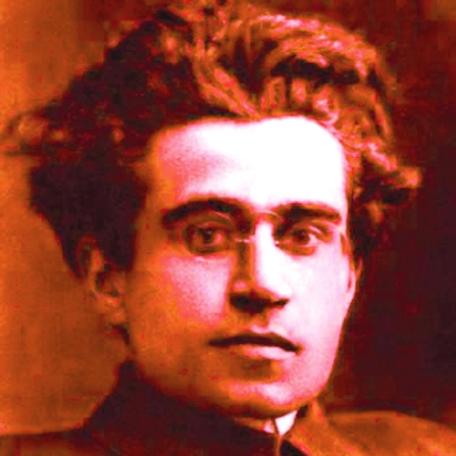
Antonio Gramsci (1891-1937): Gramsci's revolutionary insights into the nature of political authority are dramatically illustrated in the "counter-hegemonic" decision of 220 primary and intermediate school boards of trustees to challenge the "common sense" of the National Government's untested and widely criticised regime of "national standards".

THE MAN was considered so dangerous the Prime Minister had him jailed for 20 years. His crime? Heinous. He’d come up with a new way of explaining things.

The question he’d asked himself was simple. What makes people obey their governments?

On one level, the answer’s straightforward: because if we don’t obey our governments we end up – as he did – in jail.

At a deeper level, however, the answer is much more complex than that. Yes, the state enjoys a monopoly on the legitimate use of physical force. But, if you think about it, an exclusive reliance on force is a very inefficient and ultimately self-defeating way to run a country – just ask the Burmese generals.

A much more efficient way is to persuade people to obey their government voluntarily.

Our man’s great insight was that to secure popular obedience the state requires not only a monopoly on the use of force, but also a monopoly on what the overwhelming majority of the population regard as "common sense".

The man we’re talking about, Italian political theorist, Antonio Gramsci (1891-1937) described this state monopoly on common sense as "hegemonic".

This past week we have witnessed an open challenge to the New Zealand state’s hegemonic control. Two hundred and twenty primary and intermediate school Boards of Trustees (BoTs) have announced their intention to obstruct the Government’s policy of requiring all primary and intermediate schools to implement "national standards" in reading, writing and numeracy.

In what is fast becoming a classic Gramscian confrontation, the 220 BoTs (representing one tenth of the total) are contesting the common sense of the National Government’s policy.

In defence of their position they cite the research of leading educational scholars and point to the superiority of assessment mechanisms already in place. The real experience of teachers and pupils in school classrooms, they say, matches the data of empirical research in contradicting the claims of the Education Minister, Anne Tolley. According to the rebel BoTs, Ms Tolley’s claims are not rational but ideological.

But the Minister is not without ammunition of her own. To the mostly middle-class New Zealanders who support the National Party, requiring the nation’s primary and intermediate schools to focus on ensuring all children are proficient in the "Three Rs" is unquestionably a matter of common sense. To these folk, it is the BoTs and the teaching profession who are behaving "ideologically".

Gramsci would clap his hands in delight. Because the way in which the stand-off between the Government and its opponents is unfolding dramatically illustrates why the concept of "hegemony" embraces not only the struggle between state and citizen, but also the ideological struggle between antagonistic social classes over what exactly constitutes common sense.

The middle class, with its ready access to "cultural capital" (books, computers, overseas travel, family associations with the universities, professions and the arts) enjoys a strong advantage in education systems geared towards competition and ranking.

The working-class, with much less access to cultural capital, relies upon the public education system to make up the experiential deficit between itself and the middle-class. A focus on the process of learning, and on helping each student to master a steadily expanding range of skills, rather than a harshly competitive, pass/fail results-based pedagogy, is thus of much more benefit to working-class families.

That so many BoTs are willing to challenge the National Government’s education policies strongly suggests that it (and its middle-class allies) are losing the hegemonic struggle.

Perhaps the fierce, recession-driven competition for a dwindling number of high-paying jobs (and the social status that goes with them) and the not unrelated exodus of their children to Australia, is persuading more and more middle-class parents that the way New Zealand society is currently configured has very little to do with common sense.

Like Dr Don Brash and his colleagues on the 2025 Task-Force, Ms Tolley appears to be defending a version of common sense that has fewer and fewer adherents. This process of reality overtaking ideology, Gramsci dubbed "counter-hegemonic".

But the steady advance of counter-hegemonic thinking, Gramsci warned, could only end one way: in what he called a "crisis of authority".

Already in the dispute between Ms Tolley and the rebel BoTs we are hearing veiled references to the Ministry of Education’s extensive powers of to "discipline" those schools which refuse to come back into line.

Already, what Gramsci called the "mask of consent" is slipping, and beneath it the metallic gleam of the State’s monopoly on force is clearly visible.

And what happens when the citizens’ new definition of what constitutes common sense is resisted by the iron fist of the State?

Ah well, that is how Gramsci defined revolution. And that is why, at Gramsci’s 1926 trial, Mussolini’s fascist prosecutor told the Court:

"For twenty years we must stop this brain from functioning."

This essay was originally published in The Press of Tuesday, 9 November 2010.

Friday, 12 February 2010

Professional Standards

The Meat in the Sandwich: The National Government's determination to impose its education policies over the near universal objections of teachers and scholars has more to do with ideology than pedagogy - and New Zealand's children will pay the price.

WHO WILL WIN the battle over National Standards – and at what cost?

History suggests that in any confrontation between blue-collar workers and the forces of the State, the State wins. The historical record is not so clear, however, when it comes to confrontations between the State and professionally trained white-collar workers.

The stunning success of former Alliance MP, Laila Harré’s, "Nurses Are Worth More" campaign highlights the huge risk John Key and his National-led Government are taking by casting the New Zealand Educational Institute (NZEI) – the primary teachers’ professional organisation – as Public Enemy No. 1.

If the Government is eventually forced to back down, Key’s hitherto all-conquering reputation will be seriously damaged, and the political career of his Education Minister, Anne Tolley, will be over.

The use of the term "professional organisation" – as opposed to "union" – in this context is quite deliberate. White-collar workers with tertiary qualifications generally eschew the more proletarian designation "union" in favour of less inflammatory nouns like "organisation" (NZ Nurses Organisation), "association" (Public Service Association, Post-Primary Teachers Association, Association of Salaried Medical Specialists) or "institute".

The entirely voluntary nature of the membership of these professional bodies (which long pre-dates the Employment Contracts Act) is another pointer to their collegial status. Like the tradespeople of the so-called "craft" unions, the professionals’ primary goal is the preservation and refinement of the hard-won bundle of skills they have acquired. Proper recognition and remuneration for those skills is important – but it isn’t paramount. A carpenter’s identity derives from his craft – not his income. Teachers are no different.

So why on earth has John Key drawn the battle-lines over National Standards so crudely?

At a post-caucus press conference held in the Beehive Theatrette on 2 February the Prime Minister declared: "There will always be those that resist change, who fear increased accountability and who put their own vested interests ahead of New Zealand’s young people. We will not bow down to those critics."

Describing the NZEI as "a union protecting their [sic] members", Key went on to frame the issue as one of unaccountable teachers versus powerless parents and their ill-served children.
Parents, said Key, shouldn’t have to put up with "declining education standards, being kept in the dark about their children's progress or creeping political correctness in our schools."

This is an extraordinary statement – not only because all three of the charges levelled against the New Zealand education system and its teachers are false – but also because it sets forth in the most unabashed fashion the stridently ideological objectives of the Government’s National Standards policy.

An uncompromising commitment to "lifting education standards" – most typically by focusing on the "Three Rs" – has become a common feature of conservative party manifestos across the English-speaking world. That such policies have failed miserably wherever they’ve been introduced (most notably in the UK and the USA) has in no way lessened the enthusiasm of their right-wing promoters.

It’s this apparent indifference to the real-world harm inflicted by National Standards regimes upon the very children they’re intended to assist that betrays the conservatives’ true (albeit unacknowledged) objectives.

As the President of the NZ Principals Federation, Ernie Buutvelt, told Radio New Zealand on 3 February:

"Originally we were talking about standards for students and we were looking forward to what useful benchmarks we could make for that and suddenly its been turned into performance measures for teachers … Suddenly we’ve found where the Government’s original starting place was ... a tool to bash schools and blame teachers."

Modern conservatives’ obsession with disciplining teachers, and their profound dissatisfaction with the objectives and methodology of modern pedagogy, both stem from what they see as the profession’s deliberate failure to adequately prepare their children for the rigors of twenty-first century capitalist life.

Conservatism’s "tough love" approach to learning is neatly encapsulated in the "Why National Standards?" section of the party-political pamphlet currently being distributed (at the taxpayers’ expense) to the parents of New Zealand’s primary and intermediate schoolchildren:

"Many parents tell us", report the pamphlet’s National Party authors, "they’re not happy with the ‘politically correct’ and ‘sugar-coated’ school reports they receive."

Consider for a moment what’s being rejected here. These parents do not want the school to treat their children as unique, multi-faceted human-beings who will engage with the learning process in their own way and at their own speed. On the contrary, they want the school to treat their children purely as future components in the global economic machine. And all they want the school to tell them is how much bigger (or smaller) their little components are – compared to all the others.

This ruthless competitiveness gives the lie to the by-now-familiar conservative claim that all they want is for there to be "no child left behind", or, as Key puts it in the pamphlet:

"New Zealand deserves a future with more highly-skilled citizens, who have better job prospects, greater life choices and, in turn, who live in a society with less dysfunction, unemployment, welfare dependence and crime."

But such a future cannot be realised under a National Standards system which, by permitting the publication of "league tables" distinguishing "failing schools" from "succeeding schools", makes the elimination of the 20 percent "tail" of functionally illiterate and innumerate New Zealanders ever more unlikely.

The NZEI is more than equal to the task of explaining all this to the nation’s parents. Facts are stubborn things, and the more frequently and dramatically the NZEI places the facts before the communities in which its members live and work, the more untenable the Government’s position will become.

And if Key and Tolley remain unwilling to compromise with the NZEI (in stark contrast to their conciliatory approach to the Kura Kaupapa Schools) there is always the option of mass civil disobedience.

The Prime Minister may disavow any intention of seeking "a showdown in the courtroom", but the NZEI and the Principals Federation have the power to make him do just that.

Policemen carrying principals and primary school teachers out of their offices and classrooms and into waiting paddy wagons. How will that look on the Six O’clock News?

Boards of Trustees barring their school gates against the Education Ministry’s statutory managers? Is that the bitter legacy parents are seeking from the Government’s education policies?

Are those the "National" standards they’ll be voting for in 2011?

This essay was originally published in The Independent of Thursday, 11 February 2010.

Friday, 24 April 2009

The University (Fragment of a letter from November 1976)

The University of Otago, Dunedin.

I came to this place four years ago, young and eager to learn: to be awakened, stimulated, and to participate in the growth of man’s awareness of himself and his relationship to the other aspects of our existence.

What has happened to that young man?

He has learned that one is paid, by way of grading etc, not to think for himself.

He has learned that it is a battle against the university to maintain the spark of creativity and imagination – that is the price they want.

So much is involved beyond the essence of learning that education has taken second place in these institutions. They are just one more component of the Consuming Society in which we all live; processing plants that cunningly subvert people with the power to do far more, into doing far less.

These exams I’m about to sit are a great risk, not because exams are important in themselves, but because they are a symbol of something much more malevolent ….. There are always two communications implicit in what is said or done. Outwardly, universities give, but in reality they survive by burning up youthful energy, imagination, initiative. In return they give us a status – but this status is only viable so long as we remain within the boundaries the system has laid out for us.

Status, like words, defines things, limits them, and cuts them off from their true selves. The essence of wisdom is the dissolving of all definitions – this the Buddha may have agreed with. And isn’t it interesting that Christ chose fishermen to follow him? Only men such as these would have had the power to see what he represented. The power to see beyond the artificial cocoon that most of us spend our waking hours immersed in – especially here.

Yet, it is almost paradoxical, for this is what university has taught me.

I could not have learnt it anywhere else.

Monday, 23 March 2009

Not A Gentle Species

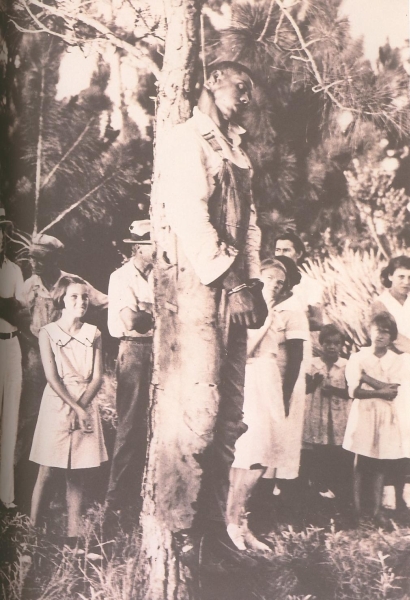
Strange Fruit: A Florida lynch-mob of the 1920s admire their handiwork. Human-beings exhibit a deep fascination with the public infliction of pain and violence.

I HEARD Cindy Kiro being interviewed on the radio the other day. The Children’s Commissioner was talking about bullying in schools. Towards the end of the interview, she said something which struck me as very funny: "Schools should prepare us for life", Ms Kiro declared.

I burst out laughing.

If schools really were about preparing us for life, they’d not only teach us how to endure bullies, they’d teach us how to become one.

What is a bully, after all, but a person who has embraced the basic principles of social organisation more ruthlessly than his or her peers?

Bullies intuitively grasp the brutal, but essential, truth that all human communities are held together by the threat, or, where the threat fails, by the actuality of violence. Experience has also taught them that when the weak are being bullied by the strong, most people will do absolutely nothing to protect them.

Indeed, history shows that human-beings exhibit a deep fascination for the public infliction of pain and violence.

Just examine the photographic record of the scores of lynchings which took place in the southern United States during the first three decades of the 20th Century, and you will be stunned by the participants’ expressions. Though they have just witnessed the torture, emasculation and incineration of a fellow human-being, you will find no traces of horror, fear or disgust upon their faces. On the contrary, they’re smiling broadly for the camera, and their eyes glitter with excitement. Even the faces of the children (some might say especially the faces of the children) wear expressions of fierce triumph and frank pleasure.

We are not a gentle species.

Millennia have taught us that when the powerful start exercising their power the smartest thing for those not involved to do is stand well clear. Those brave (or foolish) individuals who, in ages past, displayed their empathy too openly, or recklessly intervened on behalf of the victim, were clearly placing themselves at an evolutionary disadvantage. Incurring the wrath of the dominant individual, or group, is probably not the most effective method for ensuring one’s genes get passed on to the next generation.

Endorsing the bullies’ choice of victim may not rate highly in terms of ethics, but it’s an excellent survival strategy.

And it is this, the brutal logic of evolutionary advantage, which lies behind the behaviour of so many school principals when confronted with evidence of bullying. Punishing the strong, on behalf of the weak, makes absolutely no evolutionary sense.

Almost unconsciously, the people in charge of our schools – its dominant individuals – will align themselves (emotionally, if not formally) with the bully rather than the victim. In their heart-of-hearts they know that, in the world beyond the school gates, it’s the bullies who go places. They will be the managers, the bosses, the sergeant-majors and – yes – even the headmasters in the workplaces our children will enter upon leaving school. Punish the bully and, by implication, you condemn the intricate system of multiple hierarchies upon which our entire, unforgiving society depends.

So, you see why I laughed – not unkindly, but ironically – at Cindy Kiro and her stalwart ally, Rosslyn Noonan, the Chief Human Rights Commissioner. If they have their way (and in the face of the less-than-sympathetic Education Minister, Anne Tolley, I’m pretty sure they won’t) our schools will be transformed into islands of empathy, decency and justice in a vast sea of social brutality and indifference.

I can’t see it, myself. The fact that the bully’s right to an education is so clearly spelt out by the Education Ministry, while nothing at all is said about the rights of the victim should tell our idealistic Commissioners something about the State’s real priorities. It would certainly explain why, nine-times-out-of-ten, it’s the victims who are forced to leave the school in which they were attacked, and the bullies who remain.

Dear Ms Kiro! Brave Ms Noonan! They’d have us all behave in the "real" world, as they’d like to think our children behave at school. And, of course, the Commissioners are right: we should defend the weak from persecution and injustice; we should empathise with the laughed-at, the picked-on, the excluded and the "other". That should be the nature of the world into which our children sally forth.

Why shouldn’t they have something to teach us?

This essay was originally published in The Dominion Post, The Timaru Herald, The Taranaki Daily News, The Otago Daily Times and The Greymouth Evening Star of Friday, 20 March 2009.