Showing posts with label Environmentalism. Show all posts

Thursday, 12 March 2020

Jeanette Fitzsimons 1945-2020: An Assessment.

A Force For Good: Jeanette Fitzsimons stands firmly in the tradition of such high-minded intellectual reformers as Beatrice Webb in the United Kingdom, and Jane Addams in the United States: women who put their faith in the discoveries of science (the social-sciences in particular) and in the unimpeachable power of official statistics, rather than in the surging passions of the masses – down in the street.

JEANETTE FITZSIMONS’ DEATH brings to a close the political narrative which began with the Tony Brunt Values Party in 1972. In its essence, it’s been a story about principled expertise, cultural radicalism, and what later came to be known as “ecological wisdom”. Expressed in this truncated way, the most remarkable thing about the period traversed by Fitzsimons’ political career is that the interwoven strands of New Zealand’s green movement did not fray and snap.

Fitzsimons’ serene personality played a critical role in the Greens’ political coherence over her three decades of active involvement. Political leaders are not always calm and unflappable human-beings. Indeed, the preferred leadership style in New Zealand is the one that offers the voters hardness and decisiveness in equal measure. The Greens’ consensus-based decision-making is often dismissed as woolly-woofterish weakness. In reality, it is anything but. Few outside the Green Party appreciate the power of a patiently assembled super-majority – especially when wielded with a serene smile.

An political leader requires more than serenity, however, if she is to succeed. Knowledge and expertise also count for a great deal – especially in avant-garde minority movements like Values and the Greens. In this regard, Fitzsimons was a formidable protagonist. Her scientific training equipped her admirably for the unavoidable and often trenchant debates which her radical environmental and political agendas provoked. Against the defenders of the status-quo, and especially against the protectors of entrenched corporate interests, expertly marshalled facts and figures were the only rhetorical weapons capable of drawing blood. Fitzsimons always excelled in this kind of political warfare.

Her other great advantage owed nothing to these personal strengths. Simply by being born in 1945, she experienced all of the many benefits of growing up in post-war New Zealand. What’s more, she was perfectly positioned not only to imbibe all the heady cultural brews of the late-1960s, but to make sense of them. Twenty-seven, and already an academic high-flyer, when Tony Brunt launched the Values Party in 1972, Fitzsimons was the sort of asset any fledgling political movement was bound to welcome with open arms.

That intellectual heft is an important part of Fitzsimons’ and the Greens’ political genealogy. In terms of Twentieth Century progressivism, her role in Values and the Greens is analogous to that of historical figures from earlier in the century when progressivism – and a certain type of socialism – first gained its political momentum. She stands firmly in the tradition of such high-minded intellectual reformers as Beatrice Webb in the United Kingdom, and Jane Addams in the United States: women who put their faith in the discoveries of science (the social-sciences in particular) and in the unimpeachable power of official statistics, rather than in the surging passions of the masses – down in the street.

Not that there was any lack of passion in Fitzsimons’ love affair with the natural world. Indeed, it was from the natural harmonies and intricate balances of Nature that Fitzsimons’ drew her political inspiration. This always separated her, radically, from those on the traditional Left, who characterised their mission of uplifting the poor and oppressed as a struggle to overthrow and overpower not only the ruling-class, but Nature herself.

What little socialism there was in Fitzsimons (and, honestly, there wasn’t much) was the socialism of gentle folk like the British polymath, William Morris, who drew his inspiration from the organic communities of the Middle Ages. Not from the feudal aristocrats and their brutal retinues of knights and tax-collectors, you understand, but from the ministering monasteries and abbeys, and, most especially, from the guilds of medieval craftsmen. Less Karl Marx’s post-industrial utopia – more J.R.R. Tolkien’s Shire!

Much of the Traditional Left’s animosity towards the Greens was born of what they saw as the latter’s politically dubious love-affair with what the Germans call the volksgemeinschaft – the “people’s community”. In the eyes of these old-fashioned socialists and social-democrats, the Greens organicism smacked of a deeply conservative preference for human subordination to the “natural order”. Certainly, there remains a strong political tendency within the Green ideology to elevate pre-industrial indigenous cultures over the extractive and oppressive industrial societies of the colonialist-capitalist West. The Traditional Left didn’t just pour scorn on the Greens’ Morris-dancing because it looked silly – they took it as evidence of the Greens’ dangerous liaisons with all manner of reactionary ideas.

No one who ever visited Fitzsimons’ organic farm in the Kauaeranga River Valley was left in any doubt about her commitment to treading gently on the earth. Not even her staunchest critics – left or right – could accuse her of not walking her talk. If there was a reactionary element to her politics, then it was born of her scientific and moral rejection of Capitalism’s addiction to growth: an entirely justifiable reaction to the havoc which that addiction is unleashing upon the planet’s fragile ecosystems. It’s a reaction that goes all the way back to the Values Party: to the conviction that so long as Science remains under the control of unaccountable corporations, then its insights and discoveries will inevitably be turned towards violent, perverted, and, ultimately, life-diminishing ends.

As they used to say back around the time the Values Party was formed: “If this planet’s a corporation, it’s a corpse.”

What then, we are left to wonder, did Fitzsimons make of the Green Party in 2020? Did she see it as a source of pride, or as a cause for concern? Are those who have come of age, politically, in the years of Capitalism’s undisputed triumph more, or less, able to perceive the danger it poses to the future of all living things? Do they manifest the same acute ecological wisdom that enabled Jeanette to hold the party together for more than quarter-of-a-century? Do they walk lightly upon the earth, as she did? Or, do they just talk about it?

This essay was originally posted on The Daily Blog of Tuesday, 10 March 2020.

Friday, 22 November 2019

The Message From Messenger Park.

Coasters Turn Out In Droves: It’s precisely the widening gulf between those with actual experience of things like guns, chainsaws and drilling machines, and those who regulate their use, that accounts for the angry crowd at Greymouth’s Messenger Park on Sunday, 17 November 2019. In the rarefied atmosphere where decisions to shut down whole industries are made, hands-on experience is not only rare – it’s despised. What do workers know about anything?

THE NUMBERS WERE IMPRESSIVE. Indeed, it looked as is half the Coast had turned out to give this government a piece of its mind.

Many of those present wore their work-clothes. Lots of high-viz vests and brightly-coloured safety helmets – those universal signifiers of blue-collar labour – were on display. Hardly surprising. The West Coast has long celebrated its status as the birthplace of the New Zealand labour movement. Trade union historian, Bert Roth, dubbed its fiery founding fathers – Pat Hickey, Paddy Webb and Bob Semple – “Two-Gun Men from the West Coast”. Labour’s current MP, Damian O’Connor, has been called many things in his time, but a “Two-Gun Man” isn’t one of them!

About the only thing the modern Labour Party has to do with the region’s two-gun men is its grim determination to turn them all into One-Gun, or No-Gun, West Coasters.

It’s what makes law-abiding gun-owners so damned mad. Growing up with firearms invariably instils a strong ethic of care and responsibility in their users. Seeing up-close what a high-powered rifle can do to a deer or a pig makes sure of that. If the bureaucrats sipping coffee on Lambton Quay, most of whom have never fired a gun in their lives, understood that ethic, then they might be a little less fearful – and a lot less judgemental.

It’s precisely this widening gulf between those with actual experience of things like guns, chainsaws and drilling machines, and those who regulate their use, that accounts for the angry crowd at Greymouth’s Messenger Park. In the rarefied atmosphere where decisions to shut down whole industries are made, hands-on experience is not only rare – it’s despised. What do workers know about anything?

That’s the question isn’t it? What do workers know? The answer, of course, is “more than they think”.

For a start, they know that human-beings have been changing nature for millions of years. From the moment some brave ancestor pulled a burning branch from the edge of a blazing forest, our species ceased to be just another mammal. From chipping flint to smelting steel, humanity’s relentless drive to innovate and alter has granted it, in the solemn language of Genesis: “dominion over the fish of the sea, and over the fowl of the air, and over every living thing that moveth upon the earth.”

You don’t truly understand this truth until, using your own strength and skill, and the strength and skill of your workmates, you collectively transform your world. And that sort of truth: the knowledge you gain down in a mine or felling a tree: you won’t find in a book anywhere.

Workers know that all those people in the cities going on and on about “keeping the coal in the ground” don’t understand that without the high-quality coking-coal from places like the West Coast of the South Island of New Zealand, the world’s steel mills couldn’t function. Without steel there is no modern world. Without coking-coal we’re back in the Iron Age – cutting down whole forests to make the charcoal crucial to the smelting of iron and most other metals.

Workers know what civilisation is made of because they extract it every day.

Farmers are the same. They know what it takes to coax crops out of the ground. How much they are beholden to forces no human-being can ever truly tame or control. They also know what city dwellers pampering their pets in suburban bungalows do not. That the relationship between human-beings and animals has always been one of ruthless exploitation. As inescapable as it is irreducible: we consume them.

It’s a hard world – as hard as the callouses on the hands of those who work it. And there is precious little which the world is able to surrender to us without long and bitter struggle.

In the process of exploiting its plants, animals and minerals is humankind damaging this world? Are we ruining the atmosphere by wrenching from its bowels the fossil fuels that make our lives so much easier?  

The answer from the protesters of Messenger Park is “Yes.”, and “Yes.” And, unless we want to return to the day before that brave ancestor picked up that burning branch, they’re telling us to “get over it”. Nothing comes from nothing.

Nobody lives closer to Mother Nature than the people of the Coast.

It’s hard work.

This essay was originally published in The Otago Daily Times and The Greymouth Star of Friday, 22 November 2019.

Wednesday, 12 July 2017

Damning The Dam.

Dam Democracy 1982:  Thirty-five years on, and the National Party has been making threatening noises about executing another constitutional outrage in support of another dam. With just a couple of statements the Prime Minister, Bill English, and his Conservation Minister, Maggie Barry, made it clear that more than three decades of profound political change have made not the slightest impression on the National Party’s understanding of New Zealand’s constitutional proprieties. If the Ruataniwha Dam cannot be secured by hook, then this government stands ready to secure it by crook.
 
ABOVE THE CHAINS looped through the handles of the Dunedin Courthouse, the protesters had affixed a sign. “This Court is now obsolete, irrelevant, and just a nuisance. Accordingly it is CLOSED until such time as people no longer expect the law to protect their rights.”
 
Identical “Dam Democracy” notices were affixed to the padlocked doors of the Court of Appeal in Wellington and the Christchurch High Court. All were inspired by the passage of the Clutha Development (Clyde Dam) Empowering Act 1982. Having proved their case to the satisfaction of the Court of Appeal, opponents of the Clyde Dam had been forced to endure the sordid spectacle of Rob Muldoon’s National Government dragooning Parliament into overturning the Court’s decision. Hence the protests.
 
Thirty-five years on, and the National Party has been making threatening noises about executing another constitutional outrage in support of another dam. With just a couple of statements the Prime Minister, Bill English, and his Conservation Minister, Maggie Barry, made it clear that more than three decades of profound political change have made not the slightest impression on the National Party’s understanding of New Zealand’s constitutional proprieties. If the Ruataniwha Dam cannot be secured by hook, then this government stands ready to secure it by crook.
 
The common thread linking these extraordinary events is the National Party’s peculiar fetish for state planning and control. Once convinced that New Zealand’s future prosperity requires the implementation of a specific set of economic initiatives, the Nats’ adherence to “The Plan” puts the programmatic rigidity of the old Soviet Union to shame.
 
In the days of Rob Muldoon, “The Plan” was known as “Think Big”. New Zealand was going to become self-sufficient in energy off the back of a number of huge development projects – of which the damming of the Clutha River at Clyde was the largest. “Think Big” did not stop at vast hydro-electric schemes and synthetic fuel plants, however. With the additional energy Muldoon proposed to power steel mills and a second aluminium smelter. The latter was to be built at Aramoana – at the mouth of Otago Harbour.
 
The environmental impact of “Think Big” was deemed to be catastrophic, but Muldoon’s National Government turned both a blind eye and a deaf ear to the consequences of “The Plan”.
 
Under John Key and Bill English, “The Plan” is all about the intensification of primary production – especially dairying. But, whereas Muldoon was following the economic policies of industrialisation and diversification promoted by, of all people, the left-wing economic nationalist, senior civil servant and historian, William B Sutch; the plan chosen by Key and English represents a reactionary, Federated Farmers-inspired retreat into the worst kind of price-dependent pastoralism.
 
Like “Think Big”, the Key-English Plan came with catastrophic environmental side-effects. The massive expansion of New Zealand’s dairy industry could only be accomplished by supplying transitioning farmers with huge quantities of heavily subsidised water. State-funded – and protected – irrigation schemes formed an integral part of the Key-English Plan.
 
The constitutional consequences of “The Plan” soon became apparent. When ECan – The Canterbury Regional Council – balked at signing-off on the all-too-obvious ecological devastation associated with implementing water policies aimed at increasing the number of dairy cows in the region from less than 50,000 to nearly half-a-million, the National Government simply dismissed the councillors and brought in commissioners. If the needs of Democracy and the needs of “The Plan” conflicted, then it would not be Democracy that prevailed.
 
For the ratepayers of the Hawkes Bay region the story was somewhat different. The balance of political forces on the Hawkes Bay Regional Council was (until very recently) narrowly, but firmly, in favour of constructing an irrigation storage dam at Ruataniwha. That the project would almost certainly end up poisoning the Tukituki River was not considered a sufficient reason to abandon the project. Indeed, an official report suggesting that the intensification of dairying which the Ruataniwha Dam would make possible represented a threat to the region’s ecosystem was recalled and rewritten.
 
In spite of the fact that the Hawkes Bay Regional Council had yet to secure possession of the land upon which the dam would be built, it is reported to have sanctioned the expenditure of approximately $20 million on ensuring that the project went ahead. Such was their faith in the Key-English Plan.
 
But, just like Rob Muldoon, they reckoned without the Courts. The Supreme Court’s decision striking down the Department of Conservation’s facilitation of the Ruataniwha project – like the Court of Appeal’s ruling against the Clyde Dam – leaves the National Government facing a hard choice: uphold the constitution, or, uphold “The Plan”.
 
It is unlikely that “The Plan” can be legislatively protected retrospectively before the General Election. New Zealanders are thus presented with an opportunity to deliver a judgement of their own. In 2017, Democracy can “Damn the Dam”.
 
This essay was originally published in The Press of Tuesday, 11 July 2017.

Thursday, 14 April 2016

Refusing Sanctuary: The Dangers Of Reflexive Left Syndrome.

Something Fishy Going On: The furore surrounding the Kermadec Ocean Sanctuary offers a powerful example of the political difficulties into which Reflexive Left Syndrome can lead a progressive political party. Almost overnight, the significant benefits to the global environment represented by the Kermadec Ocean Sanctuary have been put at risk for no better reason than that a determinedly commercial entity like Te Ohu Kaimoana wishes to reserve the right to harvest the Kermadec fishery.
 
THE LABOUR PARTY is at serious risk of, once again, succumbing to Reflexive Left Syndrome (RLS). Simply put, RLS causes progressives to respond predictably (and all-too-often counter-productively) to every issue affecting the Left. Those suffering from RLS do not wait for the facts; nor do they pause to consider whether their support for one part of the Left might put them at serious odds with another. Positions are fixed with precipitate haste, and room for subsequent manoeuvre and compromise is severely restricted. RLS nails its victims to the political spot: positions they frequently cannot abandon without incurring serious damage and/or ridicule.
 
The latest example of Labour succumbing to RLS involves the party’s position on the Kermadec Ocean Sanctuary.
 
At the First Reading of the legislation establishing the sanctuary, the vote in favour of this internationally acclaimed measure of marine conservation was unanimous. So far, so good. But, all it took for Labour to announce that it was “reassessing” its support for the legislation was a claim that it contravened the Maori fisheries settlement.
 
Te Ohu Kaimoana, the Maori Fisheries Trust, had announced that it was challenging the Crown’s actions in the High Court. Labour’s six Maori MPs, feeling obligated to defend their constituents’ rights under the Treaty of Waitangi (Fisheries Claims) Act of 1992, immediately began applying pressure to their Pakeha colleagues. References were made to the Seabed and Foreshore Act of 2004. With the party registering just 28 percent in the latest One News/Colmar brunton poll, Labour’s Maori Caucus wanted to know if it was intending to alienate their people’s electoral support all over again?
 
With typical haste, Labour succumbed to RLS. On 12 April, David Parker, Labour’s Environment spokesperson, and Kelvin Davis, its spokesperson for Maori Development, jointly issued a press statement declaring: “The lessons of foreshore and seabed must not be forgotten and the Crown should not by legislation run rough-shod over Māori interests.”
 
Exactly which Maori interests were being run roughshod over was not specified by Parker and Davis. That a number of “prominent Maori” (including Sir Tipene O’Regan and Dame Tariana Turia) had spoken out against the sanctuary was all that was needed for RLS to kick-in.
 
But, Parker and Davis were not the only people to issue a media release on this issue. The former leader of Mana Motuhake, and Alliance Cabinet Minister, Sandra Lee, had some very different thoughts to offer on Te Ohu Kaimoana’s attempt to prevent the establishment of the Kermadec Ocean Sanctuary.
 
“Te Ohu Kaimoana have a poor conservation record”, said Lee. “They openly supported illegal Japanese whale hunting in the United Nations Southern Ocean sanctuary when I was Minister [of Conservation] and probably still do. Perhaps they could focus their energy on helping our own unemployed rangatahi  [young people] to get on the water fishing their own quota instead.”
 
Certainly, Sir Tipene O’Regan’s response to Pakeha concerns about the fate of what he labelled “charismatic megafauna” [whales] could hardly be described as supportive.
 
The furore surrounding the Kermadec Ocean Sanctuary offers a powerful example of the political difficulties into which RLS can lead a progressive political party. Almost overnight, the significant benefits to the global environment represented by the Kermadec Ocean Sanctuary have been put at risk for no better reason than that a determinedly commercial entity like Te Ohu Kaimoana wishes to reserve the right to harvest the Kermadec fishery.
 
The Neo-Tribal Capitalist character of the forces pushing for the scrapping of the Kermadec Ocean Sanctuary has not been lost on Sandra Lee. Nor has the need for all the peoples of the Earth to challenge the right of commercial interests to plunder the planet’s living resources without let or hindrance. But Labour, rather than balancing carefully the respective claims of a vulnerable ocean eco-system, and a commercial Maori entity, has allowed its response to be dictated by RLS. They have rushed in like fools – and not in the defence of angels.
 
This essay was originally posted on The Daily Blog of Thursday, 14 April 2016.

Tuesday, 23 February 2016

Green Vote Down! Is History Repeating Itself?

Red Pressure: Is it possible that the same reckoning that caused Values supporters to return to the Labour fold in 1978 is at work again? Even in the era of Mixed Member Proportional Representation, have the supposedly redundant arguments of FPP reasserted themselves? Have centre-left voters come to the realisation that, if they want to get rid of John Key’s National-led Government, then they are going to have to push Andrew Little’s Labour into a credible second place?
 
THE GREENS’ DRAMATIC FALL in the latest Colmar-Brunton should be a matter of considerable concern to the whole party. If it continues, then we may see the Greens fall victim to the same political phenomenon that led to the demise of the Values Party.
 
Voting for Values peaked at the General Election of 1975 when it attracted 5.19 percent support. Not surprisingly, its members were ecstatic. Anticipating an even bigger surge of support in 1978, they began the process of firming-up and paring-down the policies contained in their extremely popular 1975 Manifesto, Beyond Tomorrow.
 
This turned out to be an unexpectedly fraught process. A large and well-organised fraction of the Values Party argued strongly that the system-changing objectives set forth in Beyond Tomorrow would never be acceptable to New Zealand’s ruling-class, whose power would have to be substantially diminished if the party’s core environmental policies were ever to be implemented.
 
This eco-socialist position did not sit altogether comfortably with the party’s pure ecologists, who believed that once people understood the scientific rationale for radically reorienting Western values, then radical change would follow naturally – and without the class conflict predicted by Values’ eco-socialist wing.
 
Better organised and superior in debate, the eco-socialists gained the upper hand, leading Values into the 1978 General Election with one of the most radical manifestos ever presented to the New Zealand electorate. The votes they hoped to plunder with this document were those of Labour’s more left-wing supporters. On paper, it seemed like a winning strategy.
 
What the eco-socialists hadn’t counted on, however, was just how fed-up the non-National-Party-voting half of the New Zealand electorate had become with Prime Minister Rob Muldoon. Under the First-Past-The-Post electoral system, the sort of oppositional vote-splitting which Values was advocating almost always ended up advantaging the incumbent government.
 
Recognising this, the left-wing idealists who had flocked to Values banner in 1975 underwent a decisive change of heart. In the name of getting rid of “Piggy” Muldoon, they were willing to abandon the idealistic dreams of Beyond Tomorrow. Accordingly, in 1978, the Values Vote almost exactly halved: falling from 83,241 to 41,220 – just 2.41 percent of the votes cast.
 
The eco-socialists’ strategy of taking on Labour had failed dismally. The pure ecologists rallied their supporters and drove the eco-socialists out of the party. But, if they were hoping that a Red purge would recover their fortunes, they were wrong. In the General Election of 1981, Values was more-or-less wiped out. From 41,220 their vote fell to a risible 3,460. In 1984, the party attracted just 0.20 percent of the popular vote. Game Over.
 
Values’ rebirth, as the Green Party, in 1990, saw it win an impressive 6.85 percent of the popular vote. The old FPP realities remained, however, and they were forced to join forces with the left-wing NewLabour Party in 1991 under the rubric of Jim Anderton’s “Alliance”. With the introduction of proportional representation in 1996, however, all the old FPP rationales against vote-splitting became redundant. In 1999, the Greens stood under their own banner and received 5.16 percent of the Party Vote – just enough to secure them 7 seats in Parliament.
 
Between 1999 and 2008 the Greens’ Party Vote fluctuated between 5.16 percent and 7.0 percent. With the defeat of Helen Clark’s Labour-led centre-left government, however, and the onset of what would be six years of internal conflict and lacklustre politics from Labour, the Green vote soared: from 157,613 Party Votes (6.72 percent) in 2008 to 257,356 Party Votes (10.70 percent) in 2014. It looked as though the old eco-socialist strategy of luring away Labour’s left-wing voters was on the point of being vindicated.
 
And then, in February 2016, Colmar Brunton’s pollsters registered a drop of 4 percentage points in the Greens’ numbers. The party had shed one third of its support: falling from 12 to 8 percent.
 
Is it possible that the same reckoning that caused Values supporters to return to the Labour fold in 1978 is at work again? Even in the era of Mixed Member Proportional Representation, have the supposedly redundant arguments of FPP reasserted themselves? Have centre-left voters come to the realisation that, if they want to get rid of John Key’s National-led Government, then they are going to have to push Andrew Little’s Labour into a credible second place – i.e. somewhere closer to 40 percent of the Party Vote than 30 percent?
 
If the answer to all these questions is “Yes”, then the Greens had better brace themselves. They have a lot further to fall.
 
This essay was originally posted on The Daily Blog on Monday, 22 February 2016.

Friday, 22 August 2014

Abandoning Science - And The Planet

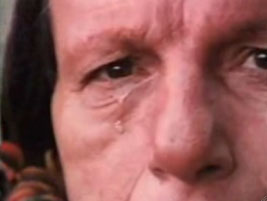
Weeping For The Planet: The famous "Crying Indian" advertisement, produced by Keeping America Beautiful, struck a deep chord with Americans when it first screened on "Earth Day" - 22 April  1971. It was a time when both the Left and the Right respected ecological science and were ready to take action to protect the environment. How times have changed. In 2014, right-wing politicians are unwilling to tolerate "any measures which are socialism masquerading as environmentalism".
 
MANY NEW ZEALANDERS are puzzled by the sudden descent of right-wing political parties into anti-environmentalism. Forty years ago, in the first flush of global ecological awareness, political parties of every ideological stripe were ready to put aside their differences for the sake of the environment. There was a strong bi-partisan agreement that, regardless of whether they were Left or Right, every human-being had a personal vested interest in improving the health of the planet.
 
It was a Republican President, Richard Nixon, who signed into law the National Environmental Policy Act of 1969, which, for the first time, required federal agencies to file environmental impact statements for federally funded programmes.
 
Nixon who oversaw, in 1970, the creation of the Environmental Protection Agency and signed into law the Clean Air Extension Act, imposing strict controls on airborne pollutants known to be hazardous to human health.
 
Nixon who, in 1972 offered whales, dolphins, sea otters, polar bears and seals the protection of the US Government by signing the Marine Mammals Protection Act.
 
Nixon who, likewise, presided over the passage of the 1973 Endangered Species Act and the Safe Drinking Water Act 1974.
 
Though a deeply conservative (and deeply flawed) politician, Nixon was a shrewd enough politician to grasp the electoral heft of the burgeoning environmental movement.
 
By the 1980s, however, political parties of the Right around the world were rapidly distancing themselves from the “environmentally friendly” legislative reforms of the 1970s. Ronald Reagan was no Richard Nixon.
 
The Right’s growing antipathy to environmentalism was fuelled by the world-wide ideological resurgence of laissez-faire capitalism. The so-called “New Right” was hostile to just about every kind of regulatory regime, but it was environmental regulation that earned its special ire. This was because the much admired dynamism of “the free market” was hugely dependent on the capitalists’ ability to “externalise” (i.e. not have to account for or pay for) the environmental and social consequences of their behaviour.
 
If capitalists were required to fully account for and pay for their detrimental impact upon the natural and human environments, then their profitability would be seriously (and in many cases irreversibly) reduced.
 
In the 1970s, political leaders like Nixon still felt obliged to respond to the voters’ pleas to save the planet. By the 1980s, however, the priorities of the Right had changed. The mission of conservative parties everywhere was now to convince voters that capitalism’s ultimate contradiction: the extraction of infinite profits from a finite planet; wasn’t really a contradiction at all, and that industrial capitalism’s most fearsome externality, anthropogenic global warming, was nothing more than “green propaganda”.
 
This was not an easy sell. Historically speaking, the rise of capitalism and the rise of science had coincided, spurring one another on to new discoveries, new applications. Persuading people to reject the science of global warming could only be achieved at the cost of abandoning the rationalist project itself.
 
But it was rationalism and science which had, ever since the eighteenth century, imbued capitalism with its progressive economic, social and political force. To reduce scientific knowledge to the status of exculpatory evidence bought and paid for; and scientists to little more than the servants of big business; would strip capitalism of its intellectual potency. It would mean abandoning what Professor Niall Fergusson calls its “killer apps” – the critical advantages that had enabled capitalism to see off all its ideological rivals.
 
These potentially fatal dangers notwithstanding, by the second decade of the twenty-first century it was possible for right-wing political leaders to win public office in spite of (or even because of) their refusal to accept the findings of environmental science.
 
Across the Tasman, for example, the Cabinet of the Australian Prime Minister, Tony Abbott, has proclaimed, with a straight face, that it is not prepared to tolerate “any measures which are socialism masquerading as environmentalism”.
 

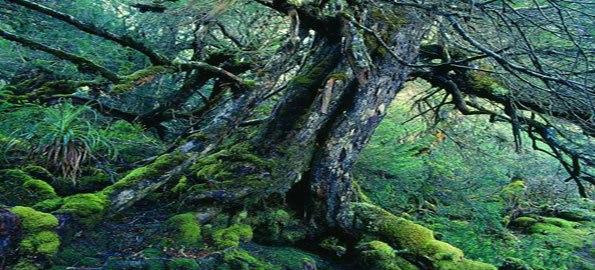
Who Speaks For The Trees? Ancient Huon Pine, Mt Read, Tasmania. These trees are among the oldest on the planet (3,000-10,000 years old).
 
Included among these allegedly “socialist” measures, is the World Heritage Status of both the Tasmanian wilderness and the Great Barrier Reef. In any stand-off between ecological science and Australia’s extractive industrialists it’s not difficult to predict who will win the Abbott Government’s support.
 
We shouldn’t feel too smug and superior, however, when it comes to our Australian cousins. Not when the difference between their right-wing politicians and ours is, as always, more a matter of subtlety than substance.
 
Environmental destruction masquerading as economic growth.
 
This essay was originally published by The Waikato Times, The Taranaki Daily News, The Timaru Herald, The Otago Daily Times and The Greymouth Star of Friday, 22 August 2014.

Monday, 21 July 2014

"Hot Air" Delivers The Cold Hard Facts About New Zealand's Response To Climate Change

Watch It And Weep: Alister Barry's Hot Air documents the losing battle, waged since 1990, between the politicians of good-will from both sides of the House who attempted to do something to mitigate the effects of climate change and the ruthless representatives of New Zealand's largest industries who opposed them.

IF YOU SEE only one film in the 2014 NZ International Film Festival see Alister Barry's feature-length documentary, Hot Air.
 
This chilling exposé of the strategy and tactics adopted by New Zealand's largest industries to ensure that no effective action to combat climate change is ever undertaken in this country should be viewed by every voter.
 
Hot Air constitutes one of the most persuasive arguments for radical, ruthless and rapid policy implementation on behalf of people and planet I have ever encountered.
 
The documentary proves conclusively that if a government opts for “business as usual” politics, then it is “business” that usually always wins.
 
Hot Air screens on the following dates at the following locations:
 
 
AUCKLAND
 
Friday 1 August  1:00 p.m.  Sky City Cinema
Saturday 2 August  3:30 p.m. Sky City Cinema
 
WELLINGTON
 
Thursday 31 July  6:15 p.m.  Paramount Cinema (World Premiere)
Wednesday 6 August 11.00 a.m.  Paramount Cinema
 
DUNEDIN
 
Friday  8 August  1:00 pm  Rialto
Sunday 10 August  1:15pm  Rialto
 
CHRISTCHURCH
 
Monday  11 Aug  6.00pm  Hoyts Northlands 3
Tuesday  12 August 11.00am  Hoyts Northlands 3
 
 
DO NOT MISS IT!
 
This posting is exclusive to the Bowalley Road blogsite.
 

Friday, 13 July 2012

Business As Usual: Labour Disowns "Uncompromising Dogma"

Politics Without Idealism: Paulo Zerbato's grim painting offers an acerbic commentary on the notion that political action can somehow be divorced from the ideals ("uncompromising dogma") which inspired it. In the face of inescapable moral challenges, it is "business as usual" (or as close to "usual" as you can make it) that paves the road to perdition.

“WE CAN’T AFFORD the luxury of uncompromising dogma.” The Green Party should write that down. It’s a direct quote from Labour’s deputy-leader and environment spokesperson, Grant Robertson.

He was speaking alongside (and keeping an eye on, a cynic might suggest) David Cunliffe at a “Labour and the Environment” forum held at the Titirangi Public Library on Saturday, 23 June. I took down Mr Robertson’s words because they were so obviously intended to alert all left-leaning political activists (including Mr Cunliffe) that Labour will be offering no hostages to fortune when it comes to formulating environmental policies for the 2014 election.

It’s worth spending a little time unpicking Mr Robertson’s statement. Obviously, his “uncompromising dogma” barb was directed at the environmental policies of other parties – but which ones?

Was he alluding to the National Party? Certainly, Mr Key’s government has a reputation for dogmatism when it comes to deep-sea drilling, the evils of trade unionism and the virtues of educational standards, but “uncompromising”? Mr Key’s many critics on the Right would strongly disagree. Indeed, it is precisely Mr Key’s willingness to back-track and compromise that so infuriates his detractors.

No, I do not think Mr Robertson’s rhetorical harpoon was intended for the National Party. His target wasn’t a blue whale, it was green.

Labour’s attitude to the Greens gyrates wildly between aggrieved toleration and rank hostility. Fundamentally, they regard the Greens as poachers: impudent trespassers on the Left’s ancestral lands and wilful perpetrators of electoral larceny. It’s what the hapless Clare Curran, Labour MP for Dunedin South, meant when she blogged, in August of 2011, about “attempts by the Greens to encroach on Labour territory”.

Labour looks at the polls: sees its own numbers rising; National’s falling; and the Greens’ tracking up. Clearly, some of National’s soft right-wing vote is drifting back to Labour, but, equally clearly, Labour’s left-wing support is shifting to the Greens. The policy implications of this right-wingers-in-the-front-door, left-wingers-out-the-back, political movement presents the Labour leadership with all kinds of headaches.

Reading the full text of his speech to the Titirangi meeting, it is clear that rather than see Labour go fly-fishing in the rivers of the Right, Mr Cunliffe would prefer the party to lower a net into the ocean of the 800,000 electors who declined to participate in the 2011 General Election.

In his speech, TheDolphin and the Dole Queue, Mr Cunliffe declares:

Getting the best long term outcomes will not always mean maximising short term profits. It can’t. Anyone who tells you it can is either stupid or lying … Do people … understand the costs of not adjusting and not planning for a better future? Do they understand that business as usual simply cannot continue?

The strategic thinking here is bold: align Labour’s policies closely with the Greens’ and let the two parties go fishing together for the disillusioned, the disengaged and, most especially, for the young.

Grant Robertson: Cautious political instincts.

Unfortunately, Mr Robertson’s more cautious political instincts adjudge this sort of thinking to be not bold but reckless. Mr Cunliffe’s recitation of the well-documented global hazards threatening the human species’ long-term survival, and his radical conclusion that “business as usual simply cannot continue”, all of it rings in Mr Robertson’s ears as “uncompromising dogma”. Such policies are all very well for minor parties like the Greens, but they simply will not do for parties that aspire to the status of New Zealand’s “alternative government”.

Such parties “cannot afford the luxury” of a radicalism that just might energise this country’s increasingly inert electorate. An alternative government committed to the notion that “business as usual simply cannot continue” would instantly attract the enmity of every entrenched industrial, commercial and financial interest in the land. It’s leaders would be pilloried, denounced, demonised. And, honestly, Mr Robertson has never struck me as a politician who would, voluntarily, risk any of those experiences.

That’s the message he’s conveying to his rival for the Labour leadership and, more importantly, it’s what he’s saying to the Greens’ co-leaders, Russel Norman and Metiria Turei. It’s a simple, and very brutal warning:

There’s a cabinet seat for you in the next Labour-led government, but only if you’re willing to leave your radical ideals [“uncompromising dogma”] at the door. Only if you accept that it will be ‘business’ as close to ‘usual’ as Labour can make it.

This essay was originally published by The Otago Daily Times, The Waikato Times, The Taranaki Daily News, The Timaru Herald and The Greymouth Star of Friday, 13 July 2012.

Tuesday, 26 June 2012

Rio + 20

Fingers Not yet Burnt: Only when the global environmental crisis is perceived as a direct existential threat will humanity take the steps necessary to address it. By then, of course, it will be too late.

WHO NOW REMEMBERS the 1992 “Earth Summit” meeting in Rio? Am I right in recalling that Al Gore was present? And weren’t we represented by the National Party’s smartest-ever cabinet minister – Simon Upton? It was all very worthy, not to mention predictable: the rain forests were disappearing; indigenous peoples were threatened; more and more species were endangered. And, as if that wasn’t enough, the Summit’s “Climate Change Convention” warned humanity that fossil-fuel emissions were heating up the Earth’s atmosphere.

All very important and urgent, but New Zealanders had other things on their minds back then. The effects of Ruth Richardson’s “Mother of All Budgets” and Jenny Shipley’s benefit cuts were all around them, and unemployment was only slowly coming off its 11 percent peak. For a great many people the survival of the planet came a poor second to the survival of themselves and their families.

Twenty years on and another Rio Summit is warning us that the condition of the planet’s wafer-thin biosphere, humanity’s incredibly delicate survival-suit, is deteriorating rapidly. And, again, the effects of a global economic crisis are dominating the headlines, banishing important environmental stories to the inside pages of our daily newspapers.

Do we care that global temperatures continue their relentless upward swing? Do we lament the extinction of entire species? Do we understand the dangers of out-of-control deforestation in the planet’s tropical zones? Of course we do. It’s just that we care about holding onto our jobs, paying our bills and looking after our kids a whole lot more.

As a species we are genetically programmed to recognise and repel immediate existential threats. The leopard in the long grass of the savannah; the firestorm swallowing up the forest; the cave bear rearing out of the darkness: these we can deal with. But the slow encroachment of the desert sands; the gradual decline in the river’s flow; the changing migration paths of woolly mammoths or caribou: these things proved more perplexing.

In the days before men drew lines on maps, people simply moved on to where the grass was greener, the rivers flowed more swiftly and the herds could be tracked and attacked in the same old ways. But today, one hundred millennia removed from our hunter-gatherer past, the human species numbers seven-thousand-millions, and moving on is not an option.

We must fight for our survival from where we are – and for most of us that means fighting in a city. It was only a few years ago that more than half of humanity ceased living in the countryside. If the planet is to be saved, it will be by people living in its urban environment.

The 2,400 representatives from Non-Governmental Organisations who attended the 1992 Rio Summit understood this very well. China and India were industrialising at break-neck speed and simply could not avoid drawing millions into the urban environments that manufacturing on a massive scale inevitably creates. They urged the developing countries’ governments to avoid the resource-depleting, pollution-generating automobile cultures of the West by prioritizing the provision of public transportation. Anyone attempting to navigate the streets of New Delhi or Shanghai will grasp how emphatically the world’s fastest-growing economies declined to heed their advice.

The determination of these economies to afford their consumers a Western life-style is entirely understandable, but it is also strip-mining Australia, Africa and South America of their natural resources, and sucking dry the world’s dwindling oil reserves. Unless the urban environment undergoes changes as dramatic as those which set this global environmental crisis in motion, its insatiable appetite, not only for minerals and fossil fuels, but simply for food and water, will crash the entire system of industrial civilisation.

The political representatives of late industrial capitalism seem incapable of understanding these existential threats. The only bears they’re willing to fight are those currently stalking Wall Street. It is to the representatives of enlightened humanity that we must, therefore, turn if the enemies of our common future are to be overcome: the Greens and those social-democratic parties still capable of stepping-up to the challenges of radical change.

Given New Zealand’s remoteness, and its relatively tiny population, the contribution we can make to saving the world will, necessarily, be limited. Perhaps the best gift we could offer our fellow human-beings is a positive example of the practical changes that need to be made.

The devastated city of Christchurch could play a vital role in this regard by modelling the sustainable urban environment the world needs to copy. There’d be a state-of-the-art public transportation system; ecologically intelligent architecture; urban gardens, self-sufficient small-scale energy generators connected to the national grid; water recycling schemes; and the conscious creation of resilient urban communities. (Hat-tip to Leanne Dalziel.)

The oft-quoted environmental slogan: “Think globally, act locally” could hardly be more relevant.

Let the future begin right here.

This essay was originally published in The Press of Tuesday, 26 June 2012.