Showing posts with label Foreign Investment. Show all posts

Tuesday, 31 October 2017

Passing The TPP Test.

Test Mission: The way in which Prime Minister Ardern and Trade Minister Parker conduct themselves at the TPP-11 discussions in Danang, Vietnam, will have a major bearing on how the new Labour-NZ First-Green Government is perceived by its supporters. To sign the TPP, without first fixing it, would be to "Fail" the first major test of the Coalition's political resolve.

IN JUST NINE DAYS, Prime Minister Ardern, and her Trade Minister, David Parker, will be in Vietnam. At a side-bar gathering to the Apec Conference that summons them, they will meet with the remaining 11 signatories to the Trans-Pacific Partnership (TPP). At that gathering, the New Zealand government will attempt to negotiate a number of minor modifications to the agreement.

Essentially, the Prime Minister and Trade Minister will be asserting their country’s right to prevent foreign speculators from purchasing urban property and farmland within its borders. A right the previous National government, for reasons it never adequately explained, failed to assert. A right reserved by just about every other signatory to the TPP agreement.

The Prime Minister and Trade Minister will also assert New Zealand’s right to renegotiate its predecessors’ acceptance of the Investor/State Dispute Settlement (ISDS) procedures of the TPP. These are the procedures which grant foreign corporations the power to sue the New Zealand Government for legislating in what it believes to be the best interests of its own people. Such litigation will take place in corporate-controlled tribunals, without reference to the New Zealand judiciary. Once again, the previous National government’s failure to defend this, the most fundamental duty of any sovereign state, awaits a convincing explanation.

Presented in this fashion, the mission of the Prime Minister and Trade Minister is not only an important, but also a necessary, act of remediation. In its present form, the TPP should never have been signed by the former National Government. Accordingly, any failure on the part of the remaining 11 signatories to accede to the Labour-NZ First-Green Government’s entirely reasonable requests for minor, country-specific, modifications (President Donald Trump has already pulled the United States out of what he dismissed as “a very bad deal”) should trigger New Zealand’s immediate withdrawal from the agreement.

What a pity, then, that the Prime Minister’s and Trade Minister’s mission is not being presented in this fashion. Ms Ardern and Mr Parker will depart for Danang shrouded in the same obfuscating clouds of free-trade rhetoric that have prevented the New Zealand public from ever being vouchsafed a clear understanding of the TPP agreement.

Rather than allowing an open and informed debate on the pros and cons of the TPP, the free-trade lobby is presenting Ms Ardern’s trip to Apec as a crucial test of her political and economic maturity. Any outcome other than New Zealand’s unequivocal ratification of TPP-11 will be publicly represented as a significant failure.

Even if the Prime Minister and Trade Minister manage to secure their desired modifications to the TPP text, the free-trade fanatics will still insist that the Labour-NZ First-Green Government has fallen at its first hurdle. By displaying hostility to globalism in general, and foreign investment in particular, the new government will be accused of endangering New Zealand’s economic security.

As if that wasn’t reason enough for Ms Ardern and Mr Parker to feel nervous, the opponents of an unmodified TPP are as likely to turn her trip to Vietnam into a critical test of her government’s intentions as its supporters.

The fight to turn Labour away from what its “free-trade-right-or-wrong” position under Helen Clark has been as gruelling as it was long. For those engaged in this fight, persuading the Labour caucus to take a firm position on the critical question of national sovereignty constituted a pivotal victory. Without it, Labour’s relationships with NZ First and the Green Party would have come under enormous strain. Indeed, had Labour not refused to sign-on to the TPP, as negotiated by the National Government, it is difficult to see the formation of a Labour-NZ First-Green government ever becoming a realistic possibility.

Labour’s opposition to TPP was also an important factor in deescalating the vociferous protest movement which reached its crescendo in February 2016. Had all the parties committed to changing the government not been more-or-less on the same page in relation to the inadequacy of the National Party’s TPP, it is debateable whether or not the massive protest demonstrations it was beginning to inspire would have proved so easy to wind down.

To the New Zealanders who feared that TPP would bring with it a permanent loss of their nation’s sovereignty, the following words from Labour were a source of considerable reassurance:

“The TPPA will have ramifications for generations of New Zealanders. For their sake, we should not so lightly enter into an agreement which may exacerbate long-term challenges for our economy, workforce, and society.”

The votes that made the Labour-NZ First-Green government possible were inspired by many factors. That the three parties’ common opposition to the TPP was one of then cannot be disputed.

As Ms Ardern and Mr Parker wing their way to Vietnam, they should consider very carefully whose test of free-trade principles they most wish to pass.


This essay was originally published in The Press of Tuesday, 31 October 2017.

Tuesday, 21 July 2015

Foreign Investors.

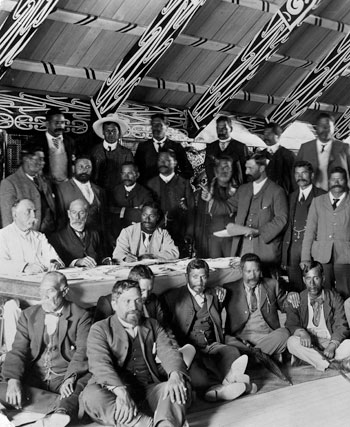
Foreign Investment: The Native Land Court transferred more land from Maori to Pakeha than Queen Victoria's regiments ever managed. Without land, no people may be counted free. Restricting the access of foreigners to New Zealand real estate isn't about racism - it's about the preservation of our national sovereignty.
 
IT IS THE EARLY 1860s in the Waikato. A Maori newspaper editor, and fervent supporter of the Kingitanga movement, has a great idea for a story. He summons his best journalist and explains what he has in mind.
 
“I want you to travel to all the major cities,” he says, “visit the Land Registry offices, and discover the identity of everyone who’s been purchasing land that formerly belonged to Maori.”
 
“That’s a pretty expensive exercise, Boss”, the young journalist replies, “especially when we both know what the answer will be.”
 
“You’re right,” says the editor, “but I need more than mere conjecture, more than just anecdotal evidence. What I’m looking for are cold, hard facts! Under the Treaty of Waitangi, we Maori can only sell land to the Crown. But who is the Crown selling it to? Is it being sold to New Zealanders? Or is it being purchased by foreigners with huge sums of money to invest? That’s what I want you to find out.”
 
“Hmmmm?” The journalist responds, doubtfully. “I’m not sure the Pakeha keep that sort of information.”
 
“Yes, yes, I’ve thought of that. What I want you to do is look at the surnames of the purchasers. That’ll give you are reasonably good steer. After all, somebody called McKenzie is unlikely to be of Tainui descent, is he?”
 
“No. But, there are quite a few McKenzies already here in New Zealand. How are we supposed to sort out the local sheep from the foreign goats?”
 
“I’ve thought about that, too”, says the Editor, warming to his theme. “What percentage of the total population do you think the Pakeha currently comprise – especially here in Te Ika A Maui?”
 
The young journalist scratches his head. “Surely not much short of 4 in 10? With more arriving all the time. It would be higher in Te Wai Pounamu.”
 
“Exactly so!”, says the Editor. “So, if your research shows that 8 out of 10 purchasers of former Maori lands has a surname like McKenzie, or O’Reilly, or Twyford, then doesn’t it stand to reason that overseas British investors are disproportionately involved in buying up this country from under the feet of its original inhabitants? That we Maori are fast becoming tenants in our own land?”
 
“Actually, Boss, I’m not sure it does. Couldn’t it mean that the British settlers already here are just buying up as much land as they can – as quickly as they can get their hands on it?”
 
“Oh come on!”, the Editor snorts derisively. “Most of the Pakeha disembarking at the ports don’t have a pot to piss in! Where are they going to get the money to buy land?”
 
“I’m not talking about the ones who come in steerage, Boss. I’m talking about the ones who make the voyage in private cabins. The youngest sons of good English and Scottish families who arrive here with a very healthy bank balance – courtesy of Papa back in London or Edinburgh. They’ve got plenty to spend.”
 
“Alright. But even if that’s true, the result is exactly the same – isn’t it? They apply to the Crown, and the Crown obliges them – at our expense.”
 
“But only so long as we go on selling our lands to the Crown, Boss. I mean, who else are they going to buy land from in these islands – if not from Maori? Isn’t that the whole point of the Kingitanga? To stop the sale of any more Maori land to the Crown?”
 
“Yes, of course it is! Which is why I want you to write this story for me. To give the Kingitanga the facts about what’s happening to their whenua – to their future!”
 
“The Settler Government in Auckland isn’t going to like a story that singles them out on the basis of their surnames”, the young journalist observes, ruefully. “They’re going to point to it as yet more evidence of Maori mischief-making. Yet another reason why the Governor should send troops south to destroy the Kingitanga.”
 
“No! No! Governor Grey will never make war upon the Maori people. He is a good man. He believes this country can only be improved by British capital and Maori enterprise. He also recognises the importance of Maori autonomy – he made provision for it in the Constitution Act!”
 
“He did, Boss. Yes. But the settlers seem ill-disposed to granting us that autonomy. And, I think I know why.”
 
“Tell me.”
 
“Because they want everything, Boss. Not just what Maori consent to sell them – but everything. Just think of how much we depend on them for already – and it’s only going to get worse. There’s millions of them, Boss – numbers our language has no words for. And we’re in their way.”
 
The Editor turned and gazed out over the lush Waikato countryside. There were tears in his eyes.
 
This essay was originally published in The Press of Tuesday, 21 July 2015.

Thursday, 16 July 2015

Perilous Whites: Labour, China and the Liberal Intelligentsia.

Wiring Problems: What makes it so difficult for the Liberal Intelligentsia to see what is happening to their country; to its people; to its assets; when it is all unfolding before their very eyes? Is it possible that the answer really is, as they insist, racism?
 
THE OUTCRY precipitated by Labour’s critique of overseas Chinese investment in the Auckland housing market is profoundly disturbing. The “Liberal Intelligentsia” (to use Steven Joyce’s term) has reacted to Phil Twyford’s and Rob Salmond’s data as if this is 1915, not 2015.
 
China’s revolutionary self-emancipation and her transformation into a global economic superpower – a process spanning the whole of the twentieth century – appears to have passed the Liberal Intelligentsia by entirely. It’s as though they are still living in the days when most Chinese New Zealanders were green-grocers and market-gardeners. When Pakeha children intoned racist rhymes about “Ching-Chong-Chinaman”, and their parents openly parroted the prejudices of those earlier generations of New Zealanders who had erected a viciously discriminatory legislative cage to contain the “Yellow Peril”.
 
The liberals seem blissfully unaware that the period in which tens-of-thousands of economic refugees poured out of a China in search of safety and the chance to build a better life ended more than half-a-century ago. The Chinese immigrant of today arrives with capital to invest, a factory to build and/or a business to run. And the New Zealand government is only too eager to assist. Indeed, in 2015, it’s the Kiwi exporter heading north who travels in hope of a better deal. And his destination is a hundred years distant from the China laid low by the superior firepower of Western imperialism. We are the supplicants now.
 
Carve Up: In this turn-of-the-19th-Century cartoon, a helpless China protests the imperial powers' carve up of its territory and resources. A century later China's position in the world has changed dramatically.
 
The failure of the liberals’ historical imagination is even more astonishing when one considers how very loudly they have proclaimed their support for tino rangatiratanga. Their outrage at the thought of the indigenous Maori people of New Zealand being relieved of their lands, forests and fisheries by rapacious British colonists was awesome to behold. And it mattered to them not at all that most of these real estate transactions were without legal blemish. How quick the Liberals of the 1970s and 80s were to remind us of the words of the Lakota War Chief, Red Cloud: “The white man made us many promises – more  than I can remember, but he never kept but one: he promised to take our land – and he took it.”
 
All of which raises a very interesting question: what makes it so difficult for the Liberal Intelligentsia to see what is happening to their country; to its people; to its assets; when it is all unfolding before their very eyes? Is it possible that the answer really is, as they insist, racism?
 
If racism is at work in this matter, then it is not in the Labour Party. No, the racism at work here is born of the towering arrogance and ignorance of the Liberal Intelligentsia itself. So sure are these people of their own superiority that they simply cannot accept that in this little corner of the world, at least, the power of the West is waning. That white, well-educated, urban professionals, like themselves, are no longer calling the shots in New Zealand. That, for some time now, the future of this country has been decided thousands of miles from these shores – where New Zealanders don’t get a vote. These blissfully unconscious racists still see Chinese New Zealanders in terms of a helpless minority to which they, with infinite condescension, are duty-bound to extend their protection – as if the “victims” are still green-grocers and market-gardeners. The idea that it might be the Chinese who, increasingly, are calling the shots in New Zealand, is beyond their comprehension.
 
Raybon Kan’s brilliant essay in this morning’s Herald said it all. We Kiwis have become so smug, so insular, so convinced that we have all the answers, that we have failed to notice how very large and dangerous the world has grown. Land will always end up in the hands of those who best appreciate its value. If we are unwilling to assign a credible price to our little paradise at the bottom of the world, then there are millions of other human beings out there who will happily do it for us.
 
That is all Labour’s politicians are trying to say. It is a fact of real political importance that the Liberal Intelligentsia can no longer hear them.
 
This essay was originally posted on The Daily Blog of Wednesday, 15 July 2015.

Friday, 21 March 2014

Rapt In History

The Mill House, Waianakarua: Constructed in 1879 by a German immigrant, Ernst Diehl, the massive building is now an accommodation-restaurant complex. Born amidst treachery and tragedy, the mill stands as a symbol of both continuity and change in the Herbert-Waianakarua District.

THERE ARE PLACES where history wraps around us like a warm blanket – or a winding sheet. Sometimes, like both at once. The Mill House, located 25 kilometres south of Oamaru on State Highway One, is one such place.
 
Originally a flour mill, it was constructed in 1879 by a German-born immigrant named Ernst Diehl – and it was built to last. According to a contemporary report in the North Otago Times: “The foundation is laid on solid rock, and is 9 feet in depth, the walls being 3ft 3in in thickness.”
 
Alas for Herr Diehl, his mighty structure had hardly been standing a year when it was beset by treachery and tragedy.
 
In the words of local historian, Dorothy McKenzie: “A considerable amount of money was held in the mill safe over the summer, so that farmers could be paid out as they delivered their bags of grain. At the height of the first season of operations, the mill was burnt out and as the local story has it [Diehl’s business partner] Davidson had disappeared, leaving an empty safe behind him.”
 
The Mill may have been burnt out but it was not burned down. Under the management of the appropriately named Phoenix Milling Co., the refurbished mill continued to grind flour for another 60 years, finally closing its doors in 1939.
 
Growing up in the neighbouring village of Herbert in the 1950s and 60s, I remember the mill as a mysterious industrial ruin. Massive and seemingly indestructible it guarded the graceful span of the Waianakarua stone bridge like some misplaced medieval castle. Its blank windows shedding less and less light on a story that fewer and fewer people could remember.
 
Now an “accommodation-restaurant complex” the Mill House wraps its 3ft 3in walls around visitors from all over the world. New stories are daily being added to the old.
 
For me, also, this past week has been a mixture of new and old stories. One-hundred-and-fifty years ago, on 15 March 1864, the contemporaries of Ernst Diehl founded Otepopo (Herbert) School. Aging adults, who, when last I saw them were children, came from as far away as Sydney, to greet the geographic, architectural and human strongholds of their youth.
 
From them I learned how many of the farms of the original settler families had already passed – or were passing – into the hands of faceless foreign corporations. “Bewley”, the property my father farmed, I was told, had gone with them.
 
The great forest that the State had spread over the hills above Herbert in the 1930s is now in the hands of an American forestry firm.
 
Herbert’s beautiful Presbyterian church, St John’s, stands forlorn, its future uncertain. Spiders’ webs seal its padlocked wooden doors.
 
This is not, of course, a tale familiar to North Otago only. All across New Zealand the solid signposts of the past are being dismantled. The family farm, which for 150 years has given this nation a foundation as solid as the Mill House’s, is rapidly fading away.
 
Only a handful of the children I attended Otepopo School with remained in the district. Most were scattered, like gulls blown on a boisterous wind, to Sydney, London, the North Sea, Wyoming. Or simply to places in New Zealand with more to offer than a sleepy North Otago township.
 
But those children did not leave Herbert empty-handed. The values imparted by the teachers of Otepopo School and the ministers of St John Presbyterian Church went with them.
 
And not just with them; because the same values were also imparted to successive generations of New Zealand children by thousands of equally caring rural teachers and clergymen, farmers and farriers; railwaymen and road workers; shopkeepers and country GPs.
 
And now those New Zealanders, rural no longer, are imparting to their own offspring a core of values not so very different from the ones they learned in little places like Herbert up and down the long length of Aotearoa.
 
Thus does history wrap us warm in its blanket, and bind us tight in our winding-sheet.
 
And thus did my thoughts run as I looked down from a window set in the Mill House’s 3ft 3in walls. Listening to the Waianakarua River chuckling in its sun-dappled bed, and the bell-birds tolling the hours.
 
Thinking about where New Zealand has come from – and where it is going.
 
This essay was originally published in The Waikato Times, The Taranaki Daily News, The Timaru Herald, The Otago Daily Times and The Greymouth Star of Friday, 21 March 2014.

Friday, 20 July 2012

Heading Backwards?

Missionary Zeal: Labour's finance spokesperson, David Parker, seems to be on a mission to reassure the New Zealand business community that a Labour Government will not deviate in any alarming way from the prevailing economic orthodoxy.

“I’M BECOMING INCREASINGLY CONCERNED at the Labour Caucus (and Leader) moving Labour to the Right,” observed a former Labour MP recently in an e-mail to a Labour friend and trade union stalwart of many decades standing. “As a long-time Labour Party member/activist, I find it disturbing to think the Labour Caucus is heading backwards to the Rogernomics era that was so damaging to NZ communities. Comments made by various MPs at the latest Labour Caucus Dinner at Waitangi last week did not reassure me.”

Alas, I have yet to learn what those “various MPs’” were talking about. What I do know, however, is that those who share this former MP’s concern at their party’s political direction don’t need to eavesdrop on the dinner conversations of Labour’s caucus to discover where it’s going. Labour leader, David Shearer, and his finance spokesperson, David Parker, have been telling New Zealand loud and clear, and in public, for weeks.

Speaking to a group of corporate head-hunters on 11 July, Mr Parker spelled out the details of Labour’s policy on foreign investment. Concerned to prevent “infrastructure assets with monopoly characteristics” from being sold to offshore buyers, Labour, in the run-up to last year’s election, drew up a “closed list” – to keep a “bright line” between “what is to be sold and what is not.” Among the infrastructure that was not to be sold was any: electricity line, water storage or irrigation networks; no seaports or airports; and no public hospitals, schools, railway lines or roads.

Not included in Labour’s “closed list” were telecommunications networks and – amazingly – “electricity generators”.

According to Labour’s policy:  “While the electricity market is on the cusp of becoming uncompetitive and exhibits monopoly-like characteristics, generation assets are diverse in nature, location and ownership.”

What this means is that although Labour went into the last general election on a policy of “No Asset Sales”; and in spite of the fact that its campaign advertising showed a vast banner, displaying that very message, being draped over a hydro-electricity generating dam; the party was unwilling to include electricity generators on the list of state-owned infrastructure that “ought to be run in the New Zealand interest” – and never be sold to foreigners.

Am I alone in thinking that Labour’s foreign investment policy fatally compromises its current campaign against asset sales? If the generation of electricity is an activity which properly belongs to the market, and if New Zealand’s electricity generation assets are “diverse in nature, location and ownership” and, therefore, able to be purchased by foreign interests, then I’m at a loss to know why the Labour Party is opposed to their partial privatisation.

Perhaps opposing the sale of state assets is just (if I may quote the former Labour cabinet minister, Steve Maharey) “One of those things you say in Opposition, but forget about in Government”. Certainly, the decision to keep state-owned energy generators off Labour’s “closed list” would explain why Mr Shearer keeps telling New Zealanders that: “Once they’re gone, they’re gone for good.”

I like David Shearer, he’s a good, down-to-earth Kiwi bloke. But, I also fear him. Why? Because he’s been so easily persuaded that what’s wrong with New Zealand can only be fixed by inflicting radical and wrenching change on ordinary working people. (As if ordinary working people have spent the last twenty-five years living with anything else!) He scares me because he and the people he listens to lack the courage to devise a manifesto that imposes the radical and wrenching change where it belongs – on the rich and powerful. And, like the former Labour MP quoted at the top of this column, I’m concerned that those voters too young to remember the devastation wrought by the ideas of Roger Douglas are about to let Labour’s present leader give them another go.

Mr Shearer’s convinced we’ve a “good chance” of becoming “a twenty-first century peasant economy” if he doesn’t. I’m concerned that’s exactly what we’ll become if he does.

This essay was originally published in The Dominion Post, The Otago Daily Times, The Waikato Times, The Taranaki Daily News, The Timaru Herald and The Greymouth Star of Friday, 20 July 2012.

Thursday, 7 October 2010

Executive Obligations

The service of their swords: For your average medieval knight the essence of the feudal deal was pretty simple: the land was yours, but only for as long as you were willing and able to protect it - along with all those who lived on it and off it. It's taken far too long, but finally our National Party lordlings have realised that if they cannot defend New Zealand's farmland their political tenure will soon be forfeit.

THERE WAS A TIME when the ruling elites had to put their money where their mouths were. More to the point, if they wanted to go on ruling (let alone remain one of the elite) they had to put their lives where their money was.

Back in the Middle Ages, if you weren’t willing to defend your own and your dependents’ lands, then in the eyes of your fellow aristocrats, your men-at-arms, your tenants and most especially your serfs, you weren’t fit to hold them.

That’s because the protection of land – the resource upon which everyone ultimately depends for survival – was the very essence of the feudal system. The serfs, who made up most of the population and supplied all the food, owed many kinds of services to their lord. But their lord, by the same feudal token, also owed services to them.

This reciprocity had a name: noblesse oblige. The obligations of nobility.

And the most important of these was the obligation to defend the demesne: the lands apportioned to lords by their master – the King. Above and beyond all other services, a feudal aristocrat owed his liege-lord (from whom he received the property and people entrusted to his care) the service of his sword.

Even today, defending the source of the people’s wealth and welfare is the sine qua non of executive responsibility. A lord who refuses to defend his demesne is traitor to both his King and his people.

How pleasing, then, that our own "feudal lords" – John Key and Bill English – have finally rendered us the service of their regulatory swords. What remains of this country’s productive farmland: the demesne apportioned to them by their liege-lord and sovereign – the New Zealand people – will not, now, be permitted to fall into foreign hands.

Not that we serfs should forget how much urging it took to recall these lordlings to the obligations of their democratic ennoblement. Nor should we overlook the startling fact that under the stewardship of those wearing Labour’s livery the Overseas Investment Office permitted foreigners to purchase an astonishing 650,000 hectares of the people’s demesne.

The Wearers of Red, who today criticise the Wearers of Blue for their tardiness in addressing the problem of strategic resource alienation, had nine years to redraft the legislation governing the scale and scope of foreign investment in New Zealand – and did little more than tinker around the edges.

But perhaps we shouldn’t be too hasty in condemning our political masters. Considering the multitude of evil counsellors whispering in their ears, it’s surprising we have any land left at all.

What advice do you suppose the foreign moneylenders are offering them? What demands are being made by our desperately indebted farmers? How many of them can afford to refuse the foreigners’ proffered gold?

And what about the mad monks of Treasury – and their even more ascetic brothers in the Business Roundtable? Having compelled us all to wear the hair-shirt of deregulation and the flesh-biting cilice of free trade, they are still urging our leaders to surrender what’s left of New Zealand’s patrimony to the Holy Church of Globalisation.

That the Prime Minister and his Minister of Finance refused to be swayed by such evil counsels is cause for celebration. But, while we are praising our lords for the service of their democratic swords, let us also offer up a word or two of thanks to the Crafar family.

Had their debt-laden farms not come so close to passing forever into foreign hands, it is very doubtful whether we inattentive serfs or our indifferent lords would ever have become sufficiently roused to rise in defence of our beleaguered demesne.

Having lifted not one finger to save the 650,000 hectares that disappeared into foreign ownership over the past decade, the pledge of every citizen, and every political party must now be: New Zealand for New Zealanders!

Whoever seeks to purchase New Zealand farmland must agree to live on it – or look elsewhere.

This essay was originally published in The Dominion Post, The Timaru Herald, The Taranaki Daily News, The Otago Daily Times and The Greymouth Evening Star of Friday, 1 October 2010.

Thursday, 15 July 2010

Pro Patria

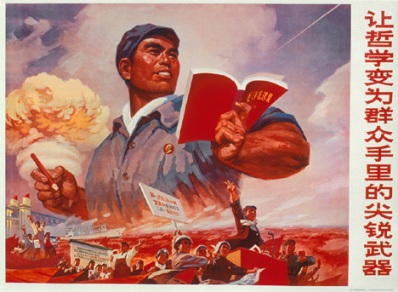
"China has stood up!": Mao Zedong's revolutionary nationalism (masquerading as Marxism) empowered the Chinese people to shrug-off both the European and Japanese imperialists who had subjugated and exploited their country for more than a century. They must find New Zealanders' willingness to sell their most valuable economic resources to foreigners deeply perplexing.

HAS NEW ZEALAND become a "creepily nationalistic" country? Is xenophobia running rampant in the heartland? At what point, exactly, does love of country become a disease?

It’s always struck me as odd that both the extreme Left and the extreme Right have no love of borders. Whether it be Karl Marx’s ringing exhortation for "workers of all lands" to "unite!"; or the proud boast of free marketeers that globalisation has made the nation state "redundant"; poor old Patria has been getting it in the neck for the best part of 150 years.

Fortunately Patria – literally, "the land of our fathers" – has a pretty tough neck.

The Socialist International, in the years leading up to the outbreak of World War One, worked hard to ensure that if the worst happened, and war did break out between the Great Powers, proletarian internationalism would trump the nationalist’s call to arms. "The bayonet", cried the socialists, "is a weapon with a worker at both ends."

But in August 1914, when the mobilisation orders were posted, workers of all lands rushed not to the barricades, but to the railway stations and the recruitment offices. The International’s call to stand shoulder-to-shoulder with the workers across the borders was drowned out by the cries of: "La Patrie en danger!"

The bayonet turned out to be what it had always been: a weapon with "Us" at one end – and "Them" at the other.

The clarion call to internationalism rang out once again in August 1991, when actually existing socialism "in one country" (and its satellites) suddenly withered away.

The disintegration of the Soviet Empire, boasted the American neoliberal scholar, Francis Fukuyama, signalled not only "the end of history", but the inevitability of globalisation. The triumph of free market capitalism and liberal democracy, he predicted, would set humanity on course for a borderless world.

Ten years later, nineteen young men – apparently unconvinced by Mr Fukuyama’s thesis – demonstrated that history wasn’t quite dead by flying their hijacked airliners into the World Trade Centre and the Pentagon.

America’s response was instructive. Less than a month after 9/11 the US Congress passed the Patriot Act, and President George W. Bush established the Department of Homeland Security.

Turns out borders mattered after all.

So, is nationalism really as "creepy" as the Auckland business community’s glamorous correspondent, Deborah Hill Cone, suggests? Or, is Patria’s claim to our love and loyalty as strong and as natural as that of our own parents’? And, is being "Pro Patria", or, to set this whole discussion in its proper context, taking a lively interest in who is, and isn’t, permitted to purchase large tracts of New Zealand farmland, really the same as xenophobia?

The short answer, according to Property Council New Zealand’s Chief Executive, Connal Townsend, is "Yes."

Interviewed by Radio New Zealand’s Checkpoint programme, Mr Townsend said that "there’s a real danger in pandering to a kind of ignorant, racist and xenophobic anti-foreigner feeling in this country, and not actually thinking sensibly about what’s actually best for our nation."

Ms Hill-Cone is even more explicit: "On the chattering classes dinner party circuit it is acceptable to be downright racist against Chinese interests buying land here".

I suspect the Chinese themselves would greet such statements with a degree of wry amusement – and be genuinely puzzled as to why those who sought to protect New Zealand’s vital economic interests are being pilloried in this way. No Chinese citizen would seriously contend that foreigners be permitted to venture into the heart of their homeland and secure exclusive control of its key resources.

Most Westerners simply don’t appreciate the Chinese people’s intense shame at being humiliated and exploited by European and Japanese imperialism. The Chinese State’s history stretches back through two-and-a-half millennia and no people could be prouder of their nation’s achievements.

When Mao Zedong created the Peoples Republic in 1949, he declared to the world: "China has stood up" – a statement whose full import could only be appreciated by a people who, for more than a century, had been forced to bow their heads to foreign invaders.

No, there’s little New Zealanders could teach the Chinese people about the love of country.

What Ms Hill Cone and Mr Townsend are teaching us, however, is how little they understand the people whose investment in New Zealand they are promoting. The Chinese may be tough negotiators – hard bargainers – but they will not be "put off" by those whose patriotism requires them to fiercely protect their nation’s resources. They would do no less – and they expect the same from their economic partners.

Indeed, I’m confident the only behaviour Chinese citizens would find "creepy" is the willingness of some New Zealanders to sell their country to strangers. Mao’s revolutionary nationalists called such people "compradors" – native-born agents for foreign businesses.

Those who did not flee to Formosa were shot.

This essay was originally published in The Press on Tuesday, 13 July 2010.

Friday, 26 February 2010

Bad Bargains

A different kind of wealth: Aquatic ecologist, Zeb Hogan, thigh-deep in the pristine headwaters of Mongolia's Eg River, holds a juvenile specimen of the rare Taimen - the world's largest species of trout. Several hundred miles to the south, huge gold-mining dredges are extracting a fortune from - and laying waste to - Mongolia's wild rivers. Is New Zealand's National-led Government about to make the same bad bargain as its Mongolian counterpart - trading the environmental integrity of our pristine wilderness for the mineral wealth that it contains?

THE EXPRESSION on the face of aquatic ecologist, Zeb Hogan, said it all. The host of the National Geographic Channel’s television series, Monster Fish, had been chasing the elusive taimen – the world's largest species of trout – in the pristine headwaters of Mongolia’s Eg River, and now he was confronting a vast alluvial gold mining operation on the Urr River – many miles to the south.

A huge machine – three of four stories high – had dug its metallic snout into the earth along the river’s banks. Using its waters to wash the rock, shingle, sand and soil away from the precious gold, the colossal contraption then spewed the tailings back on to the ravaged countryside. Hectares of black sand and shingle marked the passage of this behemoth. Zeb surveyed the damage in grim silence – letting the images speak for themselves.

A fellow of the World Wildlife Fund, Zeb had been working with the Mongolian Government to protect the taimen. By charging wealthy US fisherman $US5000 for a chance to catch and release these extraordinary fish, eco-tourist entrepreneurs were offering Mongolians living along the Eg the opportunity to do well by doing good.

Can the Eg and its massive (up to 2 metres long) trout be saved?

It’s a slim hope.

As of 2005 there were 135 alluvial gold mines operating across Mongolia. Lured by the prospect of massive direct foreign investment (Mongolians sit upon vast deposits of coal and fluorite as well as gold) their Government, like so many of its counterparts in the Developing World, has been eager to profit from the industrialised countries’ insatiable demand for minerals.

Still, the mining of Mongolia’s pristine rivers, and the threat posed to rare species like the taimen, are both very remote from New Zealand. What has Zeb Hogan and his monster trout to do with us?

More than you might think.

Thanks to The Standard blogsite (whose contributors have been doing a little digging into our MPs’ Register of Pecuniary Interests) it’s been revealed that our Foreign Affairs Minister, Murray McCully, owns shares in a company called Widespread Portfolios which, according to its website, has an investment in King Solomon Mines Ltd – a company exploring for gold in Chinese Inner Mongolia.

Widespread Portfolios – described as a "mining sector venture capital investor" – also has a stake in a number of New Zealand-based mineral prospecting operations.

All well and good. Providing such investments are properly registered by our representatives, there’s surely no reason to worry?

And yet, I cannot help but worry that New Zealand, deeply enmeshed in the global economy, and financially dependent upon the generosity of financiers and industrialists eager to lay their hands on what remains of our nation’s untapped natural resources, might feel as obliged to respond to "economic realities" as Mongolia.

As someone who’s had (and as far as we know retains) a financial stake in the quest for those resources, Mr McCully is well-placed to advise his Cabinet colleagues on the rewards that lie in store for countries which assist in the discovery and exploitation of mineral deposits. No less than the Mongolians, New Zealanders could benefit hugely by opening their wild and pristine environments to the world’s mining companies.

Maybe so. But wealth comes in many guises. Gold, oil and coal can make a nation rich, but so can wild, free-flowing rivers and forest-clad hills. The wonder inspired by megafish like the Mongolian taimen – or by birds believed to be extinct, but found again, like New Zealand’s takahe – these, too, are a kind of wealth.

We live in a part of the world as remote, in its way, as the headwaters of the Eg River in north-west Mongolia. And it is only in such far-flung places that the unblemished face of Planet Earth remains visible.

It would surely be a tragedy if one day, in the not-too-distant future, New Zealanders find themselves, like Zeb Hogan, standing in tight-lipped silence before the reeking wreckage of some mining company’s waste-spewing behemoth, and meditating upon the awful bargain that a Government desperate for overseas funds was willing to strike.

The ancient historian, Tacitus, famously observed that "Rome made a desert – and called it Peace." Will the historians of the future (if there are any) say of us: "Human-beings turned the wild places of the Earth into slag-heaps – and called it Wealth."

This essay was originally published in The Timaru Herald, The Taranaki Daily News, The Otago Daily Times and The Greymouth Evening Star of Friday, 26 February 2010.