Showing posts with label Nationalism. Show all posts

Wednesday, 23 April 2025

What’s on the Label -vs- What’s in the Tin.


Would our political parties pass muster under the Fair Trading Act?

WHAT IF OUR POLITICAL PARTIES were subject to the Fair Trading Act? What if they, like the nation’s businesses, were prohibited from misleading their consumers – i.e. the voters – about the nature, characteristics, suitability, or quantity of the products – i.e. the policies – on offer? Would they pass muster? Or would MBIE be sending them a letter?

Let’s begin with the smaller parties.

The unlikelihood of ever finding themselves in a position to implement their entire policy agenda significantly reduces the political incentives for small parties to obfuscate and mislead the voters.

Such honesty is both refreshing and alarming. Small parties like Te Pāti Māori, NZ First, Act, and the Greens are not, as a rule, reticent about their plans for the country. They rightly intuit that ideological candour attracts more serious interest than political evasiveness. Their preference is for the narrow temple over the broad church.

So, Te Pāti Māori is openly demanding tino rangatiratanga – Māori sovereignty – and to hell with all the cavilling colonialists who complain. The party’s openly stated mission is to win all seven of the Māori seats, and to eliminate Labour’s decisive advantage, vis-à-vis Te Pāti Māori, in the Party Vote. Its leaders neither expect, nor are they seeking, a majority of all the votes cast. Their plan is to win enough parliamentary seats to make the support of Te Pāti Māori indispensable to the formation of any future New Zealand government.

That this makes the party hell-scary to a very large number of Non-Māori voters doesn’t bother Te Pāti Māori. It is well aware that skewering the Pakeha is a winning feature, not a fatal bug, of the party’s pitch. To succeed electorally it needs the enthusiastic support of rangatahi – and half-measures are repugnant to the young. Inspired by the uncompromising militancy of Hana-Rāwhiti Maipi-Clarke, they want it all, and they want it now.

In other words, Te Pāti Māori is offering exactly what it says on the tin.

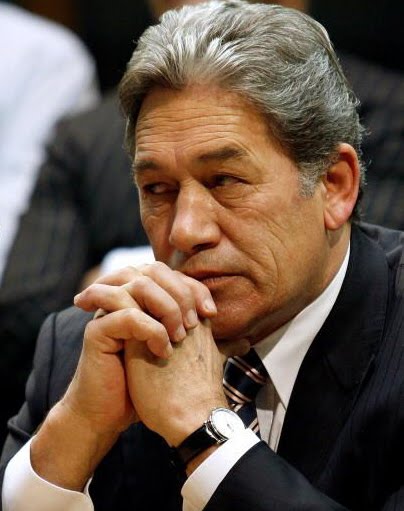
NZ First and its leader, Winston Peters, are considerably more opaque.

Schooled by Rob Muldoon – New Zealand’s second-most-successful populist politician after Richard Seddon – Peters’ consistent electoral objective has been to reconstitute the angry coalition of farmers, small-business owners, and culturally-alienated working-class voters, that swept Muldoon to victory in 1975.

Like Muldoon, Peters expects his angry coalition to shoulder the task of restoring the social, economic and cultural equilibrium which he charges the Left with disrupting. Unlike Muldoon, however, Peters had to launch his populist crusades in a multi-party environment. The binary choice between himself and Bill Rowling, which Muldoon set before voters in 1975, has never been available to Peters and NZ First. In the post-MMP political marketplace, NZ First has always faced too many competitors.

In attempting to match the offers of its competitors, NZ First has tended to promise more on the tin than its serially monogamous attachments to one or other of the two main parties could possibly secure by way of coalition agreements. It’s the party’s fatal marketing flaw: promising more, delivering less.

Act has never been overly concerned about what gets printed on the party’s tin, or whether it matches its contents. Hardly surprising, given that Act’s key objective has always been to preserve and, if possible, extend, the top-down free-market revolution.

Act’s most successful leaders, Richard Prebble and David Seymour, have always understood that the best way to achieve the party’s objectives is to persuade National voters that the dominant party of the Right has gone soft on social and cultural issues (free speech, the Treaty of Waitangi, law and order) or, even worse, that it is losing focus on the key objectives of neoliberal economics.

‘Give us the votes, and we will keep National honest’, has always been Act’s best pitch. And, if right-wing voters read no further than that on the tin, then satisfaction with the product is likely to be high. To paraphrase the Rolling Stones: Act doesn’t always get what disgruntled right-wing voters want (Treaty Principles Bill) but it’s highly effective at getting what the Neoliberal Revolution needs (workplace reform).

And then there’s the Greens.

For post-scarcity parties like the Values Party (1972-89) and the Greens, it really isn’t stretching things too far to suggest that what’s written on the tin matters a whole lot more than what’s inside it. The purpose of such parties (or should that be “movements”) is to educate and inspire the electorate. Meaning that it’s not so much a matter of telling people what’s actually in your tin, as it is of stipulating what should be in everybody else’s.

To a large extent this explains why Green Party co-leader James Shaw became something of an embarrassment to his colleagues. He’d committed the unforgivable sin of actually achieving something by persuading the National Party to lend its support to his Climate Change Response (Zero Carbon) Amendment Bill. Shaw’s wheeling and dealing, his willingness to compromise, smacked uncomfortably of actually existing politics – as opposed to the “perfect world” politics favoured by the true believers.

The Greens’ unbridled idealism explains in large measure why the challenge of matching what’s written on the party’s tin with its actual contents, has become so daunting. Promising the voters diversity, equity and inclusion on the label is one thing; opening the can to reveal Bible Belt Bussy; is something else entirely!

And Labour? Does it comport with the expectations of the Fair Trading Act?

It’s tempting to say that it does. (Not least on account of the fact that the author once sat as the party’s industrial representative on Labour’s New Zealand Council.) Certainly, anyone turning up to a Labour Party conference will still encounter trade union affiliates, feminists, LGBTQI activists, Māori reps, and ambitious youth delegates. Policy remits will be debated. Elections held. The trappings of a progressive party dedicated to furthering the interests of the New Zealand working-class are all still in place.

Upon closer inspection, however, the label on Labour’s tin has the look of something carefully designed by an advertising agency to evoke a powerful nostalgic reaction. There’s a lovely photo of Mickey Savage, the typeface chosen has a staunch 1930s feel to it, and there are numerous references to Labour’s proud history of delivering “social justice” to “working people”.

But the compulsory list of ingredients, set in 8 point at the bottom of the label, reveals something a little different: Democratic Socialism: 1 percent; Social Justice: 10 percent; Decolonisation and Indigenisation: 15 percent; Gender Equity: 19 percent; Neoliberalism: 55 percent.

Don’t say you weren’t warned.

And National – New Zealand’s most successful political party? How closely does National’s content match its branding?

Let’s start with the party’s name, “National”. It was deliberately chosen by the party’s founders to indicate that, unlike Labour’s openly sectional commitment to working-class New Zealanders and their trade unions, the new party (born in 1936 out of the United and Reform parties) was committed to serving the whole nation – irrespective of its citizens’ class origins. That was a big, and an almost impossible, ask.

If they’d been serious: if the party had indeed been dedicated to the welfare and advancement of all New Zealanders; i.e. to the “national” interest; then its policies would have built upon and extended Labour’s reforms. Not to put too fine a point upon it, a genuinely “national” party would have been as much “left” as it was “right”.

There will be many who, reading the above sentences, will cry: “Aha! That’s exactly what National is – ‘Labour Lite’!”

But, that would be an ideological, not an historical, response. Between 1936 and 1946 National was pledged to sweep away all of the social and industrial reforms of the First Labour Government. And even the party’s reluctant (albeit election-winning) acceptance of the welfare state in 1949 was tactical, rather than sincere. Forty-two years later, in 1991, National atoned for its earlier historical sins by laying waste to both the unions and the welfare state. What little of them remained standing, the party has been systematically dismantling ever since.

So, National isn’t a national party. Still less is it a nationalist party. A party infused with nationalist pride would be voluble in upholding the achievements of the New Zealand nation. It would sing the praises of its settlers, its city-builders, its progressive legislators, its engineers and scientists, its writers, poets, painters, and architects. A nationalist party would not sit mute as the New Zealand people’s achievements were disparaged as work of colonialist white supremacists.

No, National isn’t a nationalist party either.

If the policies promoted by the dominant party of the present coalition government came in a tin, and that tin was labelled “National”, then the only defence against a charge brought under the Fair Trading Act would be that after nearly 90 years of “representing everyone, farmers and businessmen alike” (thanks Gary McCormick) New Zealanders have come to accept that, in their country, the Right’s leading political party has only ever been notionally “national”.

We all know exactly what’s inside.


This essay was originally posted on the Interest.co.nz website on Monday, 21 April 2025.

Friday, 21 October 2022

The Two Vladimirs.

First Time As Tragedy, Second Time as ... Tragedy: The Leninist will-to-power is also there in Putin, but the dream is different. Not a speculative blueprint for humanity’s future, but a necromancer’s resurrection of Russia’s obscurantist past. Not the white-hot ripples of modernist self-confidence, but the poisonous fogs and vapours of the Middle Ages.

TWO VLADIMIRS, facing each other across a century of time: joined and separated by the Russian nation. Two Vladimirs – Lenin and Putin – around whose understanding of and aspirations for Russia the whole world has, reluctantly, been forced to circle. Two Vladimirs and their contradictory visions of Russia’s meaning dictating the fate of humankind. Two Vladimirs, more alike than either man would willingly admit.


THE FIRST VLADIMIR, Lenin, saw Russia’s potential. Not, simply, as an empire ripe for revolution in ways that the British and German Empires were not, but as a gigantic Petri dish in which something new and immensely powerful could be cultured.

As a dedicated Marxist, Lenin understood just how dramatically Russia deviated from Marx’s revolutionary schema. It was an quasi-feudal empire of peasants, only slowly beginning to industrialise – the starkest possible contrast with the advanced capitalist economies of the United States, Great Britain and Germany – places identified by Marx as the most likely locations for a humane socialist revolution. Lenin wasn’t bothered. A humane socialist revolution was not on his agenda.

In this respect, Lenin was all Russian. His revolutionary politics were shaped by its traditions of terrorist violence and the imposition of new orders from above.

There was a glittering seam of the most reckless nihilism that ran through Russia’s revolutionary rock. It shrugged-off ethics and laughed at caution, fostering an all-or-nothing approach to politics. Lenin mined that seam assiduously, becoming the most fearless political gambler.

He risked the accusation of being a German spy by allowing the Kaiser to facilitate his return to Petrograd. He risked everything on his Bolshevik Party’s coup d’état toppling the Provisional Government of Alexander Kerensky. He risked the survival of Russia itself by accepting the predatory terms of the Treaty of Brest-Litovsk, betting that Germany would not win the First World War, and would ultimately be forced to surrender its gargantuan territorial gains.

Having won Russia, Lenin then proceeded to abolish it. Not even its name remained. Lenin named his Petri dish the Union of Soviet Socialist Republics. Not that his socialism was all that socialist. He drew inspiration from the way the German war economy had been organised by Walter Rathenau. He admired Henry Ford’s assembly-lines. Had he lived, there is every possibility that he would have prefigured the Peoples Republic of China’s Deng Xiaoping, who famously responded to his party’s bitter internal disputes over which “road” to follow – communist or capitalist – by quipping: “I do not care if the cat is black or white – so long as it catches mice.”

What fascinated and inspired the first Vladimir were the glittering possibilities arising out of a political entity that encompassed one sixth of the planet’s land surface. An entity bursting with resources, and now, thanks to a revolution, a civil war, and the emigration of the Tsarist regime’s fondest supporters, an entity unencumbered by all the usual historical baggage. An entity whose people were a blank slate for his party to write on. An entity which, if it was as lucky as the man who created it, would go on to shape the destiny of the entire world.


THE SECOND VLADIMIR, Putin, looking back over the century separating him from the first, can see with equal clarity not only how much of Vladimir Lenin’s vision was realised, but also the dire, if unintended, consequences of that success. Though raised in Lenin’s Petri dish, and inordinately proud of its achievements, Putin is pinioned by the inescapable fact of its failure.

The Russian people: impassive, resilient, deeply cynical; but also mystical, superstitious and prone to dangerous enthusiasms; turned out to be anything but a blank slate upon which the Bolsheviks could freely write the future. Their country may no longer have been called Russia, but Russians they remained. Their empire also, which, thanks to their heroic efforts against the exterminationist Germans, expanded to encompass all of Eastern Europe.

No Tsar had ever wielded the power of Joseph Stalin. The Soviet Union glowered over Western Europe and the world through black, bear-like eyes: the object, alike, of humanity’s grim admiration and abiding fear.

Lacking in this Red empire was the first Vladimir’s readiness to wager everything to move the experiment forward. Stalin was ruthless, but he wasn’t brave. The man lived his whole life in fear, and made damn sure the Soviet people did the same. Lenin’s Petri dish was poisoned by his fear. The Soviet Empire that evolved may have been bigger and more terrifying that the Tsars’, but Homo Sovieticus was a pretty wretched specimen.

The second Vladimir, like the Russian Federation he rules, is a hot mess of geopolitical and cultural insecurities. He despises the late Mikhail Gorbachev for presiding over the dissolution of the Soviet Union. That event, according to Putin: “was the greatest geopolitical catastrophe of the century. As for the Russian people, it became a genuine tragedy. Tens of millions of our fellow citizens and countrymen found themselves beyond the fringes of Russian territory.”

What Putin missed completely was the historical courage of Gorbachev’s all-or-nothing bet that the entity created by the first Vladimir might yet prove equal to its creator’s optimistic vision.

That Gorbachev lost the bet is, of course, the best possible proof that Homo Sovieticus was an evolutionary dead-end. That the Soviet Union’s successor states all became hopelessly corrupt kleptocracies merely demonstrated how degraded Soviet Man’s political and economic DNA truly was. That Putin rose to become Russia’s new strongman heaped irony on tragedy.

Because its all there in the second Vladimir: the nihilism, the cynicism, the existential wager on nothing more elevating that re-swallowing the Ukrainian people. First devoured by Lenin in the 1920s, and then eaten again by Stalin in the 1930s. The Leninist will-to-power is also there in Putin, but the dream is different. Not a speculative blueprint for humanity’s future, but a necromancer’s resurrection of Russia’s obscurantist past. Not the white-hot ripples of modernist self-confidence, but the poisonous fogs and vapours of the Middle Ages.


This essay was originally posted on The Daily Blog of Tuesday, 18 October 2022.

Thursday, 23 July 2015

Friends And Allies: What Is The “Comprador Bourgeoisie” When It’s At Home?

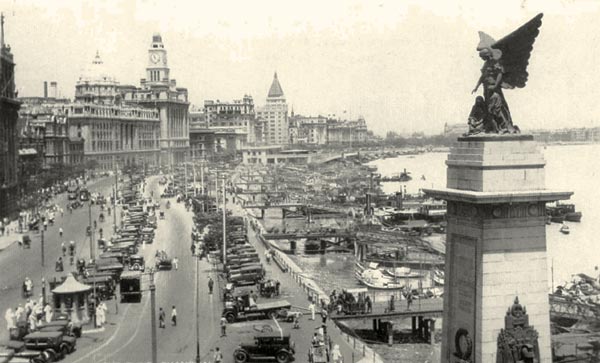
Imperial Façade: Shanghai's famous "Bund", where Western and Japanese capitalists rubbed shoulders with what Mao's communists called the "bourgeois comprador class" - the local capitalist intermediaries who built and maintained the crucial links between the Chinese people and the foreign investors, multi-national corporations, bankers and military interests of the imperial powers. Ironically, a reinvigorated China is now cultivating comprador capitalism in the societies of its dependent trading partners.
 
CHINA’S RAPID RISE to superpower status (at least economically) is producing some delicious political ironies. Eighty years ago, Mao Zedong’s communists wrote scathingly about China’s “bourgeois comprador class”. These were the local Chinese capitalists who acted as intermediaries between the Chinese people and the foreign-controlled enterprises and investors then operating in China under the protection of the major imperialist powers (Great Britain, Japan, France and the USA). The expression eventually entered the broader Marxist lexicon as “comprador bourgeoisie” and is defined as: “A section of an indigenous middle class allied with foreign investors, multi-national corporations, bankers and military interests.” The political irony lies in the fact that today’s comprador bourgeoisie is no longer located in China, but in the societies of her increasingly dependent trading partners.
 
As New Zealand’s largest trading partner, China is steadily wooing our own bourgeois comprador class away from its traditional friends and allies among the foreign investors, multi-national corporations, bankers and military interests of the UK, the USA and Australia. Already, a number of large Chinese banks have set up shop in New Zealand and have thought it politic to recruit both a former prime-minister, and a former leader of the opposition, to sit on their boards of directors. In light of the on-going furore about offshore investment in Auckland residential property, it is clear that this country’s largest real estate agencies must also be numbered among the more prominent members of our comprador bourgeoisie.
 
The Chinese surnames controversy has also exposed the role played by what might be called “cultural compradors”. The penetration of foreign capital, and the political leverage that goes with it, is only very occasionally accomplished at the point of an imperial bayonet. By far the most common method of establishing foreign influence is by using religion and/or ideology to recruit a local following to perform the role of domestic friends and allies. Such people constitute an invaluable bulwark against any attempt by the opponents of foreign influence and control to reassert national values and interests.
 
The extraordinary attacks on the Labour Party: the vicious accusations of “racism” levelled against Andrew Little and Phil Twyford; both provide grim evidence of the cultural compradors’ reckless hatred of the bourgeois compradors’ deadliest foe – the national bourgeoisie.
 
The word “national” notwithstanding, it is the Labour Party which has always represented New Zealand’s national bourgeoisie most effectively. As one of this country’s foremost public intellectuals, the late Bruce Jesson, shrewdly observed: “National knows how to govern for capitalists; but only Labour knows how to govern for capitalism.” The National Party may be “relaxed” about foreign investors pushing the price of a house beyond all but the wealthiest Kiwi’s reach, but Labour, by promising to restrict the rights of foreigners to purchase land, indicates its willingness to put the interests of New Zealanders first.
 
Dr Bryce Edwards: "Global Cosmopolitan".
 
The University of Otago political studies lecturer, Dr Bryce Edwards, frames the struggle of comprador against national capitalists as a contest between what he calls “Economic Nationalists” and “Global Cosmopolitans”. It’s a neat trick. Rather than dealing with the very hard choices New Zealanders are going to face as the economic and cultural power of China and its local facilitators waxes ever greater, Bryce has simply re-cast the drama as an existential confrontation between ageing patriots, clinging stubbornly to the outdated shibboleths of the nation state; and free-wheeling global citizens of the twenty-first century, possessed of an impressive collection of internationally marketable skills – but no country.
 
Bryce would also like to cloak his cultural comprador allies in the frayed costume of twentieth century socialist internationalism. He is hardly alone in this. All over the world, the Left is engaged in a bitter debate over whether nationalism can ever be turned to progressive purposes; and if it is still (or ever was) possible to construct socialism in one country.
 
Bryce is, however, wrong to try and smuggle those who would prepare the way for Chinese state capitalism in New Zealand into the honourable precincts of progressive disputation. Cultural compradors, like the comprador bourgeoisie, of which they are part, have no interest in constructing a political space in which the future of New Zealand can be reasonably debated. In their eyes, the future of New Zealand has already been decided – and not by New Zealanders.
 
This essay was originally posted on The Daily Blog of Thursday, 23 July 2015.

Tuesday, 13 May 2014

New Zealand's Progressive Nationalism

Progressive Nationalist: Murray Horton has been the public face of the Campaign Against Foreign Control in Aotearoa (CAFCA) since the mid-1970s. He has just completed his triennial, election year, tour of New Zealand during which he reacquaints grass-roots New Zealanders with the facts, the figures and the consequences of trans-national corporate dominance of their country.
 
LAST FRIDAY I had the privilege of listening to one of Canterbury’s finest sons, Murray Horton. For 40 strenuous years Murray and a dedicated band of supporters have run the organisation called Campaign Against Foreign Control in Aotearoa (CAFCA). The official organ of CAFCA – Foreign Control Watchdog – is edited by Murray, published quarterly, and along with articles and reviews on politics and economics contains a handy compendium of all the latest decisions of the Overseas Investment Office. It always makes for challenging, not to mention sobering, reading.
 
Every election year, for close on 20 years now, Murray has journeyed from one end of New Zealand to the other, bringing to New Zealanders the facts, the figures and the consequences of foreign investment in their country. Though the rigorously atheistic Horton would probably frown at the suggestion, I look upon these nationwide tours as a kind of pilgrimage. Not the sort of pilgrimage where faith is restored through the proximity of saints, shrines and relics, but through a renewed connection with that most essential raw material of Democracy – the people themselves.
 
In trades halls, church halls, community halls (and the occasional university lecture hall) from Bluff to Kaitaia, Murray gives his 90 minute talk to groups ranging in size from half-a-dozen to several score. It’s not for the faint-hearted because Murray’s a political campaigner of the old-school – the sort that eschews sound-bites for hard evidence and patient reasoning.
 
And people love it: asking him questions and arguing about his answers for hours at a time. In this regard the talk I attended in Auckland on Friday was no exception. People arrived at 4 and didn’t leave until after 7:00pm.
 
The gospel according to Horton is a compelling testament not least because the person delivering it is so quintessentially Kiwi. Laconic, sharp, self-deprecating, larger-than-life and with an accent you could sharpen a knife on, he’s the sort of character Labour used to hoist onto the hustings. (Back in the days when describing someone as working-class and clever was not discounted, in rounded middle-class vowels, as oxymoronic.)
 
It is compelling, too, because it is directed at people who still regard themselves, culturally, as members of a national community, and, politically, as citizens of a nation state.
 
It’s no accident that CAFCA was founded in 1974, a year in which the potent, genuinely progressive New Zealand nationalism unleashed by Norman Kirk just 12 months earlier was gathering strength. The nationalism which would reach its apogee in the anti-tour protests and nuclear-free New Zealand movement of the early 1980s. The enduring conviction of what New Zealand should represent – and could represent – that the neoliberal ideology introduced by Roger Douglas and Ruth Richardson has worked so diligently to deconstruct for the past 25 years.
 
Kirk’s progressive nationalism – and Horton’s – can trace its origins all the way back to the progressivism of the Liberal Government of 1891-1912. It was during this period that New Zealand acquired the sobriquet “social laboratory of the world”, giving practical effect to the author of God Defend New Zealand, Thomas Bracken’s, prayer that the Almighty would “guide her in the nations’ van” as humanity’s pathfinder to a more just and abundant society.
 
That New Zealand’s most enduring nationalistic traditions should derive directly from the progressive side of politics is hardly surprising. The mobilising sentiment against which they have invariably measured themselves has almost always been generated by this country’s conservative elites on behalf of the supra-national entities in which New Zealand has historically found itself culturally, politically and (most importantly) economically enmeshed.
 
First as a colony and then as a (reluctant) dominion, New Zealand’s conservative leaders have consistently presented these islands and their inhabitants as the British Empire’s most loyal subjects. The awful blood sacrifice of World War I kept the “Mother Country’s” doors open to all the butter, cheese, wool and lamb her Pacific farmers could send. And when, in 1941, the Japanese were unkind enough to sink Mother’s warships Repulse and Prince of Wales, New Zealand was compelled to shift, without so much as a pause of breath, into the imperial embrace of Uncle Sam.
 
While the USA was under the progressive management of Franklin D. Roosevelt that might not seem so bad, but as Uncle Sam swiftly acquired the bloodthirsty habits of all imperial potentates, New Zealand’s conservative elites were only too happy to again subsume their country’s interests in the supra-national, American-led “Free World” and, after the Cold War’s end, into “the global marketplace”.
 
Listening to Murray Horton’s inspirational pitch for progressive New Zealanders to put the interests of New Zealand first, and those of foreign investors second, and, then, to reduce the “Five Eyes” global surveillance agreement to a Kiwi-less four, I suddenly understood Che Guevara’s cryptic observation:
 
“The Revolution is not a portrait – it’s a landscape.”
 
This essay was originally published in The Press of Tuesday, 13 May 2014.

Thursday, 15 July 2010

Pro Patria

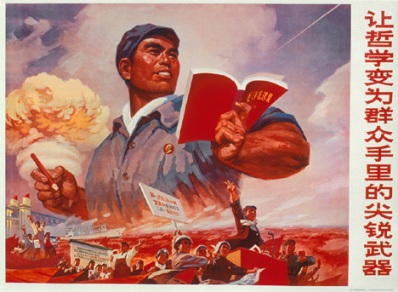
"China has stood up!": Mao Zedong's revolutionary nationalism (masquerading as Marxism) empowered the Chinese people to shrug-off both the European and Japanese imperialists who had subjugated and exploited their country for more than a century. They must find New Zealanders' willingness to sell their most valuable economic resources to foreigners deeply perplexing.

HAS NEW ZEALAND become a "creepily nationalistic" country? Is xenophobia running rampant in the heartland? At what point, exactly, does love of country become a disease?

It’s always struck me as odd that both the extreme Left and the extreme Right have no love of borders. Whether it be Karl Marx’s ringing exhortation for "workers of all lands" to "unite!"; or the proud boast of free marketeers that globalisation has made the nation state "redundant"; poor old Patria has been getting it in the neck for the best part of 150 years.

Fortunately Patria – literally, "the land of our fathers" – has a pretty tough neck.

The Socialist International, in the years leading up to the outbreak of World War One, worked hard to ensure that if the worst happened, and war did break out between the Great Powers, proletarian internationalism would trump the nationalist’s call to arms. "The bayonet", cried the socialists, "is a weapon with a worker at both ends."

But in August 1914, when the mobilisation orders were posted, workers of all lands rushed not to the barricades, but to the railway stations and the recruitment offices. The International’s call to stand shoulder-to-shoulder with the workers across the borders was drowned out by the cries of: "La Patrie en danger!"

The bayonet turned out to be what it had always been: a weapon with "Us" at one end – and "Them" at the other.

The clarion call to internationalism rang out once again in August 1991, when actually existing socialism "in one country" (and its satellites) suddenly withered away.

The disintegration of the Soviet Empire, boasted the American neoliberal scholar, Francis Fukuyama, signalled not only "the end of history", but the inevitability of globalisation. The triumph of free market capitalism and liberal democracy, he predicted, would set humanity on course for a borderless world.

Ten years later, nineteen young men – apparently unconvinced by Mr Fukuyama’s thesis – demonstrated that history wasn’t quite dead by flying their hijacked airliners into the World Trade Centre and the Pentagon.

America’s response was instructive. Less than a month after 9/11 the US Congress passed the Patriot Act, and President George W. Bush established the Department of Homeland Security.

Turns out borders mattered after all.

So, is nationalism really as "creepy" as the Auckland business community’s glamorous correspondent, Deborah Hill Cone, suggests? Or, is Patria’s claim to our love and loyalty as strong and as natural as that of our own parents’? And, is being "Pro Patria", or, to set this whole discussion in its proper context, taking a lively interest in who is, and isn’t, permitted to purchase large tracts of New Zealand farmland, really the same as xenophobia?

The short answer, according to Property Council New Zealand’s Chief Executive, Connal Townsend, is "Yes."

Interviewed by Radio New Zealand’s Checkpoint programme, Mr Townsend said that "there’s a real danger in pandering to a kind of ignorant, racist and xenophobic anti-foreigner feeling in this country, and not actually thinking sensibly about what’s actually best for our nation."

Ms Hill-Cone is even more explicit: "On the chattering classes dinner party circuit it is acceptable to be downright racist against Chinese interests buying land here".

I suspect the Chinese themselves would greet such statements with a degree of wry amusement – and be genuinely puzzled as to why those who sought to protect New Zealand’s vital economic interests are being pilloried in this way. No Chinese citizen would seriously contend that foreigners be permitted to venture into the heart of their homeland and secure exclusive control of its key resources.

Most Westerners simply don’t appreciate the Chinese people’s intense shame at being humiliated and exploited by European and Japanese imperialism. The Chinese State’s history stretches back through two-and-a-half millennia and no people could be prouder of their nation’s achievements.

When Mao Zedong created the Peoples Republic in 1949, he declared to the world: "China has stood up" – a statement whose full import could only be appreciated by a people who, for more than a century, had been forced to bow their heads to foreign invaders.

No, there’s little New Zealanders could teach the Chinese people about the love of country.

What Ms Hill Cone and Mr Townsend are teaching us, however, is how little they understand the people whose investment in New Zealand they are promoting. The Chinese may be tough negotiators – hard bargainers – but they will not be "put off" by those whose patriotism requires them to fiercely protect their nation’s resources. They would do no less – and they expect the same from their economic partners.

Indeed, I’m confident the only behaviour Chinese citizens would find "creepy" is the willingness of some New Zealanders to sell their country to strangers. Mao’s revolutionary nationalists called such people "compradors" – native-born agents for foreign businesses.

Those who did not flee to Formosa were shot.

This essay was originally published in The Press on Tuesday, 13 July 2010.

Thursday, 22 April 2010

Third Time Lucky?

Praying for another chance? The current alignment of political constellations could hardly be more propitious for Winston Peters and NZ First to make it "third time lucky".

WINSTON PETERS, as the leader of NZ First, has twice received the Governor-General’s warrant: the first time from the National Party, the second time from Labour. On both occasions his ministerial sojourn ended badly.

With last week’s Roy Morgan poll registering an increase in NZ First support from 1 to 3 percent, many New Zealanders are now wondering whether, nineteen months hence, Peters will, for the third time, be asked to accept a ministerial warrant? And, will it be third time lucky?

Certainly, it is difficult to conceive of a conjunction of the political constellations more propitious for a Peters/NZ First comeback. Let’s just look at some of the issues which have already risen, or are rising, above the political horizon.

A Chinese business consortium at large in New Zealand, eyeing-up more than 100 Kiwi-owned dairy farms with a view to setting up a billion-dollar, vertically-integrated dairying operation in competition with this country’s single largest export-earner – Fonterra.

A Minister of Treaty Negotiations blithely conceding (to The Nation’s Duncan Garner) that, under the National-led Government’s proposed definition of Maori customary right, an iwi or hapu partnership-deal with Chinese interests seeking to invest $100 million in beach resorts holding a 100-year foreshore & seabed lease, would be subject only to the Resource Management Act and "other general pieces of legislation".

A "Whanau Ora" scheme promising to transfer hundreds-of-millions of dollars from publicly-administered and accountable welfare institutions to privately-owned, ethnically-driven providers (whose operations will be exempt from the scrutiny of the Official Information Act). A scheme which, Government reassurances notwithstanding, will operate according to a set of pre-modern cultural assumptions which most New Zealanders will neither accept nor endure. A scheme practically certain to detonate a sequence of financial and administrative explosions all the way from July 2010 to Election Day 2011.

A Government determined to intensify the consumption taxation of the poor so that it can attenuate the income taxation of the wealthy.

How could a politician of Peters’ skill and experience possibly fail to turn such a glittering array of political opportunities to his own and his party’s advantage?

In this regard, it’s leader’s electoral martyrdom and exile only works in favour of a NZ First comeback. Beyond the Beltway, and putting to one side those voters who have always experienced an allergic reaction to Peters’ political style, there are thousands of New Zealanders who, both at the time and with the benefit of hindsight, came to see the media-assisted crucifixion of the NZ First leader as not only an egregious misuse of media power, but also as a kind of modern-day show-trial designed to secure Peters’ absence from the new political environment the Key-led National Party was attempting to create.

Peters is the sworn enemy of the "neo-traditional tribal capitalists" National’s strategists have identified as a crucial element in the new combination of cultural and economic forces it believes will dominate the electoral politics of the 21st Century. NZ First’s absence from Parliament is crucial to making the ostensibly unlikely relationship between the National and the Maori parties politically durable.

Peters’ followers might not express the problem in quite those terms, but they know that his absence from Parliament is important – that it matters. They understand intuitively that over the past 17 months things have been done that could not have been done if Peters was still there.

NZ First’s return to Parliament would critically alter the balance of political forces, fundamentally weakening National’s grip on power. The inevitable attrition of the Government’s public support (already evident in the Roy Morgan poll) leaves Key dangerously exposed to a Peters-led crusade in 2011.

Rodney Hide’s super-city-inspired brutalisation of Auckland voters has compounded National’s difficulties. It places Act’s future in doubt – making Key utterly dependent on the Maori Party’s good-will. But, if Peters’ campaigning in the Maori seats threatens, even slightly, the Maori Party’s position, see how quickly that good-will evaporates!

What sort of platform would Peters and NZ First need to run on to make good that threat? And who should they target to garner five percent-plus of the Party Vote?

According to the American political scientist, Professor Jack H. Nagel, there are five salient socio-political "cleavages" around which an insurgent political party can be constructed in New Zealand: class; ethnicity; post-materialism; economic interventionism; religion and/or social conservatism.

At one time or another in its 17 year history, NZ First has sought to exploit nearly all of these categories. In 2010, however, with the ethnic and post-materialist cleavages already "taken" – by the Maori Party and the Greens respectively – NZ First is left with fewer "cleavages" to choose from. With Jim Anderton about to depart the political stage, Economic Interventionism is available, but Act’s David Garrett has already raised his party’s flag over Social Conservatism.

If Peters is really smart, however, he’ll focus on class – and one class in particular. Not Labour’s blue-collar, wage-earning working-class, but the class of self-employed and/or contract-dependent battlers which has grown like Topsy out of the wreckage of New Zealand’s once heavily-protected domestic economy.

Under enormous competitive pressure, resentful of those they see as the beneficiaries of "special privileges" and deeply suspicious of (or even overtly hostile to) immigrants of any kind, this classically petit-bourgeois, artisanal, "Waitakere Man" strata of society is ripe for the picking.

It encompasses not just the bloke who mows your lawns and the woman who styles your hair, but the share-milking couple despairing of ever being able to buy their own farm. You’ll find them in the heart of our big cities, but also in small provincial towns – and they constitute way more than five percent of the New Zealand electorate.

No one in NZ First understood this group better than the late Terry Heffernan. A very similar social strata had, after all, constituted the core of his original political home – Social Credit. The worst mistake Winston Peters ever made was choosing Michael Laws over Heffernan as his chief policy adviser in the run-up to the 1996 General Election. Laws turned NZ First into "National Lite" – a serious political blunder.

If Peters can re-capture in 2011 that curious mixture of patriotism, economic interventionism and progressive humanitarianism that Heffernan used to fuel NZ First’s assent of the opinion polls in the mid-1990s, then it’s possible, he just might, make it third time lucky.

This essay was originally published in The Independent of Thursday, 22 April 2010.

Friday, 15 January 2010

Epic Fail

The sharp end of Japanese Foreign Policy: The Japanese whaling fleet's security ship Shonan Maru No. 2 deliberately rams the New Zealand boat Ady Gil in the waters off Antarctica. New Zealand's Foreign Affairs Minister, Murray McCully's response? He accuses the protesters of wanting to kill people!

JAMMER looks like he should stink to high heaven – but he doesn’t. At least, not in a bad way. Those brown dreadlocks piled high behind his head, like he’s carrying a furry octopus up there, exude a resinous, piney-wood scent (special oils, apparently) which is actually rather pleasant. And his gypsy wardrobe, which looks like it’s been assembled at random in the nearest Salvation Army store, carries the reassuring aroma of Sunlight soap and Janola.

With Jammer, appearances can be deceptive.

"’S’up?" He asks as he slumps down at my table.

"Not a lot", I reply. "How about you? Keeping out of trouble?"

"Nope."

Jammer lifts a squat bottle of Australian ginger-beer in mock salute to "trouble".

"Let me guess," I say, raising my own glass of pinot in reply, "Stanley Street? Shahar Peer?"

"Nope. Palestine was last week. I’ve just come from the Japanese Consulate."

"Ah", I shake my head in what I hope is an appropriately sympathetic fashion. "Bad business."

"Business is right", says Jammer. "And what’s with this dude McCully? A New Zealand boat is rammed by the Japanese whalers’ attack-ship, a bunch of people are nearly drowned, and our Foreign Affairs Minister goes on National Radio and accuses the anti-whaling protesters of sailing down to Antarctica to kill people. I mean, that is just so fucked-up. So wrong. You know all these politicians, Chris. What’s the guy into?"

The emphasis which Jammer lays on "into" communicates a world of youthful disdain.

"You’ve got to understand where McCully and his colleagues are coming from, Jammer. What they’re trying to achieve."

"What? Earn a few brownie-points with the Japanese? Keep our trading partners happy? That sort of thing?"

"Actually, no, I don’t think that’s what’s driving McCully at all. From a short-term political perspective, his indifference to what is taking place in the waters off Antarctica is doing the National-led Government a lot of damage. And he’s far too well-versed in the dark arts of public relations not to know it. Sure, Japan’s an important trading partner of New Zealand – but with the rest of the world as pissed-off with the Japanese as we are, there was nothing to be gained, and a lot of public support to be lost, by down-playing this country’s opposition to ‘scientific’ whaling."

"So why all the aggro towards the Sea Shepherds? Why the refusal to speak out against the sinking of the Ady Gil?"

"Well, partly it’s just McCully’s Tory reflexes kicking-in. As you and John Minto discovered last week, conservative New Zealand still has no great love for protesters."

"Yeah! Did you see all those comments on John’s blog? Five hundred of them! People just don’t get it, do they?"

"Nope, they don’t. And believe me, Jammer, they were just the same at the beginning of the anti-apartheid movement fifty years ago. And that, really, is the point. It’s that very Kiwi impulse to come out in support of the under-dog; to stand up and be counted in the face of injustice – even if it pisses-off the French and the Rugby Union, like Norman Kirk did; or the Americans, like David Lange and Helen Clark did – that McCully’s out to eradicate."

"No way!"

"Yep, I’m afraid so. National has always hated the way progressive and idealistic New Zealanders have hauled this country kicking and screaming onto the moral high-ground. It’s always detested, and done its best to douse, the beacon fires of principle we’ve lit there for all the world to see. As Foreign Minister, McCully wants New Zealand to become a follower – not a leader. He wants to show the big powers, America and China in particular, that we’ve finally abandoned our troublesome predilections for standing-up and being counted. He means to show the world that, henceforth, New Zealand will be only too happy to take things lying-down – and count for nothing.

"So that’s why, for the first time in 10 years, this country wasn’t represented at the International Whaling Commission by a Cabinet Minister?"

"Yep. And it also explains why we’ve got the SAS in Afghanistan, and why we hardly said boo to a greenhouse-gas-emitting goose at Copenhagen."

"And why the cops were so bloody heavy-handed with us outside the tennis?"

I nod. Jammer puts down his ginger-beer, shaking his dreadlocks sadly.

"Epic fail, dude" he sighs. "Epic fail."

This essay was originally published in The Timaru Herald, The Taranaki Daily News, The Otago Daily Times and The Greymouth Evening Star of Friday, 15 January 2010. 

Friday, 18 December 2009

Distress Signal

A nation in distress: The anti-war film In The Valley of Elah ends with the hero running the US flag up the flagpole upside down - the international signal of distress. John Key's decision to fly the Tino Rangatiratanga flag alongside the New Zealand ensign has caused many New Zealanders to wonder whether their own nation might soon be in need of rescue.

IN THE VALLEY OF ELAH is one of the best anti-war films to come out of Hollywood since America declared war on terror in 2002. In the film, Tommy Lee Jones plays the role of Hank Deerfield, a retired army investigator, who sets out to discover the fate of his missing soldier son.

As he heads out of town at the beginning of his quest, he notices the Stars and Stripes has been raised upside down outside the local high school. In a sharp exchange with the school’s indifferent Hispanic janitor, the ex-Marine asks:

"Do you know what it means when a flag flies upside down?"

"No."

"It’s an international distress signal."

"No shit?"

"No shit! It means we’re in a whole lot of trouble so come and save our asses ‘cause we ain’t got a prayer in hell of saving it ourselves."

"It says a lot …" murmurs the janitor.

"Yes, it does …" says Hank Deerfield.

 
I COULDN’T HELP RECALLING that scene when, last Monday afternoon, the Prime Minister, John Key, announced that the Cabinet had given its official sanction to the flying of the Tino Rangatiratanga flag over government buildings on Waitangi Day.

We are asked to interpret this decision as a gesture of reaffirmation toward the bi-cultural partnership enshrined in the Treaty of Waitangi.

I am extremely doubtful, however, whether a majority of New Zealanders will see it that way.

Sadly, their views will get short shrift from "Official" New Zealand.

The politicians and public officials whose business it is to align public opinion with state policy have already framed this issue in such a way that any criticism of the Government’s decision will be dismissed as "immature", or, should that label prove ineffective, be decried as "racist".

Whatever the critics are branded, the ultimate effect will be the same: the suppression of genuine public debate and the marginalisation of the Government’s opponents. All those individuals and groups in some measure dependent on the grace and favour of the state will lower their heads and shut their mouths.

The resulting silence will then be interpreted as assent.

Thus will Official New Zealand lay yet another carefully-fashioned stone in the edifice of our distress.

Thus will ordinary New Zealanders’ anger: their sense of being ignored, belittled and despised; grow and fester.

A government that plays fast and loose with the core symbols of its citizens’ national identity does so only at the gravest risk to its own survival. Mr Key’s apparent ignorance of just how important these core symbols are – especially to the people who elected him – is, therefore, deeply troubling. Like the immigrant janitor in the scene I have quoted from In The Valley of Elah, our Prime Minister does not appear to know what his country’s flag means, nor that how it is flown can send a powerful message.

The Tino Rangatiratanga flag is not a symbol of bi-cultural harmony – but its opposite.

No matter how much oil the Minister of Maori Affairs, Dr Pita Sharples, attempts to pour over the troubled waters of its history, the flag which Mr Key’s Cabinet has just authorised to be flown alongside New Zealand’s flag – "says a lot."

It declares Maori nationalism’s fervent desire to reverse the verdict of history: to re-constitute the "absolute power of the tribal chieftains" (the literal meaning of tino rangatiratanga) and to re-establish the same conditions of dual sovereignty that prevailed immediately prior to the land wars of the Nineteenth Century.

That was the last time two flags – one representing the tangata whenua, the other the tangata tiriti – flew side-by-side. And no one back then was in the slightest doubt about what those flags meant.

The two flags stood for two sovereignties. And where two sovereignties are asserted, there also will be two states. And where there are two states there will be two economies; two bureaucracies; two codes of justice; two systems of health, education and welfare; two parliaments – and two armies.

Wittingly or unwittingly, Mr Key’s Government has struck a blow against the safety of the New Zealand realm. They have signalled to the Maori Party that their cherished dream of making two states out of one will not be thwarted.

At least, not by them.

If New Zealand’s flag must fly alongside Dr Sharples’ banner – then fly it upside down.

This essay was originally published in The Timaru Herald, The Taranaki Daily News, The Otago Daily Times and The Greymouth Evening Star of Friday, 18 December 2009.