Showing posts with label Gender Relations. Show all posts

Thursday, 30 March 2017

Us and Them: The Fatal Divisions of Exploitative Culture.

Us and Them: The trick to running a successful Exploitative Culture lies in defining who is – and who is not – a member of it. Or, to put it another way: who is included in the idea of “Us”, and who belongs with “Them”.
 
OURS IS NOT JUST A RAPE CULTURE: it’s a Kill Culture, a Rip-off Culture and a Lie Culture as well. But, rather than attempting to reconcile ourselves to living in a multiplicity of malign cultures, it is probably more helpful to think of ourselves as inhabiting a single Exploitative Culture. One in which human-beings are consistently treated as means to another’s end – not as ends in themselves.
 
The trick to running a successful Exploitative Culture, therefore, lies in defining who is – and who is not – a member of it. Or, to put it another way: who is included in the idea of “Us”, and who belongs with “Them”.
 
Generally speaking the smaller the “Us”, the greater the power. If you’re a member of the “One Percent”, for example, it not only means that you are obscenely wealthy and powerful, but also that 99 percent of your fellow human-beings are, in one way or another, exploitable.
 
Exploitation is always and everywhere associated with actual physical violence, or the threat of it. Without violence people simply would not consent to being treated as the means to someone else’s ends – they would rebel. Exploitative Culture (which is to say all culture) may thus be further defined as the organisation of, and the devising of justifications for, purposive social violence.
 
We thus return to “Us” and “Them”: which may now be thought of, respectively, as those who must be protected from the imposition of purposive violence; and those upon whom such violence may be inflicted with impunity.
 
Consider the current controversy surrounding “Operation Burnham” the botched, or exemplary (depending on whether you believe journalists Nicky Hager and Jon Stephenson, or the Chief of the New Zealand Defence Force, Lt-General Tim Keating) attack on settlements in the Tirgiran Valley in Northern Afghanistan.
 
What happened in the Tirgiran Valley could not have happened if its inhabitants were regarded by the New Zealand soldiers taking part in the operation as members of “Us”. To listen to Lt-General Keating deliver his media briefing on Monday afternoon (27/3/17) was to hear a man doing everything within his power to make sure that the men under his command continued to be regarded by the New Zealand public as “Us”; and that the villagers of the Tirgiran Valley, “the insurgents”, as he called them, were seen as “Them” – our enemies.
 
In the eyes of the New Zealand Defence Force (NZDF) Hager and Stephenson are guilty of engaging in the most basic prohibition of all Exploitative Cultures: attempting to redefine the meaning of “Us” and “Them”.
 
The whole purpose of their book, Hit & Run, is to make the reader see the victims of Operation Burnham as people like themselves: hard-working farmers; a trainee schoolteacher home for the holidays; parents and grandparents; a three-year-old girl called Fatima. And the more successful the authors are at transforming “Them” into “Us”, the more outrageous Operation Burnham seems to the New Zealand public.
 
The subtitle of Hit & Run refers to the “meaning of honour”. The reference shows considerable insight on the part of Hager and Stephenson, because the concept of “honour” is inseparable from what it means to be a soldier – a warrior.
 
The military virtues are all “hard” virtues: valour, prowess, discipline, loyalty. They need to be, because bodies of armed men, willing to inflict injury and death on command, are the ultimate guarantors of Exploitative Culture. Crucial to the success of these hard military virtues is the continual and favourable contrast provided by the justifiers of exploitation with the “soft” virtues of civilian life: wisdom, creativity, tolerance, solidarity.
 
Significantly, Exploitative Culture assigns almost identical combinations of qualities to the constructs of masculine and feminine. Strength and masculinity is pitted against weakness and femininity in what can only be described as the primal social dichotomy: the first and most destructive reduction of human-beings from ends-in-themselves to means-to-an-end.
 
For ordinary men to accept their subordination to stronger, richer and more powerful men, Exploitative Culture supplies them with their own inexhaustible supply of subordinates – women and children. And since there can be no exploitation – no power – without violence, the maintenance of this primal dichotomy is of necessity achieved through the unremitting application of physical and emotional coercion. Domestic violence, rape, child abuse: these are not just the products of the masculine/feminine dichotomy, they are also the most tragic expression of the “Us” and “Them” divide.
 
The non-consensual penetration of a young woman at a party; the invasion of a distant river valley by airborne special forces; both are symptoms of the same dreadful disease.
 
This essay was originally posted on The Daily Blog of Wednesday, 29 March 2017.

Saturday, 28 November 2015

Window Dressing A Dark Reality: Why I Won’t Be Signing On To “HeForShe” Anytime Soon.

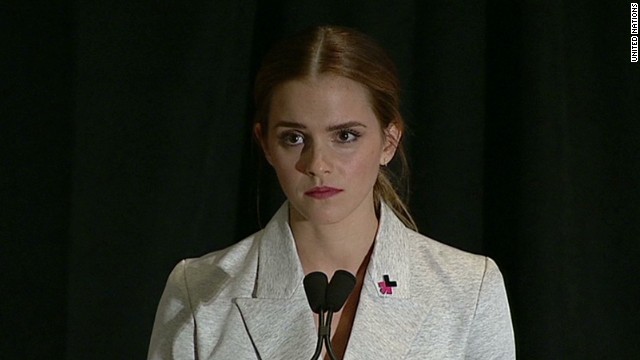
Through A Glass Darkly: Emma Watson's passionate advocacy of Popular Feminism at the UN Women's launch of the "HeForShe" initiative in September 2014 broke with 40 years of feminist process by inviting men and boys to become part of the struggle to end gender inequality. Bitter experience had taught Second Wave feminists that this was a struggle best fought by women, for women, and on women's terms. In the immortal words of Frederick Douglass: "Power concedes nothing without a demand."
 
“I AM INVITING YOU to step forward, to be seen to speak up, to be the ‘he’ for ‘she’. And to ask yourself if not me, who? If not now, when?” That was the challenge thrown down to men and boys around the world by the British actor, Emma Watson, at the launch of the HeForShe movement in New York City last year. The brainchild of UN Women, the UN organisation dedicated to gender equality and the empowerment of women, HeForShe openly solicits the support of men in the struggle for gender equality – tacitly acknowledging the success of patriarchal resistance to the further extension of women’s rights internationally.
 
Watson spoke movingly of her own conversion to feminism and of the many “inadvertent feminists” who had made it seem natural for her to be treated as an equal. But she also made reference to the declining influence of feminism as a mobilising ideology.
 
“I was appointed six months ago and the more I have spoken about feminism the more I have realized that fighting for women’s rights has too often become synonymous with man-hating. If there is one thing I know for certain, it is that this has to stop.”
 
Watson’s speech thus resurrected the line of argument which some of the early advocates of what came to be known as “Second Wave Feminism” deployed in their quest for male allies.
 
“We don’t often talk about men being imprisoned by gender stereotypes but I can see that that they are and that when they are free, things will change for women as a natural consequence … Both men and women should feel free to be sensitive. Both men and women should feel free to be strong. It is time that we all perceive gender on a spectrum not as two opposing sets of ideals.”
 
Subsuming the struggle for women’s rights in a grander battle for the freedom of both sexes did not, however, strike many 1970s feminists as a particularly effective strategy for securing their own liberation. Their personal experiences as political activists told them that any movement for gender equality in which men participated as full and equal partners would inevitably end up being dominated by men, and reflect a masculine view of the world. Women found their own voices much more readily in groups with a “Women Only” membership rule.
 
This herstory is well known to the New Zealand spokeswoman for HeForShe, Sue Kedgely. As one of the Founding Mothers of Second Wave Feminism in New Zealand, she is well aware of the movement’s organisational evolution. All the more surprising, then, that she should be the one inviting all good Kiwi blokes to don their shining armour and ride to the rescue of the world’s damsels.
 
Never backward in coming forward, Kedgely kicked off the New Zealand HeForShe effort, launched in Wellington on Friday (27/11/15) afternoon, by signing up the realm’s leading knight – and Governor-General – Sir Jerry Mateparae. Other high-profile fellas signing on to this noble, global quest to secure gender equality by 2030 include broadcasters Wallace Chapman and Jack Tane; economist and philanthropist, Gareth Morgan; and comedians Te Radar and Jeremy Ellwood.
 
If you’re a bloke and also feel moved to support this new cause of “Popular Feminism”, then simply pay a visit to the website and sign on.
 
Just be aware, though, that not every feminist shares Emma Watson’s views. Responding to her New York speech, feminist columnist, Clementine Ford, wrote in the Sydney Morning Herald of 27 September 2014:
 
“It’s true that a person like Watson is very well placed to inspire people who may still be labouring under the weight of stereotypes regarding feminism, and that is undoubtedly cause for celebration. I applaud her for being brave enough to speak out when so many others haven’t. But feminists have been battling these stereotypes for decades and we will almost certainly be battling them for years to come because the unfortunate truth is that gender inequality is about power – who has it, and who wants to retain it. No amount of window dressing (for that is surely what the HeForShe campaign amounts to, given its entire breadth seems to be asking men to click a button and download a twibbon) is going to change the systemic global oppression that results in women’s degradation, subjugation and death in persistently high numbers. And it isn’t, as some have suggested, ‘tearing another woman down’ to want to discuss that reality.”
 
To which, as a “He”, I am happy to stand and say to that particular “She”:
 
“Right-on Sister!”
 
This essay was posted on The Daily Blog and Bowalley Road of Saturday, 28 November 2015.

Tuesday, 11 August 2015

Of Messengers And Messages: Reflections On Rachel Smalley's Controversial Column.

Greater Gender Balance Equals Greater Diversity? Well, yes, Rachel Smalley, but only in relation to gender - a factor which in no way guarantees a diversity of viewpoints. And it is, surely, the messages which are carried on the nation’s airwaves that matter most – not the gender of the broadcasters who carry them?
 
IT WAS ONE of the most “respectable” of the Suffragette arguments. Give women the vote. Allow them to stand for Parliament. Make them ministers – even prime ministers – and society will be transformed. The mere presence of women in the halls of power (respectable women, that is, because powerful men and disreputable women have never been far apart) can only soften the raw masculinity of the political process and usher in a more caring, a more productive, and – most importantly – a more peaceful world.
 
All nonsense, of course. No sooner was war declared in 1914, than the leader of the British suffragettes, Emmeline Pankhurst, and her ambitious eldest daughter, Christabel, were up on the nearest platform, loudly urging every able-bodied British male to enlist in the great fight for King and Country. From chaining themselves to railings, the Pankhurst’s impressive army of suffragettes were swiftly redeployed to handing out white feathers to any young man not in uniform. When it came to mass slaughter, the female of the species was determined to prove herself no less deadly than the male.
 
Or, even deadlier. Because, once again, when women did become prime ministers (be it Israel’s Golda Meir, India’s Indira Ghandi, or Britain’s Margaret Thatcher) they did not show themselves to be one whit less willing to unleash fire and death than their male counterparts. (As anyone familiar with the careers of Boudica, Isabella de Valois, Catherine de Medici, Elizabeth I or Catherine the Great could confidently have predicted!)
 
Old news, one might say. But, one would be wrong. Because no matter how many times it is knocked down, the argument that women, simply by being there, or by virtue of some magical essence peculiar to the female of the species, will make an important difference to the way everything from corporations to cabinets are run, keeps popping right back up again.
 
The argument’s latest protagonist is the broadcaster Rachel Smalley, who used the occasion of John Campbell’s appointment as Radio NZ-National’s new drive show host to lament the preponderance of male voices on prime time radio.
 
“The perspective a male host takes into an interview is often very, very different to that of a woman”, wrote Smalley, in her column on the Newstalk-ZB webpage. “The perspective any of these hosts take into an interview about domestic abuse, sexual violence, or funding cuts to women’s refuge will be very different to mine.”
 
Really? I would have thought that, on any issue, a journalist’s perspective – male or female – would be determined by their willingness to set aside stereotypes and prejudices and allow their professional judgement to be guided by the evidence on offer. And isn’t their personal response to domestic abuse and sexual violence as likely to be determined by their capacity for empathy as their gender? After all, it was a male, David Cunliffe, who told a women’s refuge conference that the statistics relating to sexual violence made him “sorry to be a man”. By no means all the people who pilloried him for that comment were men.
 
Indeed, Smalley’s assumptions regarding the positions a male journalist is likely to take on everything from paid parental leave, to aid for victims of the wars in the Middle East, might, themselves, be characterised as examples of sexist prejudice. Do fathers have no stake in the quantum of paid parental leave? Do journalists like Robert Fisk, and our own Jon Stephenson, not risk their lives to bring the stories of the victims of war to the world?
 
Smalley’s argument would have been a great deal stronger if she had couched it in terms of ideological, rather than gender, diversity. The problem with prime-time radio in New Zealand is not a preponderance of male voices, but of right-wing voices. It is, surely, the messages which are carried on the nation’s airwaves that matter most – not the gender of the broadcasters who carry them?
 
Mary Wilson (the broadcaster John Campbell is about to replace on week-nights between 5:00 and 7:00pm) will soon be playing a major role in shaping the messages coming out of Radio NZ-National. Reality TV suprema, Julie Christie, already plays a very similar role at MediaWorks.
 
Now, ask yourself: Are the radically different messages carried by these women’s respective networks more likely to be the product of their makers’ gender – or their politics?
 
This essay was originally posted on The Daily Blog of 10 August 2015.

Tuesday, 12 November 2013

Rescuing Us Right Back: Further Reflections On The Roastbusters Scandal

Rescuing Each Other: Between them, the early medieval troubadours and their aristocratic patronesses of Southern France created a new and enduring cultural style: the Ideal of Courtly Love. For a thousand years in the West it has been possible to like and respect women, seek out and enjoy their company, heed their advice – and still be considered a man.
 
THEY CAME FROM THE SOUTH, wandering the rough roads and sweeping beaches of Aquitaine. Bringing with them all the news and scandal of the day and singing long strange tales to the rhythm of a tabor and the ripples of a harp. They were the troubadours: half journalists, half rock-stars; and wholly welcome in the castle-based culture of Southern France during the eleventh and twelfth centuries.
 
As often as not those castles were ruled by women. With their lords far away, settling old feudal scores; or even further afield, crusading in the Holy Land; these ladies found themselves temporary matriarchs. They may have been ruling over men in their husband’s name, but they were ruling nonetheless.
 
Out of these two – the troubadours and the matriarchs – emerged a new cultural style that was to influence the relationship between the sexes for centuries to come: the ideal of courtly love; chivalry; romanticism.
 
Powerfully influenced by the sparkling cultures of Islamic Spain and Sicily, this new cultural style was aimed directly at the uncouth brutality of the fiercely patriarchal societies of Northern Europe. From across the Pyrenees the troubadours brought glimpses of a world where manhood was not defined entirely by the violent assertion of power and control, but by how completely he was able to enter the life of the mind. To read, to write, to make music, to patronise beauty and knowledge: these were accomplishments of which men could also be proud. Yes, and women, too.
 
Women were the key, the means by which a feudal brute could be transformed into a courteous knight. The Ideal of Courtly Love challenged men to seek out and savour all the qualities that a warrior culture despises: tenderness, vulnerability, longing, patience, generosity and sacrifice.
 
Patriarchy rejects these emotions precisely because they are the qualities it associates most closely with the world of women. Were men to open themselves to these experiences, then interaction between the sexes would at once become both more intelligible and more equal, and the rigid barriers of patriarchy would crumble.
 
It was this, the revolutionary potential of courtly love, that inspired Eleanor of Aquitaine (Queen to both the King of France and of England) and her daughter, Marie, the Countess of Champagne, to champion courtly love throughout the courts of Europe. Aristocratic feminists they may have been (did serfs even have feelings?) but the cultural style which they and their troubadour propagandists promoted has, over the intervening millennium, become a defining motif of Western culture.
 
For a thousand years in the West it has been possible to like and respect women, seek out and enjoy their company, heed their advice – and still be considered a man.
 
Modern feminists tend to give the Ideal of Courtly Love short shrift. Queen Eleanor and her troubadours have largely been denounced for “putting women on a pedestal” which, according to their latter-day sisters, confers upon women an entirely spurious superiority, rather than the equality that is theirs by right. “Benevolent” sexism chivalrous behaviour may be, but it’s still sexism.
 
In a week during which New Zealand women have become acquainted with all the gut-wrenching details of malevolent sexism, feminism’s swift dismissal of chivalry’s benevolence surely warrants reconsideration? The narrative of courtly love may have been a literary, historical and sociological fiction, but it provided men with a model of “the perfect knight” they could become. By the rules of chivalry, honour and virtue were the consequence of neither a man’s genealogy, nor his wealth, but of his character. A man attained honour by the virtue of his choices.
 
Where was honour and virtue among the Roastbusters? In a room full of young men made brutes by the fictions of pornography, isn’t it tragic that not even one boy was raised on the fictions of chivalry? Not one young man who, perceiving the evil intent of his companions, recognised damsels in distress and chose to become their perfect knight? Not one 17-year-old boy who chose to, in Matthew Hooton’s anguished father’s appeal to shock-jocks Willie Jackson and John Tamihere: “look after them and get them home safely”?
 
For all stories have power. As the Canadian producers of a documentary looking into the sexualisation of young women revealed, a huge number of girls are still raised on the fictions of the Disney Corporation. Encouraged to see themselves as little princesses, they grow up expecting their very own Prince Charming.
 
Sadly, their brothers grow up with very different expectations. Rather than draw inspiration from the chivalrous deeds of King Arthur and his Knights, they revel in the murders and rapes depicted in Game of Thrones.
 
Perhaps Queen Eleanor and the troubadours were right: in a world of brutal exploitation and violence, men must be encouraged to rescue women. So that women, in their turn, can rescue us right back.
 
This essay was originally published in The Press of Tuesday, November 12, 2013.

Friday, 8 November 2013

Fathers And Sons

Assumptions Of Complicity: The young men involved in Roastbusters projected a jarring sense of invulnerability: an assumption that their sexual humiliation of young women was just the normal stuff all young men engage in. It was an attitude which received a measure of endorsement from media figures who described the Roastbusters' behaviour as "mischief".

IT WAS THEIR SMIRKS that enraged me the most: the “Roastbusters’” easy assumption that every male in New Zealand was envying them. Telling us: “You want this, too. This is your best fantasy. We’re doing everything you ever dreamed of doing but didn’t – because you never believed anyone could possibly get away with it.”
 
And there was more.
 
The mocking expression on these young men’s faces was also saying: “You’re complicit in this because, deep down, you’re just like us. Deep down, your view of women is no different from ours. They’re meat. You chew them up. You spit them out. And if you can organise a bit of a laugh at their expense along the way – then so much the better!”
 
How has New Zealand raised such sons?
 
That’s a question only New Zealand’s fathers can answer.
 
What sort of example have we set?
 
When New Zealand was governed by a woman, did the nation’s fathers indicate to their sons that this was a state of affairs of which they should be proud? Were they outraged on their sons’ behalf when their workmates and drinking buddies stood around the barbecue making jokes about her looks, her voice, her sexuality – or did they join in the ribald laughter?
 
Paraphrasing Dr Martin Luther King, did they tell their sons that a woman is to be judged not by the shape of her body, but by the content of her character?
 
Do New Zealand’s fathers teach their sons that before anybody is male or female; black or white; gay or straight; intelligent or stupid; beautiful or ugly: they are first and always a human-being?
 
And, since they are human, their irreducible share of humanity’s common inheritance must be acknowledged and respected.
 
Shakespeare, in The Merchant of Venice, puts into the mouth of his character Shylock, a despised Jewish moneylender, what is perhaps the greatest appeal to our common humanity in all of English literature:
 
“Hath not a Jew eyes? hath not a Jew hands, organs, dimensions, senses affections passions? fed with the same food, hurt with the same weapons, subject to the same diseases, healed by the same means, warmed and cooled by the same winter and summer as a Christian is? If you prick us, do we not bleed? If you tickle us do we not laugh? If you poison us, do we not die?”
 
What is missing from the education of our sons that so many of them seem incapable of even the most basic empathy? Why, when invited to participate in the “Roastbusters” theatre of cruelty, were so many West Auckland boys incapable of imaginatively trading places with the young women they were planning to abuse? What was it that prevented their consciences from shouting out on their pitiably young victims’ behalf: “If you stupefy us, and gang-rape us, and broadcast our humiliation on Facebook? Will we not want to die?”
 
In attempting to explain the “Roastbusters’” appalling behaviour, many New Zealanders will point to the pornographic images that are now so easily available on the Internet. They will argue that the “message” young men are taking from these staged sexual encounters is that women enjoy being dominated and abused, and that a man is not a man unless he is capable of deriving sexual pleasure from dominating and abusing his female partners.
 
Given the ubiquity of both the Internet’s pornographic websites and of the devices required to access them, it is surely past time that New Zealand’s teenage men and women were given a more wholesome series of messages regarding not only what they have a right to expect from one another sexually, but also regarding their fundamental human rights.
 
The “Roastbusters” revelations make it very clear that our secondary schools’ sex education syllabus is in need of urgent revision. Against pornography’s messages of exploitation and abuse we must counterpose the messages of respect, compassion and equality. Not only for our daughters’ safety, but also for our sons’.
 
This essay was originally published in The Dominion Post, The Waikato Times, The Taranaki Daily News, The Timaru Herald, The Otago Daily Times and The Greymouth Star of Friday, 8 November 2013.

Tuesday, 9 July 2013

Winning Women's Equality - With Men's Weapons

The Price of Power: To secure selection as the candidate for a major political party requires the surrender of all those qualities generally associated with femininity. To survive as an MP, women must develop an impenetrable outer-skin which, as it thickens, leaves less and less space for the things it is supposed to protect.
 
I’M NOT PROUD of what I did. In fact, recalling those events, I recoil in dismay from the memory of my former self. Why did I do it? Because experience had taught me a very simple and brutal truth: in politics you either master the art of destroying your opponents – or you are destroyed by them.
 
The media storm whipped up by Labour’s plan for ensuring gender equality in its caucus – the so-called “Man Ban” – has concentrated all its force on the merit-based selection versus party-mandated quotas debate. There has been next to no attention paid to the more important question: why do fewer women than men make it through the candidate selection process?
 
The whole purpose of a quota system is to even up a contest which, from the very outset, is stacked against women. Or, perhaps, that should read: a game which, from the very outset, is stacked against those who demonstrate the characteristics our culture generally associates with women.
 
Can you stand up at a party branch meeting and respond to anyone foolish enough to oppose your plans with such cold ferocity and unflinching personal cruelty that not only do they shut up for the rest of the meeting, but they never attend another? Are you willing to spend hours on the phone lining up supporters for, and running down the opponents of, party movers-and-shakers whose backing you need to succeed? Can you cross off the names of former friends, allies – even lovers – from the “ticket” your faction is running at Annual Conference? Are you prepared to assure a pivotal party “fixer” that although you were once a fervent supporter of a cause he or she opposed, you have now seen the error of your ways?
 
These are the “skills” the aspiring parliamentary candidate needs to acquire in order to stand a reasonable chance of selection. Not to beat about the bush, they are the skills of a sociopath: the ability to lie convincingly; the ability to manipulate and exploit; the ability to impress and overawe; and, most vital of all, the ability to hurt and betray other human-beings not only without compunction – but without the slightest guilt or remorse.
 
Culturally-speaking, these sociopathic qualities are overwhelmingly associated with masculinity. And, no matter how loudly we may condemn the men who display such immoral behaviour, when we encounter them in the flesh it’s a very different story.
 
Almost against our will, we are seduced by these ruthless individuals. Some ancient species memory kicks-in to subdue our moral qualms – reminding us that these are the qualities that work. It reassures us that the family, tribe or nation that places itself under the protection of such men stands the best chance of survival. Extraordinary moral strength is required to avoid falling under their spell.
 
The most pernicious aspect of modern, democratic politics is that it cannot explicitly acknowledge any of these arcane truths. No political party is going place an ad’ saying: “Parliamentary Candidates Needed. Must be prepared to discard all conviction and compassion in the name of victory. Sociopaths Preferred.”
 
On the contrary, the qualities “officially” sought after by political parties (especially those of the Left) indicate the exact opposite. Fidelity, commitment, diligence and a high level of emotional intelligence (traditionally, the defining attributes of femininity) are the qualities demanded of a modern politician. Significantly, these were precisely the qualities which the pioneers of women’s suffrage promised their sex would bring to the corrupt and cut-throat world of male politics.
 
It was all a lie. The women who took such blandishments at face value and put their names forward for selection soon discovered that sweetness and light were no match for bitterness and the night. Those with no stomach for the vicious battles that clearly awaited women candidates and parliamentarians, withdrew from the arena. The ones who stayed had no option but to acquire both the weapons and the armour for competitive combat. Masculine weapons. Masculine armour.
 
It was seldom a comfortable fit. Certainly not for women, and not for an encouragingly large number of men. New Zealand’s most successful woman politician, Helen Clark, reported being physically sick after some meetings of the Labour caucus – so toxic were the tactics of her male colleagues. By the time she became Prime Minister, however, her armour was as hard as dragon’s hide and her swords and stilettoes honed exceptionally sharp.
 
The great danger, of course, is that those who develop such an impenetrable outer-skin leave less and less space for the things it was supposed to protect. Likewise, those who master the skills of the sociopath too often forget that they were ever anything else.
 
I was lucky to escape that fate.
 
What disquiets me is not how few women make it through candidate selection – it is the number who succeed.
 
This essay was originally published in The Press of Tuesday, 9 July 2013.

Friday, 18 February 2011

You Know Something's Wrong When ...

You Guy's Have Got To Be Kidding!: You know something's very, very wrong when the only person the Media 7 team could find to argue for the continuation of Women's Studies courses was ...

THE BETE NOIR of The Hand Mirror set ends up fronting for the value of Women’s Studies courses on Media 7.

Say what?

Yes, that’s right, the only panellist willing to defend Women’s Studies courses (and pretty much the whole feminist discourse) on last night’s Media 7 programme was the Queen of Thorns favourite prick – Chris Trotter.

Prompted by the recent decision to cancel the Women’s Studies course at Victoria University, the producers of Media 7 were keen to examine the likely impact of its demise on the coverage of gender issues by the New Zealand media.

But could they get anybody with a strong personal commitment to the teaching of Women’s Studies to appear on the show? Not on your Nelly! Sandra Coney and Sue Kedgely, founding mothers of Second Wave Feminism in New Zealand, declined. All the women in academia who were approached were unwilling to put their heads above the ivory parapet. Even the women at New Zealand’s premier feminist blogsite – The Hand Mirror – refused to participate.

Finally, in desperation (or was it out of a wicked sense of humour?) they asked Chris Trotter if he would be prepared to comment.

Well, after I stopped laughing, my first question was: "Is there no one else slightly better qualified than me – like a woman – willing to discuss this?" The producers explained that they’d lined up Deborah Coddington to discuss women in journalism, and that a young graduate of the University of Auckland’s Women’s Studies course, Hannah Lynch, would supply the voice of direct experience, but they’d been unable to find any women who were prepared to come on the programme and defend Women’s Studies per se. (To be fair, Marilyn Waring would have fronted, but she had another engagement.)

Blame it on the Imp of Perversity – but I said "Okay, I’ll do it!"

And what a weird experience it turned out to be.

The show kicked-off with an interview between Media 7 journalist Sarah Daniell and a former Women’s Studies student from Vic’ who’s gone on to become a household name in New Zealand journalism ….. John Campbell.

Okay, make that two blokes.

Then Deborah – the former libertarian and Act MP – informed the show’s stand-in host, José Barboza (you’re cursing the timing of that Webstock Conference now, aren’t you Russell) that, as a young journalist, she took her inspiration from Joan Didion, Gloria Steinem and woman journalists writing for the left-wing American periodical Mother Jones. Who knew? And, what went wrong?

For my money, however, the star of the show was Hannah. With the forbearance of age, I shall pass over this budding journalist’s first foray into public political commentary in silence. The programme is viewable here. Make up your own mind.

Suffice to say that, by the end of the programme I was ready to start bellowing out the chorus of I Am Woman and, at a pinch, would have burned my Y-fronts on camera.

Is the backlash born of the barbecue-pit and the sports bar really this strong? Have we truly reached such a low intellectual level in this country, and is the climate of fear in our universities, corporations, party caucuses, trade union offices and newsrooms really so great, that the only people willing to defend what is arguably the most important progressive movement of the past half-century are John Campbell and ….. me!

Surely, there’s something very, very wrong with this picture?

Friday, 5 June 2009

Grown-Up Stuff


WHAT IS IT with left-wing women? Why does it take a Cactus Kate to spell out the bleeding-bloody-obvious about Phil Goff’s damsel-in-distress? And, where’s the advantage, when it comes to living a fulfilling, exciting and, yes, occasionally risky life, of behaving like a permanently helpless victim?

So Dr Richard Worth hits on women. So what? It’s a thing men do. Some with genuine style and panache, others with all the finesse of a slobbering dog. Women worthy of the name take the stylish ones to bed, and tell the slobberers to take themselves somewhere else.

And, if the silly sods refuse to take the hint? Well, that’s what, workmates/bosses/girlfriends/boyfriends/husbands and, if worse comes to worst, police officers are for.

By the sounds of things, Dr Worth is a slobberer. A slobberer, moreover, who seems to have real difficulties taking the hint. Presumably, that’s why he’s become the subject of a serious allegation of wrong-doing, and why his political career lies in ruins.

If you behave like a slobbering prat, entirely unmindful of your responsibilities as a husband, a father, a minister of the Crown, a member of Parliament, a member of the National Party caucus (not to mention a member of the human race) then you deserve nothing better.

The curse of Karma has caught up with the erring member of the erring Member. So what is all the simpering and mewling and tut-tutting and isn’t-it-awfulling about?

Sex is a thing that grown-ups do. Learning to negotiate one’s way through the reefs of lust and longing is, therefore, an important and inescapable part of becoming a mature human-being. In a culture (one of the very few cultures, in fact) which proclaims and enforces the principle of sexual equality, it looks really bad when left-wing "feminists" start behaving like a bunch of Victorian maidens confronted with a naked table-leg.

If "girls can do anything", then surely they can tell some randy old bugger to fuck-off and leave them alone?