Showing posts with label John Campbell. Show all posts

Wednesday, 30 September 2015

Investigating The Democratic Sausage: Ika Seafood Bar & Grill’s Table Talk No. 6 “One Year On From Dirty Politics – What Has Changed?”

The Journalist As Hero: “One Year On From Dirty Politics – What Has Changed?” Ika Seafood Restaurant & Bar’s Table Talk No. 6 featured Dirty Politics’ author, Nicky Hager; left-leaning columnist, Dita Di Boni; veteran business writer, Fran O’Sullivan; along with the evening’s emcee, the martyred and marvellous, John Campbell.
 
BOBBY KENNEDY often joked that democracy is like a good sausage: tastes great – but you really don’t want to know what goes into it. Otto von Bismarck said something very similar about the making of laws. Regardless of its provenance, the point being made is an important one. The stuff of which politics is made: self-interest, class prejudice, religious bigotry, economic and social necessity; is often ugly and disreputable. That the final product so often turns out to be publicly palatable, is proof of our politicians’ over-riding need to preserve the system’s legitimacy in the eyes of those who elect them.
 
The distinguishing characteristic of left-wing investigative journalism, however, is that its practitioners are never satisfied with just the taste of Democracy’s sausage. They will not rest until a full list of ingredients, how they were combined, and for how long they’ve been cooked, is prepared and presented to the public. As often as not this is done without the slightest public encouragement, and the results are frequently received with considerable animosity. That’s because Democratic Sausage is generally consumed by the voters in blissful (and often wilful) ignorance of its contents.
 
They really don’t want to know what goes into it.
 
The people attending the Ika Seafood Bar & Grill's Table Talk No. 6, “One Year On From Dirty Politics – What Has Changed?”, disagreed. That’s because the journalists on stage: Dirty Politics’ author, Nicky Hager; left-leaning columnist, Dita Di Boni; veteran business writer, Fran O’Sullivan; and the evening’s emcee, the martyred and marvellous, John Campbell – along with the people packing out the restaurant to hear them – all fervently believe that the voting public not only has the right, but also the duty, to understand how Democratic Sausage is made.
 
There’s no disputing that Hager’s Dirty Politics reveals an unprecedented amount of information about what was going on behind the scenes of New Zealand politics in 2014. The wealth of material contained in Hager’s book could not, however, have been acquired outside of the thoroughly digitalised society we’ve become. Thousands of hacked e-mail communications to and from Cameron Slater’s Whaleoil blogsite had been passed on to Hager, revealing a host of startling connections between Slater, the Prime Minister’s Office, Justice Minister Judith Collins, numerous journalists, and a strange coterie of behind-the-scenes movers and shakers calling themselves “The Vast Right-Wing Conspiracy”.
 
That similar exercises in political character assassination, media manipulation, and influence-peddling went on in the past is equally indisputable. It was only very rarely, however, that evidence of such dirty deeds ever came to light. The shrewd operators of the pre-digital era took care to leave no paper trails for pesky journalists to follow. Granted, telephone landlines could be tapped, but not, in the usual course of events, by the Left. Nor was there an Official Information Act to trouble wayward civil servants and Cabinet Ministers. Dirty politics was easier to get away with in those days – and investigative journalism much harder!
 
The result, paradoxically, was that public trust and confidence in our political institutions was much higher in the past than it is today. What the journalistic eye could not see, the electorate didn’t grieve over.
 
Everything changed in the 1970s, however, when the whistle-blowing of Daniel Ellsberg, and the investigative efforts of Washington Post reporters Bob Woodward and Carl Bernstein, forced the American people to confront the realities of Democratic Sausage-making in an unprecedented way. The Pentagon Papers exposed decades of dishonesty about the Vietnam War on the part of the US Government. And the Watergate Scandal revealed to the people of the United States that their President, Richard Nixon, was a crook. Overnight, investigative reporters became heroes, and the fearless Fourth Estate was hailed as a more effective guardian of the citizen’s rights and freedoms than any politician.
 
Heroic Journalism: The Washington Post's Bob Woodward and Carl Bernstein, whose reporting brought down all the President's men - and, in August 1974, the President himself.
 
Many Baby-Boomers convinced themselves that this was how it would be from now on – but they were wrong. The blossoming of media freedom in the 1970s was actually an aberration – not a new and beautiful thing. The owners of the news media, frightened by the effective deposition of a President by the news media, tightened-up their control of newsrooms and reined-in the efforts of investigative journalism worldwide. There would be no more Watergates.
 
Partly this was in defence of the beleaguered capitalist system, but it was also about giving the news media’s consumers what they wanted. And what the readers, listeners and viewers of the late 1970s wanted most was to get the hell out of the sausage factory. They had seen enough. The truth made them uncomfortable. They wanted to believe that all was well with their democracy. That Richard Nixon was an exception, not the rule. Accordingly, just six years after the villain of Watergate had been driven from the White House, a much more dangerous President, Ronald Reagan, was moving in.
 
Nicky Hager, Dita Di Boni and Fran O’Sullivan all spoke eloquently about the difficulties facing conscientious journalists in the digital era; about the proliferation of media platforms and the constant shrinkage of newsrooms everywhere. And John Campbell, just by being there, reminded the Ika audience of what can happen to a television current affairs show that strives too earnestly to reveal the composition of Democratic Sausage.
 
What they didn’t discuss, however, was the one, incontrovertible, fact about the publication of Dirty Politics. Namely, that as a political purgative, it didn’t work. Unlike Richard Nixon, John Key was not forced to resign, and his political party was not voted out of office. In fact, a year (and a bit) after the book’s release, Key’s National Government remains as popular as it ever was. The bitter truth is that an electorally decisive number of New Zealanders reacted to Dirty Politics by moving towards – not away from – the National incumbent. Outside the relatively small circle of New Zealanders who celebrated Nicky Hager’s investigative efforts on their behalf, a great many Kiwis responded to his attempt to show them what was happening behind the façade of their democratic institutions with anger and resentment.
 
They liked the Democratic Sausages sizzling on John Key’s barbecue. They did not want to know how they were made. And they definitely didn’t want to be told what – or who – went into them.
 
This essay was originally posted on The Daily Blog of Wednesday, 30 September 2015.

Tuesday, 11 August 2015

Of Messengers And Messages: Reflections On Rachel Smalley's Controversial Column.

Greater Gender Balance Equals Greater Diversity? Well, yes, Rachel Smalley, but only in relation to gender - a factor which in no way guarantees a diversity of viewpoints. And it is, surely, the messages which are carried on the nation’s airwaves that matter most – not the gender of the broadcasters who carry them?
 
IT WAS ONE of the most “respectable” of the Suffragette arguments. Give women the vote. Allow them to stand for Parliament. Make them ministers – even prime ministers – and society will be transformed. The mere presence of women in the halls of power (respectable women, that is, because powerful men and disreputable women have never been far apart) can only soften the raw masculinity of the political process and usher in a more caring, a more productive, and – most importantly – a more peaceful world.
 
All nonsense, of course. No sooner was war declared in 1914, than the leader of the British suffragettes, Emmeline Pankhurst, and her ambitious eldest daughter, Christabel, were up on the nearest platform, loudly urging every able-bodied British male to enlist in the great fight for King and Country. From chaining themselves to railings, the Pankhurst’s impressive army of suffragettes were swiftly redeployed to handing out white feathers to any young man not in uniform. When it came to mass slaughter, the female of the species was determined to prove herself no less deadly than the male.
 
Or, even deadlier. Because, once again, when women did become prime ministers (be it Israel’s Golda Meir, India’s Indira Ghandi, or Britain’s Margaret Thatcher) they did not show themselves to be one whit less willing to unleash fire and death than their male counterparts. (As anyone familiar with the careers of Boudica, Isabella de Valois, Catherine de Medici, Elizabeth I or Catherine the Great could confidently have predicted!)
 
Old news, one might say. But, one would be wrong. Because no matter how many times it is knocked down, the argument that women, simply by being there, or by virtue of some magical essence peculiar to the female of the species, will make an important difference to the way everything from corporations to cabinets are run, keeps popping right back up again.
 
The argument’s latest protagonist is the broadcaster Rachel Smalley, who used the occasion of John Campbell’s appointment as Radio NZ-National’s new drive show host to lament the preponderance of male voices on prime time radio.
 
“The perspective a male host takes into an interview is often very, very different to that of a woman”, wrote Smalley, in her column on the Newstalk-ZB webpage. “The perspective any of these hosts take into an interview about domestic abuse, sexual violence, or funding cuts to women’s refuge will be very different to mine.”
 
Really? I would have thought that, on any issue, a journalist’s perspective – male or female – would be determined by their willingness to set aside stereotypes and prejudices and allow their professional judgement to be guided by the evidence on offer. And isn’t their personal response to domestic abuse and sexual violence as likely to be determined by their capacity for empathy as their gender? After all, it was a male, David Cunliffe, who told a women’s refuge conference that the statistics relating to sexual violence made him “sorry to be a man”. By no means all the people who pilloried him for that comment were men.
 
Indeed, Smalley’s assumptions regarding the positions a male journalist is likely to take on everything from paid parental leave, to aid for victims of the wars in the Middle East, might, themselves, be characterised as examples of sexist prejudice. Do fathers have no stake in the quantum of paid parental leave? Do journalists like Robert Fisk, and our own Jon Stephenson, not risk their lives to bring the stories of the victims of war to the world?
 
Smalley’s argument would have been a great deal stronger if she had couched it in terms of ideological, rather than gender, diversity. The problem with prime-time radio in New Zealand is not a preponderance of male voices, but of right-wing voices. It is, surely, the messages which are carried on the nation’s airwaves that matter most – not the gender of the broadcasters who carry them?
 
Mary Wilson (the broadcaster John Campbell is about to replace on week-nights between 5:00 and 7:00pm) will soon be playing a major role in shaping the messages coming out of Radio NZ-National. Reality TV suprema, Julie Christie, already plays a very similar role at MediaWorks.
 
Now, ask yourself: Are the radically different messages carried by these women’s respective networks more likely to be the product of their makers’ gender – or their politics?
 
This essay was originally posted on The Daily Blog of 10 August 2015.

Tuesday, 26 May 2015

Right Objectives - Wrong Network

Quixotic Mission? From its very inception TV3 has tried to fulfil the role of a creative and independent public broadcaster - largely because TVNZ declined to accept that role for itself. But commercial and public broadcasting are two, very different, things. In the end, if funds expended exceed funds received, a private sector corporation has to act. Campbell Live's supporters are attacking the wrong network.
 
JOHN CAMPBELL’S FRIENDS – and he has many – are attacking the wrong television network. Mediaworks is not the problem – and never has been. Nor is it the solution – though, from its very inception, nearly 30 years ago, it has (rather Quixotically, in my opinion) tried to be. If I may borrow that marvellous line from George Lucas’s Star Wars: Privately-owned, commercially-driven television, “are not the droids you are looking for”. The network John Campbell’s imperial stormtroopers should be pursuing, plasma rifles and light-sabres held high, is the one they already own – Television New Zealand.
 
It is one of the great ironies of New Zealand’s (relatively) recent cultural history that the impetus towards free and open airways has, to a startling degree, come from freewheeling cultural entrepreneurs like Colin Scrimgeour, Gordon Dryden, George Andrews, Marcia Russell and Rod Pedersen. Not forgetting that madcap piratical quartet who, in 1966, launched Radio Hauraki.
 
By and large, these were not individuals who cared a great deal about making a profit. What they did care about, however, was innovative, creative, challenging and, most of all, exciting broadcasting. Whether it was Colin Scrimgeour’s subversive “Friendly Road”; Gordon Dryden’s experiments in “talkback” on Radio Pacific; or Rod Pedersen’s anarchic “Nightline” programme on TV3; the point was always to fashion something as far removed from the dull fare of officially-sanctioned broadcasting as possible – and then beam it, with unapologetic glee, into the living rooms of the unsuspecting public.
 
One of the strangest aspects of New Zealand’s deeply conformist society is the way it drives so many of its non-conforming citizens into the private sector. Not, it must be said, in the spirit of avarice that makes true capitalists rich, but because it seemed to them about the only place where it was possible to set up an institution capable of saying “Yes”.
 
What many of them failed to grasp, however, was that although New Zealand’s state and local government bureaucrats were among the greatest nay-sayers in the world, the marketplace also possesses some pretty inflexible rules of its own. The greatest of these being the rule that insists money has to flow both ways. No matter what the enterprise, if funds expended are not exceeded by funds received, then: “Houston, we have a problem.”
 
Getting the money to flow both ways has always been TV3’s greatest challenge. Only intermittedly have the funds it received exceeded the funds it expended. Indeed, the mavericks and dreamers who founded the network had hardly begun broadcasting before they found their beloved creation placed in receivership. Throughout its relatively short life, TV3 has always, like poor Blanche Dubois in Tennessee Williams A Streetcar Named Desire, “depended on the kindness of strangers”.
 
Regardless, its extraordinarily talented staff (especially Head of News and Current Affairs, Mark Jennings) have done everything they could to stay true to TV3’s kaupapa. Running a network dedicated to producing the sort of creative and challenging television that the state broadcaster (with the important exception of a few, golden, years in the 1970s and 80s) either couldn’t or wouldn’t commit to the airwaves.
 
Those “golden” years bear closer scrutiny. For the first time, either before or since, television executives were encouraged to say “Yes”. Television One and South Pacific Television (both state-owned) were persuaded to give the green light to programmes designed not only to entertain, but also educate, and, in a handful of rare and very special cases, elevate their audiences.
 
What made it all possible was the Broadcasting License Fee. This relatively modest tax, levied on all television users, allowed public television to remain at least partially sheltered from the ratings-driven influences of commercial television. The problem was, people hated paying their Broadcasting License Fee. Viewers who, today, happily fork out $100 per month for Sky TV, thought a fee of less than $100 per year was far too much to pay for a creative, innovative and challenging television network run by – and for – New Zealanders.
 
TV3 – Mediaworks – have broadcast Campbell Live for as long as they could (and, arguably, a little bit longer than they should). Sometimes strangers have to be cruel to be kind. To expect a commercial network to ignore the most basic rules of private enterprise, in order to satisfy an audience that has yet to demonstrate an equal degree of militancy when it comes to demanding that Television New Zealand meet its responsibilities, isn’t just unfair – it’s entirely misguided!
 
As New Zealanders, shouldn’t we at least try to summon up the courage to imagine public institutions in which the creative, the challenging, and – yes – even the mavericks can find a place? And, isn’t it long past time that we encouraged the growth of a private sector dedicated to the dynamically dull, but indisputably important, business of making a buck?
 
Honestly, wouldn’t that be bloody marvellous!
 
This essay was originally published in The Press of Tuesday, 26 May 2015.

Friday, 17 April 2015

A Prudent Restraint: The Fate Of Liberal Media In Conservative Societies.

Police Riot, Chicago, 28 August 1968: Leading members of the liberal media establishment telegrammed Chicago Mayor, Richard Daley, condemning the way his Police Department repeatedly singled out and deliberately beat newsmen, allegedly to "prevent reporting of an important confrontation between police and demonstrators which the American public as a whole has a right to know." The American public backed Dick Daley and his cops.

FOR THE LIBERAL US NEWS MEDIA,  28 August 1968 was “the day the music died”. That was the day Chicago’s finest unleashed what a later inquiry would describe as a “Police Riot”. In full view of the TV networks’ cameras, the Chicago Police Department fired canister after canister of tear gas, sprayed gallons of mace into people’s faces at point-blank range, and rained down torrents of billy-club blows on unarmed anti-war protesters, delegates to the Democratic Party’s National Convention, and – horror of horrors – working journalists. CBS News’s Dan Rather was roughed up as the cameras rolled, prompting his colleague, Walter Cronkite, to declare live, on nationwide television: “I think we’ve got a bunch of thugs here, Dan.”
 
It was shocking stuff, and the newspaper publishers, their editors, and the network bosses weren’t afraid to say so. Confident that they spoke for the overwhelming majority of decent, civic-minded American citizens, the owners of America’s largest and most liberal media institutions roundly rebuked the behaviour of the Chicago Police Department and their brutal boss, Mayor Richard Daley.
 
Imagine, then, the liberal establishment’s profound shock and dismay when the overwhelming majority of decent, civic-minded Americans backed Mayor Daley and his rioting policemen. In the fortnight following the riot, the Chicago Mayor’s Office received 74,000 letters supporting his response to the anti-war protests. Fewer than 8,000 were critical of the way the Mayor and his Police Department had handled the situation. The nation’s pollsters confirmed these correspondents’ sentiments. Political pundits would later say that Richard Nixon did not win the 1968 presidential election on 2 November; he won it on 28 August.
 
The American public’s response to the Chicago Police Riot had a noticeably chastening effect on the liberal US media. Writing just a week after the event, the widely syndicated US columnist and Pulitzer Prize winner, Joseph Kraft, drew attention to the deep class divisions that liberal journalism at once reflected and exacerbated:
 
“On the one hand there are highly educated upper-income whites sure of themselves and brimming with ideas for doing things differently. On the other hand, there is Middle America, the large majority of low income whites, traditional in their values and on the defensive against innovators.”
 
“In the circumstances,” Kraft concluded, “it seems to me that those of us in the media need to make a special effort to understand Middle America. Equally it seems wise to exercise a certain caution, a prudent restraint, in pressing a claim for a plenary indulgence to be in all places at all times the agent of the sovereign public.”
 
Thirteen years later, and 13,000 kilometres south-west of Chicago, the “sovereign public’s” view of the news media was strikingly similar. In 1981: The Tour, his history of the 1981 Springbok Tour, Geoff Chapple describes an encounter between a crowd of Hamilton rugby patrons denied their match with the South African team, and a 25-year-old Radio New Zealand reporter from Auckland:
 
“He was slung around with radio-telephone gear, and he was a target too. The rugby crowd shouted at him: ‘You caused all this to happen, you bastards!’”
 
If one listens carefully, amidst all the clamour of protest at the possible cancellation of TV3’s liberal news and current affairs programme, Campbell Live, there is an unmistakeable echo of the same outrage that gripped the champions of a free press in Chicago and Hamilton. It is also a pretty safe bet that most of it is coming from “highly educated upper-income whites sure of themselves and brimming with ideas for doing things differently”.
 
In his famous post-Chicago column, Kraft invoked the medieval Catholic Church’s concept of “plenary indulgence” (the wholesale forgiveness of sins) to convey some sense of the invincible moral confidence that afflicts so many liberal journalists. That the judgements flowing from such confidence might be construed (by those required to live in circumstances of considerably less moral clarity) as a species of reproof never enters their heads.
 
Also absent from their calculations is the uncomfortable fact that, in a robust secular democracy, truth and falsehood, right and wrong, are what the majority say they are. Nothing makes the majority madder than being preached at by those who came second.
 
If as many New Zealanders voted for Campbell Live with their remotes as currently watch Seven Sharp, its future would be assured.
 
This essay was originally published in The Waikato Times, The Taranaki Daily News, The Timaru Herald, The Otago Daily Times and The Greymouth Star of Friday, 17 April 2015.

Thursday, 16 April 2015

Willkommen Im Cabaret: "Table Talk" At Ika Restaurant, Tuesday, 14 April 2015.

 
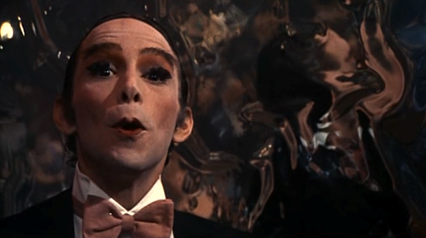
Welcome To Cabaret! Glücklich zu sehen, Je suis enchanté, Happy to see you, Bleibe, reste, stay.
 
RIDICULOUS I KNOW, but I just couldn’t help it. As I looked around Laila Harré’s Ika restaurant on Tuesday night, I kept thinking: Weimar Germany, 1932.
 
Perhaps it was the cause. In collaboration with the Coalition for Better Broadcasting, The Daily Blog, and her own (and husband Barry Gribben’s) latest venture, Harré had called together a panel discussion on the future of Campbell Live. Looking around the restaurant I momentarily entertained the gruesome thought that one well-placed bomb would wipe out the cream of the Auckland Left (plus Bill Ralston and Fran O’Sullivan!)
 
Not that it’s come to bombs – not yet. Not like the poor doomed Weimar Republic. Even so, there’s the same worrying feeling that the forces of the Right are openly manoeuvring; striking ever more provocative poses; showing less and less regard for appearances. To wit, the impending demise of Campbell Live.
 
The thing about a good puppet show is that you either can’t see, or are artfully distracted from noticing, the strings. It’s only when the strings themselves become more interesting than the puppets they’re attached to that the audience should start to worry.
 
And that time has come.
 
Which is why, as I sat there in Ika (formerly the Neapolitan eatery Sarracino, formerly the chapel of Tongue’s the undertakers!) watching present and former MPs, trade unionists and entrepreneurs, left-wing and right-wing journalists shake hands and exchange gossip, my gloomy thoughts led me to the Kit-Kat Club and Bob Fosse’s classic movie, Cabaret.
 
Up on the stage, playing the role made famous by Joel Grey was our Emcee, Wallace Chapman. And the floor-show, Ika’s Cabaret Band, if you will, were (from neoliberal right to post-modern left) Fran O’Sullivan, Bill Ralston, Simon Wilson and Phoebe Fletcher.

"I am your host!" - Wallace Chapman plays Emcee at Ika's "Table-Talk" about the future of Campbell Live.
Together, they discussed and dissected the decision to dangle the sword of Damocles above the marvellous Mr Campbell’s current-affairs half-hour. All good stuff, and the punters lapped it up. (Along with their whole gurnards and snappers, expertly seasoned, and laid out on a bed of the most fashionable vegetables.)
 
But outside in the dark, where the unseasonable weather was turning Mt Eden Road into an icy wind-tunnel, a very different New Zealand was settling in for a very different bill of fare. The languid musings of TVNZ’s Mike Hoskings, perhaps? Or TV3’s X-Factor? Maybe The Bachelor, or NCIS, or How To Get Away With Murder, or any of a host of other shows beamed into their living rooms by Sky TV’s bounteous satellite. Their thoughts and feelings so far from the worries of these left-wing luvvies that they might as well be living on another planet.
 
Hence the ominous analogy with the tragic Weimar Republic. In the nite-clubs of Berlin’s demi-monde the clever and artistic lamented what was happening in the streets outside. The running battles between Left and Right. The strategic re-positioning of big business as the economy tanked and politics turned sour. And, most of all, the looming presence of a man who seemed almost umbilically joined to all the little people living in all the little rooms where democracy was fast becoming a dirty word.
 
Willkommen, Bienvenue, Welcome. Im Cabaret, au Cabaret, to Cabaret!”
 
A version of this essay was first posted on The Daily Blog of Wednesday, 15 April 2015.

Thursday, 22 May 2014

Not Proven: "Campbell Live" Still Searching For CONCLUSIVE Evidence Against Key, Fletcher And The GCSB.

Lots Of Smoke But No Gun: Short of their very own Edward Snowden stepping forward with video, audio and written evidence of every word spoken by the main protagonists in the Kim Dotcom surveillance decision/s, Campbell Live’s investigation can progress no further.

WHILE IT IS ENTIRELY FITTING that we should congratulate TV3 and Campbell Live for the show they broadcast last evening, it is important to also acknowledge that they have gone about as far as they can go. John Campbell and his colleagues are now in the same position as the makers of the 1990 TVNZ documentary, For The Public Good, and they face the same hard choices. The evidence they have assembled is indisputably very suggestive, but it is not even remotely conclusive.
 
Back in 1990, the makers of For The Public Good went ahead and drew conclusions anyway – and it cost TVNZ a great deal of money and most of them their jobs. To avoid a similar fate, Campbell and his boss, TV3’s Head of News and Current Affairs, Mark Jennings, had no option but to do exactly what they did last night – end their investigation into John Key, Ian Fletcher and the GCSB inconclusively.
 
Short of their very own Edward Snowden stepping forward with video, audio and written evidence of every word spoken by the main protagonists, Campbell Live’s investigation can progress no further. Yes, there are many questions that cry out for answers, but those in a position to do so cannot be compelled to testify. And if TV3 attempts to put their “best guess” answers in the mouths of the “Intelligence Community” they will be sued – and they will lose.
 
That’s why so few in the mainstream news media are prepared to take on these sort of stories. Every aspect of “National Security” stories is so wrapped in secrecy, and that secrecy is so powerfully protected by the Law, that making any kind of headway is extremely difficult. Nicky Hager or Jon Stephenson, remarkably talented and tenacious free-lance investigative journalists, might beg, borrow and steal the resources and time to track down and marshal conclusive evidence, but TVNZ and TV3 – networks with many competing claims on their time and resources – are required to consider the commercial, legal, and, especially on stories like this one, the political cost of proceeding. It is a huge tribute to TV3’s journalistic values that it was willing to let Campbell run with a story like this for so long.
 
Having led us this far, and having painstakingly constructed the time-lines so essential to the process, Campbell Live is leaving the business of speculation to us.
 
This essay was originally posted on The Daily Blog of Wednesday, 21 May 2014.

Tuesday, 20 August 2013

John Key Ducks And Weaves His Way To A Symbolic Victory

Smiling Assassin: In this televised clash of champions, it was the confident jut of the Prime Minister's jaw and his refusal to make even the slightest concession to the opponents of his GCSB Amendment Bill, that saw him emerge as the clear winner over TV3's John Campbell. Unfair, but indisputable.
 
IT’S SAD REALLY, this habit we have of treating politics as a contact sport. In other parts of the world the liveliest discussions and debates are generated by the ideas behind politics. Here in New Zealand there’s only ever one question: “Who won?”
 
We talk about our politics the way we talk about our Rugby. Which side got the most possession? Who had the better kickers? Which scrum proved the stronger? Who got up highest in the line-outs? We expect our leaders to outshine their opponents by running-in more tries and kicking more penalties. Ideally, the game of politics should produce a clear winner and a clear loser.
 
Last Wednesday’s noisy, but not particularly informative, interview between the Prime Minister, John Key, and TV3’s John Campbell, is a case in point.
 
Though the Government protested (some said too much) that the public cared more about the Snapper Catch than the GCSB Amendment Bill, the very fact that the Prime Minister more-or-less invited himself onto Campbell Live suggests a significant (and possibly rising?) level of public concern. Government supporters would, no doubt, respond that Campbell Live, by embarking on a journalistic road-trip to test whether Kiwis really did or did not care about the GCSB legislation, had itself become an major generator of that concern.
 
The scene was set for a lively encounter.
 
Much has been spoken and written about the stoush which ensued. The consensus seems to be that while the Prime Minister clearly got the better of Mr Campbell, his “win” owed a great deal more to the way he “handled” the interview than it did to any fair and dispassionate communication of the GCSB legislation’s content and consequences.
 
The word from Wellington (and it’s important to acknowledge here that all words from Wellington are best taken with a whole cellar-full of salt) is that with the screening of the first instalment of Campbell Live’s road-trip on Monday, 12 August, the men and women responsible for burnishing the Prime Minister’s image became seriously alarmed. The interviews recorded by TV3’s Rebecca Wright at the National Party’s annual conference in Nelson conveyed a disturbing message of Government arrogance, with the behaviour of the Prime Minister himself bordering on the downright contemptuous.
 
Not a good look.
 
By the screening of Tuesday’s instalment of the road-trip, the alarm of the Government’s spin doctors had grown considerably. Though the Prime Minister flatly denied the allegation when Mr Campbell put it to him on Wednesday night, other political observers have insisted that the National Party’s internal pollsters were already registering a shift in public sentiment against Mr Key’s ministry.
 
Something had to be done.
 
Getting Mr Key on to Campbell Live on Wednesday evening would, if nothing else, arrest the gathering momentum of the programme’s journalistic crusade. It might also lure Mr Campbell into an attempt to humiliate his guest, live, on nationwide television. The Prime Minister was thus given a chance to spring a trap on his adversary. If Mr Campbell could be the one humiliated, live, on nationwide television, then Mr Key could claim vindication – not only for himself, but for his government’s whole approach to national security in general and to the GCSB legislation in particular.
 
With so much now riding on the outcome of the Wednesday encounter, the two Johns had become, in effect, the champions of the opposing sides in the GCSB debate. “Champions”, that is, in the original and archaic sense of the word. Hardened warriors, the best either side has to offer, meeting to do battle, with the losing side vacating the field and acknowledging the victory of their enemy.
 
No pressure, then.
 
In France or Germany the clash would have been cerebral: a fascinating battle of intellects as the whys and wherefores, pros and cons, of the modern state’s growing need (desire?) for surveillance and security were teased out and debated.
 
But ours is not a nation that places much stock in virtuoso displays of intellectual prowess. What we admire is the confident tilt of a protagonist’s chin; the impudent glint in his eye; and the sheer, bare-faced cheek of his replies. The winner of such an encounter, at least in Kiwi eyes, is the player who ducks and weaves, who sells his opponent the dummy-pass and then slips through the floundering defence for yet another five points.
 
And that is what New Zealand saw on Wednesday night. When Mr Key was through with him, Mr Campbell resembled one of those panting, slump-shouldered, prop-forwards for whom the Ref’s final whistle brings nothing but blessed relief.
 
A symbolic defeat, then, for those opposing the growth of the surveillance state, but not, perhaps, for our democracy. Politics has always been a surrogate for organised violence. Better metaphorical blood on the TV studio floor, than real blood – in the streets.
 
This essay was originally published in The Press of Tuesday, 20 August 2013.

Friday, 16 August 2013

Kiwis Do Care About The GCSB

Inadequate Defence: Campbell Live's Rebecca Wright interviews Justice Minister, Judith Collins, on the GCSB Amendment Bill. Like so many of her colleagues, the Minister was unable to offer a cogent and/or accurate defence of her Government's legislation.
 
SOMETHING’S VERY WRONG when senior Cabinet Ministers cannot defend their own Government’s legislation. The spectacle of multiple National Party politicians struggling to justify the GCSB Amendment Bill to Campbell Live’s Rebecca Wright was more than a little disconcerting. Stuttering and stammering, none of them were able to draw together the rudiments of a convincing defence. Indeed, their uniformly uninspiring replies suggest a Cabinet characterised not so much by its intellectual acuity, as by its mental and moral vacuity.
 
Not that they care. From the Prime Minister to the lowliest back-bencher, the National Government appears to be driven by disdainful contempt, bordering on outright hatred, for practically every evidence-based and logically argued case submitted in opposition to its policies.
 
This has been especially evident in relation to the GCSB Amendment Bill.
 
In spite of the fact that he possesses no legal qualifications, the Prime Minister felt perfectly free to dismiss the New Zealand Law Society’s submission on the Bill to the Intelligence and Security Committee. The Society, he claimed, had simply misunderstood the legislation.
 
Unfortunately, Mr Key (unlike most reasonable people) did not feel obliged to demonstrate exactly how the Law Society got it all so badly wrong. The Prime Minister declaring its argument deficient was apparently all that was required for the submission to be set aside. Taking their cue from Mr Key’s response, the Prime Minister’s colleagues continue to treat the Law Society’s comprehensive deconstruction and condemnation of the Bill as if it were a C-minus undergraduate essay.
 
The same dismissive attitude is manifest in the Government’s response to the criticisms of Sir Geoffrey Palmer. In spite of the critic being a former Law Professor, Attorney-General, Law Commissioner and Prime Minister of New Zealand; and ignoring the fact that he, like Mr Key, at one time held ministerial responsibility for the country’s security services, Sir Geoffrey’s objections to the GCSB Amendment Bill are, apparently, as muddled and mistaken as the Law Society’s.
 
All the more puzzling, then, why the same National Party cabinet ministers and back-benchers who’ve been so quick to allege that all those who characterise the GCSB amending legislation as a vast, unwarranted and potentially dangerous expansion of the State’s ability to pry into the private affairs of its citizens have got it wrong, become so utterly incoherent and/or obfuscatory when asked to set us right.
 
And how reassuring it has been (at least to those of us who still believe in the virtues of democracy) to hear coherent arguments, both for and against the GCSB Amendment Bill, coming from the mouths of ordinary New Zealand citizens. Whether it be the young Maori man in Kaitaia’s main street, who had been following the issue closely on the Internet, and who was eloquent in his condemnation of the Government’s expansion of the security services’ powers. Or, the Four Square store proprietor who was pleased to know that the Government “had his back” when it came to the threat of international terrorism.
 
These responses, captured by the irrepressible John Campbell and his team, as part of a week-long, televised, opinion-gathering road-trip from Cape Reinga to the Bluff, are also rather puzzling. Because, according to the Prime Minister (and just about his entire caucus) nobody out there cares about the GCSB – or its amending legislation.
 
What they do care about, says the Prime Minister (and, again, the National caucus nods its collective head) is the recreational Snapper catch-limit. (As if Kiwis can only be concerned about one issue at a time!)
 
But as Campbell Live (demonstrating with considerable élan just how vital a free media is to the processes of democratic government) has shown us, emphatically and indisputably, the Prime Minister’s claim is untrue.
 
From Northland to Southland, ordinary Kiwis have been paying close attention to their Government’s plans to expand the GCSB’s powers. Most are uneasy. Some are frightened. Practically all of them do care – a lot – and, unlike Mr Key’s Cabinet, are perfectly capable of telling us why.
 
John Key vs John Campbell: Game, Set and Match to the Prime Minister. (And, unlike his interlocutor, he did it all without notes!)
 
POSTSCRIPT: Goaded into action by the power of Campbell Live’s reporting, the Prime Minister agreed to a live interview with John Campbell on Wednesday night. The latter gentleman discovered to his cost that while National’s Cabinet may have struggled to defend the GCSB Amendment Bill, the Prime Minister was made of considerably sterner stuff. Even opponents of the legislation, watching the exchange, agreed that it was Game, Set and Match to the Prime Minister.
 
This essay was originally published in The Dominion Post, The Waikato Times, The Taranaki Daily News, The Timaru Herald, The Otago Daily Times and The Greymouth Star of Friday, 16 August 2013.