Showing posts with label Simon Wilson. Show all posts

Thursday, 12 January 2017

Leading Labour's "Broad Church".

The Red Dawn: The labour movement conceives political power as a force residing not in charismatic leaders, but in the democratic electorate itself. If you're a member of the Labour Party, the only future worth having is a future fashioned by the people, for the people.
 
THE SOLUTION, if there is one, to Labour’s political woes is unlikely to involve the wholesale adoption of the führerprinzip. The notion that all Labour has to do to reclaim the Treasury Benches is find a leader capable of being admired, trusted and liked by the voters has found an enthusiastic advocate in The Spinoff's Simon Wilson. Unfortunately, enthusiasm is no substitute for political understanding.
 
“I’d have voted for Helen Kelly for prime minister”, gushes Wilson. “I’d have voted for David Shearer, too. I dearly wish I’d been given the chance to do both.” Never mind that a vote for David Shearer would have been a vote for the resumption of Rogernomics, and a vote for Kelly would have been a vote for its long-delayed repudiation. For Wilson, a party’s principles, and the content of its manifesto, mean nothing. The sole criterion by which its fitness to rule should be judged is whether or not its leader gets the electorate’s juices flowing.
 
That this approach to politics amounts to an open invitation to the Donald Trumps and Adolf Hitlers of this world to traduce our democratic institutions in no way slows Wilson down. Indeed, having proudly declared that he would have voted for Helen Kelly, Wilson proceeds to rubbish her final political testament that politics should be “about values” and that there is “far too much attention on leadership”.
 
“It sounds sensible”, says Wilson, “but sadly it’s not. It’s the idea that has done more damage to the Labour Party than any other since Rogernomics. Why? Because it keeps them out of power.”
 
Quite how Wilson is able to reconcile identifying Rogernomics as one of the main reasons Labour finds it difficult to attract electoral support with his earlier contention that he would have happily voted for David Shearer, is anybody’s guess. Perhaps he doesn’t know that Shearer became active in the Labour Party because of Rogernomics – not in spite of it. Or that shortly after becoming Labour’s leader, Shearer informed New Zealanders that he was an ardent admirer of Esko Aho, Finland’s neoliberal shock-therapist prime minister. I guess it all comes back to Wilson’s contention that ideas and policies are less important than whether the voters are ready to give their führer what really counts – power.
 
That one of the reasons political leaders are admired, trusted and liked is because their party’s ideas and policies correspond closely to broad swathes of the electorate’s own hopes and dreams, does not appear to have occurred to Wilson. We should not, however, be surprised at his failure of imagination. Wilson’s political vantage point is that of the elite observer; the technocratic fixer; the well-connected insider looking out – and down. Viewed from this perspective, voters are clay to be shaped and moulded, not citizens to be heeded.
 
If power is something that can only be bestowed from above, not seized from below, then Wilson’s support for the idea that Labour should be a “broad church” makes perfect sense. If one’s choice of political party is dictated solely by considerations of personal taste – like the choice between Coke and Pepsi – then the political ideas of its membership are irrelevant. Except, of course, membership of a political party is not determined by personal taste but by personal conviction. Once again, Wilson is guilty of a profound political misunderstanding.
 
The idea of Labour as a “broad church” harks back, as the metaphor suggests, to matters of individual conscience – not political economy. In the days when it really was a working-class party, Labour had to be able to accommodate both teetotal Methodists and Salvationists as well as hard-drinking Catholics. Staunch educational secularists had to be willing to get along with the supporters of parochial schools. Arguments for and against capital punishment raged alongside debates pitting pacifists against the supporters of king and country.
 
On questions such as the state’s dominant role in the New Zealand economy, and the centrality of the trade union movement to the working-class’ economic and political power, however, Labour was – until Rogernomics – a very narrow church indeed.
 
It is doubtful whether any party could have survived the sort of breakneck ideological expansion that Roger Douglas and his allies imposed upon the New Zealand Labour Party in 1984. Indeed, the only truly surprising aspect of the internal reaction to Rogernomics was how long Labour’s left-wing waited before splitting away in 1989. The latter’s departure did not, however, make Labour a broader church ideologically. On the core issues of political economy, Labour remained as narrow as ever: neoliberalism taking the place of democratic socialism.
 
More surprising, perhaps, was the party’s failure to remain a broad church on matters of conscience. As the party’s socialist credentials faded, the rainbow colours of the new social movements of feminism, anti-racism, gay rights and environmentalism intensified. So brightly did “identity politics” shine that Labour’s long-standing tradition of agreeing to disagree on issues of personal morality retreated into the shadows. In 2017, it is still possible for a member of the Labour Party to be “misogynistic”, “racist” and “homophobic” – but not openly.
 
The present-day party’s vigilant intolerance of socially conservative views is only possible because the ideological upheaval of Rogernomics reduced Labour’s membership from a staggering 85,000 in 1984 to around 8,500 in 2017. The militant “political correctness” of which Labour currently stands accused would have been unenforceable in its days as a mass party and remains a significant barrier to it ever again becoming one.
 
This is a problem, because although the purposes of politically correct party cadres may be served by ensuring that Labour’s membership remains “fewer but better”, the business of winning elections is all about “the more the merrier”. If all that Labour is prepared to offer the electorate is an unpalatable combination of watered-down neoliberalism and beefed-up identity politics, then winning elections is not going to be easy.
 
Wilson argues that Labour must learn from Michael Wood’s emphatic by-election victory in Mt Roskill: “Wood joined the dots. A party committed to raising wages must also be committed to better parental leave, childcare support and equal pay for women. A party determined to resolve the housing needs of the destitute and the working poor must confront the complex issues involved on the basis of class and race.”
 
But isn’t this precisely the sort of values-based and ideas-driven politics that Helen Kelly championed, and Wilson decries? And wasn’t Wood admired, trusted and liked because the people of Mt Roskill knew him to be a politician whose hopes and aspirations matched their own? And didn’t his campaign succeed because, rather than highlighting the characteristics that set the multi-ethnic communities of his electorate apart, he focussed on the issues that drew them together?
 
And isn’t that what being the leader of Labour’s “broad church” is really all about?
 
This essay was originally posted on The Daily Blog of Thursday, 12 January 2017.

Thursday, 27 October 2016

“Old Lefties” – WTF! Simon Wilson hosts “Table Talk” at the Ika Seafood Bar and Grill.

Takes One To Know One, Simon: Simon Wilson's denigration of "old lefties" struck some as odd - coming as it did from a former member of the Workers Communist League! His present political orientation, however, is relatively clear. As he wrote for The Spinoff: “[O]ne way or another, everything benefits the agents of capitalism. If you’re a progressive, or a social democrat, or a socialist, you have to suck that up.”
 
“LABOUR – WTF?” The question said it all. And the packed-out restaurant confirmed its aptness. Laila Harré has good instincts for the mood of the Auckland Left, and “WTF?” sums up its assessment of the current state of the Labour Party with earthy directness.
 
Less adroit, perhaps, was her decision to allow The Spinoff to co-sponsor the event. It’s hard to reconcile the Ika Seafood Bar and Grill’s skilful courting of Auckland’s progressives with The Spinoff’s vicious attack on one of the Left’s most respected representatives – Mike Lee. That the attack on Lee could so easily have resulted in (and was quite probably intended to secure) Bill Ralston’s election to the Auckland Council merely confirmed The Spinoff’s political incorrectness.
 
That the choice of Simon Wilson as host of the evening’s panel discussion’s proved equally unsuitable was not something for which the Ika team could be blamed. Wilson made himself so by persuading The Spinoff to post his “Look, there goes the Labour Party – sliding towards oblivion” on the same day as the Table-Talk event.
 
It is a very curious piece of writing. Provocative title aside, Wilson’s posting is mostly an attempt to isolate and ridicule left-wing critics of his beloved Unitary Plan. Though no names are mentioned, it is clear that the sort of people Wilson has in mind when he castigates these “old lefties”, are people like Mike Lee.
 
“Their dispute wasn’t really defined by age,” writes Wilson, “but it was about modernising the progressive cause. The old argument is that when you relax the rules around building and allow more density, you create conditions for ugly apartment blocks and slums that ruin the quality of life for everyone who has to live in or near them. There might be more homes but the big winners are the developers who make a killing.
 
“That sounds grand, principled, insightful and historically sound. It’s been true in the past, even the quite recent past. In fact, in relation to the UP, it’s sentimental nonsense.”
 
But is it? Auckland’s history offers very little justification for believing that market-led intensification will produce anything other than “ugly apartment blocks” and “developers who make a killing.” More importantly, Wilson offers nothing in the way of evidence that the Unitary Plan, as approved, will ensure that Auckland’s future does not resemble its past.
 
What he does do, however, is set up a straw man. He implies that Mike Lee and his allies do not understand that “a compact city, with good quality affordable homes clustered densely around a comprehensive and efficient public transport system, is essential for any fast-growing city that wants to offer a decent quality of life to all its citizens.”
 
This is laughable. One of the reasons the tight little clique of lawyers, land-bankers, property developers, and roading contractors that has run Auckland for the past 150 years was so keen to get rid of Mike Lee was because, as Chairman of the Auckland Regional Council, he refused to extend Greater Auckland’s boundaries. Lee was arguing for a more compact city when Wilson was still collecting recipes for Cuisine magazine. His constant and highly successful advocacy for “a comprehensive and efficient public transportation system” – especially rail – also put Lee offside with Auckland’s powerful roading lobby.
 
Not so laughable is the fact that Wilson knows full well that Lee is but the latest in a long-line of left-wing politicians and planners who have fought for an Auckland capable of offering “a decent quality of life to all its citizens”.
 
In between his stints at Cuisine and Metro, Wilson was a jobbing editor for the Random House publishing group. One of the books he edited was my own No Left Turn, which included a chapter entitled “The Auckland That Never Was”. All of the elements making up what Wilson rather grandly calls “New Urbanism” feature in the plans for Auckland’s future development that were prepared for the First Labour Government by the Housing Division of the Ministry of Works back in the 1940s! That those extraordinarily progressive plans remained unfulfilled may be sheeted home to the same private sector interests who made their fortunes by turning Auckland into a cheap copy of Los Angeles, and who now propose to make themselves even richer by turning Auckland into a cheap copy of Singapore.
 
How someone in possession of this knowledge could, nevertheless, attempt to paint Mike Lee as someone guilty of failing “a bedrock test” for progressive urban planning, is utterly beyond me. But, then, I found it no less puzzling that the same man who could write: “one way or another, everything benefits the agents of capitalism. If you’re a progressive, or a social democrat, or a socialist, you have to suck that up”, was, somehow, able to begin last Wednesday’s (19/10/16) Table Talk discussion by quoting the late Helen Kelly’s emphatically anti-capitalist vision of the Labour Party.
 
Obviously, Wilson’s definition of “progressive”, “social democrat” and “socialist” is somewhat different from my own.
 
The rest of the evening was full of depressingly similar contradictions.
 
Only a very few minutes had expired before the Labour Party President, Nigel Haworth, took on the expression of a man who wished he'd stayed at home. Keeping out of the public eye has been something of a fetish for Haworth, whose principal motivation in taking on Labour’s presidency appears to have been quieting down the party’s frequently  restive rank-and-file. Having to admit that, had he been in Britain, he would not have voted for Jeremy Corbyn, was almost certainly something he would have preferred to keep under his hat.
 
Deborah Russell, Labour’s candidate for the Rangitikei electorate in 2014, told us she would have voted for Corbyn. That becoming a Corbynista would have put her offside with a fair swag of her putative caucus colleagues did not appear to have occurred to her. Which says a lot about her understanding of the party she defended with such enthusiasm throughout the night.
 
Chloe Swarbrick’s reputation for straight-talking was in no way diminished by her participation in the Table Talk panel. When asked what it would take to make her join the Labour Party, her quick-fire response, “an invitation”, raised eyebrows and hopes in almost equal measure.
 
Head-and-shoulders the most acute political thinker on the stage last Wednesday night was, however, Andrew Campbell. Formerly the Green Party leaders’ chief-of-staff, and now – impressively – communications director for the NZ Rugby Union, Campbell’s insights into the workings of contemporary New Zealand politics were refreshingly candid. That, in his estimation, “politics is a PR game” might be a bit depressing for “old lefties” like me, but only a fool would argue that, in New Zealand, in 2016, our politics is very much of anything else.
 
This essay was originally posted on The Daily Blog of Tuesday, 25 October 2016.

Wednesday, 14 September 2016

Reinvent Auckland, Simon? If Only We Could!

A Safe Pair Of Hands: The whole point of the neoliberal Auckland supercity is to ensure that “big visions” and “bold execution” in the pursuit of anything other than neoliberal objectives is rendered impossible. As a tried and tested neoliberal himself, Phil Goff gets this. Producing “incremental improvements with greater efficiency” constitutes the outer limits of his political imagination. It’s what makes him the perfect candidate.
 
SIMON WILSON is an odd fellow – with some odd opinions. Here, for example, is the Metro Editor-at-Large's opinion on the general public response to the National Government’s forced amalgamation of Auckland, North Shore, Waitakere and Manukau cities. “Aucklanders were cynical about everything before he [Len Brown] and the supercity came along in 2010. But we lost that cynicism and we set about reinventing the city.”
 
I would be most annoyed if I thought Simon was including me in that “we”. Long before the legislation setting up the supercity came into force the level of my cynicism was already off the scale.
 
Everything about the supercity’s establishment: from the man chosen to oversee the process (the Act Party leader, Rodney Hide) to the deliberate exclusion of the people of the Auckland region from any meaningful say in whether or not the merger of their four cities should finally proceed; highlighted the profoundly anti-democratic spirit in which the entire process was conceived.
 
The reason for this hostility to democracy wasn’t difficult to discern. Far from being a bottom-up exercise: driven by angry residents’ from across the Auckland region; the supercity was a top-down exercise: the joint creation of local and national elites. Their common purpose? To create a model for local government in the neoliberal era. And the central feature of that model? The almost total disempowerment of the citizens of Auckland and their elected representatives.
 
The full measure of the supercity’s creators’ contempt for democracy was revealed in the proposed size of the supercity’s “Governing Body”. In the equivalent decision-making structures of Auckland, North Shore, Waitakere and Manukau cities, the ratio of elected representatives to citizens was roughly 1:15,000. In the new supercity it would be 1:70,000! Supercity councillors were being asked to represent more citizens than a directly elected Member of Parliament.
 
My own level of cynicism (and, I suspect, the cynicism of thousands of other Aucklanders) was in no way lessened by the Ports of Auckland dispute. It was during this brutal test of strength between the supposedly municipally-owned Port and its employees that Aucklanders learned just how misnamed their “Council Controlled Organisations” (CCOs) truly were.
 
Aucklanders elected representatives turned out to be equally mischaracterised. Far from being the people’s democratic tribunes, Auckland’s elected councillors proved to be little more than powerless pawns. The real game was controlled by legally cocooned CCO boards of directors – over whom the so-called “Governing Body” (including the Mayor) exercised no effective control whatsoever.
 
Indeed, so politically impotent was the Mayor made to feel in relation to the day-to-day management of National’s neoliberal supercity, that the poor fellow felt obliged to demonstrate his potency “by other means”. A better symbol of Auckland’s vast democratic deficit than Len’s and Bevan’s affair is difficult to imagine. Turned out the Mayor’s Office was good for very little else!
 
Even Brown’s signal achievement: the National Government’s final approval of his beloved City Rail Link; owes as much to the projected massive inflation of property values along its inner-city route, as it does to any rational realignment of Auckland’s public transport system.
 
In his latest Metro article, Simon Wilson opines that the job facing the next Mayor of Auckland is “not simply to produce incremental improvements with greater efficiency and better relations with the government in Wellington. Auckland has fallen into crisis. Growth has far outstripped expectations. Housing policies have had a catastrophic outcome. A big vision is required, all over again, and bold execution has to follow.”
 
Except, of course, the whole point of the neoliberal supercity is to ensure that “big visions” and “bold execution” in the pursuit of anything other than neoliberal objectives is rendered impossible. (That the Unitary Plan was so heavily promoted by the National Government and the Auckland City bureaucracy, both of whom threatened dire consequences should the councillors fail to approve it, tells us all we need to know about the document’s ideological complexion!) As a tried and tested neoliberal himself, Phil Goff gets this. Producing “incremental improvements with greater efficiency” constitutes the outer limits of his political imagination. It’s what makes him the perfect candidate.
 
Poor Simon. He seems to have been both surprised and distressed to learn that in a Citizen Insights Monitor survey released by the Auckland Council in June 2016, “just 15 per cent of us said we were satisfied with the council’s performance. Only 17 per cent of us said we trust it. This is disgraceful.”
 
Really, Simon? Disgraceful? Frankly, I’m astounded as many as 17 percent of Aucklanders place any trust at all in National’s neoliberal supercity. I do, however, understand completely why 83 percent of us find little, if anything, to like about the “governance” of the unresponsive bureaucratic monstrosity into whose tender care we were delivered without so much as a confirming referendum.
 
Nor am I surprised that only 35 percent of eligible voters bothered to return their ballots in 2013. Not when the people elected by those ballots are so bereft of power that – even if they wanted to – it wouldn’t be “within the purview of their lawful governance function” to make the trains run on time.
 
In terms of empowering the people who live within its boundaries, there’s nothing I’d rather do, Simon, than “reinvent” the Auckland supercity. It’s why I’m voting for Chloe Swarbrick. Not because she stands the slightest chance of winning, but because, alone of all the Mayoral candidates, she demonstrates some understanding of just how much we have lost.
 
This essay was originally posted on The Daily Blog of Tuesday, 13 September 2016.

Thursday, 11 February 2016

Here Be Dragons: The Ika Seafood Bar & Grill’s First “Table Talk” Looks At The Year Ahead - Through Right-Wing Eyes.

"Have a care when fighting dragons, lest ye become a dragon yourself." Nietzsche's famous aphorism remains as confronting as ever. To beat the likes of the Right's Matthew Hooton, should the Left attempt to match their Machiavellian amorality? Or, should it simply decide not to invite them onto "Table Talk" panels?
 
I LEFT the first Ika “Table Talk” for 2016 feeling very down – and I know I wasn’t the only one. The panel discussion, on “The Year Ahead”, could have been an enlivening rehearsal of the challenges facing the New Zealand Left in 2016 – but it wasn’t. Instead Ika’s patrons endured an hour-long demonstration of the Right’s remarkable skill at kicking the Left’s ass.
 
Moderated by broadcaster Lisa Owen (of TV3’s The Nation) the panel was made up of the ubiquitous far-right political commentator, Matthew Hooton (proprietor of Exeltium Public Relations) arbiter of all-things-Auckland, Simon Wilson (Editor at Large of Metro Magazine) and Maori educationalist, Dr Ella Henry (AUT Faculty of Maori Development).
 
Dr Henry adopted a position of wry detachment from her “bourgeois” audience of mostly inner-city leftists. Her comments throughout the evening suggested that she regards "Table Talk" as little more than an additional course which Laila Harré has tacked on to Ika’s menu. A heaped ideological platter in which, this time, the sour easily overpowered the sweet.
 
Only once did she cut through the relentless conservative discourse of her fellow panellists and that was in relation to the forthcoming local government elections. Her uncompromising description of the world inhabited by West and South Aucklanders: Maori, Pasifika and immigrant; was as compelling as it was unsparing. Intruding, as it did, a jarring note of brutal social reality to the proceedings, Dr Henry’s intervention was easily the most uplifting of the night.
 
There was a period in Simon Wilson’s life when he mixed almost exclusively with the sort of people who attend the Ika Seafood Bar & Grill’s events. As the Editor of the Victoria University Students Association’s newspaper, Salient, and later, as the Maoist President of NZUSA, Wilson’s youth was an emphatically left-wing affair. The journey he has undertaken since then, from the Left to the Right, has been a slow one. The Maoism he ditched early in favour of the well-mannered leftism of the Wellington liberal intelligentsia. It was only when he bade farewell to Wellington, and Consumer magazine, to take up the editorship of the yuppie gourmand’s glossy guidebook, Cuisine, that the shift to the Right began in earnest.
 
Wilson has a newshound’s nose for a shift in the political winds. As a Metro writer, he’d correctly predicted John Key’s comprehensive electoral victory in 2008, and two years later used his new position as Metro’s Editor to deftly reposition the magazine as the voice of the socially liberal, economically conservative and aggressively acquisitive Auckland middle-class. Nowhere was this repositioning more in evidence than in his choice for Metro’s political columnist. Where the magazine’s founder, Warwick Roger, had turned to New Zealand’s best left-wing journalist, Bruce Jesson, for political commentary, Wilson’s choice was the National Party’s leading ideological skirmisher, Matthew Hooton.
 
Those skirmishing skills were displayed to considerable effect from the get-go on Tuesday night (9/2/16) when Hooton accused the writer of seeing the 4 February anti-TPPA demonstrations as “the beginning of a revolution”. It is precisely this acidic mixture of smile and sneer that makes Hooton such a formidable opponent. That, and his ability to master a complex political brief very quickly and then fashion it into a political argument that is at once simple and subtle. Hooton, when he’s in control of himself, is both a superb manipulator of the truth and a master at identifying his opponents’ weak spots.
 
Out of control, Hooton can be rabid. One of the reasons the numbers were down for Ika’s first Table Talk for 2016 was that many people simply refused to be in the same room as the man who has constantly and viciously impugned the integrity of Professor Jane Kelsey. This penchant for abusing progressive New Zealanders publicly has turned Hooton into something of a hate figure, and it seriously undermines his political credibility. If he ever learns to control it, he will instantly become an even more deadly opponent of the Left.
 
As it was, the Good Cop/Bad Cop routine of Wilson and Hooton was deflating enough. Between them they succeeded in making their left-wing audience wince, sigh, squirm and shake their heads in disbelief. A different set of panellists may have blunted some of the worst thrusts from Hooton, but the one we “bourgeois” leftists had to endure on Tuesday night left Lockwood Smith’s political adviser; the man who makes RNZ’s Kathryn Ryan sound like a moderate; in undisputed possession of the field.
 
Now the more hard-headed leftists amongst us would no doubt say that Tuesday’s Table Talk was an important wake-up call for the Left. Unused to the punishing performance that Hooton excels at delivering, an hour-long pistol-whipping at his hands might be exactly what the Left needed if it is to muscle-up and become politically competitive.
 
But if the only way to defeat a dragon is to become a dragon oneself, then what’s the point? What distinguishes the Left from the Right is its belief that the world should be – and can be made – a better place. Against all the contrary evidence that the cynics and trimmers delight in throwing in their path, the world’s progressives must somehow continue to muster the faith, hope and love to continue fighting. That’s why Laila Harré’s gatherings at the Ika Seafood Bar & Grill are so valuable. They provide an opportunity for the beleaguered Auckland Left to recommit itself to a more just and equal future. The cause that Simon Wilson long ago abandoned, and Matthew Hooton openly despises.
 
So, Laila, please. No more dragons!
 
This essay was posted on The Daily Blog and Bowalley Road on Thursday, 11 February 2016.

Thursday, 16 April 2015

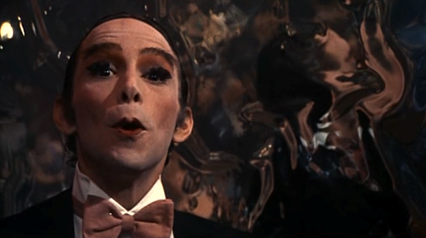
Willkommen Im Cabaret: "Table Talk" At Ika Restaurant, Tuesday, 14 April 2015.

 
Welcome To Cabaret! Glücklich zu sehen, Je suis enchanté, Happy to see you, Bleibe, reste, stay.
 
RIDICULOUS I KNOW, but I just couldn’t help it. As I looked around Laila Harré’s Ika restaurant on Tuesday night, I kept thinking: Weimar Germany, 1932.
 
Perhaps it was the cause. In collaboration with the Coalition for Better Broadcasting, The Daily Blog, and her own (and husband Barry Gribben’s) latest venture, Harré had called together a panel discussion on the future of Campbell Live. Looking around the restaurant I momentarily entertained the gruesome thought that one well-placed bomb would wipe out the cream of the Auckland Left (plus Bill Ralston and Fran O’Sullivan!)
 
Not that it’s come to bombs – not yet. Not like the poor doomed Weimar Republic. Even so, there’s the same worrying feeling that the forces of the Right are openly manoeuvring; striking ever more provocative poses; showing less and less regard for appearances. To wit, the impending demise of Campbell Live.
 
The thing about a good puppet show is that you either can’t see, or are artfully distracted from noticing, the strings. It’s only when the strings themselves become more interesting than the puppets they’re attached to that the audience should start to worry.
 
And that time has come.
 
Which is why, as I sat there in Ika (formerly the Neapolitan eatery Sarracino, formerly the chapel of Tongue’s the undertakers!) watching present and former MPs, trade unionists and entrepreneurs, left-wing and right-wing journalists shake hands and exchange gossip, my gloomy thoughts led me to the Kit-Kat Club and Bob Fosse’s classic movie, Cabaret.
 
Up on the stage, playing the role made famous by Joel Grey was our Emcee, Wallace Chapman. And the floor-show, Ika’s Cabaret Band, if you will, were (from neoliberal right to post-modern left) Fran O’Sullivan, Bill Ralston, Simon Wilson and Phoebe Fletcher.

"I am your host!" - Wallace Chapman plays Emcee at Ika's "Table-Talk" about the future of Campbell Live.
Together, they discussed and dissected the decision to dangle the sword of Damocles above the marvellous Mr Campbell’s current-affairs half-hour. All good stuff, and the punters lapped it up. (Along with their whole gurnards and snappers, expertly seasoned, and laid out on a bed of the most fashionable vegetables.)
 
But outside in the dark, where the unseasonable weather was turning Mt Eden Road into an icy wind-tunnel, a very different New Zealand was settling in for a very different bill of fare. The languid musings of TVNZ’s Mike Hoskings, perhaps? Or TV3’s X-Factor? Maybe The Bachelor, or NCIS, or How To Get Away With Murder, or any of a host of other shows beamed into their living rooms by Sky TV’s bounteous satellite. Their thoughts and feelings so far from the worries of these left-wing luvvies that they might as well be living on another planet.
 
Hence the ominous analogy with the tragic Weimar Republic. In the nite-clubs of Berlin’s demi-monde the clever and artistic lamented what was happening in the streets outside. The running battles between Left and Right. The strategic re-positioning of big business as the economy tanked and politics turned sour. And, most of all, the looming presence of a man who seemed almost umbilically joined to all the little people living in all the little rooms where democracy was fast becoming a dirty word.
 
Willkommen, Bienvenue, Welcome. Im Cabaret, au Cabaret, to Cabaret!”
 
A version of this essay was first posted on The Daily Blog of Wednesday, 15 April 2015.

Sunday, 7 June 2009

I #*! Super City: Why Metro has got it wrong. Really

Metro's Simon Wilson: Cheerleading Rodney Hide's Auckland "super city" power grab.

FOR sheer Pollyanna puffery, Simon Wilson’s "Why We Love Super City", in the latest issue of Metro, takes some beating. The image of a perky cheerleader dominates Wilson’s text, and that is wholly appropriate. When your sub-heading is "Why Rodney Hide has got it right. Really." – cheerleading is pretty obviously the name of the game.

It’s a pity really, because Wilson is usually a thoughtful writer, and not given to lending his support to the sort of PR glad-games currently being rolled out to justify one of the most audacious power-grabs in New Zealand’s political history.

The article begins with the picture of a region suffering from "economic underperformance, blighted urban planning and social dysfunction" – all of it, Wilson implies, the dystopic residue of incompetent "local fiefdoms". He has to do this, of course, because if it could be proved that Auckland’s multiple afflictions (if they exist at all) are in no way the fault of its local authorities, then the whole rationale for Hide’s "Super-City" disappears.

But, this is precisely what Auckland’s history does; it completely explodes both Hide’s and the Royal Commission on Auckland Governance’s arguments for collapsing local democracy into regional "governance". The city’s woes, going back to, and beyond, 1865, have almost always arisen out of Auckland businessmen’s determination to turn politics into profit.

Whether it be Thomas Russell, fomenting war with the Maori king to expedite his company’s land-grabbing; or the powerful "development" business nexus, which spawned the sprawling, car-dependent culture of post-war Auckland; or the mirror-glass speculators, who tore down what remained of the city’s graceful Victorian architecture in the deregulated 80s; it has always been that fateful combination of greed and ambition (both local and national) which made Greater Auckland so much less than it could have – should have – been.

Were the cities and boroughs of Auckland responsible for the motorway system which demolished so many thriving communities in the 1950s and 60s – or was that the work a handful of Auckland roading contractors and property developers, operating hand-in-glove with their National Party cronies in the Capital?

Was it Auckland’s local politicians who shut down the great manufacturing plants of south and west Auckland in the 1980s – or was the resulting "economic underperformance" and "social dysfunction" the legacy of the MPs for Mangere, Manurewa, Te Atatu and Auckland Central?

Was it the avarice of mayors and city councillors which saw the wealth of middle-class Aucklanders wiped out in the crash of ’87 – or was it the greed of the wide boys who drank at the Rogues Bar and worked for Equiticorp?

Was it the Auckland Regional Council which stalled the electrification of Auckland’s rail services for the past four years – or was that Michael Cullen and his Treasury advisers?

The key premise behind the Super City proposal is that Auckland’s local problems are the fault of Auckland’s local politicians – and it just ain’t true.

Wilson, as an editor of New Zealand history, and one of Metro’s senior writers, should know all this. So why is his article a history-free zone? Perhaps because it’s so much easier to declare, bluntly, and without the slightest supporting evidence, that: "The status-quo is not an option."

But even if we accept that some sort of change is desirable, the more important question: "Why Rodney Hide’s version of change?", is one that Wilson does not even begin to answer.

It’s all very well to play-up the Royal Commission’s emphasis on social, economic, environmental and cultural "well-being", but the brute fact of the matter is that all of its "namby-pamby, feel-good sloganising" has been rejected by both the National and Act Parties. They have a very different set of priorities.

And before citing Singapore, Seattle, Glasgow and Barcelona as examples of "vibrant" urban economies, why didn’t Wilson do a little research into the nature of their governmental structures.

Rightly celebrated throughout the European Union as one of its most progressively governed cities, Glasgow, with a population of 580,690 citizens, is roughly comparable in size to the present City of Auckland. The similarities end there, however, because instead of Auckland’s 19, Glaswegians get to elect 79 city councillors – one councillor for every 7,350 citizens. Compare that "vibrant" and very democratic ratio with Rodney Hide’s one Super City councillor for every 65,000 citizens. Even Barcelona’s 1.6 million citizens, living under a municipal constitution drafted in 1960 by General Franco’s fascist regime, are entitled to 41 councillors (1:39,000).

What Wilson has either failed to understand, or refuses to acknowledge, is that the Auckland Super City has been designed by neo-liberals, for neo-liberals. From its very beginnings, as the brainchild of senior Auckland business leaders, it’s purpose has never been to generate the "social well-being" which the members of the Royal Commission so naively attempted to interpose in their report, but its opposite. What Rodney Hide and his backers want to see in their shining Super City on a hill, is that universal hallmark of neo-liberal success: growing income inequalities.

That’s why Hide is promoting the democratic obscenity of 20 councillors for 1.3 million citizens. (With eight of the 20 elected "at large", an electoral option rejected by New Zealanders more than 20 years ago.) It’s why he’s promoting 20-30 powerless "community councils", rather than the four, more influential, "city councils" recommended by the Royal Commission. It also explains his vehement opposition to special Maori representation, and why the straightforward, democratic, expedient of taking the 75 councillors currently representing the four major cities of the Auckland region, and putting them under the roof of a single chamber, simply wouldn’t occur to him. Why not? Because, fundamentally, neo-liberalism and democracy are incompatible.

In his final paragraph, Wilson quotes the Royal Commission’s vision statement, noting approvingly its preference for "an integrated sustainable approach" and its wish that the city’s business be "actively and effectively managed … in a responsible way". But this is the bloodless language of corporate bureaucracy – not popular democracy. Nowhere in his article, and in spite of all his condescending concern for the "common folk", does Wilson acknowledge that it is their right to self-government – not good governance – that is at stake for Auckland’s 1.3 million citizens.

A Super City Council of Aucklanders, by Aucklanders, for Aucklanders.

All Aucklanders.

"Who doesn’t want that? Who doesn’t think we need it? And who seriously thinks we’ve got it already?"

This commentary was originally published in The Independent of Thursday, 4 June 2009.