Showing posts with label Kingitanga. Show all posts

Wednesday, 4 September 2024

A Time For Unity.

Emotional Response: Prime Minister Christopher Luxon addresses mourners at the tangi of King Tuheitia on Turangawaewae Marae on Saturday, 31 August 2024.

THE DEATH OF KING TUHEITIA could hardly have come at a worse time for Maoridom. The power of the Kingitanga to unify te iwi Māori was demonstrated powerfully at January’s national hui, where upwards of 10,000 people answered King Tuheitia’s summons to the Turangawaewae marae. But now, at this fractious historical hour, the power of the Kingitanga is passing into untested hands.

If the traditional “kingmakers” of the royalist iwi choose unwisely, then the divisions and tensions between Tangata Whenua and Tangata Tiriti may widen further. In the weeks and months that lie ahead, rash and angry words from King Tuheitia’s successor have the potential to ignite a political conflagration. In these circumstances, Māori and Pakeha have an equally pressing need for the Kotahitanga [Unity] that was the late King’s guiding star.

This need for unity was expressed with affecting sincerity at the King’s tangi by someone many New Zealanders would regard as its most unlikely champion. As the leader of the conservative coalition government responsible for sharpening the points of Māori-Pakeha difference, Christopher Luxon’s participation in the King’s funeral ceremonies could easily have been construed as perfunctory, or, even worse, provocative. That he spoke of his relationship with the King with such obvious emotion, his voice close to breaking, unquestionably impressed his Tainui hosts. That said, the thought surely crossed their minds: “What is it with this Pakeha, who weeps with us, even as his ministers assault us?”

What indeed? The most obvious answer is that Luxon, like all politicians, is a complex mixture of emotion and calculation; sincerity and subterfuge. What’s more, though reason reels from the thought, Luxon, like many politicians, can be both at the same time. Very few Pakeha New Zealanders are immune to the extraordinary, almost magical, power which Maoridom is able to summon at moments of great historical significance. It brings our emotions suddenly, and often unexpectedly, to the surface, catching us off-guard.

This blending of the spiritual with the material was a skill which, until relatively recently, was manifest in all cultures. Those over the age of 70 will recall the state funeral of the slain President, John F. Kennedy: the soldiers slow-marching with arms reversed; the riderless horse, its master’s boots facing backwards; and that unforgettable image, almost unbearably poignant, of Kennedy’s young son innocently snapping his father a filial salute as the funeral cortege passed by.

Symbols, and the powerful feelings they evoke, were much more available to Westerners sixty years ago. New Zealand, now one of the world’s most secular societies, was then an emphatically Christian nation. Pakeha religiosity was strong in the 1950s and 60s, and, come Sunday morning, most of the nation’s churches were full. Back then, the spiritual world and the material world overlaid each other and intermingled in ways that today’s secular Pakeha would struggle to accept.

But not today’s Māori. In te Ao Māori the spiritual infuses the material in ways that at once entrance and confuse Pakeha. A cynic might say that this spirituality, this affinity for the metaphysical, is Maoridom’s secret weapon, and that Christopher Luxon is as susceptible to its magic as any number of his equally entranced compatriots.

Why, then, does he not take advantage of it? Why impress Tainui and the Kingitanga with your tears, and then return to a Parliament where Act and NZ First continue to drag the National Party down the path of “pernicious polarisation?

Typically, “pernicious polarisation” is initiated by political elites that have been electorally sidelined and are willing to do almost anything to get back in the game. They deliberately stoke class, racial and/or religious divisions – often in cahoots with more extreme groups. Their hope is to extend their electoral reach by advancing under the cover of their new allies’ more inflammatory political rhetoric, and by quietly promising to introduce at least some of the extremists’ most radical policies as soon as power has been reclaimed.

Clearly, the National Party, alongside Act and NZ First, has been drawing heavily from the pernicious polarisers’ playbook. Equally clearly, it has worked: National has reclaimed the Treasury Benches and is sitting pretty as the dominant party within a conservative coalition government.

National’s problem, now, is that, having been assisted into office by its more extreme coalition partners, it is required to deliver on the promises made to get them (and keep them) onside. Since these commitments are mostly bound up with Act’s and NZ First’s determination to rein-in what both parties believe to be an over-mighty Maoridom, New Zealand’s politics risk becoming convulsed to a degree not seen since the 1981 Springbok Tour.

Such convulsions are most unlikely to spare the National Party. Its record on race-relations is a proud one, and trashing it to keep David Seymour and Winston Peters happy is not a course of action a significant number of National Party MPs and members are likely to accept with equanimity. Indeed, the louder the chorus of protest from Māori and progressive Pakeha New Zealanders grows, the more misgivings National is likely to experience.

There will be some in the party who look to National’s past and argue that civil unrest has always been the Right’s friend. Certainly, National romped back into office after the 1951 Waterfront Dispute, and Rob Muldoon’s facilitation of the 1981 Springbok Tour saw National returned (narrowly) to power. But, the past is not always prelude, sometimes it represents an end, not a beginning.

With the King’s tangi as a backdrop, Christopher Luxon could earn considerable praise from across the country if he was to announce that, as a coronation gift, he was giving the new Māori monarch his solemn promise that the National Party would not allow Act’s Treaty Principles Bill to reach the floor of Parliament.

Would David Seymour respond by breaking up the Coalition? Quite possibly. Luxon should let him. National still has plenty of money. Labour, the Greens and Te Pāti Maori are in no position to mount a credible threat to National’s re-election chances. Indeed, the parties of the Left would be hard-pressed not to cheer Luxon on!

Moreover, if National categorically ruled out entering into another coalition with Act and NZ First, and Luxon, taking inspiration from Kamala Harris’ playbook, declared it time to “turn the page” on the politics of racial division, then he and his party would likely be rewarded with a runaway electoral victory. Kiwis don’t like political confrontation at the best of times – especially not with their own friends and whanau.

Kotahitanga, in addition to being King Tuheitia’s guiding star, could very successfully double as National’s campaign slogan.


This essay was originally posted on the Interest.co.nz website on Monday, 2 September 2024.

Thursday, 18 January 2024

When Push Comes To Shove.

Emerging From The Shadow Kingdom: So devastating was the British victory over the Kingitanga that the movement tacitly foreswore any further assertions of political will. Henceforth, the Kingitanga would represent a shadow kingdom. What also remained unspoken, however, was the Kingitanga’s understanding that if the settler state’s ability to enforce its dominance ever faltered, then the substance of Māori power would return, and the shadow kingdom would turn into something much more solid.

ONCE AGAIN, the New Zealand state must decide if it should answer a Māori push with a Pakeha shove. The Māori King, Tuheitia, has summoned the leaders of Maoridom to the Kingitanga marae at Turangawaewae to formulate a response to the Coalition Government’s “de-Maorification” agenda. It is doubtful whether most New Zealanders, back at work now and already missing the sunshine and surf, are at all aware of the potential for disaster inherent in the King’s hui of Saturday, 20 January 2024. Not since the early 1860s have Māori and Pakeha risked so much over the meaning and status of te Tiriti o Waitangi.

The big difference this time is that the New Zealand state cannot count on brute military force to enforce its will. In the original stand-off between Māori and the Crown, the settlers were supremely confident that if push came to shove, then they would have access to massive military force. Rather than see their new colony compromised by an indigenous rebellion, the British Government was willing to deploy considerable military resources. Indeed, it was the arrival of approximately 12,000 imperial troops under Lieutenant-General Duncan Cameron that kicked-off the Pakeha invasion of the Waikato in 1863.

So devastating was the British victory over the Kingitanga that the movement tacitly foreswore any further assertions of political will. Henceforth the Kingitanga would represent a shadow kingdom. The kingdom of what might have been if the Pakeha settler government had been willing to keep faith with the letter and spirit of Te Tiriti. What also remained unspoken, however, was the Kingitanga’s understanding that if the settler state’s ability to enforce its dominance ever faltered, then the substance of Māori power would return, and the shadow kingdom would turn into something much more solid.

Small wonder, then, that the Prime Minister, Christopher Luxon, is said to be seeking an urgent private audience with King Tuheitia. [It took place on Monday, 15 January 2024. - C.T.] The Coalition Government needs to know just how pushy the Kingitanga and its allies are prepared to get if the National-Act-NZ First de-Maorification agenda is not abandoned. If, as seems likely, the King replies “wait and see” , then Luxon’s and his cabinet’s next step will be to assess the New Zealand state’s current capacity to enforce its will. One thing’s for certain: In 2024 the British will not be sending the New Zealand Government 12,000 troops!

If Luxon hasn’t convened a meeting of the Officials Committee for Domestic and External Security (ODESC) in response to the Kingitanga’s ominous re-entry into New Zealand politics, then he’s not doing his job. Like the rest of the country, Māori leaders would have observed the enormous difficulties experienced by the New Zealand Police in assembling sufficient non-lethal force to clear Parliament Grounds of anti-government protesters in March 2022. Were such occupations and disruptions to be replicated all over the country, the ability of the Police to both keep the peace and enforce the law – without recourse to deadly force – would be seriously compromised.

According to Wikipedia, ODESC “comprises the chief executives of the Ministry of Foreign Affairs and Trade, the Defence Force, the Ministry of Defence, the Security Intelligence Service, the Government Communications Security Bureau, Police, the Ministry of Civil Defence and Emergency Management, the Treasury and others. The group is headed by the head of the Department of the Prime Minister and Cabinet, [Rebecca Kitteridge].”

On paper, at least, this group looks formidable. The presence of the security services and the Police should guarantee a continuous and accurate feed of political intelligence to the politicians. In reality, however, it is most unlikely that the SIS, the GCSB and Police Intelligence personnel have been monitoring the communications of the Māori king, other iwi leaders, Te Pāti Māori and/or Māori activists generally. The political fallout, should such interceptions be exposed, would be politically catastrophic.

Ever since the Christchurch Mosque Massacres of 2019, the eyes of the spies have been firmly fixed upon New Zealand’s tiny community of Far Right extremists. Spying on Muslims and/or Māori would be construed by a large number of New Zealanders as evidence of state-sponsored white supremacism. ODESC’s ability to predict with any confidence the tactics and strategies of the rapidly coalescing Māori resistance movement is, therefore, negligible.

It is also probable that New Zealand’s defence chiefs would urge caution when assessing the capacity of the Military to come to the aid the Civil Power. Morale in the NZDF is said to be at an all-time low. Intense dissatisfaction with successive government’s underfunding of the armed forces is reportedly running very high. Called onto the streets to reimpose civil order through the application of deadly force, the willingness of servicemen and women to open fire on their fellow citizens must be rated as exceedingly doubtful. The great danger would be the soldiers going over to the people – thereby transforming nationwide protests into a full-blown revolution.

The New Zealand state has been here before, of course, back in the 1980s and early-90s, when Māori nationalist activists were tootling off to Libya and Cuba to pick up the rudiments of “freedom-fighting”. Back then, however, there were still plenty of concessions in the state’s briefcase: action on Te Reo, forests and fisheries, Māori health and education, cultural production of all kinds and – most important of all – the Treaty Settlement Process.

Taken together, these concessions bought the state three more decades of peace between Tangata Whenua and Tangata Tiriti. When “indigenisation” and “decolonisation” became the order of the day, however, all bets were off. Should those two projects become entrenched Crown priorities, then the economic, institutional and cultural dividends flowing from the Pakeha victories of the 1860s will be threatened, and the ability of the state to concede its way out of trouble will diminish towards zero.

So, what will Messrs Luxon, Seymour and Peters do to placate the Kingitanga and settle down the angry rangatahi that are Te Pāti Māori’s nation? If they are wise, they will either defer, or scrap altogether, their de-Maorification agenda. Erect those bi-lingual road signs. Keep calling Hamilton “Kirikiriroa”. If necessary, retain the Māori Health Authority. Then, having secured the peace, spend the next five years pouring resources into the Police and the armed forces.

As the bicentenary of the signing of Te Tiriti looms ever nearer, the Pakeha settler state faces two, equally unpalatable choices. It will either have to accede to a Māori-led constitutional revolution, or find its own, twenty-first century equivalent of General Cameron. A Pakeha military leader prepared to shove back harder than the movement for tino rangatiratanga can push.


This essay was originally posted on The Democracy Project of Monday, 15 January 2024.

Friday, 17 March 2017

The Maori King's Over-Mighty Subject.

Kingmaker - Or Breaker? Buoyed, perhaps, by the growing economic power of the Iwi Leadership Group, and encouraged by the willingness of first John Key, and now Bill English, to pay lip-service to the Maori Party’s grandiose schemes for constitutional reform and post-democratic power-sharing, Tukoroirangi Morgan is intent on organising a clean-sweep of the Maori electorates and then leveraging his party’s “kingmaker” status into a full-scale revolution in Maori-Pakeha relations.
 
TUKOROIRANGI MORGAN’S AMBITIONS for his king are huge. But are the shoulders of his King, Tuheitia Paki, broad enough to carry them? The Maori Party President’s chances of success would, undoubtedly, be greater if he was able to entrust the realisation of his plans to a more experienced sovereign. But, would a more experienced Maori monarch have been as willing to put the Kingitanga in harm’s way?
 
Because the potential for the Kingitanga to be harmed by Morgan’s ambitious electoral strategy is considerable. King Tuheitia has thrown the prestige of his title behind Rahui Papa, one of his leading counsellors – and the Maori Party’s pick for the parliamentary seat currently occupied by the King’s cousin, Nanaia Mahuta.
 
The insult to Mahuta is both implicit and explicit. Not only has the King broken with his mother’s, Queen Te Ātairangikaahu’s, practice of maintaining a careful neutrality vis-à-vis party politics – to the obvious disadvantage of his kinswoman – but he has also seen fit to garnish Papa’s royal endorsement with the extraordinary charge that Mahuta no longer has any mana in Parliament.
 
This unprecedented foray into electoral politics is reckless on at least two counts. First, the King’s disparaging reference to Mahuta’s current status betrays an inadequate grasp of the intricacies of Pakeha politics. Second, it assumes a willingness to be directed on the part of the voters of Hauraki-Waikato which may not, in practice, extend anything like as far as the polling booth.
 
Mahuta’s fall in Labour’s caucus ranking reflects nothing more than the political exigencies of the 2014 leadership transition from David Cunliffe to Andrew Little. Any change of leader will, inevitably, be accompanied by a reordering of the caucus hierarchy. While the friends and allies of the former leader are eased down, the friends and allies of the new leader are eased up. That Mahuta is still to be found among the top twelve Labour MPs in 2017 is actually a tribute to her enduring mana – not proof of its loss.
 
The King, along with his chief political strategist, Morgan, may also be misreading the character of the Waikato and Maniapoto people’s relationship to the Kingitanga. Throughout his mother’s long reign, the Maori monarchy underwent a subtle but crucial shift from representing the scorched banner of colonial era resistance to symbolising the enduring dignity and resilience of New Zealand’s indigenous culture.
 
Morgan’s determination to see himself as the re-incarnation of Wiremu Tamihana, “The Kingmaker” and to conceive of his political mission as the fulfilment of Tamihana’s dream: the reconstitution and preservation of Maori sovereignty in New Zealand; moves the Kingitanga out of Dame Te Ātairangikaahu’s symbolic realm and into the all-too-real world of cut-and-thrust power politics.
 
Clearly, Morgan is convinced that the outcome of this second attempt to establish dual sovereignties within a single, unitary state will turn out very differently from the first. Moreover, he has been successful in persuading the Maori King to test his hypothesis.
 
Buoyed, perhaps, by the growing economic power of the Iwi Leadership Group, and encouraged by the willingness of first John Key, and now Bill English, to pay lip-service to the Maori Party’s grandiose schemes for constitutional reform and post-democratic power-sharing, Morgan is intent on organising a clean-sweep of the Maori electorates and then leveraging his party’s “kingmaker” status into a full-scale revolution in Maori-Pakeha relations.
 
The Labour Leader, Andrew Little, and Labour’s Maori caucus, are betting that Maori voters on both the Maori and General electoral rolls are nowhere near ready to indulge the Maori Party President’s political fantasies to this extent. They are convinced that if the choice presented to Maori voters is between restarting the Land Wars of the Nineteenth Century, and winning improved access to employment, housing, education and health services in the Twenty-First, then they will opt, overwhelmingly, for the latter.
 
And if they do – especially if they vote that way in the Maori seat of Hauraki-Waikato – then the mana of the Maori King will be diminished to the point where abdication becomes the only remaining dignified response. His successor, if there is one, will then be faced with the challenge of reconstituting the Kingitanga to more closely correspond to the cultural aspirations of Twenty-First Century Maori.
 
King Tuheitia would be wise to familiarise himself with how the kings of old dealt with “over-mighty subjects” – because he has one.
 
This essay was originally published in The Waikato Times, The Taranaki Daily News, The Timaru Herald, The Otago Daily Times and The Greymouth Star of Friday, 17 March 2017.

Friday, 26 August 2016

A Political King.

Birds Of A Feather: If Edward VIII had been a less enamoured sex-slave to Wallis Simpson and a more convinced fascist, it is entirely possible that he could have completely upended the British constitution. Royal words, and deeds, still matter - as the political impact of the Maori King's, Tuheitia Paki's, intervention earlier this week attests.
 
IT’S AN INTRIGUING COUNTERFACTUAL to contemplate. What if Edward VIII had been a less enamoured sex-slave to Wallis Simpson and a more convinced fascist? It is entirely possible that a highly politicised King, ably assisted by Winston Churchill (who, in real life, fought right up until Edward’s abdication speech to keep him on the throne) David Lloyd-George (Britain’s Prime Minister during World War I) and Sir Oswald Mosley (leader of the British Union of Fascists) could have completely upended the British constitution.
 
Early in 1936 Edward had given hope to millions of unemployed workers, and heart palpitations to the Conservative Government of Stanley Baldwin, by declaring that “something must be done” about the appalling poverty he had just witnessed on a royal visit to South Wales.
 
British monarchs were not supposed to say such things. But, let us suppose that Edward had continued to speak out against poverty and mass unemployment. Let us further suppose that his younger brother, George, the Duke of Kent, had used his contacts with Nazi-sympathising German aristocrats to forge an alliance with like-minded members of the British upper-classes? With the additional assistance of the brilliant outcast politicians mentioned above – all of them desperate to restore their dwindling political fortunes – a more intelligent and dynamic Edward VIII would have had every chance of successfully carrying-off a royal coup d’état.
 
Even today there are elements within the British establishment who dread the ascension of the Prince of Wales. Unlike his remarkable mother, who has maintained the constitutional proprieties impeccably for the whole of her 64-year reign, it is feared that King Charles III may not be content to remain above the political fray. Imagine a King who tweeted? A King who to read his own Speech from the Throne? In the throes of another economic crisis, and unwilling to be ‘rescued’ by a political class they both despise and distrust, what might Charles III’s subjects not do?
 
What has prompted these musings on the residual power of the monarchy? Obviously, it was the extraordinary, and apparently impromptu, political observations of Tuheitia Paki, the Maori King. The latter’s disparaging remarks about the Labour Party, coupled with his de facto endorsement of the Maori and Mana parties, have garnered the Kingitanga movement considerable media coverage. It is a matter of some significance that, to date, media coverage has offered little in the way of criticism of the King’s actions. Maori and Pakeha journalists, alike, have not thought it necessary to condemn Tuheitia for stepping into the fraught arena of electoral politics.
 
The NZ First Leader, Winston Peters, has had no such qualms. “It is disappointing the Maori King has been used in such a sad way,” said Mr Peters. “There is no way his predecessor, the Maori Queen, would ever have done that.”
 
Perhaps not. But was his predecessor’s reticence born of what she perceived to be her purely ceremonial status? Or, was her silence on electoral matters merely a concession to the prevailing political realities of her reign. For the past 153 years, the Kingitanga has maintained a respectful distance from the Settler State. This is hardly surprising: military invasion and land confiscation tends to dampen even the most courageous people’s political ardour.
 
The Kingitanga’s long-standing recognition of the Settler State’s power to do it harm, indicated by its dignified silence, has been misinterpreted by Pakeha politicians as indigenous acceptance of the rules of constitutional monarchy. Like his British counterpart’s, the Maori monarch’s status is regarded as purely symbolic and ceremonial. That he or she might aspire to being an independent political actor, wielding real political power, is not something Pakeha New Zealand has seriously contemplated since 1863.
 
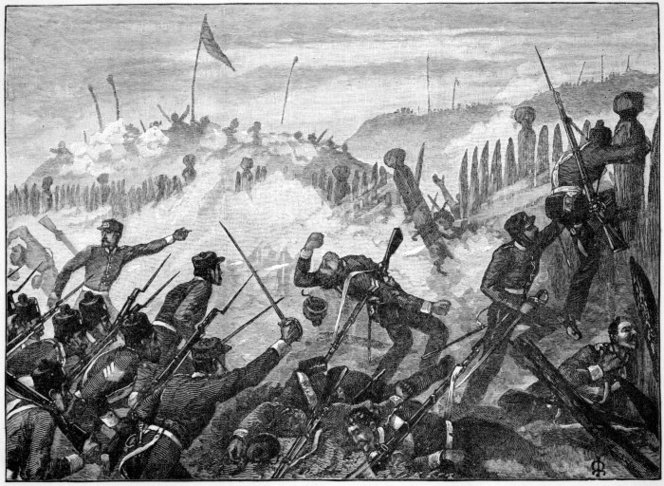
Much has changed since that violent period of our history. The Settler State is no longer the predatory beast that assailed the earthworks at Rangiriri. The need for Kingitanga reticence is not so great now as it was during the reign of Dame Te Atairangikaahu, King Tuheitia’s predecessor. In his keynote speech to mark the tenth anniversary of his ascension, the Maori King spoke of Maori exercising dual sovereignty over Aotearoa-New Zealand by 2025. This is less constitutional monarchy than it is constitutional revolution.
 
Royal words matter. If you doubt it, then just imagine the effect on Jeremy Corbyn’s fortunes if Queen Elizabeth II declared herself a life-long Labour supporter.
 
This essay was originally published in The Waikato Times, The Taranaki Daily News, The Timaru Herald, The Otago Daily Times and The Greymouth Star of Friday, 26 August 2016.

Tuesday, 23 August 2016

Let Sleeping Ghosts Lie.

Fighting For A Principle? At the Battle of Rangiriri, 1863, General Duncan Cameron's invasion force overcame the Maori King's defences at Rangiriri. It marked the beginning of the end of Maori sovereignty in New Zealand. In proposing to commemorate the New Zealand Wars, what does the Government hope Maori and Pakeha will remember? The "principles" their ancestors died for? We must hope not - lest the war begins again.
 
IT HAD TO COME, this official recognition of the dead of the New Zealand Wars. After four decades of constant revision, our nation’s story has reached the point where even those who fell in the battles that made it are summoned forth from the shadows. In recognising these ghosts, however, we must not deceive ourselves that the causes for which they fought and died will somehow remain unrecognised.
 
In announcing the Government’s intention to set aside a day to commemorate those who fell in the battles of one-and-a-half centuries ago, The Deputy-Prime Minister, Bill English declared that the time had come “to recognise our own conflict, our own war, our own fallen, because there is no doubt at Rangiriri ordinary people lost their lives fighting for principle in just the same way as New Zealand soldiers who lost their lives fighting on battlefields on the other side of the world”.
 
And what principle would that be, Mr English? The principle of dual sovereignty? – because that was what the Kingitanga represented. The principle of tino rangatiratanga? – in recognition of which the sovereign rights of Maori chiefs had been deemed inviolate under the Treaty of Waitangi? Or, was it the more general principle, recognised then, as it is now, that the military invasion and seizure of territory occupied by people who have not struck a blow against you is an international crime?
 
When teachers are asked to explain why 12,000 Imperial troops invaded the Waikato and the Bay of Plenty in 1863-64, how would Mr English have them reply? Should they tell their pupils that the Maori fighting force, against which this massive army advanced, struggled to maintain a muster of four-figures? And what should they say about the million Maori acres confiscated by the Settler Parliament? How should that be justified?
 
Perhaps these questions should be left for the Minister of Arts Culture and Heritage, Maggie Barry, to answer. She was, after all, the person who described the invasion of the Waikato, and the Battle of Rangiriri, as: “a deeply regrettable time in our history”. Speaking to those gathered to witness the repatriation of the Rangiriri battle-site to the Kingitanga on Friday, 19 August, she emphasised the significance of commemorating the New Zealand Wars: “It is important to us as a nation. At least as important as our World War I commemorations, if not more so.”
 
Much more so, Ms Barry. The formation of the New Zealand State was predicated on the full and final subjection of its indigenous people. In the two decades separating the signing of the Treaty, in 1840, and the invasion of the Waikato, in 1863, tens of thousands of mostly British immigrants had poured into New Zealand. In 1852, the British Foreign and Colonial Office responded to this influx by granting a large measure of self-government to the burgeoning settler population. The Maori tribes of the North Island interior countered by establishing the Kingitanga. While the Maori King’s writ ran, no more land would be sold to the Pakeha. To the London investors and Auckland land speculators who were chafing at the bit to turn this British “possession” into a paying proposition, such defiance was intolerable. New Zealand’s restless natives needed to be taught a lesson. General Duncan Cameron and his 12,000-strong army would be the teachers.
 
So what, exactly does Ms Barry find “regrettable” about the New Zealand Wars? That the Pakeha won them? That the confiscated lands of the Waikato, Bay of Plenty and Taranaki tribes went on to form the foundation of New Zealand’s economic prosperity? That the victory of the colonial forces, by removing the risk of further warfare, prepared the way for the breakneck development of the colony in the half-century that followed? Are these the consequences of the New Zealand Wars that the Minister of Arts Culture and Heritage regrets? Probably not.
 
So what, exactly, will Maori and Pakeha talk about on this yet-to-be-announced day of commemoration? Will the victors tell the vanquished how damned decent it was of their ancestors to let their ancestors kill so many warriors and steal so much land? Will the vanquished shrug their shoulders and say, “No worries, Bro, it was a long time ago”? And will the victors smile indulgently, slap the vanquished on the back, and say: “Quite right, Mate, it was, and we’re all New Zealanders now.”
 
We shall see. Of one thing we can be certain, however: the dead who have slept for one-and-a-half centuries beneath the disputed soil of Aotearoa will have a very different story to tell.
 
There is a reason why so many of the signposts to old battle sites are weathered and overgrown; why lichen has been allowed to obliterate the names of those who fell.
 
Sleeping ghosts, like sleeping dogs, should never be needlessly awakened.
 
This essay was originally published in The Press of Tuesday, 23 August 2016.

Friday, 30 November 2012

To Play The King

An Ass For A Lion? Always it is the lottery of succession that undoes the political efficacy of hereditary monarchy. Has the Kingitanga run up against the limits of its genetic inheritance?
 
WHAT IS A KING? If history is any guide he is the man other men follow. The man with the best explanation or, failing that, the best excuse. The sort of man who stands at the beginning of a tale: a carver of kingdoms; a founder of dynasties. Duke William of Normandy – William the Conqueror – stands as the prototype, the archetype, of this kind of king. The strong war leader, the dux bellorum, who transforms his sword into a sceptre.
 
But how are such men reproduced? How does the king/father guarantee his subjects a successor fit to rule them? Always it is the lottery of succession that undoes the political efficacy of monarchy. Or, as the Eighteenth Century writer and revolutionary, Thomas Paine, put it: “One of the strongest natural proofs of the folly of hereditary right in kings, is, that nature disapproves it, otherwise, she would not so frequently turn it into ridicule by giving mankind an ass for a lion.”
 
The creation of the Kingitanga (King Movement) is one of the greatest compliments Maori ever paid to Pakeha. By creating parallel political structures to those of the colonial administration, the beleaguered inland tribes of the North Island hoped to develop a political authority equal to that of the Settler Government. The distant British monarch and her local representatives would be required to deal with an indigenous king. It was an imitative gesture which alarmed every bit as much as it flattered the Pakeha politicians of the late-1850s.
 
The colonial government’s misgivings were unwarranted. The first Maori King, Potatau, was no Duke William. He was a man of prestigious lineage, rich in accumulated mana, but his kingship came to him via the nomination of his peers – not from victory on the battlefield. The Kingitanga itself was the product not of fighters but of thinkers; educated men like Wiremu Tamihana – known as “The Kingmaker”. From its very beginning, the Maori Kingdom served as both symbol and statement: a plea for racial equality, due process and an end to the illegal alienation of tribal lands.
 
Needless to say, it was roundly condemned by settler politicians as both a barrier and a threat to the colony’s advancement. It took 18,000 troops to break the Maori Kingdom, but break it the Settler Government did. That it survived at all – let alone into the Twenty-First Century – is explicable only in terms of its evolution from a parallel political system into a mystical hereditary taonga. For more than a century the Maori monarchs have passed through the walls of the Settler State with the ease of a phantom: holographic witnesses to the festering injustices of the past.
 
Such ethereal figures need to be very careful how they interact with the mundane world of pith and power. Like its British counterpart, the Maori Monarchy has taken special care to be in the world but not of it. Nothing’s been attempted which risked breaking the magic spell.
 
The reward, all $170 million of it, came in the form of the Waikato-Tainui Settlement – over whose determined negotiators the Maori Queen spread the feather-cloak of her carefully nurtured mana. Sadly, Waikato-Tainui’s settlement with the Crown of New Zealand has turned out to be at the expense of its own. The ill-considered choices of Dame Te Ātairangikaahu’s son and heir, King Tūheitia, are steadily proving the truth of Tom Paine’s assessment of hereditary monarchy. More and more it seems the Lioness has whelped an Ass.
 
Urged on by his courtiers and favourites, King Tūheitia shows every sign of an intention to rule as well as reign. Te Kauhanganui, the Kingitanga parliament, established by his predecessor, King Tawhiao, more than a century ago, has fought to secure the Waikato-Tainui people’s interest in the settlement’s millions only to witness its courageous leader, Tania Martin, brought low by palace intrigue and political ambush. Urged on by his counsellors, King Tūheitia, now seeks to become an absolute monarch: wielding full veto powers; free to summon and prorogue his parliament at will.
 
The Crown of New Zealand will not tolerate so blatant a pretender to its throne. If the Maori King aspires to be a politician then he must divest himself of the mystery and mana of his ancestors and endure the audit of democracy like any other citizen – Pakeha or Maori.
 
Kings do not carry wallets.
 
This essay was originally published in The Waikato Times, The Taranaki Daily News, The Timaru Herald, The Otago Daily Times and The Greymouth Star of Friday, 30 November 2012.